Nothing says, “Goodbye, winter!” quite like watching the ice disappear after a deep freeze. This timelapse video shows ice on Lake Michigan breaking up after a deep freeze. The first chunk to go is a massive plate of ice that moves off in a single large chunk. After that, the break-up takes place on a smaller scale, with individual pieces of ice tracing the flow of local currents. (Video and image credit: WGN News; submitted by ajhir)
Tag: timelapse

“The Unseen Sea”
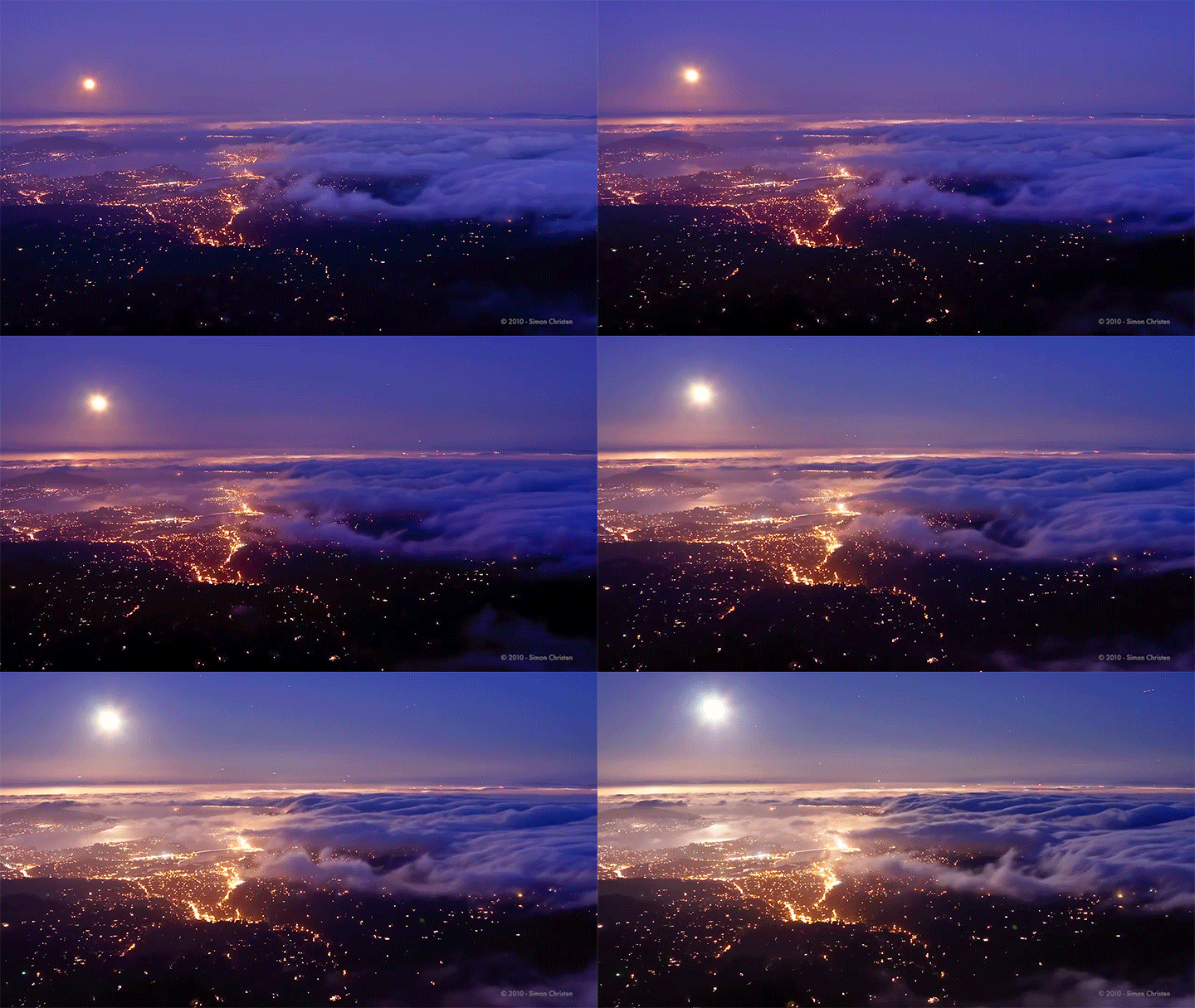
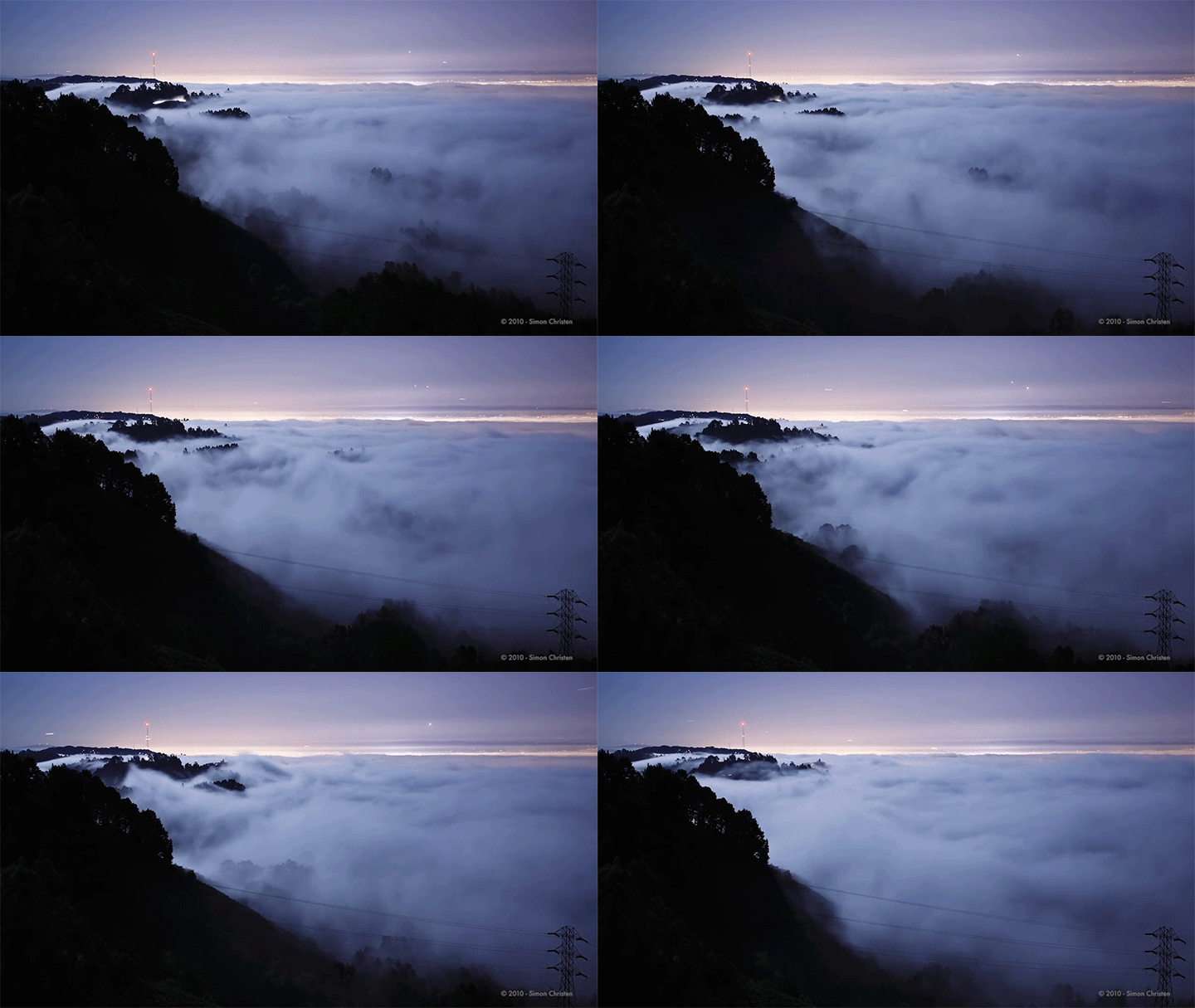
San Francisco’s picturesque fogs form “The Unseen Sea” in Simon Christen’s timelapse. Viewed at the right speed, the motion of clouds becomes remarkably ocean-like, with standing waves and surges against the hillside like waves crashing on a beach. Clouds in air don’t have the same surface tension effects as water waves in air, but, for the most part, the physics of their motion is the same, which is why they look so alike. (Image and video credit: S. Christen)

A Year From Geostationary Orbit
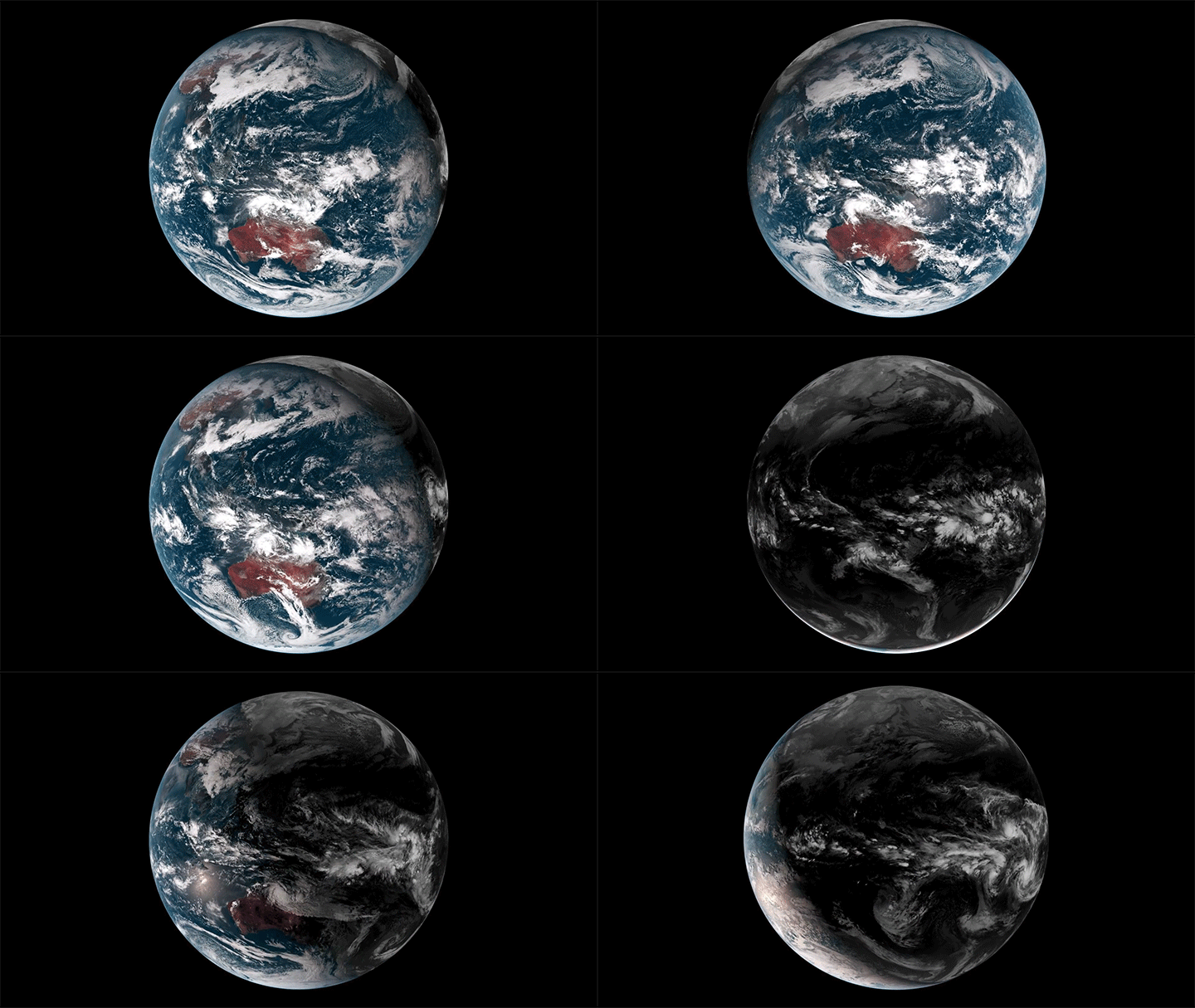
Our planet is a complex fluid dynamical system, and one of the best ways to watch nature at work is through timelapse. This short film takes us through an entire year, from December 2015 to December 2016, as viewed from a geostationary weather satellite centered over Oceania.
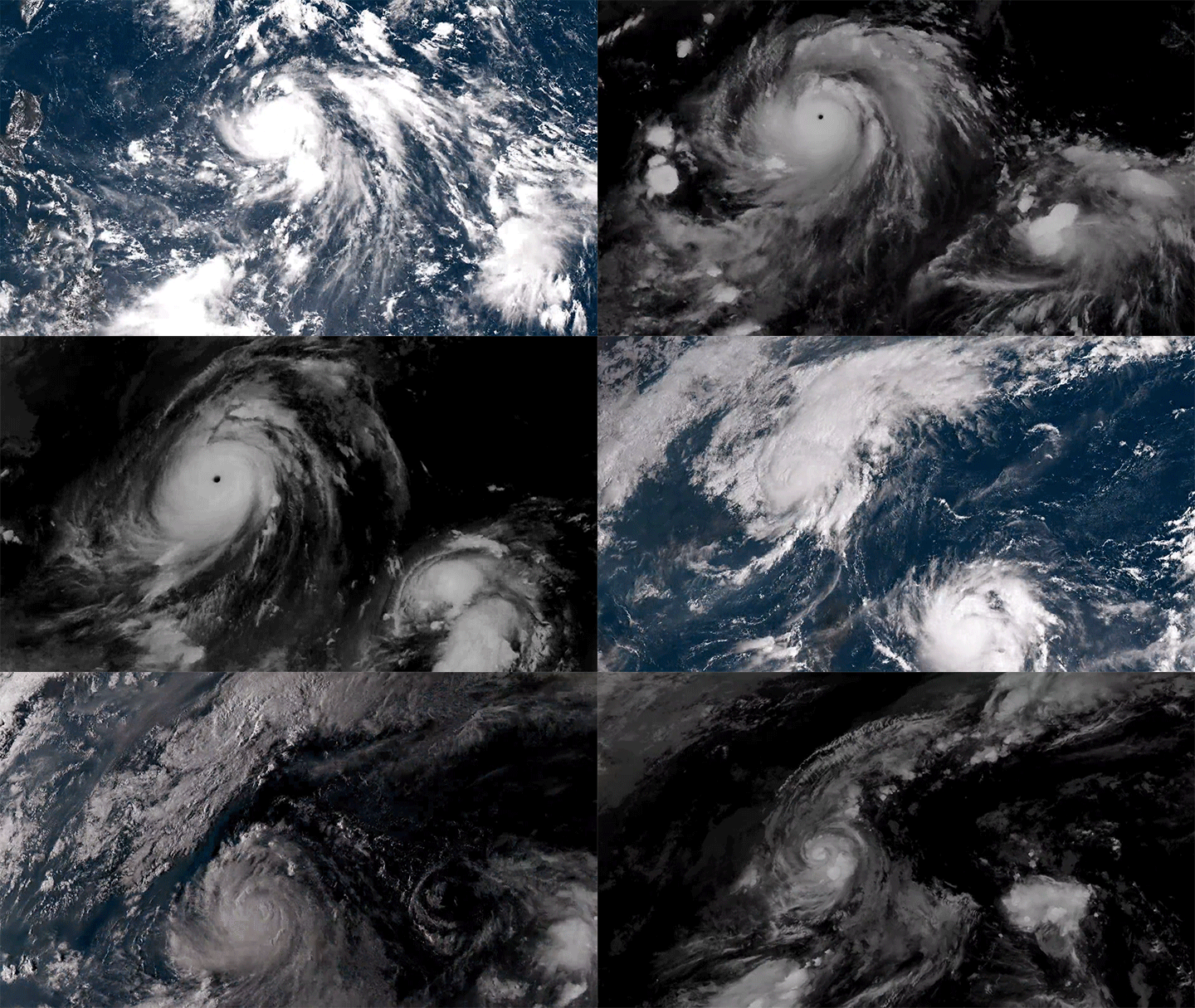
The imagery is rather hypnotic, with clouds swirling day and night across the full field of view. Watch closely, though, and you’ll see a lot of neat phenomena from typhoons forming in the Pacific to wave clouds streaming from the islands of Japan. You can also see clouds blossoming (especially during the day) over the humid rainforests of Oceania.
There are neat non-fluids phenomena, too, like a total solar eclipse and the permanent sunlight of Arctic and Antarctic summers. What do you notice? (Image and video credit: F. Dierich)

“Stormscapes 4”
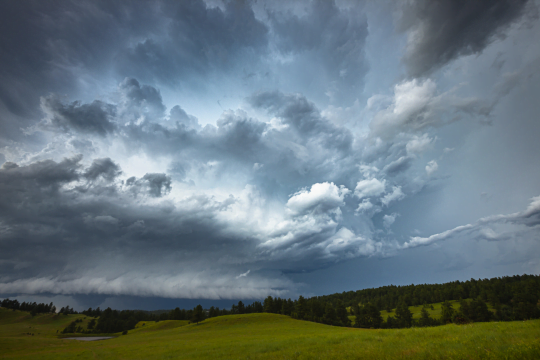
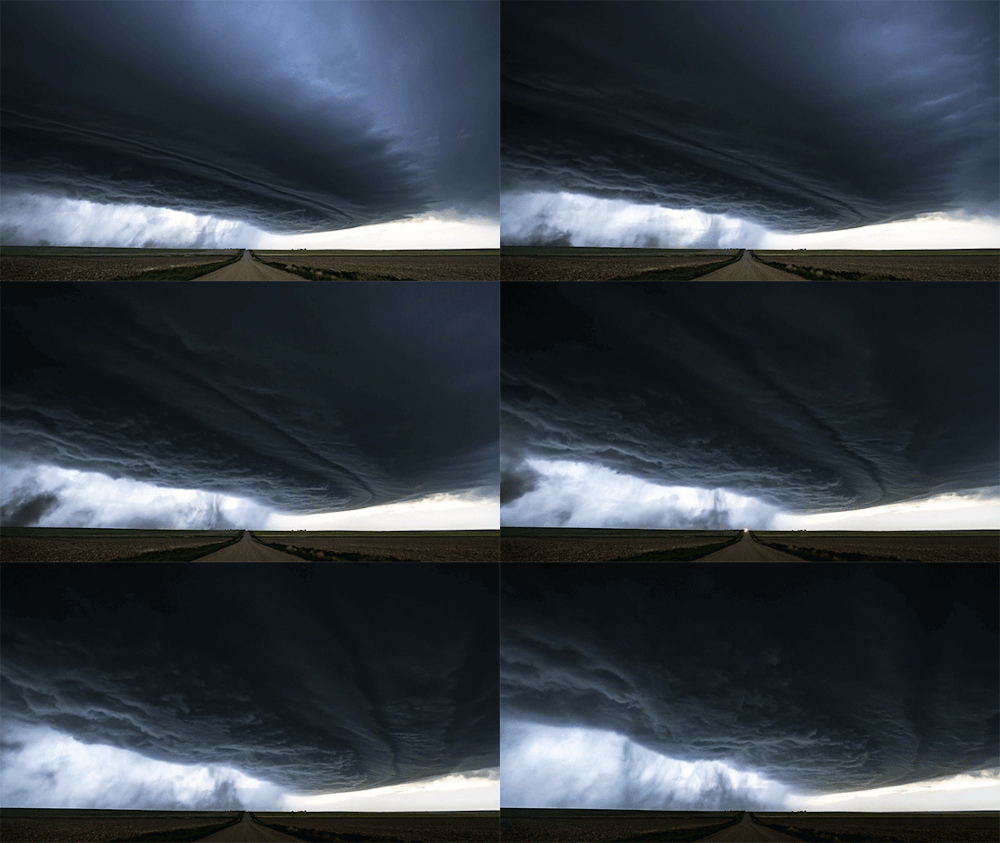
Frightening as they can be in the moment, storms have a power and majesty all their own. I’ve never seen a better way to capture that than through timelapse, and photographer Nicolaus Wegner offers a great one in “Stormscapes 4″. I particularly like how his frame captures the motion of storms and how they shear, rotate, and billow as they evolve. With a quick glance upward, it’s easy to miss that motion, even if it is fundamental to these storms. Sit back and enjoy. (Video and image credit: N. Wegner)

“Transient 2”
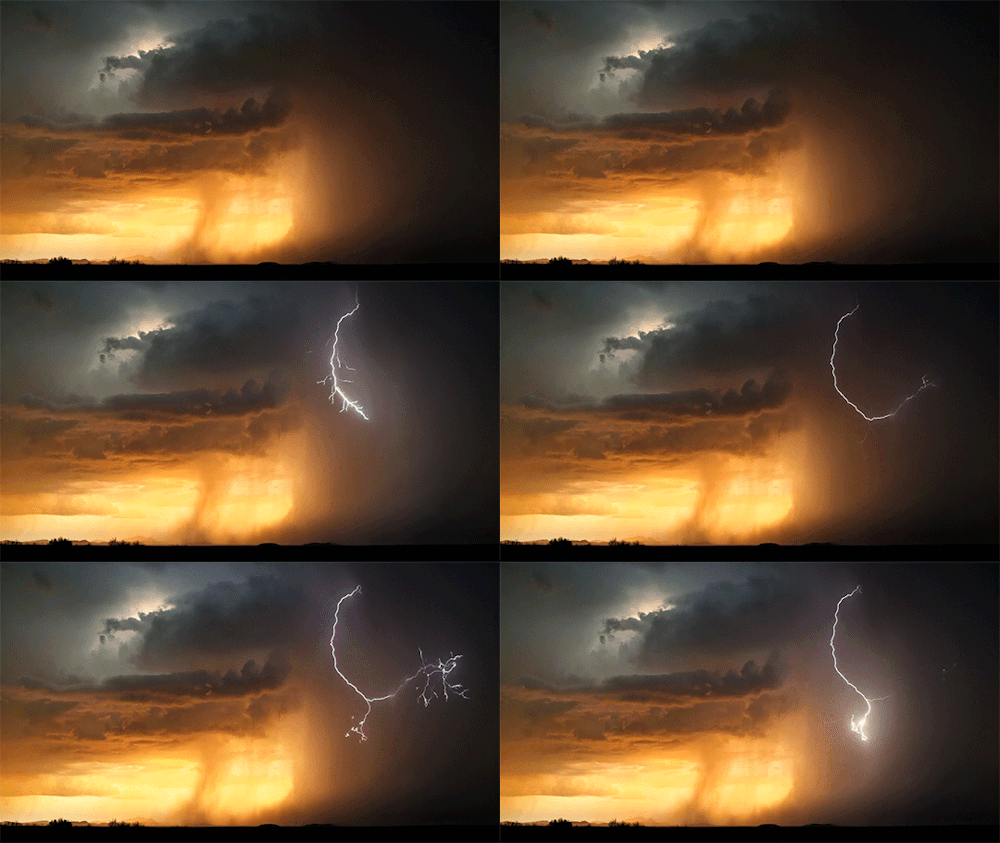
Where cold and warm air meet, our atmosphere churns with energy. From the turbulence of supercell thunderclouds to the immense electrical discharge of lightning, there’s much that’s breathtaking about stormy skies. Photographer Dustin Farrell explores them, with a special emphasis on lightning, in his short film, “Transient 2″.
As seen in high-speed video, lightning strikes begin with tree-like leaders that split and spread, searching out the path of least resistance. Once that line from cloud to ground is discovered, electrons flow along a plasma channel that arcs from sky to earth. The estimated temperatures in the core of this plasma reach 50,000 Kelvin, far hotter than the Sun’s surface. It’s this heating that generates the blue-white glow of a lightning bolt. The heating also expands the air nearby explosively, producing the shock wave we hear as a crash of thunder. (Images and video credit: D. Farrell et al.; via Colossal)

Calimero’s Uprising!
Here on FYFD posts often focus on research results, with animations and images showing only a tiny portion of the apparatus necessary to conduct that work. But in this timelapse, we get to see a glimpse of what it takes to make the research happen. The video covers a 12-week period in which student Sietze Oostveen sets up, modifies, and takes measurements with a rotating tank apparatus called Calimero.
The video captions give you a sense of all the little tasks that go into experimental work, from installing thermal control and measurement systems (in this case, laser Doppler velocimetry, or LDV) to making sure that the rotating table is balanced correctly. In experimental work, it’s worth remembering that you’ll likely spend as much or more time preparing to take data than you will actually doing measurements! (Video credit: S. Oostveen/UCLA Spinlab)

Dissolving Pills
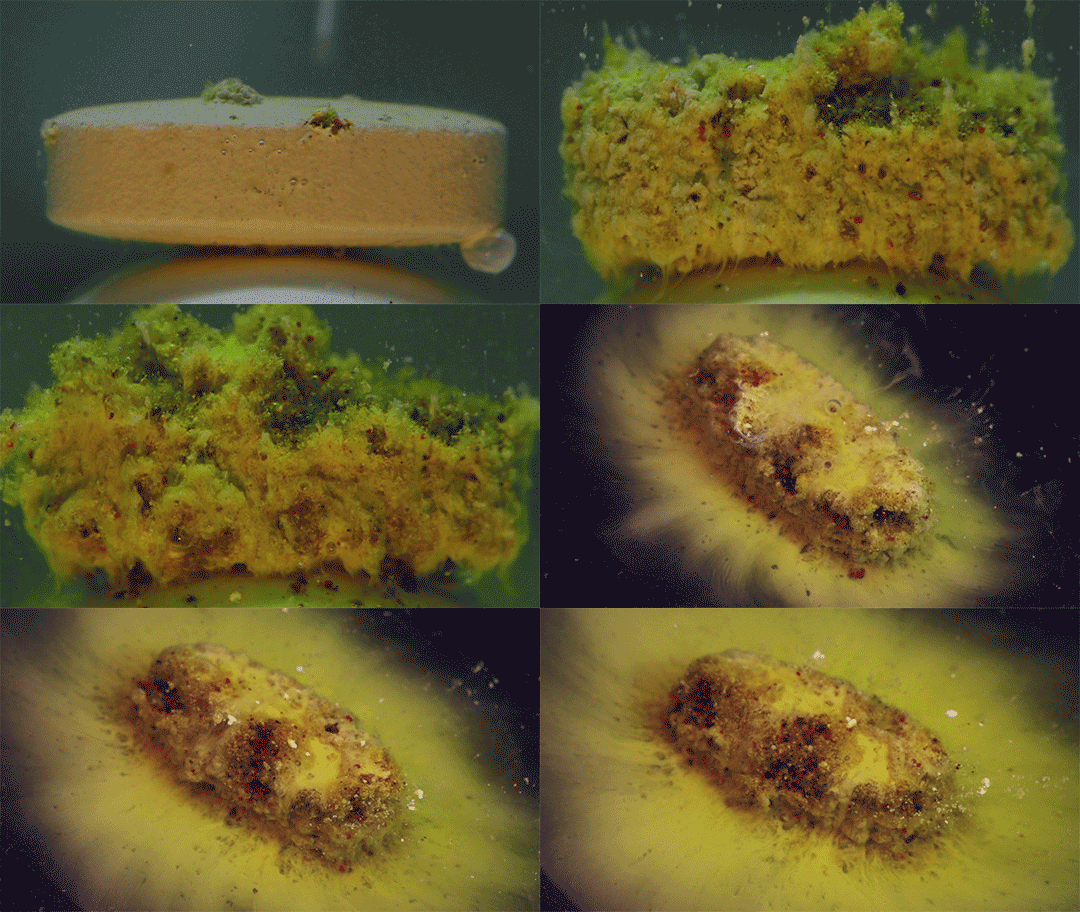
This short film from Macro Room shows how pills dissolve in timelapse. Dissolution is a complex process driven both by flow and chemical concentration. Any small motion in the water helps erode the surface, and as the chemicals dissolve, the subsequent variations in the concentration drive additional flow. This is why we often see a turning point in how quickly the pills come apart. The initial breakdown is slow, but once enough of the pill dissolves, it enhances the surrounding flow, which increases erosion. Notice how many of the pills – liquid-filled capsules, especially – have a point where fluid begins streaming away from them. Unlike the capsules, the solid pills seem to get an extra boost from bubbles that form and then pull away material. (Image and video credit: Macro Room; submitted by clogwog)

Evaporative Convection
Since we spend so much of our lives around transparent fluids like air and water, we often miss seeing some of their coolest-looking flows. Here, we see a layer of water only 3 centimeters deep but a full meter wide. It’s seeded with tiny crystals that reflect light depending on their orientation, which allows us to see the flow. Initially, the tank is spun up, then left stationary for 2 hours while evaporation cools the water.
Normally, the resulting flow would be too slow to notice, but that’s where the magic of timelapse comes in. With it, we can see the wriggling dark lines marking areas where cool, dense water sinks and brighter regions where warm fluid rises. What begins as an array of polygonal convection cells quickly merges into a couple of large, rounded cells. Check out the full video below, where you can see the streaming patterns far better than in animation. (Image and video credit: UCLA Spinlab)

Melting
File this one under “Oddly Satisfying” – this timelapse video shows the process of melting a jawbreaker candy using a blowtorch. Over a minute and a half, each colorful layer of candy melts away to reveal the strata beneath. There’s a definite connection here to some of the previous research we’ve discussed on erosion, dissolution, and melting. The blowtorch’s flame generates a hot boundary layer around the candy surface; it’s thickest and hottest at the central stagnation point, but judging by the melting layer we see running all the way to the candy’s shoulder, its size and effect are substantial even there. It’s hard to tell from the video whether the surface of candy is getting roughened (a la scalloping) or whether that’s just an uneven layer of melted candy flow. Regardless, it’s a fun watch. (Video and image credit: Let’s Melt This; via Colossal)


“The World Below”
Since the first cosmonauts and astronauts entered orbit around our planet, they’ve held a unique perspective. Thanks to the timelapse photography of recent astronauts aboard the ISS and the editing skills of photographer Bruce W. Berry, Jr, the rest of us can enjoy a taste of that viewpoint. Turn up the volume, fire up the big screen, and enjoy.
I particularly like how several of the sequences show off the depth of the atmosphere. Earth’s atmosphere is incredibly thin compared to the size of our planet – less than one percent of Earth’s radius – but thanks to the shadows that clouds cast on one another, you can really appreciate their height in sequences like the one at 2:26. (Video credit: B. Berry, Jr. using NASA footage)