Tag: thermodynamics

  • Milano Cortina 2026: Cortina Sliding Center

    Milano Cortina 2026: Cortina Sliding Center

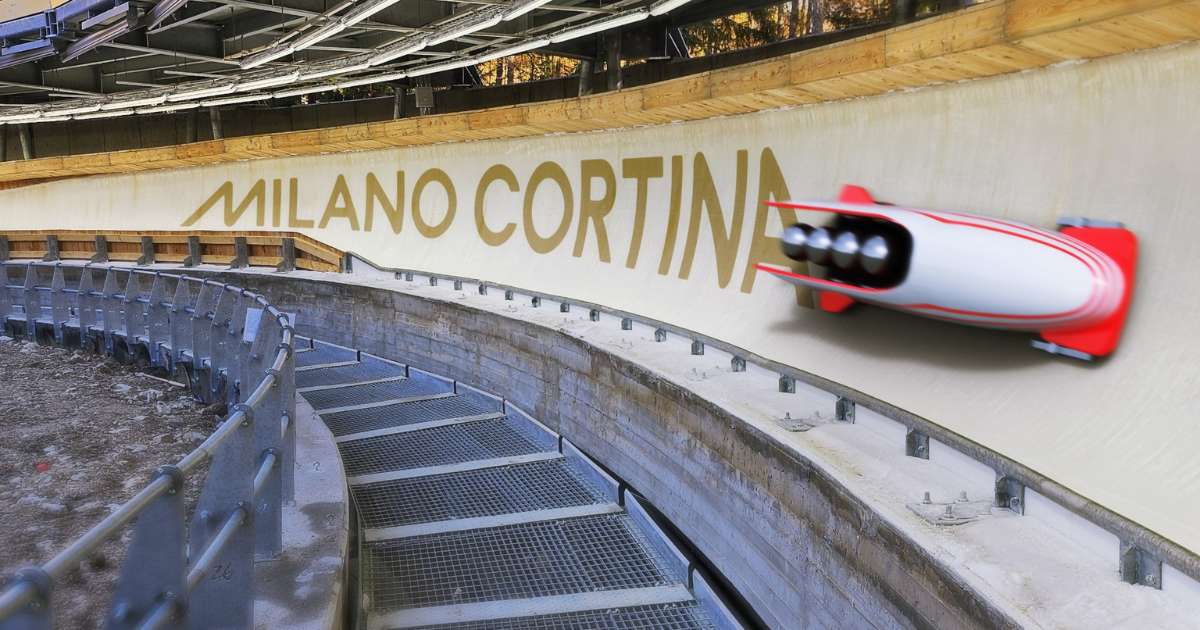
    This year’s sliding events–bobsleigh, luge, and skeleton–will take place at the brand-new Cortina Sliding Center. Built on the site of a historic sliding track, this new venue came together in only the last couple of years. It features a state-of-the-art refrigeration system that pumps a mixture of water and ethylene glycol beneath the track surface to keep the ice properly chilled. Each section of the track is continuously monitored to optimize the flow rate, temperature, and pressure of the refrigerant to keep the track at maximum performance while minimizing environmental impact.

    According to the designers, it’s the first competition track to use a glycol-based refrigeration system, which should be more sustainable than the ammonia-based systems used elsewhere. For a sense of what a run is like, check out this skeleton driver POV run from the facility’s shakedown competition last year. (Image credit: LMSteel; video credit: tuff sledding)

    Fediverse Reactions
  • Featured Video Play Icon

    Dispersing Pollutants via Smokestack

    In our industrialized society, pollutants are, to an extent, unavoidable. Even with technologies to drastically reduce the amount of pollutants leaving a factory or plant, some will still get released. It’s up to engineers to make sure that those released spread out enough that their overall concentration does not pose a risk to public health. In this Practical Engineering video, Grady explains some of the physics and engineering considerations that go into this task.

    As he demonstrates, taller smokestacks speed up the buoyant exhaust plume (to an extent), which exposes the plume to higher winds, greater turbulence, and, thus, quicker dispersal. But atmospheric conditions and even nearby buildings all affect how a plume spreads. (Image and video credit: Practical Engineering)

    Fediverse Reactions
  • Featured Video Play Icon

    How Cooling Towers Work

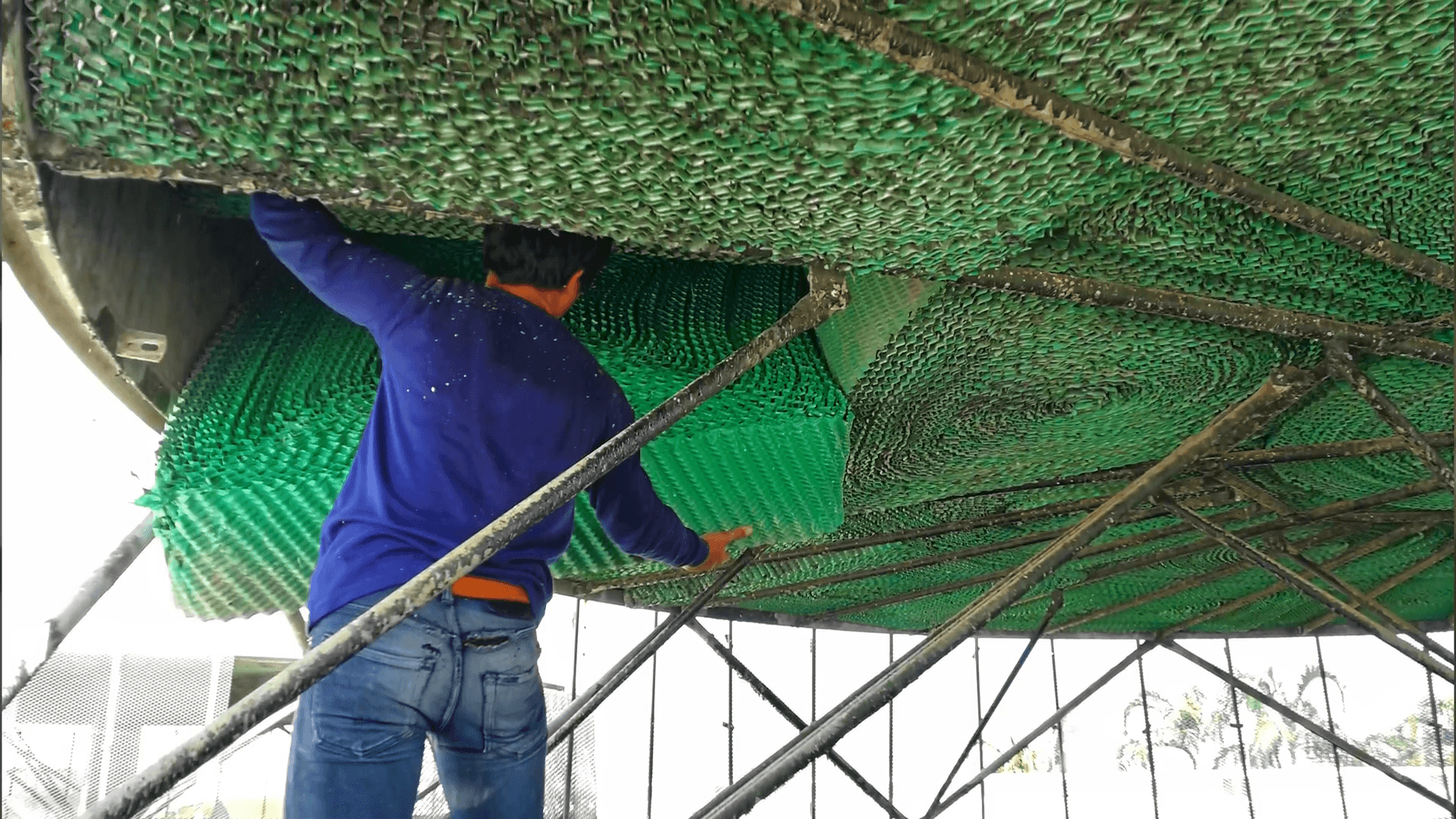
    Power plants (and other industrial settings) often need to cool water to control plant temperatures. This usually requires cooling towers like the iconic curved towers seen at nuclear power plants. Towers like these use little to no moving parts — instead relying cleverly on heat transfer, buoyancy, and thermodynamics — to move and cool massive amounts of water. Grady breaks them down in terms of operation, structural engineering, and fluid/thermal dynamics in this Practical Engineering video. Grady’s videos are always great, but I especially love how this one tackles a highly visible piece of infrastructure from multiple engineering perspectives. (Video and image credit: Practical Engineering)

    Fediverse Reactions
  • Feeding Hurricanes

    Feeding Hurricanes

    With the strong hurricane season pummeling the southern U.S. this year, you may have heard comments about how warm oceans are intensifying hurricanes. Let’s take a look at how this works. Above is a map of ocean surface temperatures in late September, as Helene was developing and intensifying. For hurricanes, the critical ocean surface temperature is about 27 degrees Celsius — above this temperature, the warm waters add enough energy and moisture to the storm to intensify it. In this image, the waters colored from medium red to black are at or above this temperature. In fact Helene’s path — shown in a dotted white line — took it across particularly warm (and therefore dark) eddies with temperatures up to 31 degrees Celsius.

    Many factors affect a hurricane’s formation and intensification; understanding and predicting storms, their path, and their strength remains an active area of research. But warmer ocean temperatures are better at sustaining the hurricane’s warm core, and their moisture is easier to evaporate, thereby fueling the storm. Unfortunately, as the climate warms, we have to expect that warmer oceans will help rapidly intensify tropical storms and hurricanes. (Image credit: W. Liang; via NASA Earth Observatory)

  • An Exoplanet With Earth-Like Temperatures

    An Exoplanet With Earth-Like Temperatures

    Although researchers have identified thousands of exoplanets in the last 25 years, most of them are far larger and far hotter than Earth. But a team recently announced the discovery of a temperate neighbor, Gliese 12 b, some 40 light years away. Gliese 12 b is a rocky Venus-sized planet orbiting the cool red dwarf star Gliese 12. Based on the star’s energy output and the planet’s characteristics, the team estimate its equilibrium temperature — about how hot it would be without an atmosphere — as 42 degrees Celsius. (For comparison, Earth’s average surface temperature is 15 degrees Celsius and rising.) The next goal will be to determine whether Gliese 12 b has an atmosphere and, if so, what it’s made up of. (Image credit: NASA/JPL-Caltech/R. Hurt; research credit: S. Dholakia et al.; via Gizmodo)

  • How a Storm Can Ruin Your Tea

    How a Storm Can Ruin Your Tea

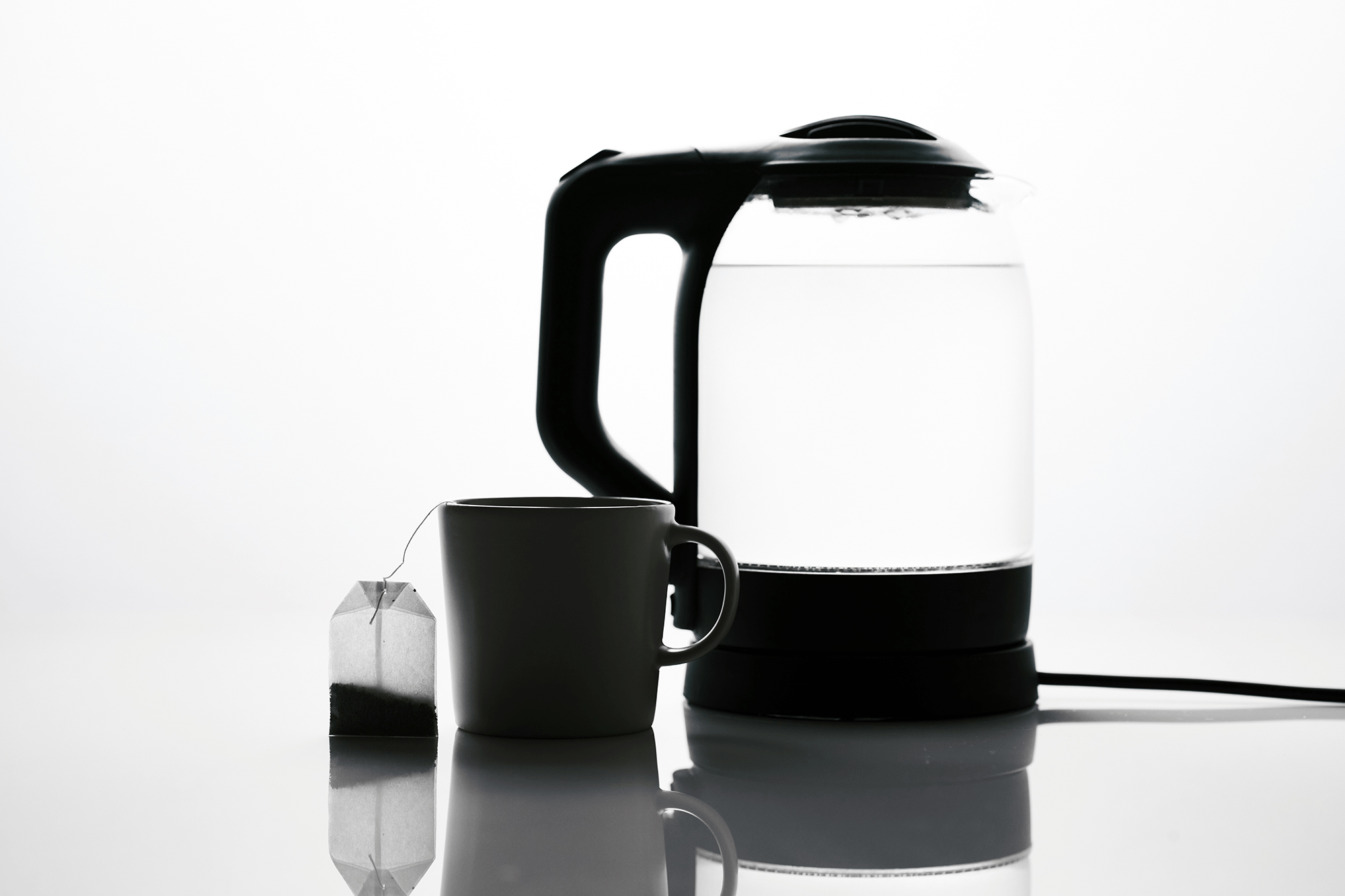
    Last November, a windstorm, known as Storm Ciarán in the U.K., blew through Europe with wind speeds as high as 130 kilometers per hour. All that wind came with a significant drop in atmospheric pressure. Researchers found that the pressure drop was large enough to lower the boiling point of water more than full 2 degrees Celsius. That difference probably wouldn’t register for anyone waiting for their kettle to boil, but it could decidedly affect the final cup of tea. Tea flavor is quite sensitive to the temperature of the boiling water used to brew it, as it affects how well the tannins get extracted. According to the researchers, Ciarán’s conditions potentially ruined millions of cups of breakfast tea in the greater London area. (Image credit: E. Akyurt; research credit: G. Harrison et al.; via Gizmodo)

  • Recycling Urban Heat

    Recycling Urban Heat

    In urban areas, buildings and concrete surfaces create a heat effect that can make temperatures in the city substantially higher than in nearby rural areas. That heat isn’t just above ground, either. It seeps into the subsurface, measurably increasing groundwater temperatures. In a recent study, authors suggest this excess subsurface heat could be reclaimed and recycled (via heat pumps and other heat exchangers) in urban areas to offset peoples’ needs and to help groundwater return to its normal temperature. They found that even focusing on heat stored in the top meter of the subsurface could provide green heating for much of the world’s urban populations. (Image credit: J. Dylag; research credit: S. Benz et al.)

  • Featured Video Play Icon

    A Levitated Boil

    When acoustically levitated, objects tend to clump together and move like a single, large solid. But researchers found more fluid-like states for their levitated particles when the particles were smaller. At low acoustic power, the particles behave like a liquid and shift primarily within a plane. But as the acoustic power increases, the granular liquid begins to “boil” and transition into a gaseous state, with particles moving in all directions. It’s amazing how often these metaphors (e.g., treating a group of particles as a “liquid”) hold true when observing different physical systems! (Image and video credit: B. Wu et al.)

  • Leidenfrost On Ice

    Leidenfrost On Ice

    We’ve seen many forms of Leidenfrost effect — that wild, near-frictionless glide that liquid droplets make on a very hot surface — over the years, but here’s a new one: the three-phase Leidenfrost effect. Researchers found that they could generate a Leidenfrost effect using an ice disk placed on an extremely hot surface. During the effect, the ice and its melting layer of water glide on vapor, hence the name.

    The team found that getting a three-phase Leidenfrost effect requires a much, much higher temperature than the regular Leidenfrost effect. Water will get its glide on at 150 degrees Celsius. Getting ice to glide on the same surface required a stunning 550 degrees Celsius! Why the big difference? The challenge is that water layer, which, by definition, has a 100-degree difference between its boiling side and its frozen boundary. It takes so much heat to maintain that layer that there’s little energy left over for evaporation; that’s why it takes so much more energy to get the three-phase Leidenfrost effect. (Image and research credit: M. Edalatpour et al.; via Ars Technica; submitted by Kam-Yung Soh)

  • Featured Video Play Icon

    Tricking a Kettle

    Electric kettles are designed to shut off when the water inside them boils. But what does that mean exactly? In this video, Steve Mould explores that question by trying to trick his kettles into boiling off ethanol, a liquid with a lower boiling temperature than water. Steve figures that, if a kettle is designed to shut off at 100 degrees Celsius (water’s boiling point), then it will overboil ethanol since its temperature will never get that high.

    I’ll let you watch the video and see what happens…

    (more…)