Tag: science

  • The Start of a Supernova

    The Start of a Supernova

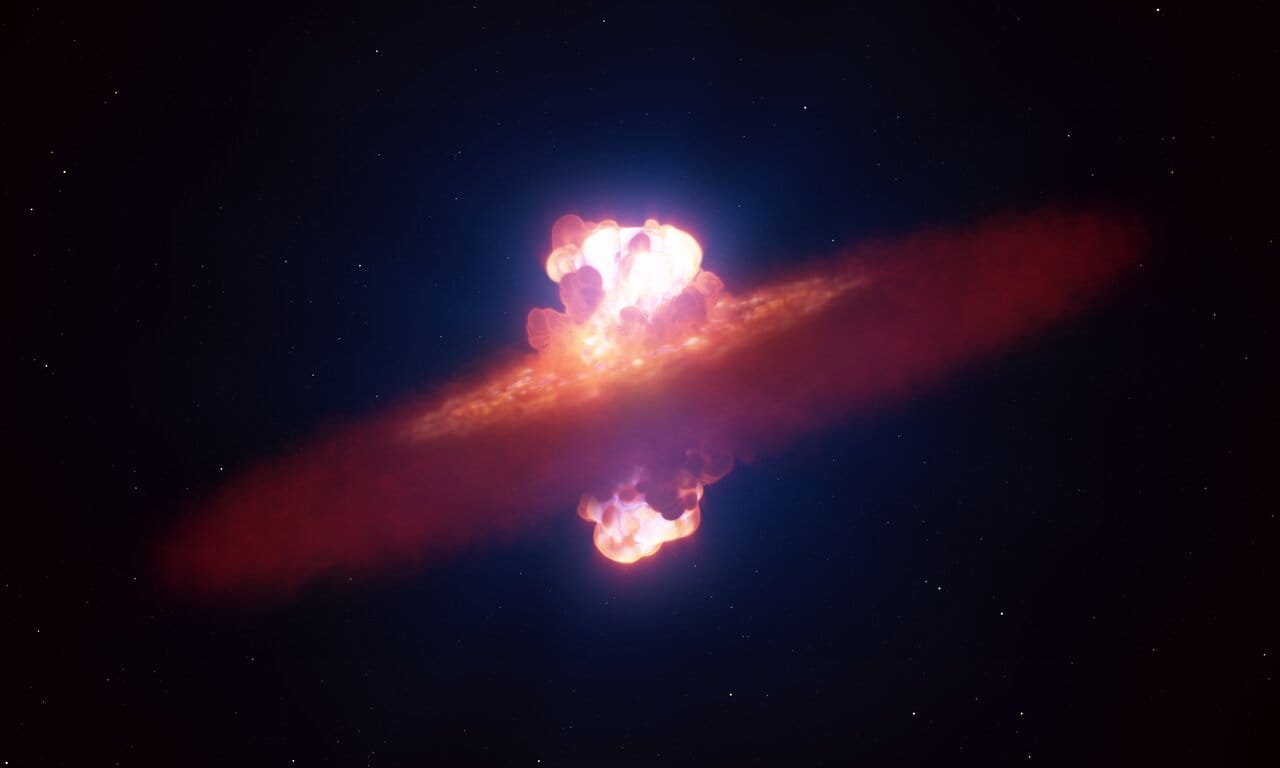
    Stars about eight times more massive than our sun end their lives in supernovas, incredible explosions that rip the star apart. The earliest stages of this explosion are something we’ve never observed firsthand, until now. A new study reports observations of the supernovaย explosionย SNย 2024ggi, detected here on Earth on 10 April 2024. Only 26 hours later, researchers pointed the Very Large Telescope at it, capture data that revealed its oblong shape as the initial explosion reached the star’s surface.

    What you see above and below are not the actual supernova. They are an artist’s conception of the event, based on the researchers’ observation data. That data is enough to rule out several existing supernova models and will no doubt guide new models of star death going forward. (Image credit: ESO/L. Calรงada; research credit: Y. Yang et al.; via Gizmodo)

    Fediverse Reactions
  • Featured Video Play Icon

    Entraining Bubbles

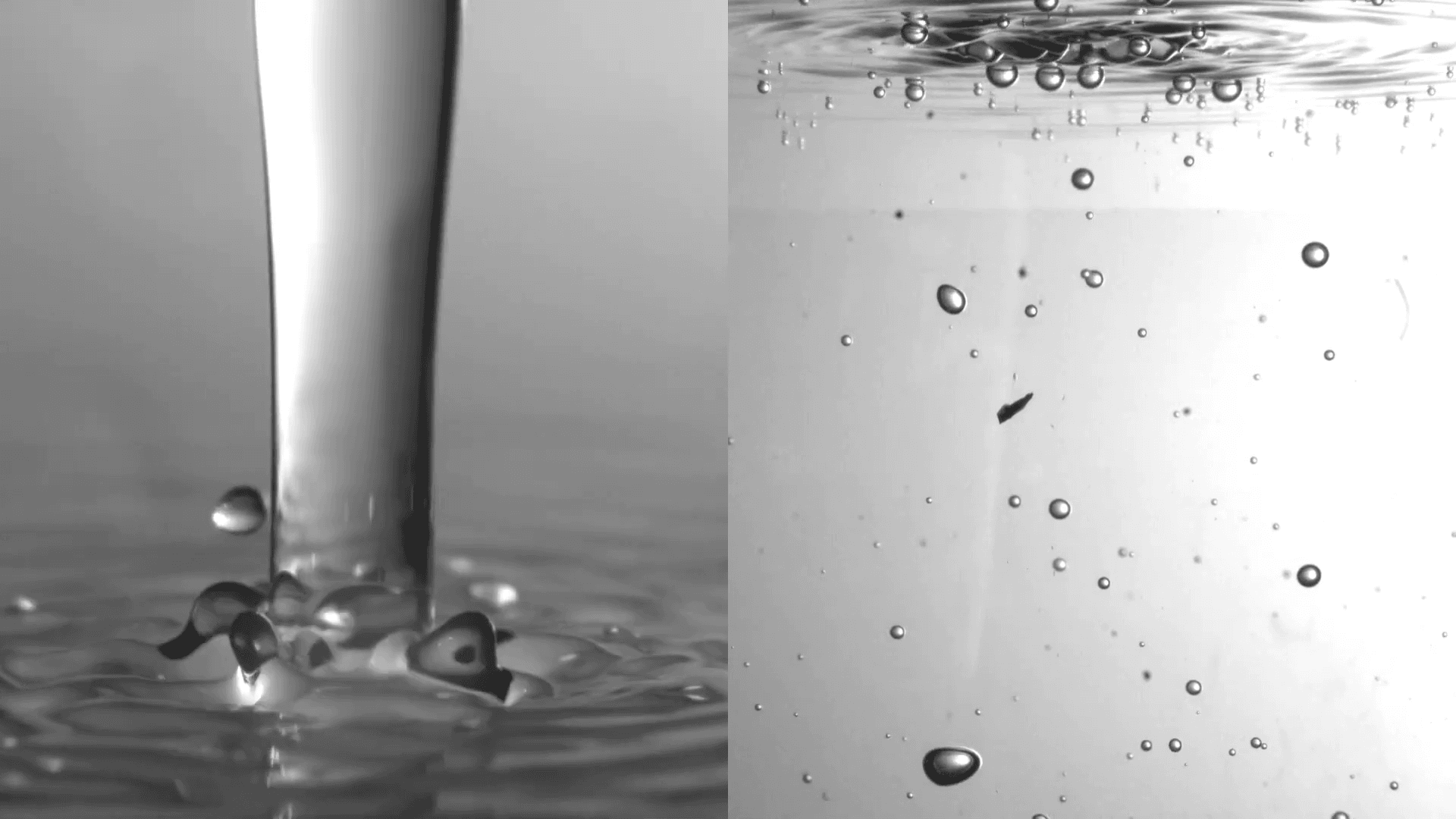
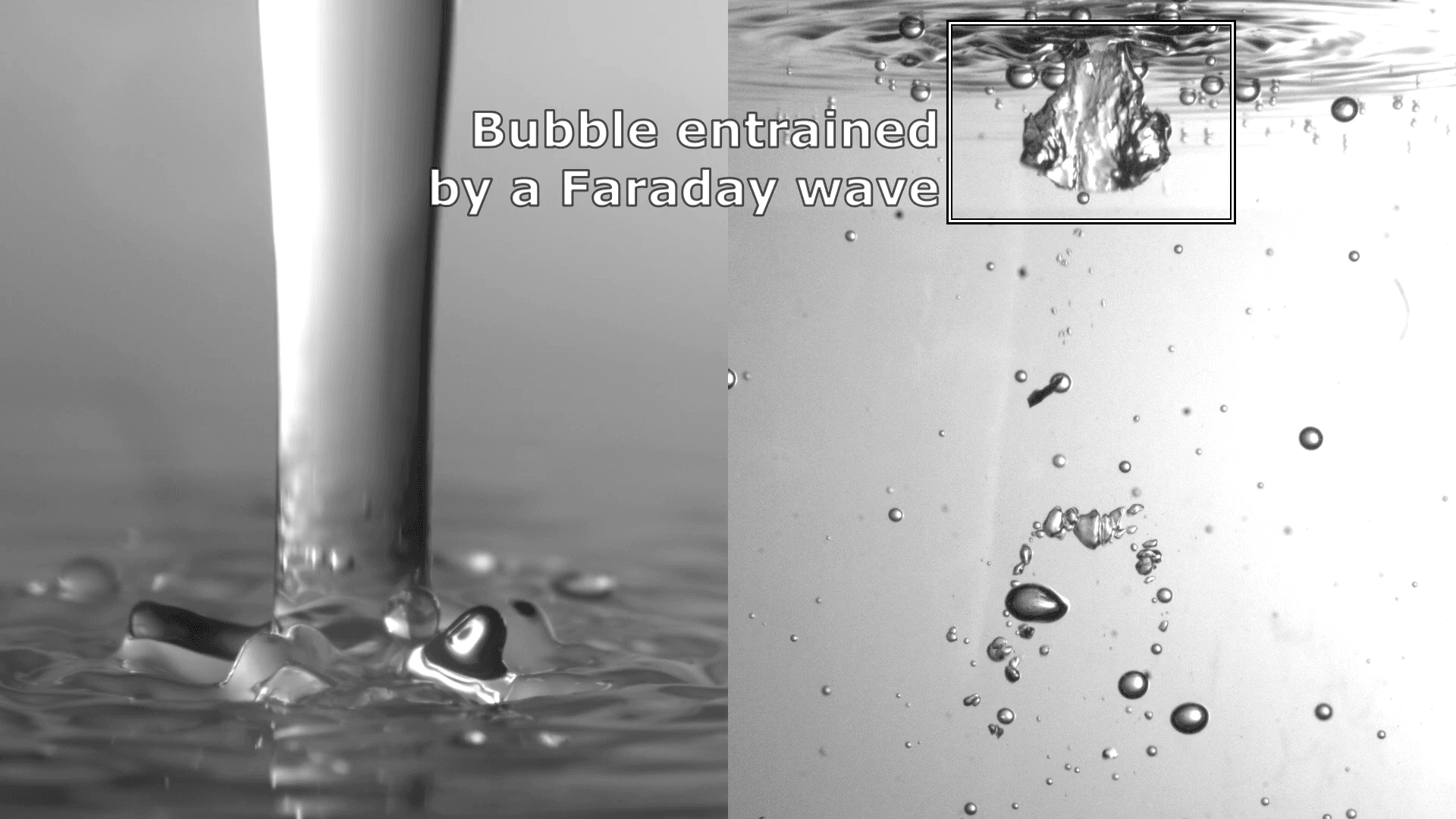
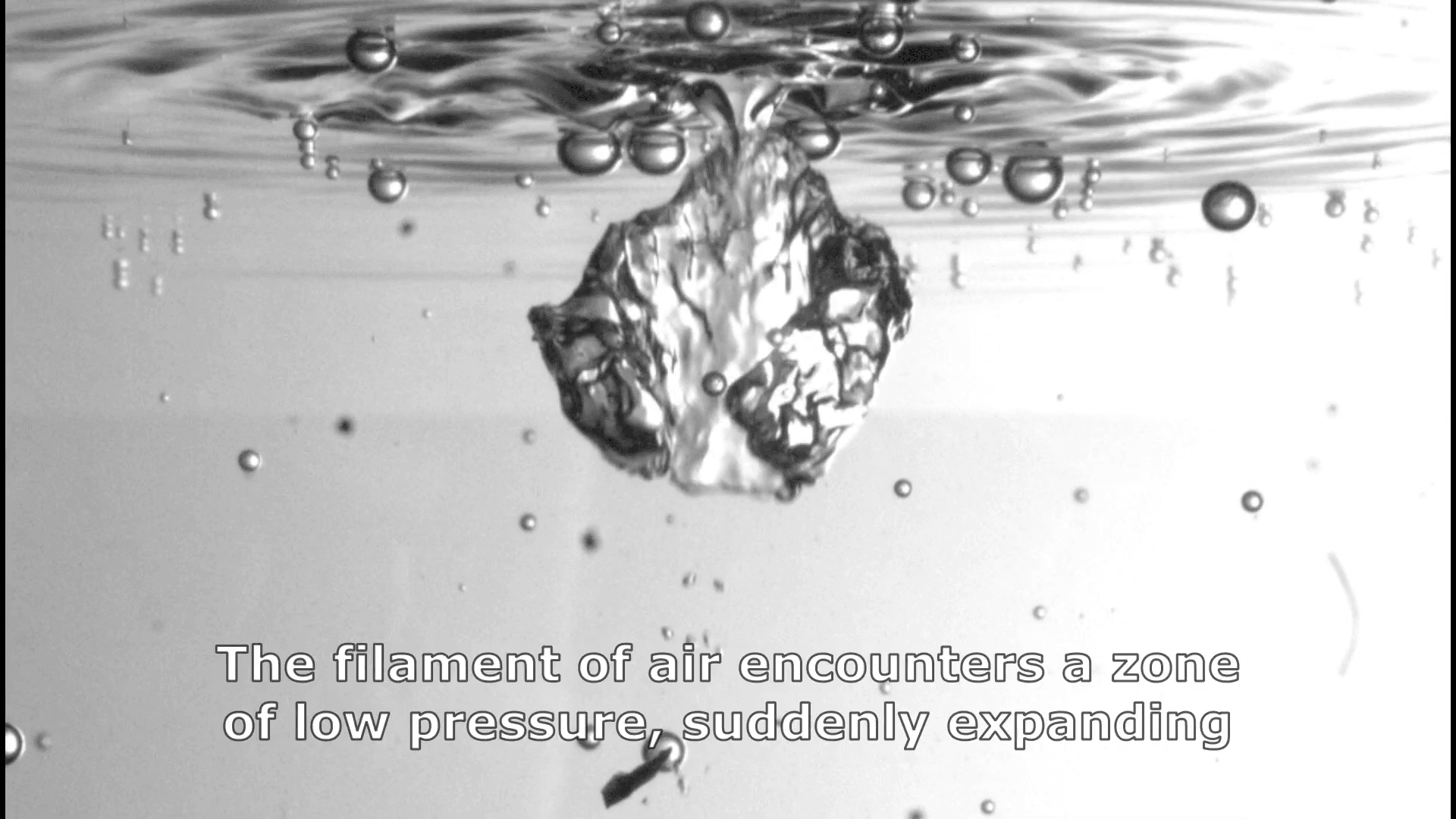
    Every time I fill a glass at my refrigerator, I watch how the falling jet creates a cloud of bubbles. The bubbles form when the impacting water jet pulls air in with it, though, as this video shows, the exact origins can vary. Here, researchers take a closer, slowed-down look at the situation; they connect disturbances in the jet and waves at its base to the entrained bubbles that form. (Video and image credit: S. Relph and K. Kiger)

    Fediverse Reactions
  • Quantum Rayleigh-Taylor Instability

    Quantum Rayleigh-Taylor Instability

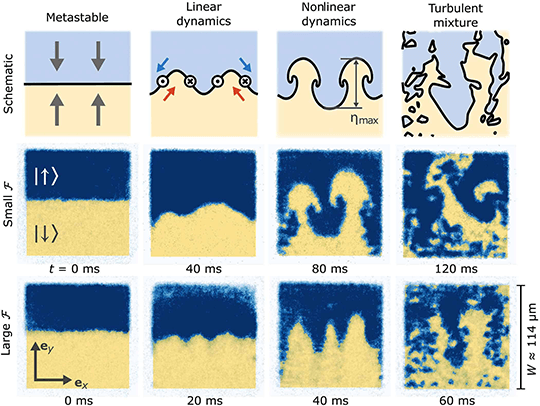
    The Rayleigh-Taylor instability–typically marked by mushroom-shaped plumes–occurs when a dense fluid accelerates into a less dense one. But researchers have now demonstrated the effect at quantum scales, too.

    For their experiment, the group used a Bose-Einstein condensate of sodium atoms and made the interface between them by exciting half of the atoms into a spin-up state and half into a spin-down one. With the interface is place, they reversed the magnetic field gradient, inducing a force on the atoms equivalent to the buoyant force seen in conventional Rayleigh-Taylor instabilities. As shown above, the interface first warped, then developed Rayleigh-Taylor mushrooms and eventually became turbulent. (Image and research credit: Y. Geng et al.; via Physics World)

    Fediverse Reactions
  • Whorls of Sea Ice

    Whorls of Sea Ice

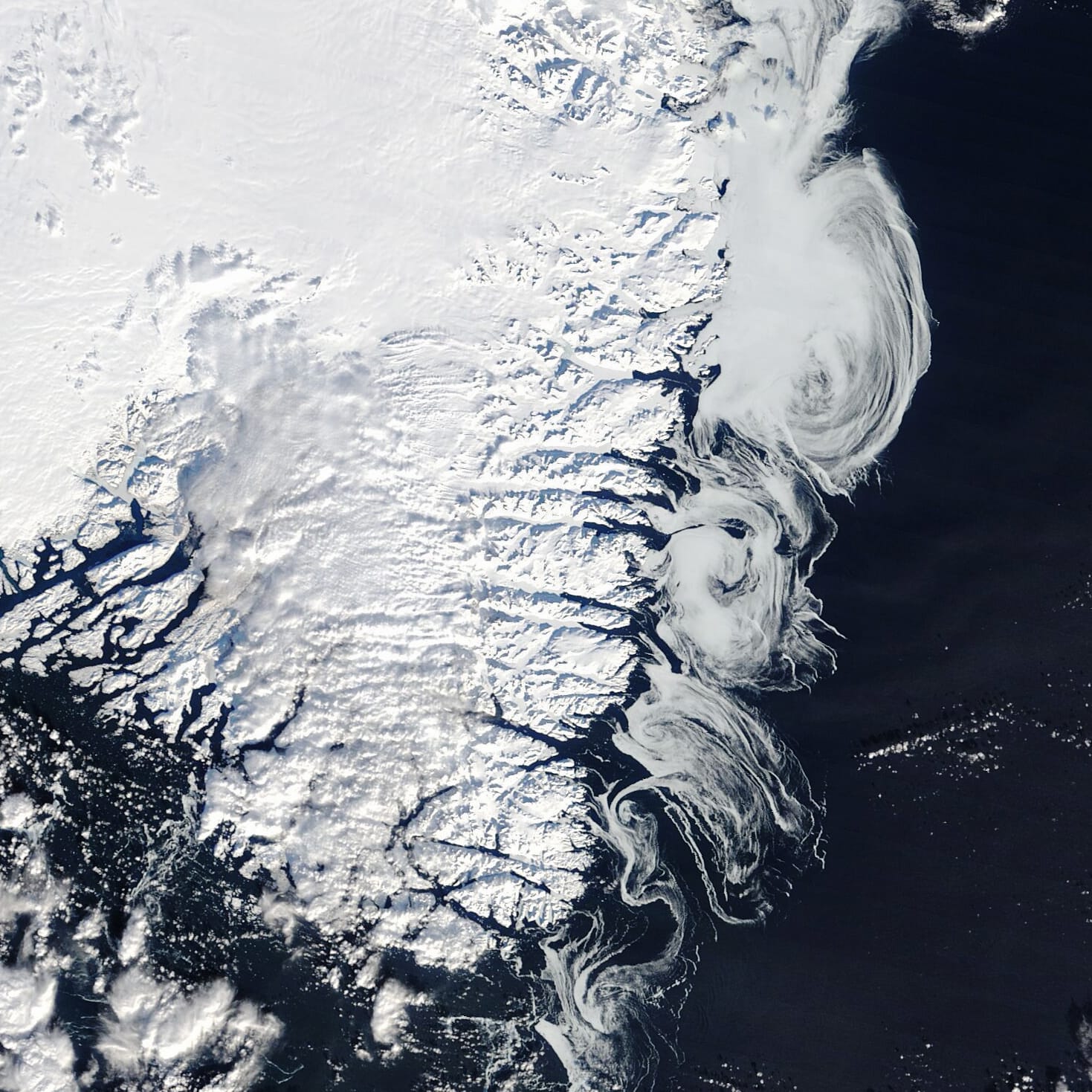
    Fresh snow shines white on the southern end of Greenland in this satellite image, taken in late February 2025. Whorls of sea ice sit off the coast, where they trace out patterns that reflect the winds and ocean currents of the region. Arctic sea ice typically reaches its largest extent by early March before experiencing a long season of melting. Both the presence and absence of sea ice have a large effect on the Arctic regions. Sea ice helps dampen wave activity; without it, seas are higher and more dynamic, creating more aerosols that seed cloud cover in the Arctic and elsewhere. (Image credit: L. Dauphin; via NASA Earth Observatory)

    Fediverse Reactions
  • “500,000-km ย Solar Prominence Eruption”

    “500,000-km ย Solar Prominence Eruption”

    It’s difficult at times to fathom the scale and power of fluid dynamics beyond our day-to-day lives. Here, twists of the Sun‘s magnetic field propel a jet of plasma more than 500,000 kilometers out from its surface in an enormous solar prominence eruption. To give you a sense of scale for this random solar burp, that’s bigger than ten times the distance to satellites in geostationary orbit. (Image credit: P. Chou; via Colossal)

  • The Balvenie

    The Balvenie

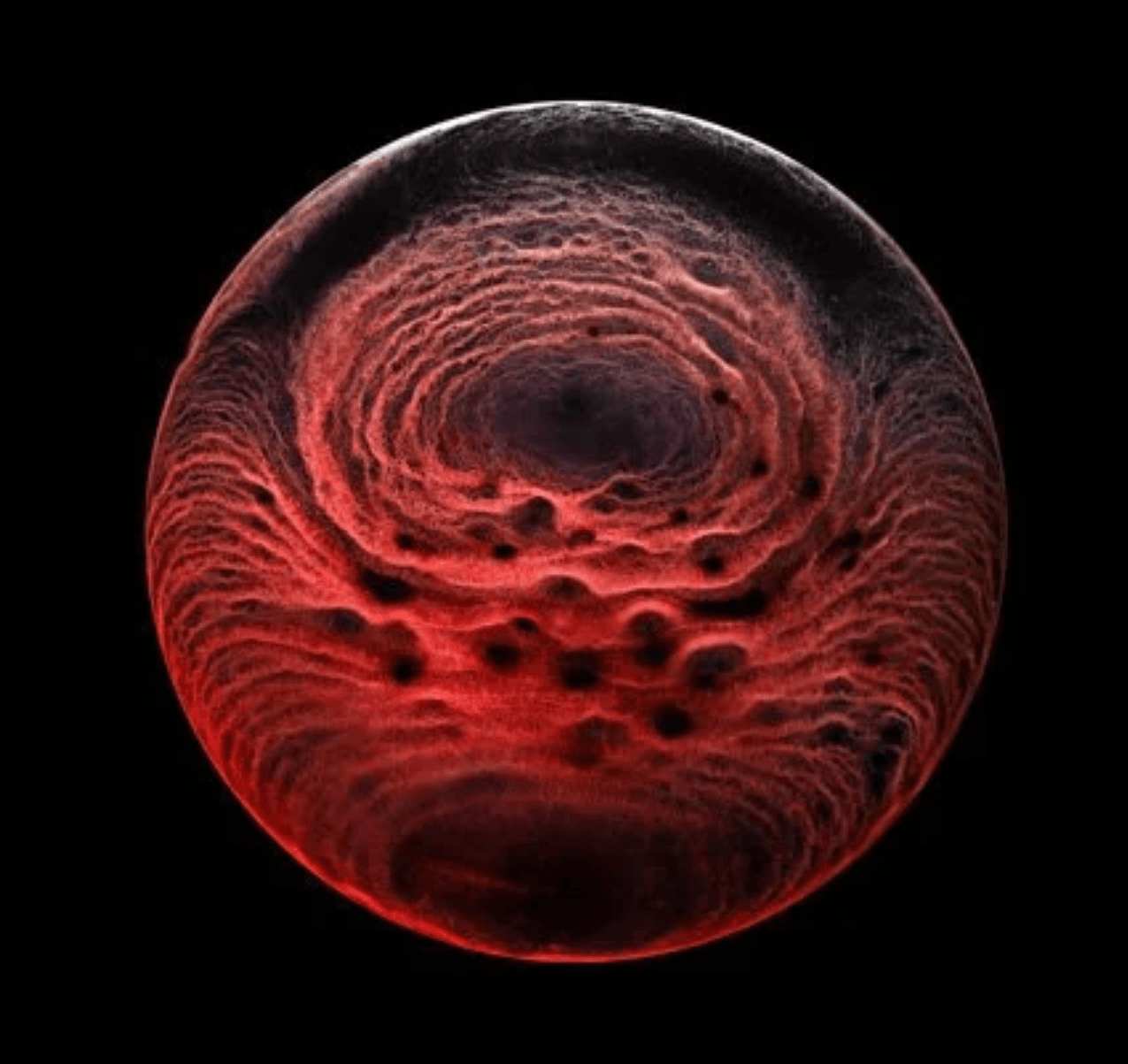
    Photographer Ernie Button explores the stains left behind when various liquors evaporate. This one comes from a single malt scotch whisky by The Balvenie. The stain itself is made up of particles left behind when the alcohol and water in the whisky evaporate. The pattern itself depends on a careful interplay between surface tension, evaporation, pinning forces, and internal convection as the whisky puddle dries out. (Image credit: E. Button/CUPOTY; via Colossal)

    Fediverse Reactions
  • Featured Video Play Icon

    How to Keep Water From Freezing

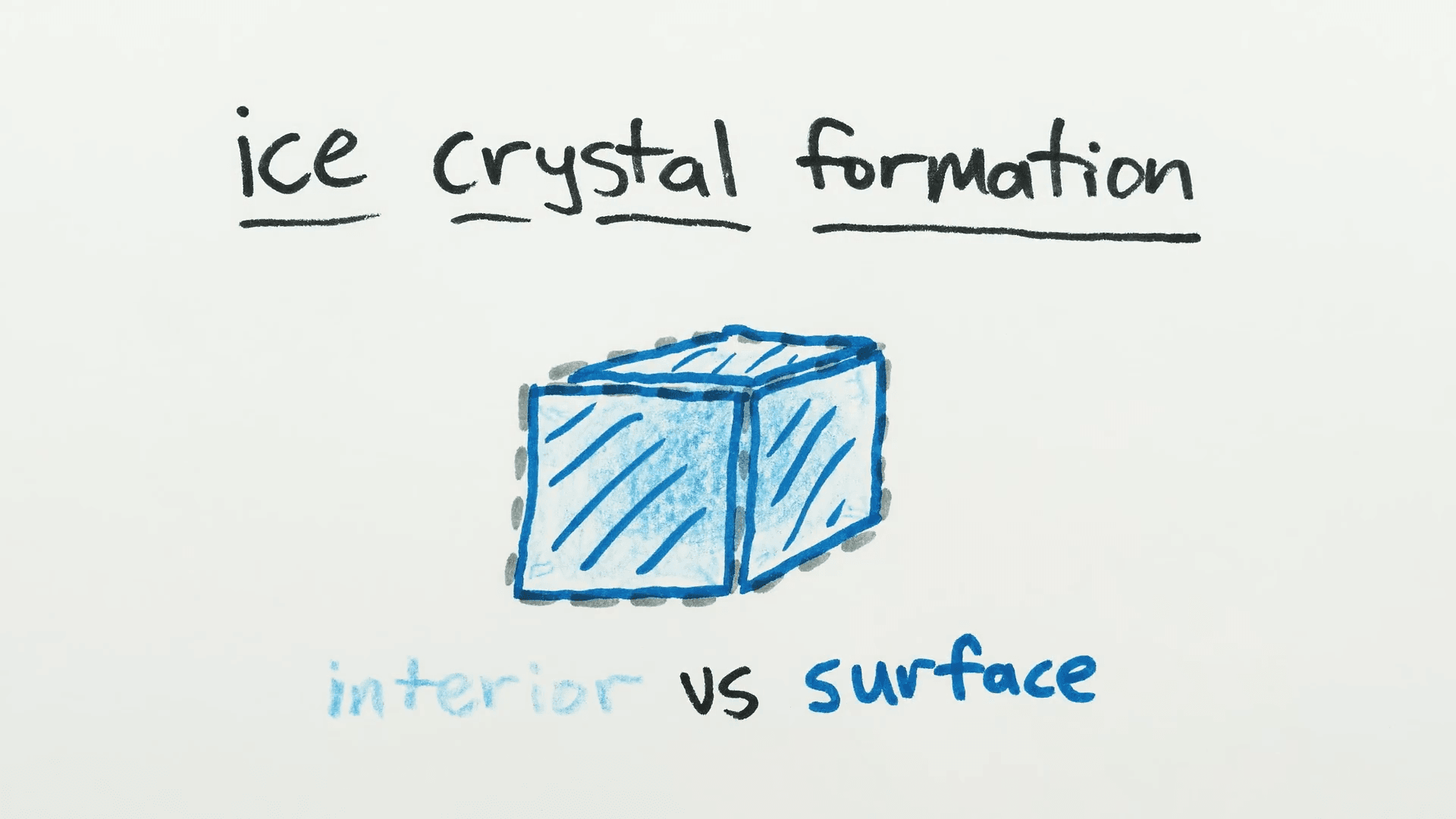
    When supercooled, water can remain a liquid even below its freezing point. As explained in this Minute Physics video, this happens because of a tug-of-war between effects in the water. Generally speaking, having impurities in the water or smacking the bottle will shift that battle enough for freezing to win out. But it’s possible–theoretically, at least–to create a situation where supercooled water can never freeze. (Video and image credit: Minute Physics)

    Fediverse Reactions
  • Deep Breaths Renew Lung Surfactants + A Special Announcement

    Deep Breaths Renew Lung Surfactants + A Special Announcement

    Taking a deep breath may actually help you breathe easier, according to a new study. When we inhale, air fills our alveoli–tiny balloon-like compartments within our lungs. To make alveoli easier to open, they’re coated in a surfactant chemical produced by our lungs. Just as soap’s surfactant molecules squeezing between water molecules lowers the interface’s surface tension, our lung surfactants gather at the interface and lower the surface tension, making alveoli easier to inflate.

    But things are a little more complicated in our lungs than in our kitchen sink because of our constant cycle of breathing, which stretches and compresses our lungs’ surfaces and surfactant layers. Imagine a flat interface, lined with surfactant molecules; then stretch it. As the interface stretches, gaps open between the surfactant molecules and allowing molecules from the interior of the liquid to push their way to the newly stretched interface, changing the surface tension. If the interface gets compressed, some of the excess molecules will get pushed back into the liquid bulk.

    In looking at how lung surfactants respond to these cycles of compression and stretching, the researchers found that the lung liquid develops a microstructure during cycles of shallow breathing that makes the surface tension higher, thus making lungs harder to fill. In contrast, a deep breath like a sigh replenished the saturated lipids at the interface, lowering surface tension and making lungs more compliant. So a deep sigh actually can help you breathe easier. (Image credit: F. Mรธller; research credit: M.. Novaes-Silva et al.; via Gizmodo)

    P.S.I’ve got a book (chapter)! Several years ago, I joined an amazing group of women to write two books (one for middle grades and one for older audiences) about our journeys as scientists. And they are out now! In fact, today we’re holding a “Book Bomb” where we aim for as many of us as possible to buy the book(s) on the same day. If you’d like to join (and get ahead on your gift shopping), here are (affiliate) links:

    Fediverse Reactions
  • Spores Get a Lift

    Spores Get a Lift

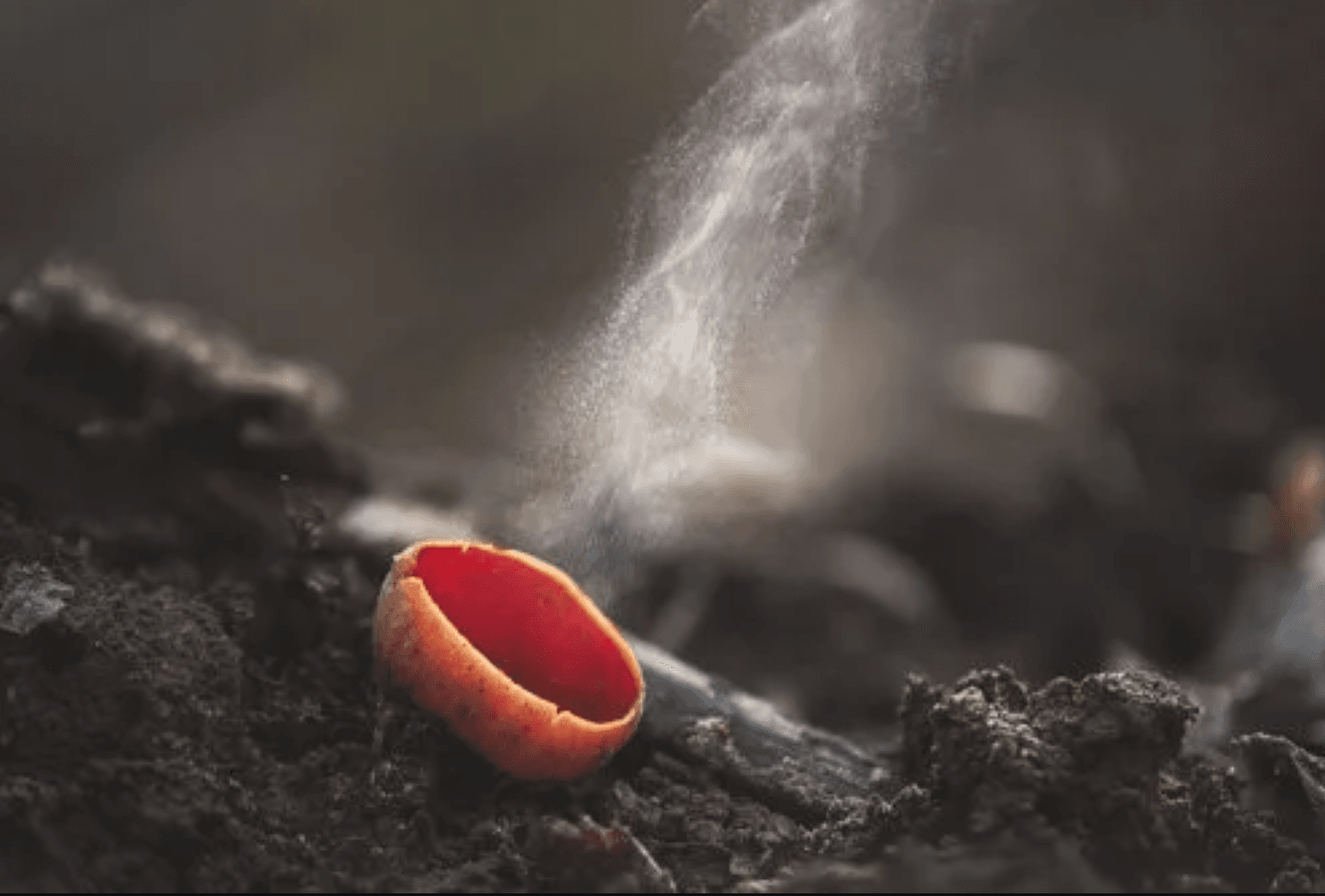
    Mushrooms have the challenging task of dispersing spores, typically from heights no more than a few centimeters above the ground. At that altitude, viscosity and friction with the ground mean that air barely moves, if it does at all. And mushrooms rely on a wide range of methods, from explosive launches to rain assistance to making their own weather. Every one of these methods gives spores a lift in altitude to reach higher winds and greater dispersal. (Image credit: A. Bejczi/CUPOTY; via Colossal)

  • A Rough Day

    A Rough Day

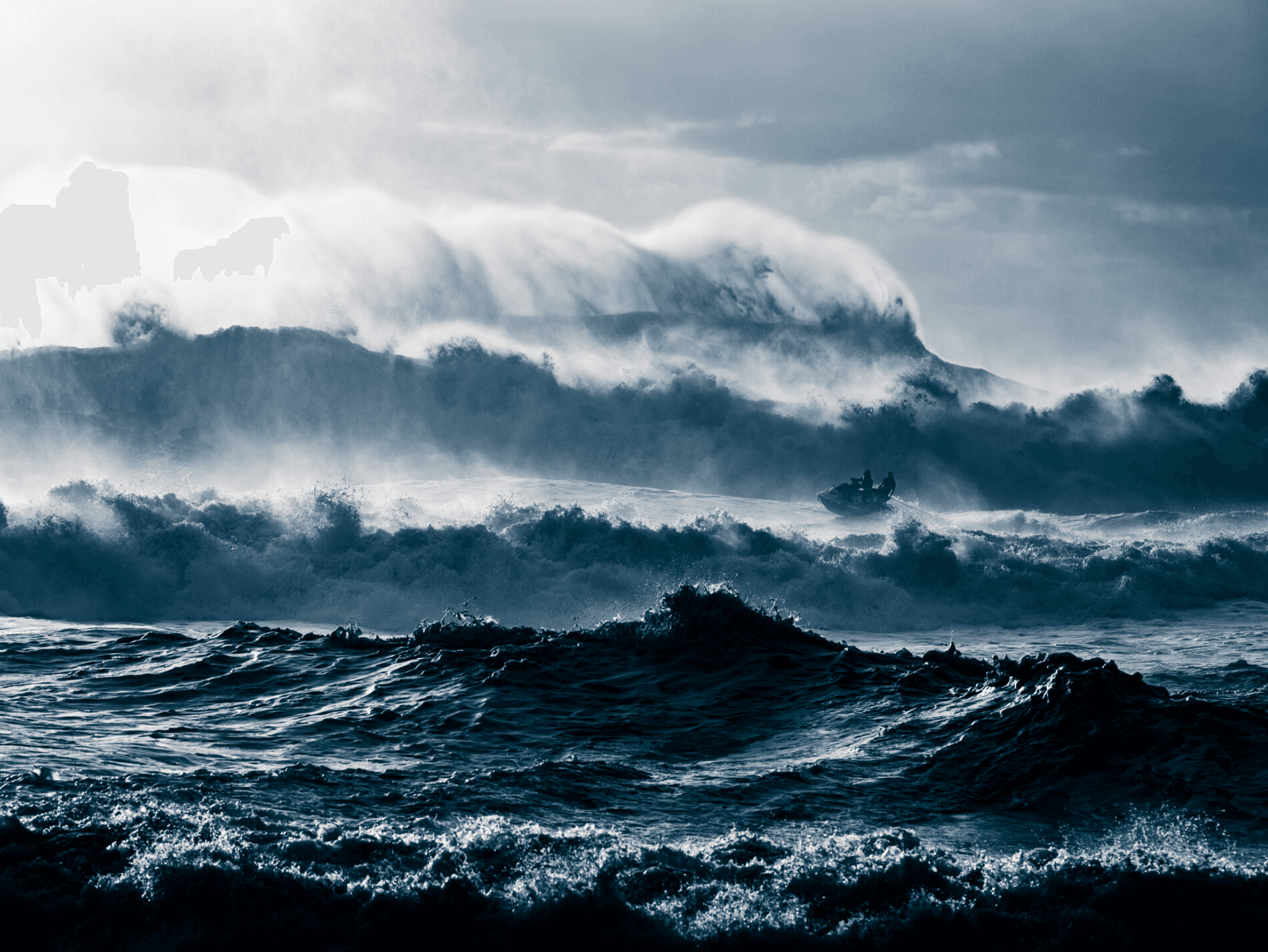
    Winds from the north made for wild conditions at Nazarรฉ in Portugal. Photographer Ben Thouard caught these crashing waves in the late afternoon, when the low sun angle illuminated the spray of the surf. Every year teratons of salt and biomass move from the ocean to the atmosphere, much of it through turbulent wave action driven by the wind. Here, the wind rips droplets off of wave crests, but smaller droplets reach the atmosphere when bubbles–trapped underwater by crashing waves–reach the surface and burst. (Image credit: B. Thouard/OPOTY; via Colossal)

    Fediverse Reactions