Tag: science

  • Dune Invasion

    Dune Invasion

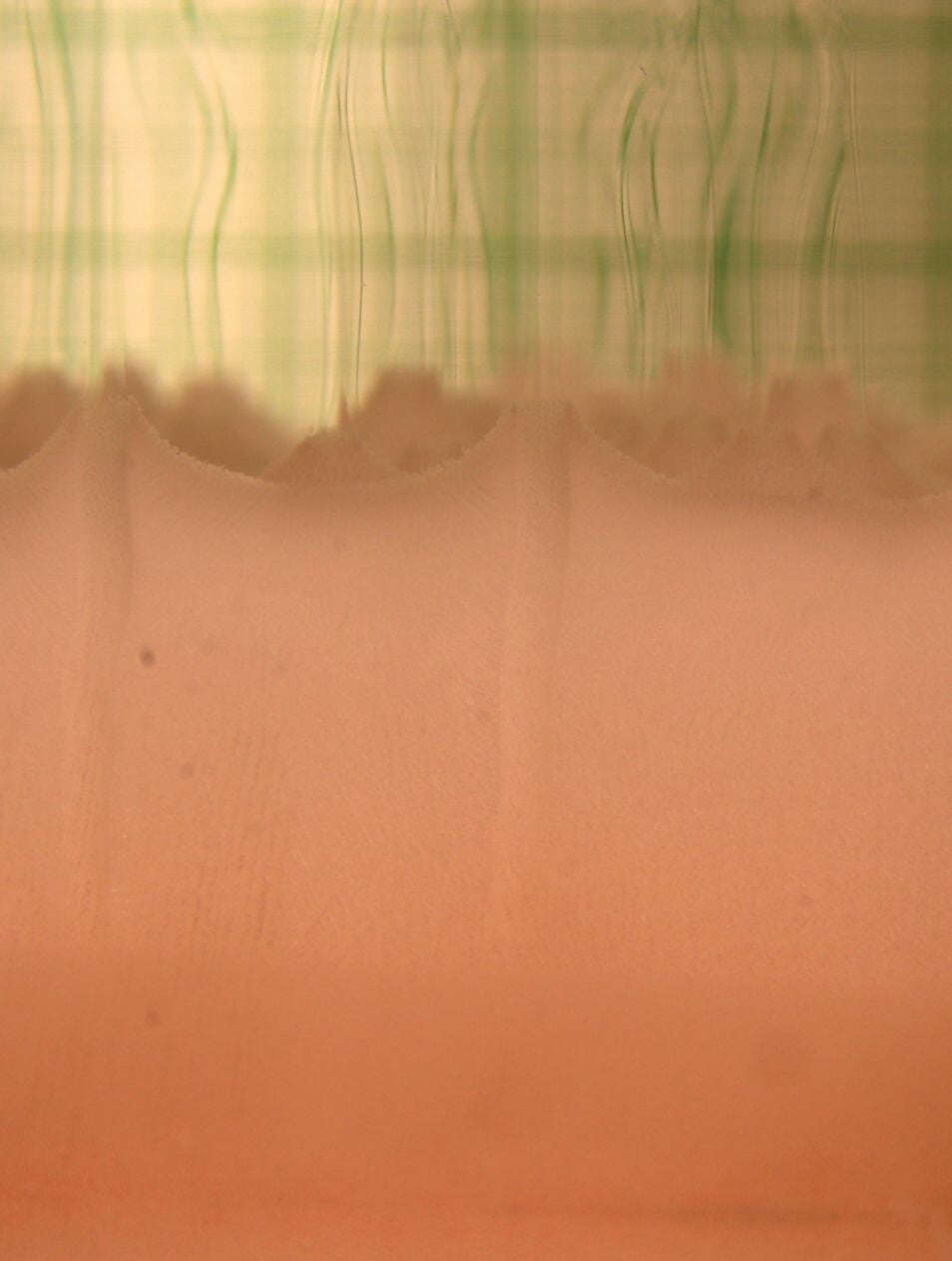
    Migrating sand dunes can encounter obstacles both natural and manmade as they move. Dunes — both above ground and under water — have been known to bury roads, pipelines, and even buildings. A recent experimental study looks at which obstacles a dune will cross and which will trap it in place. Their set-up consists of a narrow channel built in a ring, essentially a racetrack for dunes. Flow is driven by a series of paddles that rotate opposite the tank’s rotation.

    The team studied obstacles of different shapes and sizes relative to their dunes, and they found that dunes were generally able to cross obstacles that were smaller than the dune. Obstacles larger than the dune would trap it in place, and, for obstacles close to the same size as the dune, round obstacles were easier to cross whereas sharp-angled ones tended to trap the dune.

    The idealized nature of their experiment means that their results aren’t immediately applicable to the complex dunes of the outside world, but the study will be an important touchstone for those predicting dune behavior through numerical simulation. Studies like those require experimental cases to validate their baseline simulations. (Image credit: top – J. Bezanger, figure – K. Bacik et al.; research credit: K. Bacik et al.; via APS Physics)

    A quasi-2D underwater dune interacts with an obstacle.
  • Featured Video Play Icon

    On the Butterfly Effect

    Fluid dynamics is a veritable playground of chaotic systems, but that doesn’t always translate to easy explanations, as Henry Reich points out in this Minute Physics video. The common metaphor for chaos is the Butterfly Effect, an idea that a butterfly flapping its wings causes a typhoon on the other side of the world. I agree with Henry that this is a poor example of chaos, for many of the same reasons he lays out. In reality, we call a system chaotic when its outcome is so sensitive to the initial conditions that the result becomes effectively unpredictable. And there are some very simple systems that are chaotic, like a double pendulum or a three-body problem. The weather is, honestly, too complicated of a system for the metaphor to make sense, but fluid dynamics does have other, simpler examples, like mixing in porous media, bouncing droplets, or, my personal favorite, the fluid dynamical sewing machine. (Video credit: Minute Physics)

  • Stormy Landscapes

    Stormy Landscapes

    Photographer Mitch Dobrowner captures the power of major storm systems across the western United States and Canada in these dramatic black-and-white images. Misty clouds, massive downpours, bulbous mammatus clouds, and lonely landscapes abound. You can find more of his work on his website and Instagram. (Image credit: M. Dobrowner; via Colossal)

  • Marshland Wave Damping

    Marshland Wave Damping

    Coastal marshes are a critical natural defense against flooding. The flexible plants of the marsh both slow the water’s current and help damp waves. As a result of that hydrodynamic dissipation, marshes help protect against erosion and reduce the magnitude of flooding events. But coastal managers looking to maintain or improve their marshes in order to mitigate climate-change-driven storms need to be able to predict what level of vegetation they need.

    To that end, a team of researchers has built a new model to better capture the flow effects of marsh grasses. Building from an individual, flexible plant (as opposed to a rigid cylinder, as grass is often represented), the authors constructed a model able to predict wave dissipation for many marsh configurations, which should help better predict the infrastructure changes needed in different coastal regions. (Image credit: T. Marquis; research credit: X. Zhang and H. Nepf; via APS Physics)

  • Featured Video Play Icon

    Siberia’s Lena River Delta

    As rivers near the sea, they often slow down and branch out, creating intricate paths through delta wetlands. This video explores the Arctic’s largest river delta, that of the Lena River in Siberia, during its spring and summer flood season. The images were all taken by satellite and processed with color enhancements to highlight patterns in the water. Although this is not quite how the area would appear by eye, all of the visible patterns are real. (Image credit: N. Kuring/NASA’s Ocean Color Web; video credit: K. Hansen; via NASA Earth Observatory)

    Enhanced color satellite image of the Lena River delta in Siberia.
  • Cloud-Making Waves

    Cloud-Making Waves

    As sea ice disappears in the Arctic Ocean, it leaves behind higher waves on the open water. These large waves help inject sea salt and organic matter into the atmosphere, where they can serve as nucleation sites for ice crystals. A recent field expedition in the Chukchi Sea observed high concentrations of organic particulates in the air and more ice-producing clouds during periods of high wave action. So, oddly enough, the loss of sea ice may lead to more cloud cover and precipitation in the Arctic (though the effect is likely not strong enough to entirely mitigate the effects of ice loss). It’s another example of the intricate and complex connections between ice, ocean, and atmosphere in the Arctic climate. (Image credit: A. Antas-Bergkvist; research credit: J. Inoue et al.; via Gizmodo)

  • Featured Video Play Icon

    Making Lava Lamps

    Since their invention in the 1960s, lava lamps have been a fascinating example of convection in action. In this video, we see how they’re manufactured, including blowing the glass bottles, shaping the metal holder, and filling the lamps. The key to the lamp’s performance is the delicate thermal balance of its two liquids. As the waxy liquid warms, it floats up the lamp until it reaches the top, cools, and sinks back down to begin again. The exact formulation of the liquids is a closely guarded secret! Want more lava lamps? Check out how a wall of them help secure Internet traffic. (Image and video credit: Business Insider)

  • Featured Video Play Icon

    Making Horsehair Pottery

    Native American potter Eric Louis combines traditional and modern techniques in his horsehair pottery. Like his mother and grandmother before him, he collects local clay and pottery shards to make the slip that forms his pieces. After molding and an initial firing in a kiln, he uses wood chips to keep the pottery hot while he applies horsehair. The hair ignites and carbonizes, leaving behind distinctive patterns in the clay that create a backdrop for his etchings. See more of his finished work here. (Image and video credit: Insider)

  • Hagfish Slime

    Hagfish Slime

    The eel-like hagfish is a superpowered escape artist, thanks to its slime. When threatened, the hagfish releases long protein-rich threads that, when combined with turbulent sea water, unravel to form large volumes of viscoelastic slime that clog the gills of its predators. A new study shows that larger hagfish produce longer and thicker threads in their slime, enabling them to escape larger predators than their smaller brethren can.

    The properties of hagfish slime are tuned for defense. When stretched, the long protein threads resist, making the slime more viscous. Since most fish use suction methods to catch prey, that means a predator attacking a hagfish will quickly exacerbate its slimy problems. But the hagfish itself can easily escape its slime by tying itself in a knot. The threads inside the slime collapse when sheared, so the knot-tying of the hagfish slips the slime right off. (Image credit: T. Winegard; research credit: Y. Zeng et al.; via Ars Technica; submitted by Kam-Yung Soh)

  • Featured Video Play Icon

    Paint Spinning

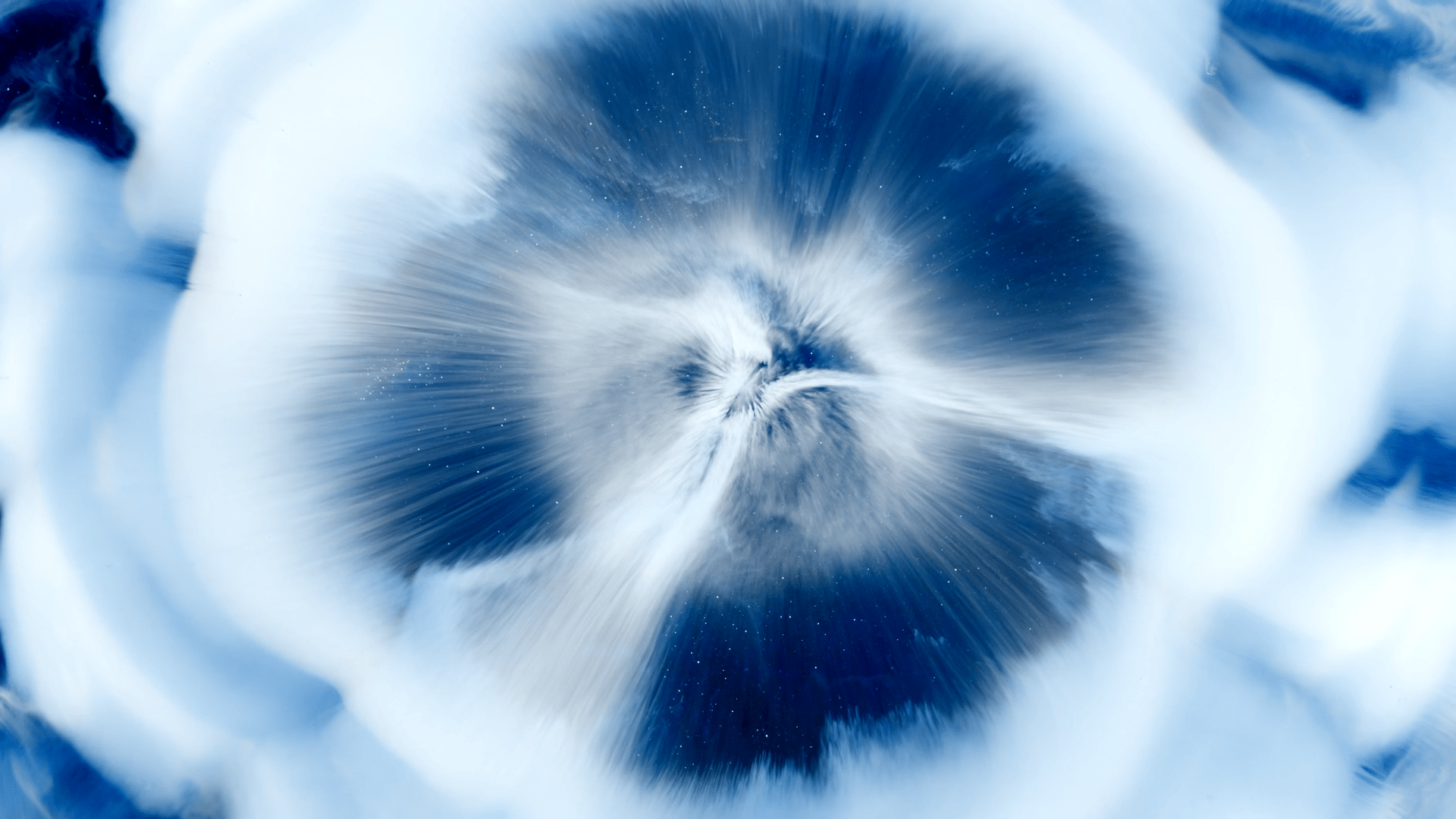
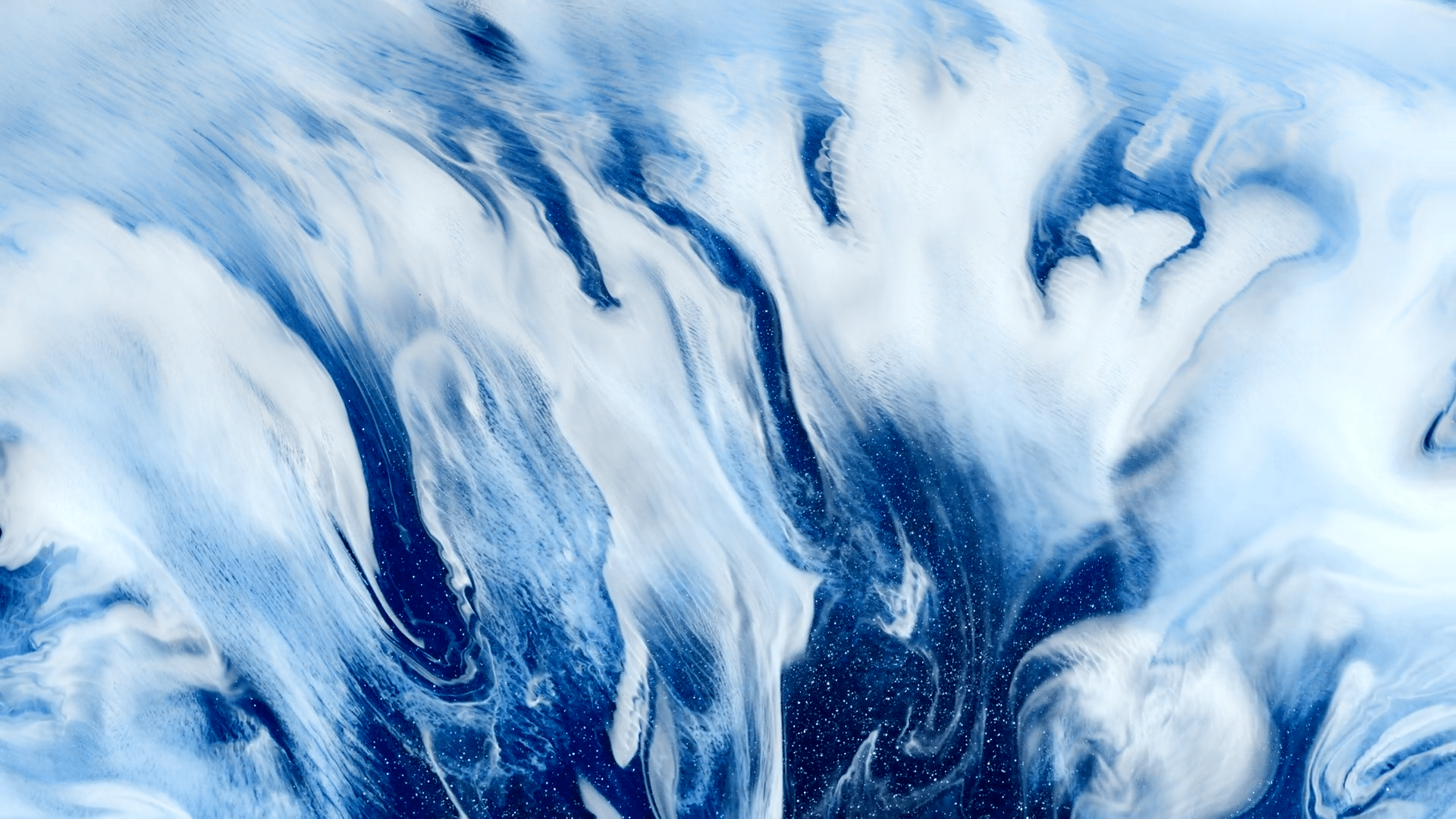
    In a return to their roots, this Slow Mo Guys video features paint flowing on (and off!) a spinning disk. To help us see what’s going on, Gav uses a trick that’s familiar to many fluid dynamicists: he rotates the high-speed footage at the same speed that the disk rotates. This transformation places the viewer into a reference frame where the disk appears stationary, so that small changes in the flow are apparent.

    It makes for a gorgeous view as centrifugal force flings the paint outward and eventually breaks it into drops. The rotation speed is unfortunately so high that the spinning completely dominates all other forces. The few runs with more viscous acrylic paint show some hints of more interesting behaviors that might be visible with a slower rotation rate (which would make the tug of war between inertia/viscosity/surface tension and centrifugal force less one-sided). Anyone got a high-speed camera, some speed control, and a willingness to get messy? (Image and video credit: The Slow Mo Guys)