Tag: rivers

  • Mardi Gras Pass

    Mardi Gras Pass

    The mighty Mississippi River has long been bound by humanity’s efforts. To keep the river in place and control its flooding, engineers have built levees, canals, and other structures. But those efforts have come with costs. Where the wild Mississippi used to deposit sediment and build new land, the bound river sends its sediment out to sea, contributing to wetland erosion. But sometimes the river still exerts its own control.

    In 2012, around the time of Mardi Gras, the river broke through its eastern bank (near an existing canal) and created a new channel to the Gulf of Mexico. Known as Mardi Gras Pass, this distributary waterway now contributes fresh sediment, nutrients, and water to the Louisiana wetlands. Despite its small size, observations indicate that the Mardi Gras Pass is, indeed, helping to build new land in the area. (Image credit: J. Stevens; via NASA Earth Observatory)

  • Ancient River Branch Discovered Near Giza Pyramids

    Ancient River Branch Discovered Near Giza Pyramids

    Today the pyramid complex at Giza sits kilometers from the Nile River, raising longstanding questions about how ancient builders moved the enormous stones that make up each structure. A new study using radar satellite imagery, geophysical data, and deep soil coring identified a previously unknown ancient branch of the Nile that ran alongside the Giza Pyramids as well as pyramids at sites to the south. The team’s data indicate that, during the era of the pyramids’ construction, the river would have flowed for over 60 kilometers with a maximum width of nearly 700 meters. Having such a substantial waterway right next to the pyramid sites would have drastically simplified the logistics of moving stones and workers during construction. (Image credit: A. Bichler; research credit: E. Ghoneim et al.; via My Modern Met)

  • “Earth’s Treasure”

    “Earth’s Treasure”

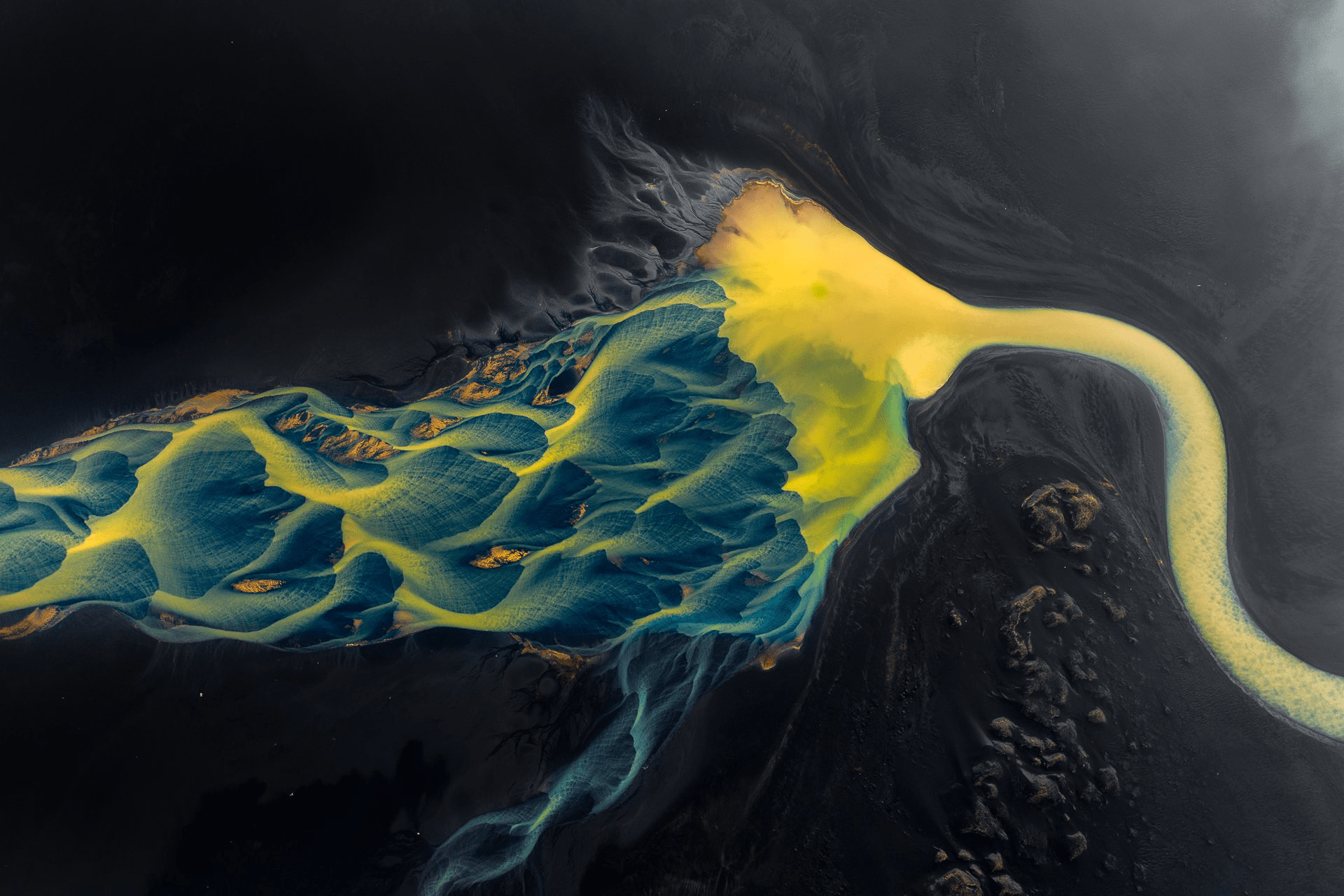
    Streams of blue and yellow braid across Iceland’s volcanic landscape in this award-winning photo from Miki Spitzer. Glacial water shows an icy blue and sediments glisten in gold. Together, their interplay creates an arresting delta viewed from above. (Image credit: M. Spitzer; via WNPA)

  • Featured Video Play Icon

    “Serenity”

    Peering from directly above, landscapes take on a whole different aspect. That idea is the heart of Vadim Sherbakov’s “Serenity,” filmed by drone. From seething waters and meandering rivers to eroded landscapes and twisting ice, there’s lots of fluid dynamics on display here. (Video and image credit: V. Sherbakov)

    Fediverse Reactions
  • Remembering Rivers Past

    Remembering Rivers Past

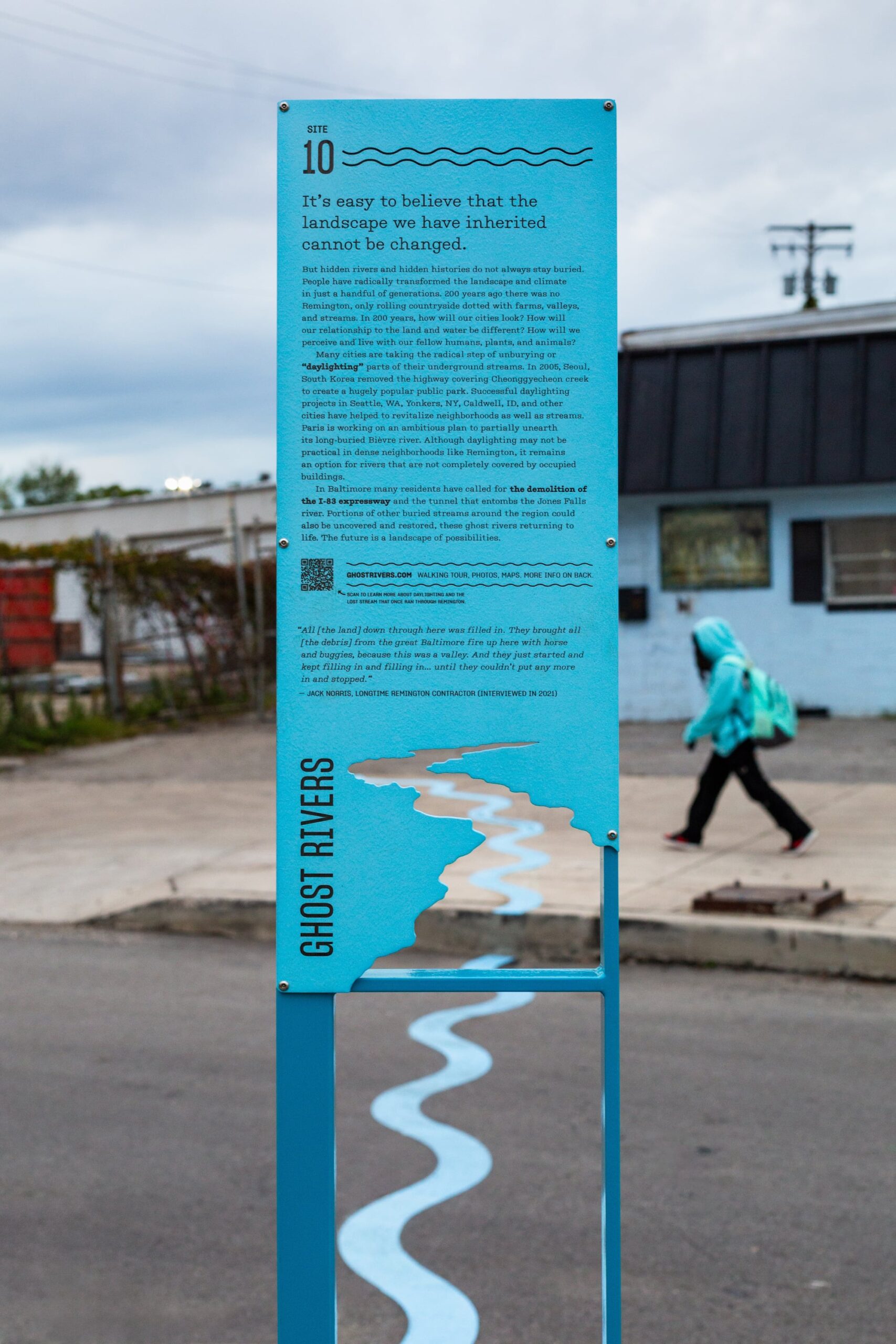
    Our landscapes have changed dramatically over the last 200 years of urban development, but traces of the land’s past still remain. Many streams and rivers that once ran on the surface persist in underground culverts. Bruce Willen’s “Ghost Rivers” installation highlights the path of one such waterway, Sumwalt Run, which flows across what is now the Remington and Charles Village neighborhoods of Baltimore. The project includes ten installations that describe the hidden water and its history as well as a wavy, blue line that marks its path. (Image credits: Public Mechanics and F. Hamilton, see alt text; installation: B. Willen; via Colossal)

  • The Best of FYFD 2023

    The Best of FYFD 2023

    A fresh year means a look back at what was popular last year on FYFD. Usually, I give a numeric list of the top 10 posts, but this year the analytics weren’t as clear. So, instead, I’m combining from a few different sources and presenting an unordered list of some of the site’s most popular content. Here you go:

    I’m really pleased with the mix of topics this year; many of these topics are straight from research papers, and others are artists’ works. At least one is both. From swimming bacteria to star-birthing nebulas, fluid dynamics are everywhere!

    If you enjoy FYFD, please remember that it’s a reader-supported website. I don’t run ads and it’s been years since my last sponsored post. You can help support the site by becoming a patronmaking a one-time donationbuying some merch, or simply by sharing on social media. And if you find yourself struggling to remember to check the website, remember you can get FYFD in your inbox every two weeks with our newsletter. Happy New Year!

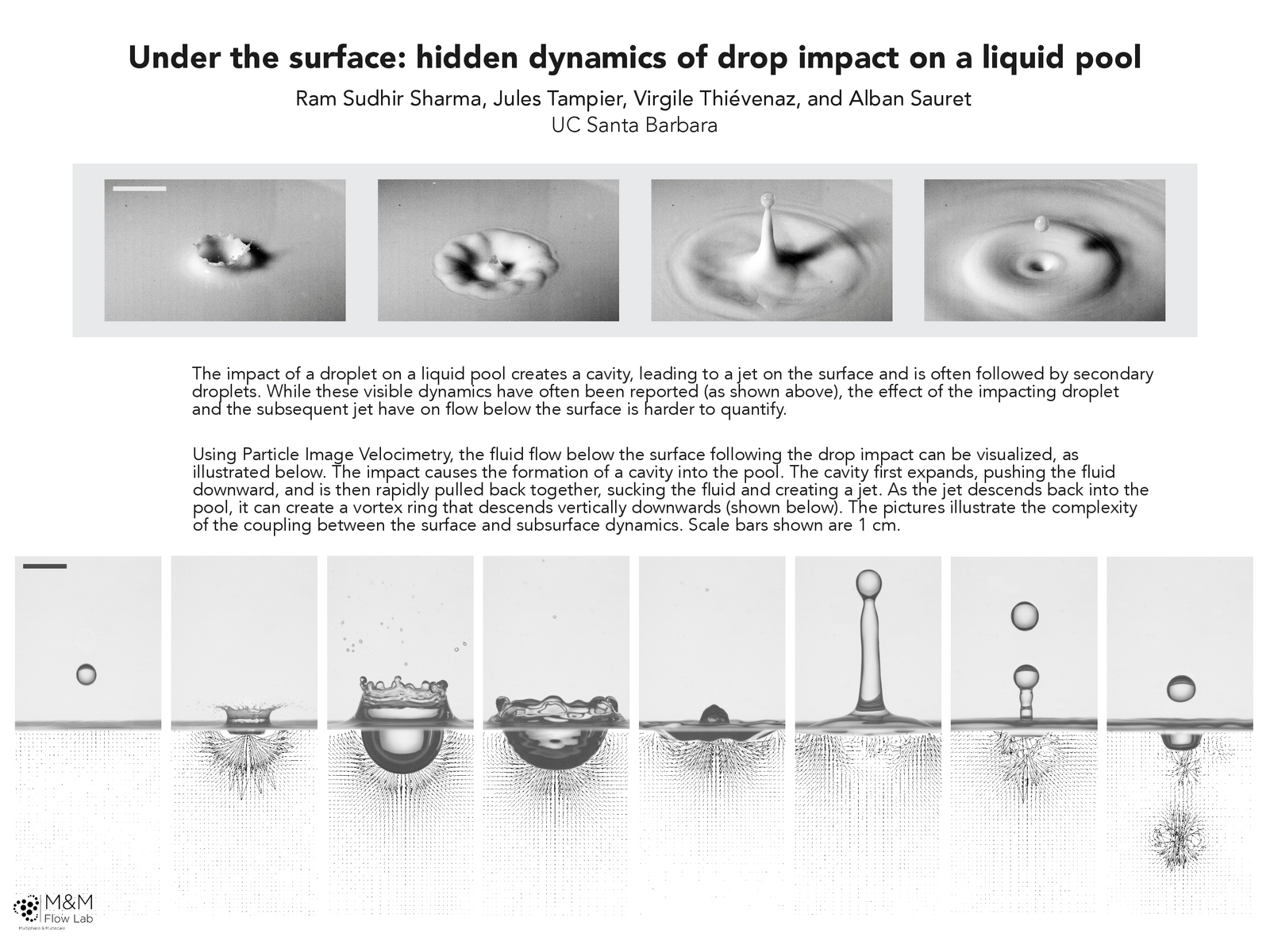
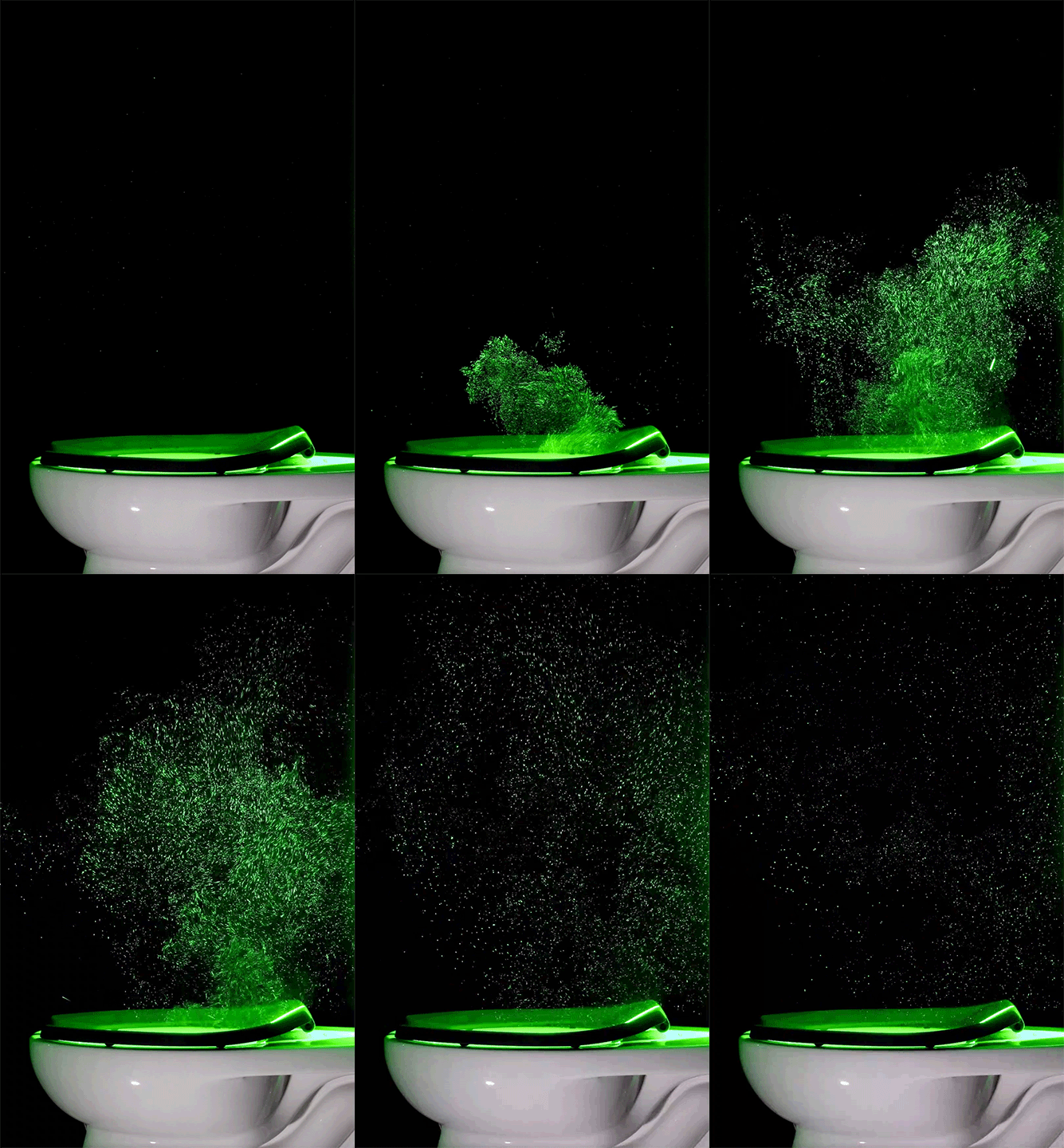
    (Image credits: sphinx – S. Boury et al., ear model – S. Kim et al., maze – S. Mould, dandelion – S. Chaudhry, water tank – P. Ammon, e. coli – R. Ran et al., drop impact – R. Sharma et al., Leidenfrost – L. Gledhill, toilet – J. Crimaldi et al., engine sim – N. Wimer et al., rivers – D. Coe, fin – F. Weston, snake – P. Schmid, nebula – J. Drudis and C. Sasse, flames – C. Almarcha et al.)

  • Ghosts of Rivers Past

    Ghosts of Rivers Past

    Artist Dan Coe uses lidar data to create portraits of rivers and their past meanders. Used aerially, lidar produces high-resolution elevation data that provides a glimpse of features that are currently hidden beneath vegetation. With rivers, this means unearthing some of their previous paths. Secondary flows in a river bend erode the bed so that the bend gets more and more strongly curved. Eventually, the river can double back on itself and cut off the long curve. Repeat that process over millennia and you wind up with the complex paths in Coe’s images. (Image credit: D. Coe; via Colossal)

  • Anabranching Riverways

    Anabranching Riverways

    The Diamantina River in Australia is dry for much of the year. But seasonal rains flood its riverbeds and provoke a bloom of vegetation along its banks. This false-color satellite image shows the river in April 2023; land appears pale and reddish, the river and its sediment blue, and vegetation a bright green. The Diamantina is an anabranching river; rather than the typical meandering paths of a delta, anabranching rivers have semi-permanent paths hemmed in by vegetation-stabilized islands. Look closely, though, and you’ll still see smaller delta-like features known as floodouts dotting some of the islands. (Image credit: A. Nussbaum; via NASA Earth Observatory)
    This close-up shows details like miniature deltas (floodouts) and wind-formed dunes.
    This close-up shows details like miniature deltas (floodouts) and wind-formed dunes.
  • Fast-Moving Martian Rivers

    Fast-Moving Martian Rivers

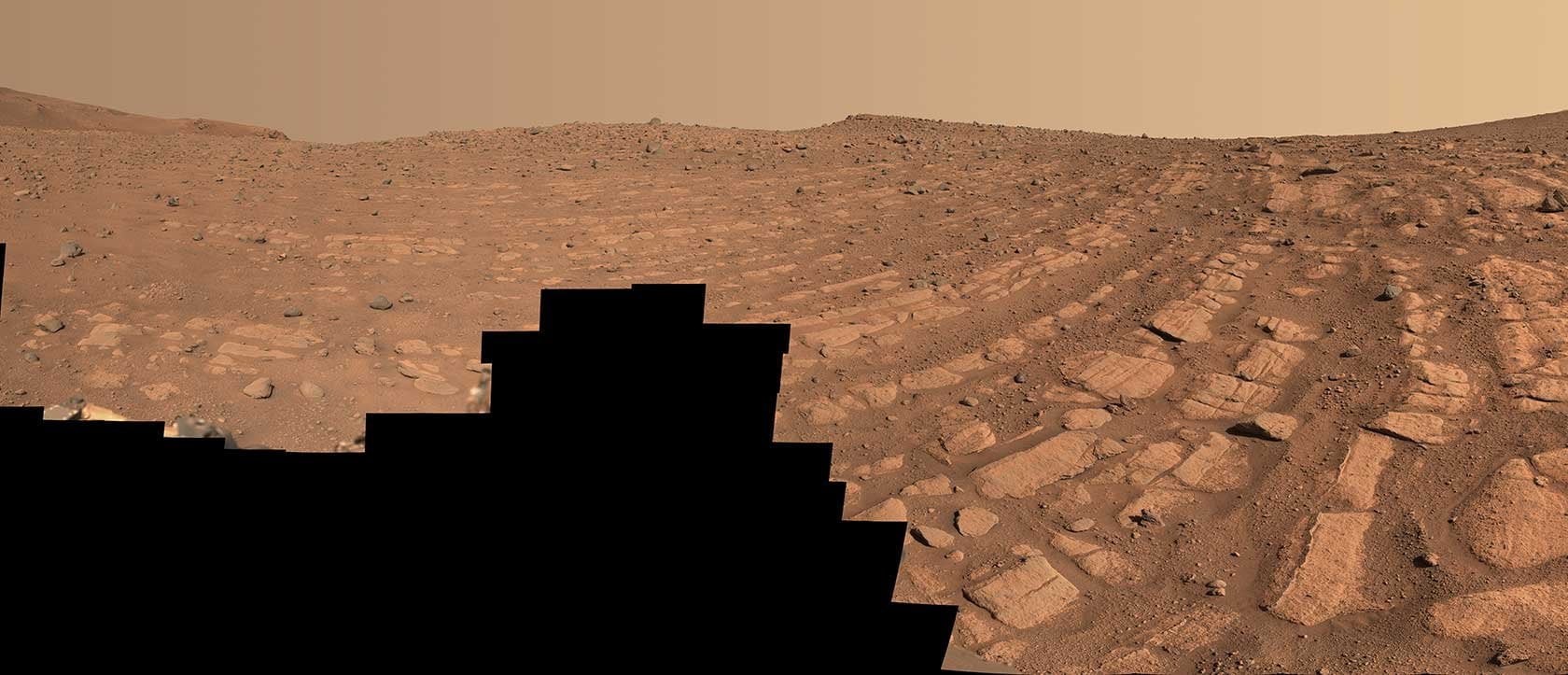
    For the first time, scientists have found evidence of deep, fast-flowing ancient rivers on Mars. After examining images taken recently by the Perseverance rover in Jezero Crater, fluvial experts have spotted familiar signs of turbulent river flow. The mosaic above shows an area nicknamed “Shrinkle Haven,” where curved bands of rock mark the landscape. Although scientists are confident that a powerful river deposited these rocks, they’re still debating whether that river was a meandering one like the Mississippi or a braided river like the Platte.

    Nicknamed "Pinestand," this hill's sedimentary layers were likely formed by a deep fast-moving river.
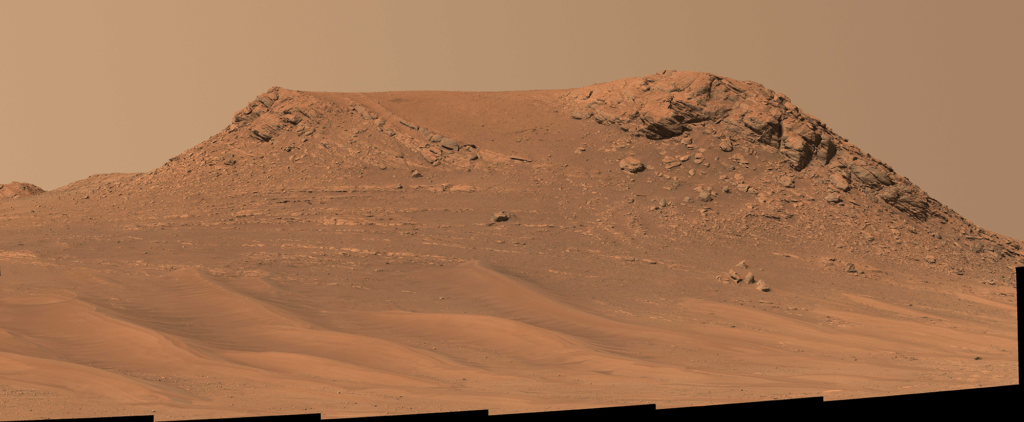
    Nicknamed “Pinestand,” this hill’s sedimentary layers were likely formed by a deep, fast-moving river.

    In another area, known as “Pinestand,” scientists spotted hills as high as 20 meters tall with clear sedimentary layers. Like Shrinkle Haven’s rock bands, formations like this are most often associated with a large, fast-flowing river. (Image credits: NASA/JPL-Caltech/ASU/MSSS; via Gizmodo; see also NASA JPL)

  • Featured Video Play Icon

    Why We Can’t Control Rivers

    Rivers are systems in a constant state of change, balancing flow speeds, path length, sediment deposition, and erosion, as seen in this previous Practical Engineering video. The next video in this mini-series considers what human interventions do to rivers. As convenient as it is for humanity to force a river into a straight and constant course, the long-term effects can be incredibly destructive both upstream and downstream.

    In this video, Grady takes a look at several types of interventions: stream straightening, dams, river crossings, and more. With the help of a stream table, he demonstrates just how these efforts shift the river’s balance and what effects — in terms of erosion, deposition, and flooding — each can cause. These disadvantages, along with habitat destruction, are part of why stream remediation projects are on the rise. (Video and image credit: Practical Engineering)