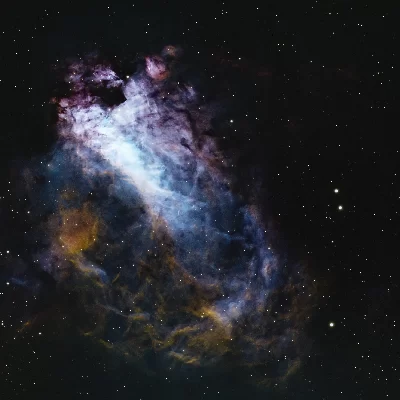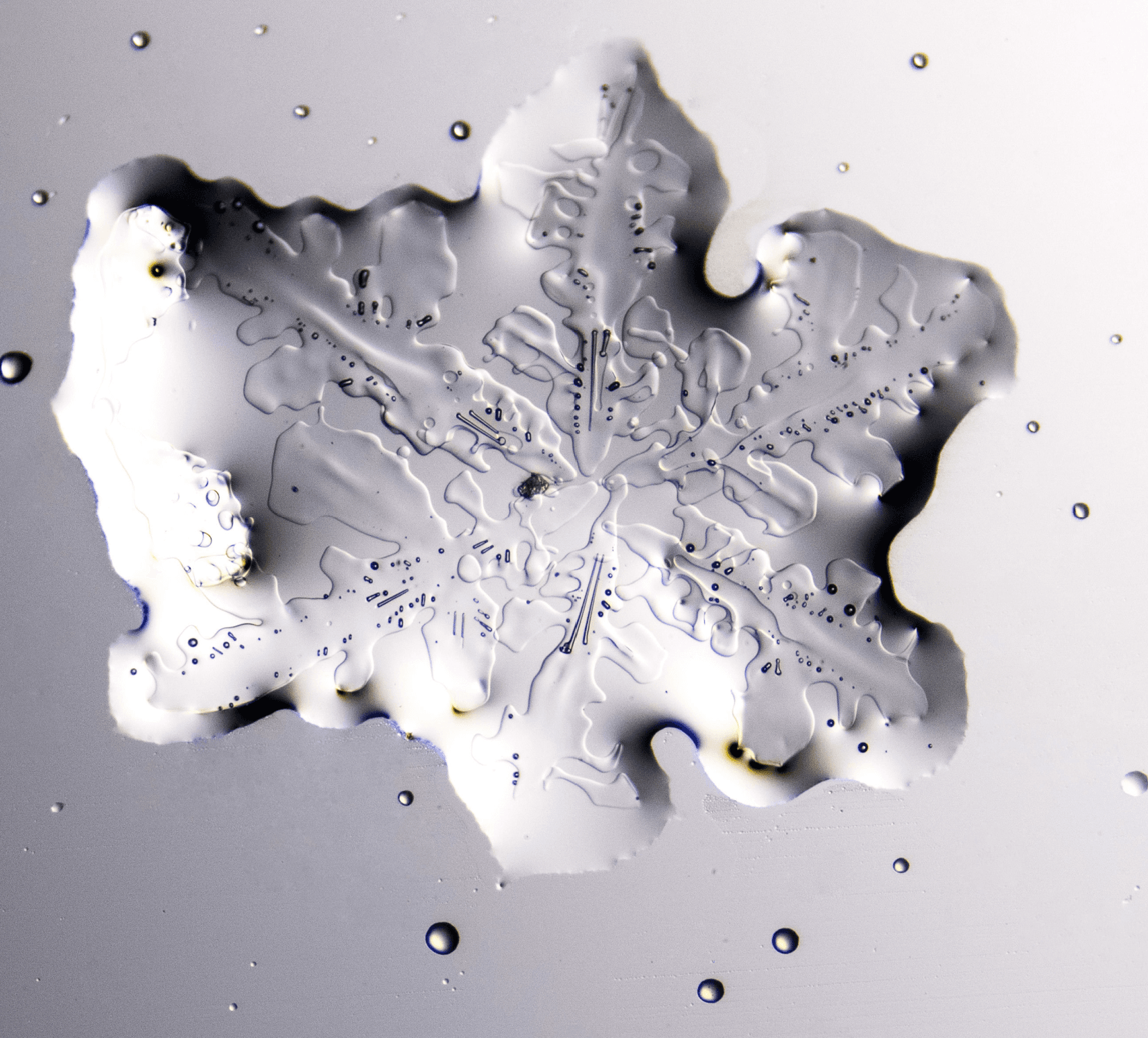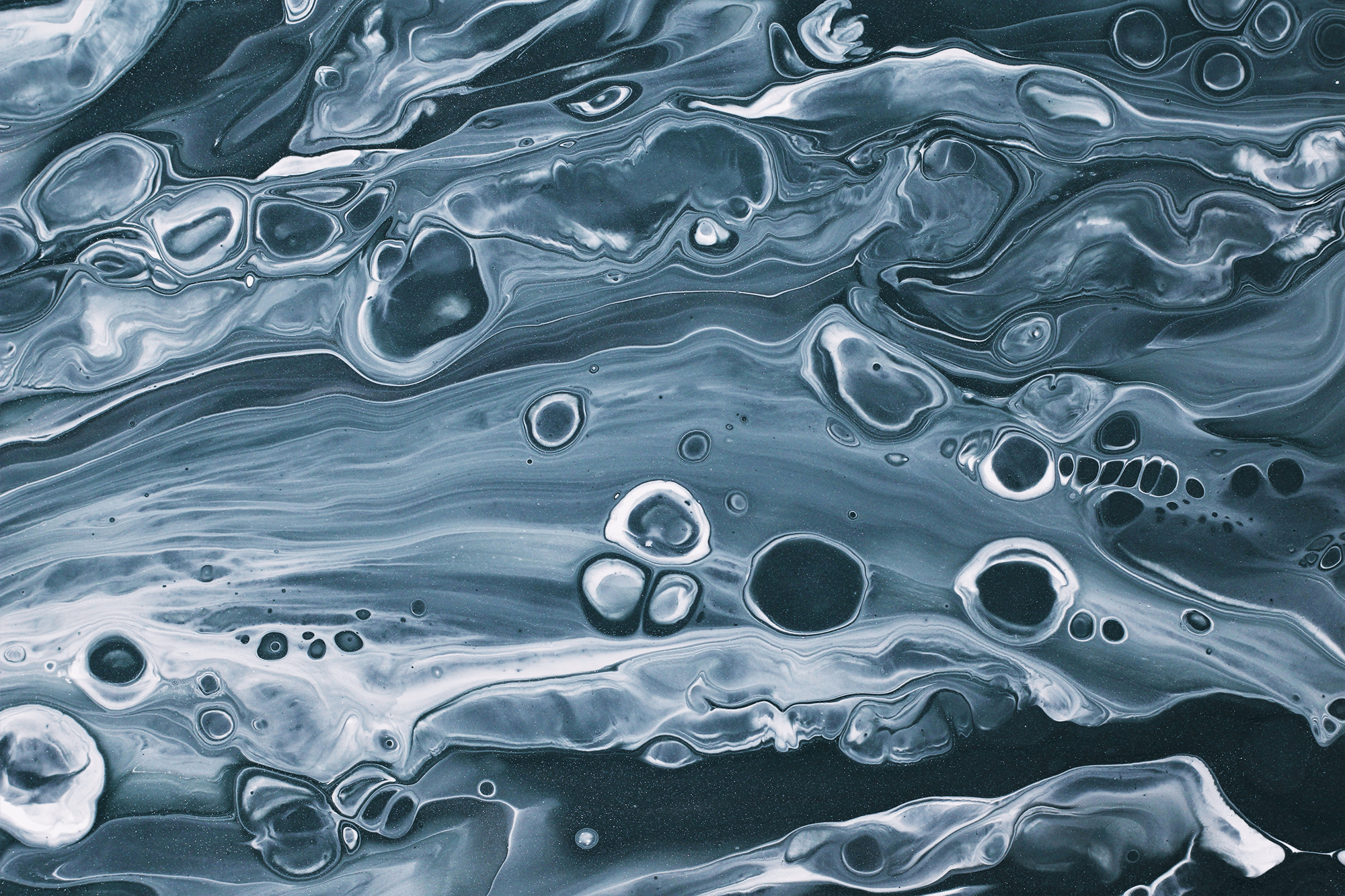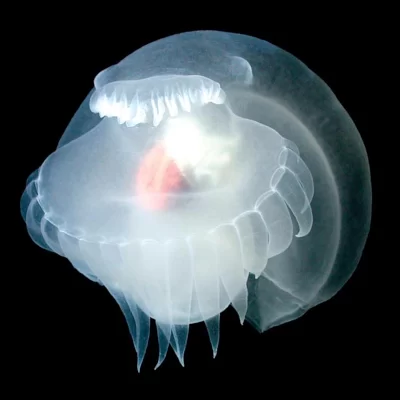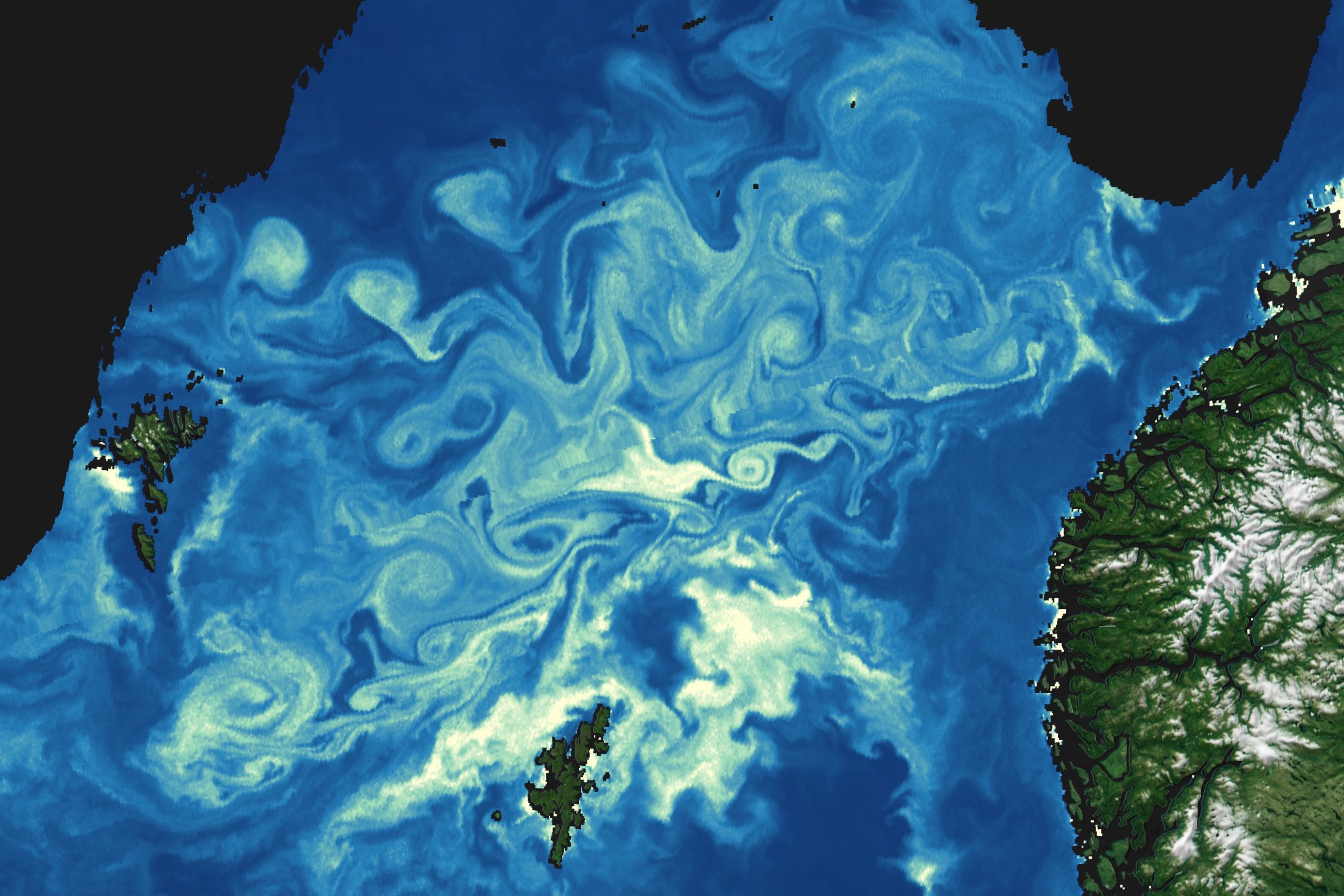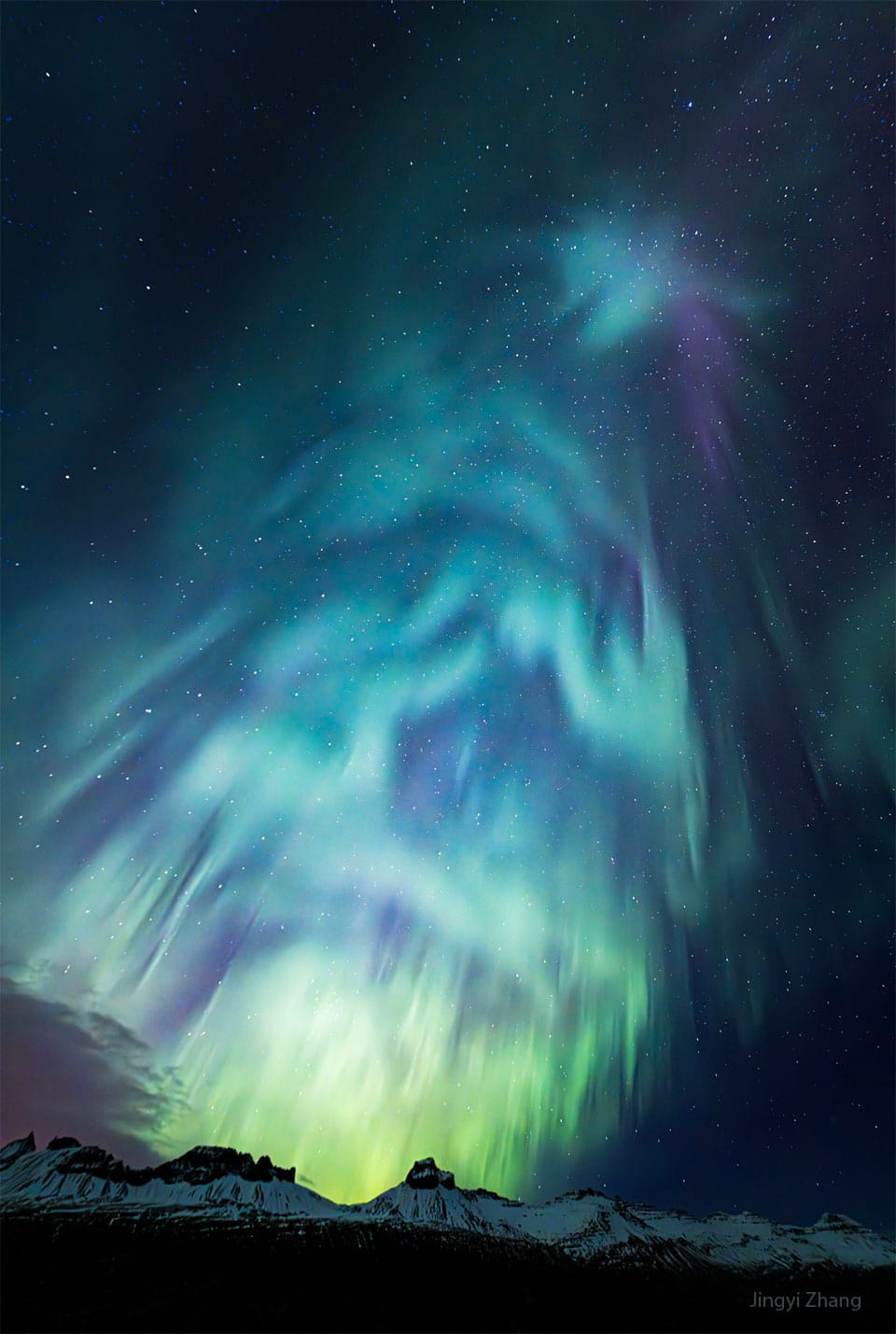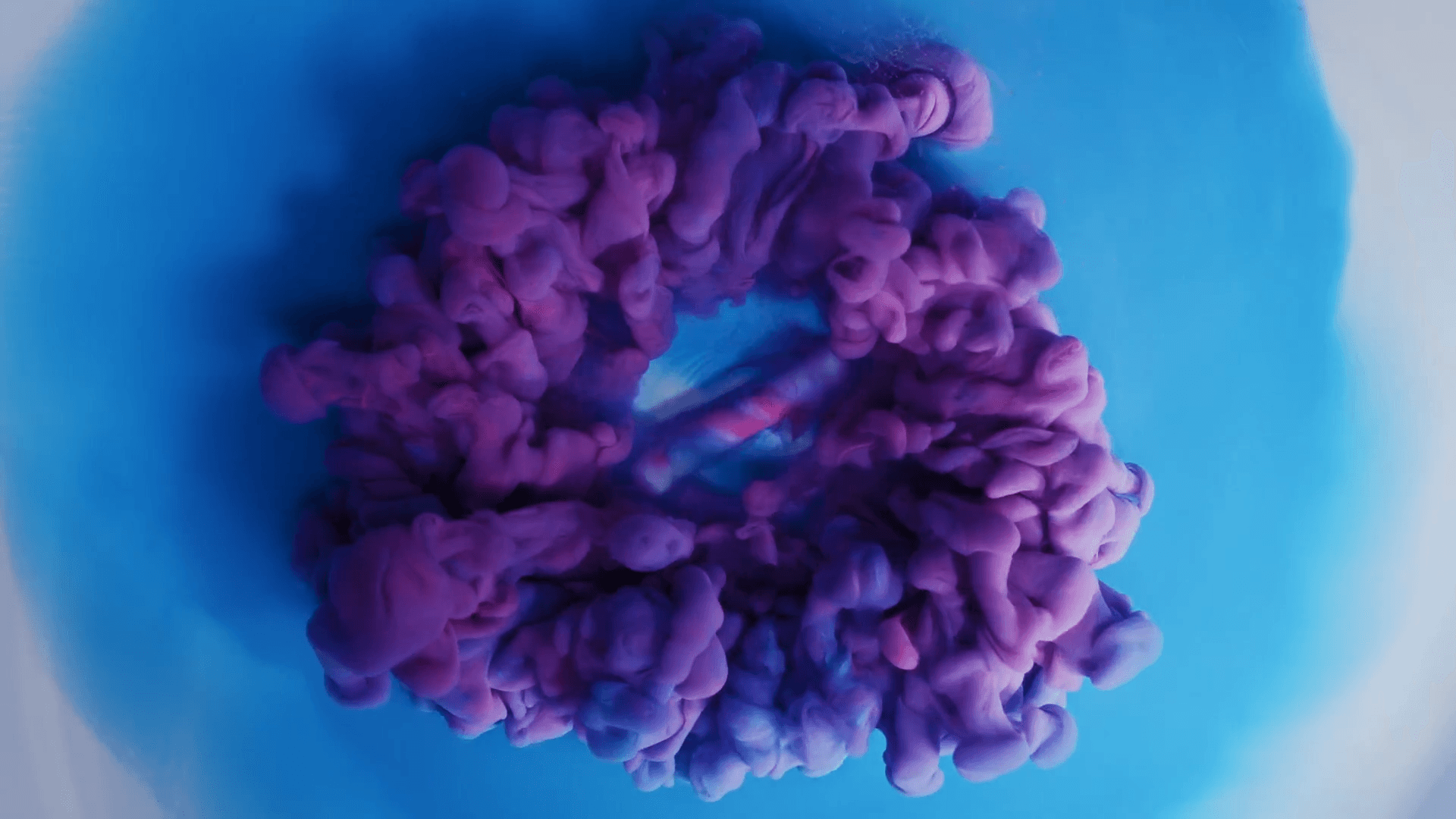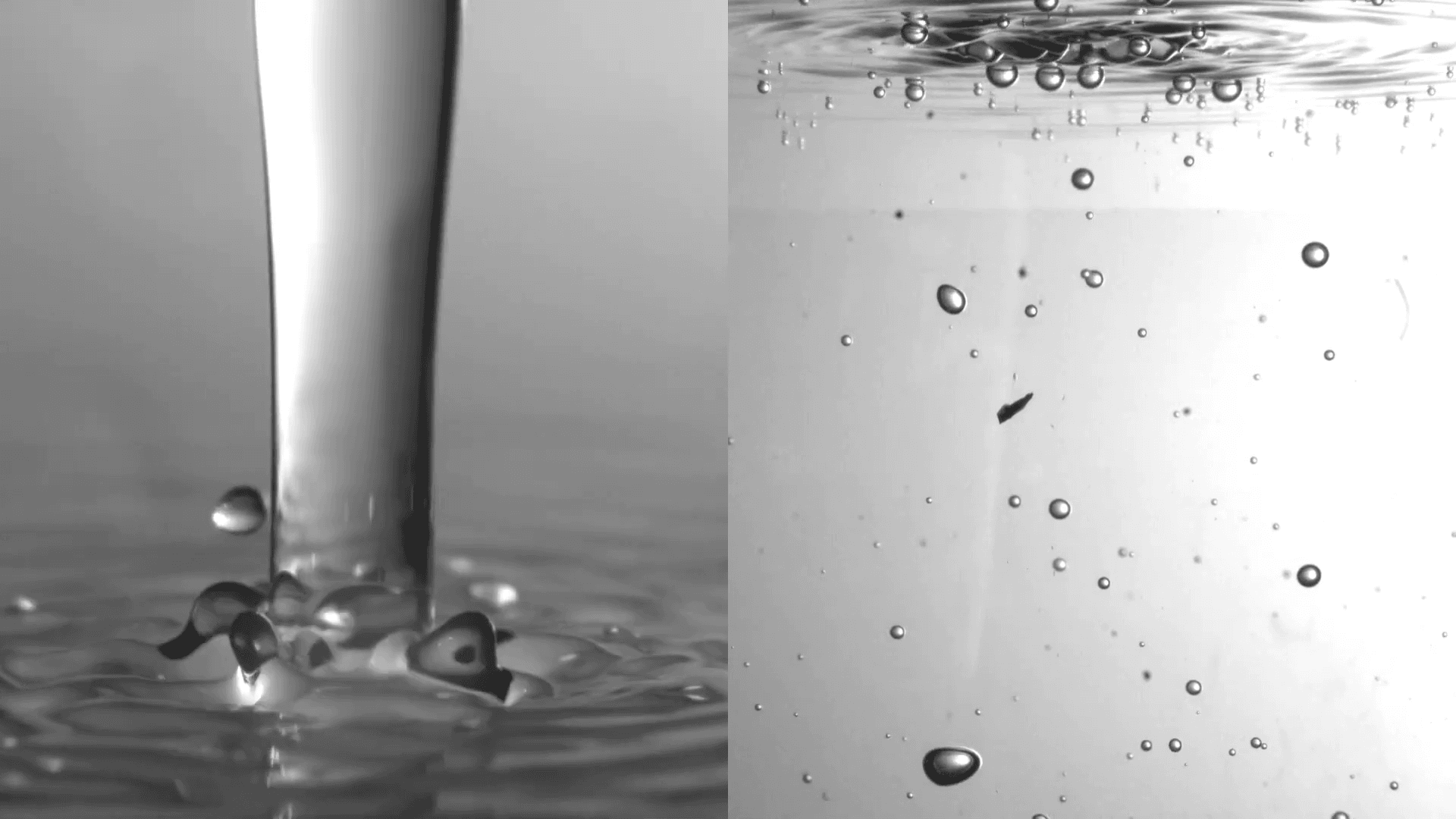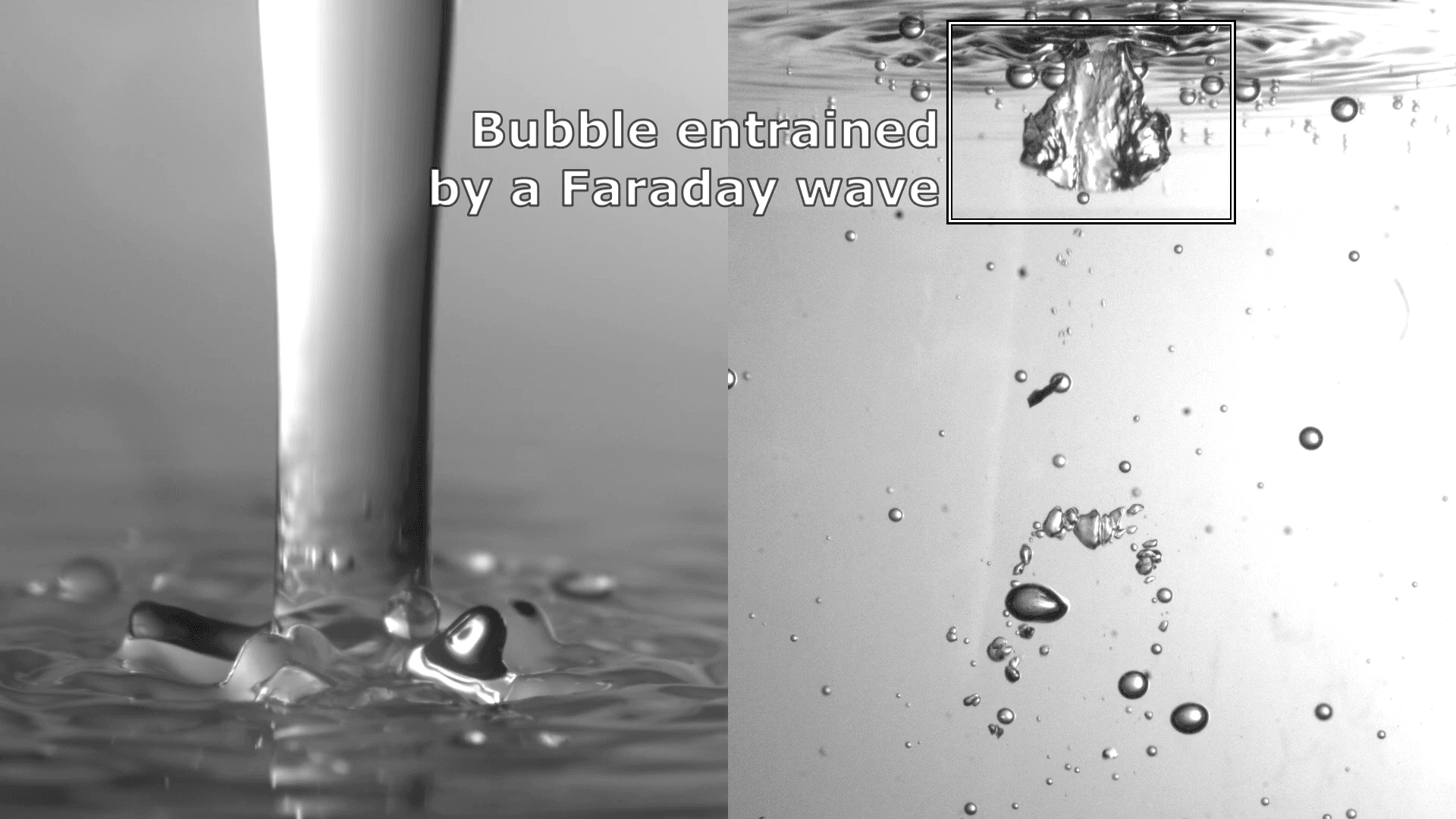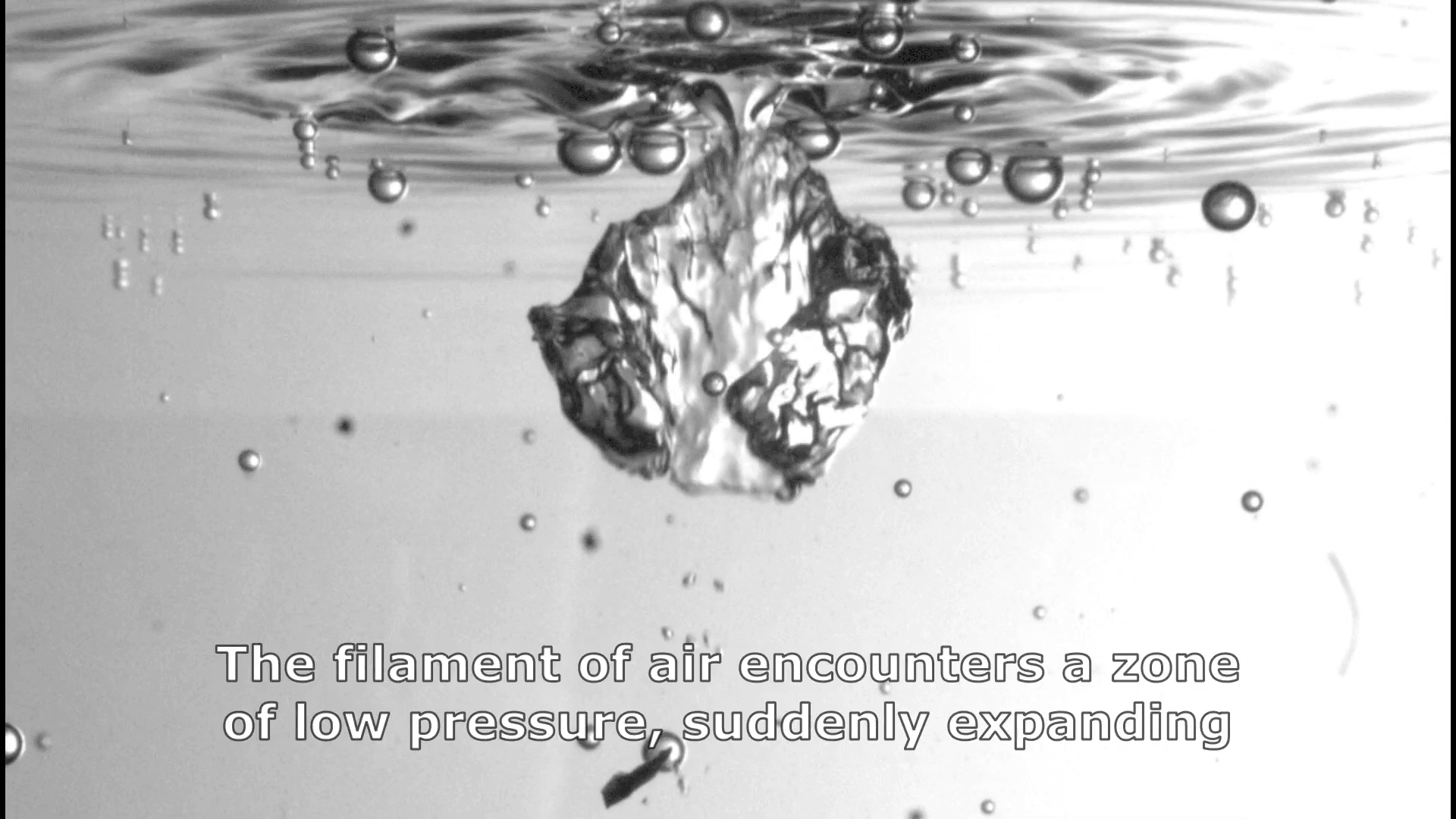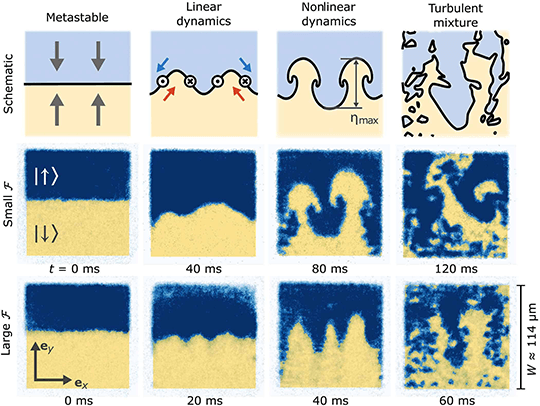
Securing information on the Internet requires a lot of random numbers, something computers are not good at creating on their own. This need for random input raises an important philosophical and practical question: what is randomness? How can we be sure that something truly is random, or is it enough for a system to be practically random? Joe explores these questions in this Be Smart video, which shows off how companies use systems — including fluid dynamical ones like lava lamps and wave machines — to generate random numbers for encryption. (Video and image credit: Be Smart)
Tag: physics

Compressing Jupiter’s Magnetosphere
Shaped by its strong internal magnetic field and the incoming solar wind, Jupiter has the largest magnetosphere in the solar system. It also has highly active aurorae at its poles, though they are most visible in ultraviolet wavelengths. A new analysis of Juno’s data shows that on 6-7 December 2022, Jupiter’s magnetosphere got compressed, coinciding with aurorae six times brighter than usual. The compression itself came from a shock wave in the incoming solar wind. (Image credit: NASA/JPL; research credit: R. Giles et al.; via Eos)

Rip Currents and Hurricanes
When it comes to the beach, looks can be deceiving. That calm-looking water to the side of big crashing waves may actually be a rip current that carries water back out to the ocean. Rip currents are a result of conservation of mass; just as waves carry water to the shore, something has to carry that incoming water back out to the ocean. Depending on the local topography, that outflow could be below the water surface, creating an undertow, or along the surface, as a rip current.
Even when far offshore, hurricanes can trigger unexpected and strong rip currents, largely because they create bigger waves that travel shoreward. Those waves can also change the depth and layout of the underwater shoreline, potentially exacerbating rip currents.
For more on rip currents, including the latest guidance on how to escape one, check out this article. (Image credit: A. Marlowe; via SciAm)

Falling From the Sky
Artist Sho Shibuya paints daily meditations on a copy of The New York Times. These particular examples are part of a recent collection, Falling From the Sky, that features realistic trompe l’oeil droplets that celebrate rain and rainy days. Having spent many an hour contemplating water droplets on my window, I love these. (Image credits: S. Shibuya; via Colossal)

Aboard a Hurricane Hunter
For decades, NOAA has relied on two WP-3D Orion aircraft–nicknamed Kermit and Miss Piggy–to carry crews into the heart of hurricanes, collecting data all the while. Every ride aboard a Hurricane Hunter is a bumpy one, but some flights are notorious for the level of turbulence they see. In a recent analysis, researchers used flight data since 2004 (as well as a couple of infamous historic flights) to determine a “bumpiness index” that people aboard each flight would experience, based on the plane’s accelerations and changes in acceleration (i.e., jerk).
The analysis confirmed that a 1989 flight into Hurricane Hugo was the bumpiest of all-time, followed by a 2022 flight into Hurricane Ian, which was notable for its side-to-side (rather than up-and-down) motions. Overall, they found that the most turbulent flights occurred in strong storms that would weaken in the next 12 hours, and that the bumpiest spot in a hurricane was on the inner edge of the eyewall. That especially turbulent region, they found, is associated with a large gradient in radar reflectivity, which could help future Hurricane Hunter pilots avoid such dangers. (Image credit: NOAA; research credit: J. Wadler et al.; via Eos)

Cooling Tower Demolition
As part of the demolition of a decommissioned coal-fired power plant in Nottinghamshire, workers simultaneously demolished eight cooling towers. The video is here. As the towers collapse, smoke and dust gets blown both out of the base and up each tower. The flow details are fascinating. The plumes have rings in them, perhaps related to how the blast’s waves reflect in the tower or how the structure itself fails. Vortex rings curl up as the rising plumes mix with the surrounding air. If you’re anything like me, you’ll have to replay it several times! (Image credit: BBC; submitted by jshoer)

Tides Widen Ice Cracks
When icebergs calve off of Arctic and Antarctic coastlines, it affects glacial flows upstream as well as local mixing between fresh- and seawater. A recent study points to ocean tides as a major factor in widening the ice cracks that lead to calving. The team built a simplified mathematical model of an ice shelf, taking into account the ice’s viscoelasticity, local tides, and winds. Then they compared the model’s predictions with satellite, GPS, and radar data of Antarctica’s Brunt Ice Shelf, where an iceberg the size of Greater London broke off in 2023.
Between their model and the observation data, the team was able to show that the crack that preceded calving consistently grew during the spring tides, when tidal forces were at their strongest. The work gives us one more clue for refining our predictions of when major calving events are likely. (Image and research credit: O. Marsh et al.; via Gizmodo)

A Glimpse of the Solar Wind
In December 2024, Parker Solar Probe made its closest pass yet to our Sun. In doing so, it captured the detailed images seen here, where three coronal mass ejections — giant releases of plasma, twisted by magnetic fields — collide in the Sun’s corona. Events like these shape the solar wind and the space weather that reaches us here on Earth. The biggest events can cause beautiful auroras, but they also run the risk of breaking satellites, power grids, and other infrastructure. (Image credit: NASA/Johns Hopkins APL/Naval Research Lab; video credit: NASA Goddard; via Gizmodo)

Espresso in Slow-Mo
Espresso has some pretty cool physics. But it’s also just lovely to watch in slow motion. This video offers a look at the making of an espresso shot at 120 frames per second (though you can also enjoy a 1000 fps version here). Watching the film form, expand, and break up at the beginning and end of the video is my favorite, but watching how the occasional solid coffee grains make their way into and down the central jet is really interesting also. (Video and image credit: YouTube/skunkay; via Open Culture)

Oil-Slicked Bubble Bursts
When bubbles at the surface of the ocean pop, they can send up a spray of tiny droplets that carry salt, biomass, microplastics, and other contaminants into the atmosphere. Teratons of such materials enter the atmosphere from the ocean each year. To better understand how contaminants can cross from the ocean to the atmosphere, researchers studied what happens when a oil-coated water bubble pops.
The team looked at bubbles about 2 millimeters across, coated in varying amounts of oil, and observed their demise via high-speed video. When the bubble pops, capillary waves ripple down into its crater-like cavity and meet at the bottom. That collision creates a rebounding Worthington jet, like the one above, which can eject droplets from its tip.
The team found that the oil layer’s thickness affected the capillary waves and changed the width of the resulting jet. They were able to build a mathematical model that predicts how wide a jet will be, though a prediction of the jet’s velocity is still a work-in-progress. (Image credit: Р. Морозов; research credit: Z. Yang et al.; via APS)