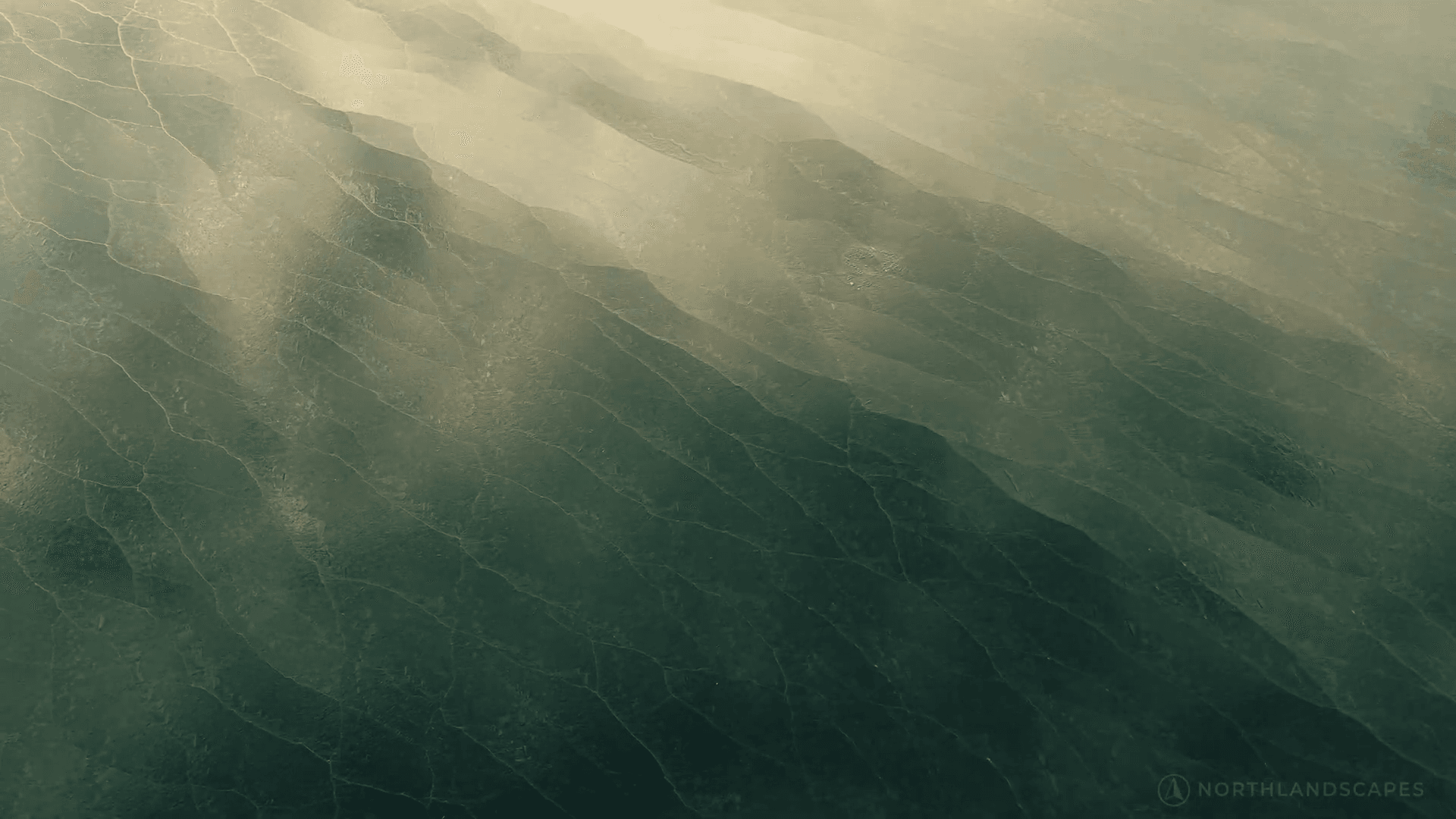
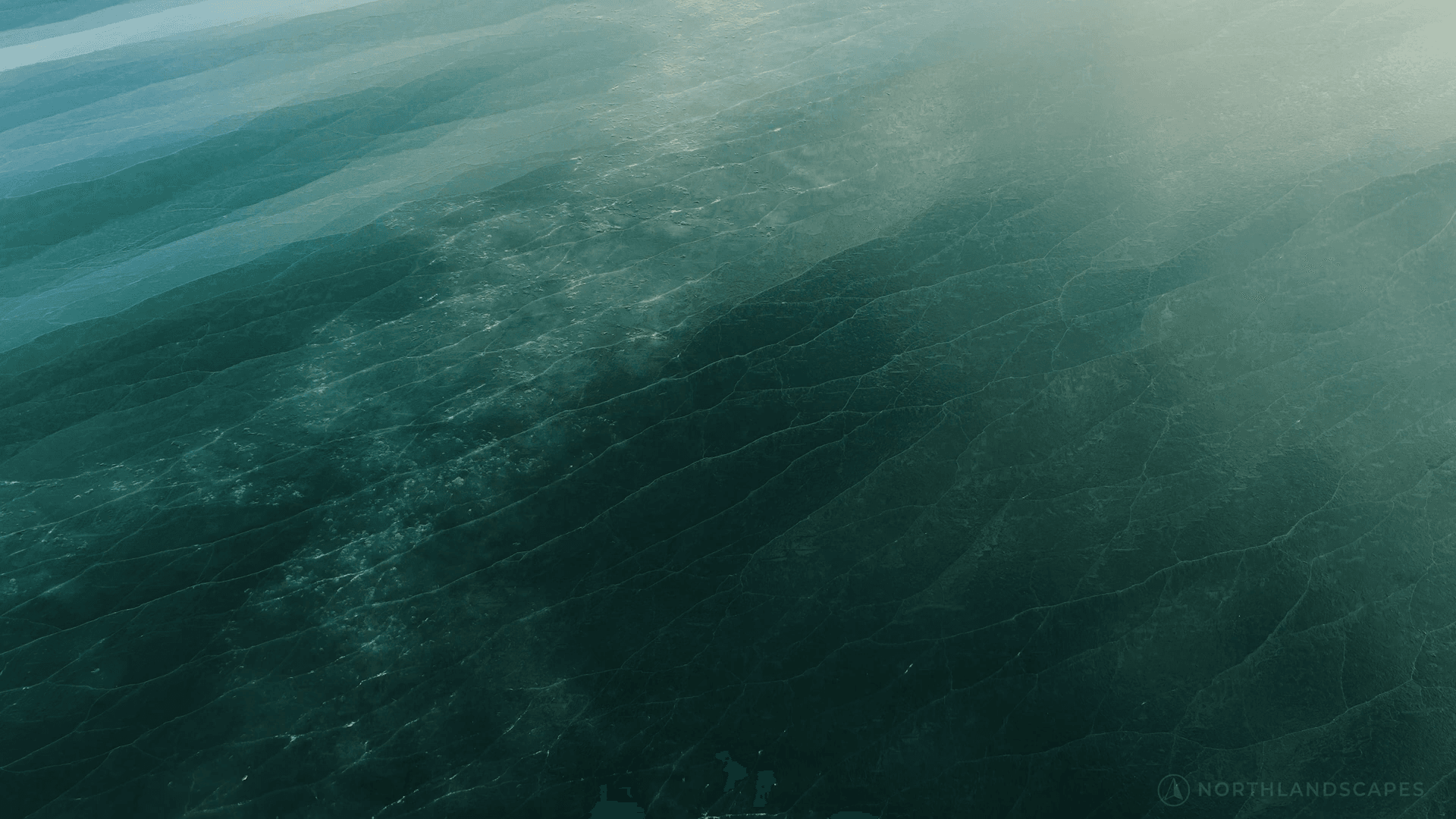
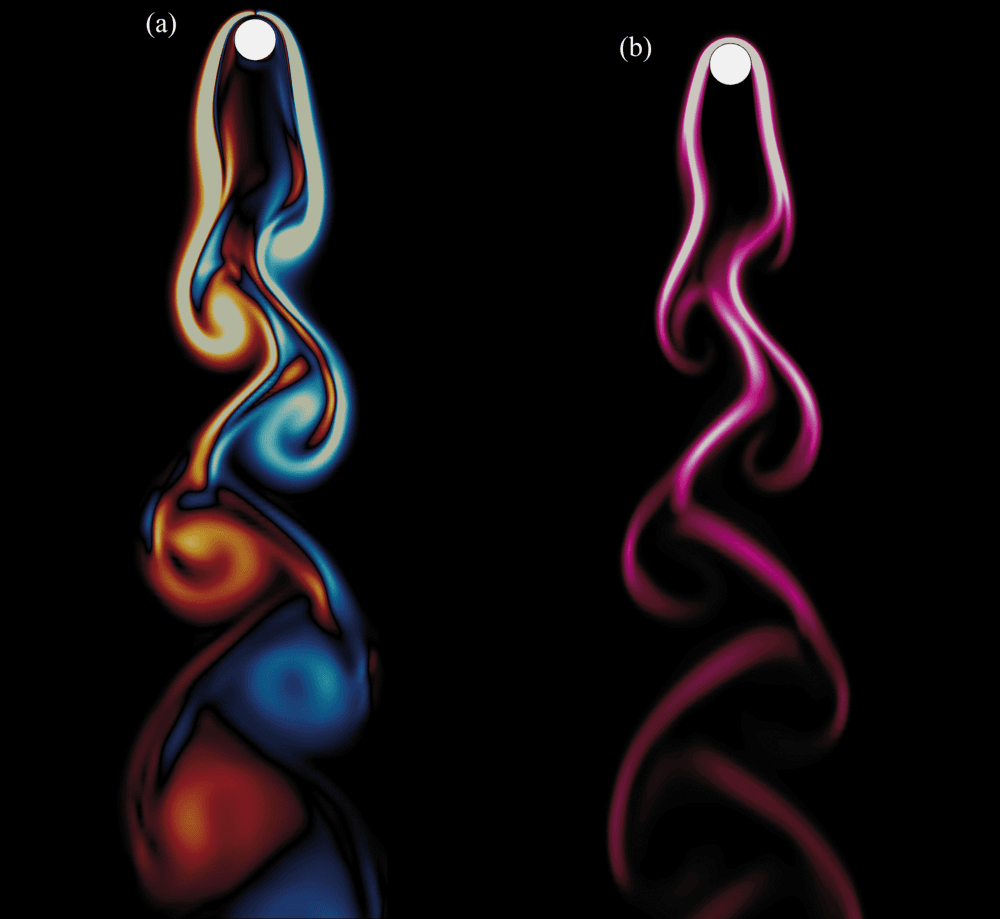
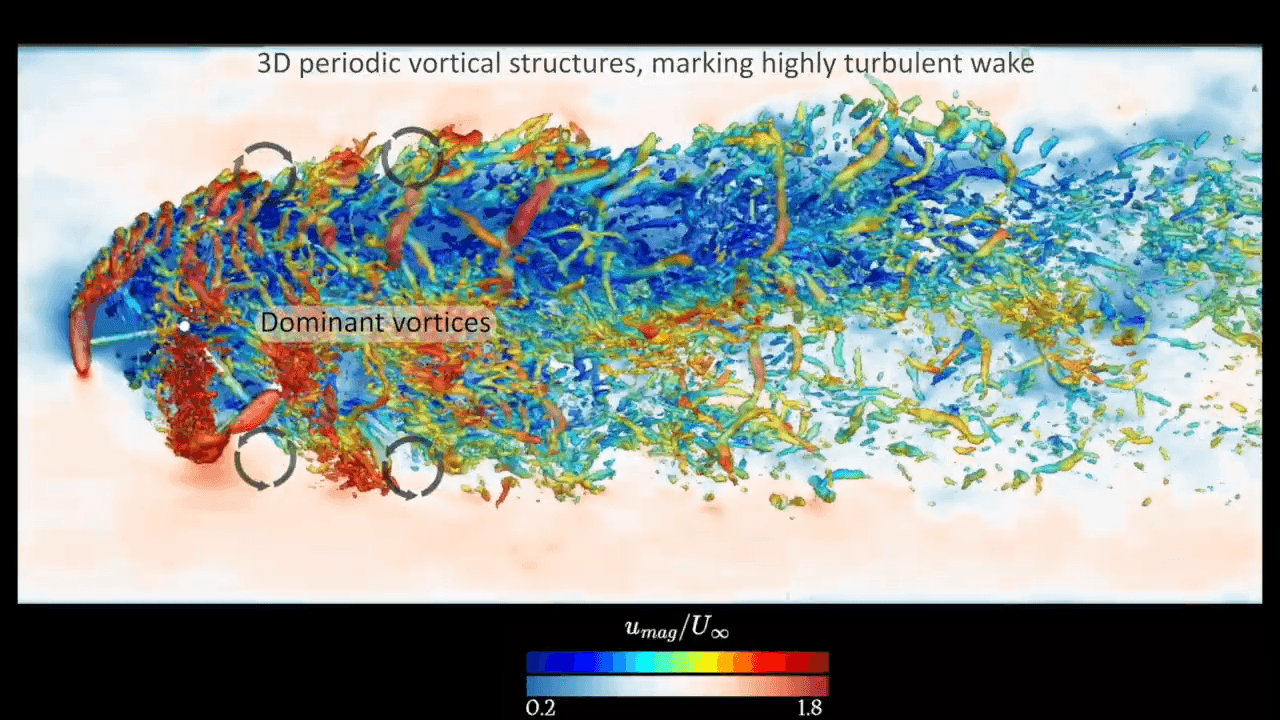
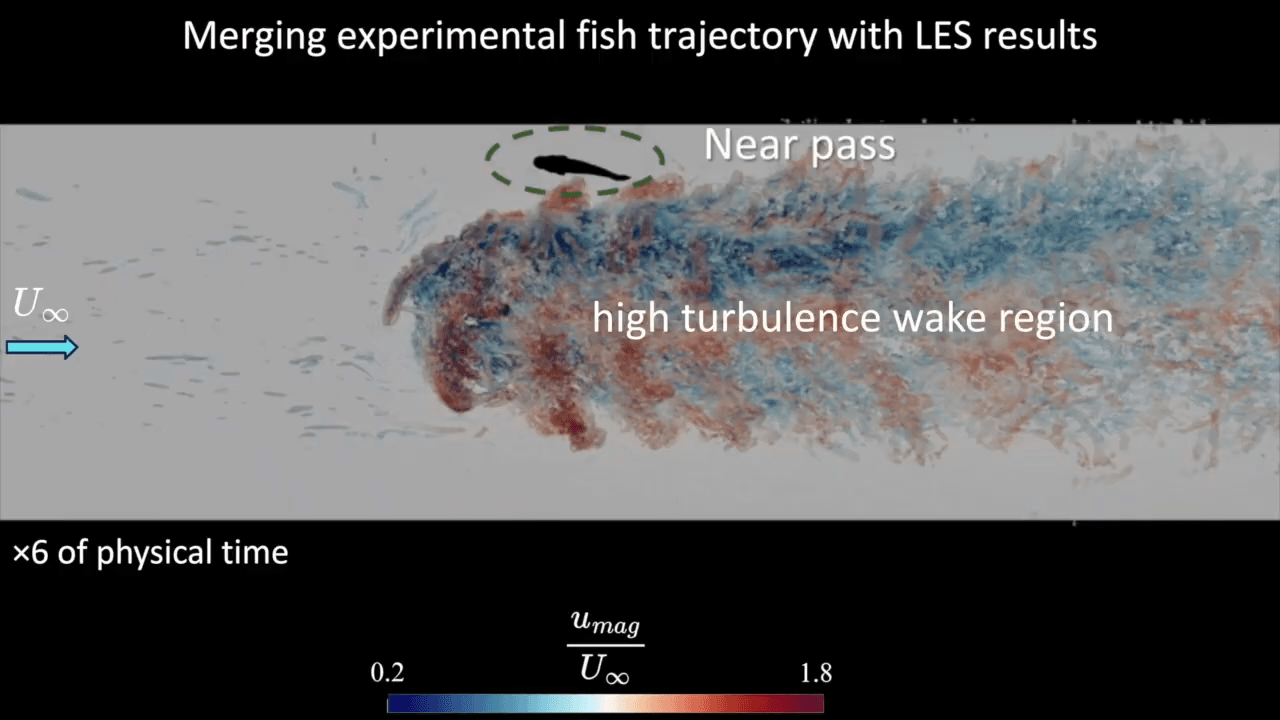
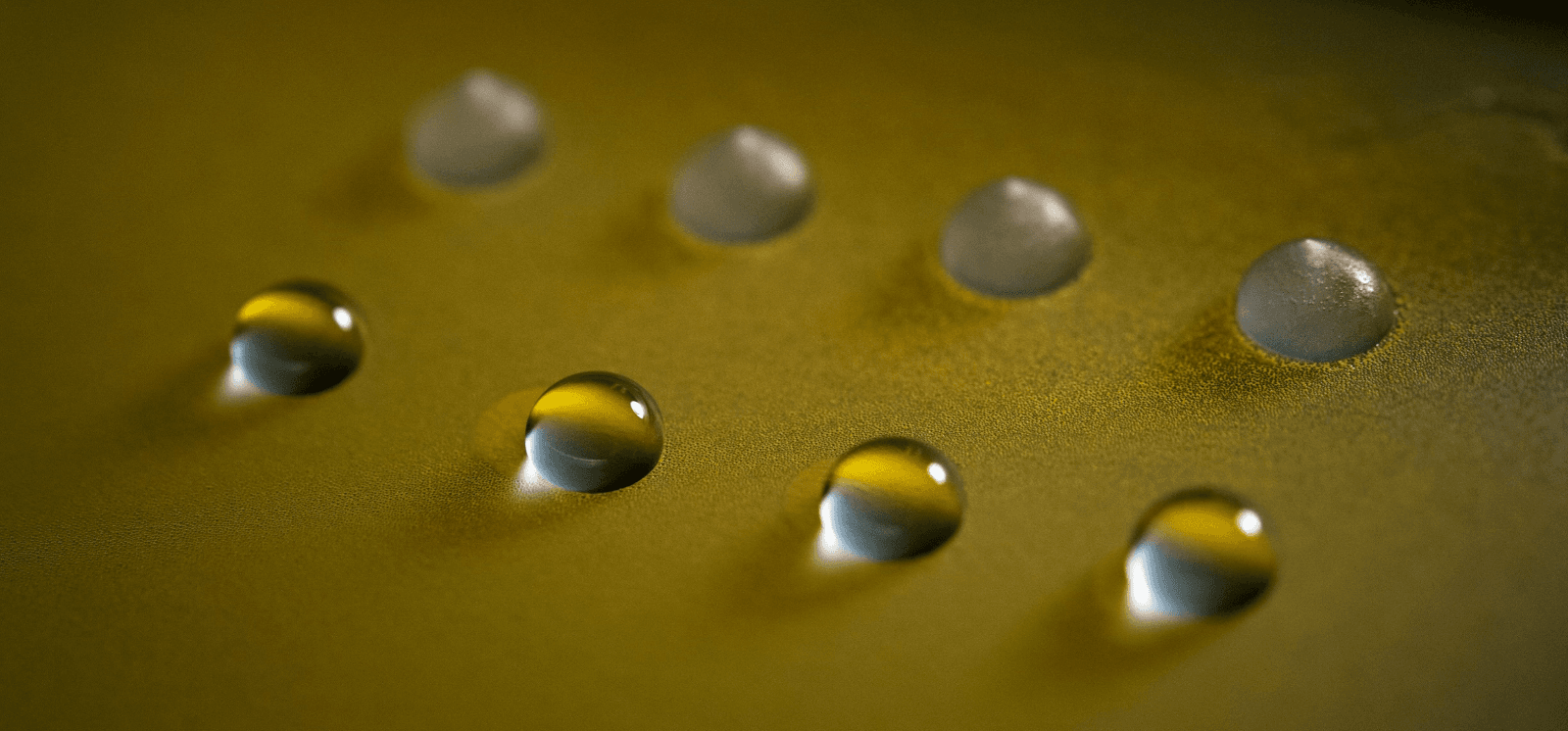
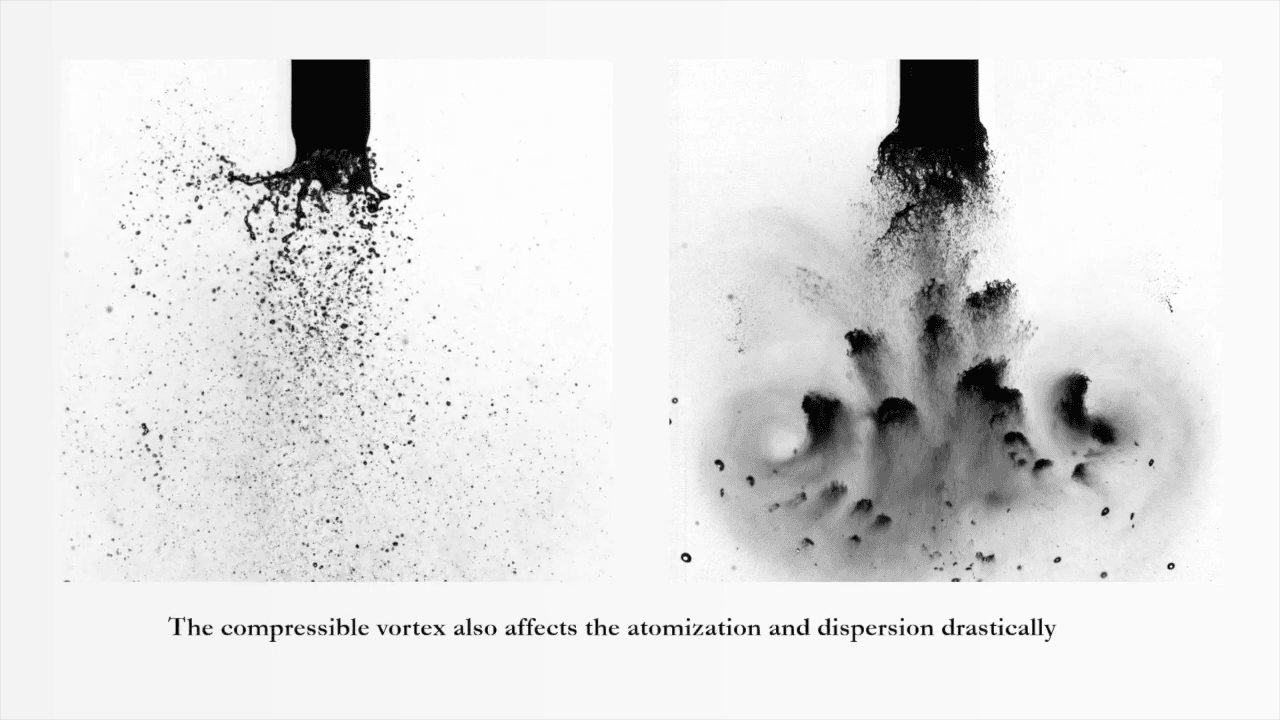
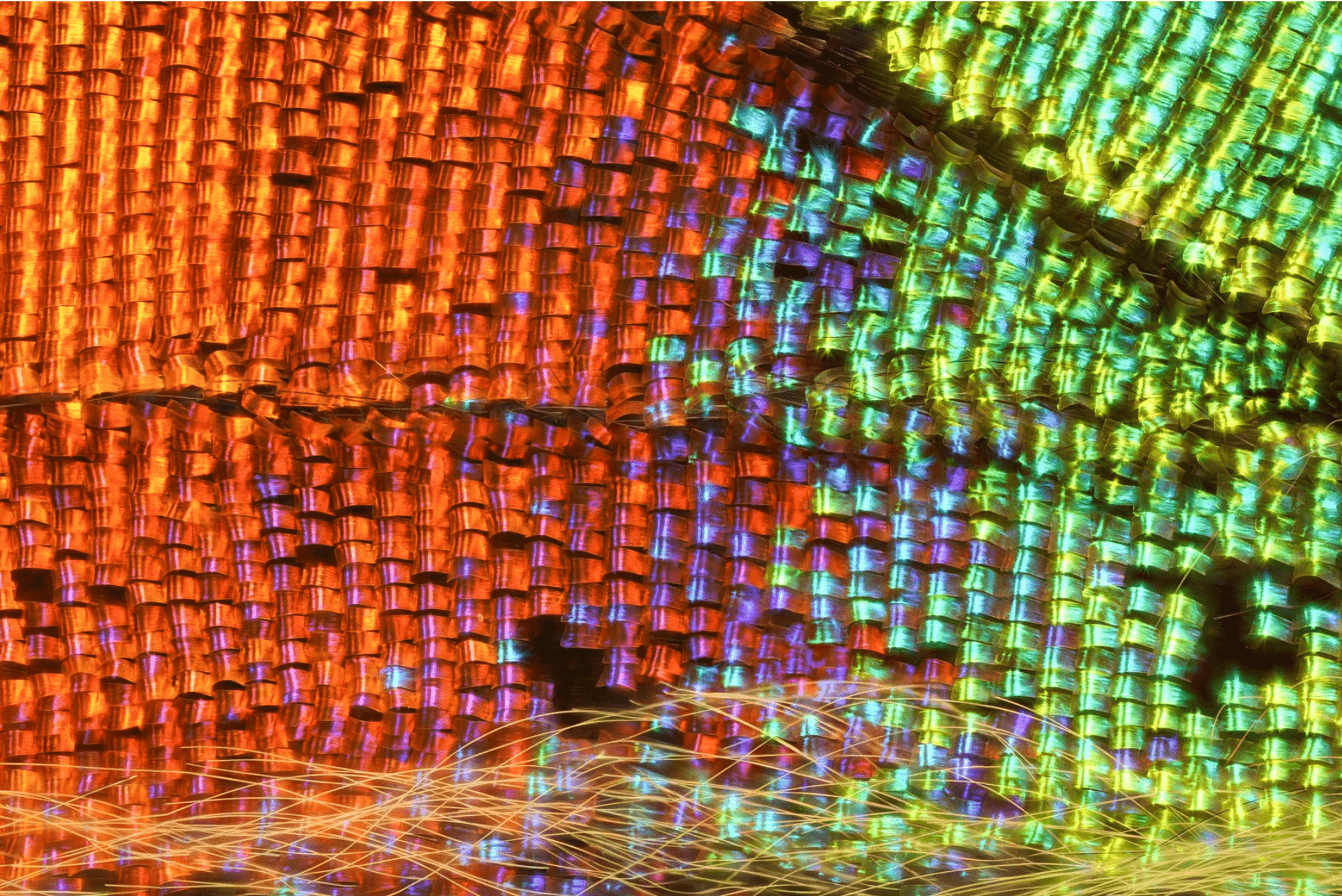
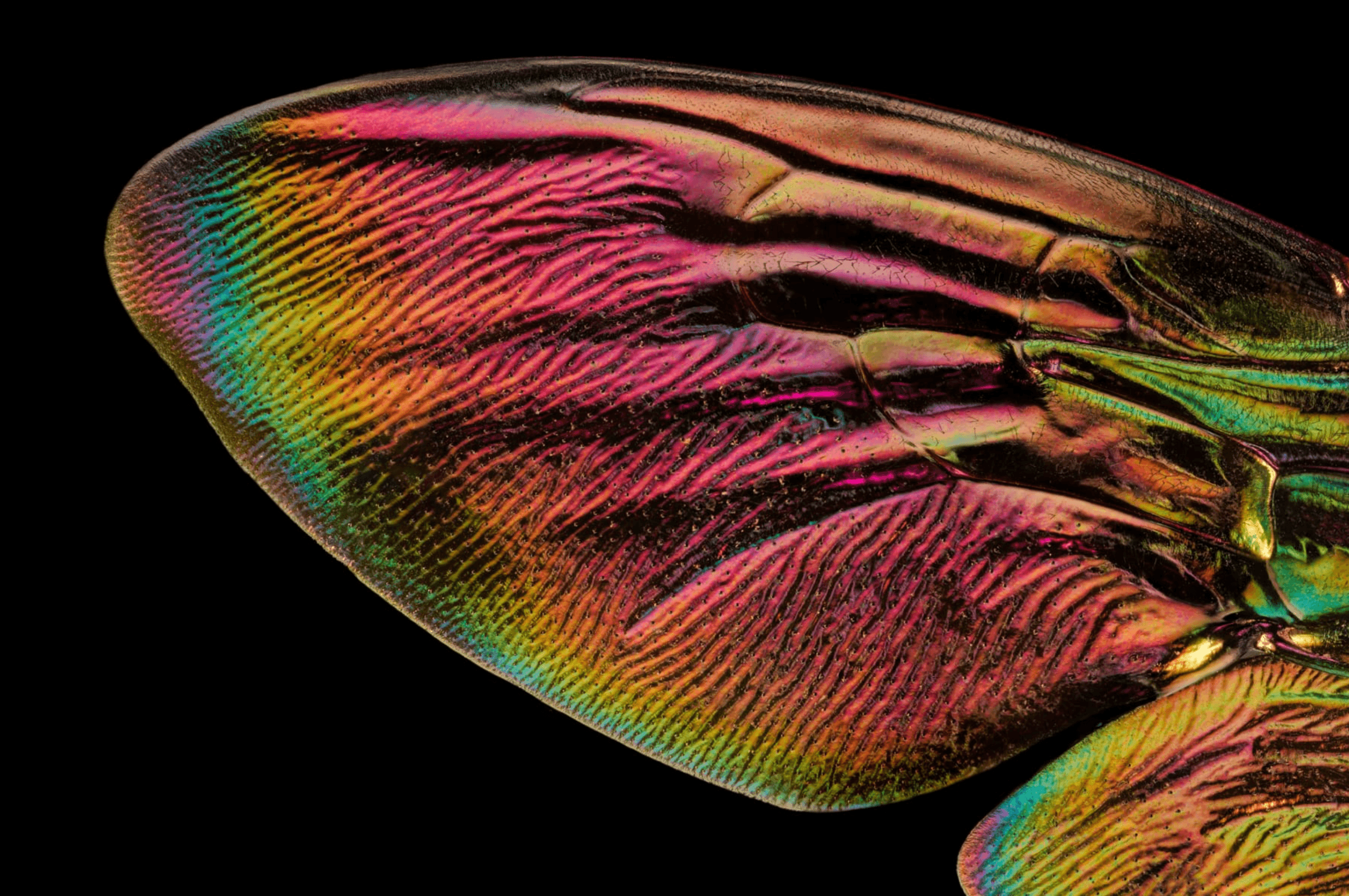
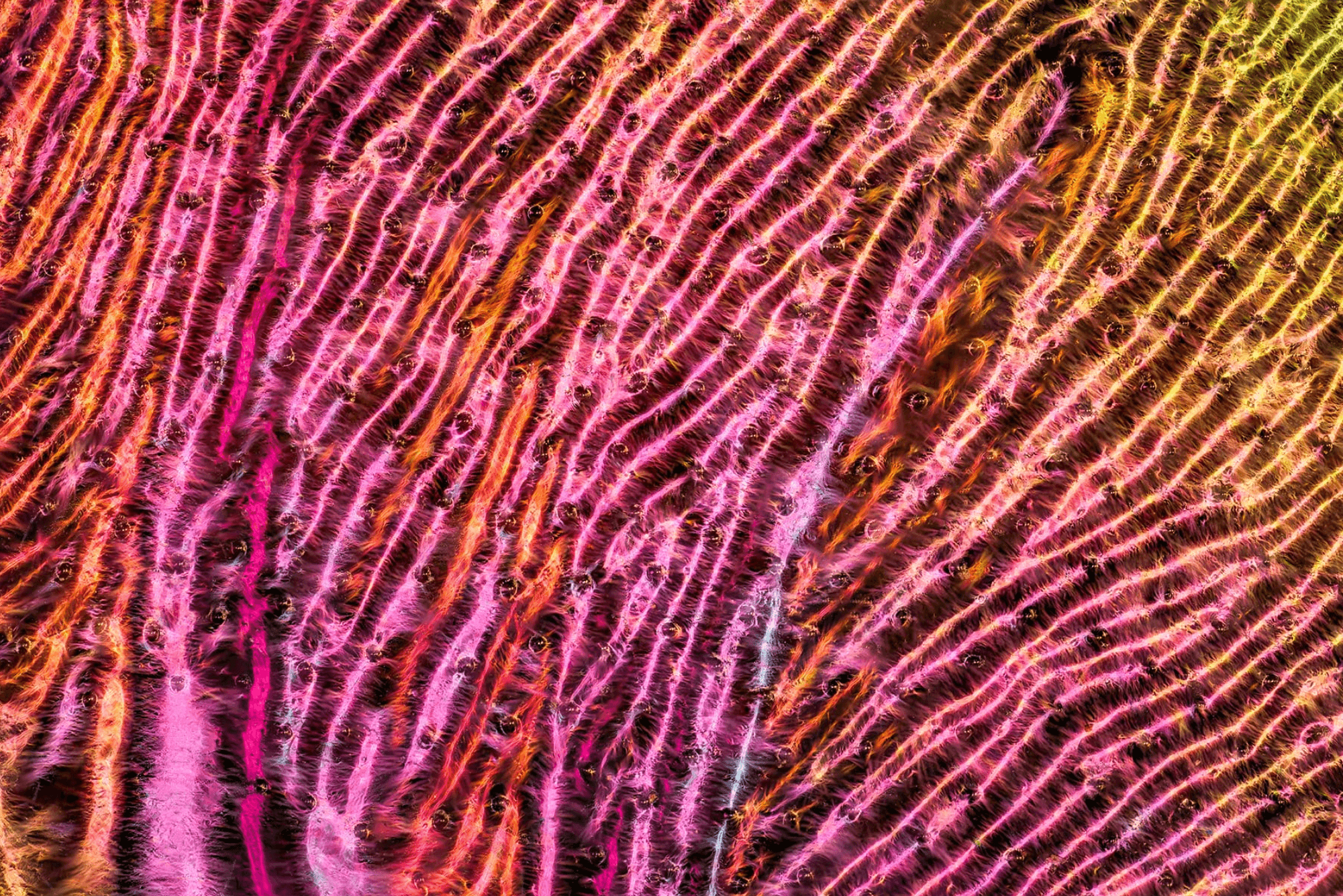
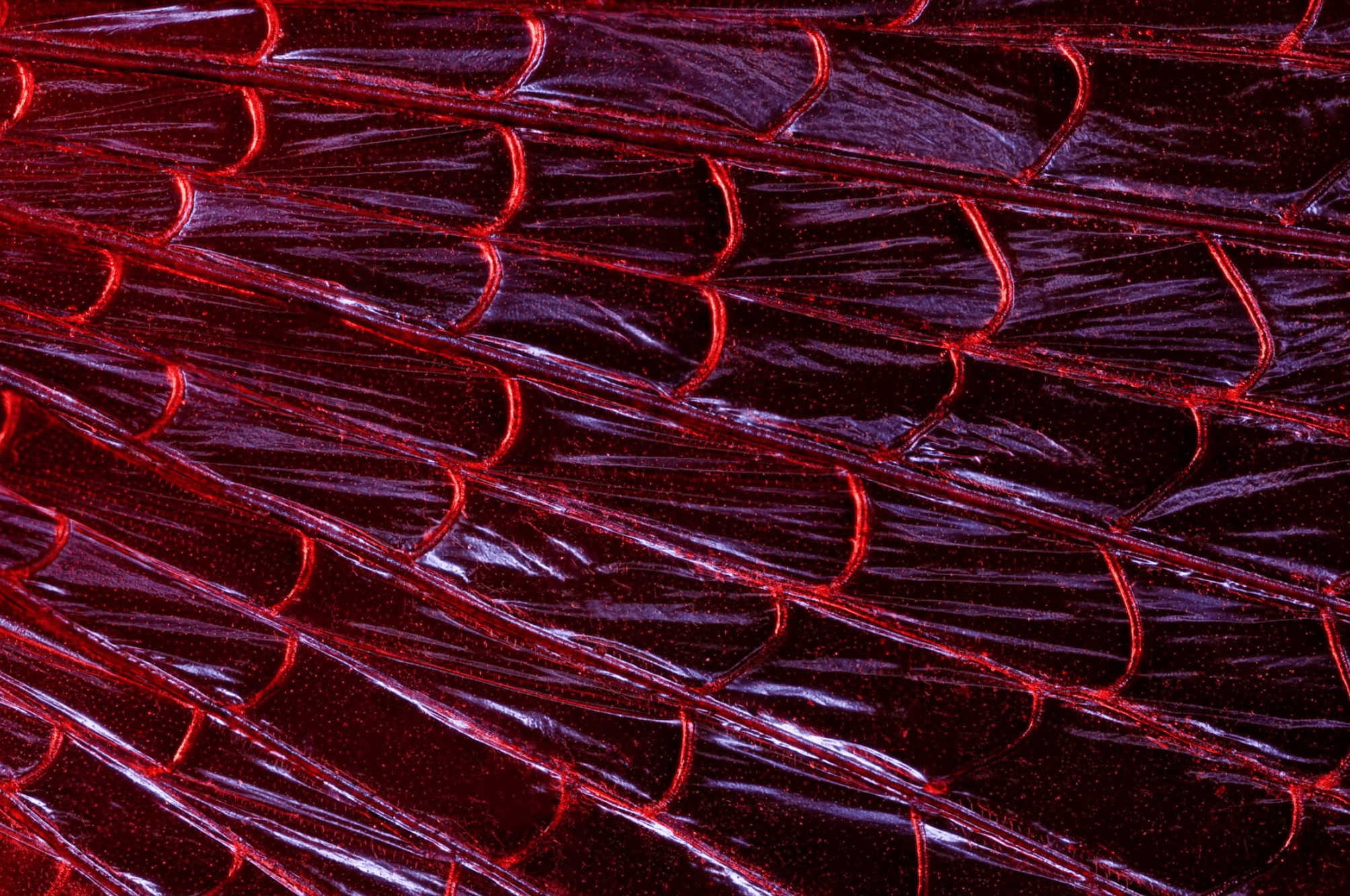
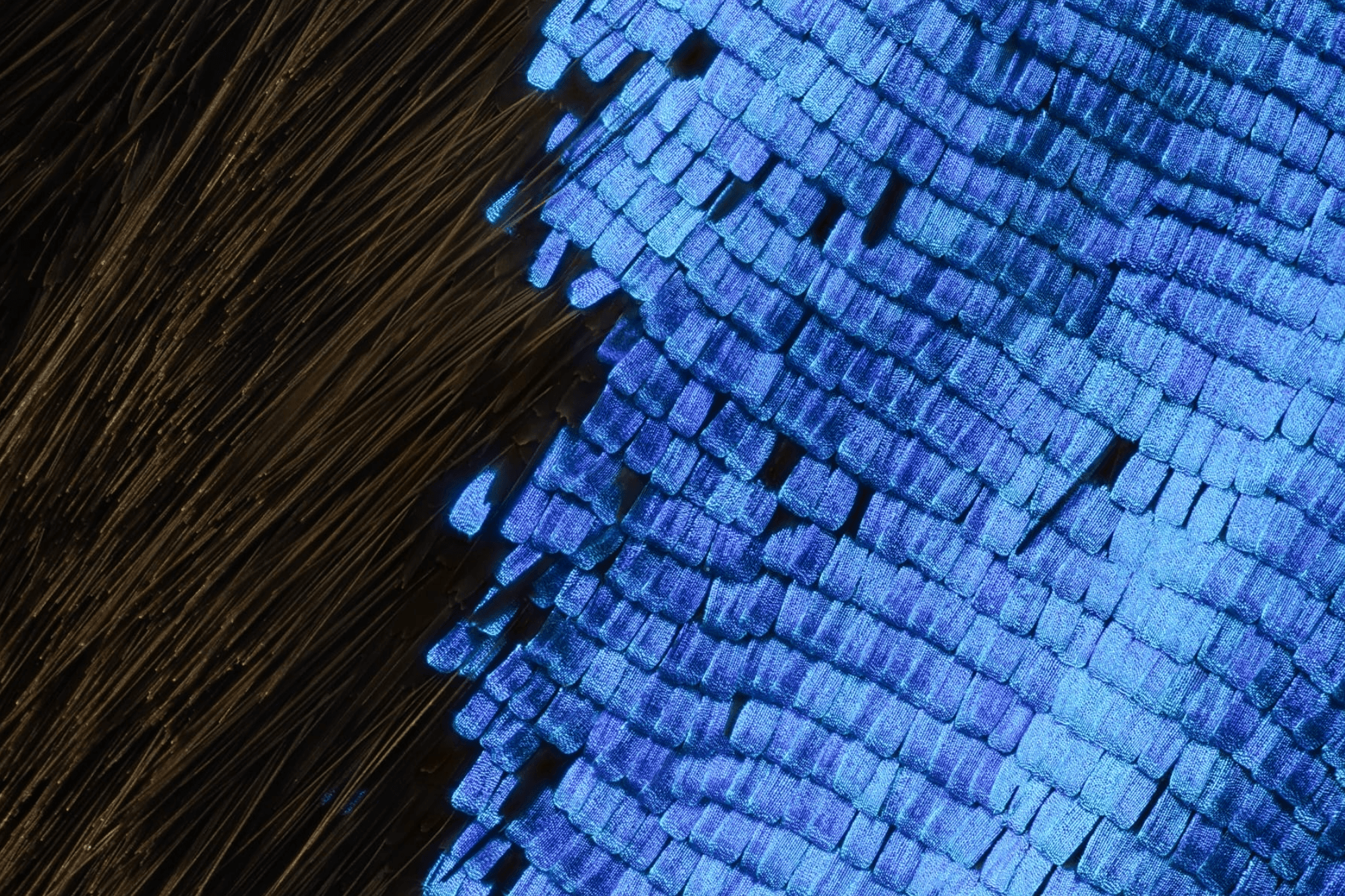
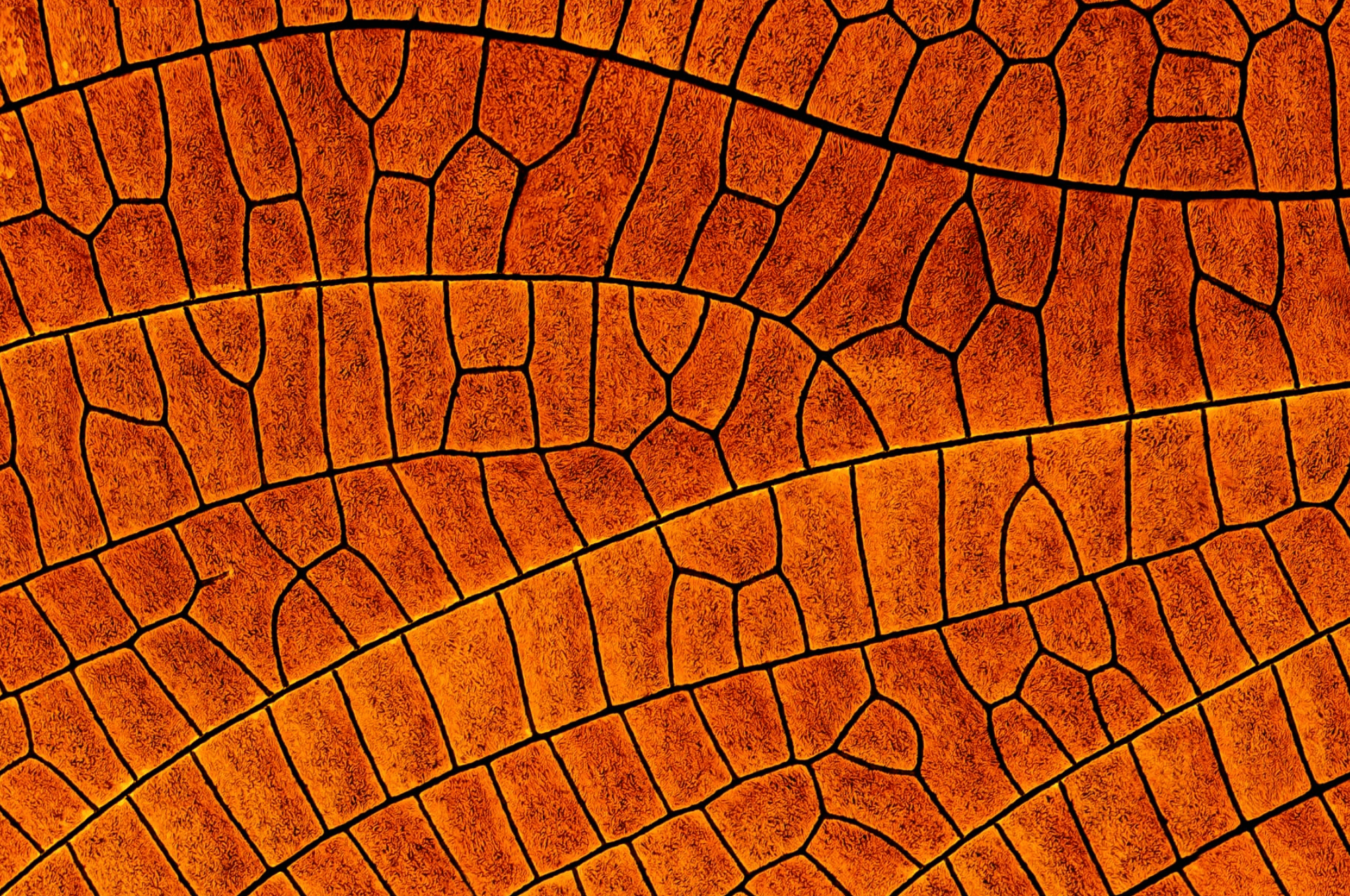
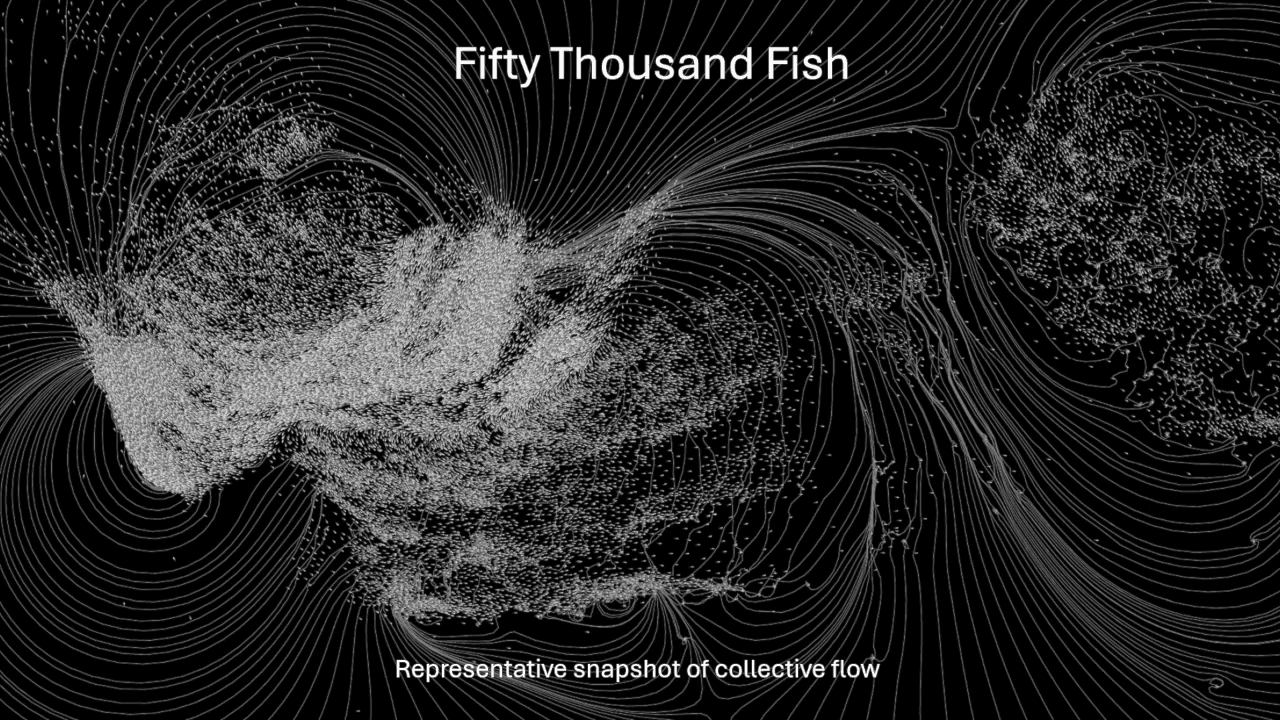
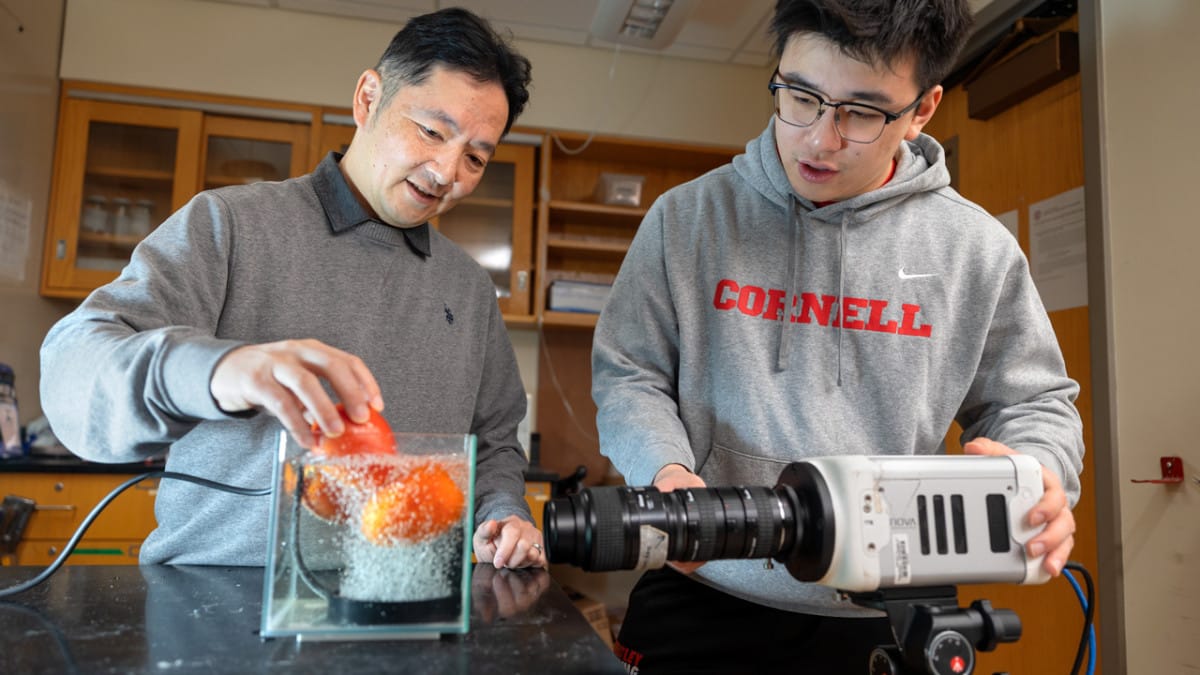
Adding just a little polymer to a pipe flow speeds it up by reducing drag near the wall. But the effects on turbulence away from the wall have been harder to suss out. A new experiment shows that added polymers suppress eddy formation in the flow and reduce how much energy is lost to friction and, ultimately, heat. In particular, the researchers found that polymer stress helped stabilize shear layers in the flow and prevent them from destabilizing into more turbulent flow. (Image credit: S. Wilkinson; research credit: Y. Zhang et al.; via APS)

Tag: physics

Chlorophyll Eddies
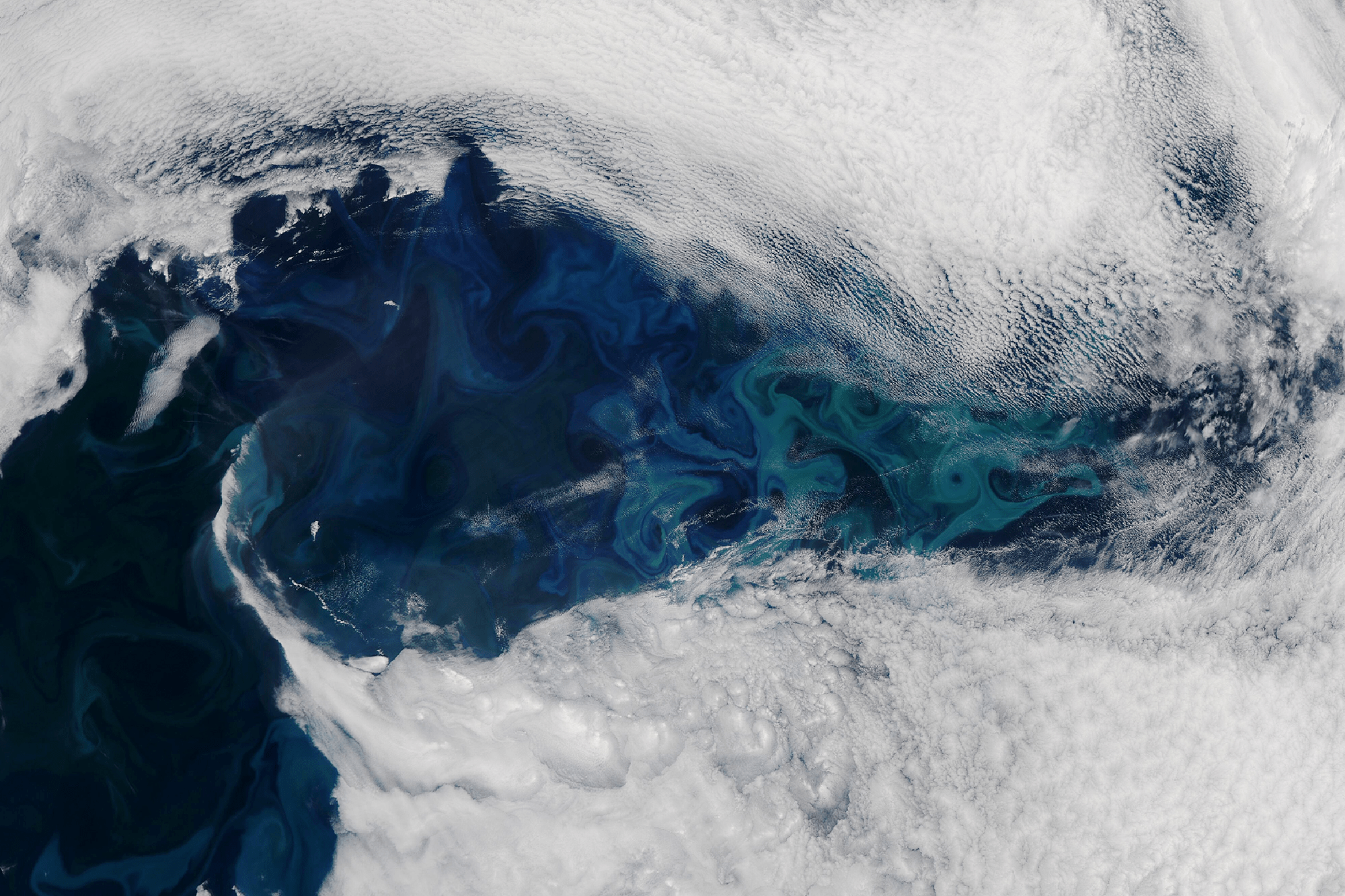
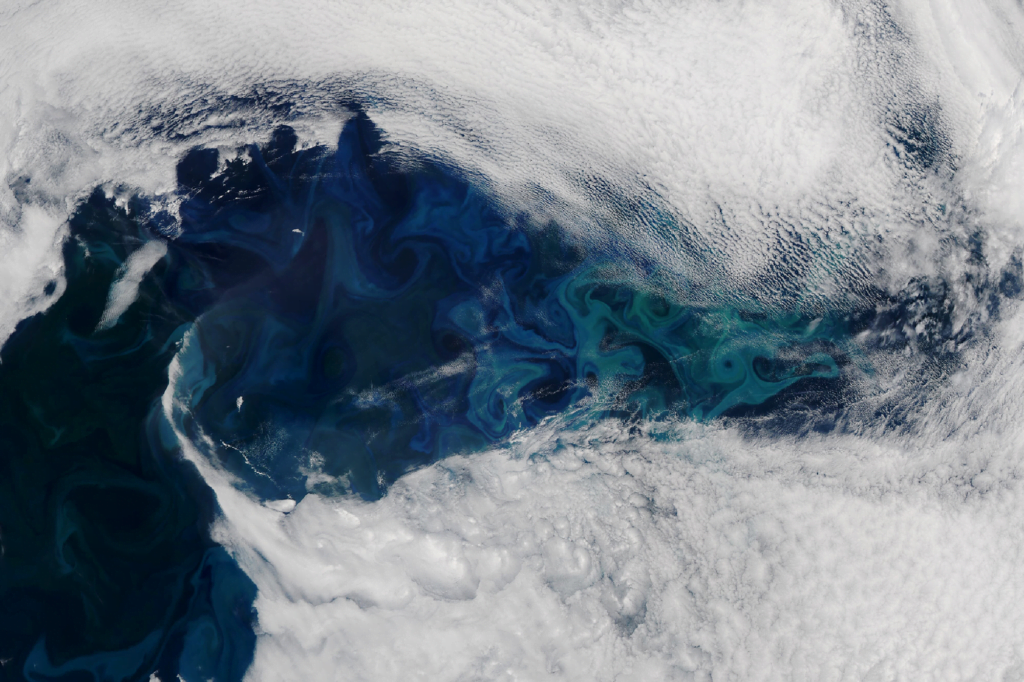
Instruments aboard NASA’s PACE mission are able to distinguish far more about phytoplankton blooms than previous satellites. This image shows chlorophyll concentrations in the Norwegian Sea in July 2025. Chlorophyll acts as a proxy for phytoplankton, which produce the chemical as they process sunlight into food and oxygen.
Despite their microscopic size, phytoplankton have enormous collective effects. Scientists estimate that phytoplankton produce as much as half of the Earth’s oxygen in addition to helping transport carbon dioxide from the atmosphere into the deep ocean. They are also the foundation of the marine food web, feeding nearly all life in the ocean. (Image credit: W. Liang; via NASA Earth Observatory)

Ocean Bubbles Capture Carbon
As humanity pumps carbon dioxide into the atmosphere, the ocean absorbs about a quarter of it. This exchange happens largely through bubbles created by breaking waves. When waves grow large enough to break, their crests curl over and crash down, trapping air beneath them. The turbulence of the upper ocean can push these buoyant bubbles meters under the surface, where the gases inside them dissolve into the surrounding water. This is how the ocean gets the oxygen used by marine animals, but it’s also how it gathers up carbon dioxide.
Current climate models often approximate this process using only the wind speed, but a recent study took matters a step further by modeling wave breaking and bubble generation, too. While they found a global carbon uptake that was similar to existing models, the researchers found their breaking wave model showed more variability in where carbon gets stored. For example, more carbon got absorbed in the southern hemisphere, where oceans are consistently rougher, than in the northern hemisphere, where large landmasses shelter the oceans. (Image credit: J. Kernwein; research credit: P. Rustogi et al.; via Eos)

Shining in the Sky
Shades of blue, green, and purple light the Icelandic sky in this image from December 2023. Incoming solar wind particles hit oxygen and nitrogen atoms high in the atmosphere, exciting their electrons and creating this distinctive glow. We’re currently near the peak of our Sun’s 11-year solar cycle, meaning that high numbers of sunspots and outbursts will continue, likely giving us more stunning auroras like this one. (Image credit: J. Zhang; via APOD)

An aurora in shades of blue, green, and purple. P.S. – This post–this one right here–is FYFD’s 4000th post! When I started this blog back in 2010 as a graduate student, I never imagined that I would have so much to write about the physics of fluids. But this subject is one that just keeps on giving, so I keep on writing. Thanks for joining the fun! – Nicole

“Magnetic Vortex”
The Macro room team is back with a video featuring their signature colorful cleverness. This time they’re using a magnetic stirrer to swirl up some mesmerizing flows. It’s well worth a watch. (Video and image credit: Macro Room)

The Start of a Supernova
Stars about eight times more massive than our sun end their lives in supernovas, incredible explosions that rip the star apart. The earliest stages of this explosion are something we’ve never observed firsthand, until now. A new study reports observations of the supernovaย explosionย SNย 2024ggi, detected here on Earth on 10 April 2024. Only 26 hours later, researchers pointed the Very Large Telescope at it, capture data that revealed its oblong shape as the initial explosion reached the star’s surface.
What you see above and below are not the actual supernova. They are an artist’s conception of the event, based on the researchers’ observation data. That data is enough to rule out several existing supernova models and will no doubt guide new models of star death going forward. (Image credit: ESO/L. Calรงada; research credit: Y. Yang et al.; via Gizmodo)

Entraining Bubbles
Every time I fill a glass at my refrigerator, I watch how the falling jet creates a cloud of bubbles. The bubbles form when the impacting water jet pulls air in with it, though, as this video shows, the exact origins can vary. Here, researchers take a closer, slowed-down look at the situation; they connect disturbances in the jet and waves at its base to the entrained bubbles that form. (Video and image credit: S. Relph and K. Kiger)

Quantum Rayleigh-Taylor Instability
The Rayleigh-Taylor instability–typically marked by mushroom-shaped plumes–occurs when a dense fluid accelerates into a less dense one. But researchers have now demonstrated the effect at quantum scales, too.
For their experiment, the group used a Bose-Einstein condensate of sodium atoms and made the interface between them by exciting half of the atoms into a spin-up state and half into a spin-down one. With the interface is place, they reversed the magnetic field gradient, inducing a force on the atoms equivalent to the buoyant force seen in conventional Rayleigh-Taylor instabilities. As shown above, the interface first warped, then developed Rayleigh-Taylor mushrooms and eventually became turbulent. (Image and research credit: Y. Geng et al.; via Physics World)

Whorls of Sea Ice
Fresh snow shines white on the southern end of Greenland in this satellite image, taken in late February 2025. Whorls of sea ice sit off the coast, where they trace out patterns that reflect the winds and ocean currents of the region. Arctic sea ice typically reaches its largest extent by early March before experiencing a long season of melting. Both the presence and absence of sea ice have a large effect on the Arctic regions. Sea ice helps dampen wave activity; without it, seas are higher and more dynamic, creating more aerosols that seed cloud cover in the Arctic and elsewhere. (Image credit: L. Dauphin; via NASA Earth Observatory)

“500,000-km ย Solar Prominence Eruption”
It’s difficult at times to fathom the scale and power of fluid dynamics beyond our day-to-day lives. Here, twists of the Sun‘s magnetic field propel a jet of plasma more than 500,000 kilometers out from its surface in an enormous solar prominence eruption. To give you a sense of scale for this random solar burp, that’s bigger than ten times the distance to satellites in geostationary orbit. (Image credit: P. Chou; via Colossal)