Tag: physics

  • Why Sharper Knives Mean Fewer Onion Tears

    Why Sharper Knives Mean Fewer Onion Tears

    Onions are a well-known source of tears for many a cook. And while the chemical source of their power–onions release a chemical that reacts in our eyes to produce tears–has been known for years, no one has looked at the fluid dynamics in the process until now.

    Video of droplets sprayed as a knife cuts into an onion.

    As seen above, a knife piercing the onion’s surface releases a mist of high-speed droplets, followed by a slower spray. Much like a citrus fruit’s microsprays, the onion’s fountain depends on both solid and fluid mechanics. As the knife presses into the onion’s stiffer outer layer, pressure builds in the softer layer underneath, which contains pores of fluid. Once the knife breaks the epidermis, that pressurized fluid sprays out.

    The good news is that the team also confirmed a common culinary wisdom: using a sharper knife and a slower, gentler cut will reduce the spray and its speed, resulting in fewer tears. (Image credit: M. Stone; research credit: Z. Wu et al.)

    Fediverse Reactions
  • Featured Video Play Icon

    Floating Bridges

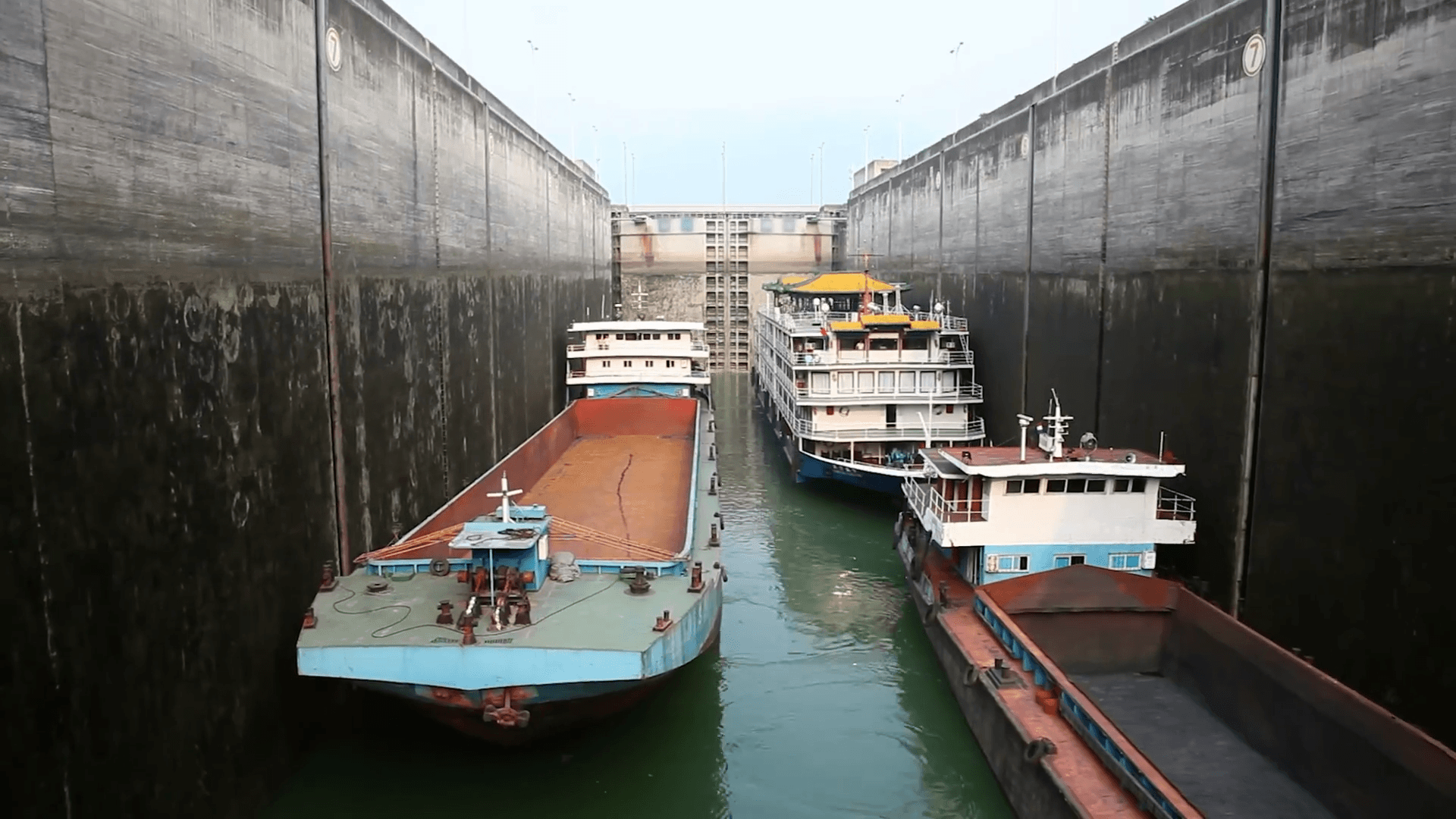
    For most of history, floating bridges have been temporary structures, often used by militaries crossing water, but over the course of the twentieth century, engineers learned to build more permanent floating bridges. These structures require very particular conditions–calm waters, minimal ice, and so on–but they can be great options for crossing lakes where the traditional anchoring options for a bridge just don’t exist. In this Practical Engineering video, Grady discusses some of the challenges and innovations of these unusual bridges. (Video and image credit: Practical Engineering)

    Fediverse Reactions
  • Oceans Could “Burp” Out Absorbed Heat

    Oceans Could “Burp” Out Absorbed Heat

    Earth’s atmosphere and oceans form a complicated and interconnected system. Water, carbon, nutrients, and heat move back and forth between them. As humanity pumps more carbon and heat into the atmosphere, the oceans–and particularly the Southern Ocean–have been absorbing both. A new study looks ahead at what the long-term consequences of that could be.

    The team modeled a scenario where, after decades of carbon emissions, the world instead sees a net decrease in carbon–which could be achieved by combining green energy production with carbon uptake technologies. They found that, after centuries of carbon reduction and gradual cooling, the Southern Ocean could release some of its pent-up heat in a “burp” that would raise global temperatures by tenths of a degree for decades to a century. The burp would not raise carbon levels, though.

    The research suggests that we should continue working to understand the complex balance between the atmosphere and oceans–and how our changes will affect that balance not only now but in the future. (Image credit: J. Owens; research credit: I. Frenger et al.; via Eos)

    Fediverse Reactions
  • Featured Video Play Icon

    Competing Time Scales

    Fluid dynamics often comes down to a competition between the different forces acting in a flow. Inertia, surface tension, viscosity, gravity, rotation — flows can be affected by all of these and more. In this video, researchers describe the three dominant forces in a rotating fluid like a planet’s atmosphere: viscosity, the fluid’s resistance to flowing; inertia, the fluid’s resistance to accelerating; and rotation, the overall spin of a fluid.

    As shown in the video, which of these three forces dominates will change depending on the speed at which the force acts. We quantify this concept using time scales; the force with the smallest time scale can act fastest and will, therefore, win the tug-of-war. (Video and image credit: UCLA SpinLab)

    Fediverse Reactions
  • Frosted

    Frosted

    Frost forms hexagonal columns on a wooden rail in this microphotograph by Gregory B. Murray. Like in snowflakes, when water molecules freeze they position themselves to form six-sided crystals. From this perspective, it looks like a miniature version of the Giant’s Causeway. (Image credit: G. Murray; via Ars Technica)

    Fediverse Reactions
  • Our Best Look Yet at a Solar Flare

    Our Best Look Yet at a Solar Flare

    Scientists have unveiled the sharpest images ever captured of a solar flare. Taken by the Inouye Solar Telescope, the image includes coronal loop strands as small as 48 kilometers wide and 21 kilometers thick–the smallest ones ever imaged. The width of the overall image is about 4 Earth diameters. The captured flare belongs to the most powerful class of flares, the X class. Catching such a strong flare under the perfect observation conditions is a wonderful stroke of luck.

    Although astronomers had theorized that coronal loops included this fine-scale structure, the Inouye Solar Telescope is the first instrument with the resolution to directly observe structures of this size. Confirming their existence is a big step forward for those working to understand the details of our Sun. (Video and image credit: NSF/NSO/AURA; research credit: C. Tamburri et al.; via Gizmodo)

  • Buccaneer Archipelago

    Buccaneer Archipelago

    Off western Australian, hundreds of low-lying islands and coral reefs jut into the ocean as part of the Buccaneer Archipelago. Tides here have a range of nearly 12 meters, so water rips through the narrow channels as the tide ebbs and flows. These fast flows lift sediment that dyes the water a bright turquoise. (Image credit: M. Garrison; via NASA Earth Observatory)

    Fediverse Reactions
  • Salt and Sea Ice Aging

    Salt and Sea Ice Aging

    Sea ice’s high reflectivity allows it to bounce solar rays away rather than absorb them, but melting ice exposes open waters, which are better at absorbing heat and thus lead to even more melting. To understand how changing sea ice affects climate, researchers need to tease out the mechanisms that affect sea ice over its lifetime. A new study does just that, showing that sea ice loses salt as it ages, in a process that makes it less porous.

    Researchers built a tank that mimicked sea ice by holding one wall at a temperature below freezing and the opposite wall at a constant, above-freezing temperature. Over the first three days, ice formed rapidly on the cold wall. But it did not simply sit there, once formed. Instead, the researchers noticed the ice changing shape while maintaining the same average thickness. The ice got more transparent over time, too, indicating that it was losing its pores.

    Looking closer, the team realized that the aging ice was slowly losing its salt. As the water froze, it pushed salt into liquid-filled pores in the ice. One wall of the pore was always colder than the others, causing ice to continue freezing there, while the opposite wall melted. Over time, this meant that every pore slowly migrated toward the warm side of the ice. Once the pore reached the surface, the briny liquid inside was released into the water and the ice left behind had one fewer pores. Repeated over and over, the ice eventually lost all its pores. (Image credit: T. Haaja; research credit and illustration: Y. Du et al.; via APS)

    Fediverse Reactions
  • Featured Video Play Icon

    Why Most Wind Turbines Are 3-Bladed

    Although wind turbines can have any number of blades, most that we see have three. The reasons for that are many, as explained in this Minute Physics video. In terms of physics, wind turbines with more blades produce more torque, but they pay for it with more drag. Engineering-wise, wind turbines with odd numbers of blades have less uneven forces on them, and, thus, cost less. And, finally, people just prefer the look and sound of 3-bladed wind turbines over other forms! (Video and image credit: Minute Physics)

    Fediverse Reactions
  • “Orion, the Horsehead and the Flame in H-alpha”

    “Orion, the Horsehead and the Flame in H-alpha”

    Photographer Daniele Borsari captured this gorgeous composite image of nebulas in black and white, emphasizing the motion underlying the gas and dust. In the upper right, the Orion Nebula shines, bright with new stars. In the lower left, you can pick out the distinctive shape of the Horsehead Nebula and, further to the left, the Flame Nebula. We often see nebulas in bright colors, but I love the way black and white highlights the turbulence surrounding them. (Image credit: D. Borsari/ZWOAPOTY; via Colossal)

    Fediverse Reactions