Tag: humpback whales

  • Catching Krill With Bubble Nets

    Catching Krill With Bubble Nets

    On their own and in groups, some humpback whales enclose their prey in bubbly columns before feeding. The whales build these bubble nets intentionally, swimming in a ring at a constant speed while producing bursts of air from their blowhole. After observing hundreds of bubble nets created by dozens of whales, researchers concluded that whales actively tune the nets, using more rings, closer bubble spacing, or deeper extents to suit their needs. Once they’ve completed the net, whales lunge up through the center, mouth open, collecting their food.

    In their study, the team found that building bubble nets is no more energy intensive for whales than typical lunge-feeding. However, the prey concentration in a bubble net means that hunting there nabs more food per lunge. The authors argue that the way humpback whales build and use bubble nets qualifies them as tool users on par with many fellow mammals, as well as some birds, fish, and insects. (Image credit: C. Le Duc; research credit: A. Szabo et al.; via Gizmodo)

  • Whale Feeding

    Whale Feeding

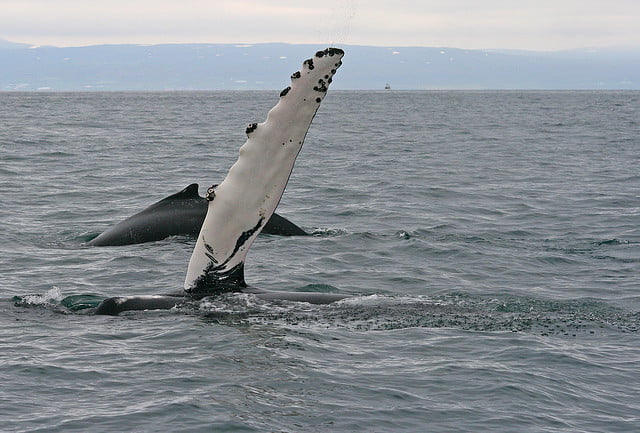
    Whether in groups or as individuals, humpback whales are canny hunters. They herd prey together by encircling them and releasing bubbles that form a “net” that bars escape. Then, the whales lunge through the center with open mouths, gathering prey. Scientists have long wondered whether humpbacks’ unusually long pectoral fins played any role in their hunting. New drone observations of whales feeding (see video below) are beginning to provide some hints.

    The scientific teams observed multiple individual whales feeding under the same circumstances and found that the whales used their fins quite differently. Both used them as additional barriers to prevent prey from escaping, but one whale favored a horizontal fin position that created currents that helped sweep prey into its mouth. The other whale used a more vertical fin position that, while hydrodynamically unfavorable, exposed its bright underside, which seemed to startle prey into fleeing into its darker, more inviting mouth. (Image credit: K. Kosma; video credit: M. Kosma; research credit: M. Kosma et al.; via Science)

  • Turning Sound Into Imagery

    Turning Sound Into Imagery

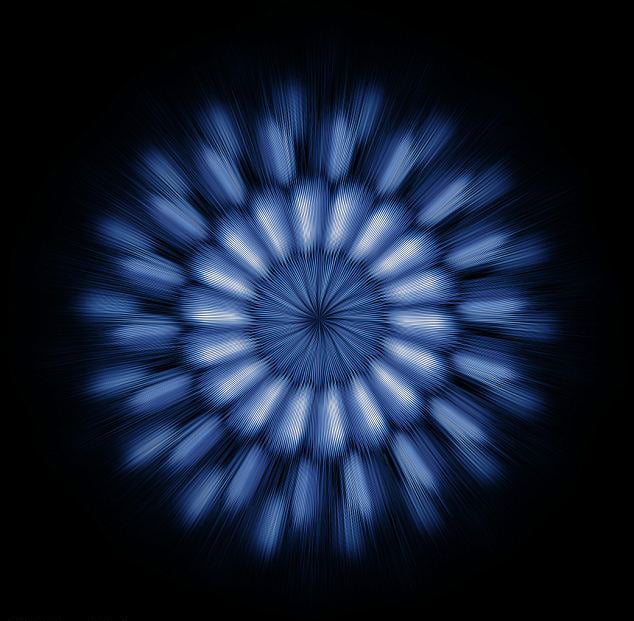
    The acoustic signatures of many animals contain features we humans cannot appreciate, given the limited range of frequencies we can hear. In fluid dynamics and many other fields, scientists and engineers have to find ways to analyze and decompose time-series data–like acoustic pressure signals–into useful quantities. Mark Fischer uses one tool for such analysis, a wavelet transform, to turn the calls of whales, birds, and insects into the colorful snapshots seen here. Wavelet transforms are somewhat similar to Fourier transforms but represent a signal with a series of wavelets rather than sinusoids. They’re also widely used for data compression. (Image credits: M. Fischer/Aguasonic Acoustics; via DailyMail)

  • Humpback-Inspired Turbine Blades

    Humpback-Inspired Turbine Blades

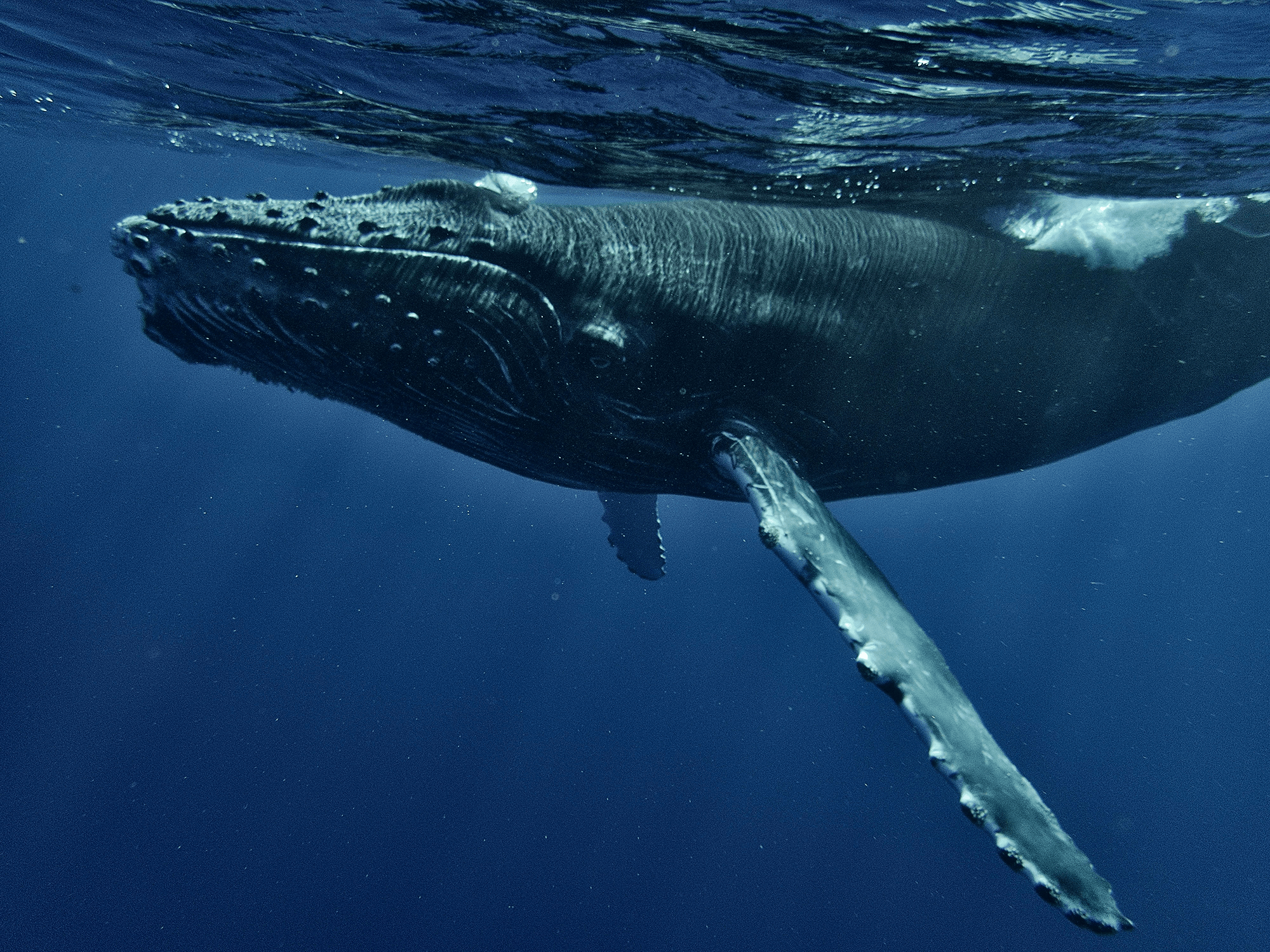
    The bumps–or tubercles–on the edge of a humpback whale’s fins have important hydrodynamic effects on its swimming. Here dye is used to visualize flow over a hydrofoil with tubercle-like protuberances–a sort of artificial whale fin. Dye released from the peaks and troughs of the protuberances flows straight back in a narrow line before breakdown to turbulence. But the dye released from ports on the shoulders of the protuberances twists and spirals into vortices. At angle of attack, these vortices are stronger. They may help keep flow from separating on the upper side of a whale’s fin. (Photo credits: SIDwilliams, H. Johari)

  • Tubercles and Turbines

    Tubercles and Turbines

    The flippers of humpback whales include bumps–called tubercles–on their leading edges. The tubercles create vortices that prevent the boundary layer from separating, which causes stall and a loss of lift. New research shows that adding similar bumps to the leading edge of tidal turbine blades results in greater energy production at low flow speeds compared to conventional designs. See Scientific American for more. #