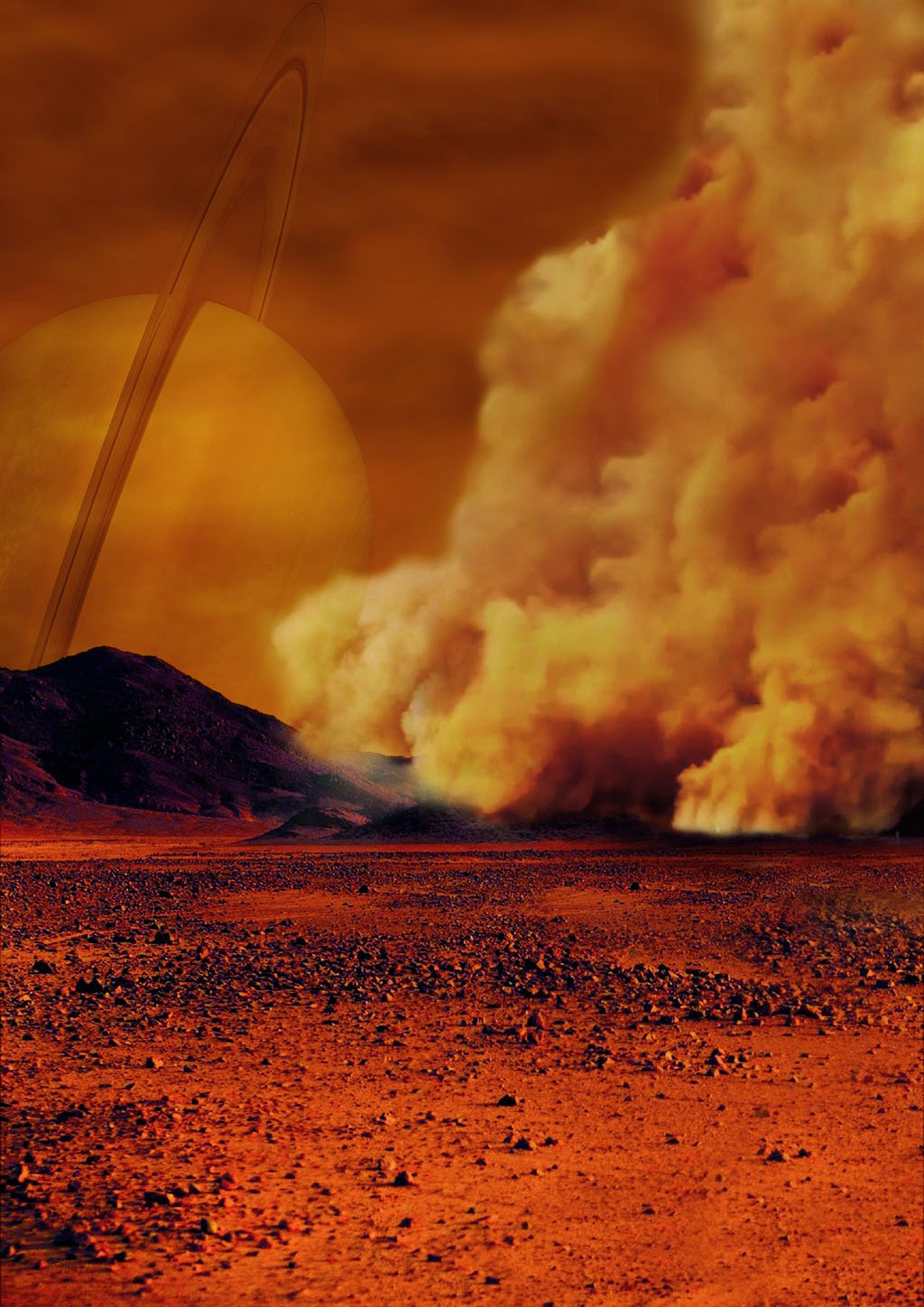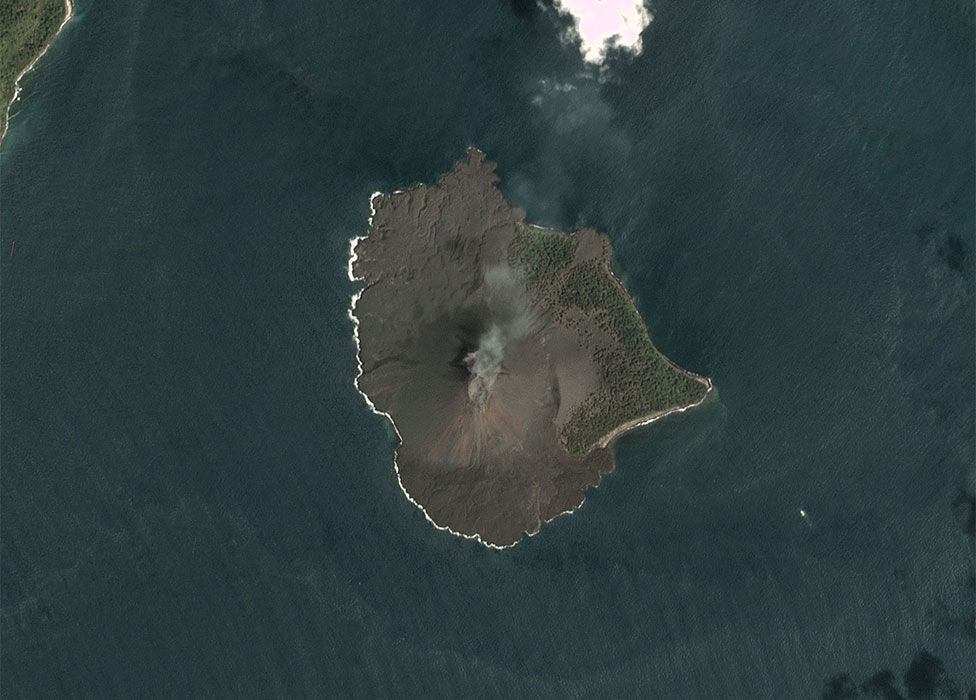
This weekend I’ll be holding my second live webcast for FYFD patrons. This month we’ll be focusing on the subject of planetary science, one of the coolest applications out there for fluid dynamics. My guests will be Keri Bean, a NASA JPL mission operations engineer and atmospheric scientist, and Professor Geoffrey Collins, a geologist at Wheaton College in Massachusetts. Keri has worked on all the recent Martian missions, including Mars Curiosity and the Phoenix Lander. She currently works on operations for the Dawn mission to Ceres. Geoff studies the geophysics of icy planets and moons like Pluto and Titan. He was part of the Galileo and Cassini missions to Jupiter and Saturn and is currently part of the team working on a future mission to Europa.
Tag: geophysics

Martian Viscous Flow

These images from the Mars Reconnaissance Orbiter show what are called viscous flow features. They are the Martian equivalent of glacial flow. Such features are typically found in Mars’ mid-latitudes.
Ground-penetrating radar studies of Mars have shown that some of these features contain water ice covered in a protective layer of rock and dust, making them true glaciers. Another study of similar Martian surface features found that their slope was consistent with what could be produced by a ~10 m thick layer of ice and dust flowing superplastically over a timescale equal to the estimated age of the surface features. Superplastic flow occurs when solid matter is deformed well beyond its usual breaking point and is one of the common regimes for glacial ice flow on Earth. (Image credit: NASA/JPL/U. of Arizona; via beautifulmars)

Pyroclastic Flow
Major volcanic eruptions can be accompanied by pyroclastic flows, a mixture of rock and hot gases capable of burying entire cities, as happened in Pompeii when Mt. Vesuvius erupted in 79 C.E. For even larger eruptions, such as the one at Peach Spring Caldera some 18.8 million years ago, the pyroclastic flow can be powerful enough to move half-meter-sized blocks of rock more than 150 km from the epicenter. Through observations of these deposits, experiments like the one above, and modeling, researchers were able to deduce that the Peach Spring pyroclastic flow must have been quite dense and flowed at speeds between 5 – 20 m/s for 2.5 – 10 hours! Dense, relatively slow-moving pyroclastic flows can pick up large rocks (simulated in the experiment with large metal beads) both through shear and because their speed generates low pressure that lifts the rocks so that they get swept along by the current. (Image credit: O. Roche et al., source)

Glaciers in Motion
To the naked eye, glaciers don’t appear to move much, but appearances can be deceiving. Like avalanches and turbidity currents, glaciers flow under the influence of gravity. They typically move at speeds around 1 meter per day, but some glaciers, like those shown above in Pakistan’s Central Karakorum National Park, can briefly surge to speeds a thousand times higher than their usual. The animation above shows 25 years worth of Landsat satellite imagery, enabling one to more easily observe the motion of these slow giants. Try picking out a feature along one of the glaciers and watch it move year-by-year. The glaciers just right of the image centerline are some of the best! (Image credit: J. Allen; via NASA Earth Observatory; submitted by Vince D)
Enjoy FYFD? Consider becoming a patron to help support the site!

Underwater Landslides
Turbidity currents are a gravity-driven, sediment-laden flow, like a landslide or avalanche that occurs underwater. They are extremely turbulent flows with a well-defined leading edge, called a head. Turbidity currents are often triggered by earthquakes, which shake loose sediments previously deposited in underwater mountains and canyons. Once suspended, these sediments make the fluid denser than surrounding water, causing the turbidity current to flow downhill until its energy is expended and its sediment settles to form a turbidite deposit. By sampling cores from the seafloor, scientists studying turbidites can determine when and where magnitude 8+ earthquakes have occurred over the past 12,000+ years! (Video credit: A. Teijen et al.; submitted by Simon H.)
Do you enjoy FYFD and want to help support it? Then please consider becoming a patron!

How the Grand Canyon Formed
The Grand Canyon is a monument to the power of water, air, and time. In this video from It’s Okay To Be Smart, Joe Hanson describes the formation of the Grand Canyon – from the ancient oceans that created its many layers to the tectonic upthrusts that eventually created the Colorado River that continues to cut through the Canyon’s rocks today. Fluid dynamics play a major role in the geology of the Grand Canyon, whether it’s in the mantle convection that helps drive plate tectonics or the sedimentation that builds and erodes rock layers. (Video credit: It’s Okay To Be Smart)

Calbuco
Filmmaker Martin Heck captured incredible timelapse footage of the Chilean volcano Calbuco erupting earlier this year. Fluid dynamics on these enormous geophysical scales is always awe-inducing. In the beginning, clouds bob gently and flow around the landscape. Then the volcano erupts, and the towering ash cloud of the eruption roils with turbulence, displaying eddies with length scales from hundreds of meters down to centimeters. And when the hot ash has risen and cooled, it forms a cap that spreads horizontally. Nature is a wonderful demonstrator of fluid dynamics, but what always amazes me is how very alike flows are whether they are confined to a laboratory or take up an entire planet. (Video credit: M. Heck; via It’s Okay To Be Smart)

Convection from a Heat Source
Convection is a major driver in many flows in nature. In this film, the UCLA Spinlab demonstrates buoyant convection caused by a local heat source. They deposit dye on a submerged, continuously heated plate, then observe as the dye slowly rises with the heated (lower density) fluid. The surface forms a cap for the rising dye, which then spreads horizontally. Qualitatively similar flows can be seen in nature over volcanic eruptions or in thunderstorms when clouds reach the troposphere or a capping inversion. Be sure to check out the rest of the Spinlab’s videos. (Video credit: UCLA Spinlab; submitted by Jon B.)

Jumps in Stratified Flows
One of the factors that complicates geophysical flows is that both the atmosphere and the ocean are stratified fluids with many stacked layers of differing densities. These variations in density can generate instabilities, trap rising or sinking fluids, and transmit waves. The animations above show flow over two ridges with dye visualization (top), velocity (middle), and contours of density (bottom). The upstream influence of the left ridge creates a smooth, focused flow that quickly becomes turbulent after the crest. The jet rebounds as a turbulent hydraulic jump before slowing again upstream of the second ridge. Like the first ridge, the second ridge also generates a hydraulic jump on the lee side. Clearly both stratification and the local topography play a big role in how air moves over and between the ridges. If prevailing winds favor these kinds of flows, it can help generate local microclimates. (Image credit and submission: K. Winters, source videos)

Pyroclastic Flow

Saturday morning Japan’s Mount Ontake erupted unexpectedly, sending a pyroclastic flow streaming down the mountain. Many, though sadly not all, of the volcano’s hikers and visitors survived the eruption. Pyroclastic flows are fast-moving turbulent and often super-heated clouds filled with ash and poisonous gases. They can reach speeds of 700 kph and temperatures of 1000 degrees C. The usual gases released in a pyroclastic flow are denser than air, causing the cloud to remain near the ground. This is problematic for those trying to escape because the poisonous gases can fill the same low-lying areas in which survivors shelter. Heavy ashfall from the flow can destroy buildings or cause mudslides, and the fine volcanic glass particles in the ash are dangerous to inhale. The sheer power and scale of these geophysical flows is stunning to behold. Those who have witnessed it firsthand and survived are incredibly fortunate. For more on the science and history of Mount Ontake, see this detailed write-up at io9. (Image credits: A. Shimbun, source video; K. Terutoshi, source video; via io9)