Tag: fluids as art

  • Featured Video Play Icon

    “Haboob”

    Mike Olbinski’s latest storm chasing timelapse, “Monsoon V,” is once again spectacular. Although I do think the name could have been “Haboob” instead, given how many sweeping dust clouds encroach on the viewer. These towering wall clouds of dust can form from downdrafts at the leading edge of a cold front, or from the fading remains of a thunderstorm. In dry, dusty regions like Arizona, the strong downward winds spread outward as they near the ground, picking up dust and sand. Below you can see two examples of haboobs racing ahead of fronts. 

    The middle image shows a microburst, where a sudden, localized downdraft falls out of the storm. Notice how the wind and rain sweep outward as they near the ground. This is typical of any flow heading straight toward a wall! Check out the full video for lots more gorgeous fluid dynamics in action. (Video and image credit: M. Olbinski)

  • Featured Video Play Icon

    Fire Tornado in a Bubble

    File this one under awesome tricks you shouldn’t try at home. Here bubble artist Dustin Skye demonstrates his handheld inverted fire tornado. First, he blows a large encapsulating bubble, then blows butane and smoke into a smaller secondary bubble. When he breaks the wall between the two, the mixture swirls into the larger bubble. Then, by breaking a narrow hole into the remaining bubble, Skye forms a swirling tornado. He’s using conservation of angular momentum here to concentrate the vorticity he created by blowing into the original butane bubble. As the big bubble shrinks, the vorticity inside gets pulled inward and speeds up – like when a spinning ice skater pulls his arms in. That’s how you get the tornado. And from there, it’s just a matter of lighting the exiting butane and air mixture. (Video credit: D. Skye; via Gizmodo)

  • Featured Video Play Icon

    “Winter’s Magic”

    Don Komarechka’s beautiful short film, “Winter’s Magic,” captures the beauty of soap bubbles as they freeze. It’s a delicate process and one difficult to capture in video. The bubble freezes first at the bottom, where it touches the cold surface – in this case, snow. That freezing releases latent heat and creates a temperature gradient along the thin liquid film. With that temperature gradient comes a variation in surface tension, and it’s this that creates the flow that lifts the ice crystals from the surface and turns the bubble into a snow globe. Eventually, as the frozen crystals continue growing, flow in the bubble walls comes to halt as the film solidifies.

    For more on the physics of freezing bubbles, check out this interview with the researchers, or, to learn more on how to film freezing bubbles, check out Komarechka’s description. (Video and image credit: D. Komarechka; via Laughing Squid; h/t to Jennifer O.)

  • A Golden Swirl

    A Golden Swirl

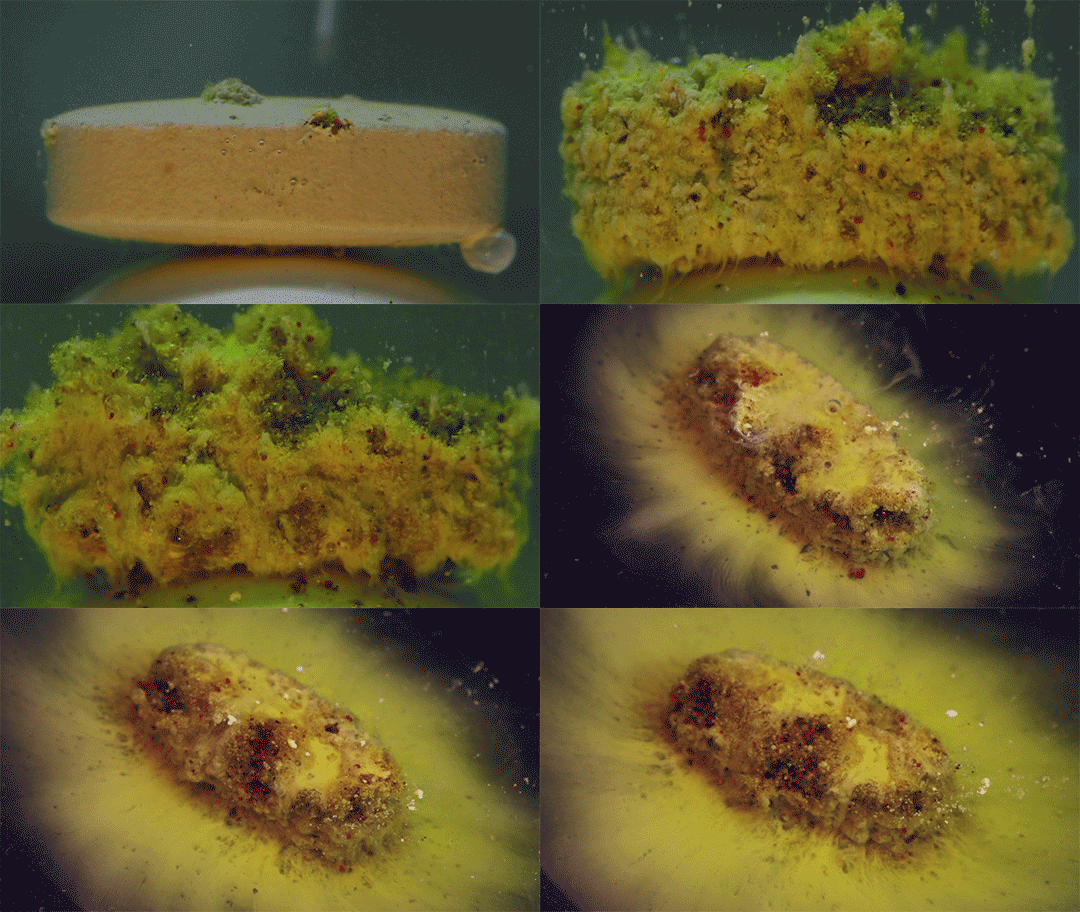
    As much as I love exploring flashy examples of fluid dynamics, like shock waves around aircraft or what happens when non-Newtonain fluids get crushed by a hydraulic press, my favorite moments are the simple, everyday ones. Getting to see fluid dynamics in my daily life, whether I’m standing in the kitchen cooking or trying to wash my hands, is what excites me the most. The photo above is an example of this kind of simple, satisfying fluid experience. The image shows wax being melted in a crockpot. As it melts and its optical characteristics change, the wax reveals the mixing pattern inside the container. There’s nothing earth-shattering or scientifically important about something like this. But it’s still a moment where the otherwise unseen and unnoticed becomes visible and beautiful. It’s the fluid dynamical equivalent of stopping to smell the roses. When did you last pause to appreciate the flows around you? (Image credit: A. Unger et al.)

  • “Ice Formations”

    “Ice Formations”

    As perfect as ice can appear, it always starts with a defect. Without a speck of dust or soot to act as a seed, supercooled water simply will not freeze. But these imperfections can lead to beauty. In “Ice Formations,” photographer Ryota Kajita captures some of the oddities of ice in Alaska’s interior swamps and ponds. In Kajita’s images bubbles are frozen in suspension, plates of ice form strange shapes, and star-shaped cracks peek through the snow. Whether the ice formed too quickly or too slowly, there are interesting signatures left behind. See the full set of images, spanning the last eight years, here. (Image credit: R. Kajita; via Colossal)

  • Featured Video Play Icon

    “If I Say”

    The new Mumford & Sons single “If I Say” features a fluid-dynamical music video. It’s full of dendritic fingers and flowing colors – likely from combinations of inks, paints, and other fluids. Although the fingers are reminiscent of the viscosity-dependent Saffman-Taylor instability, these appear to be driven by variations in surface tension between the different fluids. That’s a major feature throughout the video; although some of the flow is caused by the syringes depositing fluids, much of it seems to be a Marangoni effect, where flow moves away from areas of low surface tension to ones with higher surface tension. (Video credit: Mumford & Sons; filmed by P. Hofstede; via Katie M.)

  • Namibia From Above

    Namibia From Above

    From above, we see an all-new perspective on the flows of air and water that shape our world. Although they look like abstract art, these aerial photographs of Namibia by Leah Kennedy show rippling dunes and spreading fingers of water. Linear dunes like these grow when the prevailing winds are always from the same direction. Over time, rivers meander, always seeking new drainage paths. Patterns like these are probably driven by periodic flooding. (Image credit: L. Kennedy; via Colossal)

  • Turbulent Skies

    Turbulent Skies

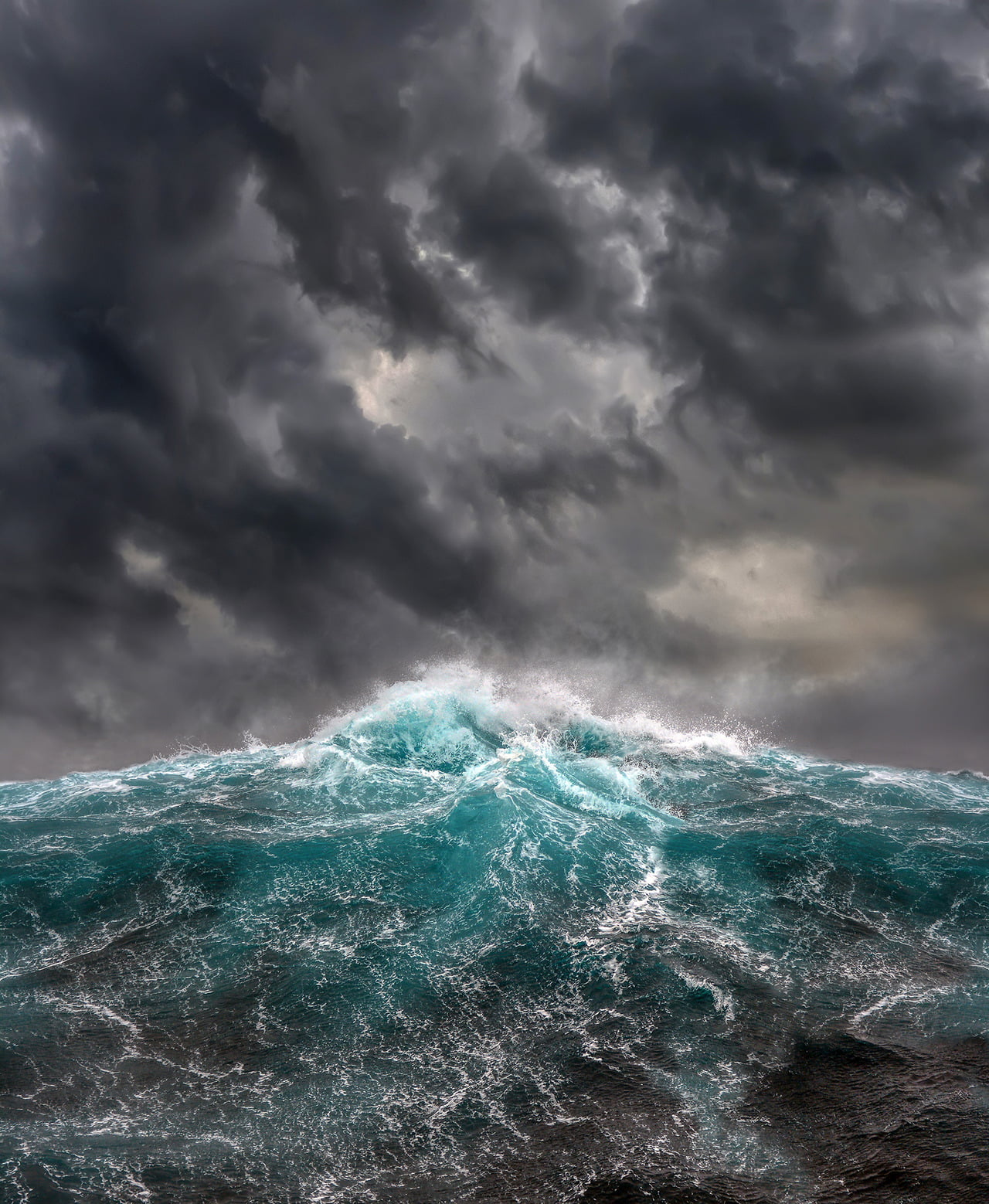
    The atmosphere above us is a thin layer enclosing our planet, but it roils with activity and energy. Photographer Camille Seamon captures the grandeur of our turbulent skies in her storm shots. These dramatic atmospheric vistas – including mammatus clouds (top), swirling supercells (middle), and turbulent storm clouds (bottom) – are all driven by the flow of heat and moisture. (Image credit: C. Seaman; via Colossal)

  • Featured Video Play Icon

    “Float”

    In “Float” artist Susi Sie uses water and oil to create a whimsical landscape of bubbles and droplets. Coalescence is a major player in the action, though Sie uses some clever time manipulations to make her bubbles and droplets multiply as well. Watching coalescence in reverse feels like seeing mitosis happen before your eyes. (Video and image credit: S. Sie)

  • A Splat is Born

    One day calligrapher Mae Nguyen accidentally squeezed a droplet out of her waterbrush pen, and a fun, new technique was born. Nguyen sometimes uses the arrays of droplets to paint and other times blows on them to create colorful splatters, like in the video above. I’d love to see the latter technique, in particular, in slow motion! I expect there is some really cool mixing as the droplets coalesce. Check out more of Nguyen’s work on her website and Instagram account. (Video credit: M. Nguyen)