Stingrays swim over rippled sands in this award-winning image from photographer Gregory Sherman. Above this peaceful vista, waves break and a dramatic skyscape looms. It’s the regular back-and-forth of the waves that shapes the ripples of sand. The rays can also use the sand for cover; note the remnants of sand atop a few of these rays, and then see how they hide themselves. See more winners from the Underwater Photographer of the Year awards in this gallery. (Image credit: G. Sherman/UPY 2023; via Colossal)
Tag: fluids as art

A Glimpse of Earth’s Interior
Lava spurts from the Fagradalsfjall volcano in Iceland in this award-winning photo by Riten Dharia. It’s always bizarre to see molten rock flowing in fountains and rivers because it’s so unlike our daily experiences. Some deeply buried areas of the Earth, including the outer part of the core, are often described as liquid rock, which brings to mind lava. But that’s not, in fact, what those regions are like. If you were to visit Earth’s outer core in some super-submersible, you would not find a sea of lava. Instead, you would find yourself surrounded by what seemed to be solid rock. That’s not to say that the outer core is solid — just that it flows on geological timescales that are far longer than any human’s lifetime! (Image credit: R. Dharia; via Gizmodo)

Exploding a Bubble
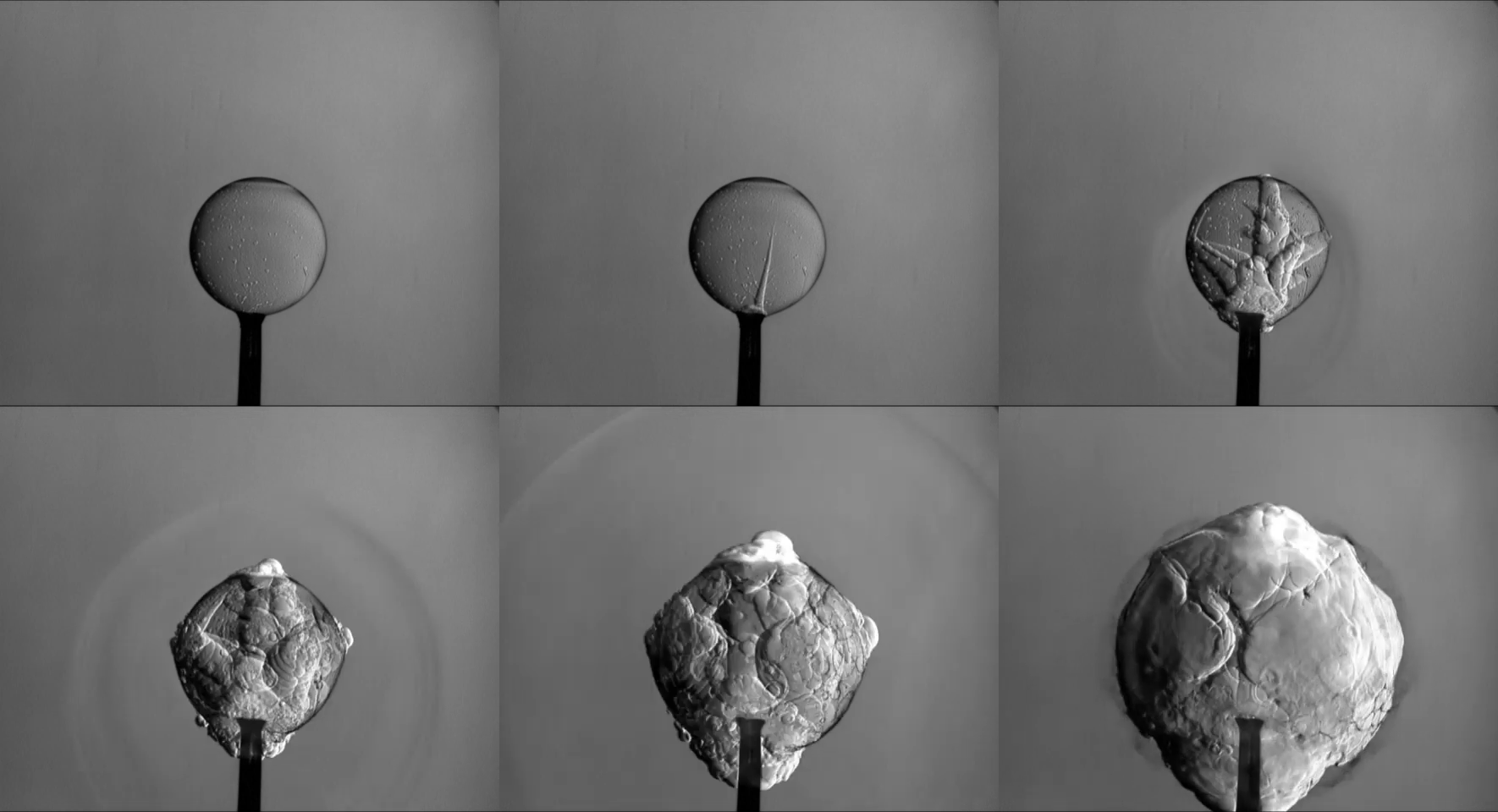
In this high-speed video, artist Linden Gledhill ignites a mixture of oxygen and hydrogen contained within a soap bubble. As neat as the video is, I decided to take a closer look at the initial detonation with this animation:

The ignition sequence within the bubble, slowed down further. Even here, it’s hard to appreciate just how fast ignition is; it lasts only a handful of frames, despite filming at 40,000 frames per second. But we can still pick out some very neat physics. The ignition begins with a spike-like jet but immediately forks into three ignition fronts that pierce the soap bubble. You can see the shadowy mist of the bubble bursting as the flame front expands. Watch the background carefully, and you can see a shock wave flying away from that moment of detonation.
Once the soap bubble is gone, the expanding flames begin to wrinkle and deform. Turbulence takes shape, eddying through the flames at a much slower speed than the initial detonation. This is where most of combustion takes place, with turbulence mixing the hydrogen and oxygen together to better enable burning. (Image and video credit: L. Gledhill)

Wreathed
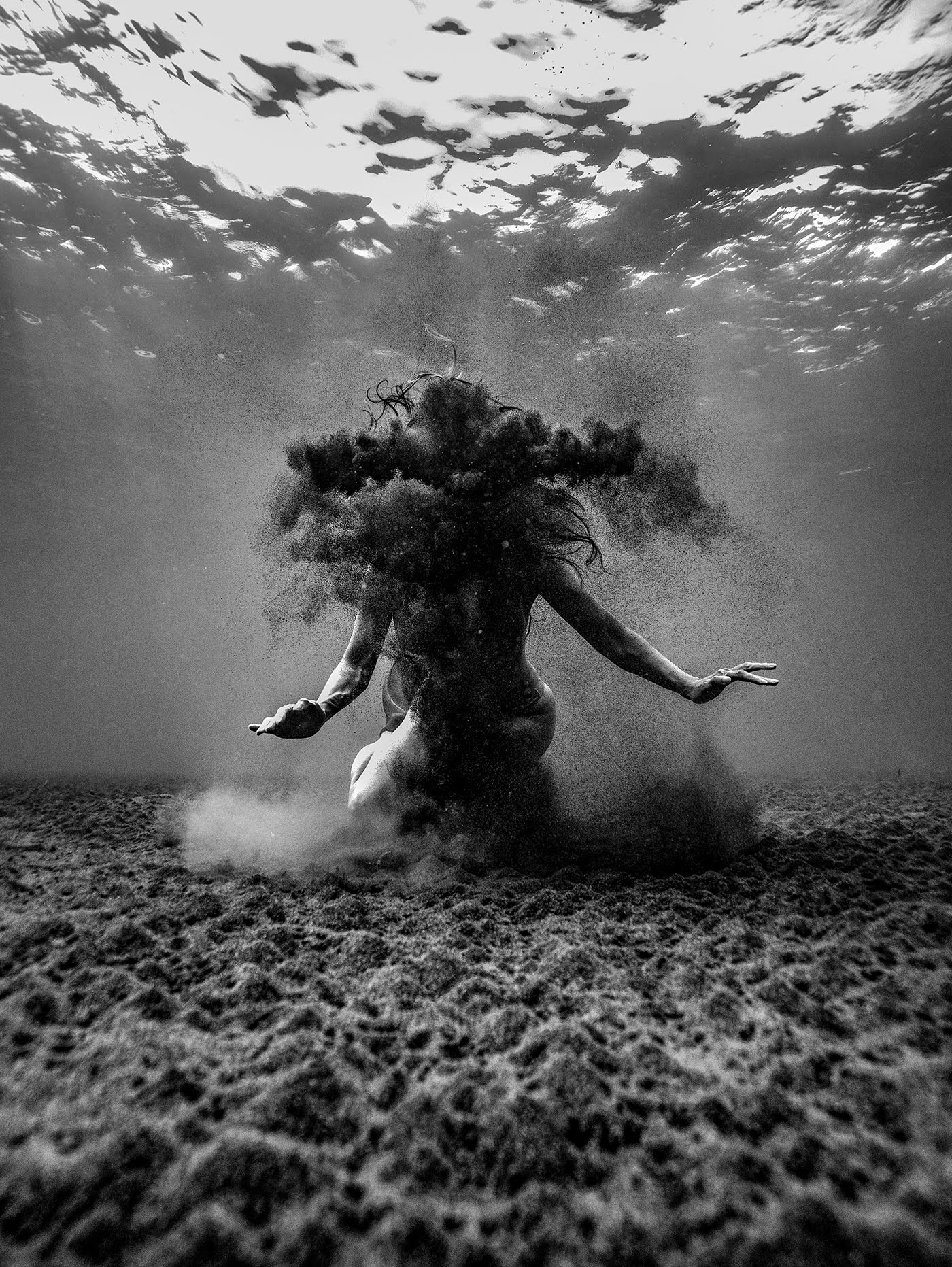
A woman hides in silt and sediment in this award-winning underwater photo by Lee Jongkee. The motion of her plunge sends water spinning downward, where it picks up particles from the ground. Slow to settle, the sediment forms an ethereal mask for the swimmer. See more of the 2023 Sony World Photography winners here. (Image credit: Lee Jongkee)

Paddling Pathlines

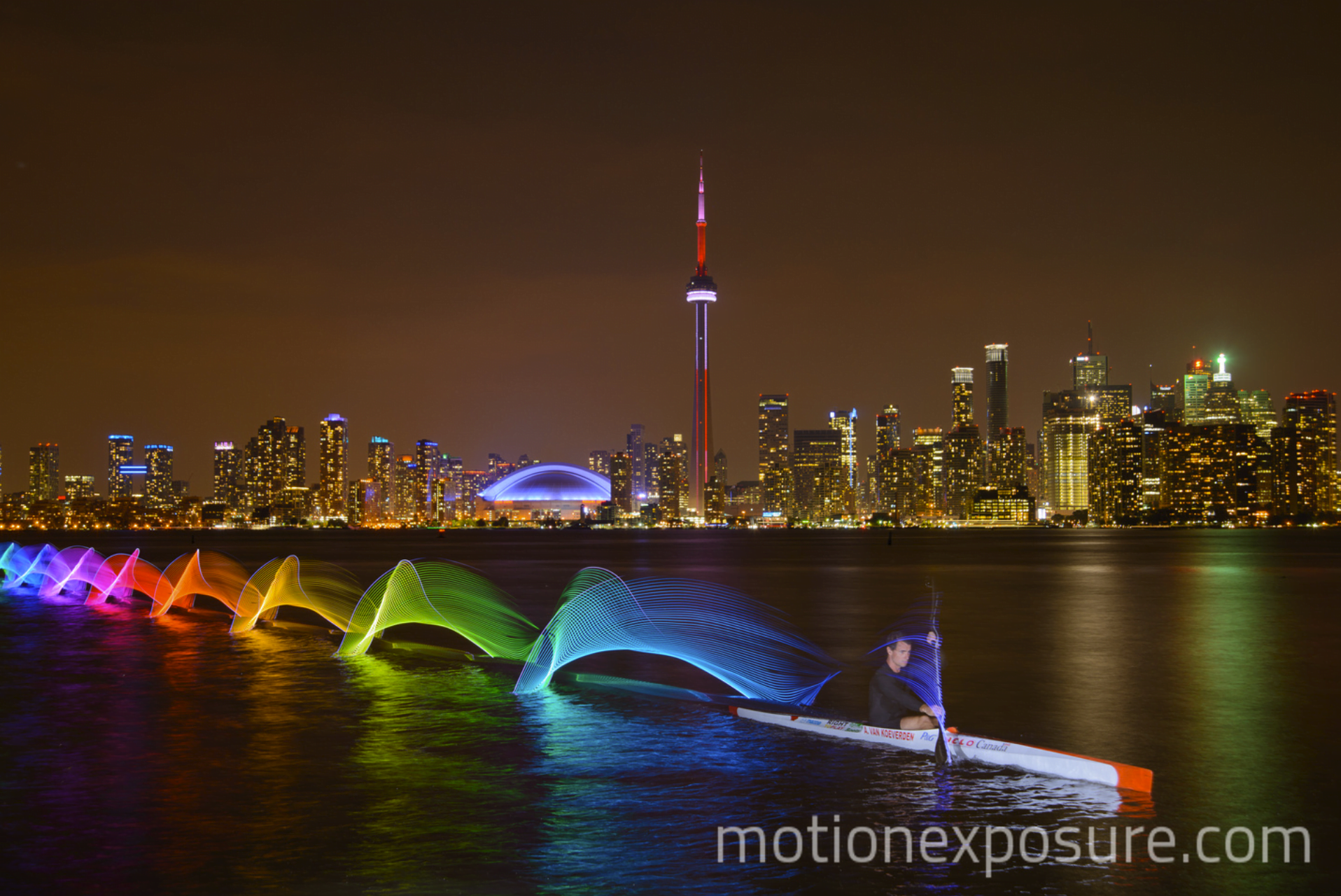


Rainbow lines cut through the darkness in photographer Stephen Orlando’s images of a kayak in motion. Equipped with an LED-lined paddle, Olympic kayaker Adam van Koeverden paddled along the waterfront while Orlando took long exposure photographs. The kayak’s motion makes it effectively invisible, while the paddle’s lights trace out the path of each stroke taken. Scientists also use this kind of technique to follow the path of an object in a flow. In fluid dynamics, we call these remnants of an object’s trajectory a pathline. (Image credit: S. Orlando)

“FLOW”
We live in a world of fluids. We breathe them, move through them, and have them move in us. “FLOW” is a celebration of that pervasive motion, animated from hand-drawn artwork. It features fluid dynamics from our daily lives — a candle’s flame, breaking waves, pedestrian traffic — all the way to astronomical scales far beyond typical human experience — the rotation and collision of galaxies. It’s a beautiful reminder that flows are always surrounding us, linking our lives from the small to the unbelievably large. (Video credit: MIT LineStorm Animation Consortium; submitted by Pell O.)

“Dark Matter”

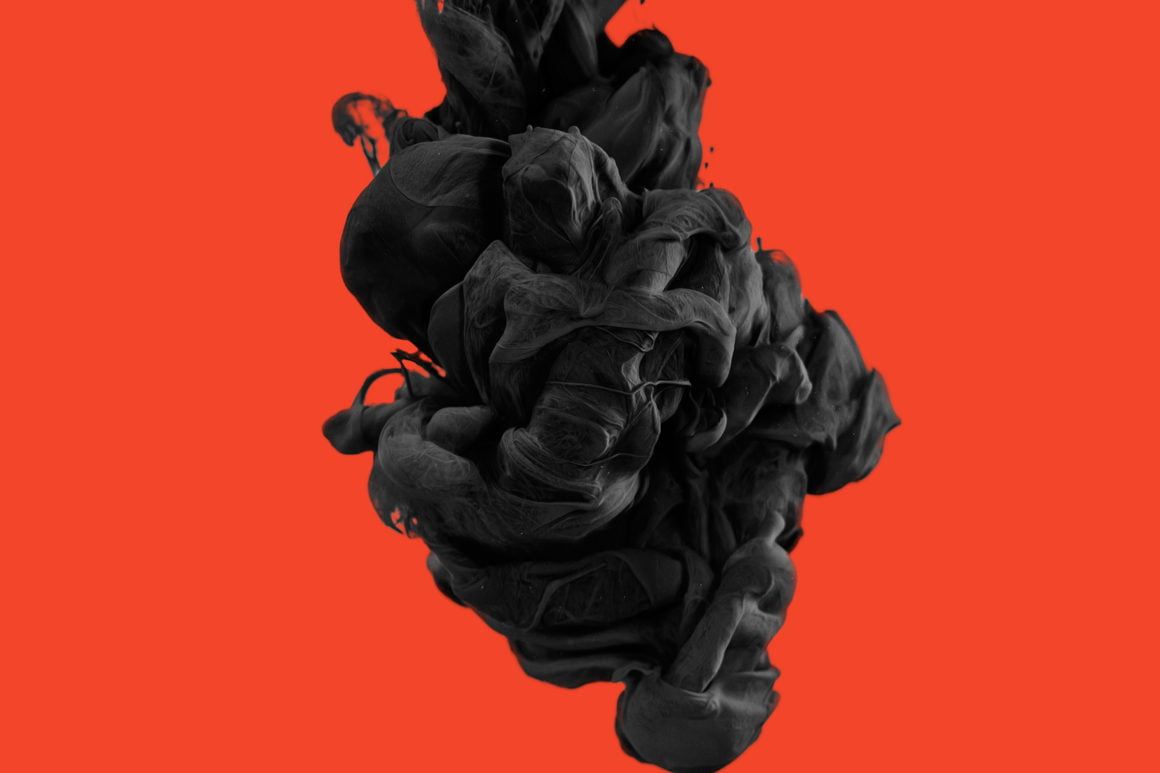

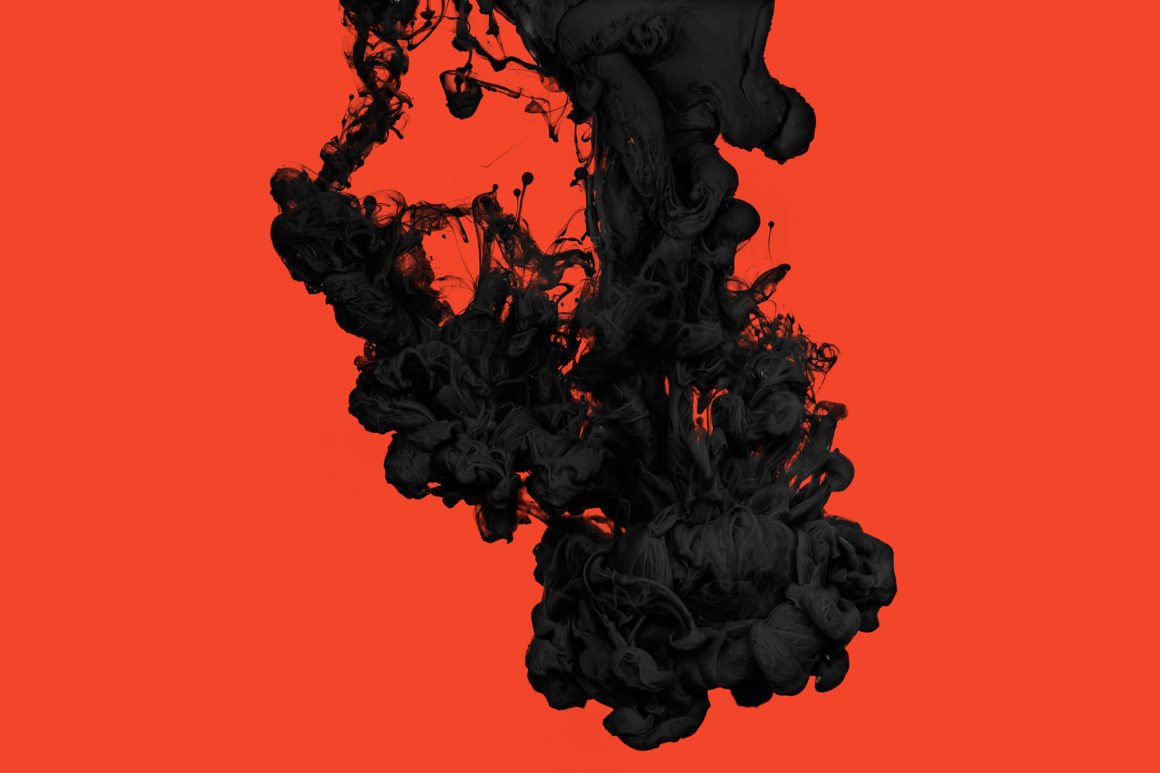


In “Dark Matter” photographer Alberto Seveso captures billowing black pigment against a bright red backdrop. Seveso excels at capturing the developing turbulence in sinking fluids. I’m always blown away by the texture in his images; it almost makes the fluid look fabric-like and solid. Look closely in some of these images and you can catch a few tiny Rayleigh-Taylor instabilities, too, as the denser pigment sinks through water. (Image credit: A. Seveso)

“Elements”
Photographer Mikko Lagerstedt specializes in Nordic landscapes, like the windswept snow seen here. I love the way he’s captured the snow that gets picked up and blown by the wind. Notice the hazy layer of snow hovering over the foreground. This snow is saltating, just as sand does in the desert. When flakes get picked up by the wind, they follow a ballistic trajectory, much like a cannonball in a high-school physics class. As the snow crashes back down, its impact knocks up more flakes, and the process continues. Repeat enough times, and you’ll see this hazy layer of blowing snow blanketing a snowscape. (Image credit: M. Lagerstedt; via Colossal)
Paint Ejection


Shaking paint on a speaker cone and filming it in high speed is an oldie but a goodie. Here, artist Linden Gledhill films paint ejection at 10,000 frames per second, giving us a glorious view of the process. As the paint flies upward, accelerated by the speaker, it stretches into long ligaments. As the ligaments thin, surface tension concentrates the paint into droplets, connected together by thinning strands. When those strands break, they snap back toward the remaining paint, imprinting swirling threads of different colors, thanks to their momentum. Eventually, surface tension wins the tug-of-war and transforms all the paint into droplets. (Video and image credit: L. Gledhill)
“Turbulence”


In his recent short film, artist Roman De Giuli explores turbulence using metallic paints and inks in a fishtank. The effects are beautiful: sparkling pigments dispersing in clouds, mushroom- and umbrella-shaped Rayleigh-Taylor instabilities, and lots of swirling eddies. It’s exactly the kind of eyecandy to kick off your weekend with! (Image and video credit: R. De Giuli)