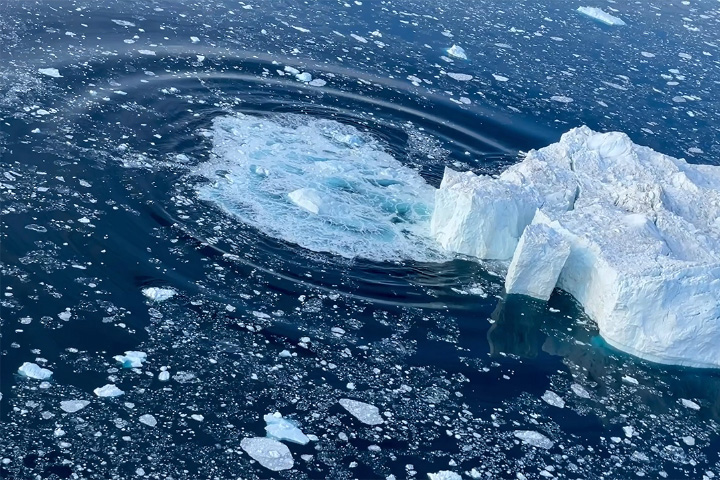
In summer, the fjords of Greenland are littered with ice, but in August 2023, satellites caught an odd interloper. See the thin white arc spanning the fjord in the photo above? Scientists suspect this ephemeral feature was a wave caused by a large iceberg calving off the glacier on the right. When large chunks of ice fall into the water, they can cause distinctive waves that travel out from the point of impact.
Another possible mechanism is an underwater plume. In Greenland’s fjords, such plumes are sometimes formed from freshwater melting below the glacier. When that water rises to the surface, it can push ice. (Image credit: W. Liang; via NASA Earth Observatory)
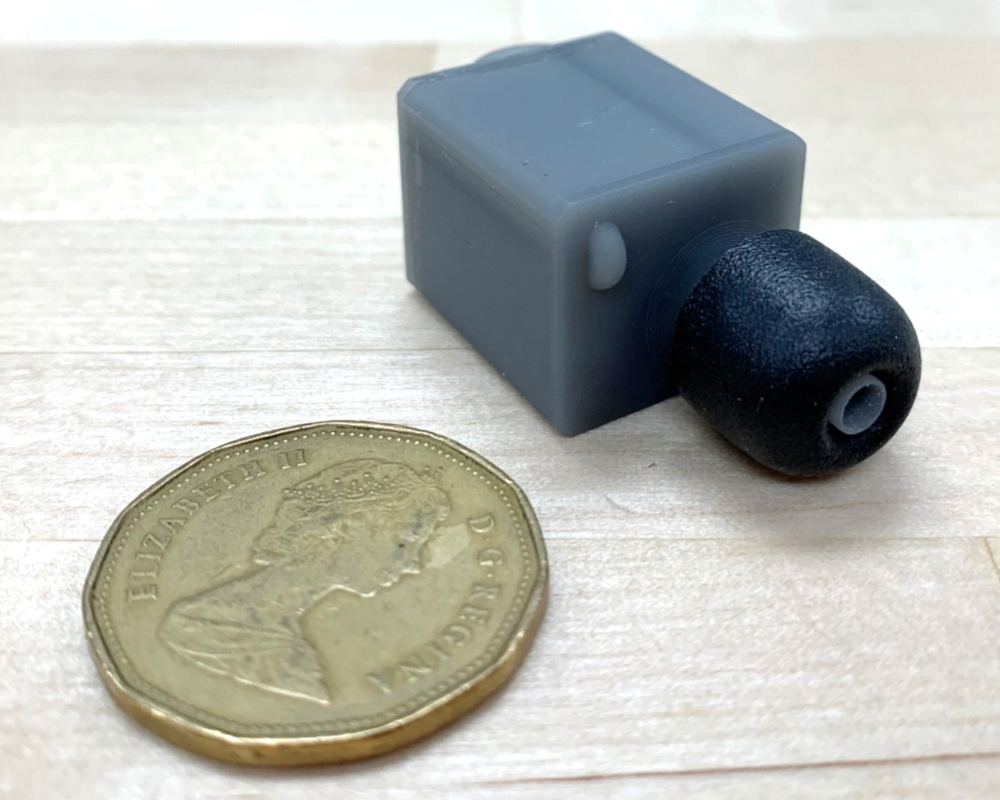
Ear plugs can be wonderful at blocking outside noise, but they come with a downside: they typically amplify internal bodily sounds, like our heartbeat, breathing, and chewing. This effect, called occlusion, is distracting enough for some users to forego ear protection or hearing aids. But a new prototype offers a hope for an occlusion-free future without requiring active noise-cancelling.
Most devices fit a short way inside our ear canals, which blocks outside sound well, but creates a little resonance chamber between the plug and our ear drums. It’s this gap that amplifies the low-frequency sounds within our bodies, making them seem much louder. To counter that, the team’s new plug contains foam sections arranged with hollow spaces between. By tuning the properties of the 3D-printed foam, they created a resonant structure inside the earbud that damps out those low-frequency body noises while still blocking outside sound.
Illustration of the earbud’s interior. The blue and green areas are foam-filled cavities.
So far the prototype has only been tested with an artificial ear designed for auditory tests; that’s enough to show that the concept works, but next they’ll redesign the bud to fit a human ear canal more comfortably. (Image and research credit: K. Carillo et al.; via APS Physics)
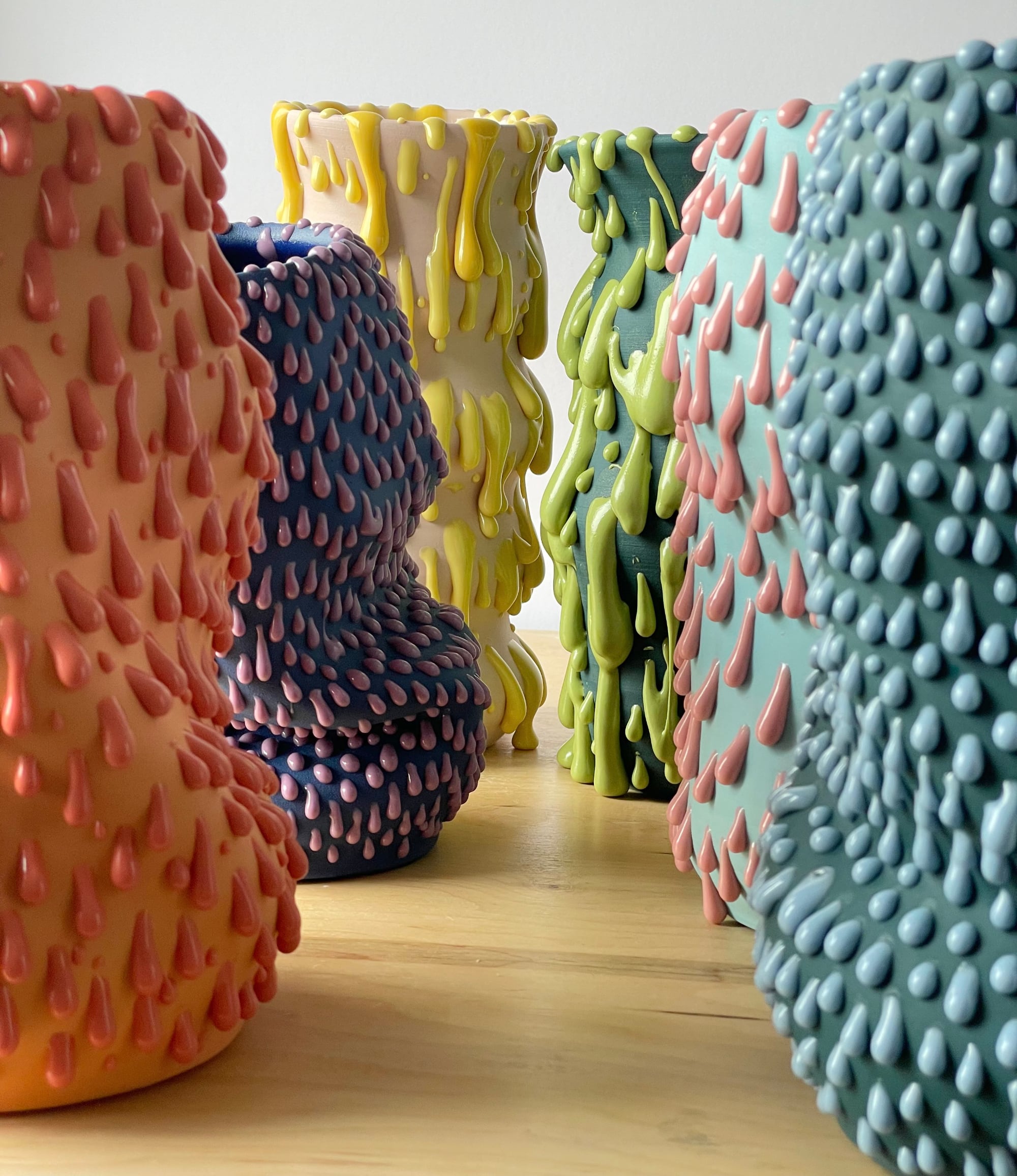
Dripping, drooping pottery is artist Philip Kupferschmidt’s specialty. Covered in drips and drops, slumping as if half-melted, Kupferschmidt’s ceramics seem partially liquid. With their colorful glazes, these pieces ooze personality. (Image credit: P. Kupferschmidt; via Colossal)
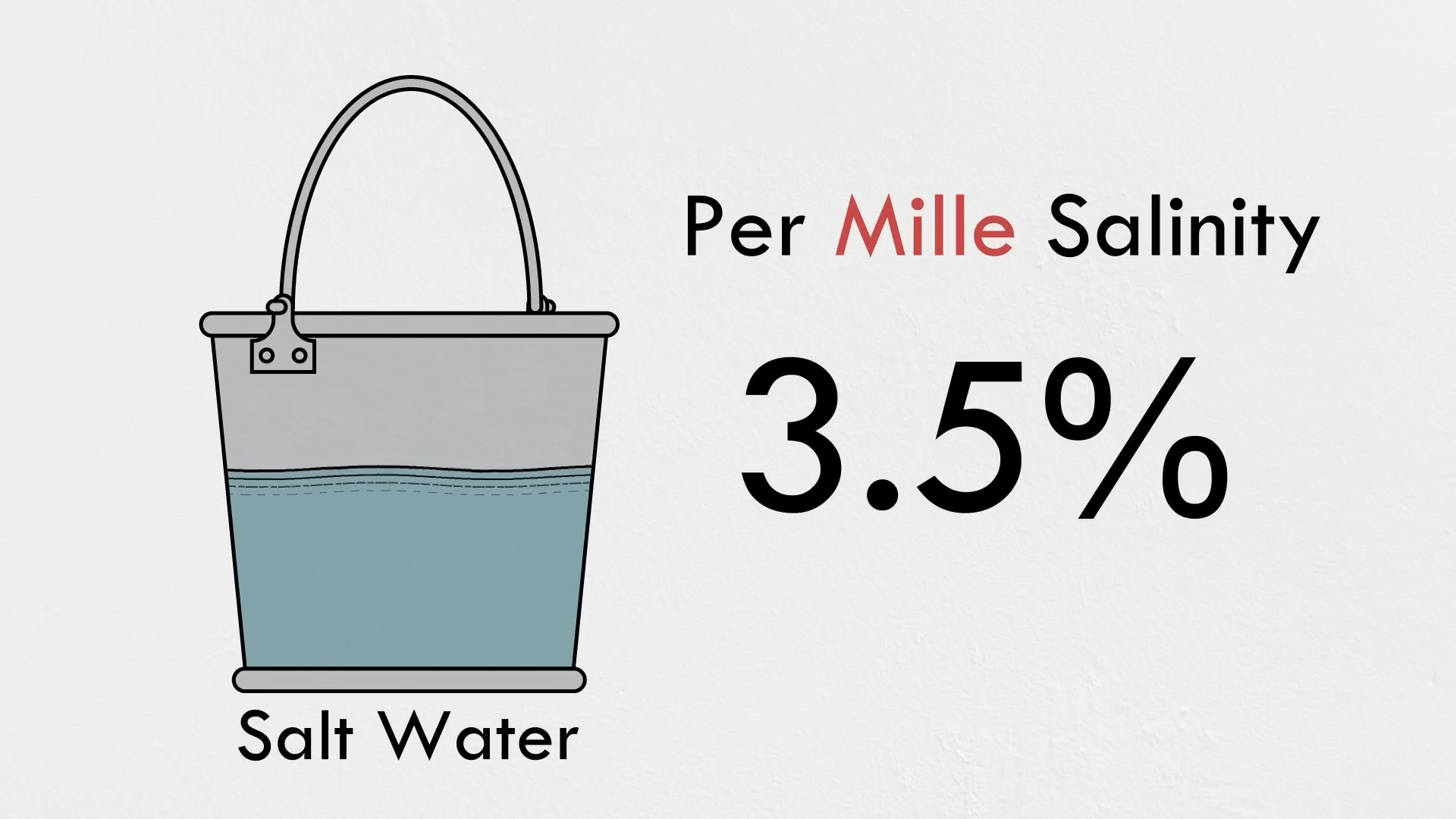
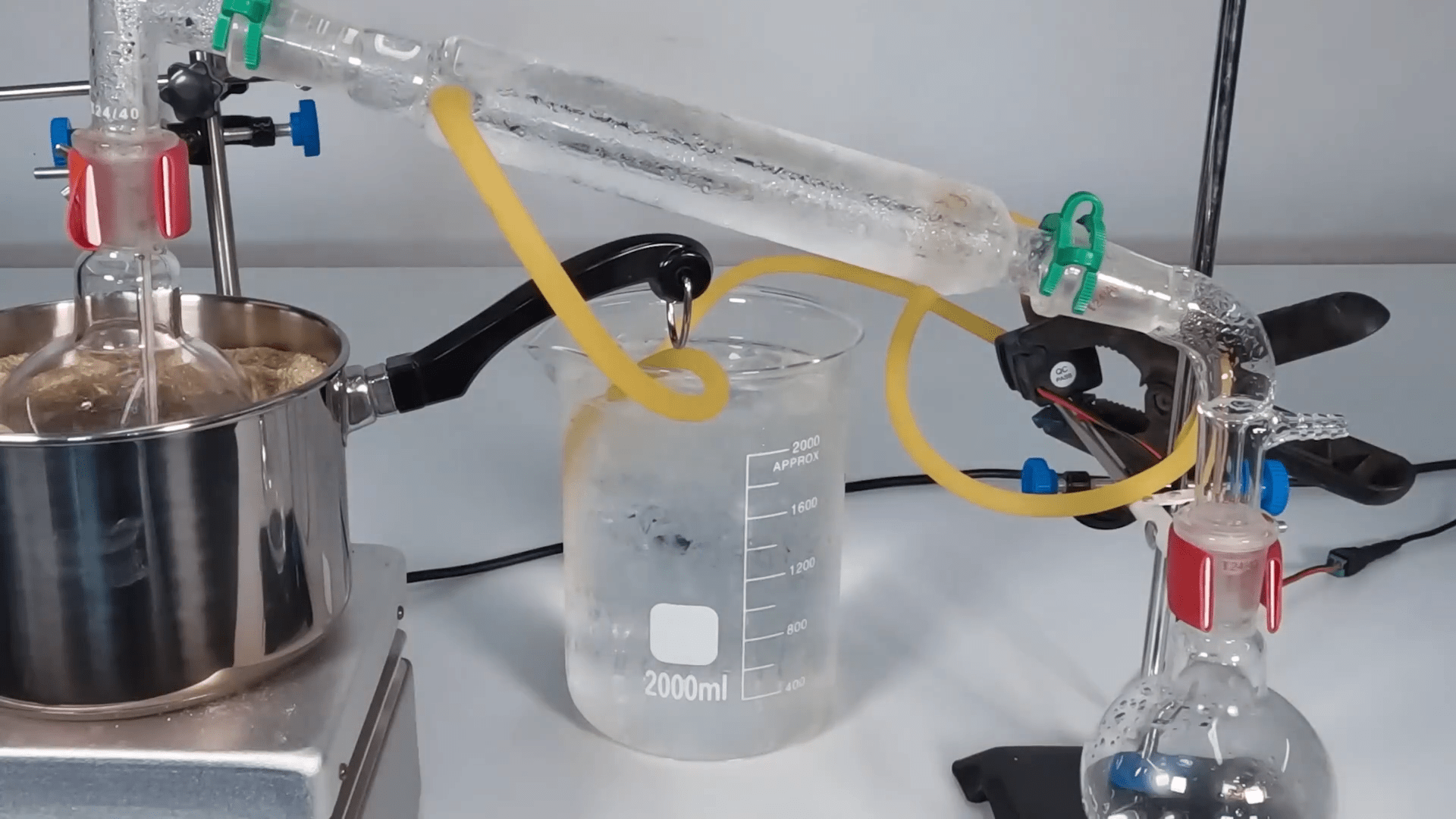
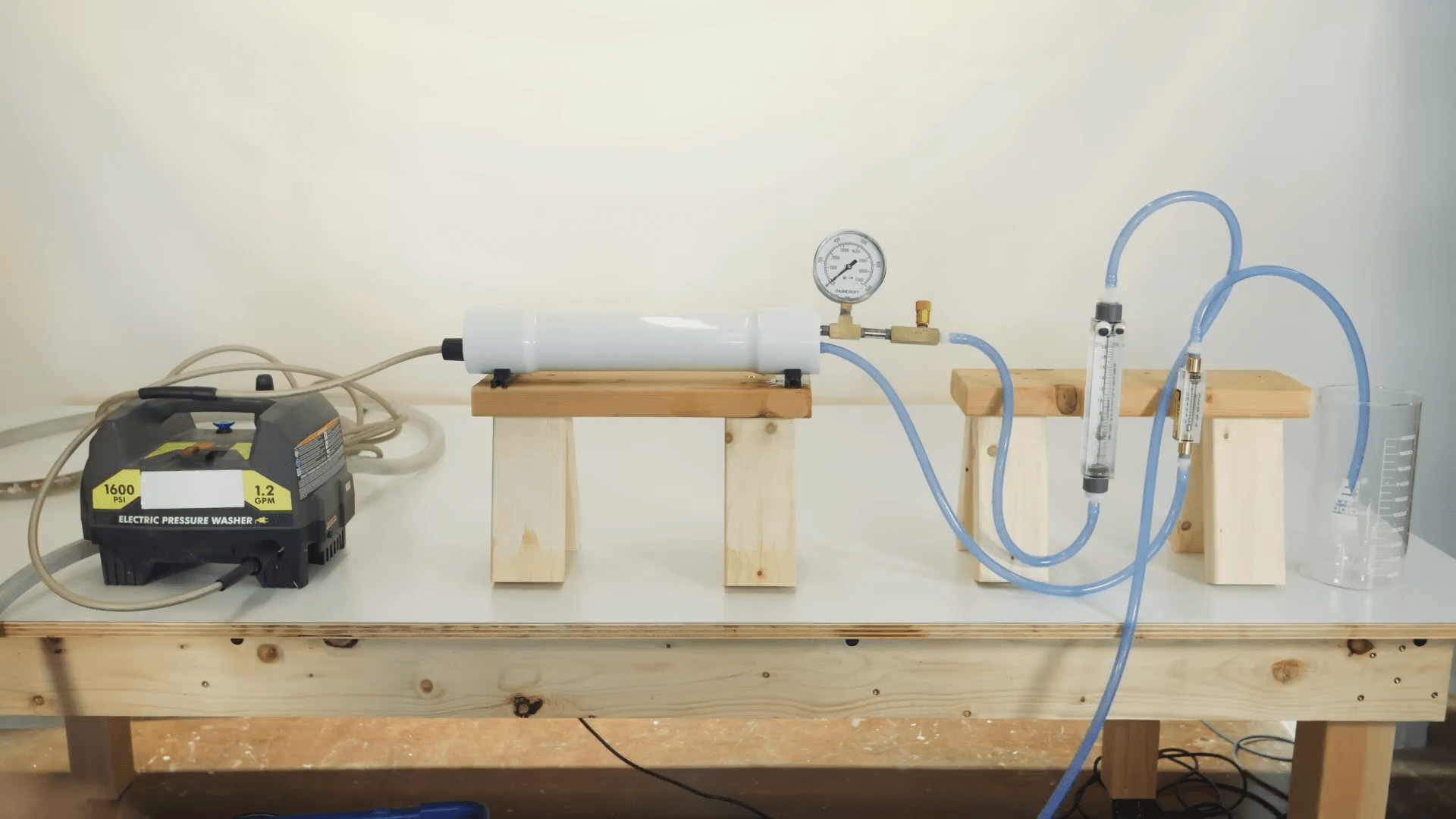
Desalination — the removal of salt from water — is an important process for providing the fresh water we need, but it’s quite expensive in terms of energy. In this Practical Engineering video, Grady demonstrates small-scale versions of the two most common methods for purifying water: distillation and reverse osmosis.
In distillation, salt water is boiled to separate the water into vapor that’s then condensed into freshwater. As straightforward as that sounds, though, the process is expensive, requiring a lot of energy for relatively little (albeit extremely pure) water. In contrast, reverse osmosis produces a somewhat less pure product at a lower energy cost. But it also produces brine, an even-saltier water that must be disposed of. (Video and image credit: Practical Engineering)
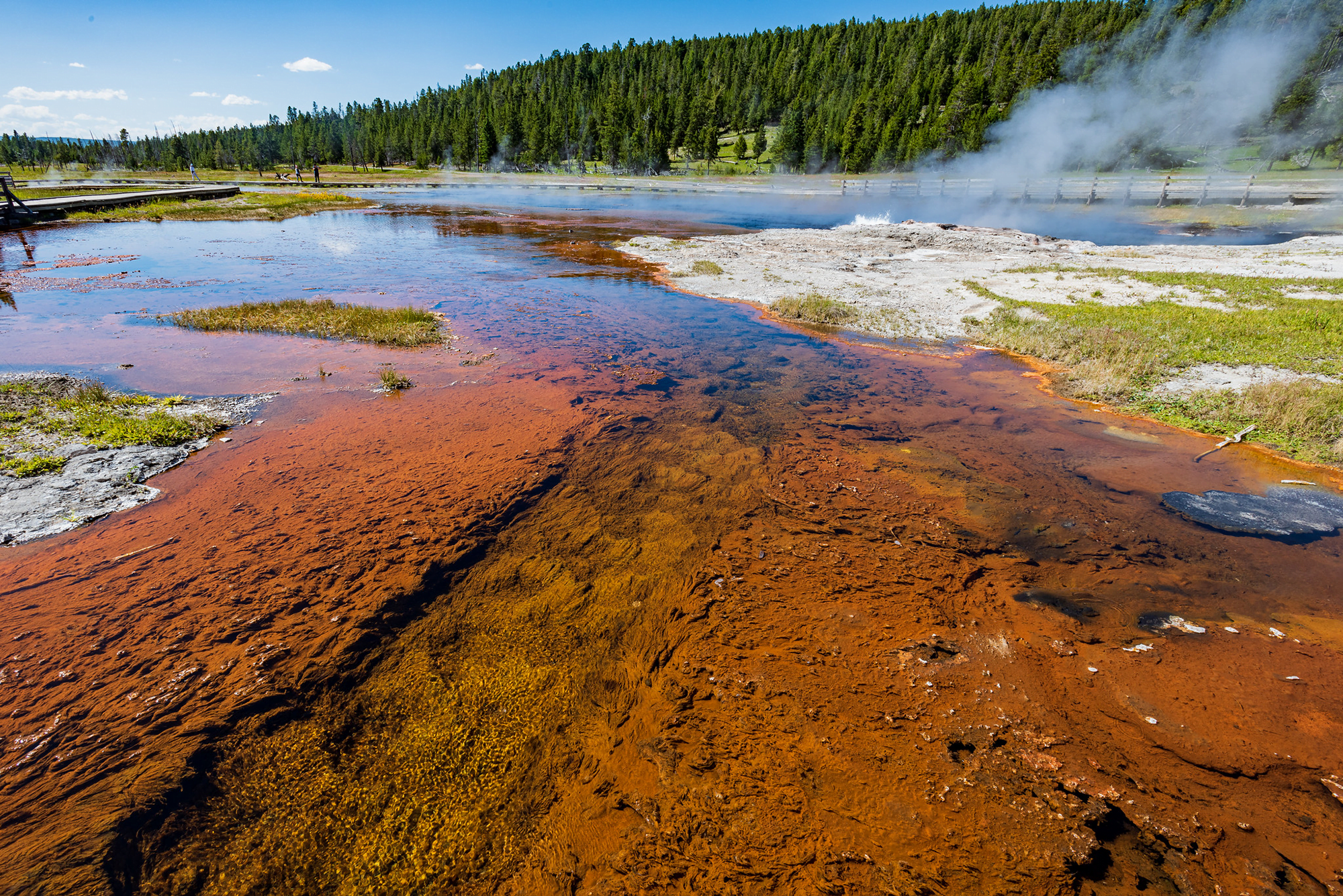
Over 2 billion years ago, cyanobacteria emerged as Earth’s first photosynthesizing organisms. Today they are widespread and critical contributors to both carbon and nitrogen cycles. Colonies can form large mats, like those pictured above, but, even at the microscale, cyanobacteria are actively forming patterns among individual bacteria. A recent study considers cyanobacteria as active matter.
At the microscopic scale, cyanobacteria form different patterns, depending on their density.
By simulating the cyanobacteria as filaments that interact through a series of simple rules, the researchers were able to reproduce the complex patterns bacterial colonies form. Their physical model also offered an explanation — based on the relative importance of advective and diffusive transport — for the characteristic length scales found in the bacterial patterns. (Image credit: Yellowstone – B. Cappellacci, patterns – M. Faluweki et al.; research credit: M. Faluweki et al.; via APS Physics)
Qinghai Lake sits in western China, where a warmer and wetter climate has been raising the lake’s water level in recent years. These two satellite images, from 2010 and 2022, show the effects of those changes. Sand spits that once separated the smaller Shadao Lake from the surrounding lake have worn away and sunk, rejoining the two bodies of water.
Why is the area’s warmer climate also wetter? The lake has risen due to increased precipitation and river run-off feeding it, but it’s also seen less evaporation. So far the area’s temperature increases have been most notable in winter months, when the lake is covered in ice. In contrast, the summers have been wetter, which means more cloudy days and less chance for evaporation. (Image credit: A. Nussbaum, modified by N. Sharp; via NASA Earth Observatory)
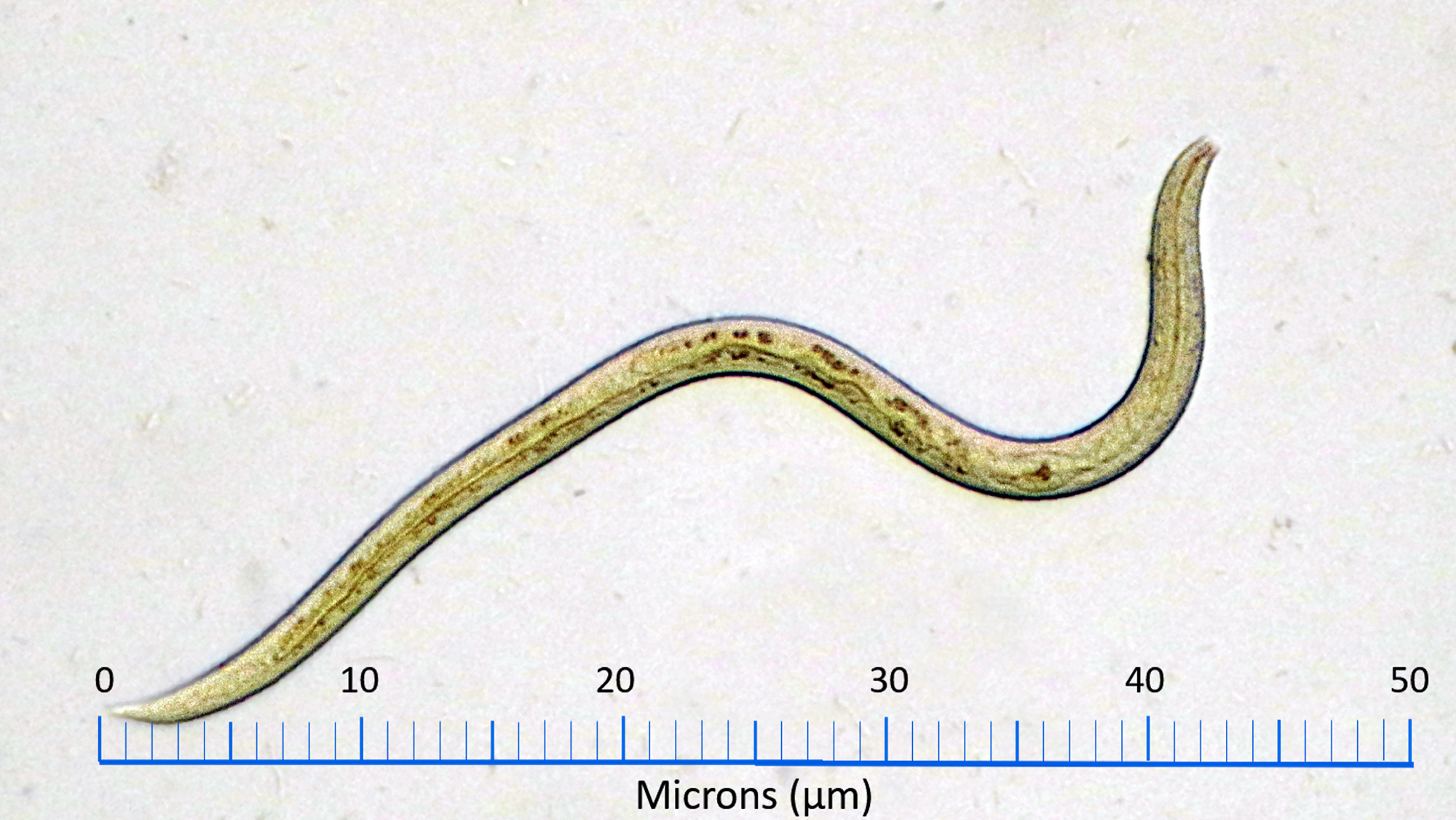
At the bottom of ponds, nematodes and other creatures swim in a world of mud. They squirm their way through a sediment of dirt particles suspended in water. Mud, of course, is notoriously impossible to see through, so to understand these creatures’ movements, scientists turn instead to biorobotics. Here, a team uses a magnetic head attached to an elastic tail to mimic these tiny creatures.
To drive the robot’s motion, they use an oscillating magnetic field, which forces the magnetic head to rotate. Combined with the elastic tail and the drag caused by surrounding materials, this causes the robot to swim in a fashion similar to its biological inspirations.
A biomimetic robot swims through immersed grains. The robot’s magnetic head is forced with an oscillating magnetic field. It swims through an underwater bed of hydrogel beads, with diameters smaller than that of the robot’s head.
To mimic the muddy environment of a pond’s bottom, scientists used a bed of hydrogel beads immersed in water. Looking at the experimental video above, you’ll see no sign of the beads. That’s because the hydrogel beads have nearly the same index of refraction as water. Once you pour water in, they seem to disappear. That allows the researchers to focus instead on the robot’s motion. In other experiments, they added dye to the beads so that they could see how they moved around the robot.
They found that the robot’s motion fluidizes the grains around it. Effectively, the robot’s motion creates an area with fewer grains and more water for it to move through. Once it’s passed, however, more grains settle in, and the bed returns to a denser packing. (Image credit: nematode – P. Garcelon, experiment – A. Biswas et al.; research credit: A. Biswas et al.)
This award-winning photo by Thomas Vijayan shows waterfalls of ice melt off the Austfonna ice cap. The third-largest glacier in Europe, Austfonna is located in Norway’s Svalbard archipelago. Like other glaciers, it sees rising temperatures and increased melting due to climate change. Vijayan highlights that melting with his focus on the many waterfalls slicing through the ice. All that meltwater contributes to changes in local salinity as well as rising sea levels worldwide. (Image credit: T. Vijayan; via Nature TTL POTY)
It takes a lot of power to lift a giant rocket‘s payload all the way to orbit, and in the first moments of a rocket launch, all that energy is directed downward at a concrete pad. How do engineers design and protect launch pads? In this Practical Engineering video, Grady tackles just that question through a comparison of SpaceX’s Stage Zero and NASA’s Launch Pad 39A.
SpaceX notoriously chose to build Stage Zero without a trench or water sprayer system like the ones NASA use. Trenches deflect the rocket exhaust to reduce the impact on infrastructure beneath the engines. And water sprayers reduce the temperatures the pad experiences and disrupt shock waves that otherwise hammer the pad. Without those precautions, even special heavy-duty concretes have a hard time holding together against a launch. (Video and image credit: Practical Engineering)
Coughing and sneezing create violent air flows in and around our bodies. As that fast air rushes over mucus layers in our lungs, throat, and sinuses, the resulting flow breaks up the mucus into droplets. To explore the details of that process, researchers built a “cough machine” that sends a rush of air over a thin film of water mixed with glycerol. The setup allows them to observe the physics in a way that’s nearly impossible in a human cough or sneeze.
Imitating a cough: high-speed video shows how a thin film made of water and glycerol breaks down in a strong airflow. Parts of the film inflate into hollow bags that form thinner weak spots. When the film breaks in those places, it forms rims and ligaments that create a spray of droplets.
As seen above, air flowing past shears the viscous fluid, stretching it out. The leading edge of the film destabilizes and breaks into large drops, but it’s what comes next that really gets things going. Areas of the film inflate to form hollow bags. When sections of the bag thin to about 1 micron, the film ruptures and the bags burst. This triggers a cascade of instabilities in the film’s rim that ultimately rip the film into a spray of tiny aerosol droplets. The researchers found that, despite their tiny size, these droplets collectively carry a large volume of liquid, making them all the more important for understanding transmission of respiratory illnesses. (Image credit: top – A. Piacquadio, experiment – P. Kant et al.; research credit: P. Kant et al.)