
This timelapse video shows the spreading of food coloring and a ferrofluid through soap suds surrounding a magnet. Capillary action, the same force that enables sap to flow up through a tree against gravity, helps draw the fluids through the interfaces between the soap bubbles without disturbing the suds. The magnet’s field provides a preferred direction for the ferrofluid flow. (via Gizmodo)
Tag: fluid dynamics
Aircraft Contrails
[original media no longer available]
Under the right atmospheric conditions, condensation can form, even at low speeds, as moist air is accelerated over airplane wings. This acceleration causes a local drop in pressure and temperature, which can cause water vapor in the air to condense. The condensation can sometimes get pulled into the wingtip vortices shed off of the wings, tail, and ailerons of an aircraft, as in the video above, making the aerodynamics of the airplane visible to the naked eye.

Hurricane Irene
This August 25th satellite image shows Hurricane Irene over the Bahamas and Florida. Hurricanes are fueled largely by the release of heat as warm water vapor in the rising air condenses. The hurricane requires a body of warm water to sustain the process, which is why hurricanes weaken drastically after they make landfall. Over open water, the heat released by condensation fuels higher winds, which lowers the pressure at the center of the system and helps increase the rate of evaporation near the ocean surface, providing additional warm vapor for future condensation. See more photos of Irene from space, along with video from the ISS. #

The Barus Effect
Non-Newtonian fluids are full of all kinds of unusual behaviors. Here a highly viscoelastic non-Newtonian fluid exhibits the Barus effect, in which extruding the fluid causes the falling jet to swell to several times larger than the diameter of the opening through which it was extruded. This is caused by the stretching and relaxation of polymers in the fluid as it passes through the opening.

Bursting Bubbles
A soap bubble bursts when its surface tension is broken, and, although from our perspective, the bubble bursts instantly, the process is actually directional. The bubble disintegrates from the point of contact outward. See it in high-speed video here or see more photos here. (Photo credit: Richard Heeks) #
Sound and Harmonics
The vibrations we perceive as sound, whether in air, water, or any other fluid, are tiny pressure waves emanating from a source, transmitting like ripples across a pond, and finally being caught by our ears and translated by our brains. In this video, the mechanisms and mathematics of sound and harmonics are explained. Although we’re most familiar with these concepts in acoustics, the same principles are used when studying other oscillatory motions, including pendulums, mass-spring systems, disturbances in boundary layers, and the vibrations of a diving board. All of these things rely on the same fundamental principles and mathematics.
Simulating Turbulence
Turbulent flows are complicated to simulate because of their many scales. The largest eddies in a flow, where energy is generated, can be of the order of meters, while the smallest scales, where energy is dissipated, are of the order of fractions of a millimeter. In Direct Numerical Simulation (DNS), the exact equations governing the flow are solved at all of those scales for every time step–requiring hundreds or thousands of computational hours on supercomputers to solve even a small domain’s worth of flow, as on the airplane wing in the video. Large Eddy Simulation (LES) is another technique that is less computationally expensive; it calculates the larger scales exactly and models the smaller ones. The video shows just how complicated the flow field can look. The red-orange curls seen in much of the flow are hairpin vortices, named for their shape, and commonly found in turbulent boundary layers.
Feynman: The Universe in a Glass of Wine
Some wisdom for you this Friday from the incomparable Richard Feynman:
A poet I think it is who once said the whole universe is in a glass of wine. I don’t think we’ll ever know in what sense he meant that for the poets don’t write to be understood. But it is true that if you look at a glass of wine closely enough, you’ll see the entire universe.
There are the things of physics: the twisting liquid, the reflections in the glass, and our imagination adds the atoms. It evaporates, depending on the wind and weather. The glass is a distillation of the earth’s rocks and in its composition, as we’ve seen, the secret of the universe’s age and the evolution of the stars. What strange array of chemicals are in a wine? How did they come to be? There are the ferments, the enzymes, the substrates and the products, and there in wine was found great generalization: all life is fermentation. Nor can you discover the chemistry of wine without discovering, as did Pasteur, the cause of much disease. How vivid is the claret, pressing its existence into the consciousness that watches it?
And if our small minds for some convenience divides this glass of wine, this universe, into parts: to physics, biology, geology, astronomy, psychology and all, remember that nature doesn’t know it. So we should put it all back together and not forget at last what it’s for. Let it give us one final pleasure more: drink it up and forget about it all.
(submitted by @jerrodh)
How Coffee Rings Form
Coffee rings (an ubiquitous feature of academia) are formed by the deposition of particles as the liquid evaporates. When a coffee drop evaporates, capillary action draws the coffee particles toward the edges of the drop, where they congregate into a ring. Research now suggests that this is due to the spherical nature of the particles. Ellipsoidal particles, in contrast, clump together and result in a uniform stain once their carrier liquid evaporates. The effect seems to be due to the particles’ effects on surface tension; the ellipsoidal particles deform the surface of the droplet as it evaporates such that they are not pulled to the edges. Adding a surfactant, like soap, that decreases surface tension caused the ellipsoidal particles to form rings just as the spherical particles do. (submitted by Neil K) #

Underwater Cloaking
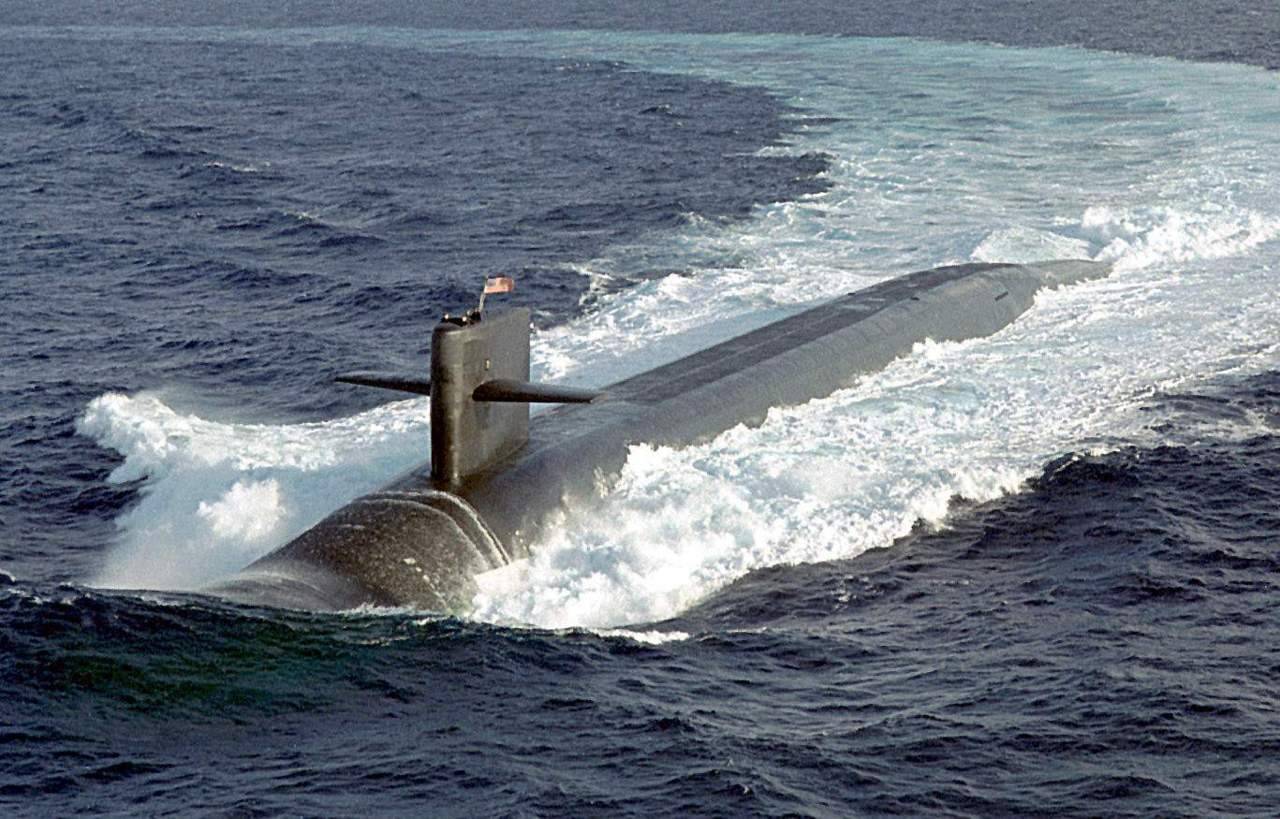
Researchers have suggested that it may be possible to cloak submerged objects as they move through a fluid using layers of mesh and micro-pumps. By redirecting the fluid so that it enters and leaves the mesh surrounding the object in the same speed and direction that it entered, it is theoretically possible to have zero drag and no wake. So far researchers have only simulated this set-up computationally using a sphere with 10 layers of mesh. It’s also unfortunately limited in size and speed: a vehicle 1 cm across could only remain wake-free at speeds below 1 cm/s. (Photo credit: Michael J Rinaldi) #


.jpg)