Tag: fluid dynamics

  • Bifurcating Waterways

    Bifurcating Waterways

    Your typical river has a single water basin and drains along a river or two on its way to the sea. But there are a handful of rivers and lakes that don’t obey our usual expectations. Some rivers flow in two directions. Some lakes have multiple outlets, each to a separate water basin. That means that water from a single lake can wind up in two entirely different bodies of water.

    The most famous example of these odd waterways is South America’s Casiquiare River, seen running north to south in the image above. This navigable river connects the Orinoco River (flowing east to west in this image) with the Rio Negro (not pictured). Since the Rio Negro eventually joins the Amazon, the Casiquiare River’s meandering, nearly-flat course connects the continent’s two largest basins: the Orinoco and the Amazon.

    For more strange waterways across the Americas, check out this review paper, which describes a total of 9 such hydrological head-scratchers. (Image credit: Coordenação-Geral de Observação da Terra/INPE; research credit: R. Sowby and A. Siegel; via Eos)

  • Featured Video Play Icon

    Playful Martian Dust Devils

    The Martian atmosphere lacks the density to support tornado storm systems, but vortices are nevertheless a frequent occurrence. As sun-warmed gases rise, neighboring air rushes in, bringing with it any twisted shred of vorticity it carries. Just as an ice skater pulling her arms in spins faster, the gases spin up, forming a dust devil.

    Black and white video illustrating a small Martian dust devil catching up to and getting swallowed up by a larger dust devil.

    In this recent footage from the Perseverance Rover, four dust devils move across the landscape. In the foreground, a tiny one meets up with a big 64-meter dust devil, getting swallowed up in the process. It’s hard to see the details of their crossing, but you can see other vortices meeting and reconnecting here. (Video and image credit: NASA/JPL-Caltech/LANL/CNES/CNRS/INTA-CSIC/Space Science Institute/ISAE-Supaero/University of Arizona; via Gizmodo)

  • Featured Video Play Icon

    “Dispersion”

    In “Dispersion,” particles spread under the influence of an unseen fluid. Like Roman de Giuli’s work, filmmaker Susi Sie creates macro images that look like ice floes, deserts, and river deltas viewed from above. This similarity of patterns at both large and small scales is a specialty of fluid physics. Just as artists use it to mimic larger flows, scientists use it to study planet-scale problems in the lab. (Video and image credit: S. Sie et al.)

    Fediverse Reactions
  • Inside an Alien Atmosphere

    Inside an Alien Atmosphere

    Studying the physics of planetary atmospheres is challenging, not least because we only have a handful of examples to work from in our own solar system. So it’s exciting that researchers have unveiled our first look at the 3D structure of an exoplanet‘s atmosphere.

    Using ground-based observations, researchers studied WASP-121b, also known as Tylos, an ultra-hot Jupiter that circles its star in only 30 Earth hours. One face of the planet always faces its star while the other faces into space. The team found that the exoplanet has a flow deep in the atmosphere that carries iron from the hot daytime side to the colder night side. Higher up, the atmosphere boasts a super-fast jet-stream that doubles in speed (from an estimated 13 kilometers per second to 26 kilometers per second) as it crosses from the morning terminator to the evening. As one researcher observed, the planet’s everyday winds make Earth’s worst hurricanes look tame. (Image credit: ESO/M. Kornmesser; research credit: J. Seidel et al.; via Gizmodo)

    Fediverse Reactions
  • Channeling Espresso

    Channeling Espresso

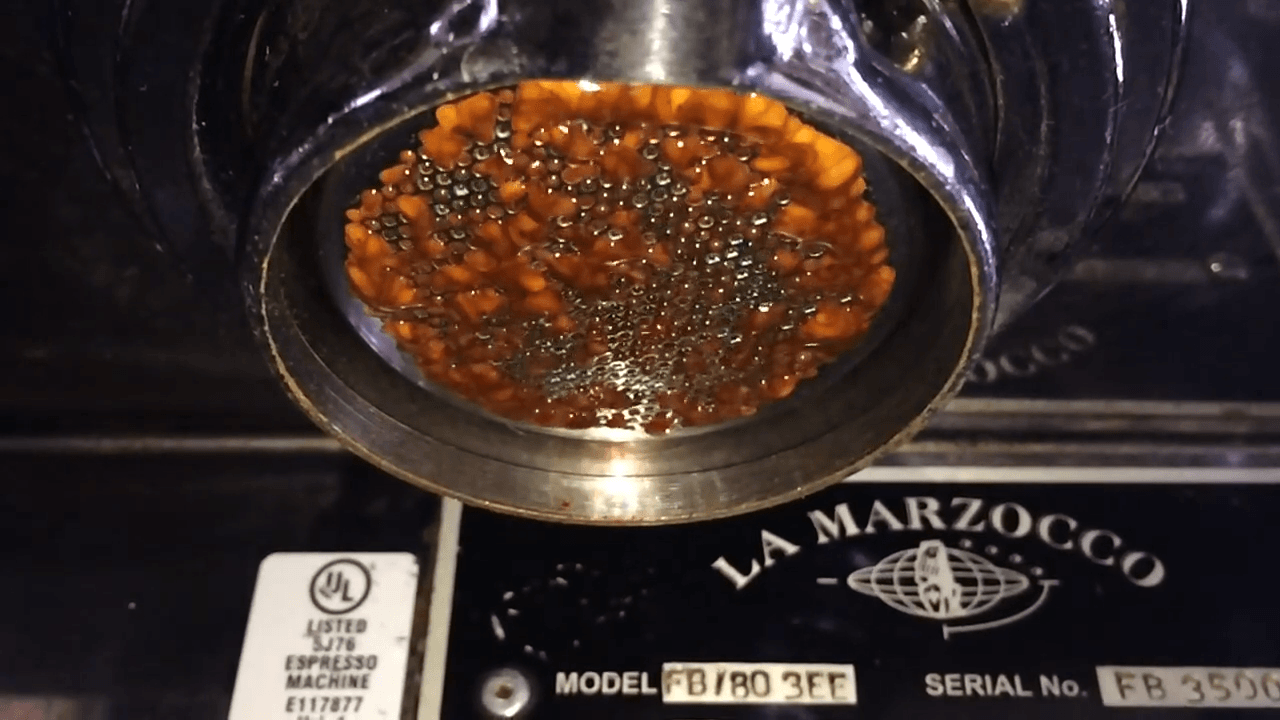
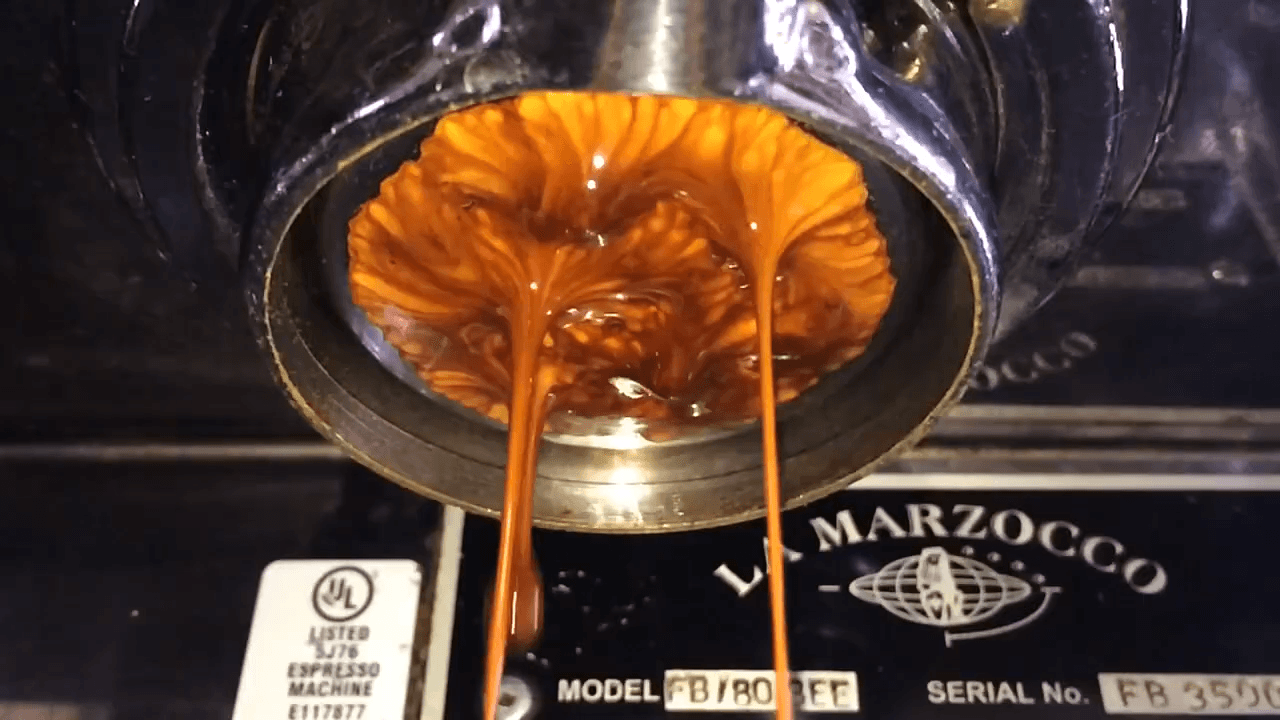
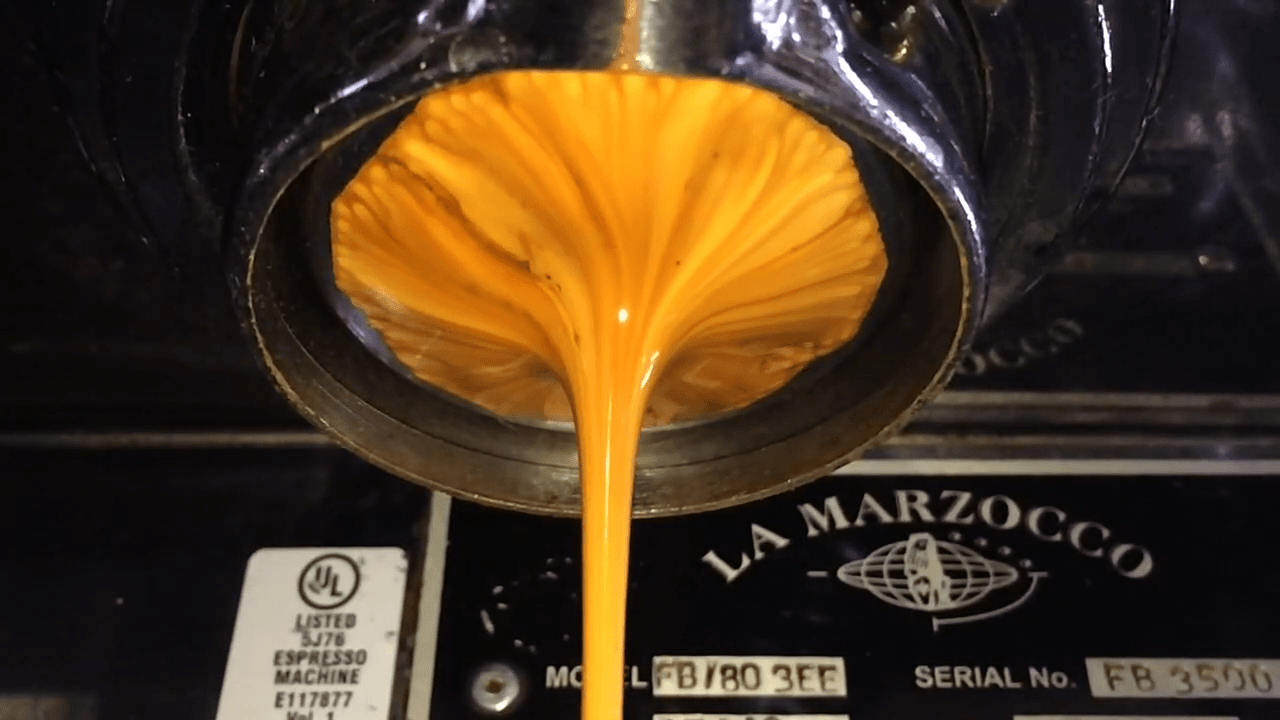
    Coffee-making continues to be a rich source for physics insight. The roasting and brewing processes are fertile ground for chemistry, physics, and engineering. Recently, one research group has focused on the phenomenon of channeling, where water follows a preferred path through the coffee grounds rather than seeping uniformly through the grounds. Channeling reduces the amount of coffee extracted in the brew, which is both wasteful and results in a less flavorful cup. By uncovering what mechanics go into channeling, the group hopes to help baristas mitigate the undesirable process, creating a repeatable, efficient, and tasty espresso every time. (Image credit: E. Yavuz; via Ars Technica)

    Fediverse Reactions
  • Flying Without a Rudder

    Flying Without a Rudder

    Aircraft typically use a vertical tail to keep the craft from rolling or yawing. Birds, on the other hand, maneuver their wings and tail feathers to counter unwanted motions. Researchers found that the list of necessary adjustments is quite small: just 4 for the tail and 2 for the wings. Implementing those 6 controllable degrees of freedom on their bird-inspired PigeonBot II allowed the biorobot to fly steadily, even in turbulent conditions, without a rudder. Adapting such flight control to the less flexible surfaces of a typical aircraft will take time and creativity, but the savings in mass and drag could be worth it. (Image credit: E. Chang/Lentink Lab; research credit: E. Chang et al.; via Physics Today)

    Fediverse Reactions
  • Featured Video Play Icon

    Salt Fingers

    Any time a fluid under gravity has areas of differing density, it convects. We’re used to thinking of this in terms of temperature — “hot air rises” — but temperature isn’t the only source of convection. Differences in concentration — like salinity in water — cause convection, too. This video shows a special, more complex case: what happens when there are two sources of density gradient, each of which diffuses at a different rate.

    The classic example of this occurs in the ocean, where colder fresher water meets warmer, saltier water (and vice versa). Cold water tends to sink. So does saltier water. But since temperature and salinity move at different speeds, their competing convection takes on a shape that resembles dancing, finger-like plumes as seen here. (Video and image credit: M. Mohaghar et al.)

    Fediverse Reactions
  • Arctic Melt

    Arctic Melt

    Temperatures in the Arctic are rising faster than elsewhere, triggering more and more melting. Photographer Scott Portelli captured a melting ice shelf protruding into the ocean in this aerial image. Across the top of the frozen landscape, streams and rivers cut through the ice, leading to waterfalls that flood the nearby ocean with freshwater. This meltwater will do more than raise ocean levels; it changes temperature and salinity in these regions, disrupting the convection that keeps our planet healthy. (Image credit: S. Portelli/OPOTY; via Colossal)

    Fediverse Reactions
  • Atmospheric Rivers Raise Temperatures

    Atmospheric Rivers Raise Temperatures

    Atmospheric rivers are narrow streams of moisture-rich air running from tropical regions to mid- or polar latitudes. Though relatively short-lived, they are capable of carrying — and depositing — more water than the largest rivers. But researchers have found that their impact is not measured in water content alone. Instead, a survey of 43 years’ worth of data shows that atmospheric rivers also bring unusually warm temperatures. In some cases, the authors found surface temperatures near an atmospheric river climbed to as high as 15 degrees Celsius above the typical. On average, temperatures were about 5 degrees Celsius higher than expected for the region’s climate.

    Several factors raise those temperatures — like the heat released when rising vapor meets cooler air and condenses into liquid — but the biggest effect came from carrying warm tropical temperatures to (usually) cooler regions. (Image credit: L. Dauphin/NASA; research credit: S. Scholz and J. Lora; via Physics Today)

    Fediverse Reactions
  • Winter in Chicago

    Winter in Chicago

    Fresh winter snow blankets Chicago in this satellite image. Over on Lake Michigan, ice dots the coastline out to about 20 kilometers from shore. Darker regions near land mark thinner ice being pushed outward by the wind. Further out, the ice appears white and may be thicker thanks to wind-driven ice piling up. (Image credit: M. Garrison; via NASA Earth Observatory)

    Fediverse Reactions