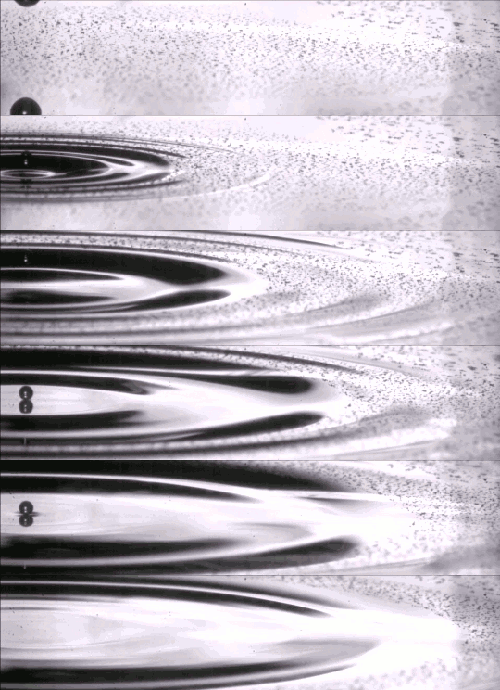
One of the enduring mysteries of fluid dynamics lies in the transition between smooth laminar flow and chaotic turbulent flow in the area near a wall. That region, known as the boundary layer, has a major impact on drag and other effects. The process begins with disturbances that are too tiny to see or measure, but eventually, those disturbances can grow large enough to generated an isolated turbulent spot, like the one imaged above. Flow in the photograph is from left to right. Turbulent spots have a distinctive wedge-like shape that expands as the spot grows and widens. These turbulent spots can merge together to create still larger spots, and when a surface eventually becomes completely covered in them, we call it fully-developed turbulent flow. (Image credit: M. Gad-El-Hak et al.)
Tag: fluid dynamics

The Coalescence Cascade and Surfactants

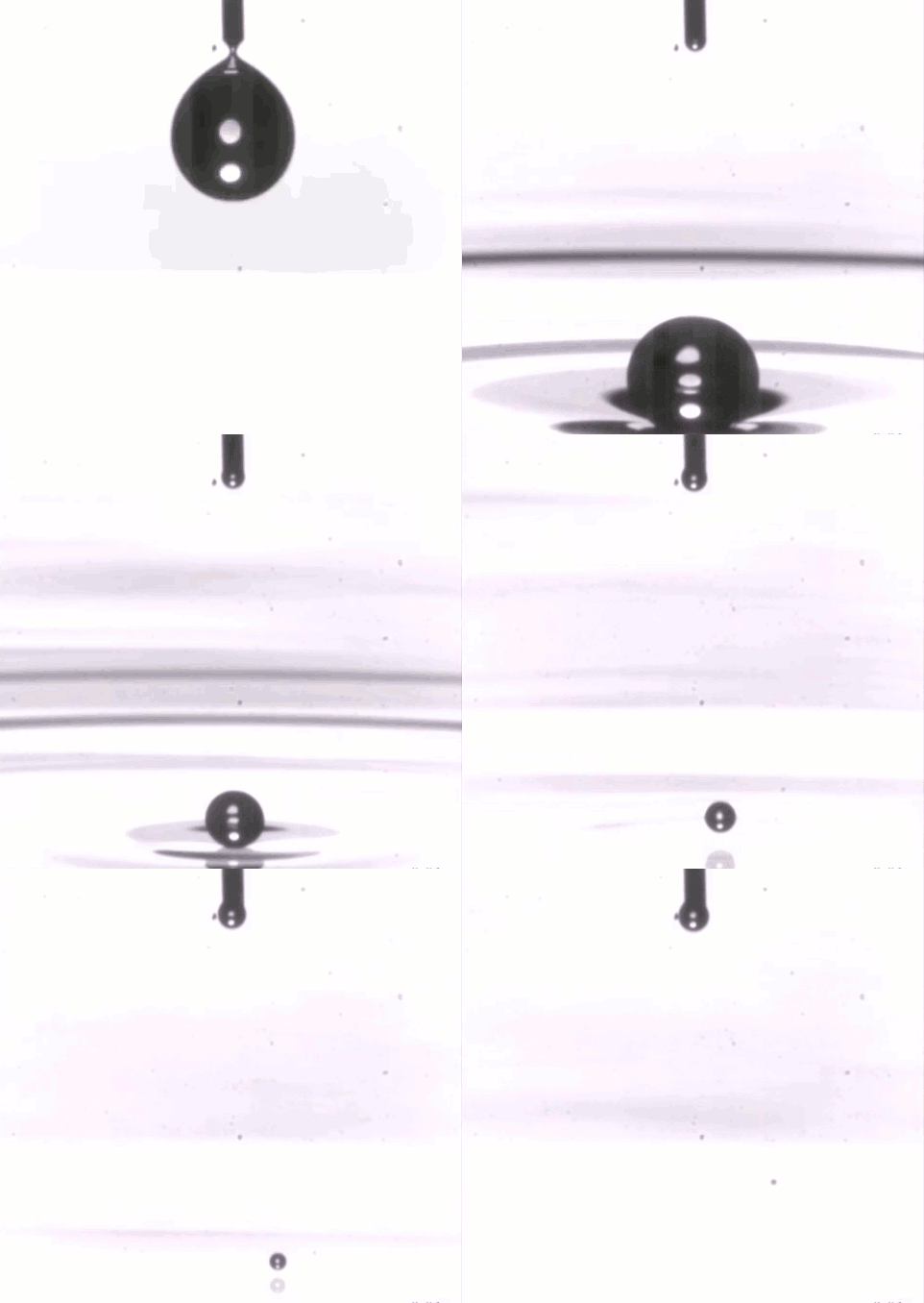
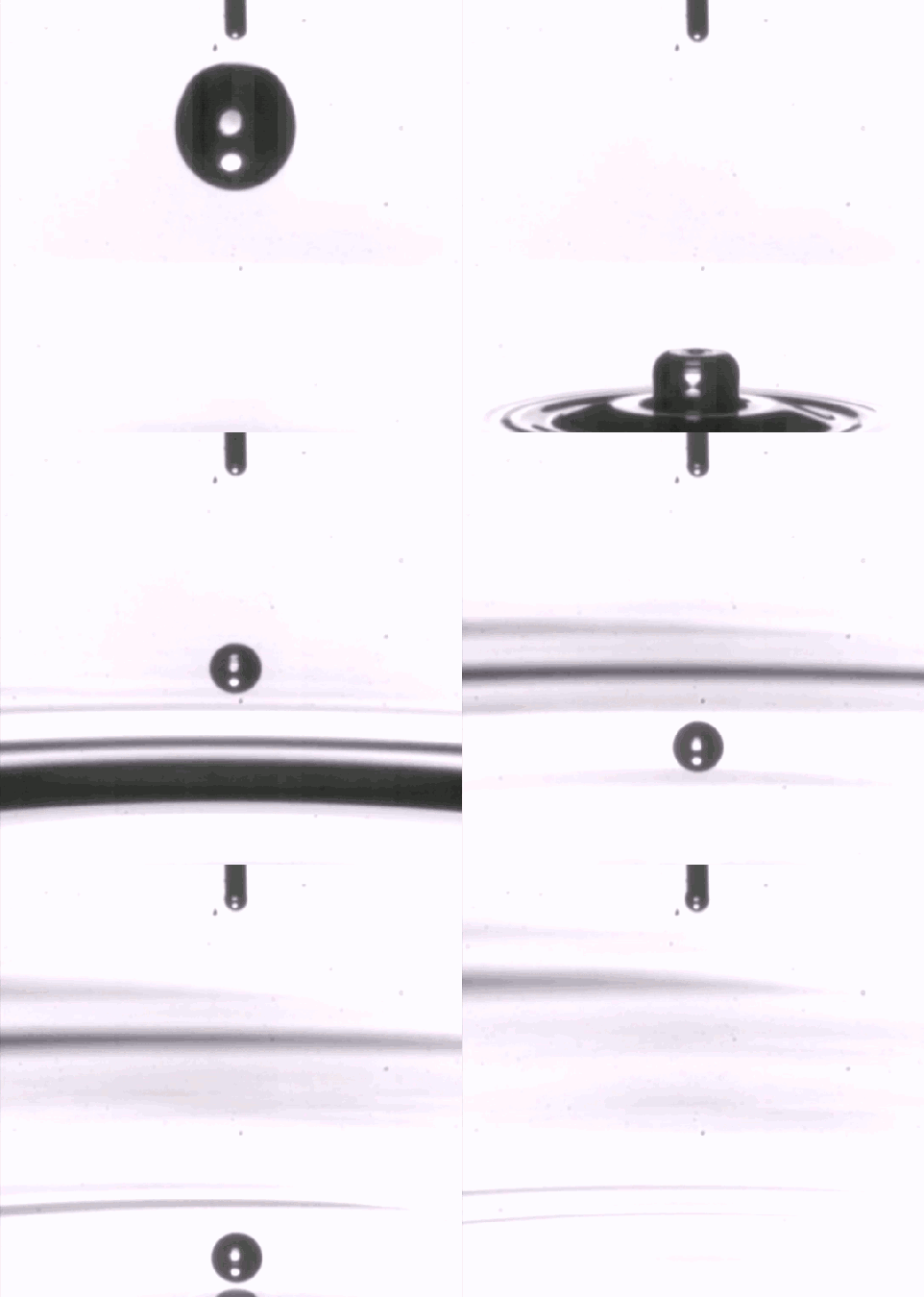
Drops of a liquid can often join a pool gradually through a process known as the coalescence cascade (top left). In this process, a drop sits atop a pool, separated by a thin air layer. Once that air drains out, contact is made and part of the drop coalesces. Then a smaller daughter droplet rebounds and the process repeats.
A recent study describes a related phenomenon (top right) in which the coalescence cascade is drastically sped up through the use of surfactants. The normal cascade depends strongly on the amount of time it takes for the air layer between the drop and pool to drain. By making the pool a liquid with a much greater surface tension value than the drop, the researchers sped up the air layer’s drainage. The mismatch in surface tension between the drop and pool creates an outward flow on the surface (below) due to the Marangoni effect. As the pool’s liquid moves outward, it drags air with it, thereby draining the separating layer more quickly. The result is still a coalescence cascade but one in which the later stages have no rebound and coalesce quickly. (Image and research credit: S. Shim and H. Stone, source)


Self-Digging Seeds
Some plants in the Pelargonium family produce seeds with long helical tails. These appendages, formally known as awns, are humidity-sensitive. On humid nights or after rainfall, the awn begins to straighten. With its end anchored on the ground, this unfurling spins the seed and helps it burrow into the soil. A study looking at the physics of this system found that rotating reduces the drag a burrowing seed experiences in a granular material. Normally much of the force that opposes motion into a granular material is the result of intergranular contacts creating what are known as force chains. (Many science museums have great displays that visualize force chains.) The rotating seed drags grains near its surface along with it, helping to break up the force chains and reduce resistance. (Image and research credit: W. Jung et al., source)

When Chaos is Not So Chaotic
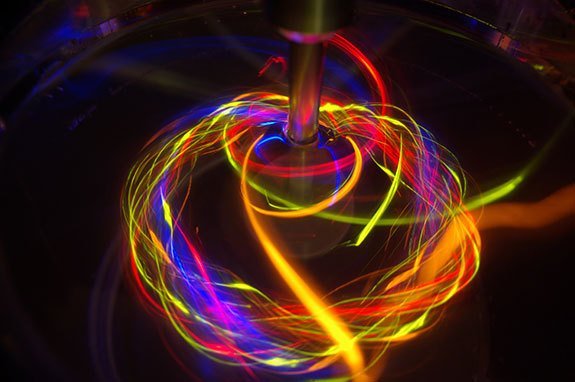
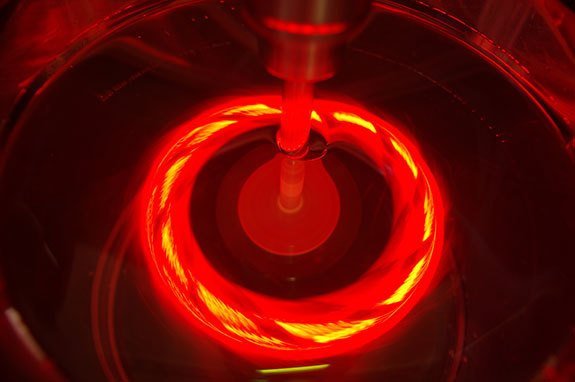
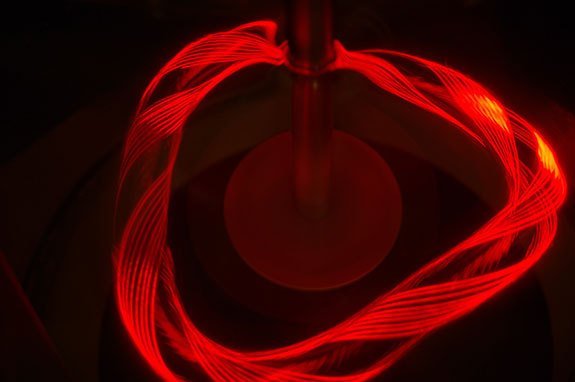
In industry, tanks are often agitated or stirred to mix different elements. The goal is to create a laminar but chaotic flow field throughout the mixture. Introducing particles to such a system reveals that things are not quite as chaotic as they might seem. The photographs above show the pathlines of various large, glowing particles initially poured into the tank from above. Over time, the particles scatter off of structures in the mixed sections of the tank and end up trapped in vortex tubes that form above and below the agitator. Once trapped in the vortex tube, the particles follow helical paths inside the tube, creating patterns like those seen in the lower two photos. (Image and research credit: S. Wang et al., 1, 2, 3)

Putting Out Fires
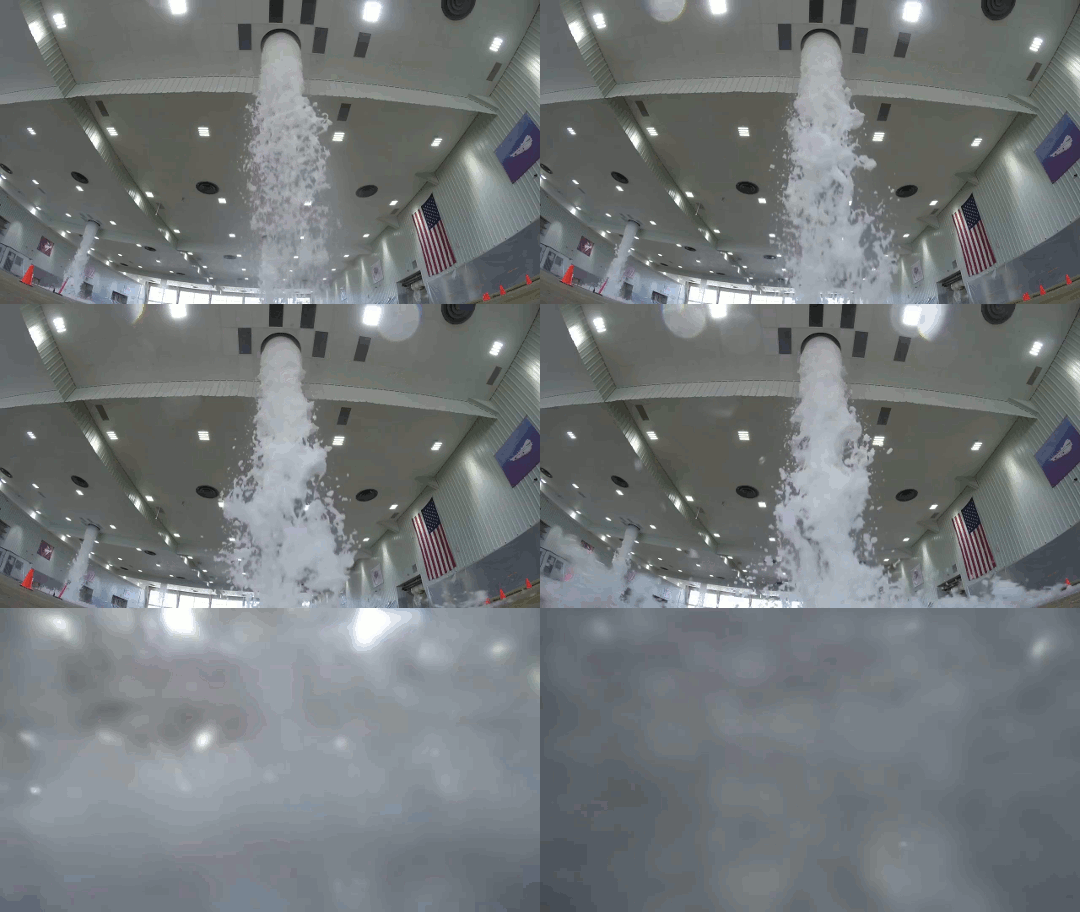
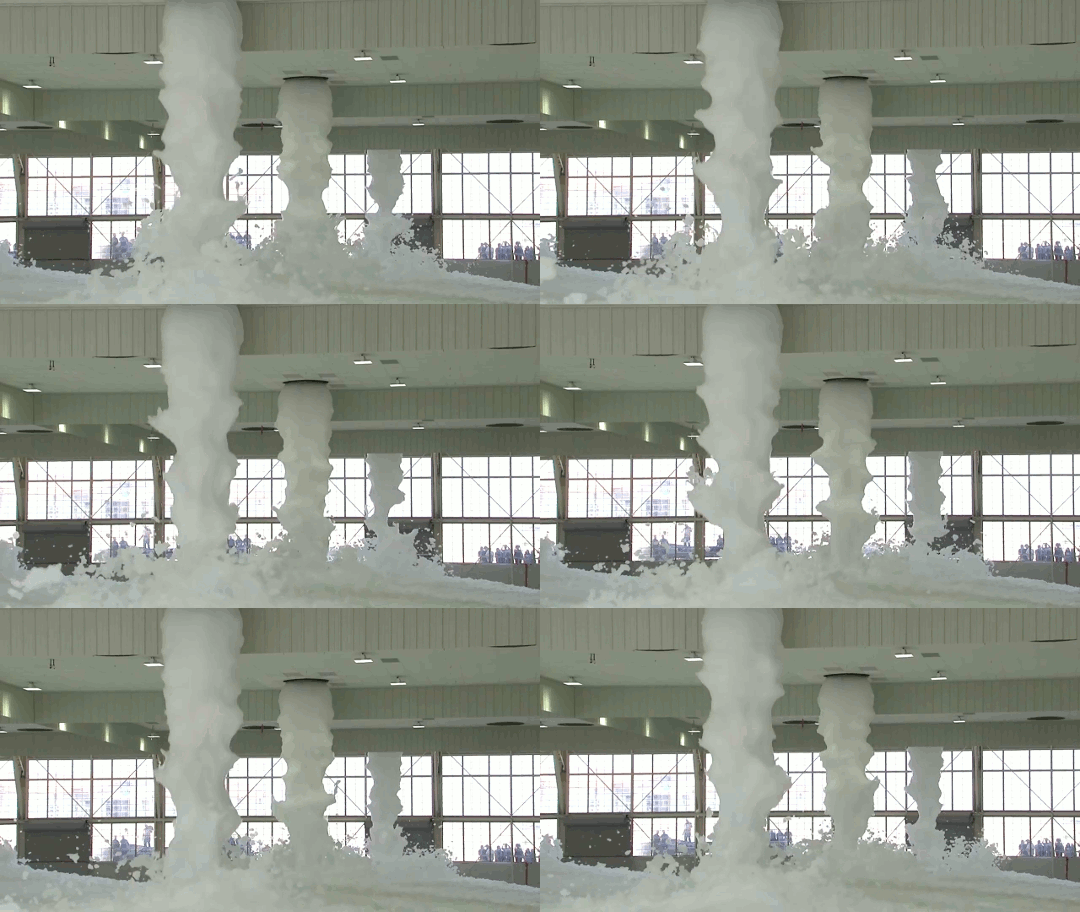
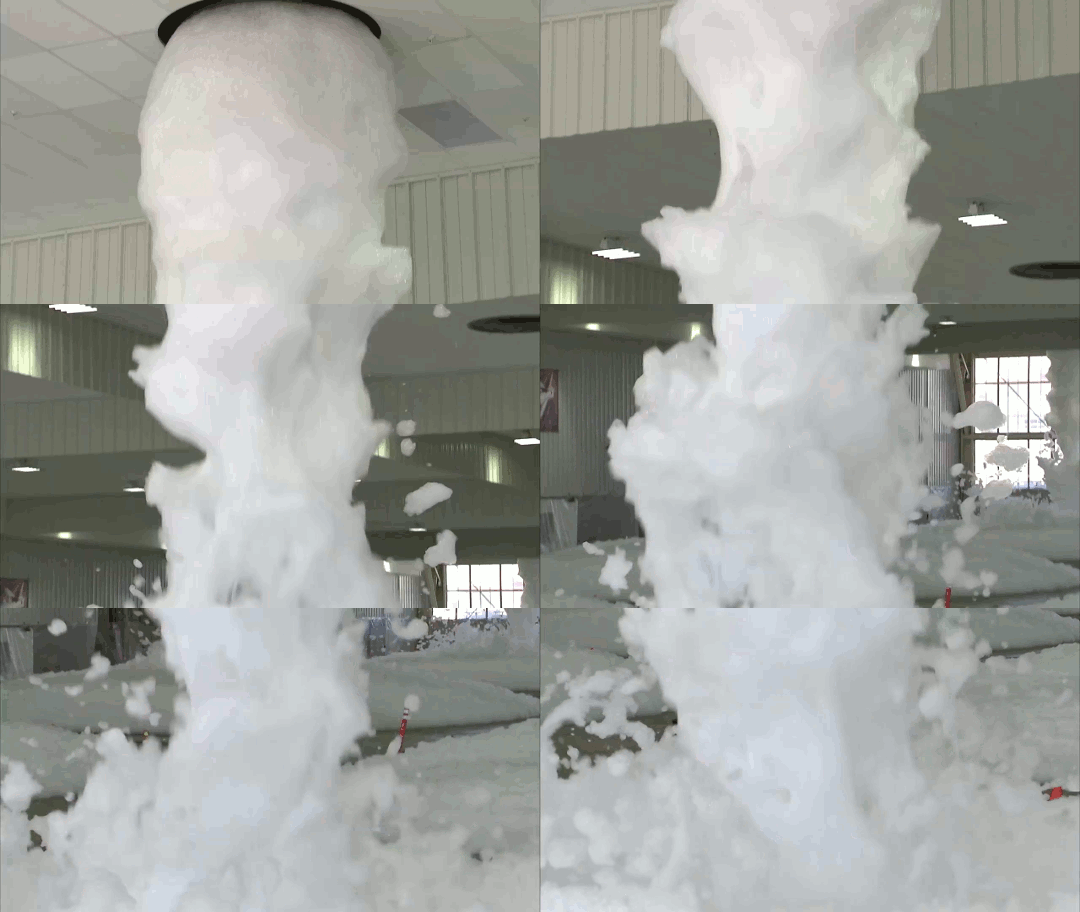
Fires in large, open spaces like aircraft hangers can be difficult to fight with conventional methods, so many industrial spaces use foam-based fire suppression systems. These animations show such a system being tested at NASA Armstrong Research Center. When jet fuel ignites, foam and water are pumped in from above, quickly generating a spreading foam that floats on the liquid fuel and separates it from the flames. Since the foam-covered liquid fuel cannot evaporate to generate flammable vapors, this puts out the fire.
The shape of the falling foam is pretty fascinating, too. Notice the increasing waviness along the foam jet as it falls. Like water from your faucet, the foam jet is starting to break up as disturbances in its shape grow larger and larger. For the most part, though, the flow rate is high enough that the jet reaches the floor before it completely breaks up. (Image credit: NASA Armstrong, source)

Stellar Bow Shock
This Hubble image shows a young star in the Orion Nebula and the curved bow shock arcing around it. Despite its age, the star LL Orionis is energetic, producing a stellar wind that exceeds our sun’s. When that wind collided with the flow in the Orion Nebula, it formed this bow shock that is about a half a light-year wide. We don’t often think about fluid dynamics applying in space, but if we consider a lengthscale that is large enough, even space contains enough matter to behave like a fluid. LL Orionis’s bow shock is in many ways comparable to ones we see form around re-entering spacecraft. (Image credit: NASA/Hubble, via APOD; submitted by jshoer)

“Ink in Motion”
In this short film, the Macro Room team plays with the diffusion of ink in water and its interaction with various shapes. Injecting ink with a syringe results in a beautiful, billowing turbulent plume. By fiddling with the playback time, the video really highlights some of the neat instabilities the ink goes through before it mixes. Note how the yellow ink at 1:12 breaks into jellyfish-like shapes with tentacles that sprout more ink; that’s a classic form of the Rayleigh-Taylor instability, driven by the higher density ink sinking through the lower density water. Ink’s higher density is what drives the ink-falls flowing down the flowers in the final segment, too. Definitely take a couple minutes to watch the full video. (Image and video credit: Macro Room; via James H./Flow Vis)

The Tibetan Singing Bowl
Rubbing a Tibetan singing bowl creates sound and a spray of droplets inside the container. But the reverse works, too! Instead of rubbing the bowl, one can project sound at it to make the droplets dance. In the video above, the speaker plays a sinusoidal wave at a frequency that resonates with the bowl. It activates the most basic vibrations in the bowl, making it bulge slightly front-to-back and then side-to-side. This is called the fundamental vibrational mode. The bowl doesn’t change shape enough to see by eye, but you can tell where the bowl is flexing the most – at the four points where the droplets are ejected! The larger vibrations there are what create the spray of droplets. (Video credit: D. Terwagne)
Escaping Quicksand


Quicksand is complicated stuff. It’s typically a mixture made up of sand, clay, and water. To get those ingredients into a proper quicksand mixture, you have to liquefy the particles by saturating the spaces between them with water, as the jumping tourists in the top animation are doing. (That’s not to say that you can’t just find a patch of quicksand – just that something has to have pumped that area full of water first.)
If you end up in quicksand, don’t panic. Quicksand is denser than a human, which means that, at the worst, you won’t sink in much further than your waist (middle image). It’s tough to move once you sink because your weight has squeezed a lot of the water out from between the sand and clay particles, thereby drastically increasing the viscosity. To get out, try putting weight on one leg and wiggling the other back and forth (bottom image). This lets water back in the mixture and hopefully lets you free that leg. Once one leg is free, try to kneel on it and work the other leg out. (Image credits: making quicksand – T. L. Nguyen, source; stuck – National Geographic, source; escape – Tech Insider, source; research credit: G. Evans et al., A. Khaldoun et al.)
The Colorful Dissolution of Candies


Many solids can dissolve in liquids like water, and while this is often treated as a matter of chemistry, fluid dynamics can play a role as well. As seen in this video by Beauty of Science, the dissolving candy coating of an M&M spreads outward from the candy. This is likely surface-tension-driven; as the coating dissolves, it changes the surface tension near the candy and flow starts moving away thanks to the Marangoni effect. With multiple candies dissolving near one another, these outward flows interfere and create more complex flow patterns.
These flows directly affect the dissolving process by altering flow near the candy surface, which may increase the rate of dissolution by scouring away loose coating. They can also change the concentration of dissolved coating in different areas, which then feeds back to the flow by changing the surface tension gradient. (Video and image credit: Beauty of Science)