At science museums and tourist attractions around the world, visitors can spin the multi-tonne spheres of kugel fountains with the brush of their hand. The secret of the sphere’s mobility is aquaplaning – the same phenomenon that can cause cars to lose traction in wet conditions. In these fountains, the massive sphere sits in a precisely-shaped cup, with their surfaces separated by a thin layer of water. The entire system acts like a hydrostatic bearing, which allows the sphere to move freely. But even a relatively small disruption can destroy the effect, as happened to the Science Museum of Virginia’s original Grand Kugel after it cracked. (Image credit: E. Roberts; via Atlas Obscura; submitted by Kam-Yung Soh)
Tag: fluid dynamics

Bubbles Affect Lava Flow


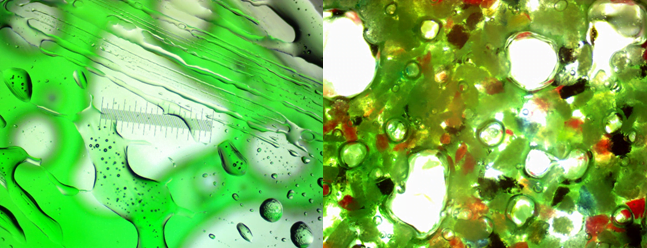

During the 2018 eruption at Kilauea, scientists noticed that the lava flowed very differently depending on how bubbly it was. In this experiment, researchers used corn syrup as a lava analogue and studied how bubbly and particle-filled bubbly flows differed from bubble-free ones. They found that bubble-free syrup flowed fastest, while particle-filled bubbly flows were by far the slowest.
The bubbles also affected the structure of the flows. Large bubbles gathered near the surface of the flow’s leading edge, allowing faster flow beneath. And in the particle-filled flow, the corn syrup developed channels that flowed at different speeds. The authors hope that their relatively simple experimental set-up will inspire more research on bubbly lava flows. (Image and research credit: A. Namiki et al.; via AGU Eos; submitted by Kam-Yung Soh)

Rocking From The Waves
Not all seismic activity stems from earthquakes. In fact, much of Earth’s measured seismic waves come from interactions of the ocean and atmosphere with solid ground. Some of the strongest vibrations come from interactions of ocean waves, which transmit pressure waves that don’t attenuate with depth before passing into the solid Earth.
How those waves propagate and scatter inside the Earth has been a matter of contention for decades, but recent simulations are beginning to uncover the mechanisms that lead to the waves seismologists measure. (Image credit: I. Mingazova; via Physics Today)

“Catalysis”


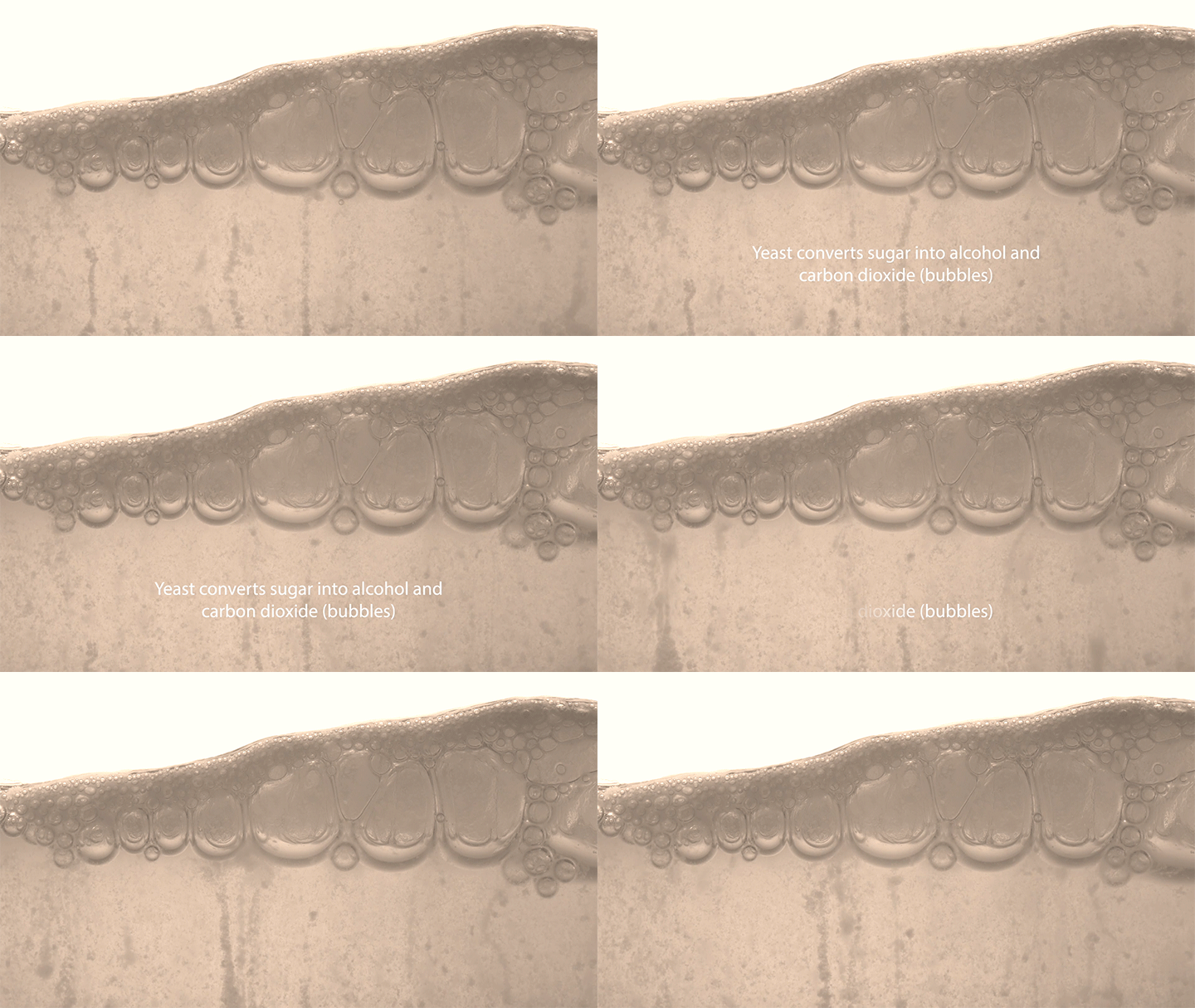
Catalysts speed up chemical reactions without being consumed themselves. In “Catalysis” the Beauty of Science team shows 5 different examples of catalytic reactions, from acetone oxidation to yeast fermentation. The film is full of bubbles, sparks, and wave-like pulses of chemical reaction. As always, it’s a lovely glimpse of processes we’re not used to watching so closely. (Image and video credit: Beauty of Science)
Sand Traps
Antlion larvae catch prey by digging conical pits in sand. The steep walls of the trap are near the angle of repose, the largest angle a granular material can maintain before grains slide down. When a hapless ant wanders into the trap, the antlion throws sand from the center of the pit, triggering a sandslide that carries the ant downward. The act of flinging sand also helps the antlion maintain the pit, correcting any disruptions to the pit’s steep sides caused by its flailing prey. (Image and research credit: S. Büsse et al.; via Science)

Following the Flow
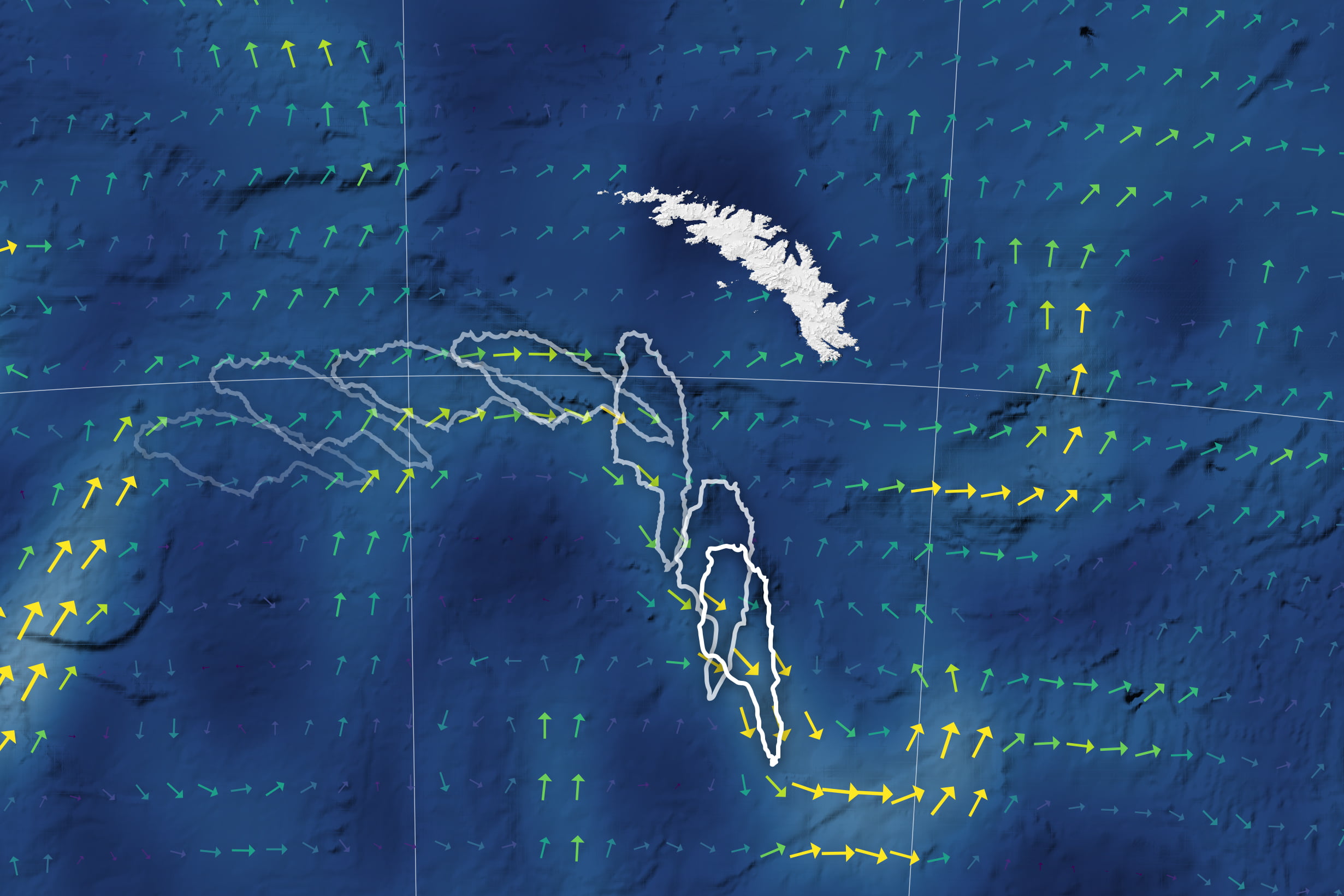
In early December 2020, the world’s largest iceberg — roughly 135 km long by 44 km wide — was heading straight for South Georgia Island. Luckily for the island, iceberg A-68A was being carried by ocean surface currents that approach the island before turning sharply southward. The enormous iceberg followed, rotating nearly 90 degrees and drifting away on faster currents.
Scientists track these large-scale — 50 to 100 km wide — currents using satellites that measure the ocean height. Currents of this size actually generate a measurable tilt to the ocean surface, which scientists measure and use as input into models that estimate the surface currents’ speed and direction. (Image credit: L. Dauphin and J. Stevens; via NASA Earth Observatory)

Uncovering Erosion Patterns
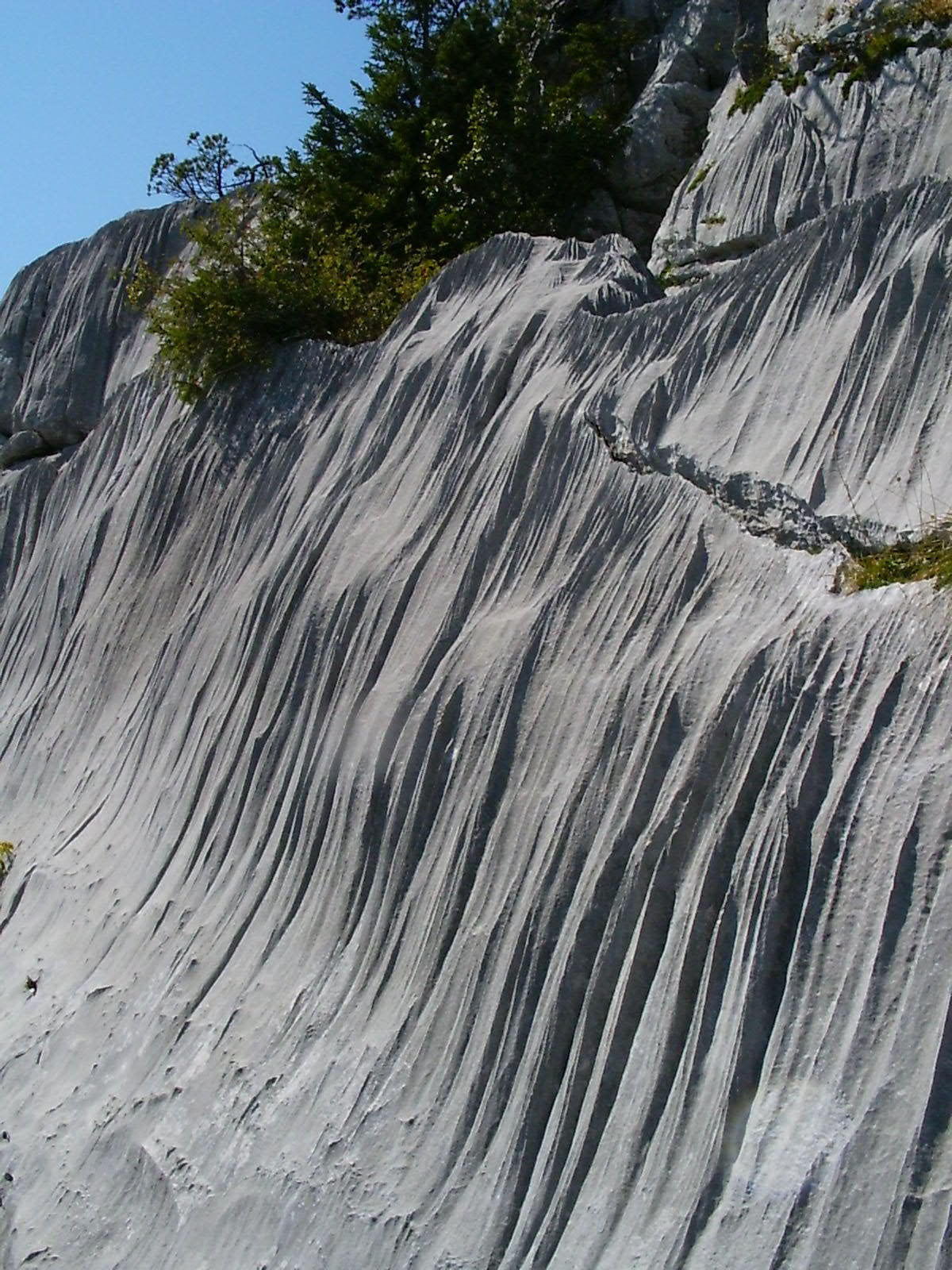
Gypsum and limestone cliffs sometimes form patterns of long, parallel grooves known as rillenkarren. Recent research shows that these patterns form when a thin layer of water flows over a dissolvable surface. As the running water picks up solute, its concentration increases, causing changes in the local hydrodynamics. What begins as a small perturbation in an otherwise flat surface grows into a groove with walls that eventually rise out of the water layer. At that point, the growth mechanism shifts because the flow is restricted to channels in the rock. (Image credit: Ymaup/Wikimedia Commons; research credit: A. Guérin et al.; via APS Physics; submitted by Kam-Yung Soh)

Breaking Bubbles


What do a nineteenth-century war ship, a sardine-hunting shark, and a viral bottle trick have in common? Cavitation! The phenomenon of cavitation occurs when a fluid is accelerated such that its local pressure drops below the vapor pressure. As a result, bubbles form and then violently collapse, creating shock waves that can damage nearby surfaces or stun prey. Dianna explains — and reveals some cool historical context that was new to me! — in the video above. (Image and video credit: Physics Girl)

Bubble Array
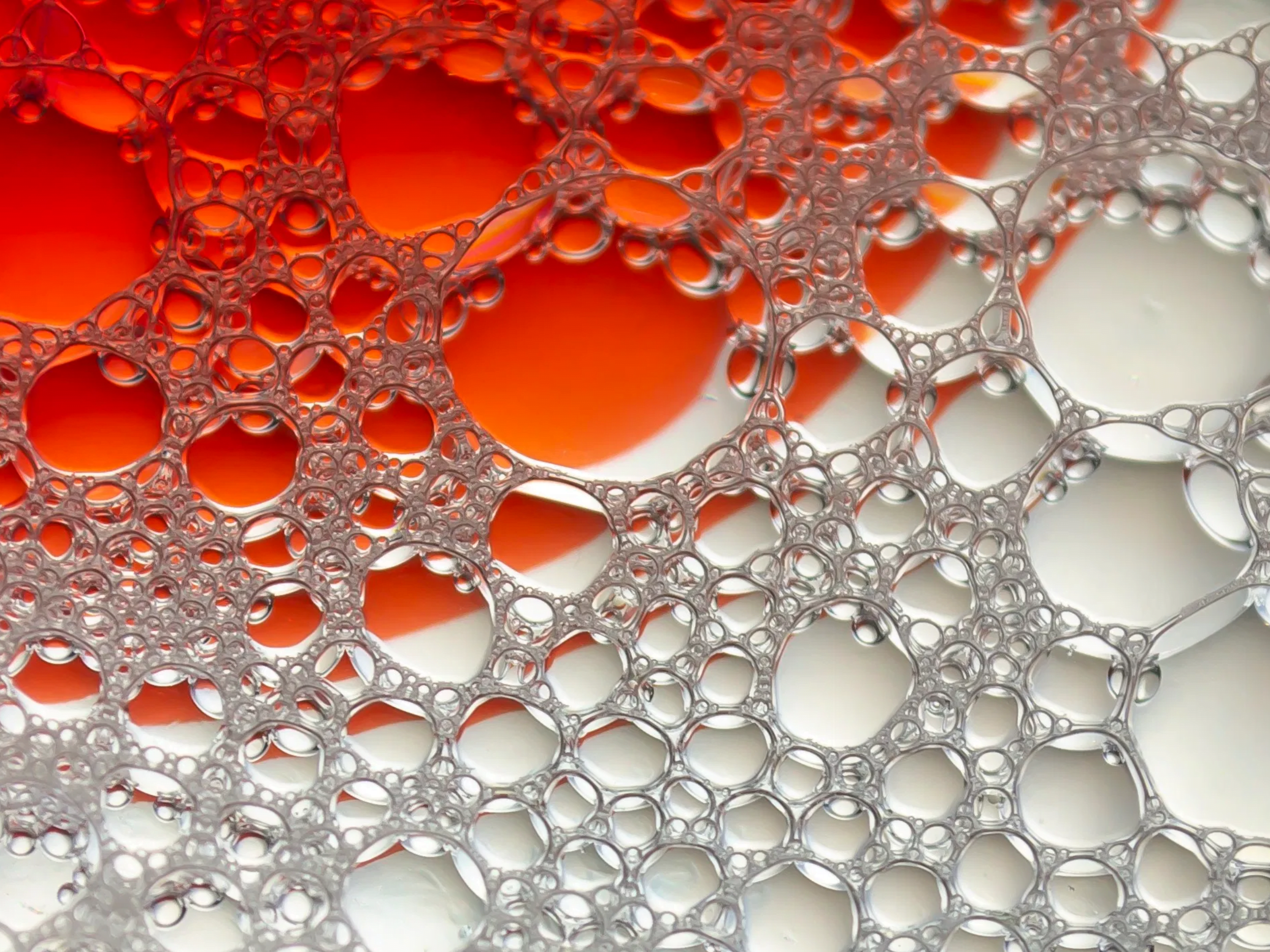
Surface tension tries to minimize a bubble‘s surface area, which is why bubbles assume a spherical shape. But when many bubbles clump together, a curved interface is not always the most energy efficient one. In this case, bubbles can take on many shapes and sizes while still minimizing the overall surface energy. Take a close look at this image and see what shapes you discover! (Image credit: M. Adil)

Hedgehogs Atop Waves


Since Michael Faraday, scientists have watched the curious patterns that form in a vibrating liquid. By adding floating particles to such a system, researchers have discovered spiky, hedgehog-like shapes that form near the surface. At low amplitudes, the surface patterns resemble the typical smooth rounded lobes one would expect, but as the wave amplitude increases, spikes form in the tracers, driven by the motion of the waves. (Image and research credit: H. Alarcón et al.; via APS Physics)