Tag: flow visualization

  • Featured Video Play Icon

    Inside Cuttlefish Suction

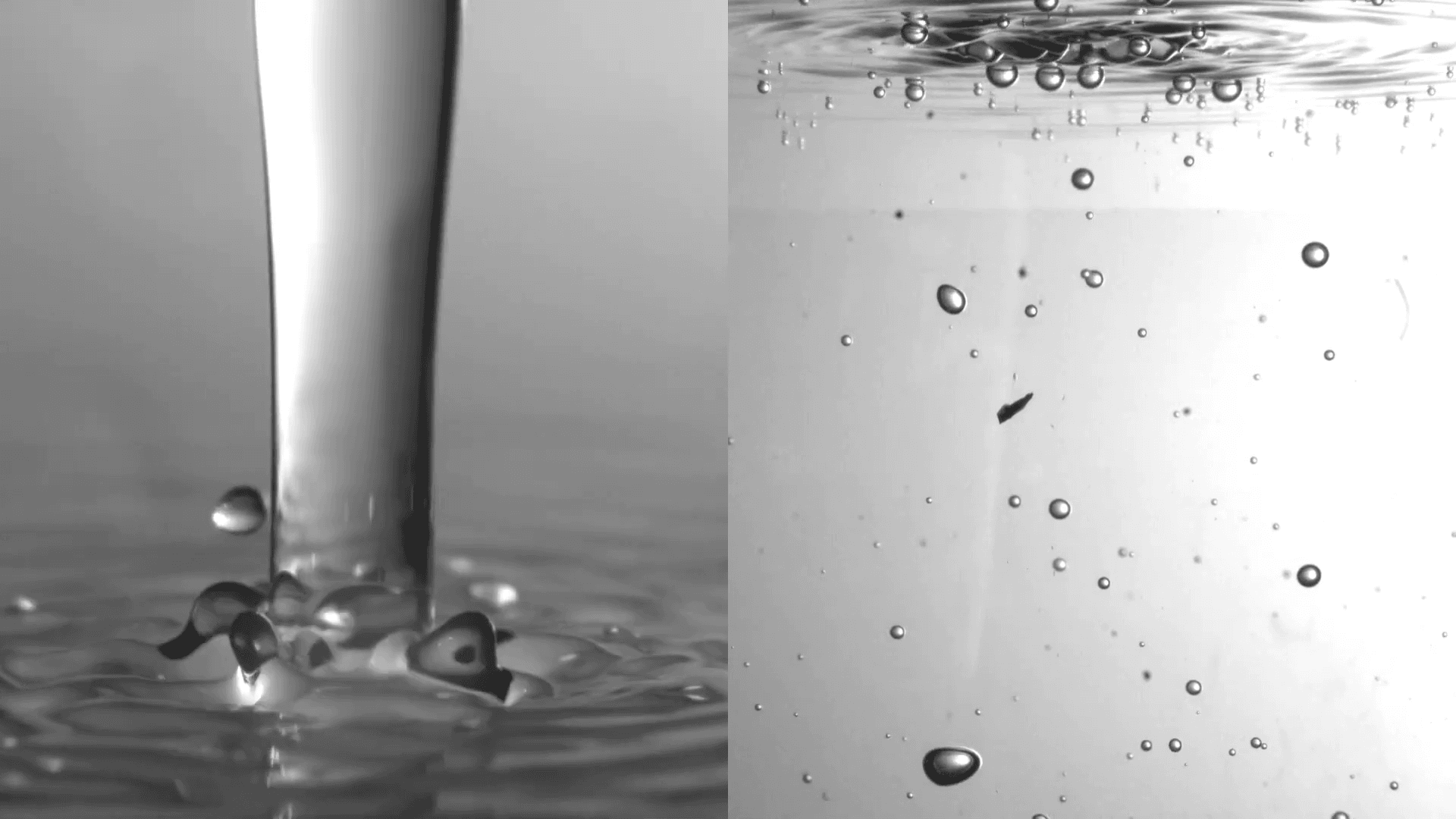
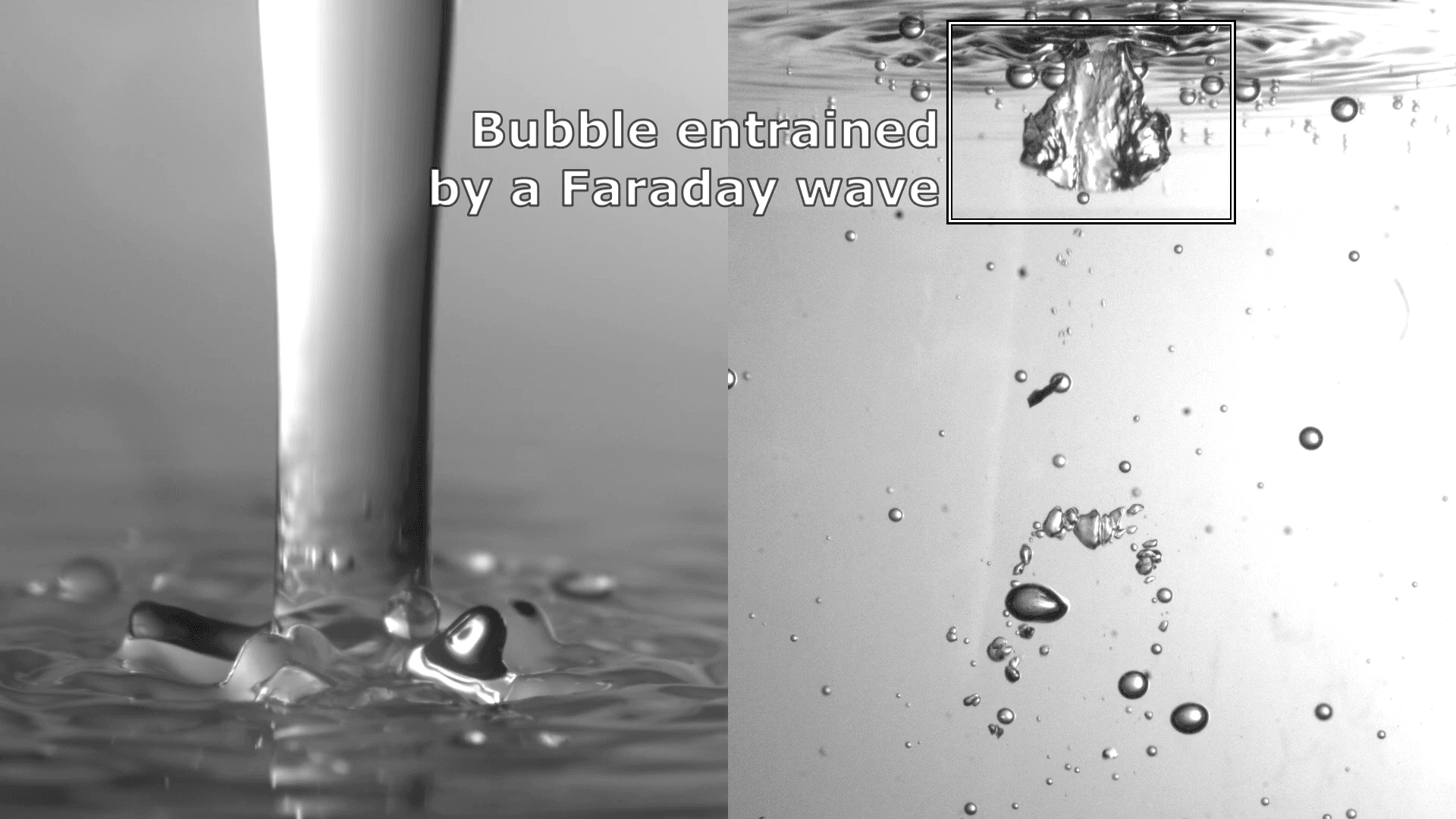
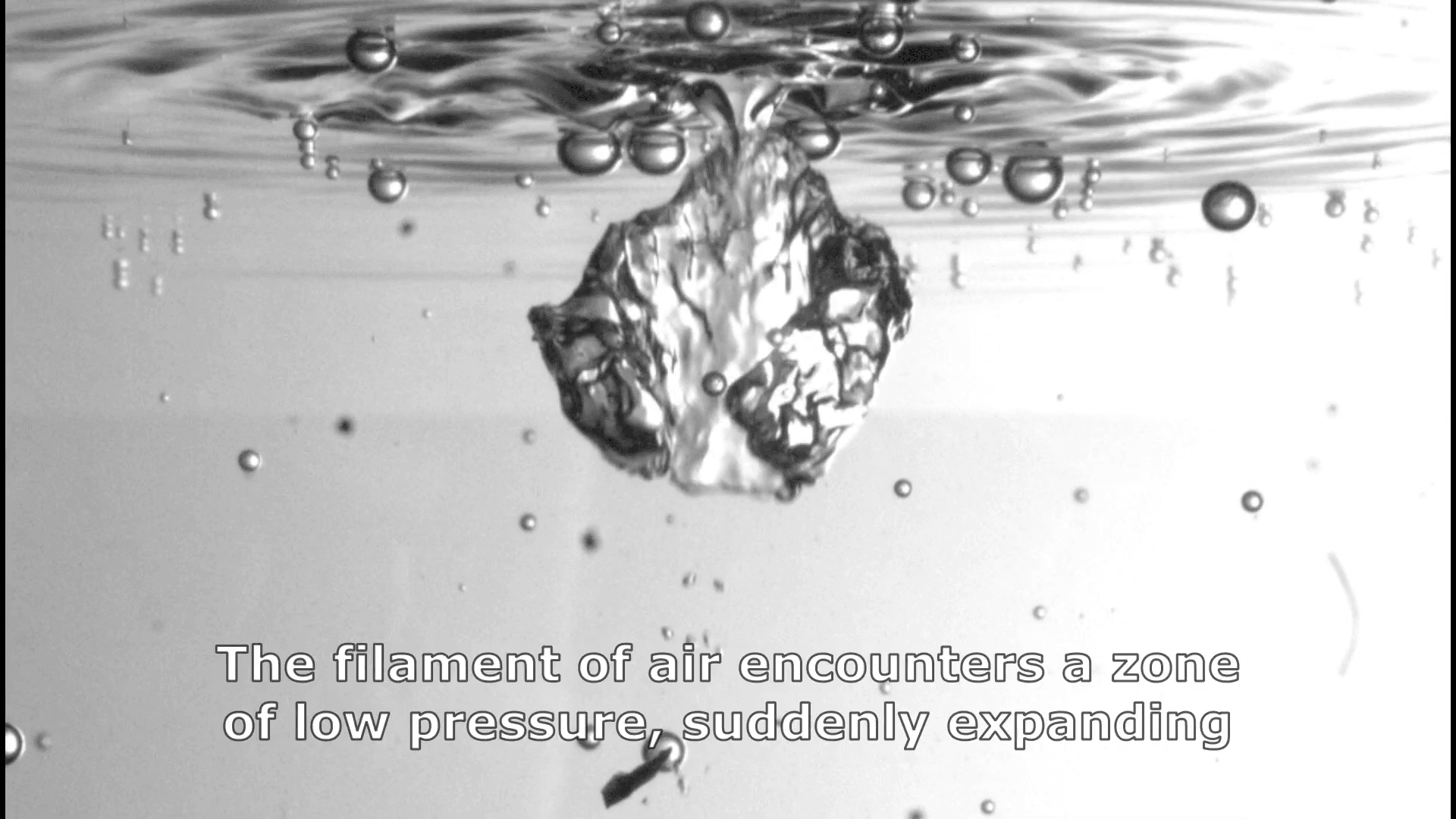
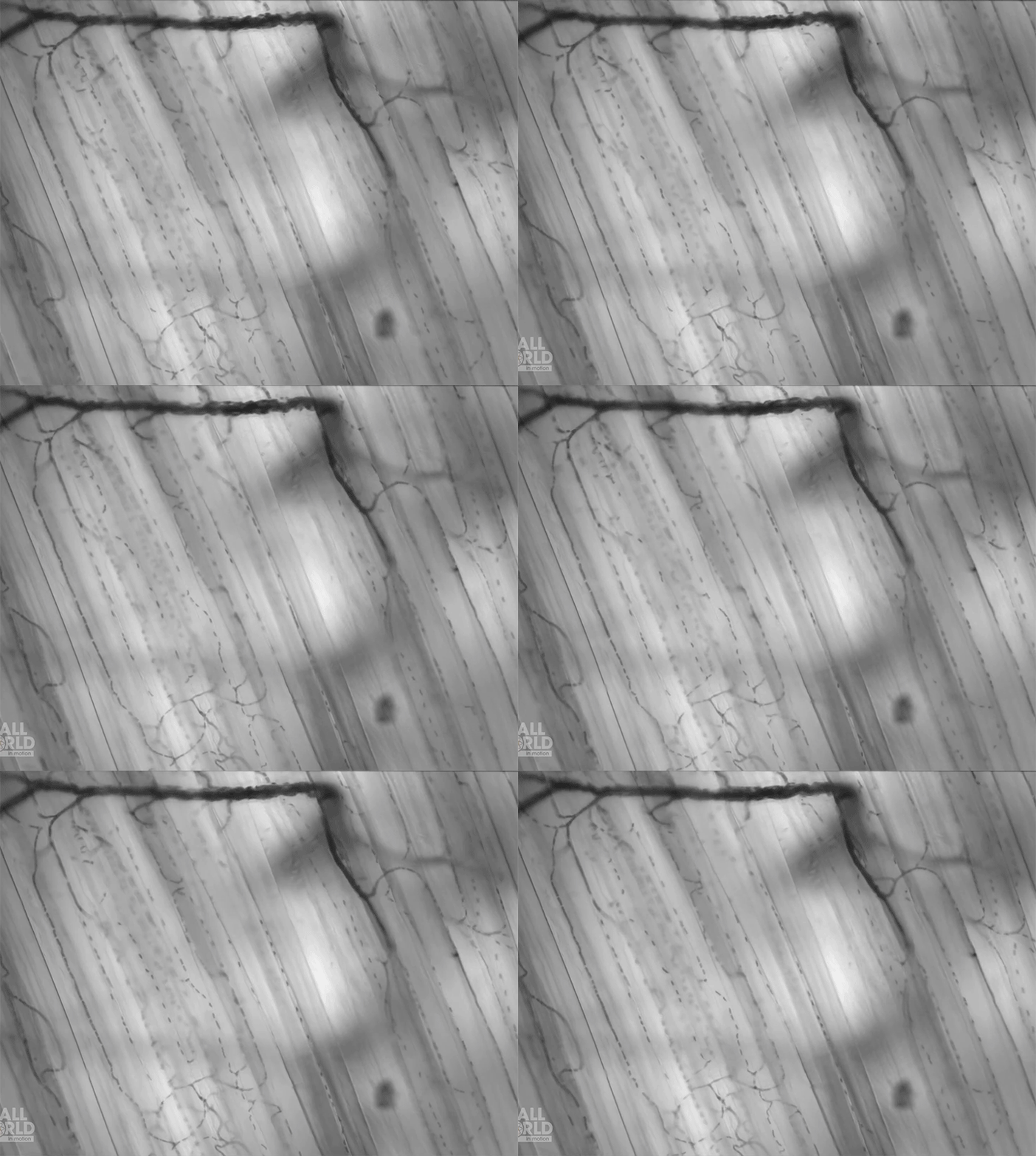
    Cuttlefish, like many cephalopods, catch prey with their tentacles. Suction cups along the tentacle help them hold on. In this video, researchers share preliminary studies of what goes on inside these suction cups as they’re detached. The low pressures inside the suction cup cause water to vaporize, temporarily. As seen for both the cuttlefish and a bio-inspired suction cup, small bubbles form inside the attached cup, coalesce into larger bubbles, and then get destroyed in the catastrophic leak that occurs once part of the suction cup detaches. (Video and image credit: B. Zhang et al.)

    Fediverse Reactions
  • Glimpses of Coronal Rain

    Glimpses of Coronal Rain

    Despite its incredible heat, our sun‘s corona is so faint compared to the rest of the star that we can rarely make it out except during a total solar eclipse. But a new adaptive optic technique has given us coronal images with unprecedented detail.

    A solar prominence dancing in the Sun's magnetic field lines.

    These images come from the 1.6-meter Goode Solar Telescope at Big Bear Solar Observatory, and they required some 2,200 adjustments to the instrument’s mirror every second to counter atmospheric distortions that would otherwise blur the images. With the new technique, the team was able to sharpen their resolution from 1,000 kilometers all the way down to 63 kilometers, revealing heretofore unseen details of plasma from solar prominences dancing in the sun’s magnetic field and cooling plasma falling as coronal rain.

    Coronal rain -- cooler plasma falling back down along magnetic lines.

    The team hope to upgrade the 4-meter Daniel K. Inouye Solar Telescope with the technology next, which will enable even finer imagery. (Image credit: Schmidt et al./NJIT/NSO/AURA/NSF; research credit: D. Schmidt et al.; via Gizmodo)

  • Bow Shock Instability

    Bow Shock Instability

    There are few flows more violent than planetary re-entry. Crossing a shock wave is always violent; it forces a sudden jump in density, temperature, and pressure. But at re-entry speeds this shock wave is so strong the density can jump by a factor of 13 or more, and the temperature increase is high enough that it literally rips air molecules apart into plasma.

    Here, researchers show a numerical simulation of flow around a space capsule moving at Mach 28. The transition through the capsule’s bow shock is so violent that within a few milliseconds, all of the flow behind the shock wave is turbulent. Because turbulence is so good at mixing, this carries hot plasma closer to the capsule’s surface, causing the high temperatures visible in reds and yellows in the image. Also shown — in shades of gray — is the vorticity magnitude of flow around the capsule. (Image credit: A. รlvarez and A. Lozano-Duran)

    Fediverse Reactions
  • South Island Sediments

    South Island Sediments

    In April and May late autumn storms ripped through Aotearoa New Zealand. This image shows the central portion of South Island, where coastal waters are unusually bright thanks to suspended sediment. We typically think of storm run-off as water, but these flows can carry lots of sediment as well. Here, the large amount of sediment is likely a combination of increased run-off from rivers and coastal sediment stirred up by faster river flows. (Image credit: W. Liang; via NASA Earth Observatory)

    Fediverse Reactions
  • Featured Video Play Icon

    “Now I See – The Collection Vol. 2”

    In the next video of his current collection, Roman De Giuli takes us flying over liquid landscapes that look like our Earth in miniature. Many of them have the feeling of river deltas or glaciers. Sharp-eyed viewers will notice bubbles and flotsam in some of these streams. If you follow them, you can see how the flows vary — wiggling around islands, speeding up through constrictions and slowing down when the stream widens. It is, as always, a beautiful form of flow visualization. (Video and image credit: R. De Giuli)

    Fediverse Reactions
  • Stunning Interstellar Turbulence

    Stunning Interstellar Turbulence

    The space between stars, known as the interstellar medium, may be sparse, but it is far from empty. Gas, dust, and plasma in this region forms compressible magnetized turbulence, with some pockets moving supersonically and others moving slower than sound. The flows here influence how stars form, how cosmic rays spread, and where metals and other planetary building blocks wind up. To better understand the physics of this region, researchers built a numerical simulation with over 1,000 billion grid points, creating an unprecedentedly detailed picture of this turbulence.

    The images above are two-dimensional slices from the full 3D simulation. The upper image shows the current density while the lower one shows mass density. On the right side of the images, magnetic field lines are superimposed in white. The results are gorgeous. Can you imagine a fly-through video? (Image and research credit: J. Beattie et al.; via Gizmodo)

  • Clapping Hands

    Clapping Hands

    Although often associated with applause, hand clapping is more universal than that. The distinctive sound can mark rhythms, draw attention, and even test the surrounding acoustics. But how exactly does hand clapping work? A recent study shows that the acoustics of hand clapping come from more than just the collision of hands. Especially in a cupped configuration, clapping hands act like a Helmholtz resonator (think blowing across a bottle top), producing a resonant jet that squeezes out between the forefinger and thumb of the impacted hand. Check out the images above to see how that jet appears in various clapping configurations. (Image and research credit: Y. Fu et al.; via Physics Today)

    Fediverse Reactions
  • Melting in a Spin

    Melting in a Spin

    The world’s largest iceberg A23a is spinning in a Taylor column off the Antarctic coast. This poster looks at a miniature version of the problem with a fluorescein-dyed ice slab slowly melting in water. On the left, the model iceberg is melting without rotating. The melt water stays close to the base until it forms a narrow, sinking plume. In the center, the ice rotates, which moves the detachment point outward. The wider plume is turbulent compared to the narrow, non-rotating one. At higher rotation speeds (right), the plume is even wider and more turbulent, causing the fastest melting rate. (Image credit: K. Perry and S. Morris)

    Fediverse Reactions
  • Featured Video Play Icon

    Manu Jumping, a.k.a. How to Make a Big Splash

    The Mฤori people of Aotearoa New Zealand compete in manu jumping to create the biggest splash. Here’s a fun example. In this video, researchers break down the physics of the move and how it creates an enormous splash. There are two main components — the V-shaped tuck and the underwater motion. At impact, jumpers use a relatively tight V-shape; the researchers found that a 45-degree angle works well at high impact speeds. This initiates the jumper’s cavity. Then, as they descend, the jumper unfolds, using their upper body to tear open a larger underwater cavity, which increases the size of the rebounding jet that forms the splash. To really maximize the splash, jumpers can aim to have their cavity pinch-off (or close) as deep underwater as possible. (Video and image credit: P. Rohilla et al.)

    Fediverse Reactions
  • Flamingo Fluid Dynamics, Part 2: The Game’s a Foot

    Flamingo Fluid Dynamics, Part 2: The Game’s a Foot

    Yesterday we saw how hunting flamingos use their heads and beaks to draw out and trap various prey. Today we take another look at the same study, which shows that flamingos use their footwork, too. If you watch flamingos on a beach, in muddy waters, or in a shallow pool, you’ll see them shifting back and forth as they lift and lower their feet. In humans, we might attribute this to nervous energy, but it turns out it’s another flamingo hunting habit.

    A mechanical model of a flamingo's foot reveals how its stomping and shape change create a standing vortex.

    As a flamingo raises its foot, it draws its toes together; when it stomps down, its foot spreads outward. This morphing shape, researchers discovered, creates a standing vortex just ahead of its feet — right where it lowers its head to sample whatever hapless creatures it has caught in this swirling vortex. And the vortex, as shown below, is strong enough to trap even active swimmers, making the flamingo a hard hunter to escape. (Image credit: top – L. Yukai, others – V. Ortega-Jimenez et al.; research credit: V. Ortega-Jimenez et al.; submitted by Soh KY)

    Video showing how active swimmers can get caught in the flamingo's stomping vortex.
    Fediverse Reactions