Tag: droplet impact

  • Liquid Sculptures

    Liquid Sculptures

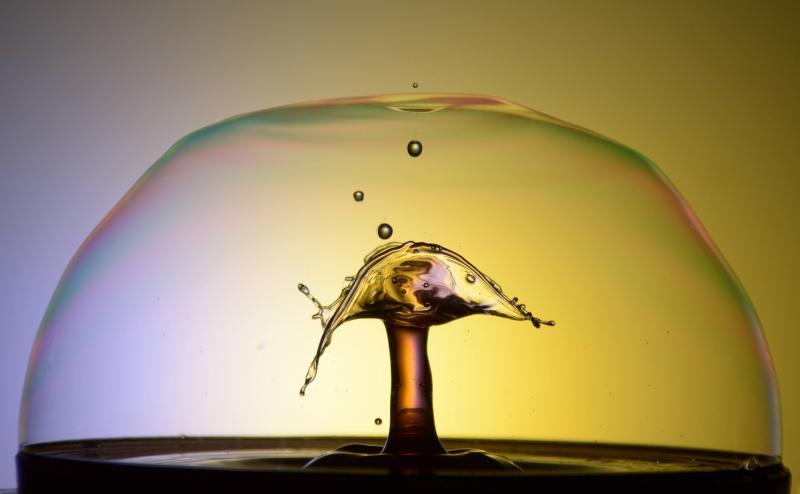
    With patience and timing, one can create remarkable sculptures with fluids. To capture this shot, Moussi Ouissem used two droplets, perfectly timed. The first fell through the soap bubble (which stayed intact thanks to its powers of self-healing) and hit the pool of water. The impact caused a cavity, which then inverted into a Worthington jet. The second drop was timed to impact the column of the jet, creating the saddle-shaped splash seen here. Ripples in the bubble are still visible from the passage of the second drop, and several satellite droplets are signs of the violence of the impacts. (Image credit: M. Ouissem)

  • Forming Craters

    Forming Craters

    Asteroid impacts are a major force in shaping planetary bodies over the course of their geological history. As such, they receive a great deal of attention and study, often in the form of simulations like the one above. This simulation shows an impact in the Orientale basin of the moon, and if it looks somewhat fluid-like, there’s good reason for that. Impacts like these carry enormous energy, about 97% of which is dissipated as heat. That means temperatures in impact zones can reach 2000 degrees Celsius. The rest of the energy goes into deforming the impacted material. In simulations, those materials – be they rock or exotic ices – are usually modeled as Bingham fluids, a type of non-Newtonian fluid that only deforms after a certain amount of force is applied. An everyday example of such a fluid is toothpaste, which won’t extrude from its tube until you squeeze it.

    The fluid dynamical similarities run more than skin-deep, though. For decades, researchers looked for ways to connect asteroid impacts with smaller scale ones, like solid impacts on granular materials or liquid-on-liquid impacts. Recently, though, a group found that liquid-on-granular impacts scale exactly the way that asteroid impacts do. Even the morphology of the craters mirror one another. The reason this works has to do with that energy dissipation mentioned above. As with asteroid impacts, most of the energy from a liquid drop impacting a granular material goes into something other than deforming the crater region. Instead of heat, the mechanism for dissipation here is the drop’s deformation. The results, however, are strikingly alike.  

    For more on how asteroid impacts affect the moon and other bodies, check out Emily Lakdawalla’s write-up, which also includes lots of amazing sketches by James Tuttle Keane, who illustrates the talks he hears at conferences! (Image credits: J. Keane and B. Johnson; via the Planetary Society; additional research and video credit: R. Zhao et al., source; submitted by jpshoer)


  • Wrinkling Drops

    Wrinkling Drops

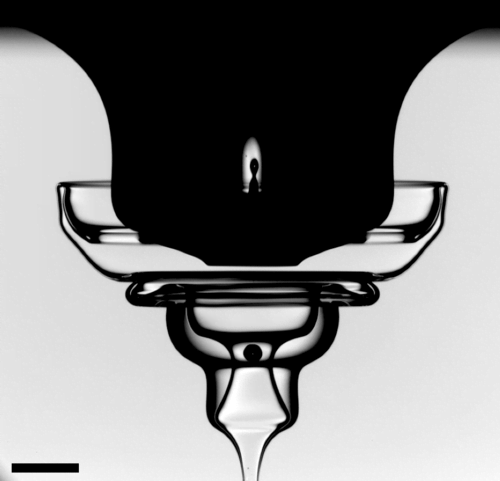
    When a viscous drop falls into a pool of a less viscous liquid, the drop can deform into some beautiful and complex shapes. Typically, shear forces between the drop and its surroundings cause a vortex ring to roll up and advect downward, thereby stretching the remainder of the drop into thin sheets that can buckle and wrinkle. Here the drop is about 150 times more viscous than the pool and impacts at 1.45 m/s, making a rather energetic entry. The vortex ring (not visible) has stretched the drop’s remains downward while a buoyant bubble caught by the impact pulls some of the drop back toward the surface. As a result, the thin sheets of the drop’s fluid are buckling and folding back on themselves like an elaborate and delicate glass sculpture. This entire paper is full of gorgeous images and videos. Be sure to check them out! (Image and research credit: E. Q. Li et al.; see supplemental info zip for videos)

  • Slipping Through a Soap Film

    Slipping Through a Soap Film

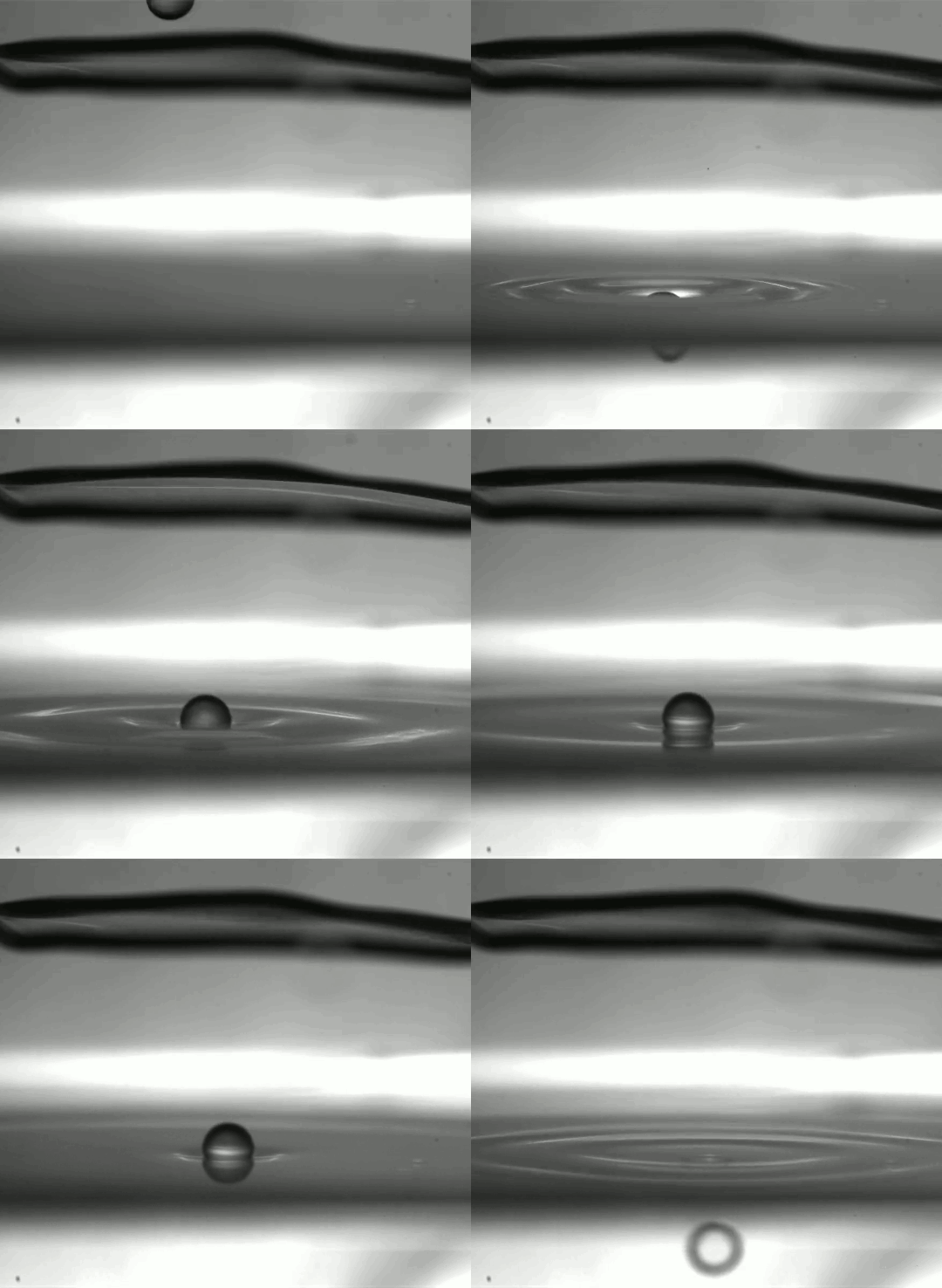
    A droplet falling at high speed can pass through a soap film without breaking it. On impact, the drop stretches the soap film and ultimately only passes through by getting coated with a thin shell of soap film fluid. That liquid shell is separated from the original droplet by an extremely thin air layer. This air layer isn’t typically visible, but we know that it’s there from what happens when that soap-film-shelled droplet later impacts a liquid pool. As seen above, the droplet sits on the surface until the soap film shell coalesces with the pool. This sucks the drop under, but the drop itself does not coalesce. Instead it becomes an antibubble – a submerged liquid drop surrounded by a shell of air. (Image credit: J. Zou et al., source)

  • A Drip’s Vortex

    A Drip’s Vortex

    Drip food coloring into water and you can often see a torus-shaped vortex ring after the drop’s impact. That vortex rings form during droplet impact has been well known for over a century, but only recently have we begun to understand the process that leads to that vortex ring. Part of the challenge is that the vortex formation is very small and very fast, but recent work with x-ray imaging has allowed experimentalists to finally capture this event.

    When a drop impacts a pool, surface tension draws some of the pool liquid up the sides of the drop. At the same time, the impact causes ripple-like capillary waves down the sides of the drop. This causes pool liquid to penetrate sharply into the drop, triggering the spirals that mark the forming vortex ring. When drops impact with even higher momentum, multiple vortex spirals can form, as seen on the lower right image. The authors observed as many as four rings during an impact. For more, check out the (open access) article.  (Image and research credit: J. Lee et al., source)

  • Superhydrophobic Splashes

    Superhydrophobic Splashes

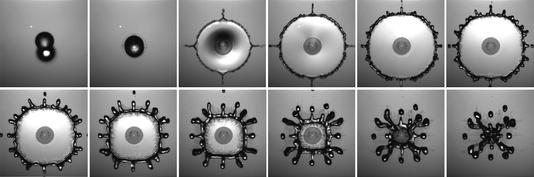
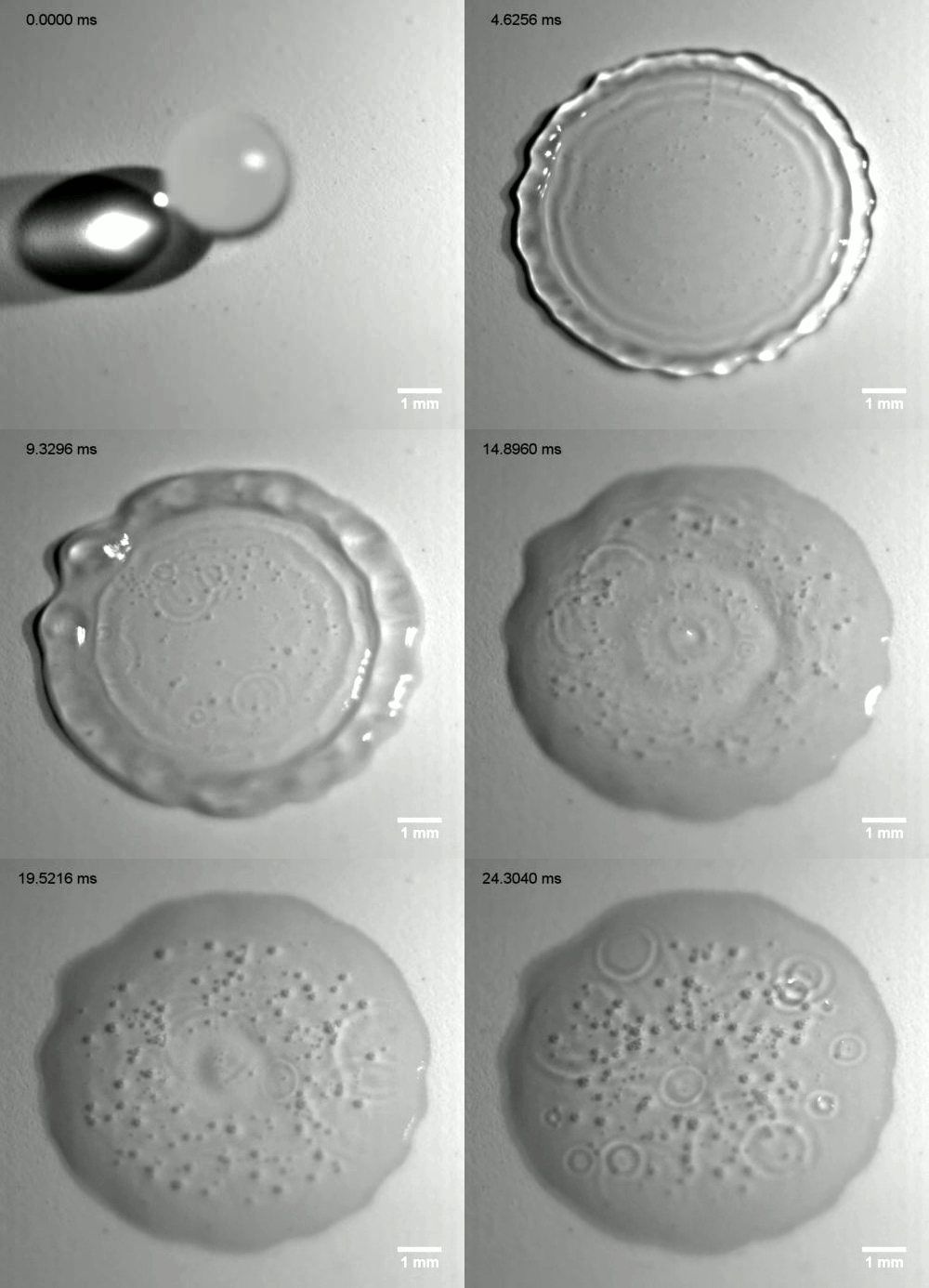
    Superhydrophobic surfaces have a complicated microscale structure that changes how water interacts with them, like the hairs on a lotus leaf or the scales of a butterfly’s wing. The photo above shows snapshots at each millisecond as a water drop hits a superhydrophobic surface covered in rows of 18 micron-tall posts. The drop hits with enough speed to drive some water into the space between posts, as shown by the dark area near the center of the splash. As the rest of the droplet spreads, four microjets form along the directions of the micropost array. Those jets remain apparent until the drop reaches its maximum radius and starts to recoil. The rectangular shape of the post array affects how the water pulls away from the surface, or depins, causing the round droplet to instead take on a square-like shape as it pulls back. (Image credit: M. Reyssat et al.)

  • Cavity Collapse

    Cavity Collapse

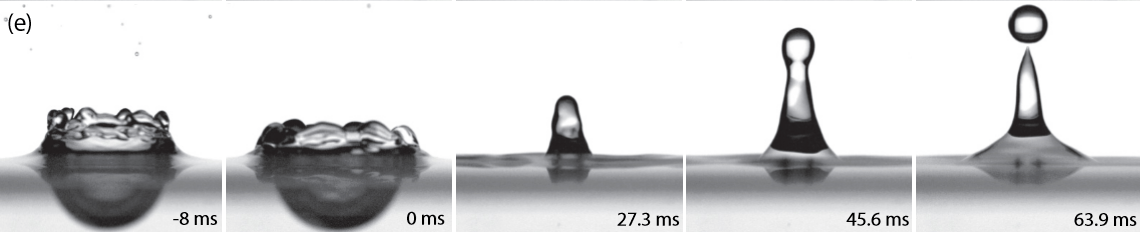
    One of the most iconic images in fluid dynamics is that of a drop impacting a liquid. When a drop hits a pool, it creates a crater, or cavity. That cavity expands and then collapses to form a jet that rebounds above the pool’s surface. If the jet is fast enough, it will eject one or more droplets before it falls back into the pool. Faster droplets, like the one that formed the cavity and jet shown above, actually create slower and fatter jets. In this regime, the complicated interplay of surface tension and gravity effects results in a jet velocity that is independent of impact speed and the liquid’s viscosity. Understanding this jet and splash dynamics is important for many industrial applications, including ink-jet printing. (Image credit: G. Michon et al.)

  • How Rainfall Can Spread Pathogens

    How Rainfall Can Spread Pathogens

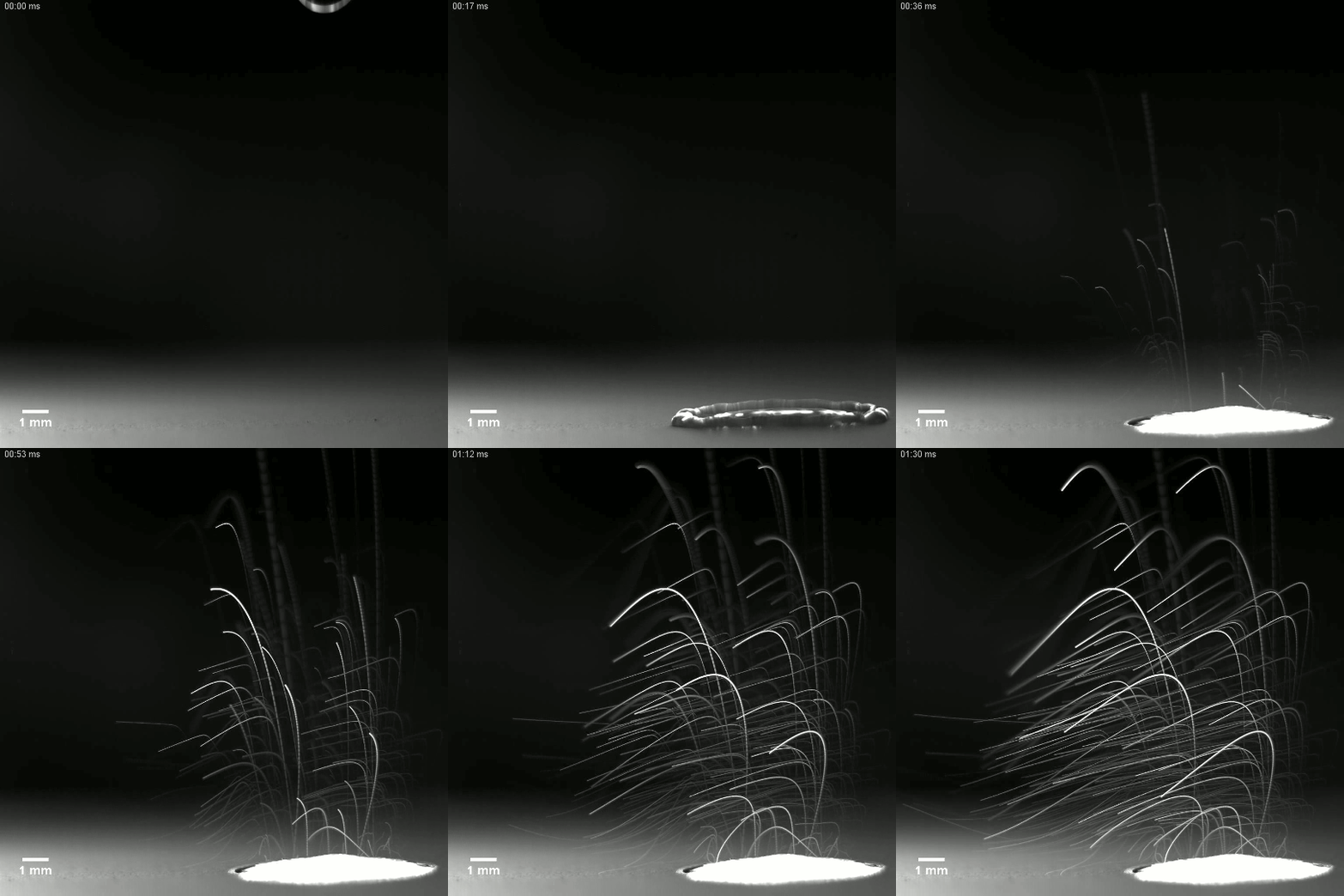
    Rainfall may provide a mechanism for soil bacteria to spread. A new study examines how raindrops hitting infected soil can eject bacteria into the air. When drops fall at the rate of a light rainfall, they form tiny bubbles after impact (upper left). Those microbubbles rise to the top of the water and burst, sending extremely tiny droplets – or aerosols – spraying up into the air (upper right). Soil bacteria can hitch a ride on these aerosols, staying alive for up to an hour while the wind transports them to fresh, new soil. The researchers found that the most aerosols were produced when soil temperature was about 86 degrees Fahrenheit (30 degrees Celsius) – the temperature of tropical soils. Depending on the conditions, a single raindrop could aerosolize anything from zero to several thousands of soil bacteria. (Image and research credit: Y. Joung et al.; video credit: MIT News)

  • Freezing Impact

    Freezing Impact

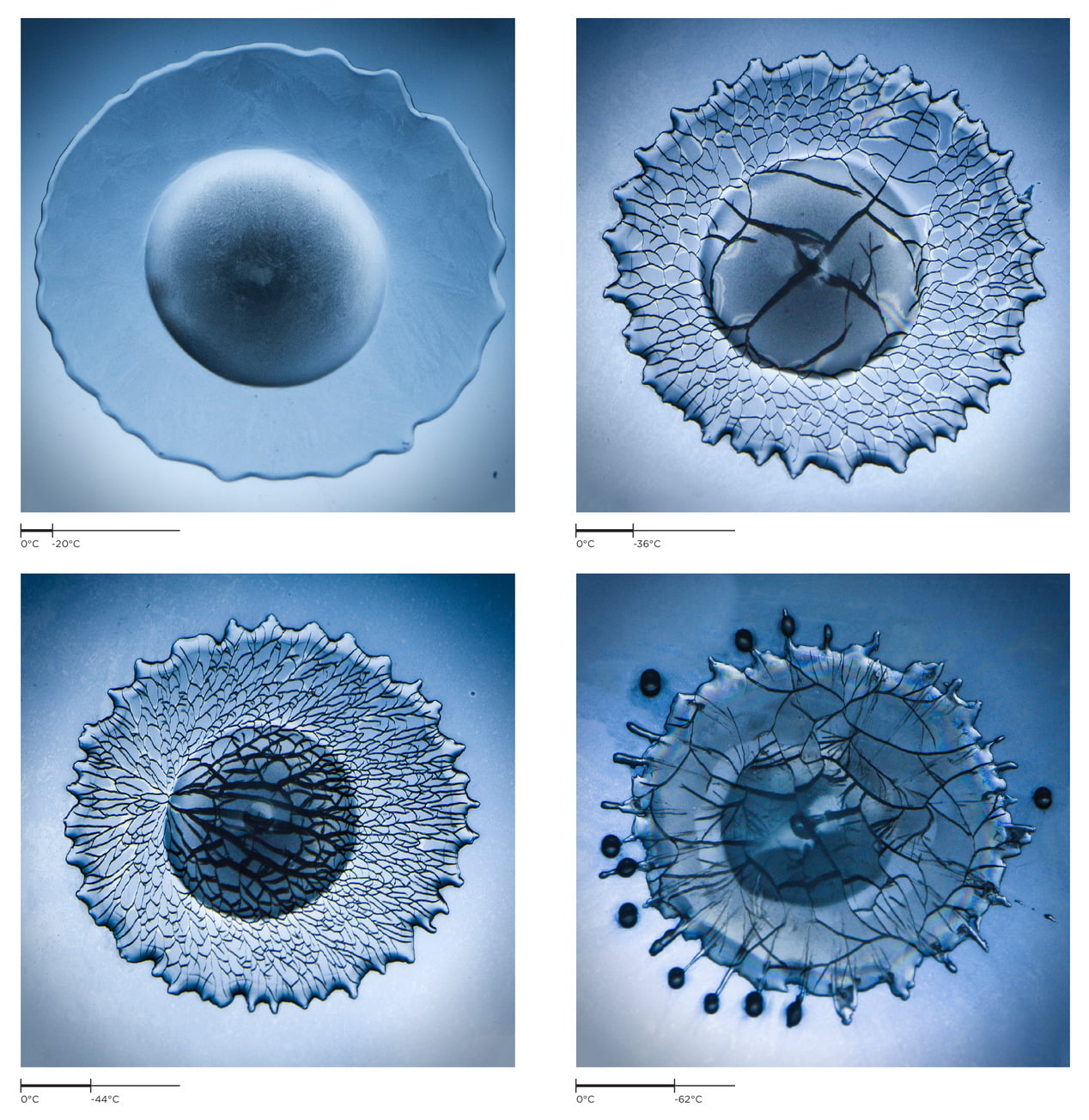
    When a water droplet hits a frozen surface, what happens depends significantly on the temperature of the substrate. At relatively high temperatures (-20 degrees C), the droplet freezes without any cracking (upper left). As the surface gets colder, drops begin to crack. At first the cracks are relatively large and unstructured (upper right), but at lower temperatures, they grow in a network of smaller cracks with more distinctive structure (lower left). Cold temperatures can also affect the contact line where water, air, and substrate meet. This can cause droplets to splash even as they’re freezing (lower right). (Image credit: V. Thievenaz et al.; see also E. Ghabache et al.)

  • A Water Balloon on a Bed of Nails

    A Water Balloon on a Bed of Nails

    If you dropped a water balloon on a bed of nails, you’d expect it to burst spectacularly. And you’d be right – some of the time. Under the right conditions, though, you’d see what a high-speed camera caught in the animation above: a pancake-shaped bounce with nary a leak. Physically, this is a scaled-up version of what happens to a water droplet when it hits a superhydrophobic surface.

    Water repellent superhydrophobic surfaces are covered in microscale roughness, much like a bed of tiny nails. When the balloon (or droplet) hits, it deforms into the gaps between posts. In the case of the water balloon, its rubbery exterior pulls back against that deformation. (For the droplet, the same effect is provided by surface tension.) That tension pulls the deformed parts of the balloon back up, causing the whole balloon to rebound off the nails in a pancake-like shape. For more, check out this video on the student balloon project or the original water droplet research. (Image credits: T. Hecksher et al., Y. Liu et al.; via The New York Times; submitted by Justin B.)

    image