Tag: drag reduction

  • Measuring Drag

    Measuring Drag

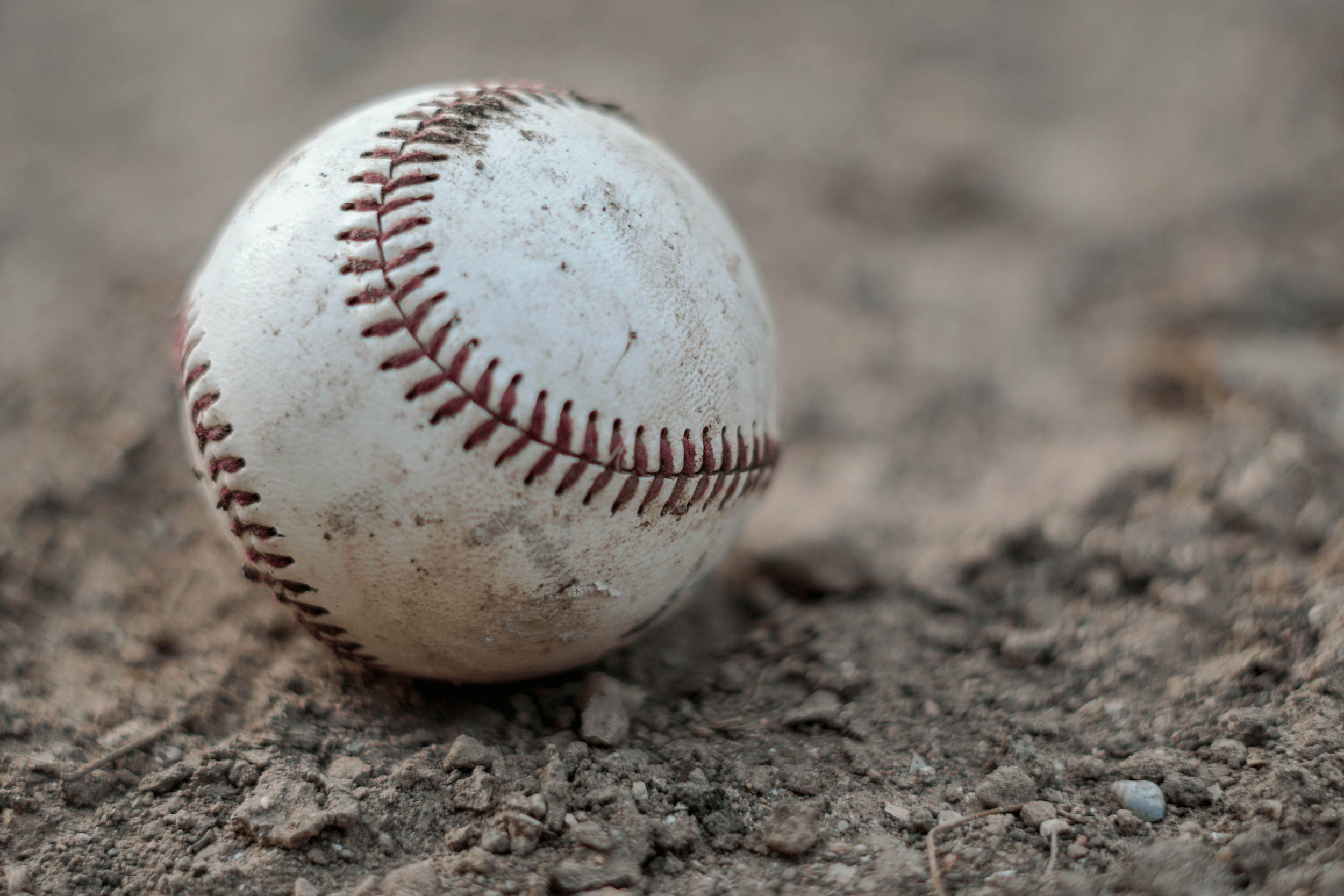
    After a noticeable rise in the prevalence of home runs beginning in 2015, Major League Baseball commissioned a report that found the increase was caused by a small 3% reduction in drag on the league’s baseballs. When such small differences have a big effect on the game, it’s important to be able to measure a baseball’s drag in flight accurately.

    In the past, that measurement has often been done in a wind tunnel, but the mounting mechanisms used there result in drag measurements that are a little higher than what’s seen from video tracking in actual games. Now researchers have developed a new free-flight method for measuring a baseball’s drag. The drag measurements from their new method are lower than those for wind-tunnel-mounted baseballs and in better agreement with video-based methods. The authors’ method should be adaptable to other sports like cricket and tennis, which will hopefully provide new insight into the subtleties of their aerodynamics. (Image credit: T. Park; research credit: L. Smith and A. Sciacchitano; via Ars Technica; submitted by Kam-Yung Soh)
  • Beijing 2022: Ski Jumping

    Beijing 2022: Ski Jumping

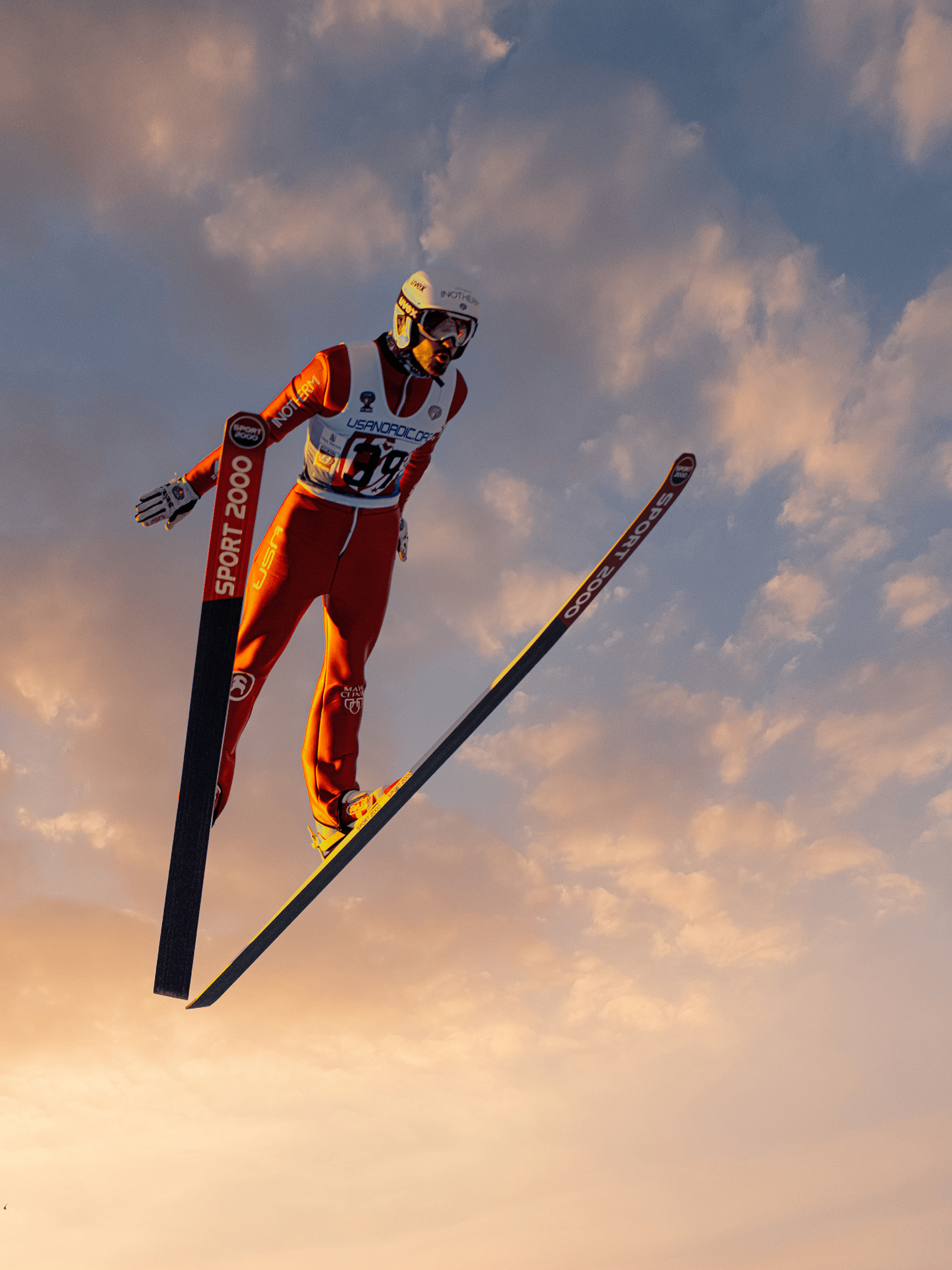
    In ski jumping, aerodynamics are paramount. Each jump consists of four segments: the in-run, take-off, flight, and landing. Of these, aerodynamics dominates in the in-run — where jumpers streamline themselves to minimize drag and maximize their take-off speed — and in flight. During flight, ski jumpers spread their skis in a V-shape and lift their arms to the sides to turn themselves into a glider. Their goal is to maximize their lift-to-drag ratio, so that the air keeps them aloft as long as possible. Because of the short flight time and high risk of taking jump after jump, many elite ski jumpers use wind tunnel time to practice and hone their flight positioning, as seen in the video below.

    Weather also plays a significant role in ski jumping; it’s one of the few sports where a headwind is an advantage to athletes. To try to adjust for wind effects, scoring for the sport uses a wind factor. (Image credit: T. Trapani; video credit: NBC News)

  • Featured Video Play Icon

    RC Ground Effect Plane

    The ekranoplan was a massive, Soviet-era aircraft that relied on ground effect to stay aloft. In this video, RC pilots test out their own homemade version of the craft, including some neat flow visualization of the wingtip vortices. When an aircraft (or, for that matter, a bird) flies near the ground, it experiences less drag than at higher altitudes. This happens primarily because of the ground’s effect on wingtip vortices.

    In normal flight, the vortices from an aircraft’s wingtips create a downwash that reduces the wing’s overall lift. But in ground effect, the vortices cannot drift downward as they normally do. Instead, they spread apart from one another, thereby reducing the drag caused by downwash from the aircraft. The end result is better performance, though it comes with added risk since there’s very little time to correct an error when flying at an altitude less than half the aircraft’s wingspan. (Video and image credit: rctestflight; submitted by Simplicator)

  • Sea Sponge Hydrodynamics

    Sea Sponge Hydrodynamics

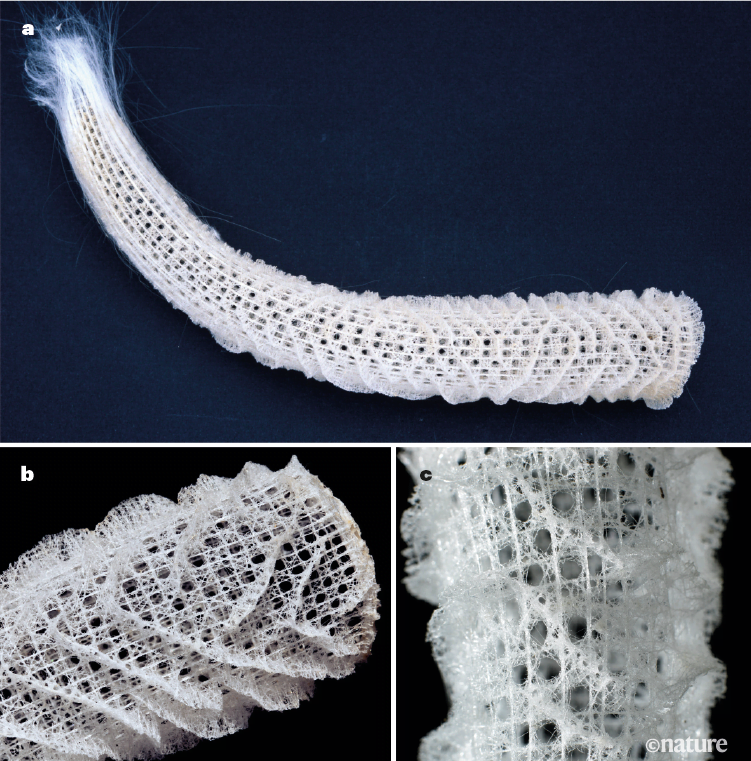
    The Venus’s flower basket is a sea sponge that lives at depths of 100-1000 meters. Its intricate latticework skeleton has long fascinated engineers for its structural mechanics, but a new study shows that the sponge’s shape benefits it hydrodynamically as well.

    The sea sponge’s skeleton is predominantly cylindrical, with tiny gaps that allow water to flow through it and helical ridges alongside its outer surface to strengthen it against the deep-sea currents surrounding it. Through detailed numerical simulations, researchers found that both of these features — the holes and the ridges — serve fluid mechanical purposes for the sponge. The porous holes of the sea sponge drastically reduce flow in the sponge’s wake (third image), which provides major drag reduction for the sea sponge. That drag reduction makes it easier for the sponge to stay rooted to the ocean floor.

    The helical ridges, on the other hand, create low-speed vortices within the sea-sponge’s body cavity (second image). Such vortices increase the time water spends inside the sponge, likely helping it to filter-feed more efficiently. The additional vorticity comes at the cost of slightly increased drag but not enough to outweigh the savings from its porosity. (Image and research credit: G. Falcucci et al.; via Nature; submitted by Kam-Yung Soh)
  • Featured Video Play Icon

    Streamlining Circa 1936

    This 1936 promotional film by Chevrolet explains the concept of streamlining objects to reduce their drag. And it actually does a pretty nice job of it, including some wind tunnel footage and table-top demonstrations. It’s also an amazing snapshot of the era, both in terms of engineering and the vision they had for the future. Just check out that City of the Future and its torpedo cars! (Video and image credit: Chevrolet; submitted by Larry S.)

  • Flexible Filament Reduces Drag

    Flexible Filament Reduces Drag

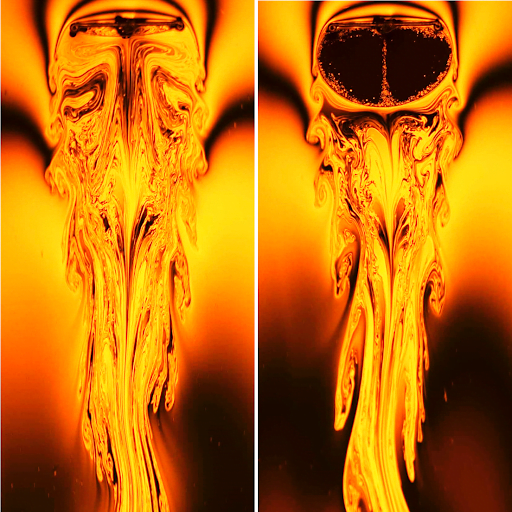
    Most shapes aren’t streamlined for fluid flow. We call these bulky, often boxy shapes, bluff bodies. Above, we see two examples of a bluff body, a flat plate, in a soap film. On the left, the plate sits perpendicular to the soap film’s top-to-bottom flow. Two large, counter-rotating vortices form behind the plate and a wide wake stretches behind it.

    On the right, we see the same flat plate but now a long, flexible filament is attached to either end. As the flow moves past, it deforms the filament, creating a rounded shape. Researchers found that, under the right conditions, this flexible afterbody could reduce drag on the object by up to 10%. (Image and research credit: S. Gao et al.)

  • Bristling Sharkskin Fights Separation

    Bristling Sharkskin Fights Separation

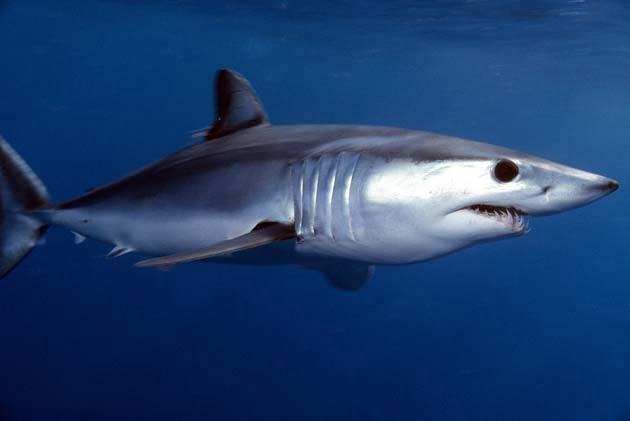
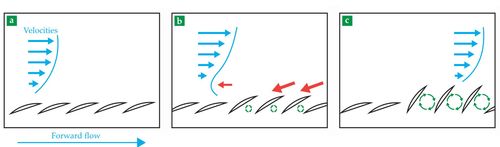
    The speedy shortfin mako shark has a secret weapon to fight drag: bristling denticles that line its fins and tail. Denticles are tiny, anvil-shaped enamel scales on the mako’s skin. In the photo above, each one is about 100 microns across. Under normal conditions, with flow moving over the shark from nose to tail, the denticles lie flat, providing no interference.

    But when sudden changes in flow near the shark’s skin cause water to begin moving in the opposite direction, the denticles flare up. Their rise interferes with the reversed flow, trapping it in small eddies beneath each denticle. Since that flow reversal is a precursor to the flow separating from the shark’s body, the bristling effectively cuts off flow separation before it can begin. The result is much less separation and much lower drag. Once the flow stops trying to move upstream, the denticles settle back into their original place. (Image credit: mako shark – jidanchaomian, denticles – J. Oeffner and G. Lauder, illustration – A. Lang, bristling – A. Lang et al.; research credit: A. Lang and A. Lang et al.; submitted by Kam-Yung Soh)

  • Gliding Birds Get Extra Lift From Their Tails

    Gliding Birds Get Extra Lift From Their Tails

    Gorgeous new research highlights some of the differences between fixed-wing flight and birds. Researchers trained a barn owl, tawny owl, and goshawk to glide through a cloud of helium-filled bubbles illuminated by a light sheet. By tracking bubbles’ movement after the birds’ passage, researchers could reconstruct the wake of these flyers.

    As you can see in the animations above and the video below, the birds shed distinctive wingtip vortices similar to those seen behind aircraft. But if you look closely, you’ll see a second set of vortices, shed from the birds’ tails. This is decidedly different from aircraft, which actually generate negative lift with their tails in order to stabilize themselves.

    Instead, gliding birds generate extra lift with their maneuverable tails, using them more like a pilot uses wing flaps during approach and landing. Unlike airplanes, though, birds rely on this mechanism for more than avoiding stall. It seems their tails actually help reduce their overall drag! (Image and research credit: J. Usherwood et al.; video credit: Nature News; submitted by Jorn C. and Kam-Yung Soh)

  • Featured Video Play Icon

    Feathered Fighter Jets

    Peregrine falcons are built for speed. They’ve been clocked at more than 380 kilometers per hour when diving. This video from Deep Look examines some of the features that make these birds of prey so fast, from the shape of their eyes to the tubercles in their nostrils that help them breathe during high-pressure dives. 

    Part of the falcon’s speed comes from its signature stoop, where it pulls in its wings to form a tight, streamlined shape. This reduces drag forces on the falcon, letting gravity pull it toward a high terminal velocity. But even with its wings extended, the falcon exudes speed and agility. Its wings form a sharp leading edge to cut through the air, with stiff, overlapping feathers that slice the flow. Compare this to the feathers of an owl, which specializes in silence rather than speed for catching its prey. (Video and image credit: Deep Look)

  • Reshaping the Wake to Decrease Drag

    Reshaping the Wake to Decrease Drag

    When it comes to the aerodynamics of cars, there’s only so much streamlining one can do. In the end, most cars have a certain boxy-ness as a matter of practicality; they do, after all, have to carry people and things. But that doesn’t mean we’re stuck with the level of drag those shapes entail.

    For cars and other non-streamlined objects, much of their drag comes from their wake, which usually contains a large, asymmetric, and unsteady recirculation region. In a new wind tunnel study, scientists used air blasts to reshape this wake, making it more symmetrical, even when the wind direction did not align with the car model. That reduced the drag by 6%. They’re now experimenting with adding additional nozzles along the non-windward edges of the model to see if they can reduce drag even further.

    Although this appears to be the first time this technique has been tested for road vehicles, the idea of blowing air to improve aerodynamics is well-established, particularly in aviation. (Image credit: V. Malagoli; research credit: R. Li et al., submitted by Marc A.)