Tag: coalescence

  • The Coalescence Cascade and Surfactants

    The Coalescence Cascade and Surfactants

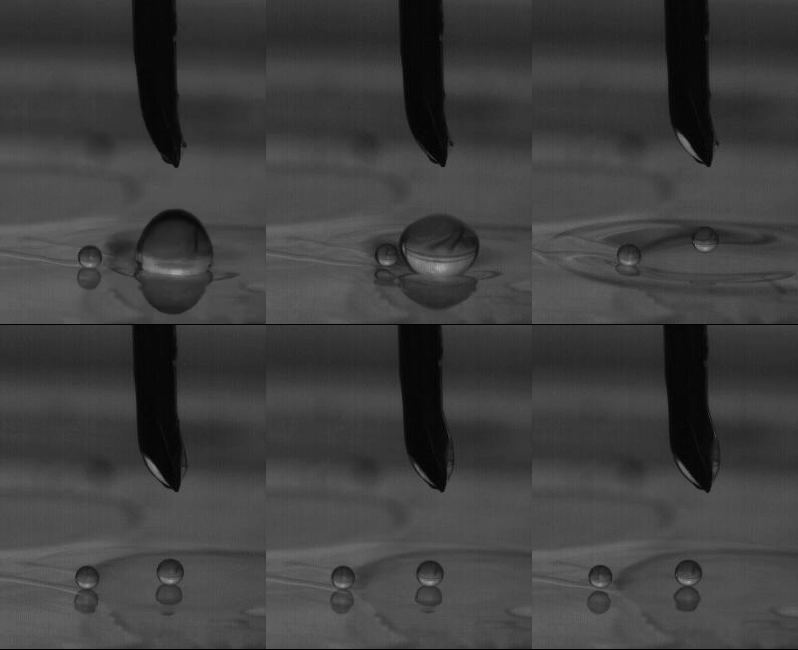
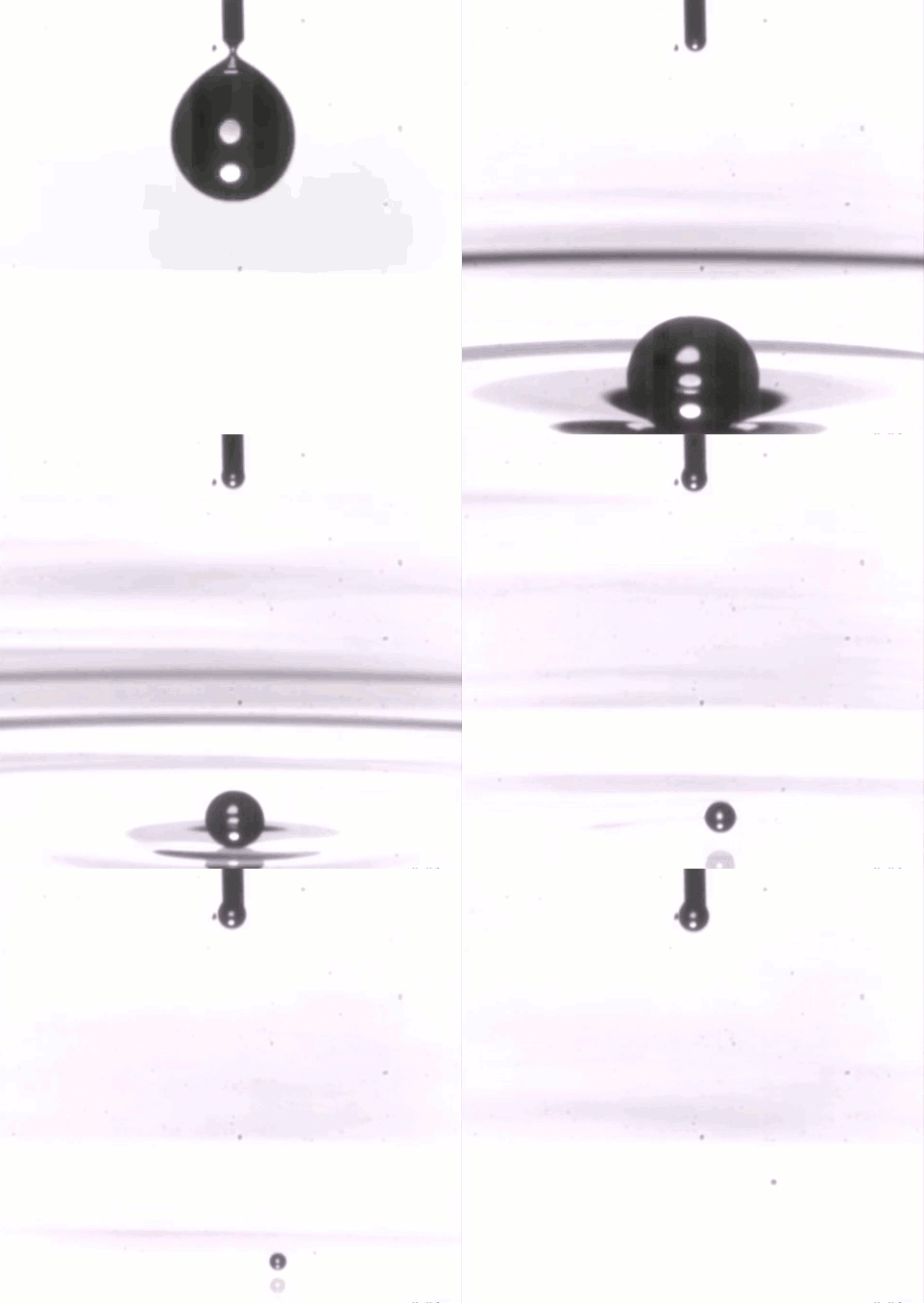
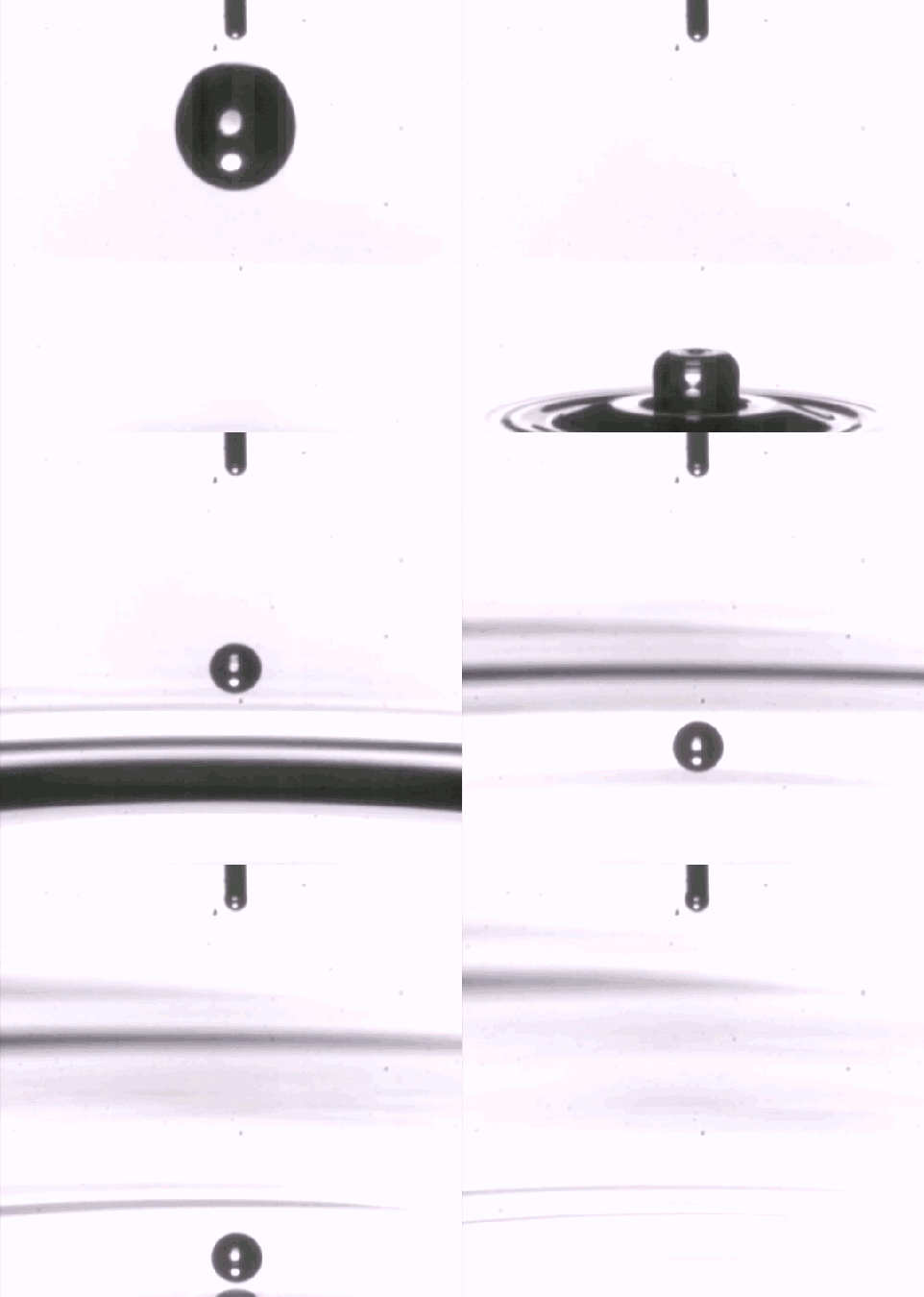
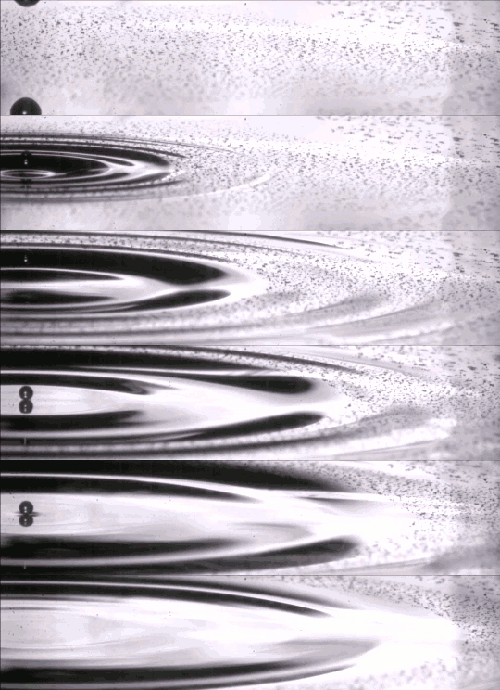
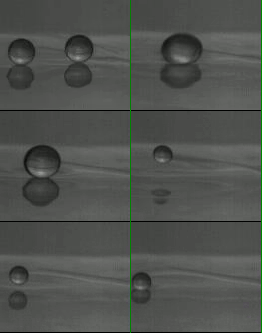
    Drops of a liquid can often join a pool gradually through a process known as the coalescence cascade (top left). In this process, a drop sits atop a pool, separated by a thin air layer. Once that air drains out, contact is made and part of the drop coalesces. Then a smaller daughter droplet rebounds and the process repeats.

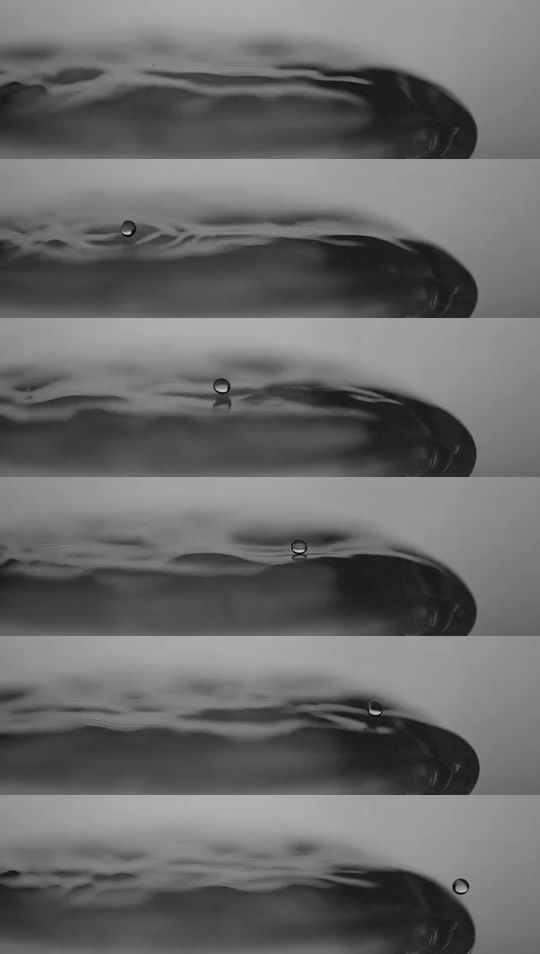
    A recent study describes a related phenomenon (top right) in which the coalescence cascade is drastically sped up through the use of surfactants. The normal cascade depends strongly on the amount of time it takes for the air layer between the drop and pool to drain. By making the pool a liquid with a much greater surface tension value than the drop, the researchers sped up the air layer’s drainage. The mismatch in surface tension between the drop and pool creates an outward flow on the surface (below) due to the Marangoni effect. As the pool’s liquid moves outward, it drags air with it, thereby draining the separating layer more quickly. The result is still a coalescence cascade but one in which the later stages have no rebound and coalesce quickly. (Image and research credit: S. Shim and H. Stone, source)
    image
  • Growing Droplets on a Trampoline

    Growing Droplets on a Trampoline

    Droplets on a liquid surface will typically coalesce, thanks to gravity and the low viscosity of the air layer between them and the pool. In certain cases, droplets will partially coalesce, producing smaller and smaller droplets until they finally coalesce completely. Vibrating the liquid surface can help prevent this coalescence but only when droplets are small.

    In fact, if the pool is more viscous than the droplets, bouncing can be used to produce droplets of a desired size, as shown above. Because the droplets are less viscous, they deform more than the pool does – behaving somewhat like a bouncy ball hitting a rigid wall. In this system, large droplets are unstable and will undergo partial coalescence until they are small enough to bounce stably. The size of stable drops is determined by the frequency and acceleration of the bouncing bath; by tuning these parameters, researchers can select what size droplets they want to end up with. (Research credit: T. Gilet et al.; images and submission by N. Vandewalle)

  • Avoiding Coalescence

    Avoiding Coalescence

    Droplets hitting a liquid surface don’t always coalesce. Above you can see a tiny droplet bounce and skate along the surface of a larger, vibrating drop. The smaller droplet doesn’t coalesce because a tiny layer of air sits between it and the vibrating drop. To actually contact and coalesce, the droplet has to sit still long enough for that air layer to get squeezed out. Instead, the vibration of the larger drop bounces it upwards, refreshing the air layer and scooting the droplet along until it falls off the vibrating drop. (Image credit: C. Kalelkar and S. Phansalkar, source)

  • Featured Video Play Icon

    Colors in Macro

    Milk, acrylic paints, soap, and oil – all relatively common fluids, but together they form beautiful mixtures worth leaning in to enjoy. Variations in surface tension between the liquids cause much of the motion we see. Soap, in particular, has a low surface tension, which causes nearby colors to get pulled away by areas with higher surface tension, behavior also known as the Marangoni effect. Adding oil creates some immiscibility and lets you appreciate both the coalescence and fragmentation of the fluids. And finally, there’s one of my favorite sequences, where bubbles start popping in slow motion. As the bubble film ruptures, fluid pulls away, breaking into ligaments and then a spray of droplets as the bubble disintegrates. (Video credit: Macro Room; via Gizmodo)

  • Featured Video Play Icon

    Droplet Bounce

    Water droplets don’t always immediately disappear into a pool they’re dropped onto. If the droplet is small and doesn’t have much momentum, it will join the pool gradually through a process known as the coalescence cascade, seen here in high speed video. The droplet bounces off the surface, then settles. A thin layer of air is caught between it and the pool. Slowly the weight of the drop pushes that air out until there is contact between the drop and pool. Before the drop can merge completely, though, surface tension pinches it off, creating a smaller daughter droplet. Ripples caused by the merger help bounce the little droplet, which repeats the same process until the tiniest droplet merges completely. (Video credit: B. ter Huume)

  • Featured Video Play Icon

    Pearls of Mezcal

    Mezcal is a traditional Mexican liquor distilled from agave. (The more commonly known tequila is actually a special type of mezcal.) As a part of the production process, distillers pour a stream of mezcal into a bowl, creating a flotilla of small bubbles called pearls. Strange as it sounds, these pearls let the distiller judge the alcohol content of the liquor! When the ratio of alcohol and water in the mixture is just right, the bubbles will have a longer lifetime before they coalesce. If there’s too little or too much alcohol, the bubbles won’t last as long. The effect depends on both the viscosity and the surface tension of the liquor, but it’s the odd way that viscosity changes in water/alcohol mixtures that creates this Goldilocks behavior. It’s a fascinating demonstration of how traditional techniques often have true scientific underpinnings. (Video credit: M. Wilhelmus et al.)

  • Bubbles and Films Merging

    Bubbles and Films Merging

    As we’ve seen before, a water droplet can merge gradually with a pool through a coalescence cascade. It turns out that the coalescence of a soap bubble with a soap film can follow a similar process! Initially, the bubble and film are separated by a thin layer of air. Once that air drains away and the bubble contacts the fluid, it starts to coalesce. But the bubble pinches off before its entire volume merges, leaving behind a daughter bubble with about half the radius of the previous bubble. This process repeats until the bubble is small enough that it merges completely. To see more great high-speed footage of this bubble merger, check out the full video below.  (Image/video credit: D. Harris et al.)

  • Blowing Through a Straw

    Blowing Through a Straw

    As kids, most of us got in trouble at some point for blowing through a straw into our nearly-empty drinks. What you see here is a consequence of such misbehavior, though in this case the fluid is silicone oil and the straw is a metal needle (not shown) through which helium is continuously injected beneath the liquid surface. Depending on the angle of the straw, different behaviors are observed, as seen in this video. The photo above shows an intermediate regime, in which tiny jets form at the surface and eject a stream of drops. Each drop sails in a little parabolic arc and briefly bounces on the surface, like the drops on the right, before coalescing into the pool. (Image credit: J. Bird and H. Stone; video)

  • Featured Video Play Icon

    Oil Film on Water

    This award-winning short film features a thin layer of volatile oil on water. The oil evaporates quickest from shallow pools only microns deep, which appear bluish in the video. Surface instabilities along the edge of the pool create flow that draws oil in, generating the iridescent droplets seen floating among the evaporation pools. The droplets combine and coalesce as they come in contact with one another. Since droplets have a larger volume per surface area than the shallow pools, they evaporate more slowly. The behaviors observed here are important to applications like oil and fuel spills, which can persist longer if the floating fluid layer tends to form droplets. (Video credit: J. Hart; via txchnologist)

  • Featured Video Play Icon

    Soap Bubble Coalescence

    Droplets falling onto a bath of the same liquid will sometimes coalesce via a series of increasingly smaller droplets in a process known as the coalescence cascade. Soap bubbles, it turns out, can exhibit a similar partial coalescence. When a bubble nears a soap film and the air between them drains away, coalesce can begin. If the the soap film beneath the bubble ruptures, some air from the inside of the bubble can escape. Part of the bubble coalesces with the soap film and a smaller daughter bubble is left behind. The researchers observed this process happen up to three times before the bubble coalesced completely. Alternatively, if the soap film did not rupture, the air inside the bubble had no escape, and the bubble would coalesce into a hemispherical lens atop the soap film. (Video credit: G. Pucci et al.; via KeSimpulan)

    ——————

    Don’t forget about our FYFD survey! I’ve teamed up with researcher Paige Brown Jarreau to create a survey of FYFD readers. By participating, you’ll be helping me improve FYFD and contributing to novel academic research on the readers of science blogs. It should only take 10-15 minutes to complete. You can find the survey here. Please take a few minutes to participate and share!