Tag: breaking wave

  • Ocean Bubbles Capture Carbon

    Ocean Bubbles Capture Carbon

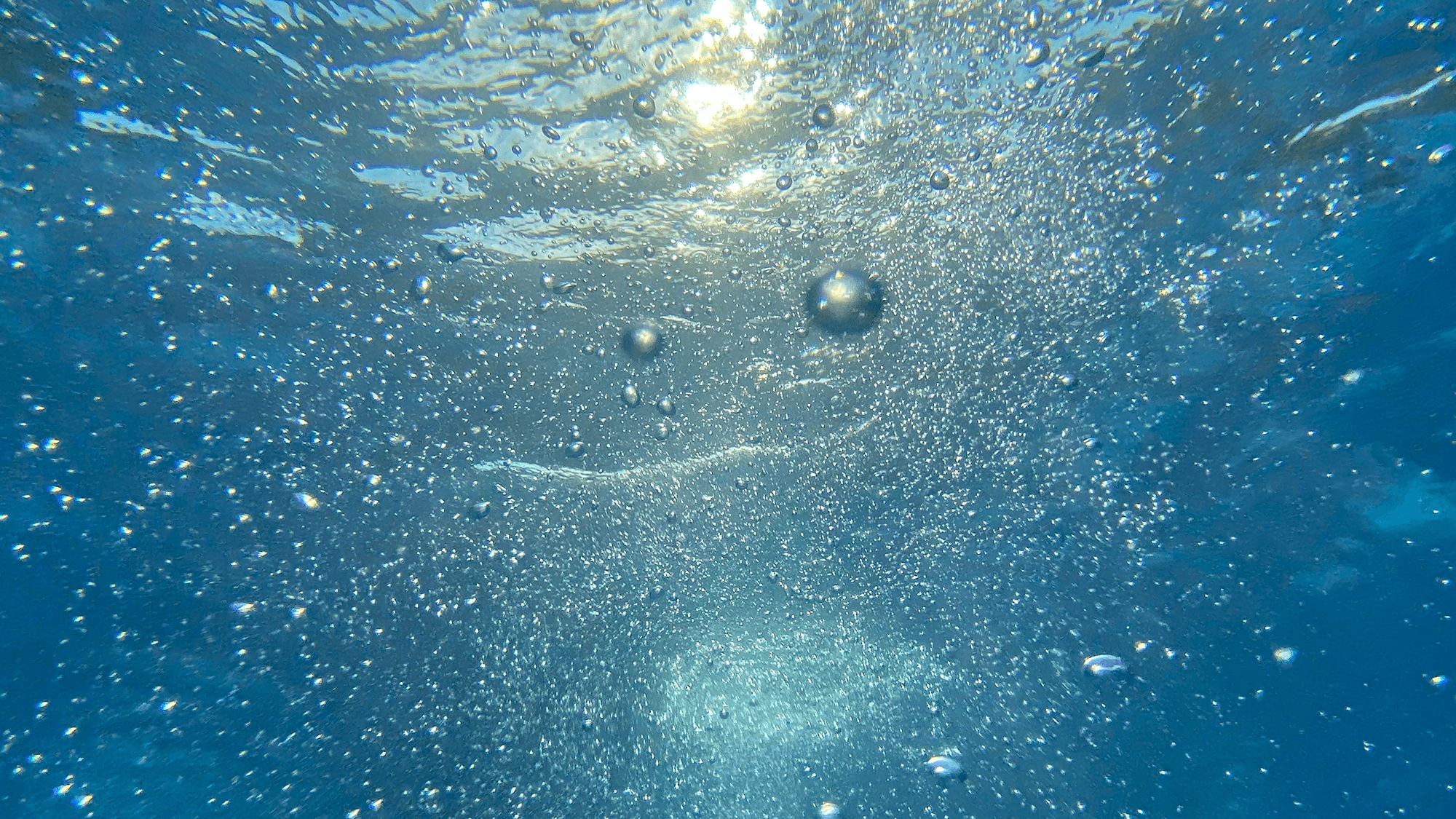
    As humanity pumps carbon dioxide into the atmosphere, the ocean absorbs about a quarter of it. This exchange happens largely through bubbles created by breaking waves. When waves grow large enough to break, their crests curl over and crash down, trapping air beneath them. The turbulence of the upper ocean can push these buoyant bubbles meters under the surface, where the gases inside them dissolve into the surrounding water. This is how the ocean gets the oxygen used by marine animals, but it’s also how it gathers up carbon dioxide.

    Current climate models often approximate this process using only the wind speed, but a recent study took matters a step further by modeling wave breaking and bubble generation, too. While they found a global carbon uptake that was similar to existing models, the researchers found their breaking wave model showed more variability in where carbon gets stored. For example, more carbon got absorbed in the southern hemisphere, where oceans are consistently rougher, than in the northern hemisphere, where large landmasses shelter the oceans. (Image credit: J. Kernwein; research credit: P. Rustogi et al.; via Eos)


    Fediverse Reactions
  • Featured Video Play Icon

    How CO2 Gets Into the Ocean

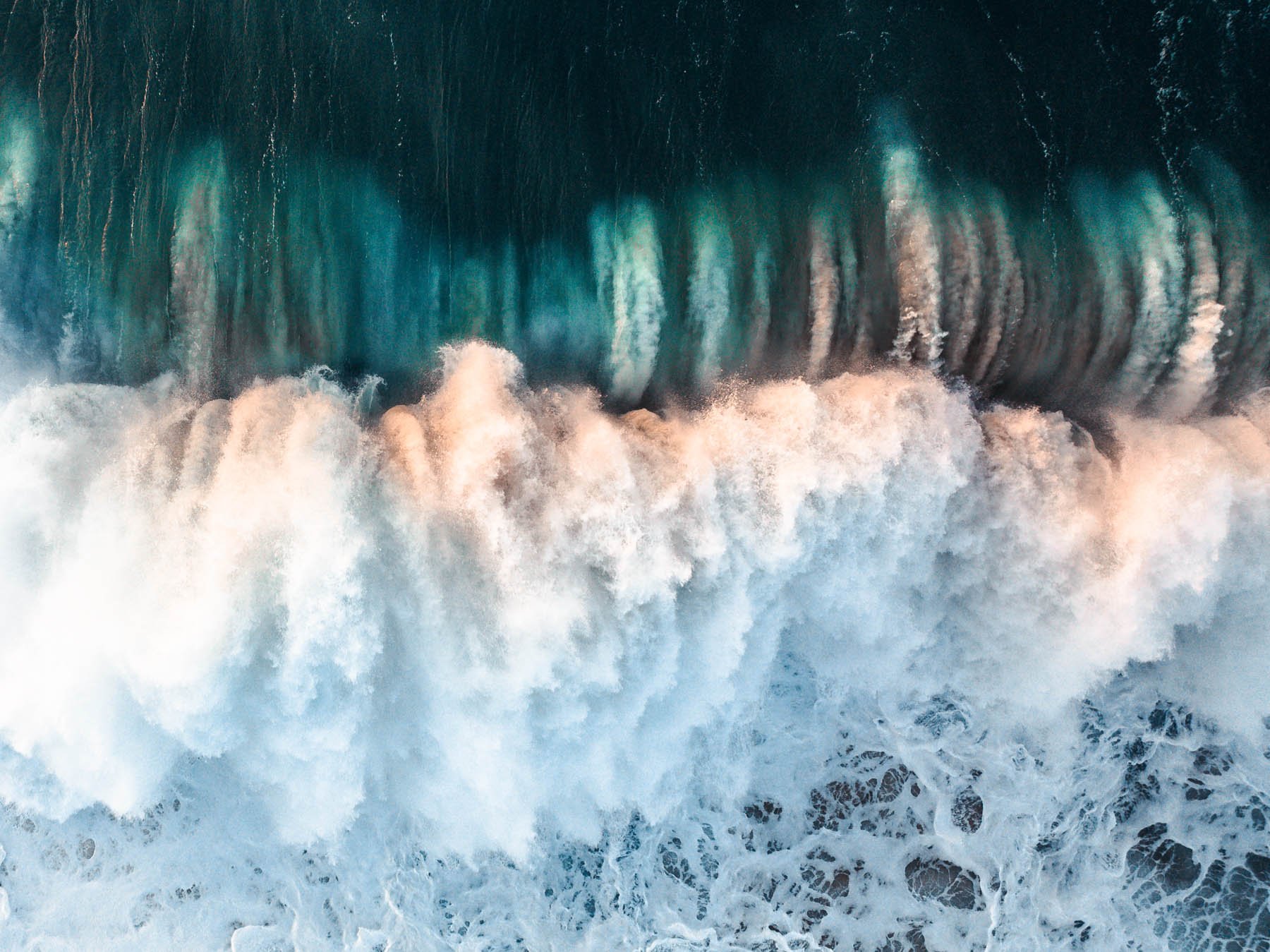
    Our oceans absorb large amounts of atmospheric carbon dioxide. Liquid water is quite good at dissolving carbon dioxide gas, which is why we have seltzer, beer, sodas, and other carbonated drinks. The larger the surface area between the atmosphere and the ocean, the more quickly carbon dioxide gets dissolved. So breaking waves — which trap lots of bubbles — are a major factor in this carbon exchange.

    This video shows off numerical simulations exploring how breaking waves and bubbly turbulence affect carbon getting into the ocean. The visualizations are gorgeous, and you can follow the problem from the large-scale (breaking waves) all the way down to the smallest scales (bubbles coalescing). (Video and image credit: S. Pirozzoli et al.)
    Fediverse Reactions
  • Breaking in Rogue Seas

    Breaking in Rogue Seas

    Many models for forecasting ocean waves simplify the physics by assuming that waves are essentially two-dimensional, like a long breaker heading toward shore. But in the open ocean, waves often come from more than one direction; crossing seas are a good example. When waves from different directions combine, a recent study shows, the resulting wave can grow far larger and steeper than expected. These monstrous rogue waves are especially dangerous for offshore infrastructure like oil rigs and wind turbines, which must be built to withstand rare but extreme waves. (Image credit: O. Мороз; research credit: M. McAllister et al.; via Gizmodo)

  • The Crashing Waves of French Polynesia

    The Crashing Waves of French Polynesia

    Surfer and photographer Tim McKenna lives in the village of Teahupo’o on Tahiti’s southeastern coast. The area’s shallow coral reef system creates some of the world’s biggest barreling waves, which attract surfers from around the world. McKenna captures the majestic power of these surges in these black-and-white photographs; you can find more of his work on his website and Instagram. (Image credit: T. McKenna; via Colossal)

  • Banzai Pipeline From Above

    Banzai Pipeline From Above

    On the north shore of O’ahu, Hawaii, Banzai Pipeline is known for some of the most thrilling and deadly surfing in the world. The area’s barrel rolls are triggered when incoming waves break over the shallow reef. Photographer Kevin Krautgartner captures the waves from above, showcasing the incredible energy inherent in the ocean. The motion and texture of the water is mesmerizing. I feel like I could stare at these all day long! (Image credit: K. Krautgartner; via Colossal)

  • Featured Video Play Icon

    “Water III”

    In “Water III,” filmmaker Morgan Maassen explores the ocean from above and below. I love the sheer variety of fluid phenomena; yes, there are classic breaking barrel waves for surfing, but there are also rib vortices and bubble plumes and churning turbulence that wouldn’t be out of place in a stormy Midwestern sky. Enjoy! (Image and video credit: M. Maassen)

  • Featured Video Play Icon

    Simulating Better Breaking Waves

    In the ocean, breaking waves trap air into bubbles that then cluster into foam, but conventional simulations don’t capture this foaminess. For bubbles to cluster into foam, there has to be a force preventing — or at least delaying — their coalescence. Typically, this is caused by impurities in the water that help lower the surface tension and thereby lengthen the bubbles’ lifespans. When these features get added to simulation models, bubbles begin to cluster and breaking waves become foamy. (Image and video credit: P. Karnakov et al.)

  • Reader Question: Waves Breaking

    Reader Question: Waves Breaking

    As a follow-up to the recent waves post, reader robotslenderman asks:

    What does it look like when the wave breaks? And why do waves sometimes push us back? Why are we able to ride them?

    I wasn’t able to find an equivalent breaking wave version of that dyed wave – side note: readers with flumes, please feel free to make one and share it! – but here’s an undyed breaking wave for our reference.

    Waves break, or get that white, frothy look, when they reach shallower water. In the previous post, the waves we saw were effectively deep-water waves, so they didn’t change in height as they rolled across the tank. Here there’s an incline to simulate a beach, which causes the water to slow down and steepen. That forms the characteristic curl of a plunging breaker, seen here.

    At the beach, a wave runs out of water to pass through and all the energy that wave was carrying has to go somewhere. Some is lost as heat, some turns into the sound of that classic crashing wave, and a lot of it gets dissipated as turbulence that pushes us, sand, shells, and anything else its way.

    As for why we can ride waves, there’s some special physics at play when it comes to surfing. To catch a wave, a surfer has to paddle hard to get up to the wave’s speed just as it reaches them. Too slow and the wave will just pass them by, leaving them bobbing more or less in place. (Image credit: T. Shand, source)

  • Featured Video Play Icon

    Breaking

    As waves fold over and break, they trap air, creating bubbles of many sizes. The smallest of these bubbles can be only a few microns across and persist for long times compared to larger bubbles. When they burst, they create tiny droplets that can carry sea salt up into the atmosphere to seed rain. Understanding how these bubbles form and how many there are of a given size is key to predicting both oceanic and atmospheric behaviors. Numerical simulations like the one featured in the video above reveal the dynamic collisions that create these tiny bubbles and help researchers learn how to model the tiniest bubbles so that future simulations can be faster. (Image and video credit: W. Chan et al.)

  • Breaking Soon

    Breaking Soon

    Australian photographer Warren Keelan captures spectacular photos of waves just before and during the moment they break. Fluid dynamics is defined by motion – specifically the motion of substances that do not hold a single form – but one thing I love about wave photography is how crisp and solid water appears when frozen in time. In a way, it feels like a reminder that, even though we classify matter into different states, ultimately those states have a lot in common. (Image credit: W. Keelan; via Colossal)