Tag: atmospheric science

  • Blue Jets

    Blue Jets

    Blue jets are a mysterious form of lightning that shoots upward from intense thunderstorms. The image above comes from one of the first color videos of blue jets, taken by an astronaut aboard the International Space Station. Scientist think blue jets form during an electric breakdown between the positively-charged upper region of a cloud and the negative charge at its boundary. Once the discharge starts, it can shoot to the stratopause in less than a second, forming a glowing, blue, nitrogen-based plasma. (Image credit: ESA/NASA/DTU Space; via NASA Earth Observatory)

  • Spiderwebs and Stratocumulus Clouds

    Spiderwebs and Stratocumulus Clouds

    Stratocumulus clouds cover about 20% of Earth’s surface at any given time, and they form distinctive patterns of lumpy cells separated by thin slits. Because of their interconnectedness, researchers nicknamed these narrow regions spiderwebs. New simulations show that evaporative cooling along the cloud tops drives the formation of these spiderwebs (Image 2). Without it (Image 3), the cloud pattern looks very different. (Image credits: featured image – L. Dauphin/MODIS, others – UConn ME 3250; research credit: G. Matheou et al.)

  • Brown Dwarfs and Their Stripes

    Brown Dwarfs and Their Stripes

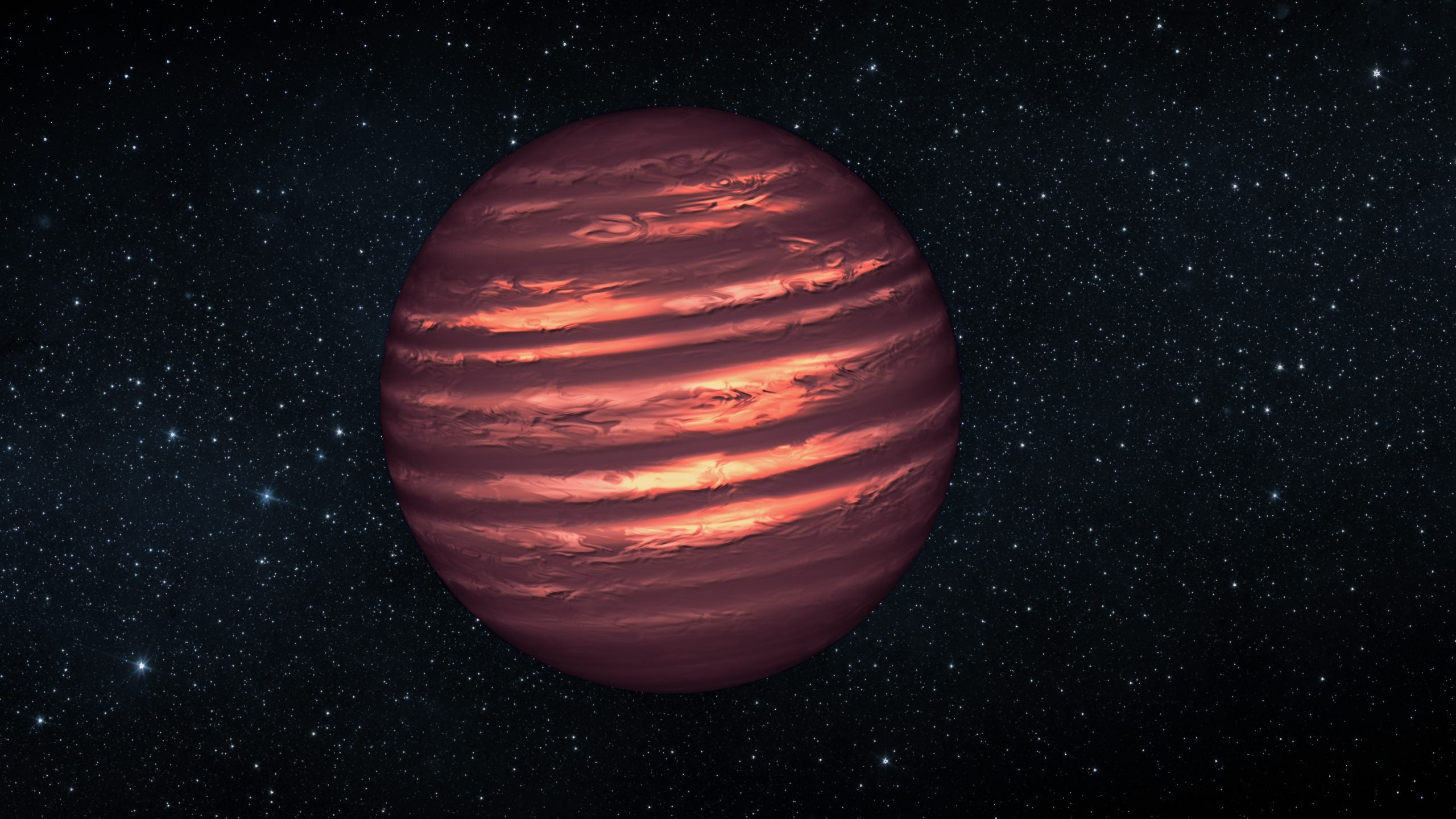
    Brown dwarfs are neither stars nor gas giants but something in between. Our two nearest brown dwarf neighbors are roughly equivalent to Jupiter in size but about 30 times more massive. Since these objects are so dim, little is known about their structure. Do they resemble stars in their atmospheric patterns or gas giants like Jupiter?

    To find out, a team of researchers studied two nearby brown dwarfs with the Transiting Exoplanet Survey Satellite. They were able to map the objects’ varying lightcurves and model an upper atmosphere consistent with those observations. They found that both dwarfs have high-speed winds running parallel to their equators, meaning that they likely have stripes like Jupiter. The similarities even extended to the brown dwarfs’ poles, where — like on Jupiter — the atmosphere became dominated by local vortices. (Image credit: NASA/JPL; video credit: Steward Observatory; research credit: D. Apai et al.; via Gizmodo)

  • Featured Video Play Icon

    Chasing Tornadoes

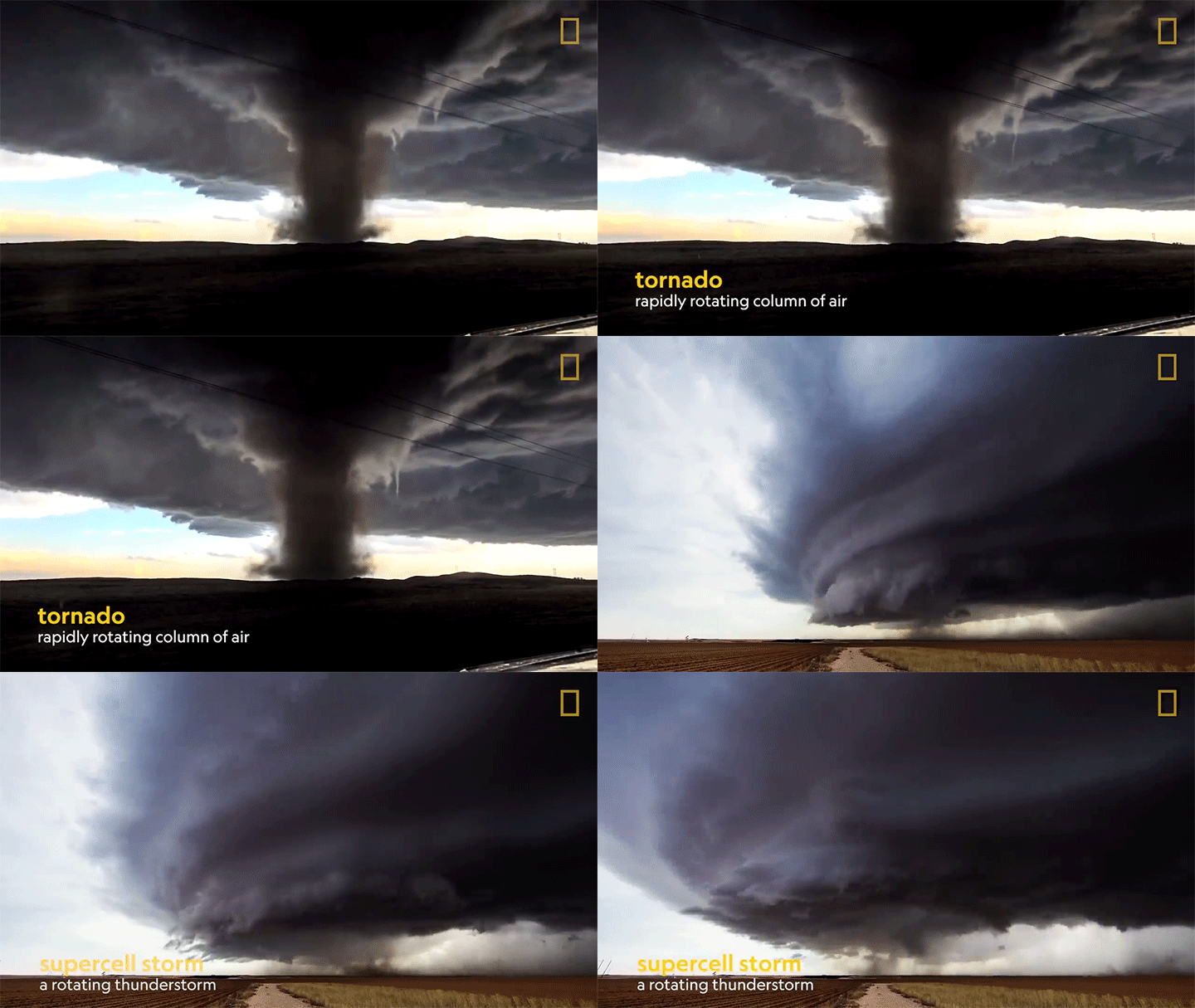
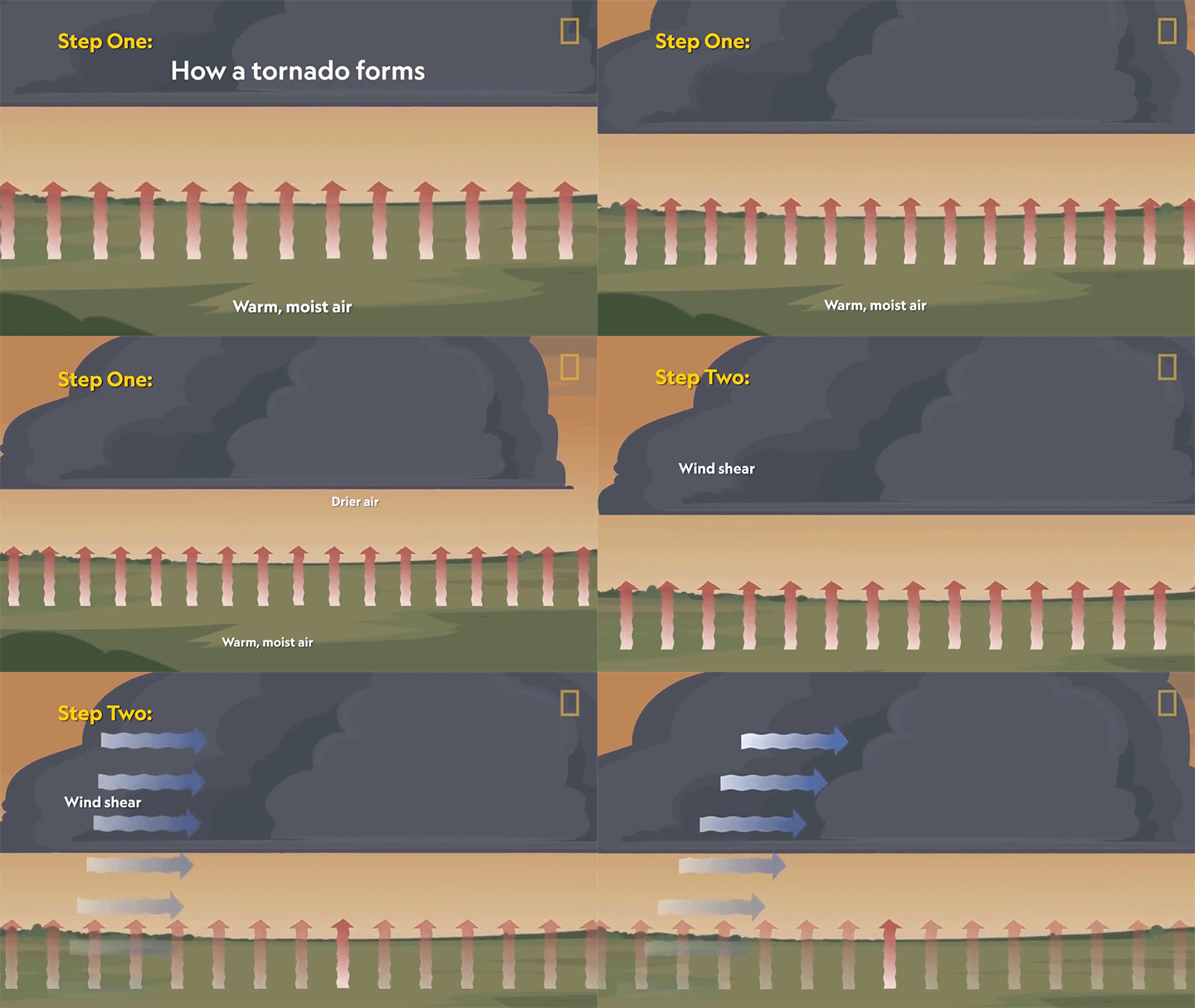
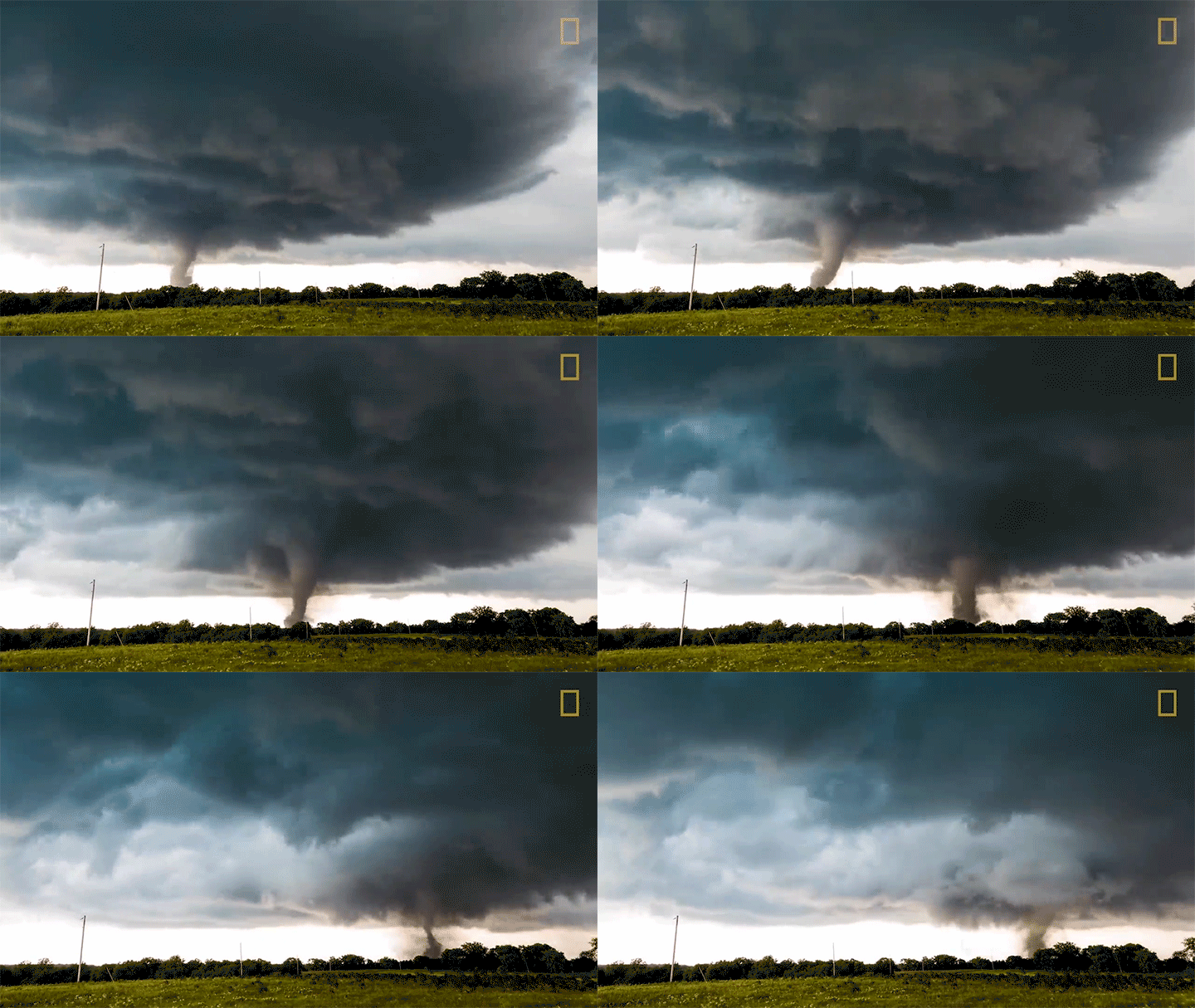
    Tornadoes are some of the most powerful storms on Earth. Their difficult-to-predict nature means that we still have a relatively scant understanding of exactly how they form. We know the conditions that promote their development — warm, moist rising air, wind shear, and rotation — but how and when those translate into a dangerous funnel cloud is harder to pin down. In this video, we hear from one of National Geographic’s storm researchers, Anton Seimon, who chases these storms in search of answers. (Image and video credit: National Geographic)

  • Featured Video Play Icon

    “Monsoon 6”

    The stunning power and beauty of our atmosphere comes to life in Mike Olbinski’s latest short film, “Monsoon 6”. Over the years, I’ve probably watched dozens of Olbinski’s videos, yet he still captures sequences that make me exclaim aloud as I watch. In this one, some of my favorites are the microburst at 2:17 and the development of mammatus clouds at 3:20. How mammatus clouds form is still very much an area of active research; I don’t know if Olbinski’s footage sheds light on their formation, but it is supremely awesome to watch! (Image and video credit: M. Olbinski)

  • Colorful Kelvin-Helmholtz Clouds

    Colorful Kelvin-Helmholtz Clouds

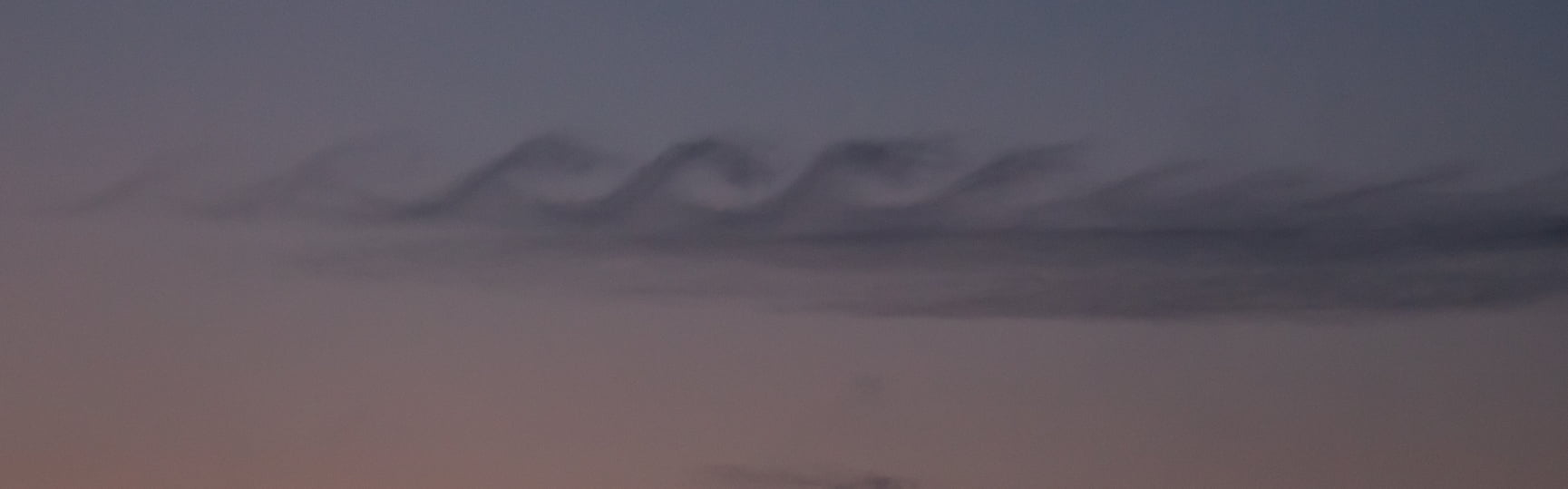
    Like breaking waves at the beach, these wavy clouds curl but only for a moment. The photo was captured near sunset on a late August evening in Arlington, MA. This short-lived cloud shape forms due to the Kelvin-Helmholtz instability, which is driven by shear forces between two layers of air moving at different speeds. The situation is a common one in the atmosphere, where air layers at altitude move in different directions and at different speeds. Most of the time we cannot see the curls that form between these air layers because of air’s transparency. But occasionally the mismatch happens right at a cloud layer and the condensation of the cloud gets pulled into these distinctive curls. (Image credit: B. Bray; submitted by Mark S.)

  • Stratospheric Effects of Wildfires

    Stratospheric Effects of Wildfires

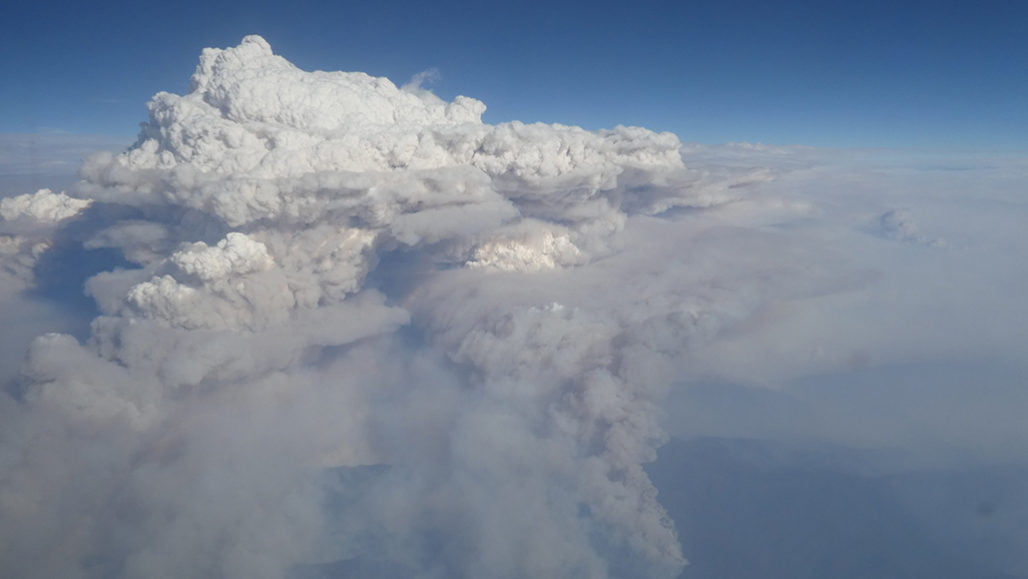
    Australia’s bushfires from earlier this year are offering new insights into how pyrocumulonimbus clouds can affect our stratosphere. A massive, uncontrolled blaze between December 29th and January 4th generated a towering, turbulent cloud of smoke like the one shown above.

    Using meteorological data, a new study shows this enormous cloud initially rose to 16 km in altitude, then began a months-long trek that circled the globe. The smoke plume ultimately stretched to over 1,000 km wide and reached a record altitude of over 31 km. Inside the plume, concentrations of water vapor and carbon monoxide were several hundred percent higher than normal stratospheric air.

    Researchers found the plume extremely slow to dissipate, possibly due to strong rotational winds surrounding it. This is the first time scientists have observed these shielding winds, and work is still underway to determine how and why they formed. (Image credit: M. Macleod/Wikimedia Commons; research credit: G. Kablick III et al.; via Science News; submitted by Kam-Yung Soh)

  • Featured Video Play Icon

    The Magic* Cork

    *Spoiler alert: it’s not magic. It’s science!

    Just what makes this dropped cork float beneath the surface? Just like a normal cork, it’s buoyancy! But this seemingly straightforward video is hiding a few key elements. Firstly, the cork has been modified; it has a metal sphere inside it so that its effective density is higher than that of water.

    Secondly, that liquid is not pure water; notice the hazy swirls near the bottom of the flask when the cork drops in? This is tap water that’s had a layer of salt dissolving in the bottom of it for the last day. That creates a density gradient with denser, salty water at the bottom and lighter, fresh water at the top. In fluid dynamics, we’d say the fluid is stably stratified; “stratified” meaning that there are distinct layers (strata) of different density and “stably” because the heavier ones are at the bottom.

    When the cork is dropped in, it settles at the fluid layer that matches its density. Because the surrounding fluid is stably stratified, poking the cork makes it bounce slightly but return to its initial height. Our atmosphere behaves just like this when it’s stably stratified. If you displace a parcel of air, it will oscillate up and down before settling back to equilibrium. In fact, the cork and the air even bounce at the same frequency! (Video and submission credit: F. Croccolo)

  • As the Fog Rolls In

    As the Fog Rolls In

    Although we talk about fog rolling in, it’s rare for us to have a perspective where we can truly appreciate that flow. But this photograph from Tanmay Sapkal provides just that for the low summer fogs sweeping over Marin, CA. When hot summer temperatures make inland air rise, cold, moist air from the ocean sweeps in to replace it. Once the moisture condenses, it forms thick, low clouds of fog that surge past the Golden Gate Bridge and into San Francisco Bay. (Image credit: T. Sapkal; via NatGeo)

  • Shedding Light on Martian Dust Storms

    Shedding Light on Martian Dust Storms

    In 2018, Mars was enveloped by a global dust storm that lasted for months. Although such storms had been seen before, the 2018 storm offered an unprecedented opportunity for observation from five orbiting spacecraft and two operating landers. As researchers comb through that data, they’re gaining new insights into the mechanisms that drive these extreme events.

    At NASA Ames, a team of researchers used observations of dust columns as input to a simulation of Mars’ global climate, then watched as the digital storm unfolded. Simulations like these have an important advantage over observations: the simulations allow scientists to track the transport of dust from one region to another.

    That dust tracking is critical for some of the team’s results. They found feedback patterns between dust lifting and deposition in different regions. For example, early in the storm dust was largely supplied from the Arabia/Sabaea regions, but once that dust was deposited in the Tharsis region, it kicked off a massive lifting event from Tharsis that put twice as much dust into the atmosphere as had landed there. Later, dust deposited back in Arabia by the Tharsis lofting generated new dust uplifts. As long as more dust got lifted than deposited, the intense storms continued. (Image credits: NASA, T. Bertrand/A. Kling/NASA Ames; research credit: T. Bertrand et al.; see also JGR Planets and AGU; submitted by Kam-Yung Soh)