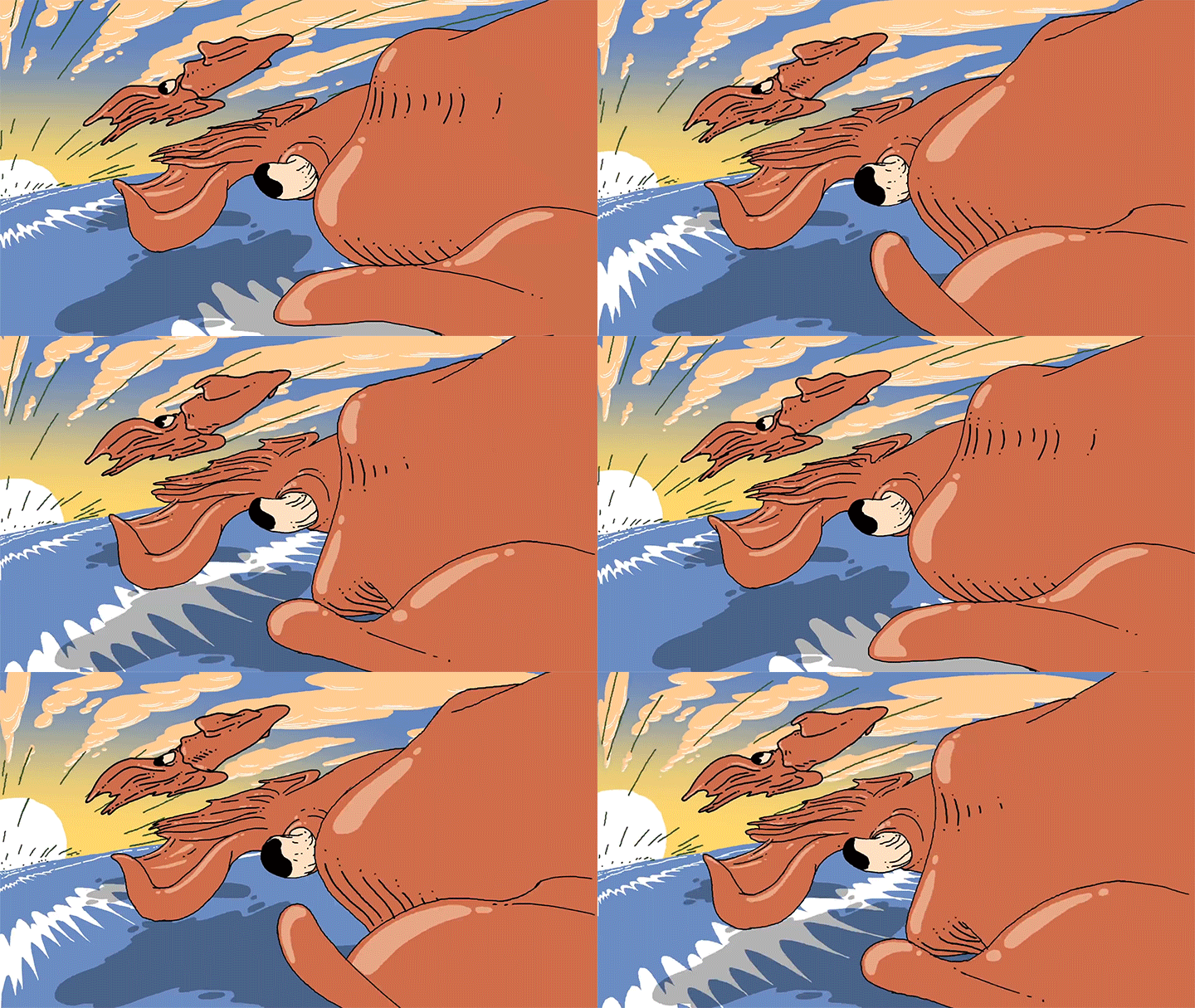
Some species of squid fly at speeds comparable to a motorboat for distances of 50 meters. The cephalopods get into the air the same way they swim underwater: by expelling a jet of water through the center of their body. Once aloft, the squids spread their tentacles to form a semi-rigid wing-like surface for lift. They can also use fins on their mantle as a canard for additional lift or control of their altitude. Researchers suspect the squids use flight as an escape mechanism to put distance between themselves and predators, but it could also be a low-energy migration strategy since a single pulse carries a squid farther in air than in water. (Video and image credit: TED-Ed)
Search results for: “lift”

Skipping Stone Physics
Skipping stones across water has fascinated humans for millennia, but incredibly, we’re still uncovering the physics of this game today. A recent paper built and experimentally validated a mathematical model of a spinning, skipping disk. The authors found that, in order to skip, a stone needs to generate upward acceleration greater than 3.8 times gravity.
To get that lift, the stone needs both the Magnus effect and the gyro effect. The Magnus effect is an aerodynamic force generated by an object spinning in a fluid that curves it away from its direction of travel — it’s what curves a corner kick into the goal in a soccer match. The gyro — or gyroscopic — effect also has to do with spinning, but it’s a result of conservation of angular momentum. Essentially, when you try to shift the axis that a rotating object spins around, there’s a force that resists that change. (The classic demo for this uses a spinning bicycle wheel.)
In stone skipping, the gyro effect helps stabilize the stone’s bounce and, if it’s spinning fast enough, keeps its direction of travel straight. Once the stone’s spinning slows, the Magnus effect can start to curve its trajectory. (Image credit: B. Davies; research credit: J. Tang et al.; via Physics World; submitted by Kam-Yung Soh)

Inside Hydroplaning
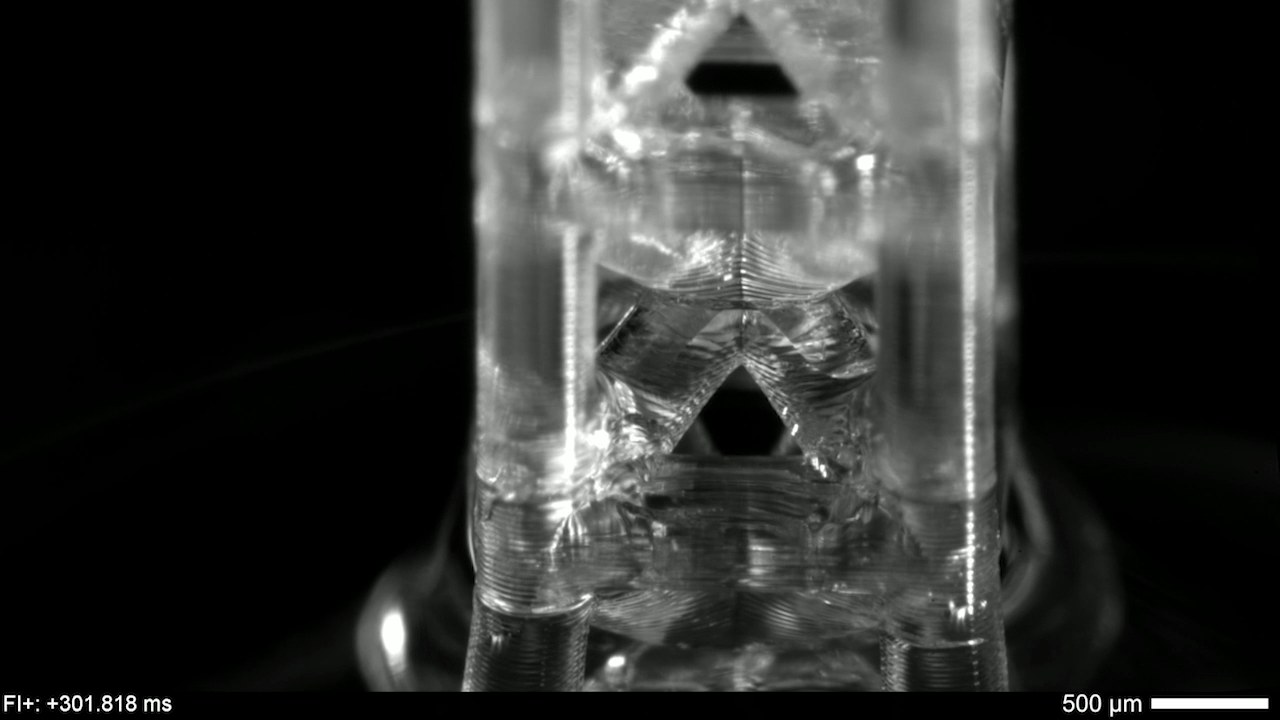
When a tire spins over a wet roadway, pressure at the front of the tire generates a lifting force; if that lift exceeds the weight of the car, it will start hydroplaning. To prevent this, the grooves of a tire’s tread are designed to redirect the water. Now researchers have visualized flow inside these grooves for the first time, using a version of particle image velocimetry (PIV). PIV techniques use fluorescent particles to track the flow.
The results reveal a complicated, two-phase flow inside the tire grooves. As seen in the images above, bubble columns form inside the tire grooves. The team’s results suggest that the bubble columns depended on groove width, spacing, and intersections with other grooves. They also saw evidence of vortices inside some grooves. (Image credit: tires – S. Warid, others – D. Cabut et al.; research credit: D. Cabut et al.; via Physics World; submitted by Kam-Yung Soh)

The Fluidity of Worm Blobs
The aquatic blackworm forms blobs composed of thousands of individual worms for protection against evaporation, light, and heat. The worms braid themselves together (Image 1). Once a blob forms, it is extremely viscoelastic, displaying properties both solid and fluid in nature (Image 2).
The worm blobs act like a collective; they bunch up to prevent evaporation that would desiccate the worms. Under intense light, the blob contracts (Image 3). The worms also prefer colder temperatures (again, to prevent evaporation) and will move toward the colder side of a temperature gradient. Under dim light, they’ll move individually, but in brighter light, the worms move collectively as a blob (Image 4).
To do so, worms on the colder side of the blob pull toward the cold, whereas worms elsewhere in the blob wiggle (Image 5). Their wiggling helps lift the blob and reduce its friction so that the pulling worms can move the blob in the right direction. For more, check out this excellent thread by one of the authors. (Image and research credit: Y. Ozkan-Aydin et al.; via S. Bhamla; submitted by Maximilian S.)

Flexible Wings Aid Butterfly Flight
Butterflies are some of the oddest flyers of the insect world, given the large size of their wings relative to their bodies. That could be a recipe for inefficient flight, but a new study shows that butterflies’ large flexible wings actually help them take off quickly.
When lifting their wings, butterflies use an unusual clapping motion, with the leading edges of their wings coming together before the rest of the wings. This motion helps cup and direct air, creating most of the butterfly’s thrust, according to the researchers. The wings’ flexibility is key to this. Using artificial wings — both stiff and flexible — researchers found that the flexible wings generated 22% more useful impulse and were 28% more efficient. For a tiny flyer with frequent take-offs, that’s an enormous savings! (Image, video, and research credit: L. Johansson and P. Henningsson; via BBC; submitted by Kam-Yung Soh)

Adjusting for Gusts
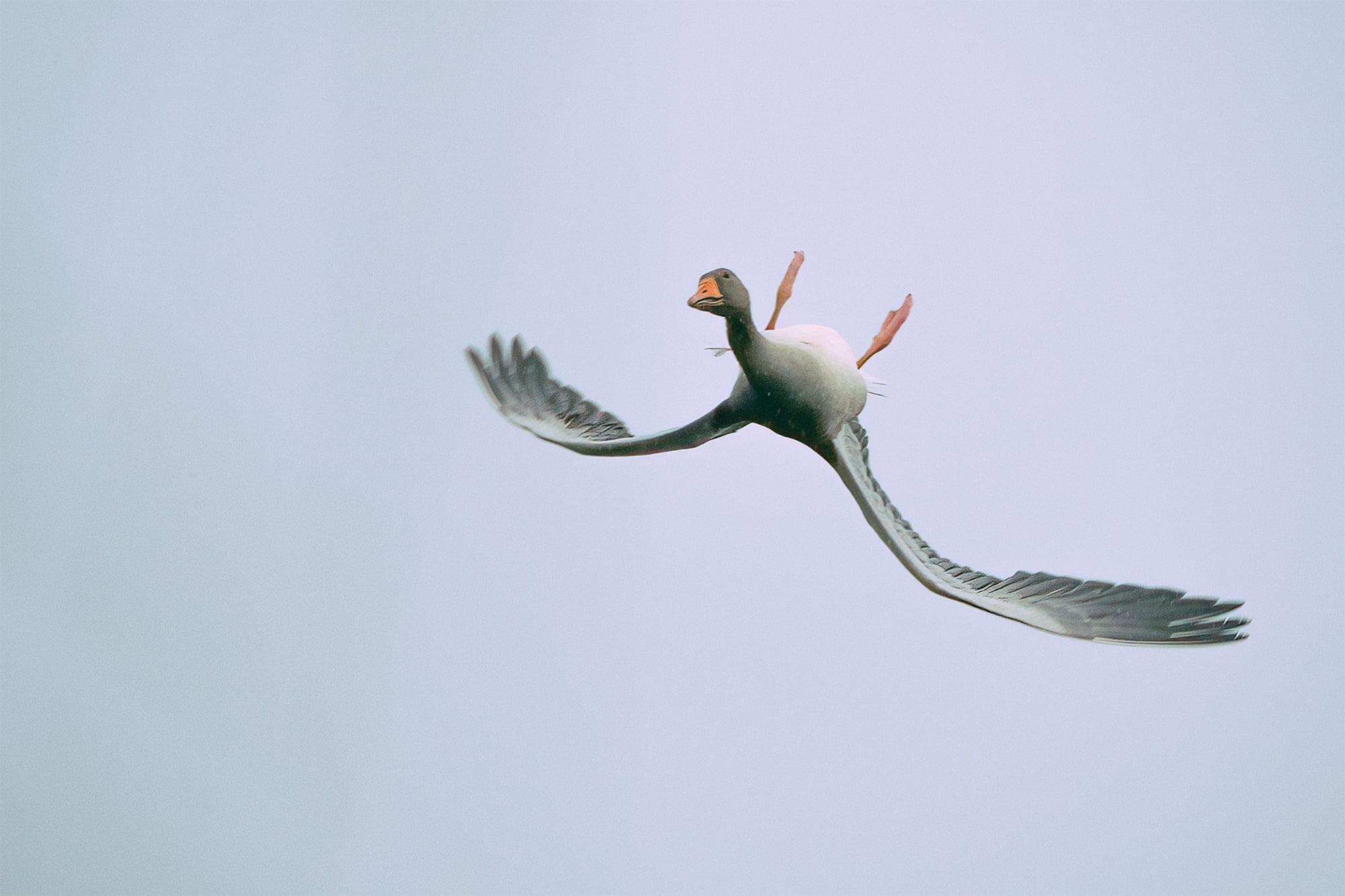
In flight, birds must adjust quickly to wind gusts or risk crashing. Research shows that the structure of birds’ wings enables them to respond faster than their brains can. The wings essentially act like a suspension system, with the shoulder joint allowing them to lift rapidly in response to vertical gusts. This motion keeps the bird’s head and torso steady, so they can focus on more complex tasks like landing, obstacle avoidance, and prey capture. (Image and research credit: J. Cheney et al.; submitted by Kam-Yung Soh)

The Best of FYFD 2020
2020 was certainly a strange year, and I confess that I mostly want to congratulate all of us for making it through and then look forward to a better, happier, healthier 2021. But for tradition and posterity’s sake, here were your top FYFD posts of 2020:
- Juvenile catfish collectively convect for protection
- Gliding birds get extra lift from their tails
- How well do masks work?
- Droplets dig into hot powder
- Updating undergraduate heat transfer
- Branching light in soap bubbles
- Boiling water using ice water
- Concentric patterns on freezing and thawing ice
- Bouncing off superhydrophobic defects
- To beat surface tension, tadpoles blow bubbles
There’s a good mix of topics here! A little bit of biophysics, some research, some phenomena, and some good, old-fashioned fluid dynamics.
If you enjoy FYFD, please remember that it’s primarily reader-supported. You can help support the site by becoming a patron, making a one-time donation, buying some merch, or simply by sharing on social media. Happy New Year!
(Image credits: catfish – Abyss Dive Center, owl – J. Usherwood et al., masks – It’s Okay to Be Smart, droplet – C. Kalelkar and H. Sai, boundary layer – J. Lienhard, bubble – A. Patsyk et al., boiling – S. Mould, ice – D. Spitzer, defects – The Lutetium Project, tadpoles – K. Schwenk and J. Phillips)

Hummingbird Flight in Slow Motion
Hummingbirds are impressive, acrobatic flyers. Their figure-8 wing stroke pattern produces about 70% of their lift on the downstroke, and the remainder during the backward upstroke. But their tails and body motions also play an important role in stabilizing them, especially in gusty winds. They also have some impressive feeding dynamics. Altogether, they’re one of the most precise flyers in the animal kingdom! (Video and image credit: BBC Earth)

Contrails From 4 Engines
The wingtip vortices of aircraft provide a veritable cornucopia of gorgeous imagery. There’s something inherently fascinating about these vortices that stretch behind moving aircraft. But four-engine aircraft add an extra twist to the imagery, as seen here.
With four engines, these aircraft produce four separate contrails, each of which acts like a streakline for the flow behind the wing. So what we see in these images is not the wingtip vortices themselves, but what their effect is on flow moving across different parts of the wing.
Nearby vortices influence one another, and one of the earliest models of aircraft physics takes advantage of this by modeling the wing itself as a series of vortices. Odd as it sounds, such models are quite good for capturing the basic flow physics behind a finite wing.
Using one of these models, Joseph Straccia explored the physics of a 4-engine aircraft’s wake (Image 4), predicting that the outboard engine contrails should initially move outward before getting rolled up and inward by the wingtip vortices. That’s exactly what we see in these images, particularly Image 1. The inboard contrails undergo less deflection, as expected since they are further from the wingtips. (Image credits: aircraft and contrails – JPC Van Heijst, J. Willems, and E. Karakas; modeling and submission – J. Straccia)

How Canal Locks Work
For thousands of years, boats have been a critical component of trade, efficiently enabling transport of goods over large distances. But water’s self-leveling creates challenges when moving up and downstream through rivers and canals. To get around this, engineers use locks, which act as a sort of gravity-driven elevator to lift and lower boats to the appropriate water level. In this video from Practical Engineering, we learn about the basic physics behind locks as well as some of the methods engineers use to limit water loss through the lock. (Image and video credit: Practical Engineering)