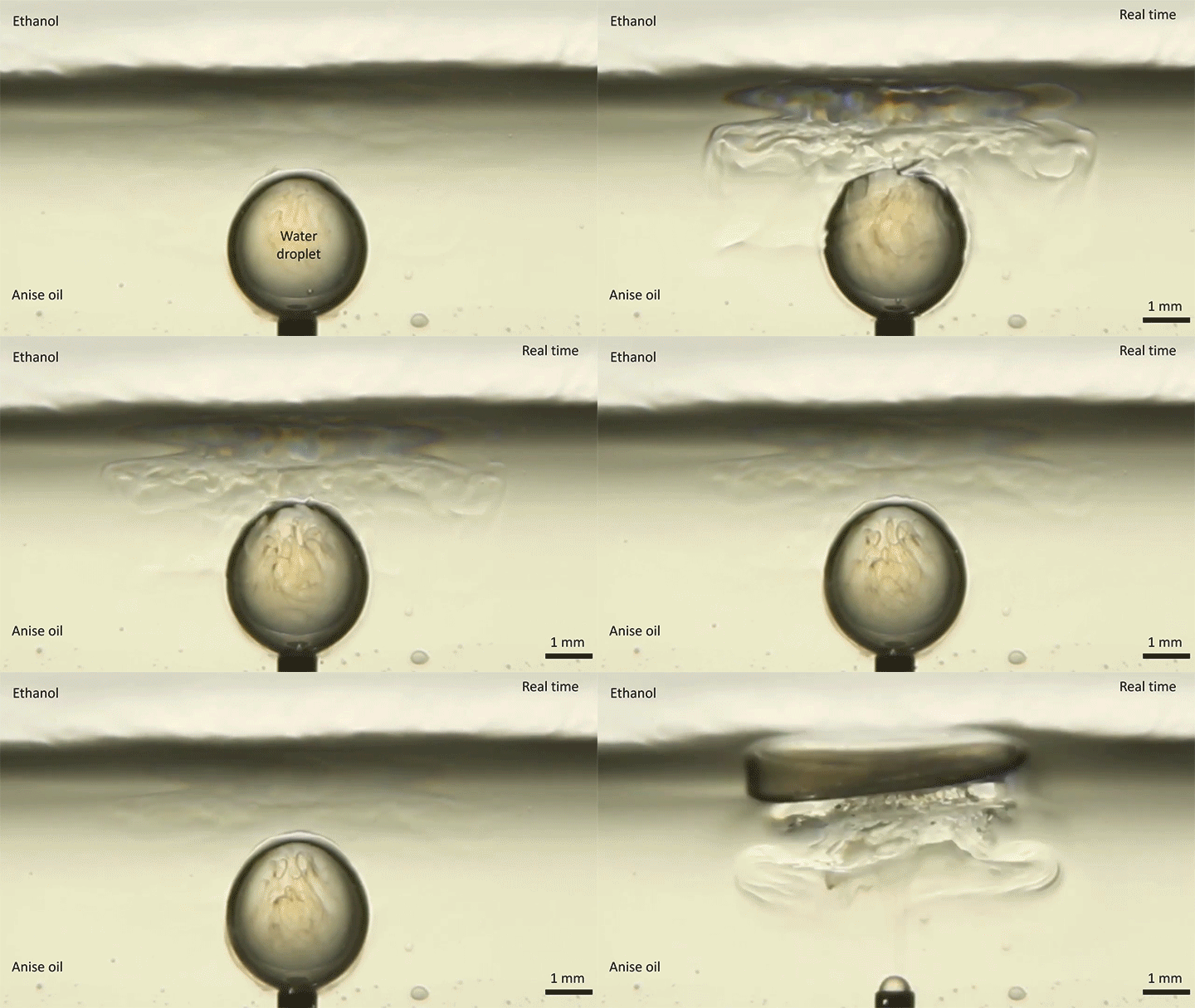
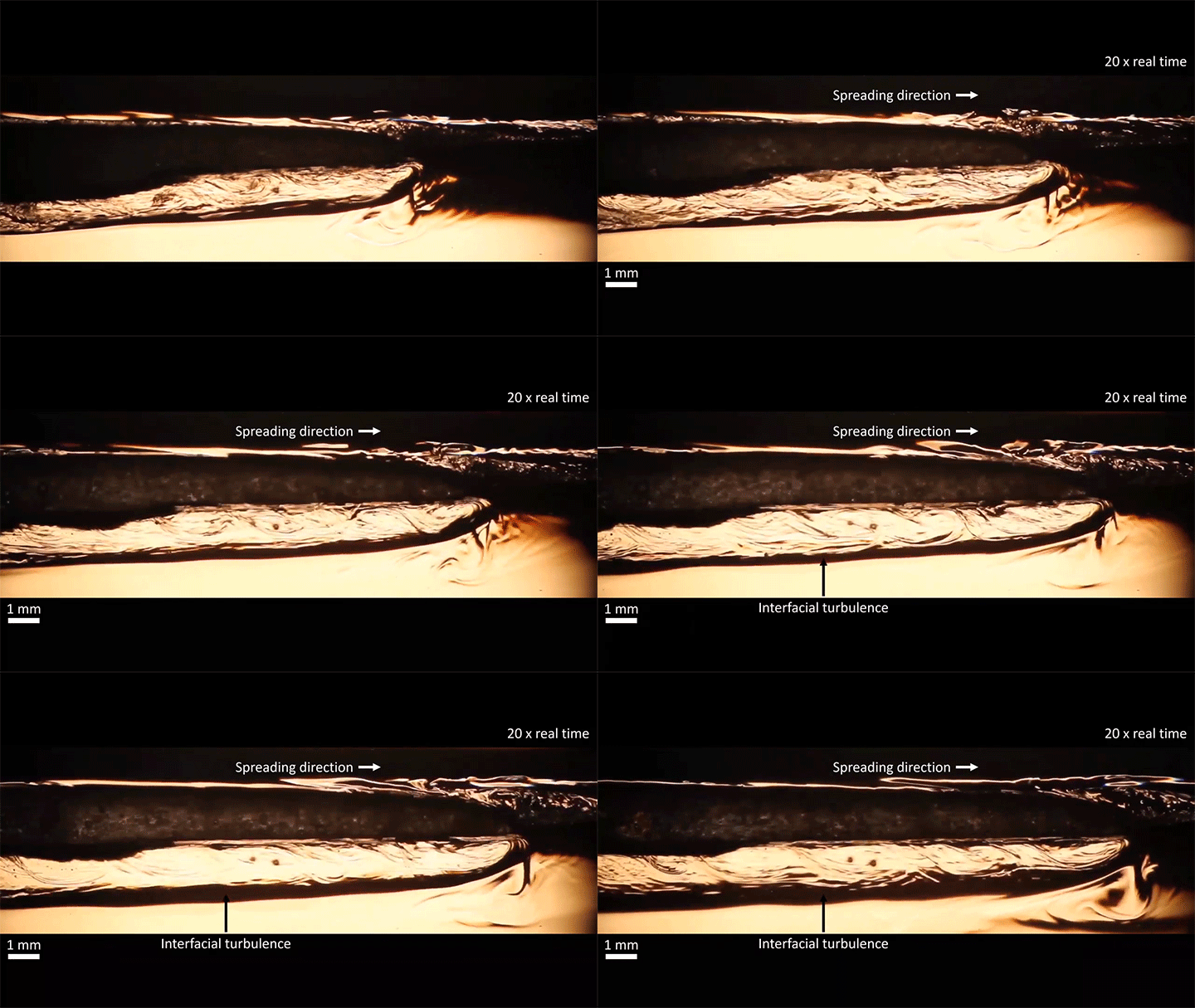
A water droplet immersed in a mixture of anise oil and ethanol displays some pretty complicated dynamics. Its behavior is driven, in part, by the variable miscibility of the three liquids. Water and ethanol are fully miscible, anise oil and ethanol are only partially miscible, and anise oil and water are completely immiscible. These varying levels of miscibility set up a lot of variations in surface tension along and around the droplet, which drives its stretching and eventual jump.
Once detached, the droplet takes on a flattened, lens-like shape that continues to spread. That spreading is driven by the mixing of ethanol and water, which generates heat and, thus, convection around the drop. This not only spreads the droplet, it causes turbulent behavior along the drop’s interface. (Image and video credit: S. Yamanidouzisorkhabi et al.)
Rotational motion is a great way to break up liquids, as anyone who’s watched a dog shake itself dry can attest. That same centrifugal force is what allows this rotary atomizer to break liquids into droplets. Relative to the photos above, the atomizer spins in a counter-clockwise direction. This motion stretches the fluid flowing off it into skinny, equally-spaced ligaments, which eventually break down into droplets.
Just how and when that break-up occurs depends on the fluid, as well as the characteristics of the spin. For Newtonian fluids like silicone oil — shown in the first two pictures — the break-up is driven by surface tension and happens relatively quickly. But with a viscoelastic fluid — shown in the last image — the elasticity of polymers in the fluid allow it to resist break-up for much longer. Instead, the ligaments form the beads-on-a-string instability. See more flows in action in the video below. (Video, image, and research credit: B. Keshavarz et al., video)
Right now people around the world are experiencing daily disruptions as a result of the recently declared coronavirus pandemic. There is a lot we don’t know yet about coronavirus, though researchers are working around the clock to report new information. Today’s video, though a couple years old, focuses on an area of medical knowledge that’s historically lacking but extremely relevant to our current situation: the mechanics behind disease transmission through sneezing or coughing.
Lydia Bourouiba is a leader in this area of research. Her studies have focused not on the size range of droplets produced but on the dynamics of the turbulent clouds that carry these droplets and what allows them to persist and spread. If you’ve wondered just why healthcare providers are recommending masks for sick people, keeping large distances between individuals, and frequent hand-washing, the image above hopefully helps explain why. Droplets carried in these turbulent clouds can travel several meters, and the buoyancy of the cloud’s gas components can help lift droplets toward ceiling ventilation. Right now, social distancing is one of our best tools against this disease transmission.
My goal in posting this is not to panic anyone. Rather, I hope you leave better informed as to why these precautions are needed. With coronavirus, our detailed knowledge of its characteristics — how long it remains viable in the air or on surfaces, how much is needed for an infection to take hold, etc. — is limited. But from research like Bourouiba’s, we know that coughing and sneezing are remarkably efficient ways to deliver respiratory pathogens, and that’s why caution is warranted. Stay safe, readers. (Video credit: TEDMED; image credit: Bourouiba Research Group, source; research credit: L. Bourouiba et al., see also S. Poulain and L. Bourouiba, pdf)
Leave a drop of coffee sitting on a surface and it will leave behind a ring of particulates once the water evaporates. But what happens to a droplet made up of multiple liquids that evaporate differently? That’s the subject of this new study. Researchers mixed a volatile drop (isopropyl alcohol) with a smaller amount of a non-volatile liquid and observed how this changed the droplet’s splash rim and evaporation pattern.
When the surface tension difference between the two liquids was large, the researchers found that the splash formed fingers along its rim (Image 1). The fingers consist almost entirely of the non-volatile component, driven to the outskirts of the drop by Marangoni forces. The dark and light bands you see in the image are interference fringes, which the researchers used to track the film’s thickness.
When the researchers used liquids with similar surface tensions, the droplet rim instead formed pearl-like satellite droplets. Once the volatile liquid evaporated away, the remaining liquid merged into a thick film. (Image and research credit: A. Mouat et al.; via APS Physics; submitted by Kam-Yung Soh)
One way to levitate droplets is to place them on a surface heated much higher than the droplet’s boiling point. This creates the Leidenfrost effect, where a droplet levitates on a thin layer of its own evaporating vapor. In this study, the situation is quite different.
Although the underlying pool of liquid — here, silicone oil — is heated, its temperature is well below the boiling point of the water droplet. But the droplet still levitates over the pool, thanks to an air layer fed by convection. Aluminum powder in the oil reveals large-scale convection in the pool; note how the oil moves radially toward the droplet. That movement drags the air in contact with the oil with it, which forms the vapor layer keeping the droplet aloft.
One side effect of this convection-driven levitation is that the droplet hovers over the coldest point in the oil. That fact suggests that users can manipulate the droplet’s motion by tuning the underlying heating. (Image and research credit: E. Mogilevskiy)
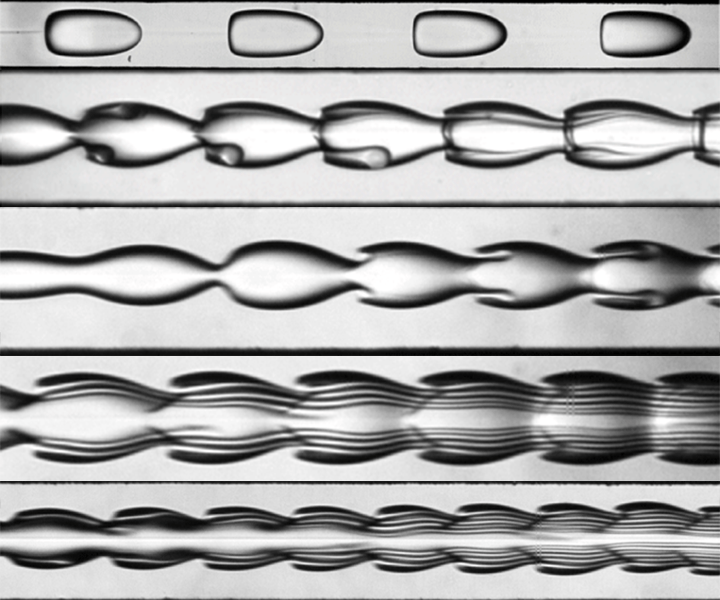
Microfluidic channels are excellent at creating a steady supply of droplets. But depending on the characteristics of the two viscous fluids being used, as well as factors like flow rate and channel geometry, the results can be anything from well-defined and separated drops to steady jets to wild instabilities. The image above shows a series of different outcomes, including waves that break on the edges of drops and ligaments that stretch around the central fluid. (Image and research credit: X. Hu and T. Cubaud)
Getting enough water in arid climates can be tough, but Western diamondback rattlesnakes have a secret weapon: their scales. During rain, sleet, and even snow, these rattlesnakes venture out of their dens to catch precipitation on their flattened backs, which they then sip off their scales.
Researchers found that impacting water droplets tend to bead up on rattlesnake scales, forming spherical drops that the snake can then drink. Compared to other desert-dwelling snakes, Western diamondbacks have a far more complicated microstructure to their scales, with labyrinthine microchannels that provide a sticky, hydrophobic surface for impacting drops. (Video and image credit: ACS; research credit: A. Phadnis et al.; via The Kid Should See This)
The splash of a drop impacting a surface depends on many factors — among them droplet speed and size, air pressure, and surface characteristics. In this award-winning video from the 2019 Gallery of Fluid Motion, we see how the geometry of a superhydrophobic surface can alter a splash.
When a drop falls on a protruding superhydrophobic surface, like the apex of a cone, it can be pierced from the inside, completely changing how the droplet rebounds and breaks up. The variations the video walks us through are all relatively simple, but resulting splashes may surprise you nevertheless. (Image and video credit: The Lutetium Project)
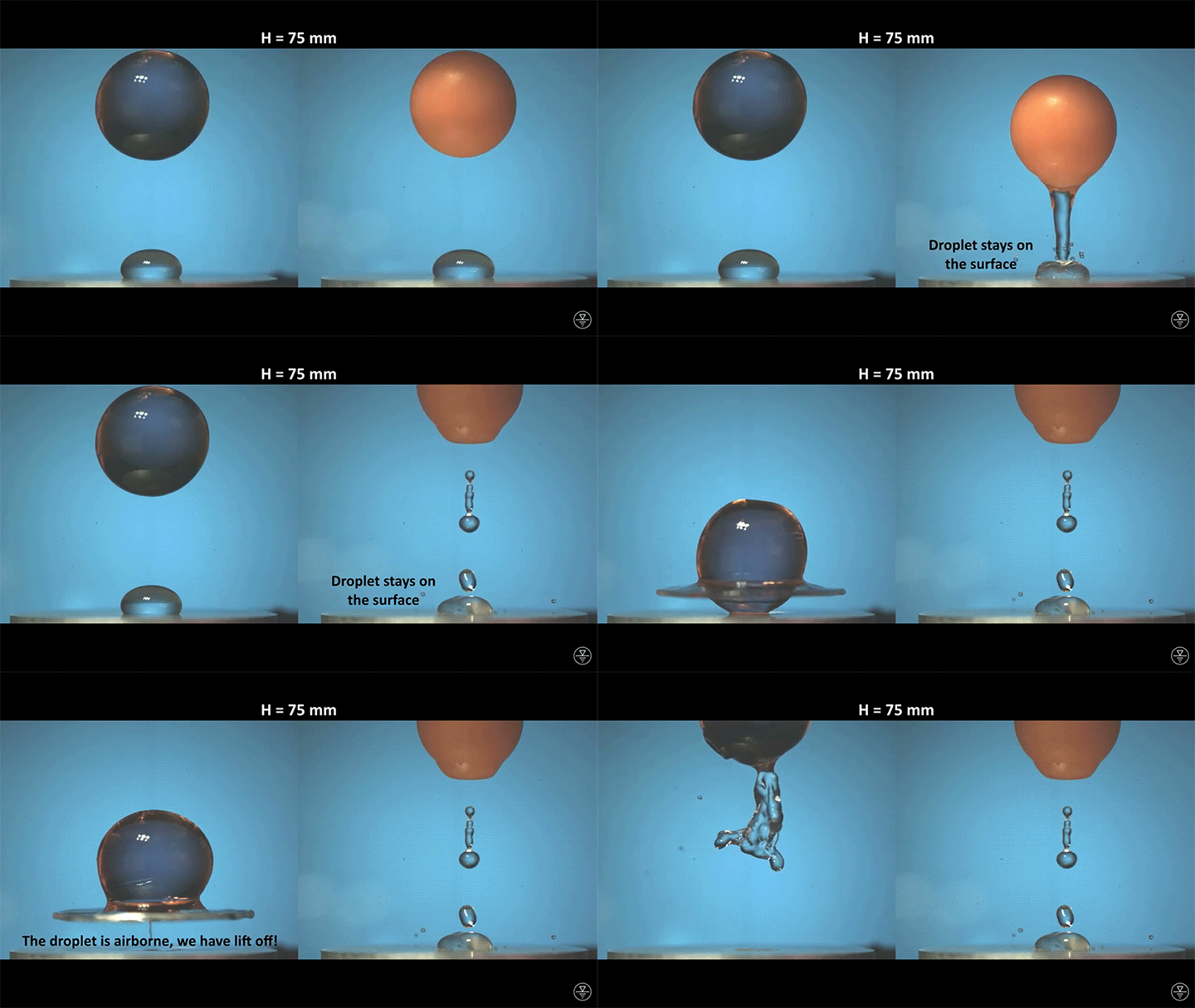
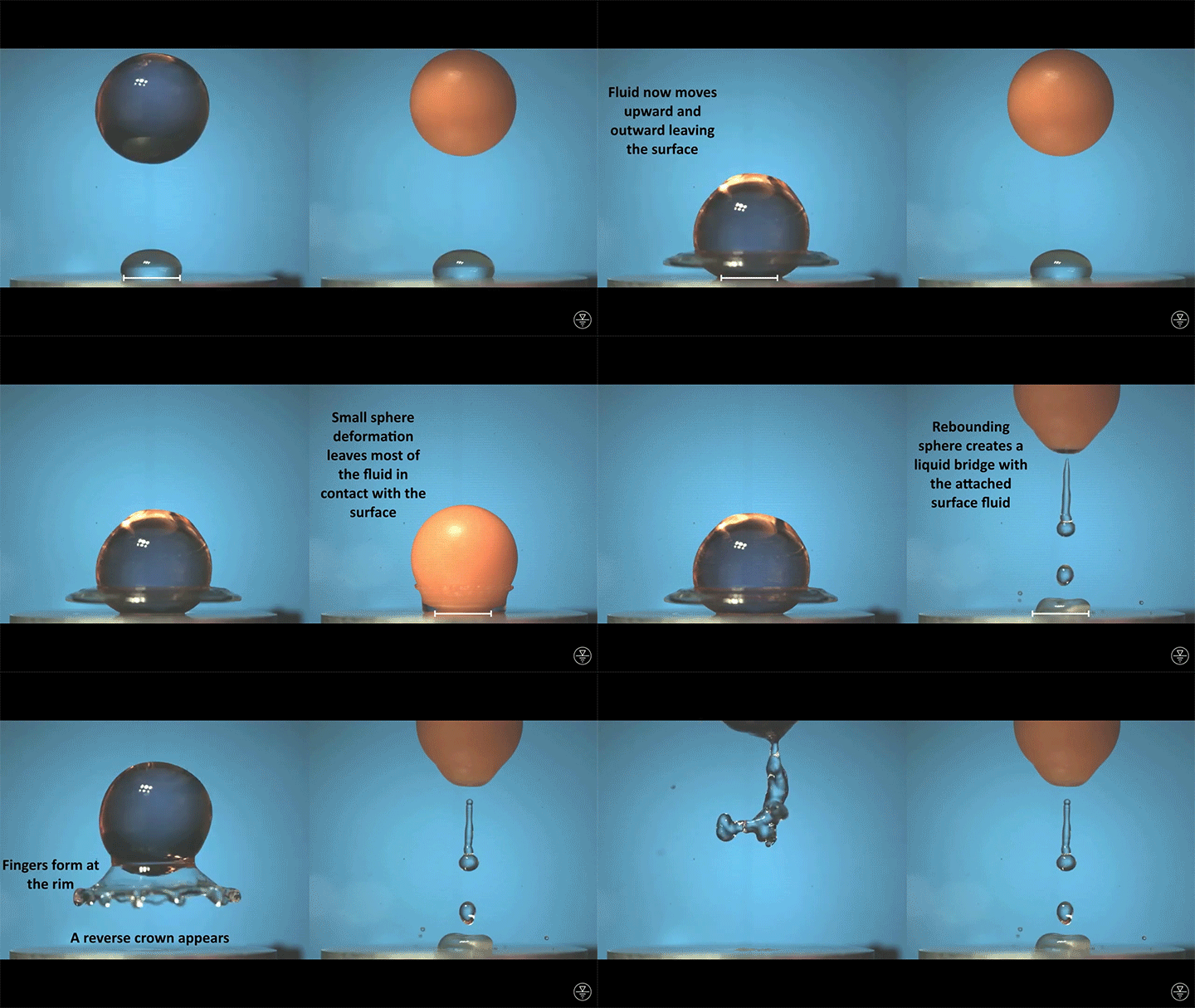
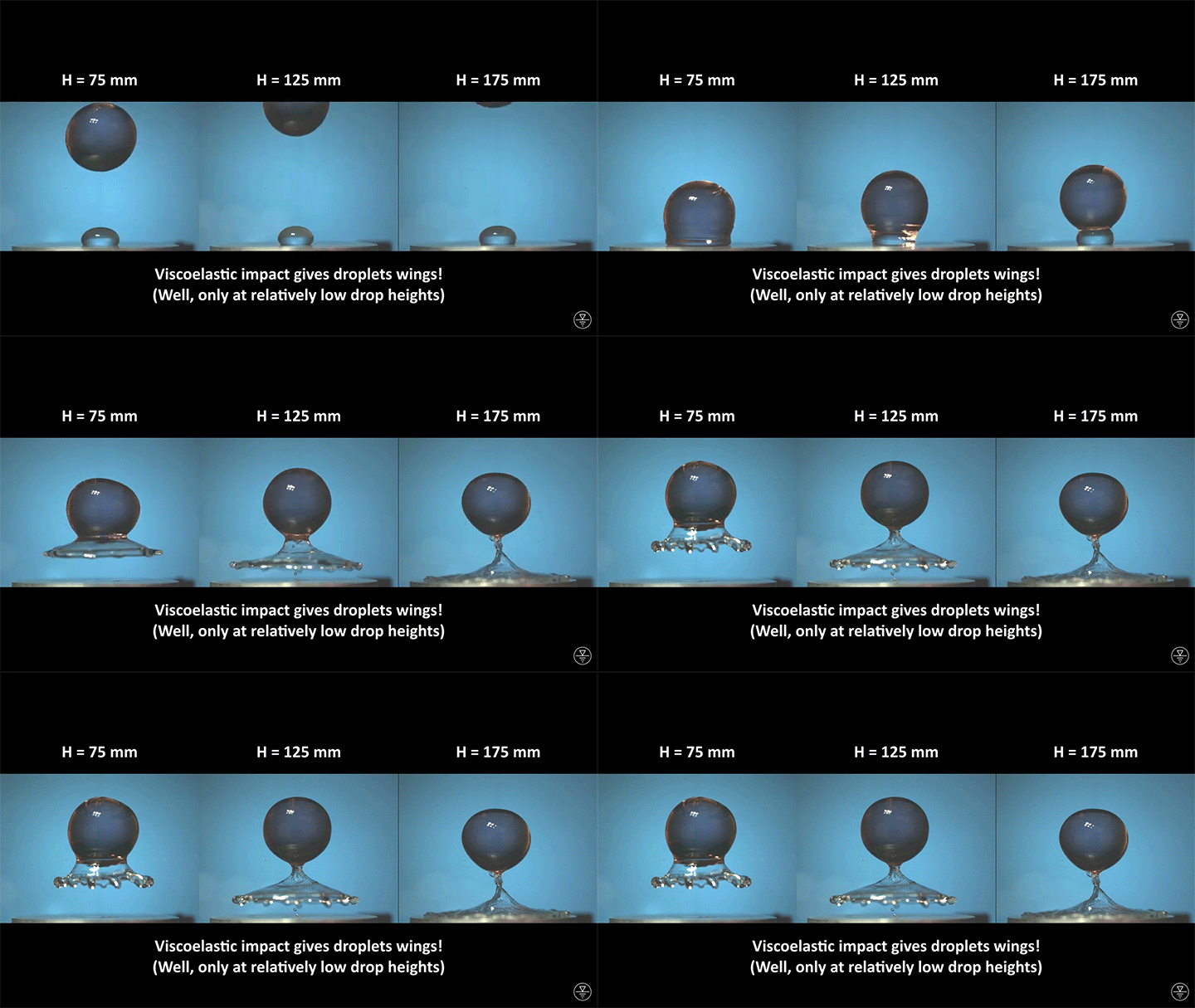
What happens when you drop a hydrogel bead on a water droplet? Because of the hydrogel’s viscoelasticity and its hydrophilic nature, the rebounding bead carries the droplet with it. As seen in the video above, when the impact energy is small enough, the droplet forms a reverse crown during lift-off, kind of like giving the hydrogel bead a skirt. The key feature for lift-off is the bead’s deformation on impact. Because the hydrogel widens at its base, it is sometimes able to push the entire droplet off its initial footprint and detach it from the surface. (Image, research, and video credit: R. Rabbi et al.)
When bubbles burst, we often pay attention to the retracting film and forming droplets, but what happens to the air that was inside? By placing a little smoke inside them, we can see. The air inside these bubbles is slightly pressurized compared to the ambient, and as such a bubble ruptures, its air gets pushed out the expanding hole. That momentum makes the air curl as it forces its way into the surrounding air, creating a stack of vortex rings. The researchers observed as many as six stacked vortices from bubbles just under 4 cm in diameter. (Image and research credit: A. Dasouqi and D. Murphy; video credit: Science; see also A. Dasouqi and D. Murphy)