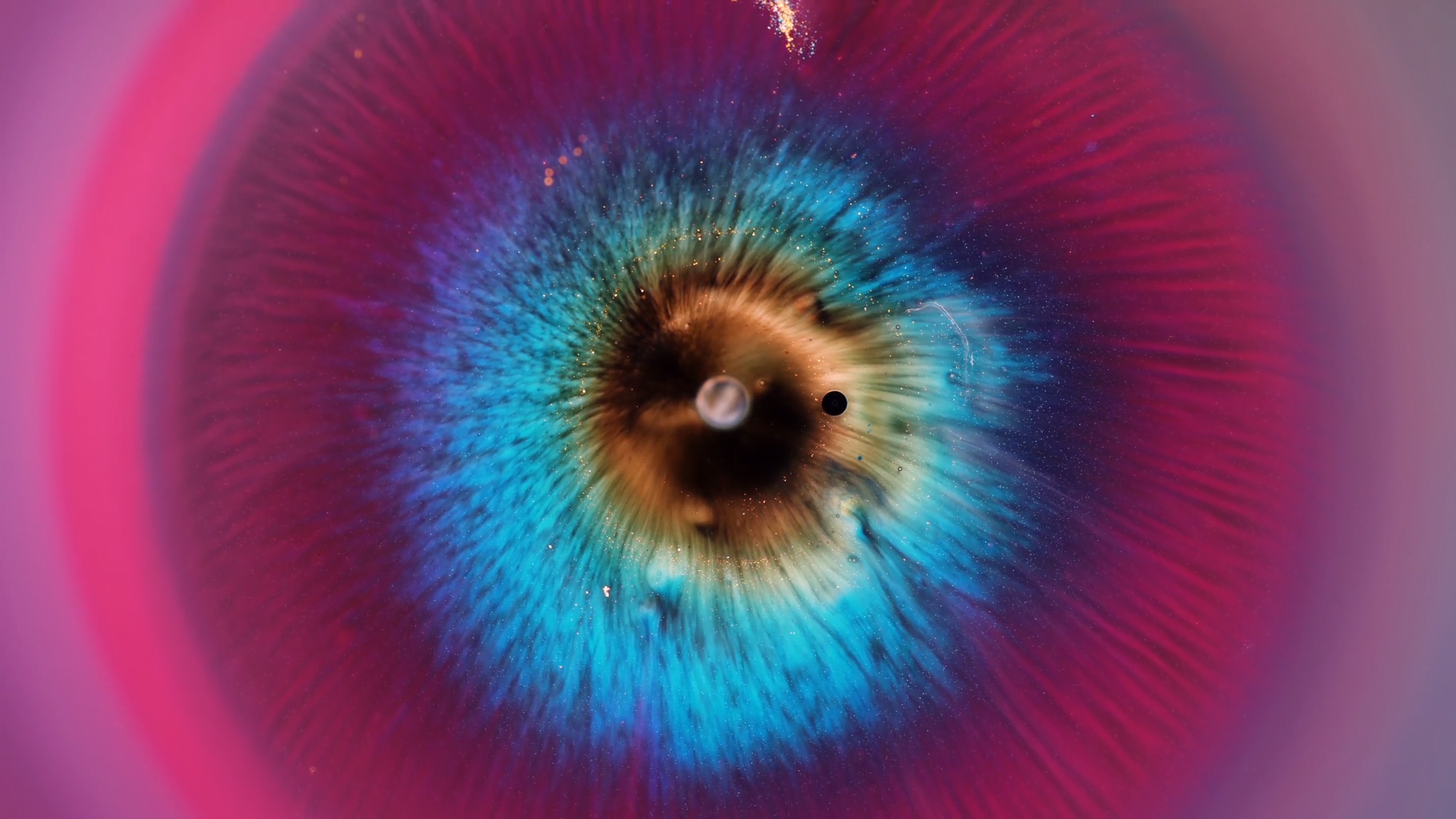
Ruslan Khasanov’s “Space Iris” explores the similarities between nebulae and eyes. Made entirely with common fluids like paint, soap, and alcohol, the film shows off the gorgeous possibilities of surface-tension- and density-driven instabilities. Marangoni flows abound! I even see some hints of solutal convection, perhaps? (Video and image credit: R. Khasanov; via Colossal)
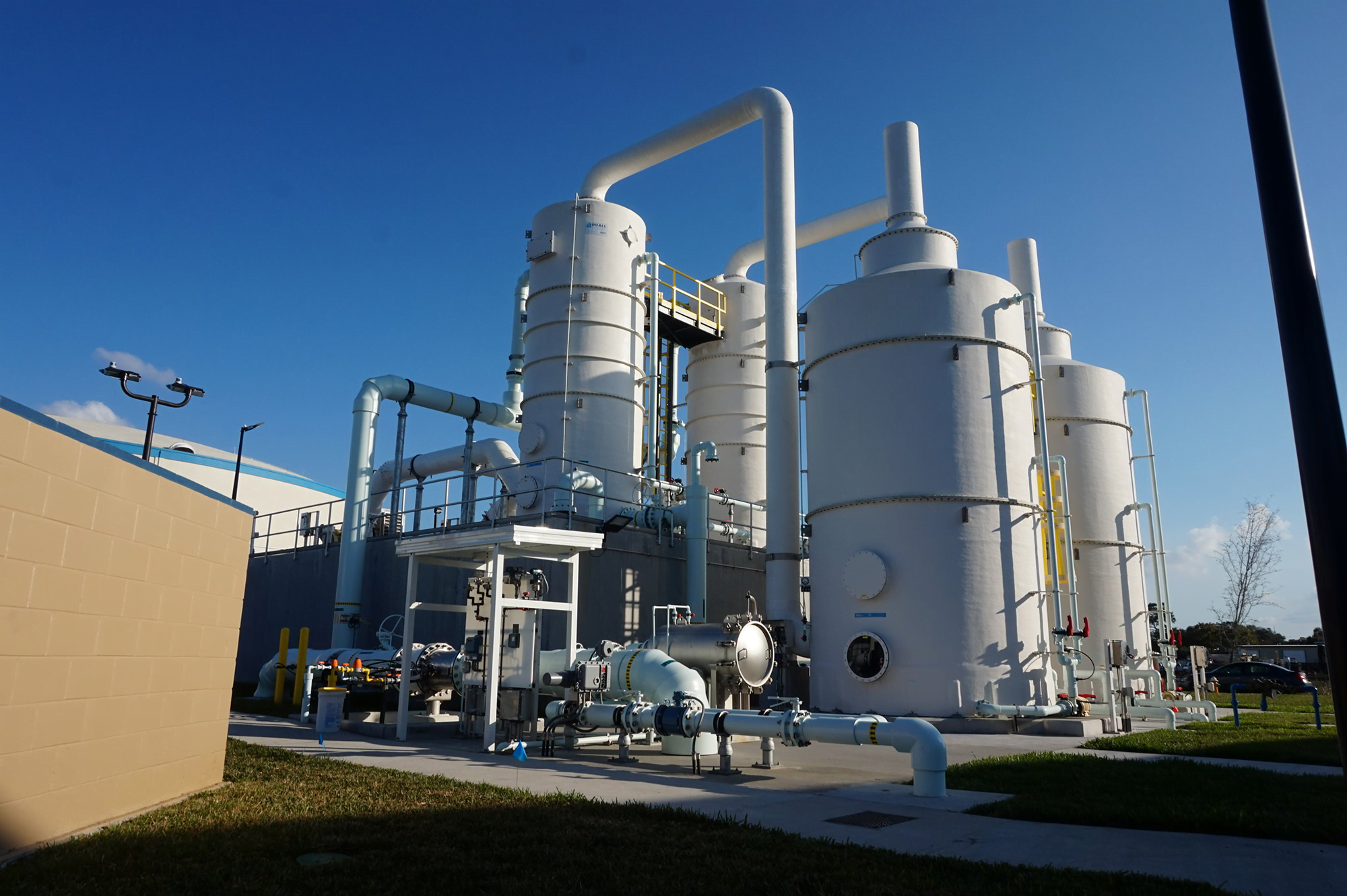
Desalination and water treatment plants both rely on reverse osmosis to generate clean water for human use. The standard theory behind reverse osmosis for the last half century suggested that the membranes separated water and other chemicals by forcing water molecules, driven by chemical gradients, to travel one-by-one through a dense membrane forest. But over the years, researchers saw signs that this theory didn’t hold up; for one, the membranes water travels through have pores in them that are larger than individual water molecules.
A new study examines the underlying assumptions of the prevailing model and finds instead that water moves through reverse osmosis membranes by pore flow. Instead of individual molecules pushed by concentration, flow takes place through pores and is driven by a pressure gradient. The difference is important because it enables engineers to design more efficient membranes according to real-world physics. By understanding the underlying mechanism, designers can tweak the pore size, density, and other features of reverse osmosis membranes to better filter unwanted chemicals and to remove salt from water with less energy input. (Image credit: Florida Water Daily; research credit: L. Wang et al.; via Wired; submitted by Kam-Yung Soh)
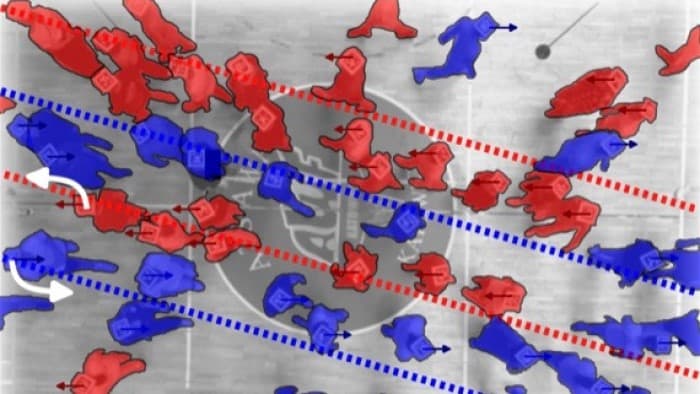
In nature — from atoms to human crowds — two groups moving in opposite directions often spontaneously organize into interwoven lanes flowing in their respective directions. Now researchers have built a mathematical model for this behavior, building on Einstein’s observations of Brownian motion.
To test their model, the researchers performed numerical simulations and experiments with pedestrians. Intriguingly, they found that introducing rules like “always pass on the right” created unexpected results, such as tilted lanes. With their model verified — at least for low-density crowds — the group hope to uncover other hidden patterns within crowds. (Image and research credit: K. Bacik et al.; via Physics World)
In their validation experiments, the researchers filmed groups of pedestrians walking past one another under different conditions. Note the lanes that form as the two groups interleave.
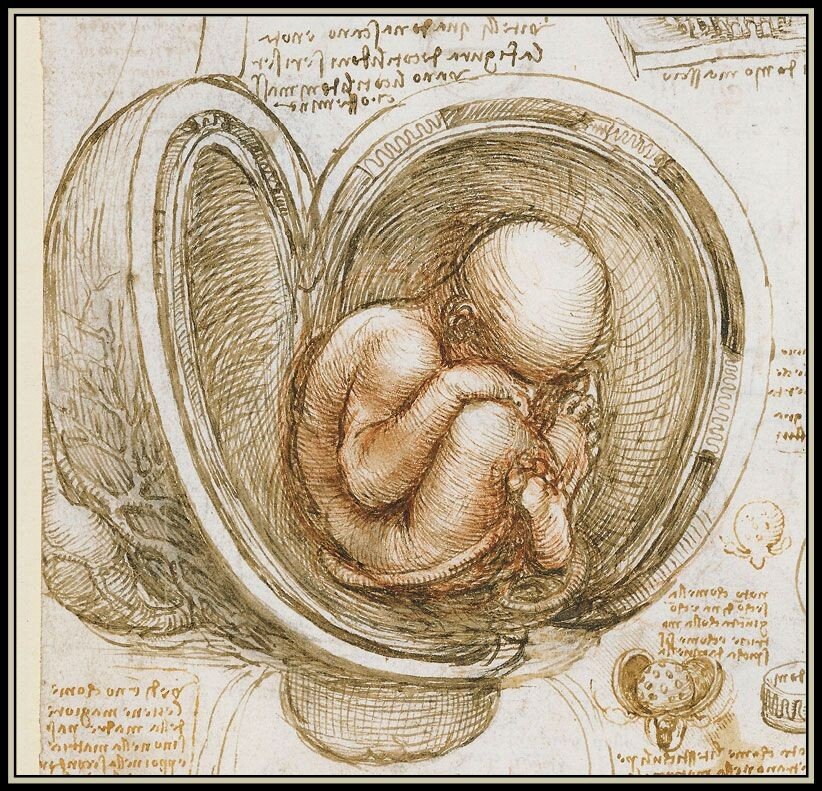
The human placenta functions as a life-support system for a growing fetus. Despite its frisbee-like appearance, the organ is packed with nearly 10 square meters of blood vessels. On the fetal side, these blood vessels form villous trees where diffusion across the placental boundary exchanges molecules with the maternal blood that fills the space between villous trees. This setup allows oxygen, glucose, carbon dioxide and other key chemicals to cross between the parent and fetus while (ideally) keeping diseases out.
Views of the placenta. Beige areas show the intervillous space where maternal blood flows while pink areas show villous trees where exchanges between the fetus and mother take place. The first three images show a) preeclamptic, b) normal, and c) diabetic placentas. The final image d) shows a 3D view of placental tissue taken with x-ray tomography.
But when diseases directly affect the structure of the placenta, flow to the fetus gets disrupted. The image above shows cross-sections of placental tissues, with villous trees marked in pink, under (a) preeclamptic, (b) normal, and (c) diabetic conditions. Preeclampsia is associated with reduced density of villous trees, which restricts the amount of nutrients a fetus receives and can lead to reduced growth or stillbirth. In contrast, with gestational diabetes villous trees can proliferate, causing a high resistance to flow that also affects exchanges.
Lab experiments and numerical simulations can only take us so far; sometimes there’s no substitute for getting out into the field. That’s why a beach in San Diego turned pink this January and February, as researchers released a safe, non-toxic dye into an estuary. The goal is to understand how small freshwater sources mix with colder, saltier ocean waters when they meet in the surf zone. Differences in temperature and salinity both affect the waters’ density and, therefore, how they’ll combine, especially in the face of the turbulent surf. Using drones, distributed sensors, and a specially-outfitted jet ski, the researchers collect data about how the dye (and therefore the estuary’s water) spreads over the 24 hours following each dye release. Check out their experiment’s site to learn more. (Image credits: E. Jepsen/A. Simpson/UC San Diego; via SFGate; submitted by Emily R.)
This mountain of interstellar gas and dust lies in the picturesque Eagle Nebula. Though it appears solid in this near-infrared image from JWST, the density of the structure is actually quite low. Jets and solar winds from the glowing, young stars inside the region sculpt the pillar’s shape. Over the next 100,000 years, the stars’ energetic jets, solar winds, and destructive supernovas will destroy the dusty nursery. (Image credit: NASA/ESA/CSA/STScI/M. Özsaraç)
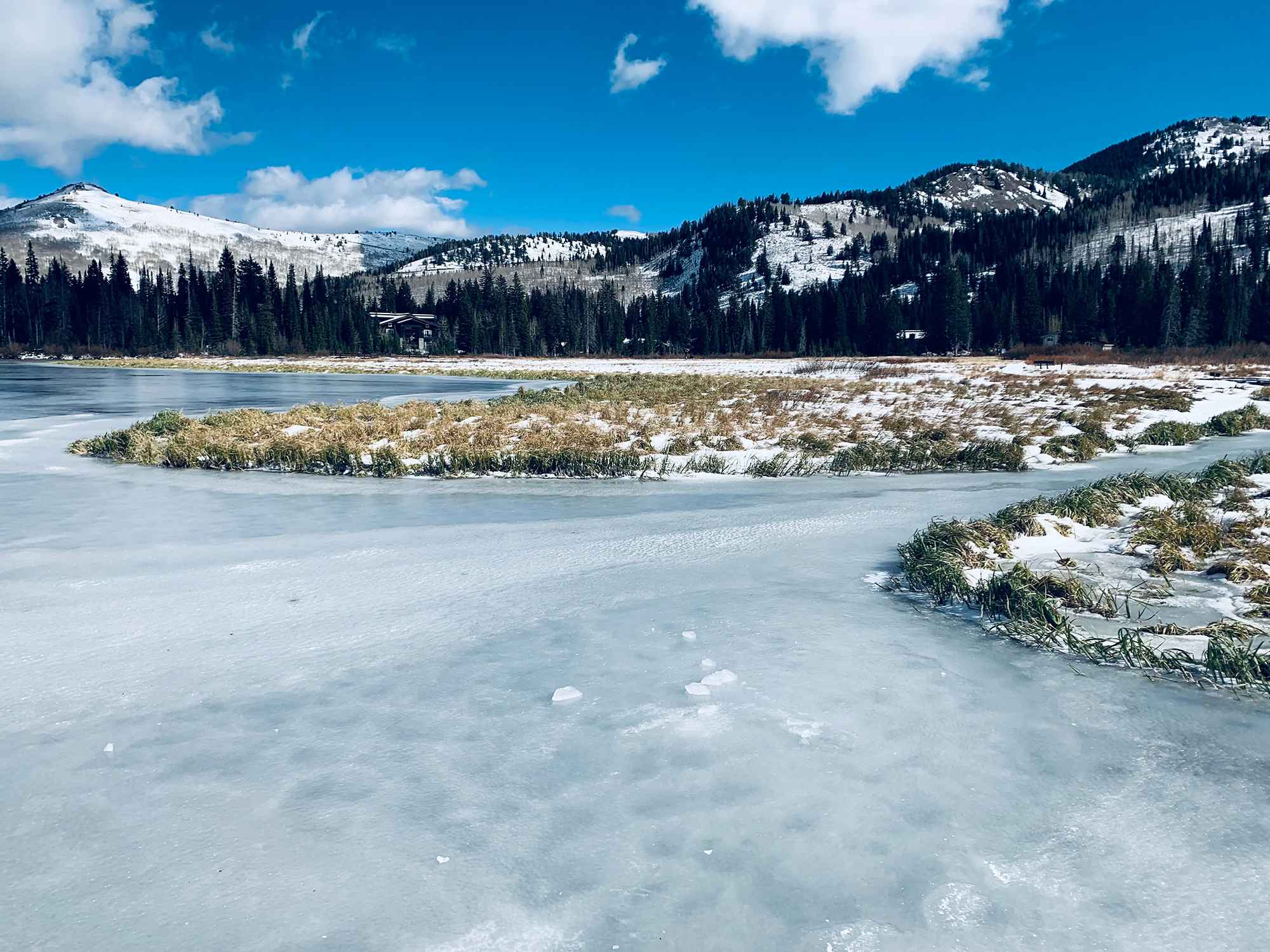
A frozen winter lake can hide surprisingly complex flows beneath its placid surface. Since water is densest at 4 degrees Celsius — just above the freezing point — mixing two water sources can lead to counterintuitive effects. A cold lake, for example, may contain water below 4 degrees Celsius, while a stream running into the lake is a bit warmer than 4 degrees Celsius. When the two parcels of water meet, they mix to form water at an intermediate temperature. But because of water’s density anomaly, that mixed water can wind up denser than the average of its parents. This is known as cabbeling.
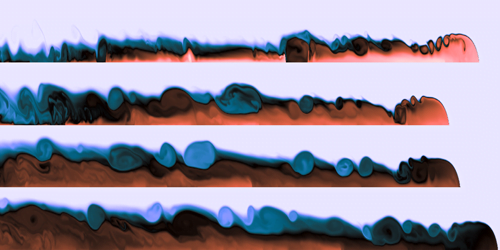
Mixing patterns within a cold lake with a slightly warmer inflow. Image from A. Grace et al.
As shown in a recent study, this newly mixed water sinks to the bottom of the lake, forming a warm current that heats the lake from below. The researchers were able to model this current and its behavior over a range of conditions. Understanding these winter circulation patterns is key to tracking both nutrient transport and how pollutants spread in the ecosystem. (Image credit: lake – G. Murry, simulation – A. Grace et al.; research credit: A. Grace et al.; via APS Physics)
A lucky encounter led the Perseverance rover to record the first-ever sound of a dust devil on Mars. The rover happened to have its microphone on (something that only happens a few minutes every month) just as a dust devil swept directly over the rover. Check out the video above to see and hear what Perseverance captured.
Using the rover’s instrumentation, researchers worked out that the dust devil was at least 118 meters tall and about 25 meters wide. The team was even able to determine the density of dust in the vortex from the sound of individual grain impacts captured in the acoustic signal! Serendipitous as the experience was, planetary scientists may now look to include microphones on more missions, since we now know how to get useful meteorological data from them. (Video credit: JPL-Caltech/NASA; image credit: LPL/NASA; research credit: N. Murdoch et al.; via AGU Eos; submitted by Kam-Yung Soh)
These “flowers” blossom as two injected chemicals react in the narrow space between two transparent plates. The chemical reaction produces a darker ring that develops a streaky outer edge due to competition between convection and chemical diffusion.
To show how gravity affects the instability, the researchers repeated the experiment on a parabolic flight. In microgravity conditions, no instability formed. That’s exactly what we’d expect if convection (i.e. flow due to density differences) is a major cause. No gravity = no convection. In contrast, under hypergravity conditions, the instability was initially spotty before developing streaks. (Image and video credit: Y. Stergiou et al.)
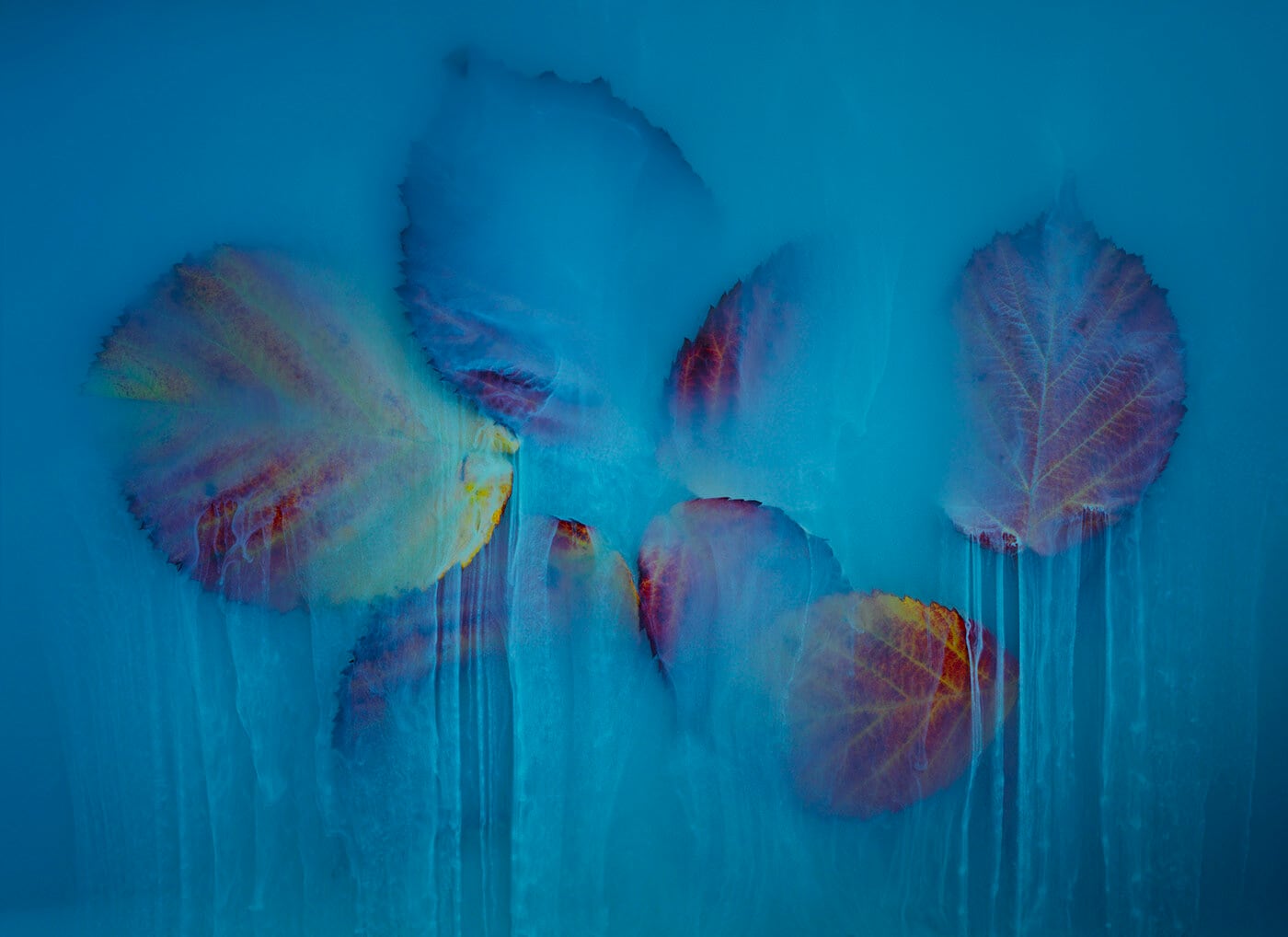
A smoke-like haze obscures colorful bouquets in these photographs from artist Robert Peek. To achieve the effect, Peek submerges his subjects underwater with white dye that sinks due to its greater density. The wakes traced by the dye are impressively laminar, so the dye must drift rather slowly past each petal. The overall effect is beautifully dream-like. You can find more of Peek’s work on Behance and Instagram. (Image credit: R. Peek; via Colossal)