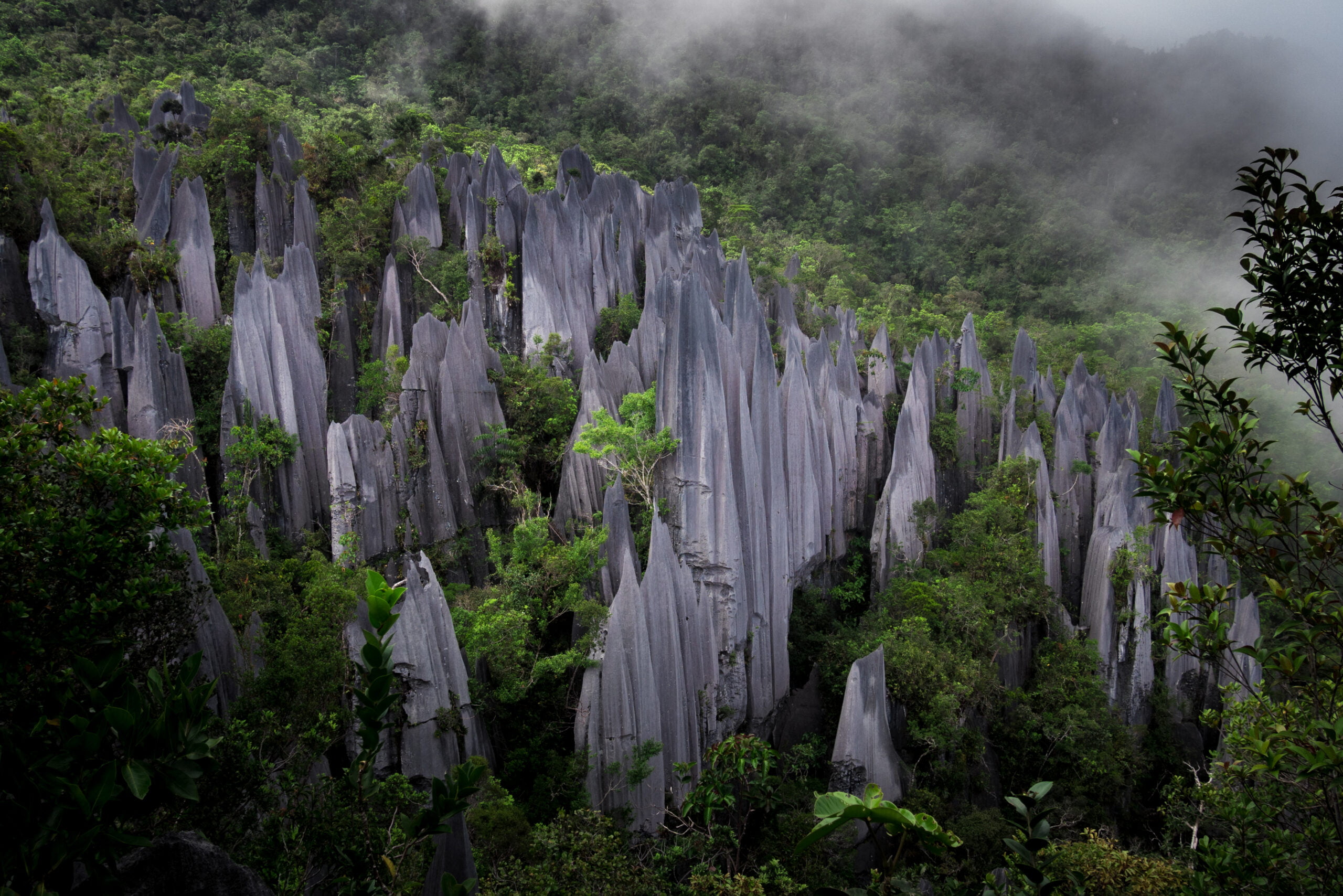
Limestone and other water-soluble rocks sometimes form sharp stone pinnacles like the ones seen here in Borneo. Scientists have recreated these structures in the laboratory simply by immersing water-soluble substances (essentially blocks of candy) into water. Without any background flow, the blocks will slowly form these pinnacle forests as material dissolves into the nearby water, creating a heavy solute-rich fluid that sinks down the exterior of the block. The convection generated by this dissolution drives the material into these sharp shapes, as shown mathematically in this recent study. (Image credit: N. Naim; research credit: J. Huang and N. Moore; via APS Physics)
Search results for: “art”

Erie Ice
Lake Erie, the shallowest of the Great Lakes, sees large swings in ice cover over the winter. In late January 2022, the lake was nearly completely frozen over, with 94 percent of its area covered in ice. By February 3rd, ice cover had dropped to 62 percent before rising again to 90 percent by the 5th. Air temperature and wind are the primary drivers of Erie’s fast ice growth and decay. As storms roll through, the ice can spread rapidly, but once temperatures rise, it takes very little forcing from the wind for the ice to begin breaking up. (Image credit: J. Stevens/USGS; via NASA Earth Observatory)
Turbulence in Flight
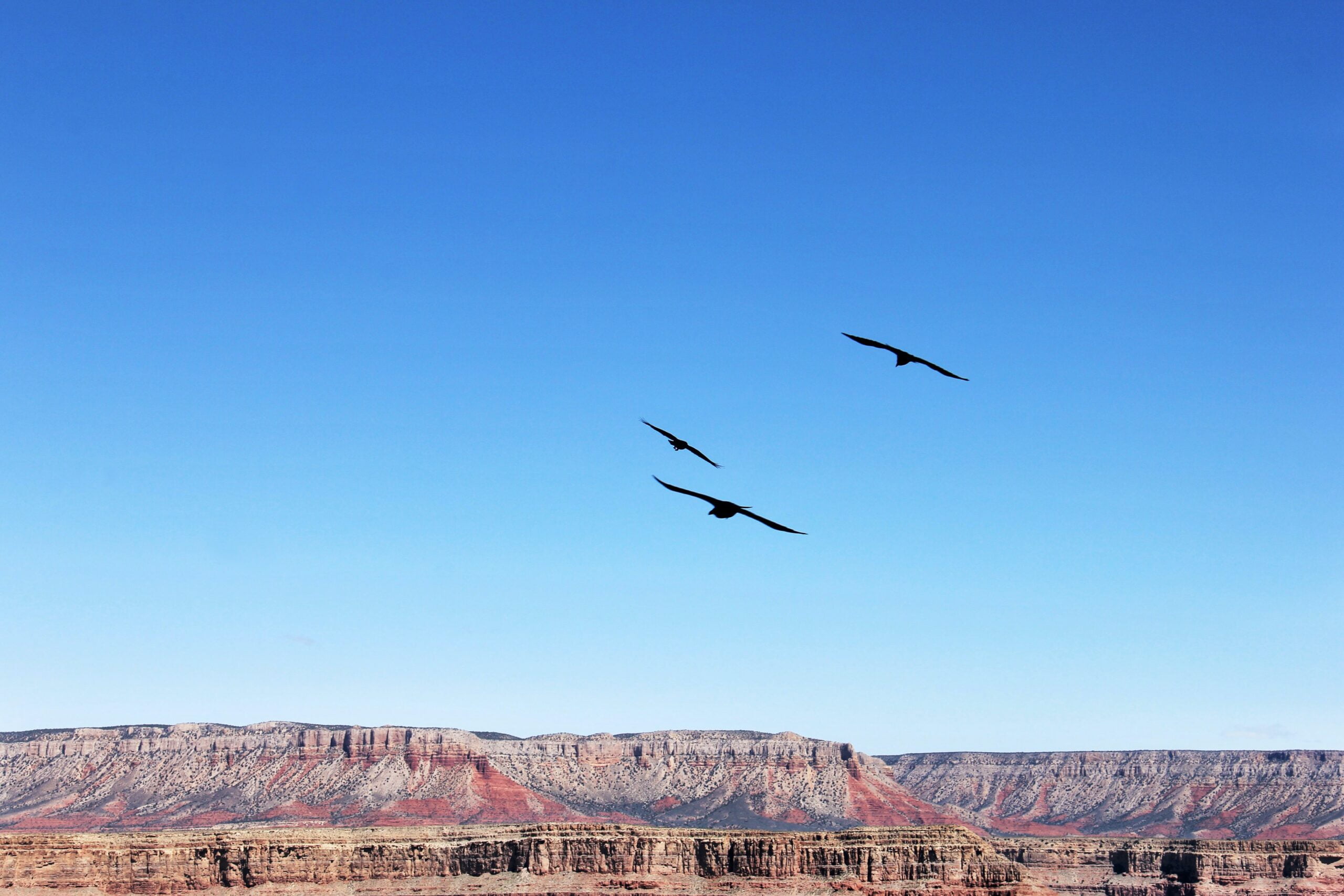
Eagles and other birds spend much of their lives in the turbulence of our atmospheric boundary layer. Some of their interactions with turbulence — like using topographical effects to aid their flight — are well-known, but much remains uncertain. One team of researchers looked at a tagged golden eagle’s flight data, compared with known wind conditions, and looked for evidence of turbulence’s influence. To do this, they drew on years of research into how turbulence interacts with inertial particles — particles that are heavier than the surrounding fluid and thus unable to follow the flow exactly.
What they found is that turbulence seems to be baked into many aspects of the eagle’s flight. Even the basic accelerations of the eagle’s body during flight showed characteristics that match those of turbulent flows. The findings suggest that turbulence — rather than something to be avoided — is an integral part of flight for birds, an energy source they’ve learned to exploit. (Image credit: J. Wang; research credit: K. Laurent et al.; submission by G. Bewley)
Portraits of Flight
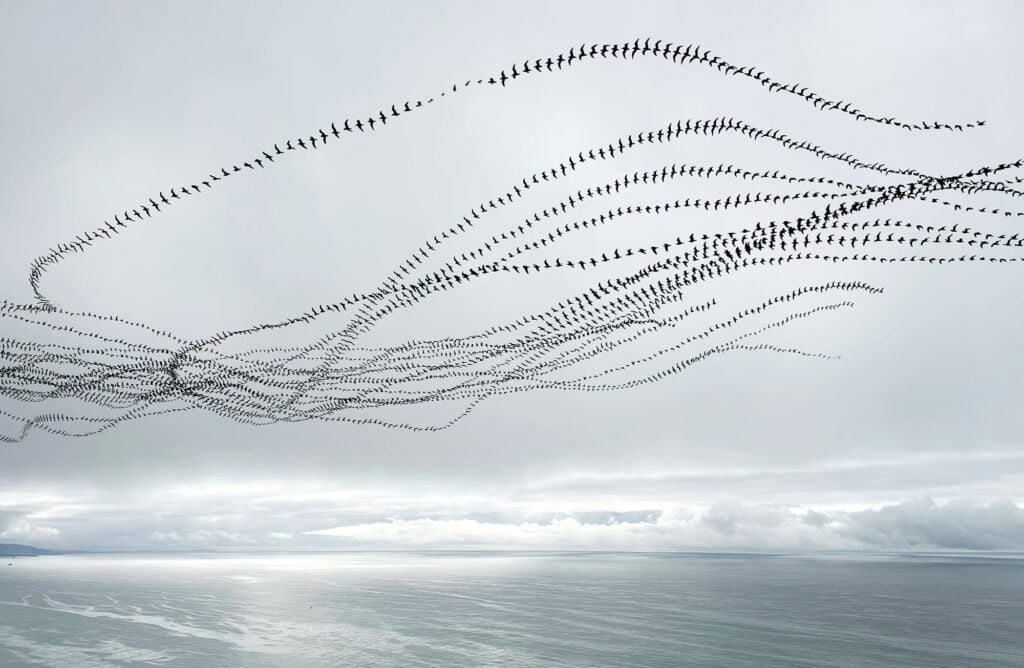
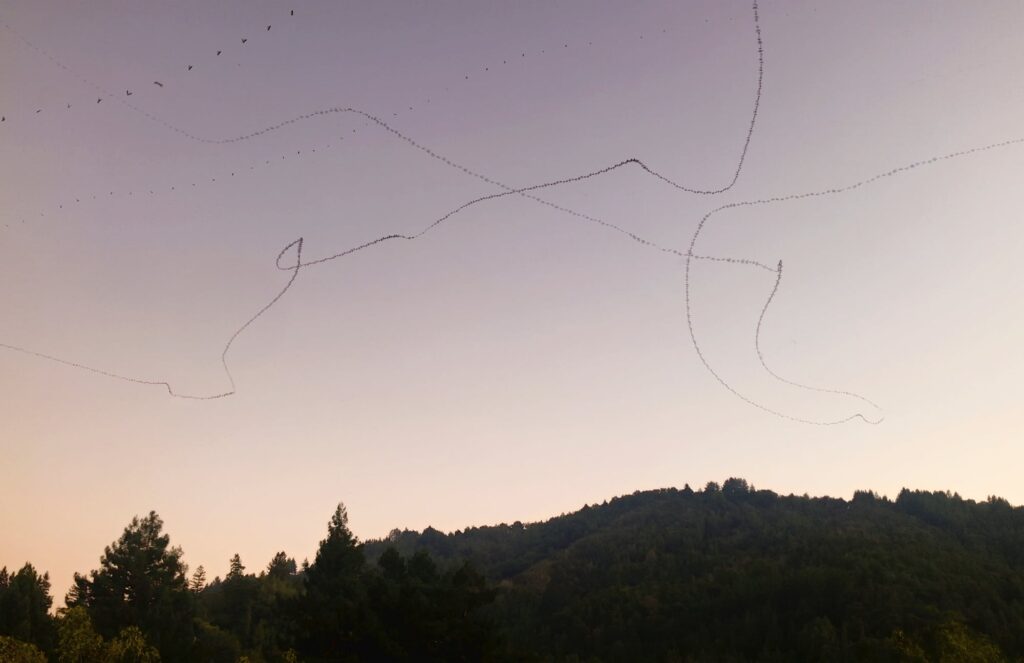
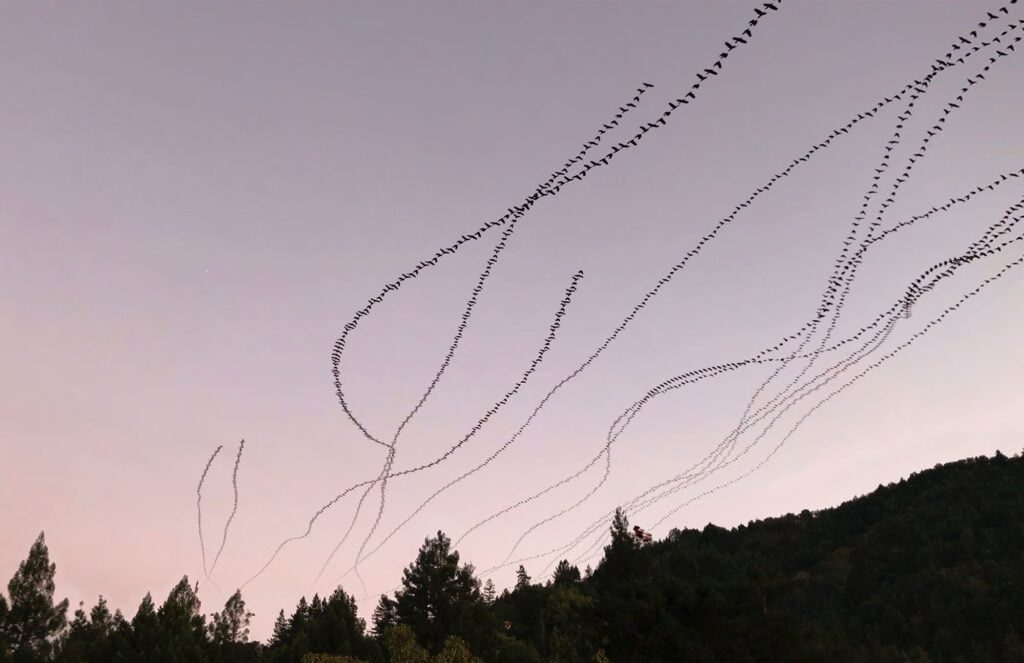
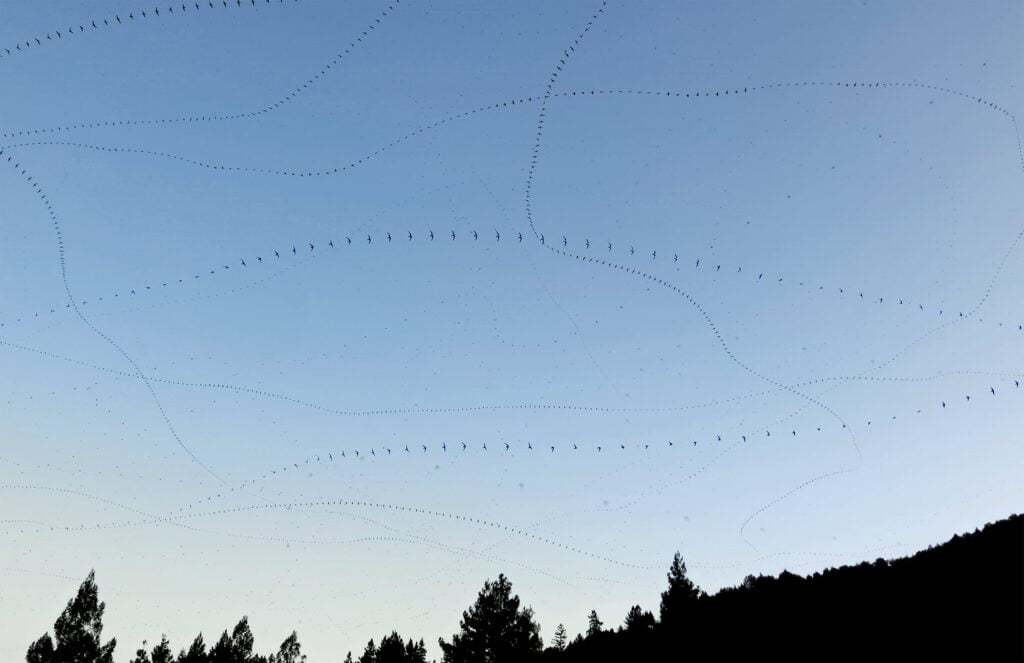
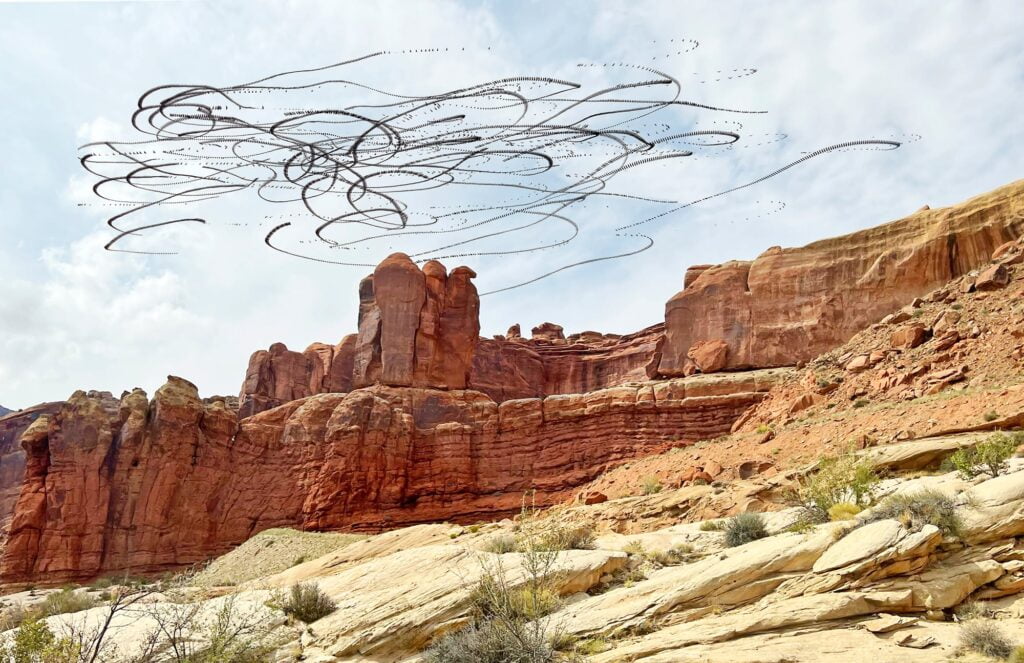
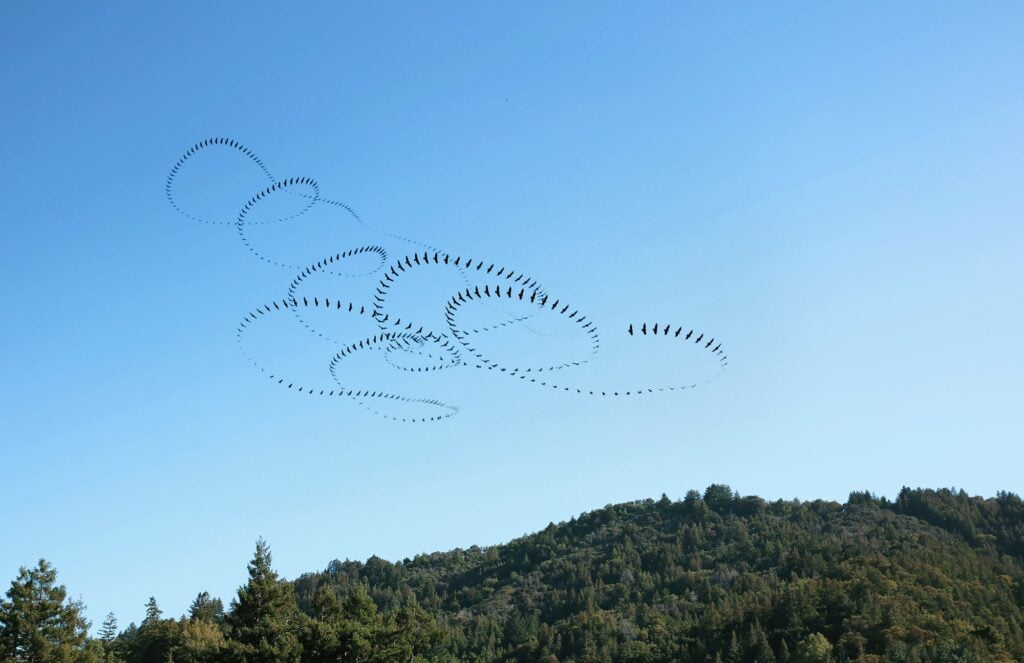
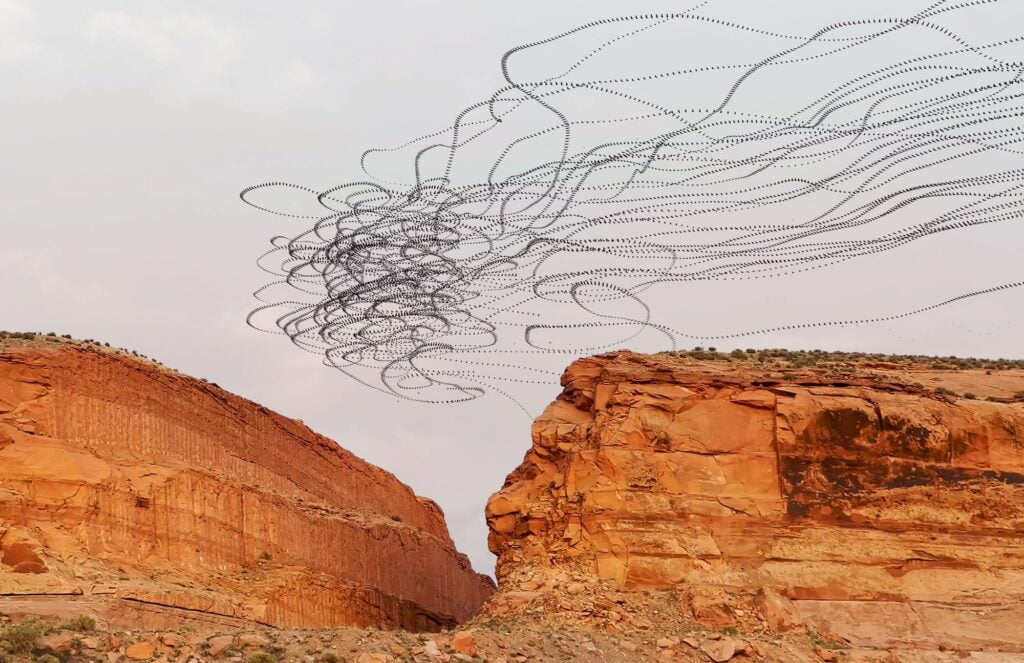


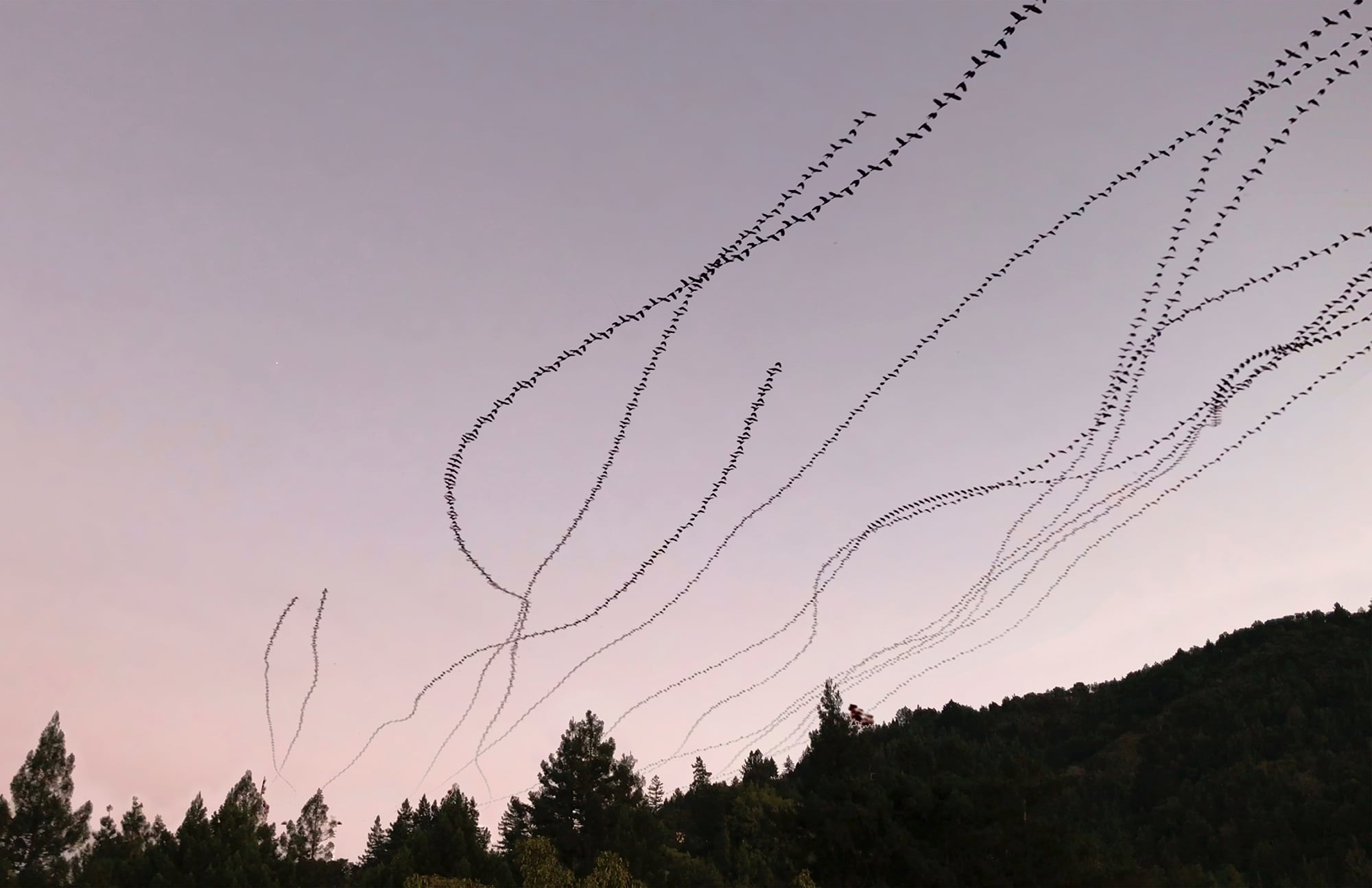


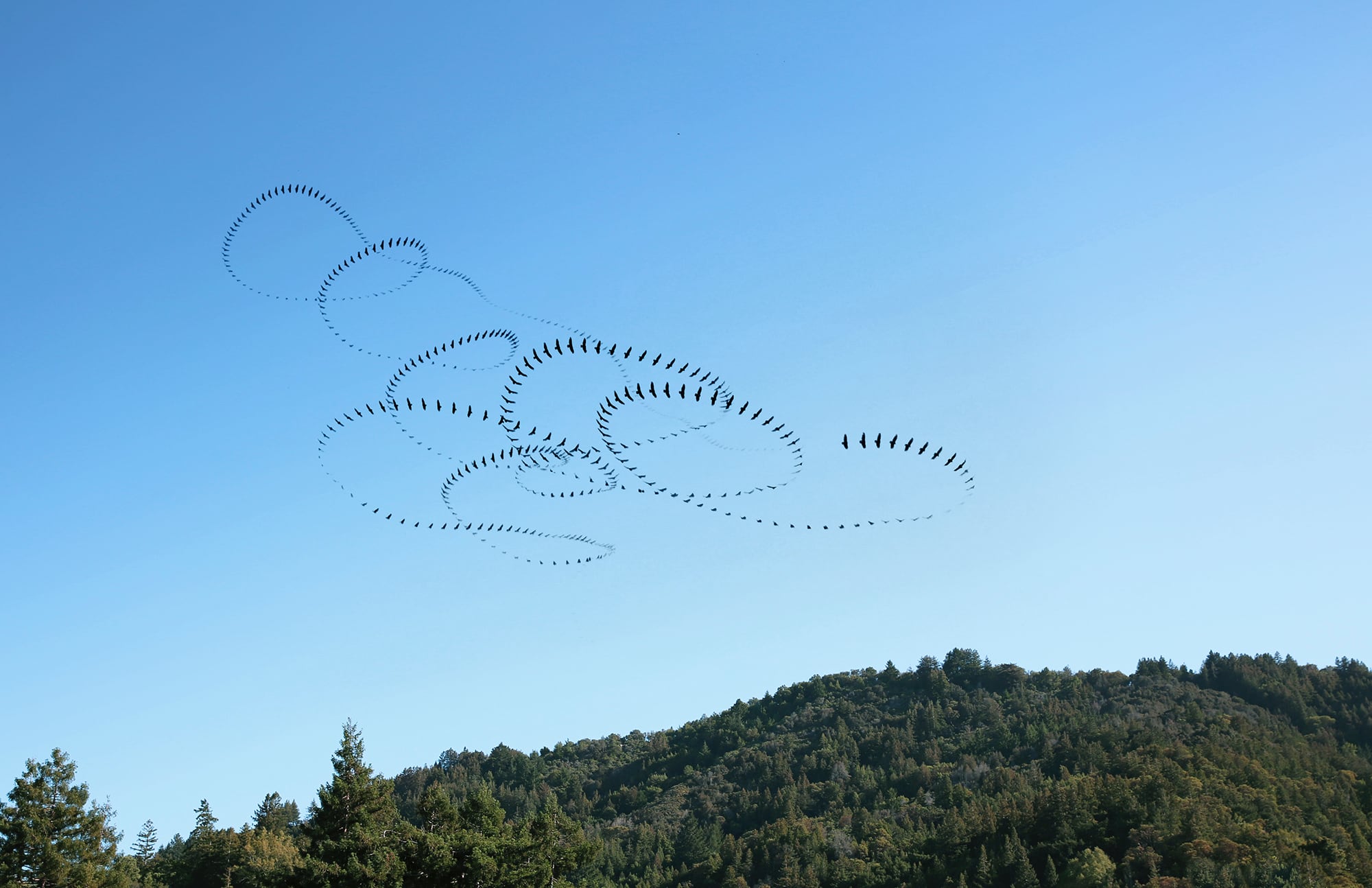
During lockdown, photographer Doris Mitsch turned her eyes to the sky and began capturing these mesmerizing composite images of animals in flight. Vultures, crows, starlings, gulls, and bats all feature in her series. Some images, like “Lockdown Vulture (Signature)”, feature a single bird’s movement over a minute. Others show entire flocks over extended periods.
I love how the images capture a sense of speed. Given equal timing between images, the lines with more space between each snapshot of a bird indicate a faster speed. It’s a bit like having particle image velociometry frames stacked atop one another! (Image credit: D. Mitsch; via Colossal)
Mushy Layers
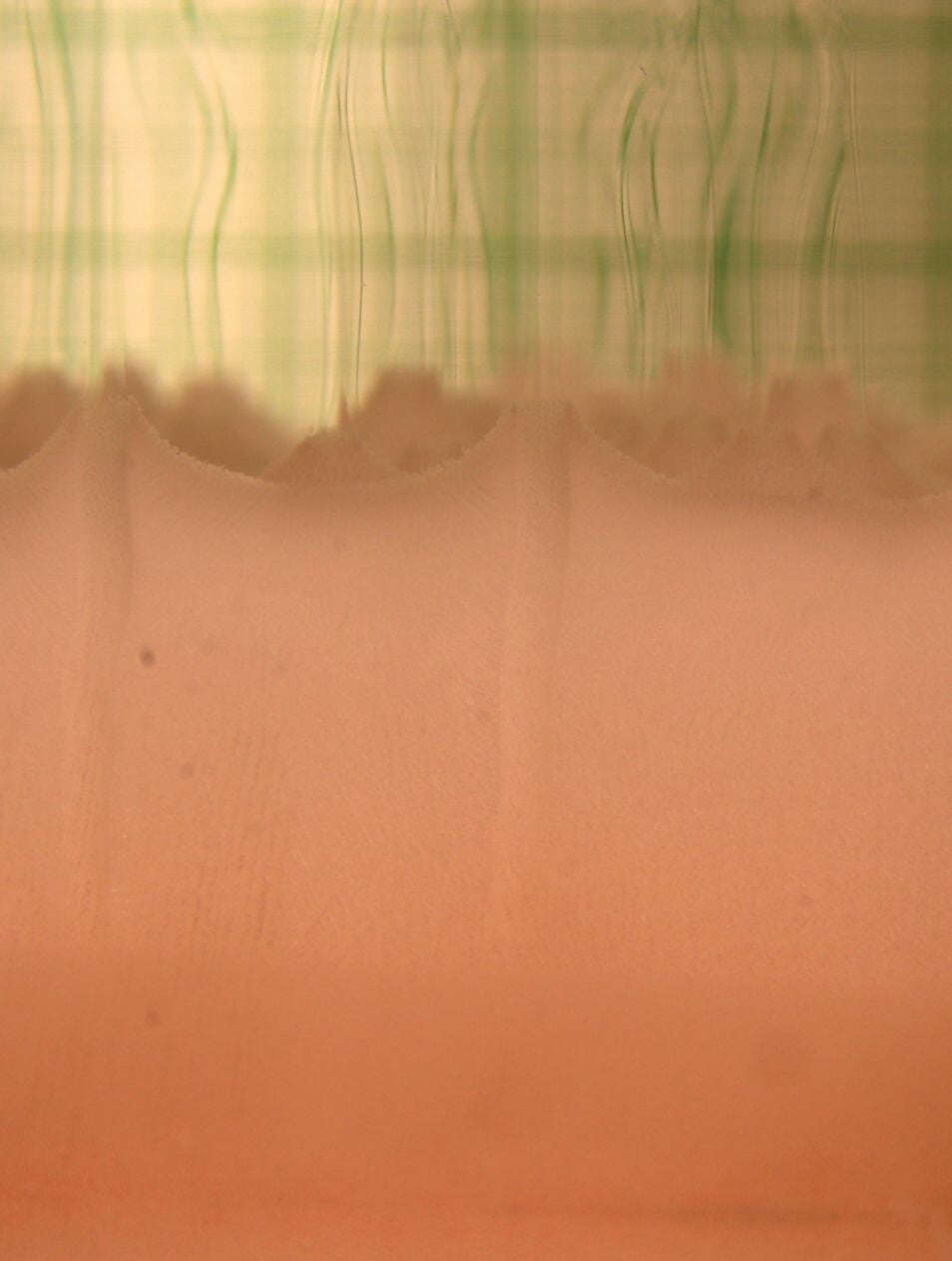
In many geophysical and metallurgical processes, there is a stage with a porous layer of liquid-infused solid known as a mushy layer. Such layers form in sea ice, in cooling metals, and even in the depths of our mantle. Within the mushy layer, temperature, density, and concentration can vary dramatically from one location to another.
The image above shows a mushy layer made from a mixture of water and ammonium chloride. Above the mushy layer, green plumes drift upward, carrying lighter fluid. Look closely within the mushy layer and you’ll see narrow channels feeding up to the surface. These are known as chimneys. In sea ice, chimneys like these carry salty brine out of the ice and into the seawater, increasing its salinity. See this Physics Today article for more details on the dynamics of mushy layers. (Image credit: J. Kyselica; via Physics Today)

#IfThenSheCan Exhibit at the Smithsonian
I’m not normally one to talk about myself here on FYFD. This site was made to keep the focus on the science, but I’m making an exception today to share a very special exhibit that I’m a part of: the #IfThenSheCan Exhibit, which opens today at the Smithsonian in Washington, DC as part of their #WomensFuturesFestival.
The exhibit features over 120 statues of real women in STEM careers — everything from robotics to marine biology, artificial intelligence to aerospace engineering. It is an absolutely amazing bunch of women, and I am so honored to be a part of it.

My statue, while on display in Dallas. Photo by Regina Binz. If you’re in the DC area before March 27th, be sure to swing by the National Mall and see the statues. (If not, you can take a virtual tour, too!) Currently, they are all located at the Arts + Industries Building, the Smithsonian Castle and the adjacent Enid A. Haupt Garden, but after March 7th, some of the statues will move to other museums around the Mall. Mine is heading to the National Air and Space Museum!
When I was twelve years old, I visited DC for the first time, and everything about that trip made a huge impression on me. I was in awe of the history, the memorials, the public transit, and, most of all, the National Air and Space Museum. My parents complained that every time we walked the Mall, I made a beeline — as if drawn by a magnetic field — right up the steps of that building. To be a part of that museum now, some twenty years later, is something I never could have imagined.
I’m so proud to be part of this initiative full of amazing women inspiring the next generation of STEM innovators! Special thanks to AAAS and Lyda Hill Philanthropies for making it all possible. (Image credits given in each description/caption.)
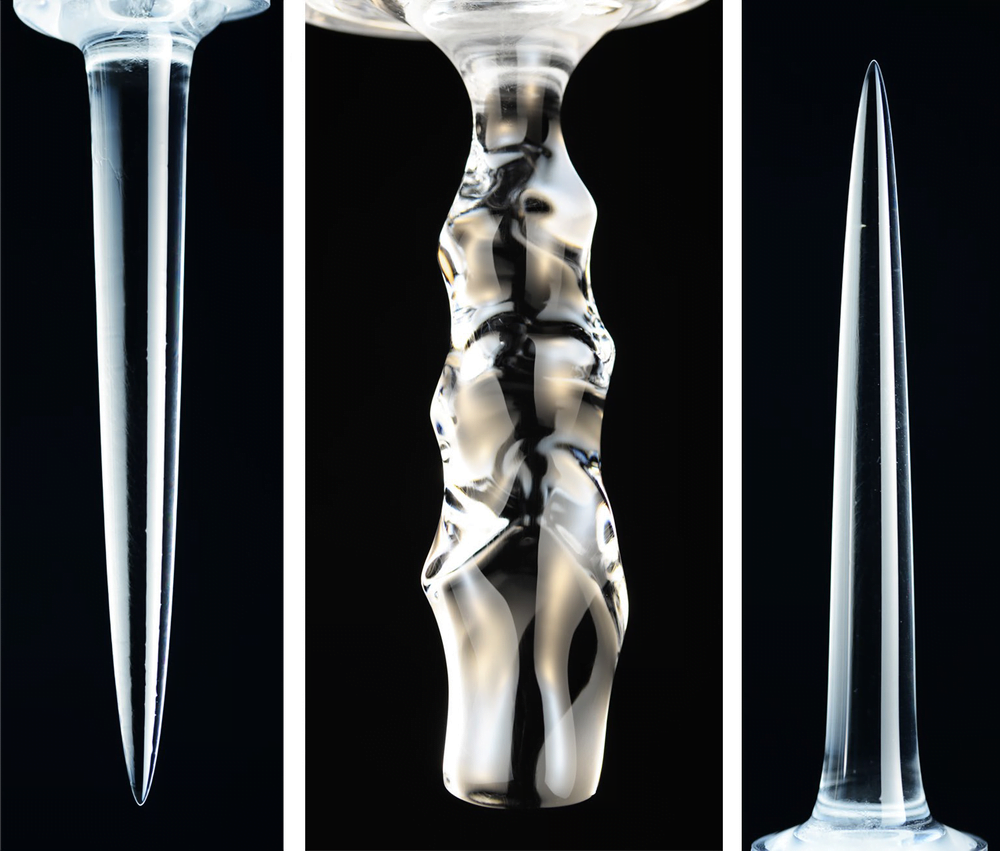
The Shapes of Melting Ice


Water is an odd substance because it is densest at 4 degrees Celsius, well above its melting point at 0 degrees Celsius. This density anomaly means that melting ice takes on very different shapes, depending on the temperature of the water surrounding it. At low temperatures (under 4 degrees Celsius), the cold water melting off the ice is denser than the surroundings, so it sinks. The sinking fluid melts lower portions of the ice faster, leading to an inverted pinnacle (Image 1).
In contrast, at higher temperatures (above 7 degrees Celsius), the meltwater is lighter than the surroundings and therefore rises, creating an upward-pointing pinnacle (Image 3). At intermediate temperatures, some areas of the ice see rising meltwater and some see sinking. This complicated flow pattern sets up vortices that result in a scalloped edge along the ice (Image 2). (Image and research credit: S. Weady et al.; via APS Physics)
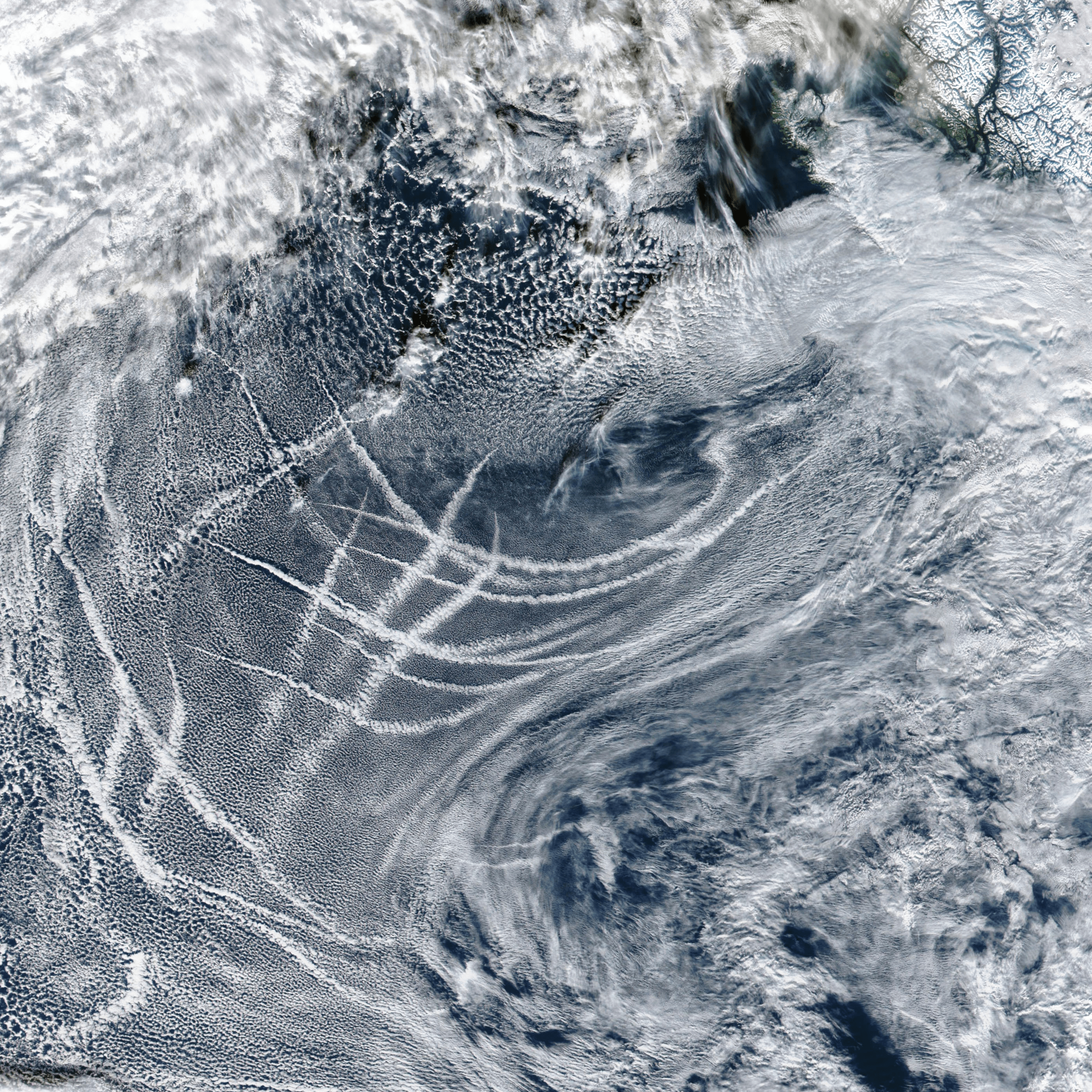
Ship Tracks in the Sky
Line-like clouds criss-cross the Pacific Ocean in this satellite image. Each one is a ship track, a remnant left behind a passing ship. As they travel, ships leave a trail of exhaust that seeds the atmosphere with aerosols that serve as additional nucleation sites for clouds. The tiny particles interact with existing low-level clouds, making them brighter. Of course, the aerosols are present in the wake of ships regardless of whether they seed clouds that we can observe. (Image credit: J. Stevens; via NASA Earth Observatory)
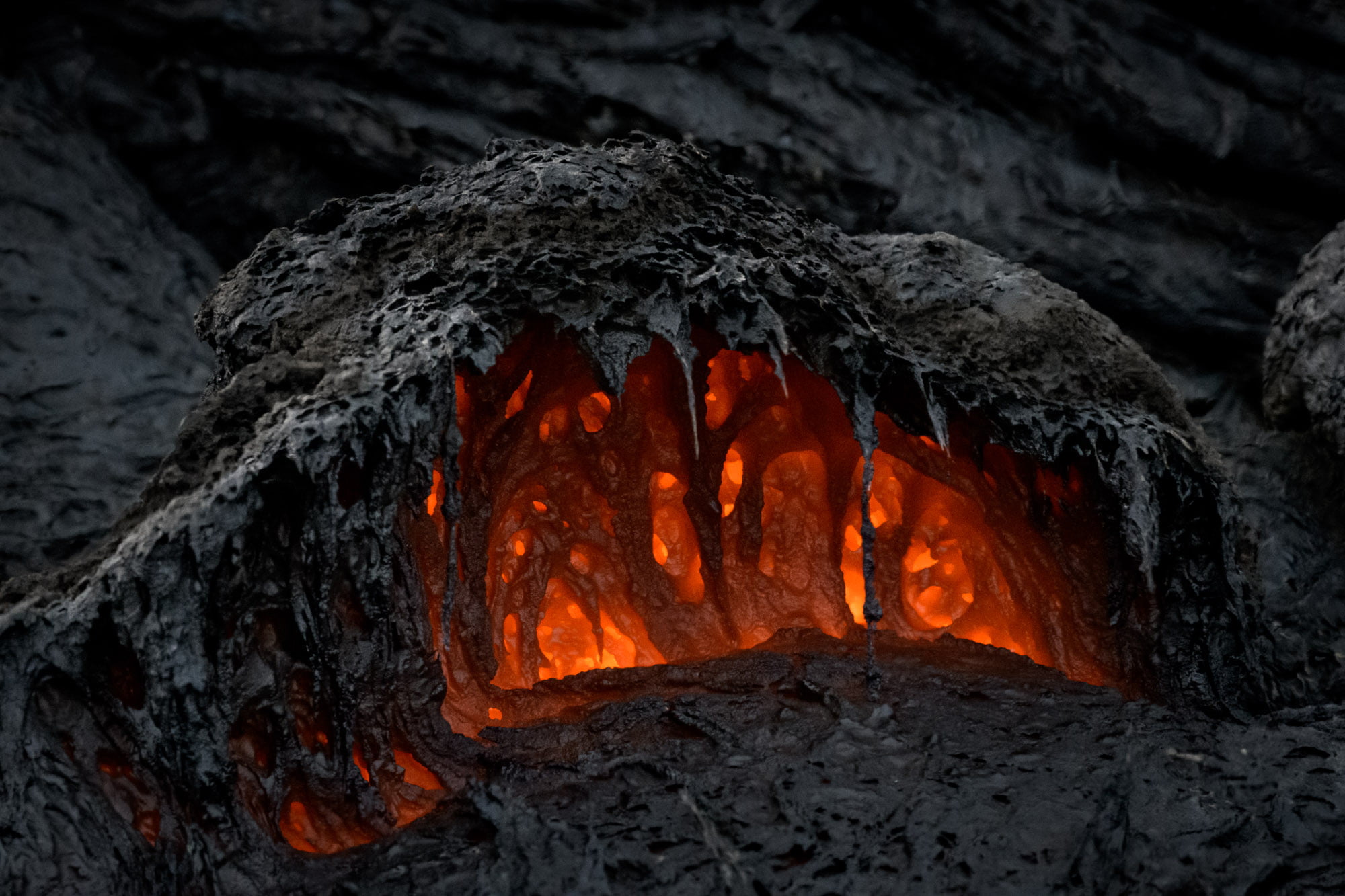
Lava Landscapes
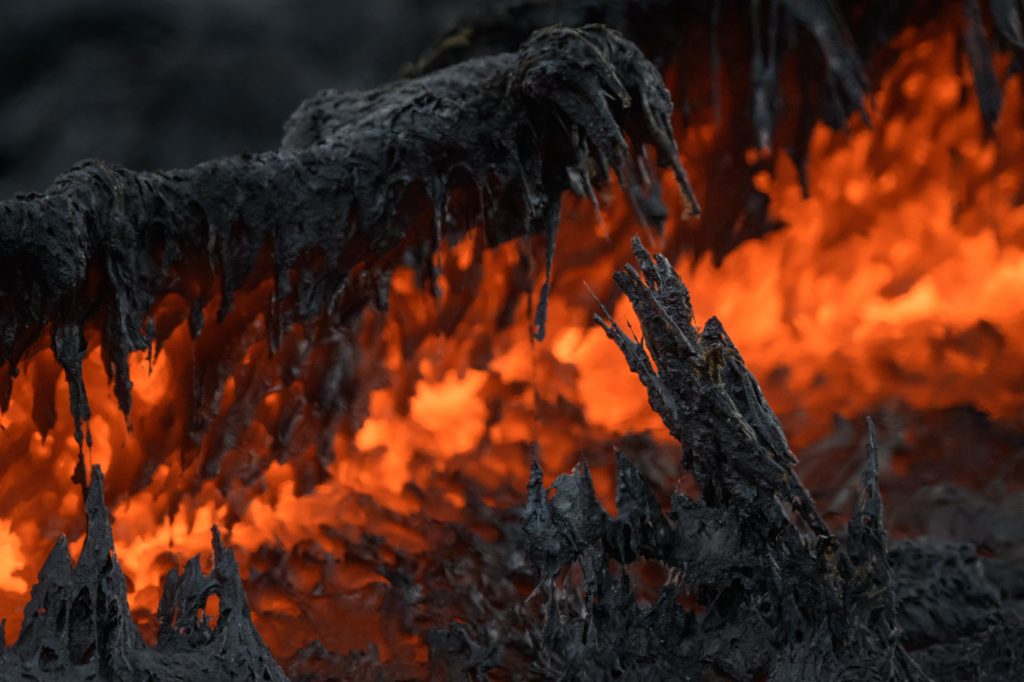
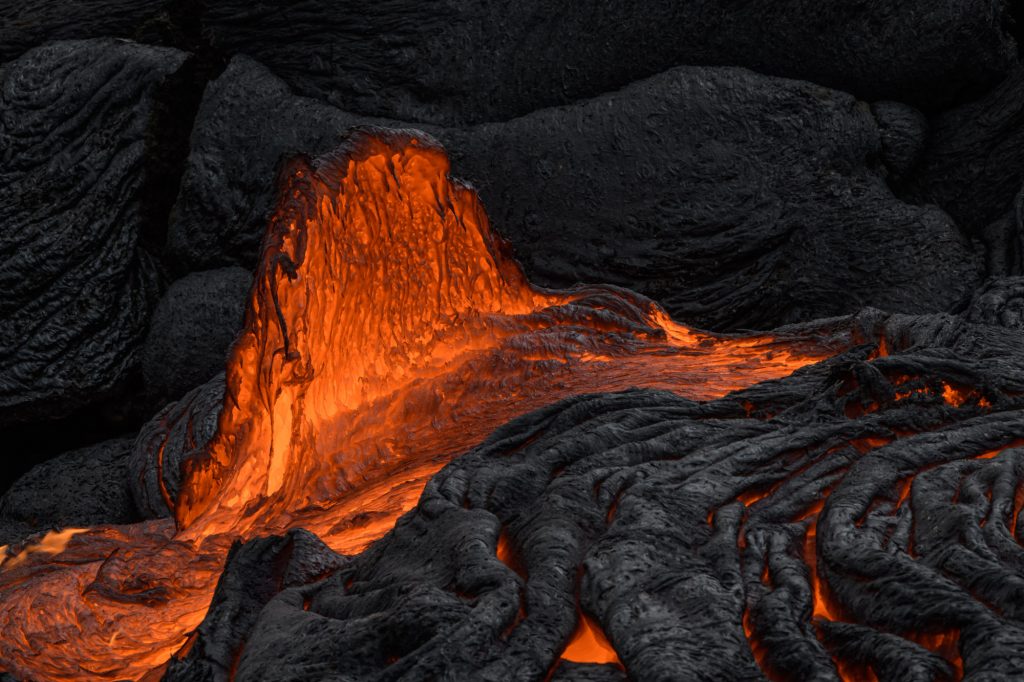
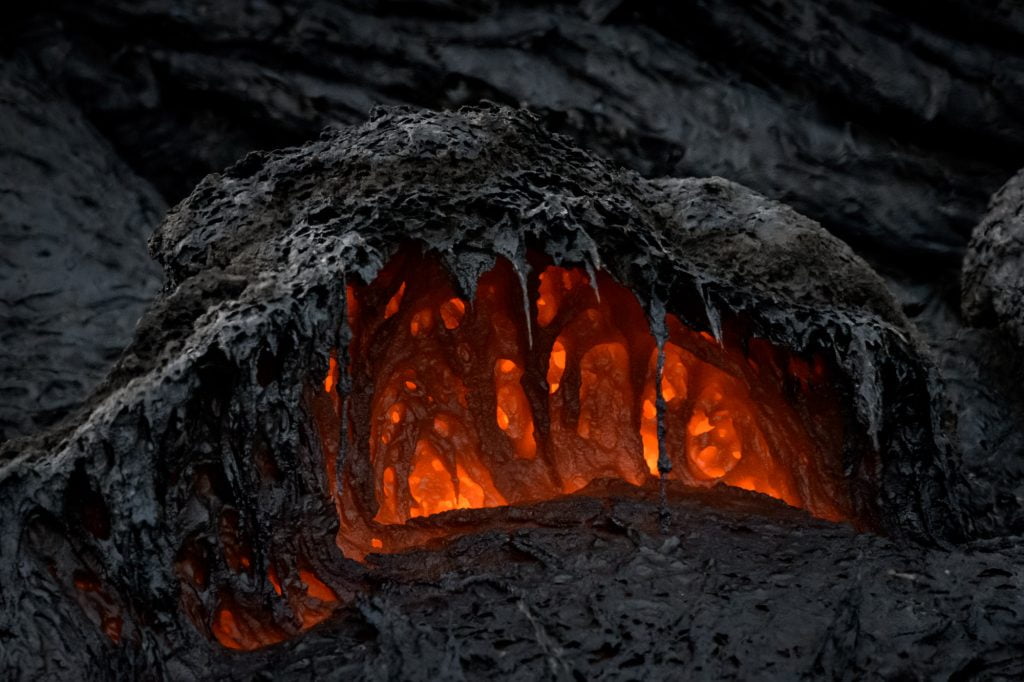

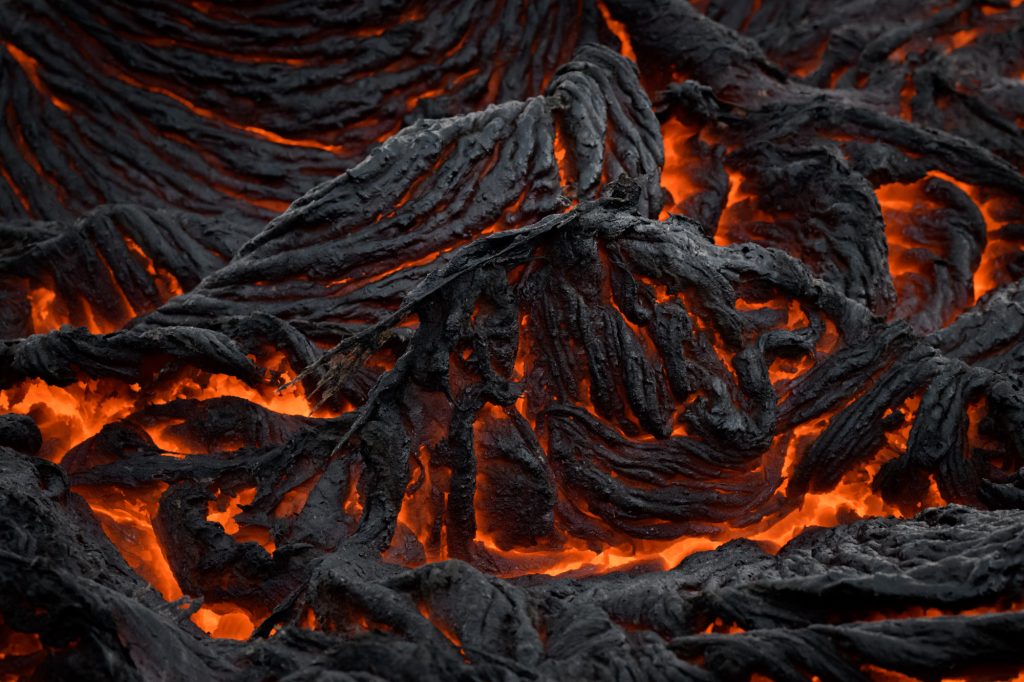
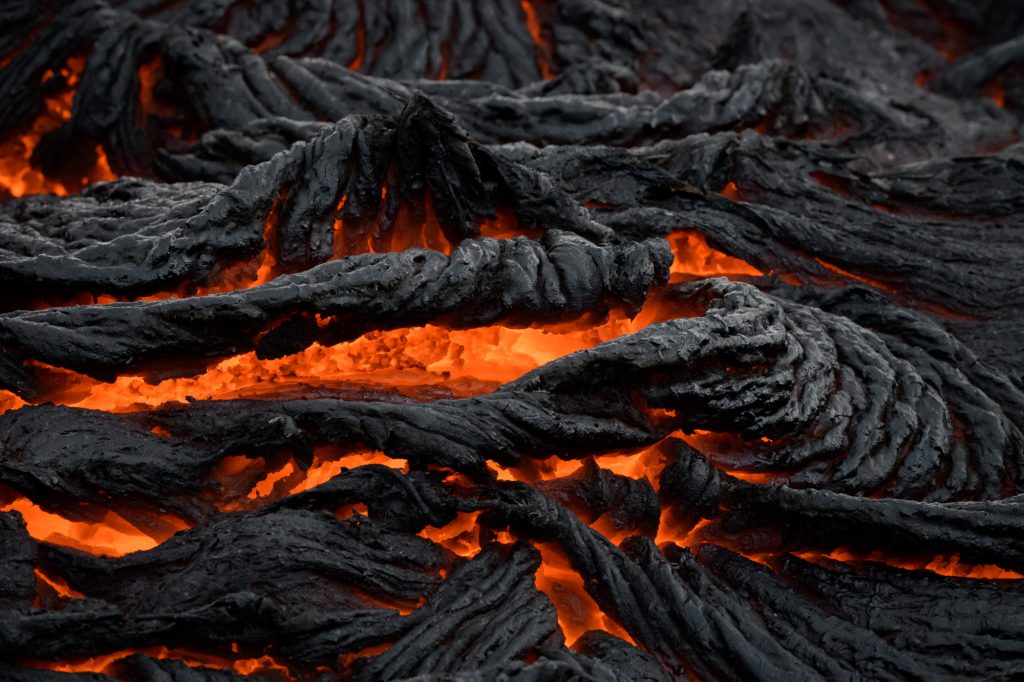

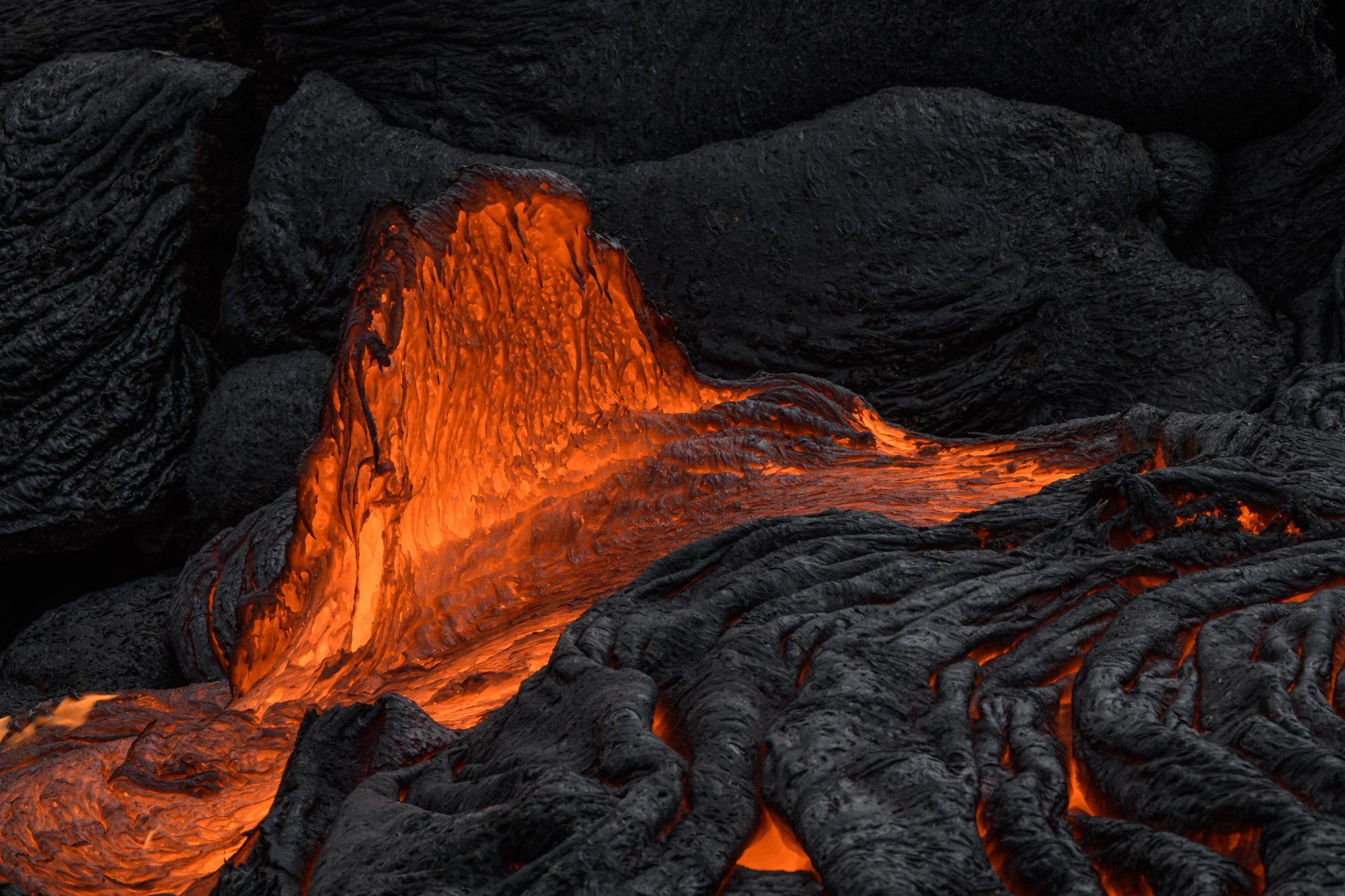


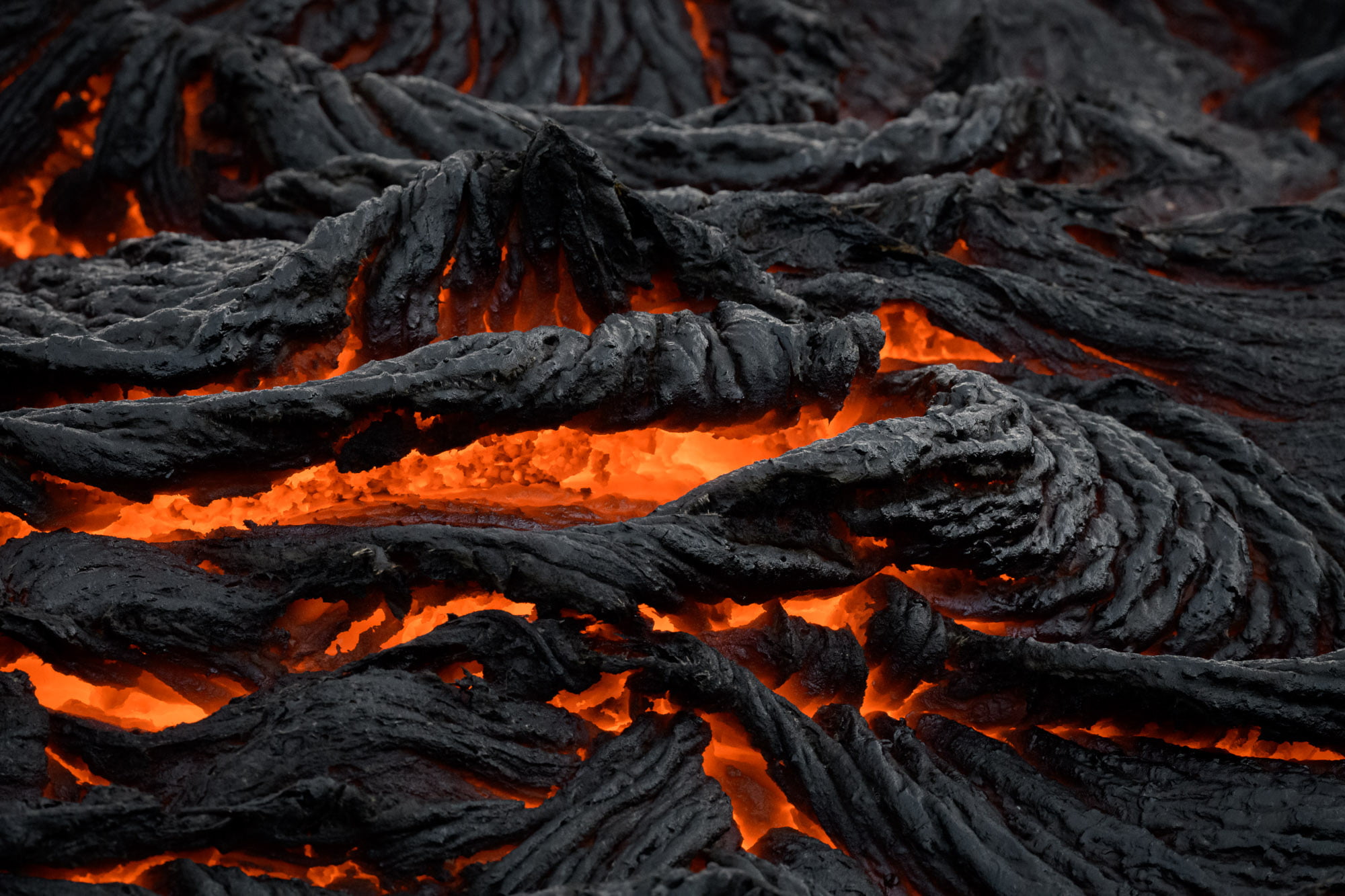
Lava flows are, by definition, transient. In his LAVA series, photographer Jan Erik Waider explores the changing vistas and textures of Iceland’s Fagradalsfjall volcano eruption. Using a telephoto lens, he captures incredible details of the charred, cooling outer crust of the lava and the glowing molten interior. Only minutes later, fresh lava tore through, destroying these natural sculptures. You can find prints of his images on his website. (Image credit: J. Waider; via Colossal)

Rocked By Waves
This astronaut photo shows the Isles of Scilly off the Cornish coast. The pale turquoise waters mark shallow reefs and shoals between the islands while blues reveal deeper waters surrounding the isles. The sun angle is perfect for highlighting the complex wave patterns caused by the winds and tides. Look closely and you’ll see swells intersecting one another and even diffracting around the smaller islets. (Image credit: NASA; via NASA Earth Observatory)


