This astronaut photo shows the Isles of Scilly off the Cornish coast. The pale turquoise waters mark shallow reefs and shoals between the islands while blues reveal deeper waters surrounding the isles. The sun angle is perfect for highlighting the complex wave patterns caused by the winds and tides. Look closely and you’ll see swells intersecting one another and even diffracting around the smaller islets. (Image credit: NASA; via NASA Earth Observatory)
Tag: diffraction

Diffraction
Wave phenomena can sometimes be a little difficult to wrap one’s head around. In this video, Mike from The Point Studios explains wave diffraction and why opening a window can help you spy on the conversation next door. Diffraction occurs when waves encounter an obstacle. If that obstacle is a slit in a wall, the slit becomes a point source, radiating waves outward spherically. The video focuses on acoustics, but diffraction matters in more than just sound – it’s key to water ripples, light and other electromagnetic waves, and, according to quantum theory, the fundamental building blocks of matter. (Video credit: The Point Studios)


Beach Cusps
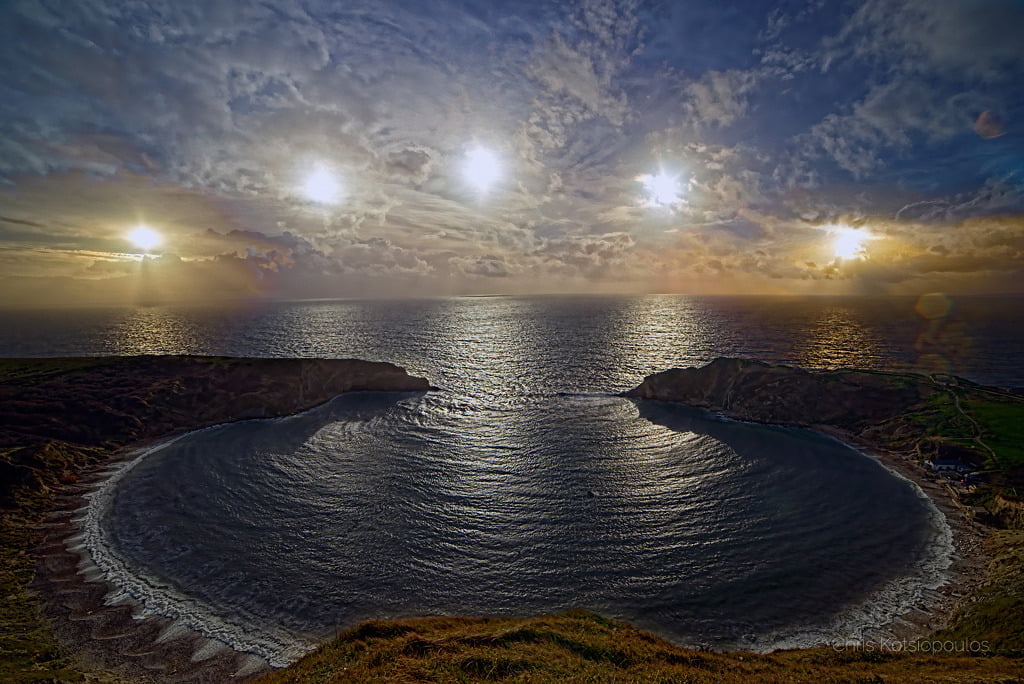
This composite photo shows the arc of the sun over Lulworth Cove in England during the December solstice. The low sun angle reveals a distinctive circular diffraction pattern of waves inside the cove. Along the shoreline, the beach has eroded into a regular, arc-like pattern known as beach cusps. Although there are multiple theories about how cusps form, their pattern is self-sustaining. They consist of a horn of coarse materials that projects into the water and an arc of finer sediments called an embayment. When incoming waves hit the horn, they slow down, depositing heavier coarse sediment on the horn while lighter, fine particles are carried further ashore. (Image credit: C. Kotsiopoulos; via APOD; submitted by jshoer)

Iridescent Clouds
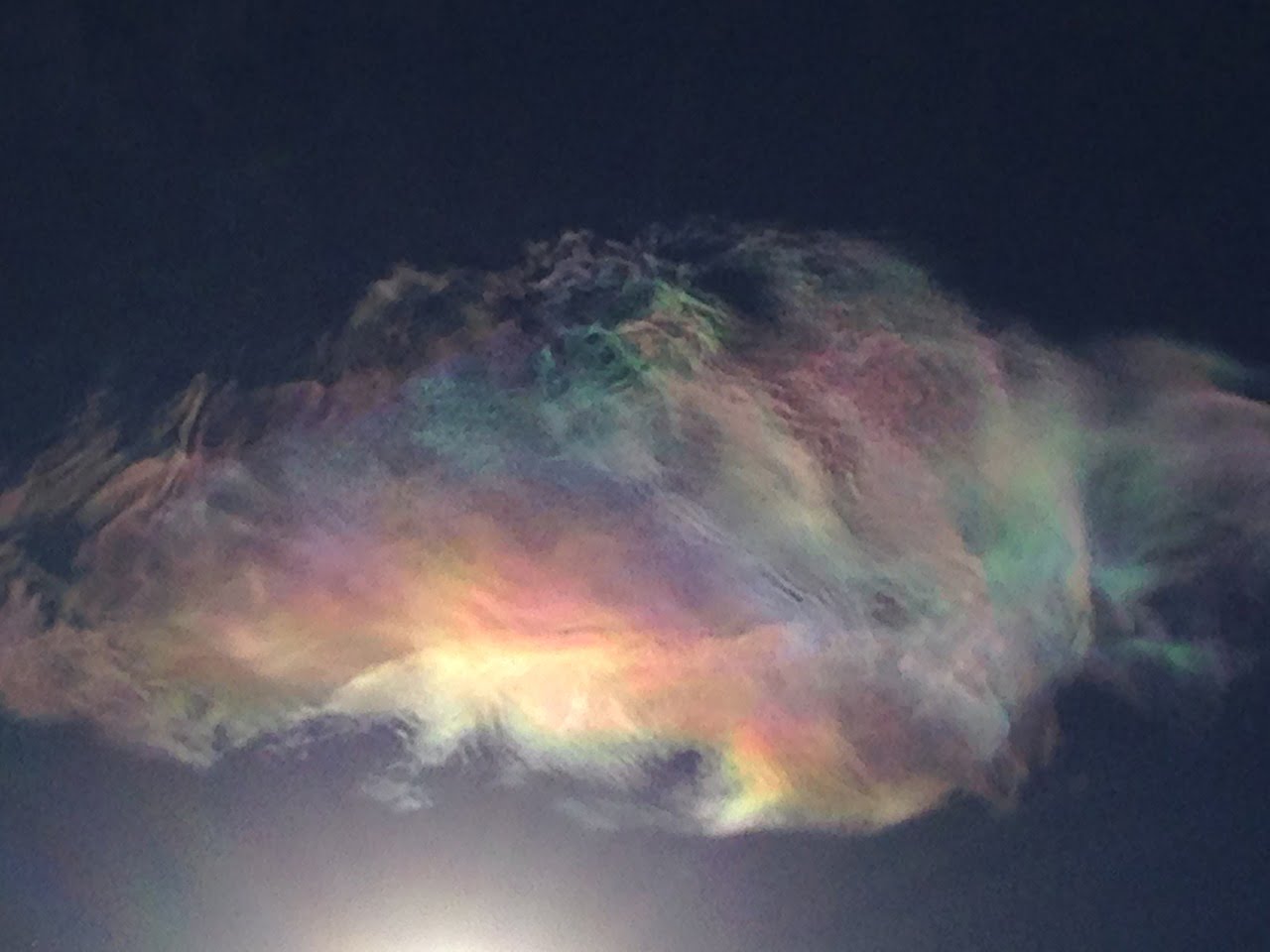
Look up at the clouds on the right day and you may catch a glimpse of a rainbow-like phenomenon known as cloud iridescence. These colors occur when sunlight is diffracted through small water droplets or ice crystals. For the effect to be apparent, the cloud must be optically thin, meaning that most of the rays of sunlight must pass through only a single droplet or ice crystal. This means the effect is usually visible only near the edges of clouds or as new clouds are forming. You can see more photos of the phenomenon here, and there’s a great video where cloud iridescence makes an appearance during a rocket launch in this previous entry. (Photo credit and submission: C. Havlin)