As part of the demolition of a decommissioned coal-fired power plant in Nottinghamshire, workers simultaneously demolished eight cooling towers. The video is here. As the towers collapse, smoke and dust gets blown both out of the base and up each tower. The flow details are fascinating. The plumes have rings in them, perhaps related to how the blast’s waves reflect in the tower or how the structure itself fails. Vortex rings curl up as the rising plumes mix with the surrounding air. If you’re anything like me, you’ll have to replay it several times! (Image credit: BBC; submitted by jshoer)
Search results for: “art”
Tides Widen Ice Cracks
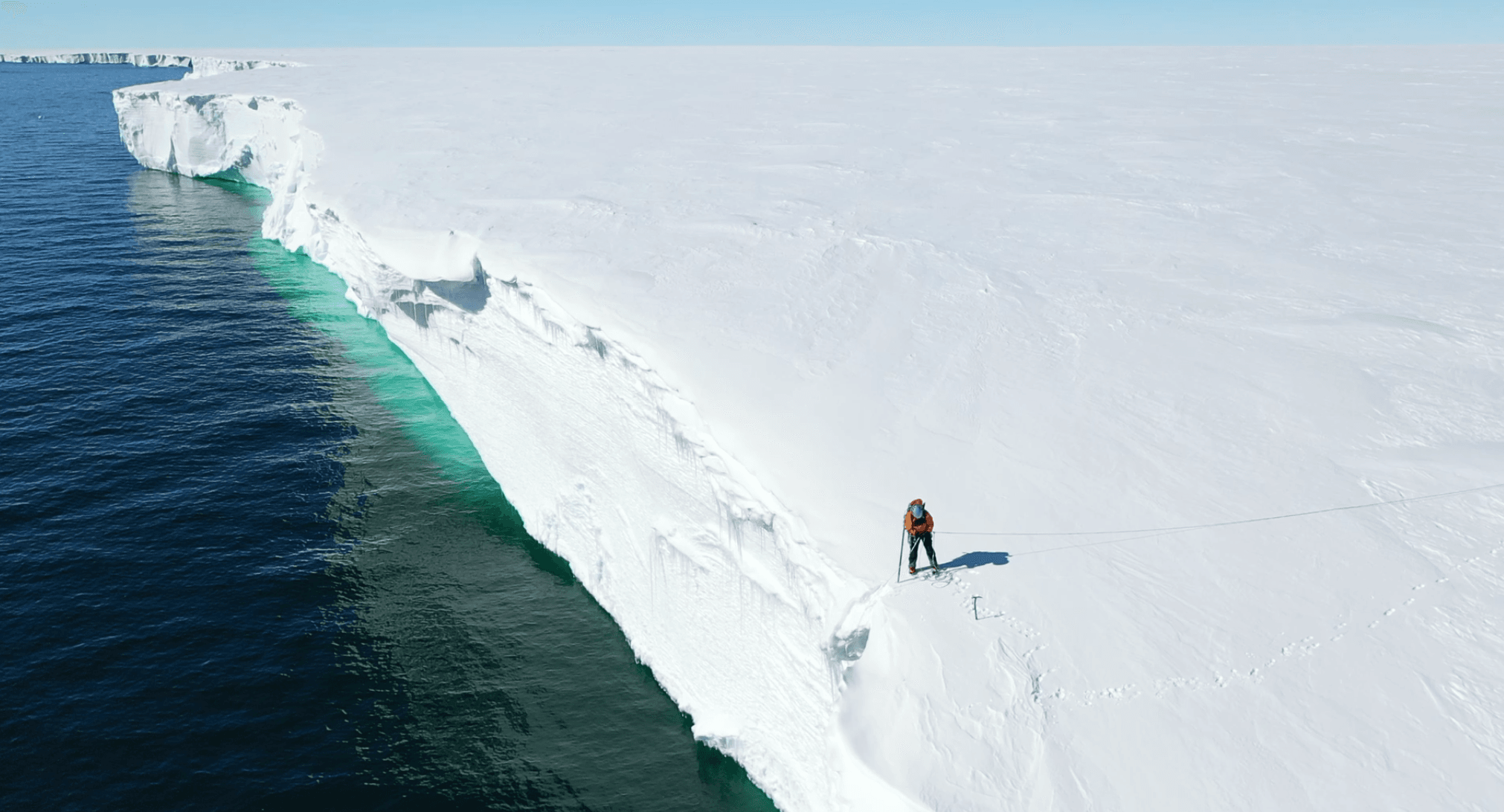
When icebergs calve off of Arctic and Antarctic coastlines, it affects glacial flows upstream as well as local mixing between fresh- and seawater. A recent study points to ocean tides as a major factor in widening the ice cracks that lead to calving. The team built a simplified mathematical model of an ice shelf, taking into account the ice’s viscoelasticity, local tides, and winds. Then they compared the model’s predictions with satellite, GPS, and radar data of Antarctica’s Brunt Ice Shelf, where an iceberg the size of Greater London broke off in 2023.
Between their model and the observation data, the team was able to show that the crack that preceded calving consistently grew during the spring tides, when tidal forces were at their strongest. The work gives us one more clue for refining our predictions of when major calving events are likely. (Image and research credit: O. Marsh et al.; via Gizmodo)
Fediverse Reactions
-

A Glimpse of the Solar Wind
In December 2024, Parker Solar Probe made its closest pass yet to our Sun. In doing so, it captured the detailed images seen here, where three coronal mass ejections — giant releases of plasma, twisted by magnetic fields — collide in the Sun’s corona. Events like these shape the solar wind and the space weather that reaches us here on Earth. The biggest events can cause beautiful auroras, but they also run the risk of breaking satellites, power grids, and other infrastructure. (Image credit: NASA/Johns Hopkins APL/Naval Research Lab; video credit: NASA Goddard; via Gizmodo)
Fediverse Reactions
-
Oil-Slicked Bubble Bursts
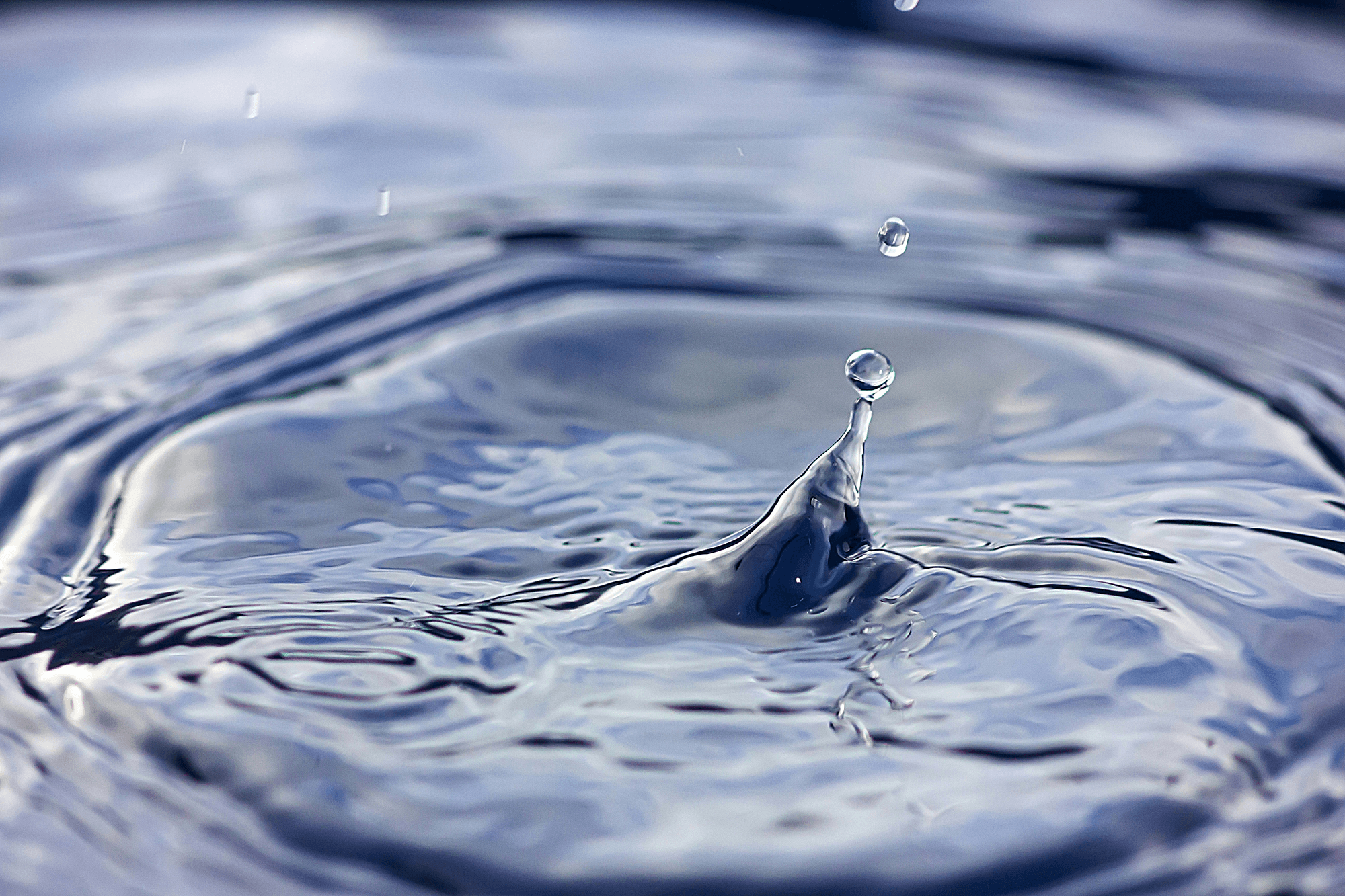
When bubbles at the surface of the ocean pop, they can send up a spray of tiny droplets that carry salt, biomass, microplastics, and other contaminants into the atmosphere. Teratons of such materials enter the atmosphere from the ocean each year. To better understand how contaminants can cross from the ocean to the atmosphere, researchers studied what happens when a oil-coated water bubble pops.
The team looked at bubbles about 2 millimeters across, coated in varying amounts of oil, and observed their demise via high-speed video. When the bubble pops, capillary waves ripple down into its crater-like cavity and meet at the bottom. That collision creates a rebounding Worthington jet, like the one above, which can eject droplets from its tip.
The team found that the oil layer’s thickness affected the capillary waves and changed the width of the resulting jet. They were able to build a mathematical model that predicts how wide a jet will be, though a prediction of the jet’s velocity is still a work-in-progress. (Image credit: Р. Морозов; research credit: Z. Yang et al.; via APS)
Fediverse Reactions
-

A New Plasma Wave for Jupiter
Jupiter‘s North Pole has a powerful magnetic field combined with plasma that has unusually low electron densities. This combination, researchers found, gives rise to a new type of plasma wave.
Ions in a magnetic field typically move parallel to magnetic field lines in Langmuir waves and perpendicularly to the field lines in Alfvén waves — with each wave carrying a distinctive frequency signature. But in Jupiter’s strong magnetosphere, low-density plasma does something quite different: it creates what the team is calling an Alfvén-Langmuir wave — a wave that transitions from Alfvén-like to Langmuir-like, depending on wave number and excitation from local beams of electrons.
Although this is the first time such plasma behavior has been observed, the team suggests that other strongly-magnetized giant planets — or even stars — could also form these waves near their poles. (Image credit: NASA / JPL-Caltech / SwR I/ MSSS/G. Eason; research credit: R. Lysak et al.; via APS)
Fediverse Reactions
-
Thawing Out
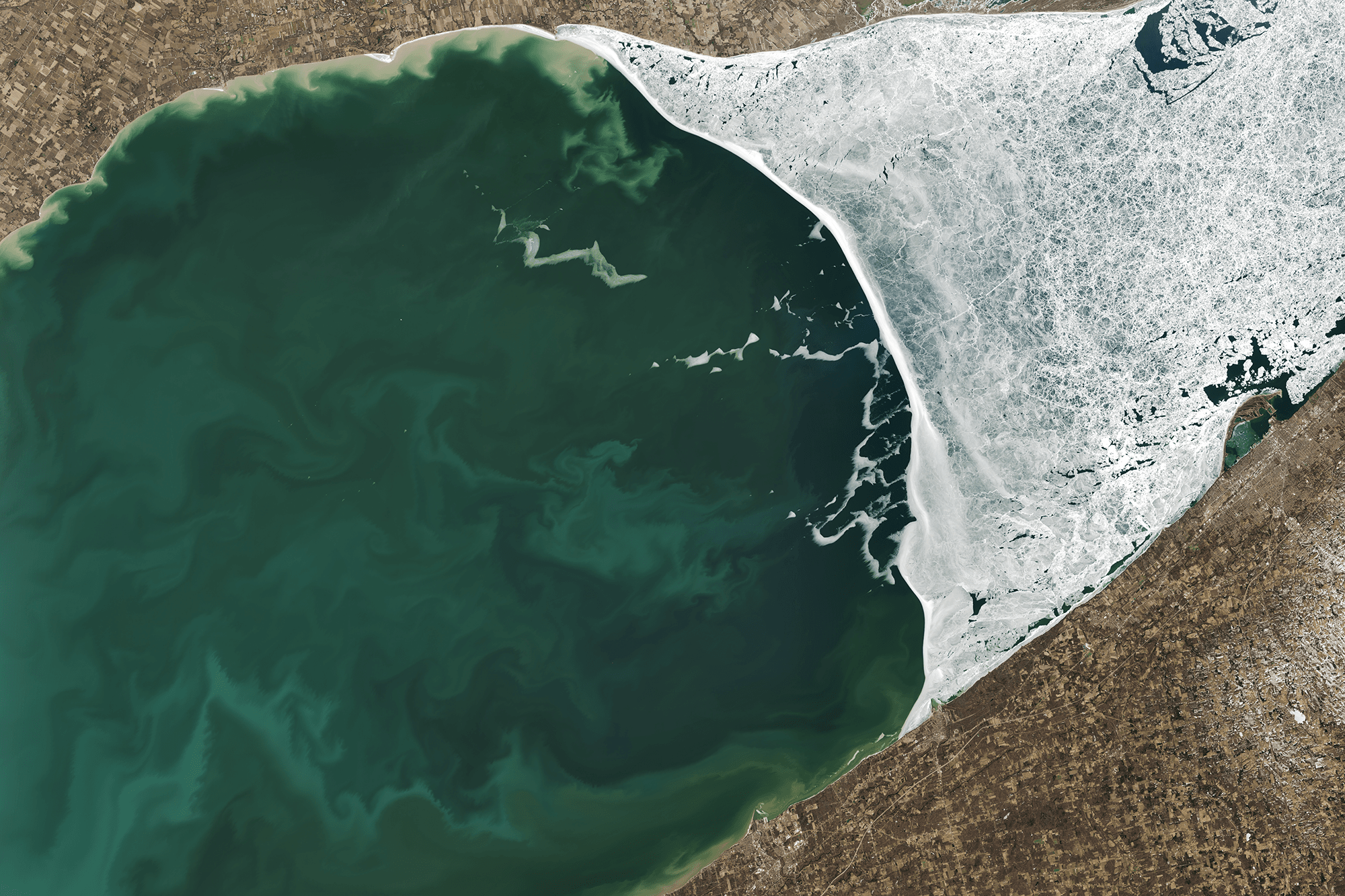
Lake Erie, the shallowest of the Great Lakes, can almost completely freeze over in winter. In this satellite image of the lake in March 2025, about a third of the lake remains ice-covered, while sediment — resuspended by wind and currents — and phytoplankton swirl in the ice-free zone. In recent decades, scientists discovered that diatoms, one of the phytoplankton groups found in the lake, can live within and just below Erie’s ice, thanks to a symbiotic relationship with an ice-loving bacteria. This symbiosis allows the diatoms to attach to the underside of the ice and gather the light needed for photosynthesis. Even in the depths of winter, an ice-covered lake can teem with life. (Image credit: M. Garrison; via NASA Earth Observatory)
Fediverse Reactions
-

Double Detonation in Type 1a Supernovae
Type 1a supernovae are agreed to be explosions of white dwarf stars, the remains of stars similar in mass to our Sun. They’re thought to be triggered when extra mass — from a nearby companion star, for example — triggers a runaway fusion reaction in their carbon and oxygen, elements that white dwarfs generally don’t have enough mass to successfully fuse. The runaway fusion then blows the star apart.
But there’s another theory — demonstrated through numerical simulations — that suggests an alternate mechanism: a small explosion on the star’s surface could compress the interior enough to trigger fusion of the heavier elements there, thereby triggering a second detonation. The two explosions would happen in quick succession, making them difficult to detect, but astronomers predicted that each explosion could create a shell of calcium; given enough time, those two shells could drift apart, allowing astronomers to see a shell of sulfur between them.
The team looked to a supernova remnant about 300 years old, and using a spectrograph from the Very Large Telescope, they were able to image — as predicted — a two shells of calcium, separated by sulfur, supporting the double-detonation hypothesis.
The impact of double-detonation in Type 1a supernovae could be far-reaching. Right now, the intensity of these objects seems to be consistent enough that astronomers use their brightness to estimate their distance. Over the years, those distance estimates have been used to measure the universe’s expansion and provide evidence for the existence of dark matter. But if Type 1a supernovae are not all the same intensity, we may need to reevaluate their use as a universal yardstick. (Image credit: ESO/P. Das et al.; research credit: P. Das et al.; via Ars Technica)
Fediverse Reactions
-

Baltic Bloom
June and July brings blooming phytoplankton to the Baltic Sea, seen here in late July 2025. On-the-water measurements show that much of this bloom was cyanobacteria, an ancient type of organism among the first to process carbon dioxide into oxygen. These organisms thrive in nutrient- and nitrogen-rich waters. Here, they mark out the tides and currents that mix the Baltic. Zoom in on the full image, and you’ll see dark, nearly-straight lines across the swirls; these are the wakes of boats. (Image credit: M. Garrison; via NASA Earth Observatory)
Fediverse Reactions
-
Studying Hydroelastic Turbulence
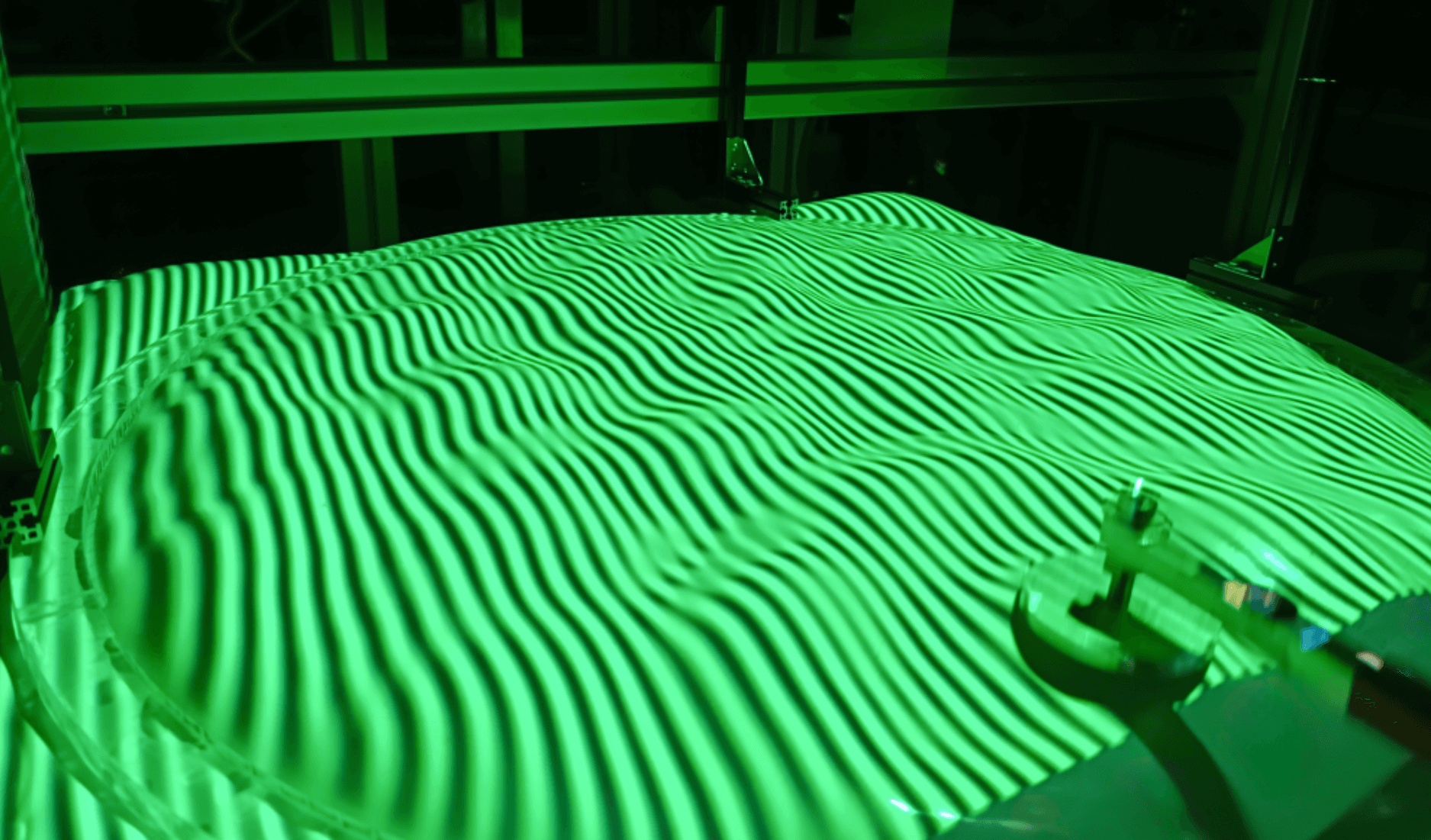
Can energy at the small-scales of a turbulent flow work its way up to larger scales? That’s a question at the heart of today’s study. Here, researchers are studying hydroelastic waves — created by stretching a thin elastic membrane over a water tank. The membrane gets vibrated up and down in just one location with an amplitude of about 1 millimeter. The resulting waves depend both on the movement of the water and the elasticity of the membrane, mimicking situations like ice-covered seas.
Rather than simply dying away, the local fluctuations introduced at the membrane spread, coalescing into larger-scale hydroelastic waves. How energy flows between these scales could have implications for weather forecasting, climate modeling, and other turbulent systems. (Image and research credit: M. Vernet and E. Falcon; via APS)
Fediverse Reactions
-
The Puquios System of Nazca
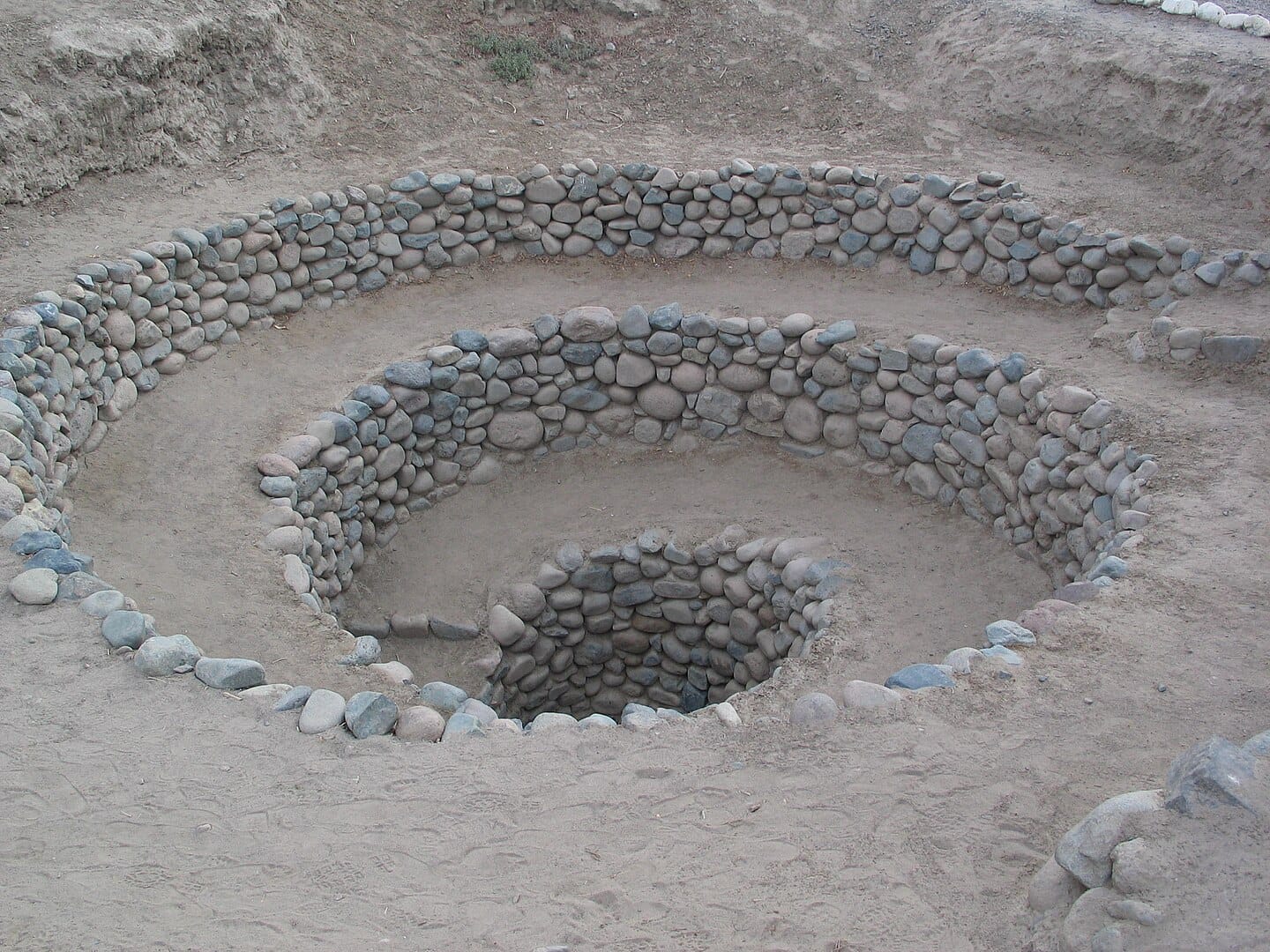
The arid Nazca region of Peru is dotted with spiral-shaped indentations, part of an irrigation system that helped indigenous civilizations thrive here before European contact. Although the region’s rainfall varies year-to-year, it never amounts to much. So pre-Columbian Nazcans turned instead to underground aquifers to gather and transport water.
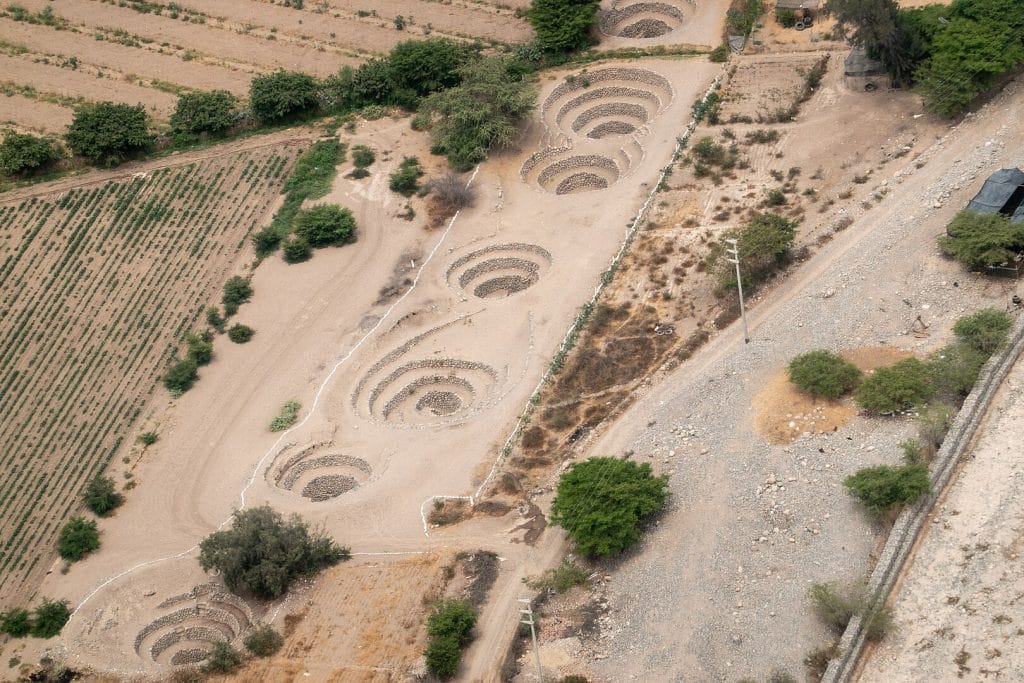
An aerial view of several puquois chimneys near Nazca, Peru. Aquifers in the region slope downward, following the local geology. Puquios builders began by digging a preliminary well in the highlands, tunneling down until they reached the aquifer. Then they built a horizontal tunnel underground, sloping gently downward, toward the location where water was needed. Along that roughly horizontal tunnel, they built additional chimneys, the spiraling mouths of which are seen above. These chimneys are thought to serve multiple purposes. They provide maintenance access to the aqueduct tunnel, and their shape may help funnel wind underground to oxygenate the water and help keep it flowing. Eventually, the underground tunnel would exit into an open trench and a reservoir, providing year-round water for irrigation and personal use.

Although the puquios cannot themselves be dated through usual archaeological means, the current consensus is that they originate from around 500 C.E., with subsequent modifications by both indigenous and colonial inhabitants. Impressively, several dozen puquios are still providing water today. (Image credits: Ab5602/Wikimedia, PsamatheM/Wikimedia, and R. Lasaponara et al.; research credit: R. Lasaponara et al.; via Eleanor K.)
Fediverse Reactions
-