Search results for: “art”

  • Featured Video Play Icon

    “Now I See – The Collection Vol. 1”

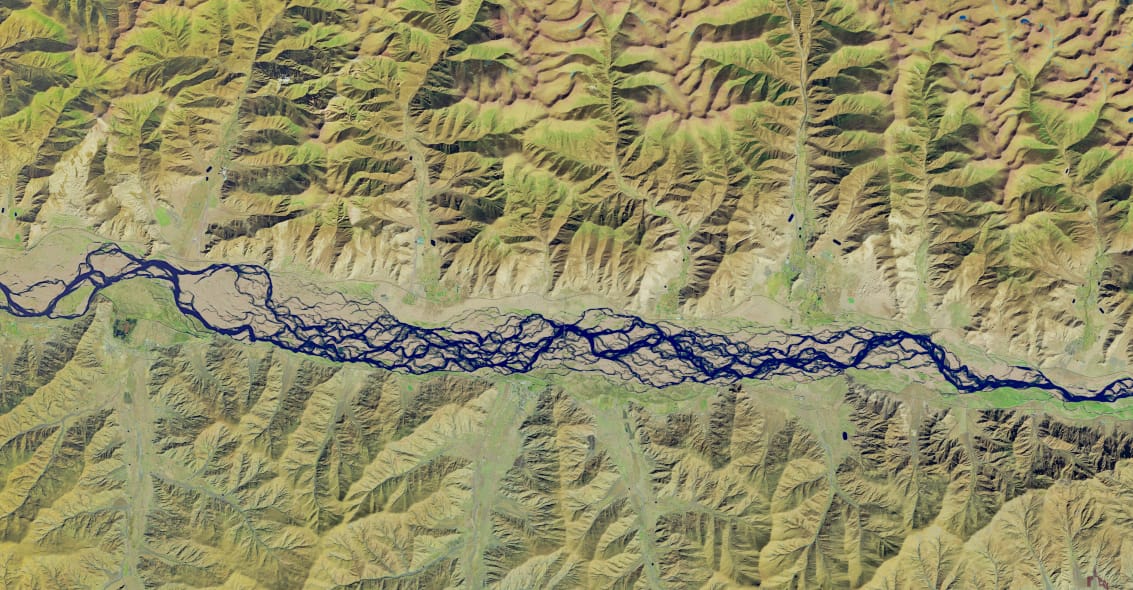
    On the heels of his behind-the-scenes introduction, here’s the first volume of artist Roman De Giuli’s “Now I See”. In it, we appear to soar above vast colorful landscapes. Rivers flow past islands. Glaciers creep along valleys. Canyons cut through deserts. It’s like a bird’s eye view of our planet’s terrestrial wonders. (Video and image credit: R. De Giuli)
  • Featured Video Play Icon

    Fractal Fingers

    As bizarre as the branching fractal fingers of the Saffman-Taylor instability look, they’re quite a common phenomenon. In his video, Steve Mould demonstrates how to make them by sandwiching a viscous liquid like school glue between two acrylic sheets and then pulling them apart. The more formal lab-version of this is the Hele-Shaw cell, which he also demonstrates. But you may have come across the effect when pealing up a screen protector or in dealing with a cracked phone screen. In all of these cases, a less viscous fluid — specifically air — is forcing its way into a more viscous fluid, something that it cannot manage without the fluid interface fracturing. (Video and image credit: S. Mould)

    Fediverse Reactions
  • Interstellar Jets

    Interstellar Jets

    This JWST image shows a couple of Herbig-Hero objects, seen in infrared. These bright objects form when jets of fast-moving energetic particles are expelled from the poles of a newborn star. Those particles hit pockets of gas and dust, forming glowing, hot shock waves like those seen here in red. The star that birthed the object is out of view to the lower-right. The bright blue light surrounded by red spirals that sits near the tip of the shock waves is actually a distant spiral galaxy that happens to be aligned with our viewpoint. (Image credit: NASA/ESA/CSA/STScI/JWST; via APOD)

    Fediverse Reactions
  • “Spines”

    “Spines”

    Water droplets cling to spine-covered plant life in this series from photographer Tom Leighton. The hairs are hydrophobic — notice how spherical the drops appear. Many plants make parts of their leaves and stems hydrophobic in order to redirect water toward their roots, where it can be taken in. Others use hair-like awns to collect and draw in dew that supplements their water capture. (Image credit: T. Leighton; via Colossal)

    Fediverse Reactions
  • Featured Video Play Icon

    Kirigami in the Flow

    Kirigami is a paper art that combines folding and cutting to create elaborate shapes. Here, researchers use cuts in thin sheets of plastic and explore how the sheets transform in a flow. Depending on the configuration of cuts, the sheets can stretch dramatically in the flow, creating complex, dynamic, and beautiful wakes. I feel like there must be some applications out there that would benefit from kirigami-induced mixing. (Video and image credit: A. Carleton and Y. Modarres-Sadeghi)

    Fediverse Reactions
  • Featured Video Play Icon

    Creating Liquid Landscapes

    Artist Roman De Giuli excels at creating what appear to be vast landscapes carved by moving water. In reality, these pieces are small-scale flows, created on paper. Now, De Giuli takes us behind the scenes to see how he creates these masterpieces — layering, washing, burning, and repeating to build up the paperscape that eventually hosts the flows we see recorded. The work is meticulous and slow, and the results are incredible. De Giuli’s videos never fail to transport me to a calmer, more pristine version of our world. I can’t wait to see the new series! (Video and image credit: R. De Giuli)

    Fediverse Reactions
  • Charged Drops Don’t Splash

    Charged Drops Don’t Splash

    When a droplet falls on a surface, it spreads itself horizontally into a thin lamella. Sometimes — depending on factors like viscosity, impact speed, and air pressure — that drop splashes, breaking up along its edge into myriad smaller droplets. But a new study finds that a small electrical charge is enough to suppress a drop’s splash, as seen below.

    Video showing three different droplets, each with a different electrical charge, impacting an insulated surface. From left to right, the charges are: 0.0 nC, 0.08 nC, and 0.1 nC. The uncharged drop splashes, the low charge drop splashes less, and the final charged droplet spreads without splashing.

    The drop’s electrical charge builds up along the drop’s surface, providing an attraction that acts somewhat like surface tension. As a result, charged drops don’t lift off the surface as much and they spread less overall; both factors inhibit splashing.* The effect could increase our control of droplets in ink jet printing, allowing for higher resolution printing. (Image and research credit: F. Yu et al.; via APS News)

    *Note that this only works for non-conductive surfaces. If the surface is electrically conductive, the charge simply dissipates, allowing the splash to occur as normal.

    Fediverse Reactions
  • Seeking Uranus’s Spin

    Seeking Uranus’s Spin

    Uranus is one of our solar system’s oddest planets. An ice giant, it spins on its side. We originally estimated its rate of rotation using measurements from Voyager 2, the only spacecraft to have visited the planet. But that measurement was so imprecise that within two years, astronomers could no longer use it to predict where the planet’s poles were. Now a new study, drawing on over a decade of Hubble observations of Uranus’s auroras, has pinned down the planet’s rotation rate far more precisely: 17 hours, 14 minutes, and 52 seconds. While that’s within the original measurement’s 36-second margin of error, the new measurement has a margin of error of only 0.036 seconds. In addition to helping plan a theoretical future Uranus mission, this more accurate rotation rate allows researchers to reexamine decades of data, now with certainty about the planet’s orientation at the time of the observation. (Image credit: ESA/Hubble, NASA, L. Lamy, L. Sromovsky; research credit: L. Lamy et al.; via Gizmodo)

  • Escape From Yavin 4

    Escape From Yavin 4

    In an ongoing tradition, let’s take another look at some Star Wars-inspired aerodynamics. This year it’s the TIE fighter’s turn. Here, researchers simulate the spacecraft trying to escape Yavin 4’s atmosphere at Mach 1.15. The research poster’s blue contours show pressure contours, with darker colors connoting higher pressures. The bright low pressure region immediately behind the craft suggests a difficult, high-drag ascent and a turbulent, subsonic wake despite the craft’s supersonic velocity. (Image credit: A. Martinez-Sanchez et al.)

    Fediverse Reactions
  • Featured Video Play Icon

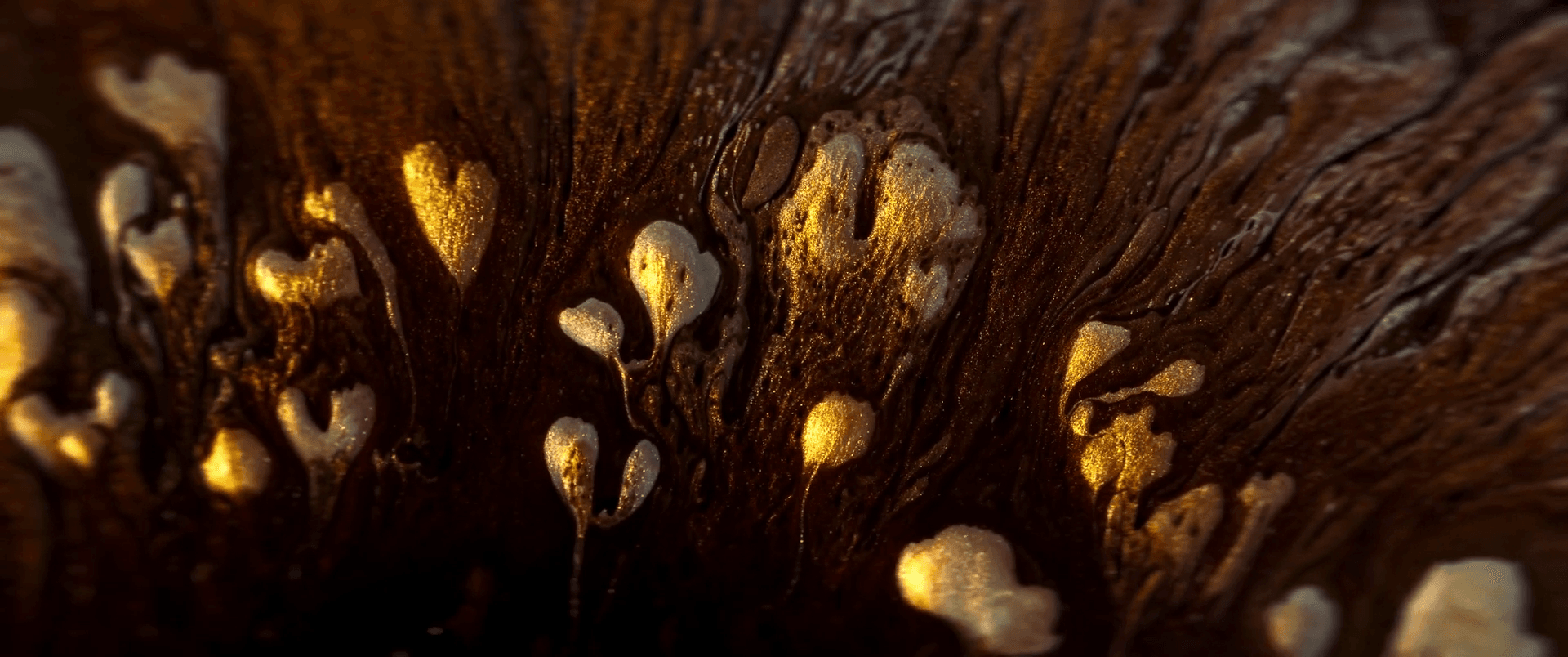
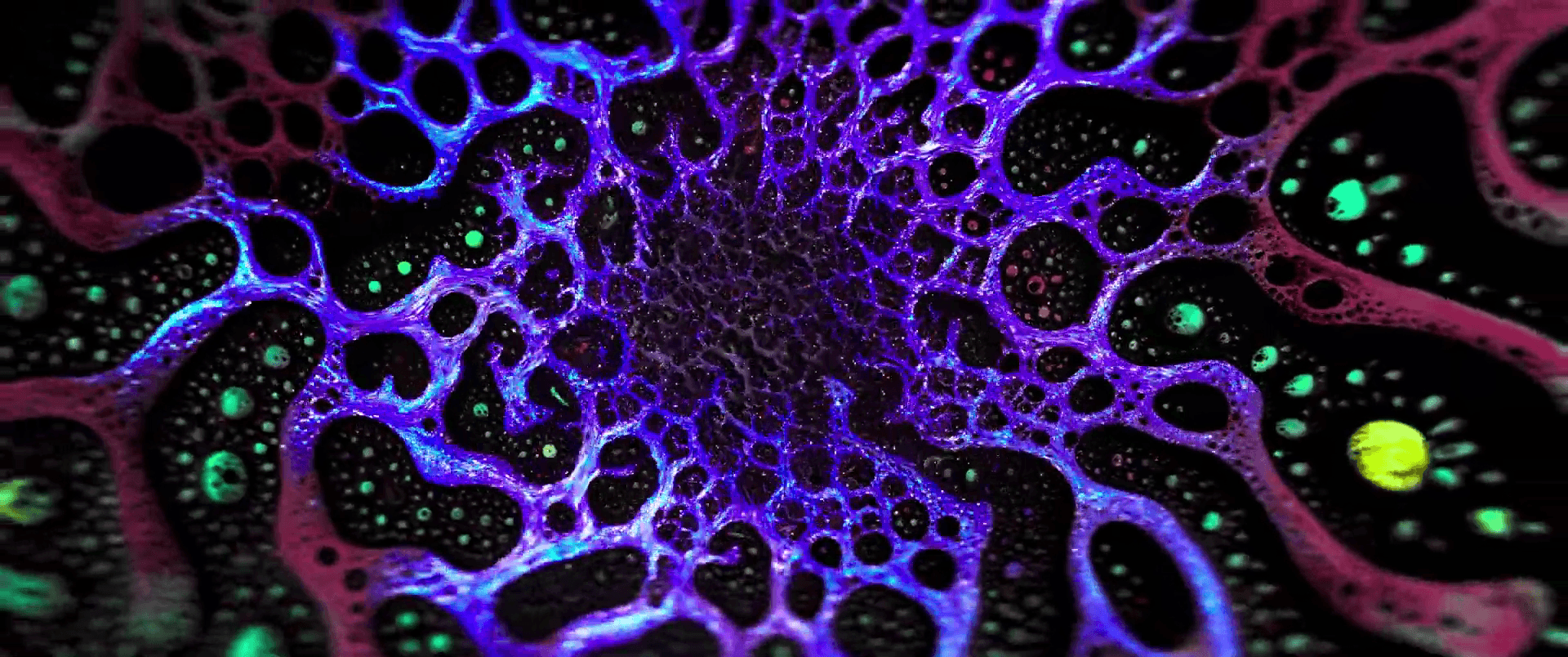
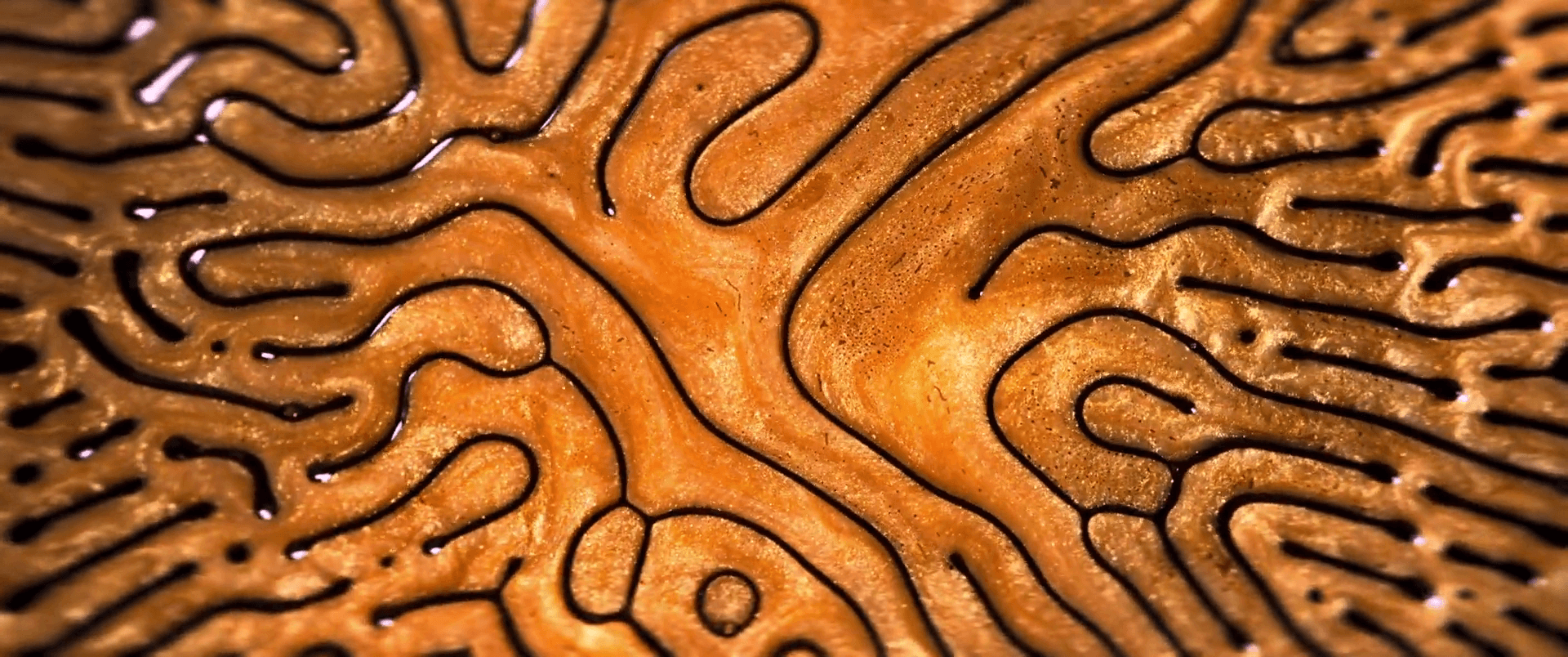
    “Legend”

    Filmmaker Roman De Giuli returns to his roots with this short fluid-filled film inspired by the color gold. He combines paint, ink, powders, and particles in a mix of micro- and macroscale photography. As always, the results are a mesmerizing plethora of fluid phenomena: Marangoni flows, turbulence, vorticity, viscous fingering and so much more. (Video and image credit: R. De Giuli)