Category: Research

  • The Disappearing Cotton Candy

    The Disappearing Cotton Candy

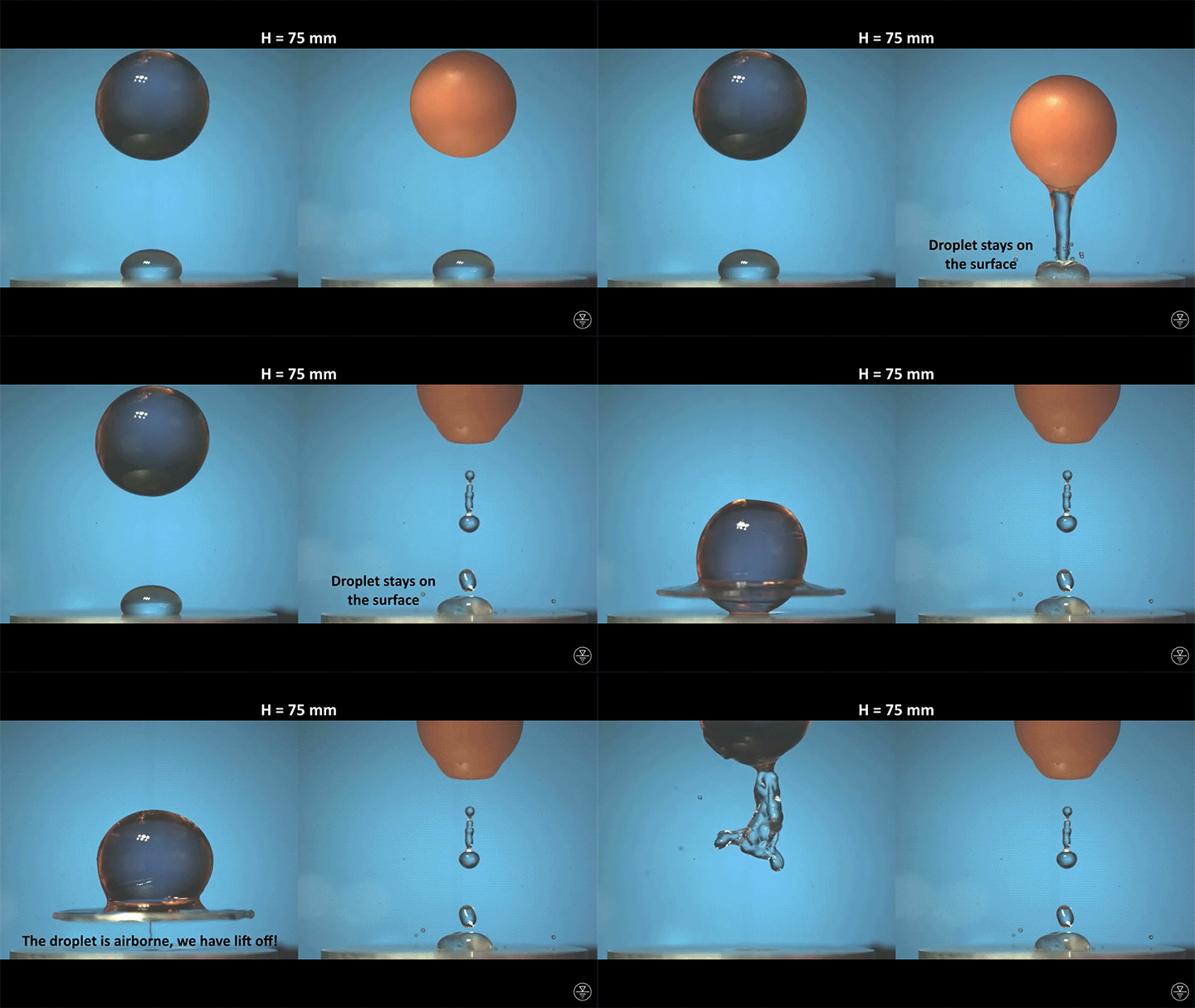
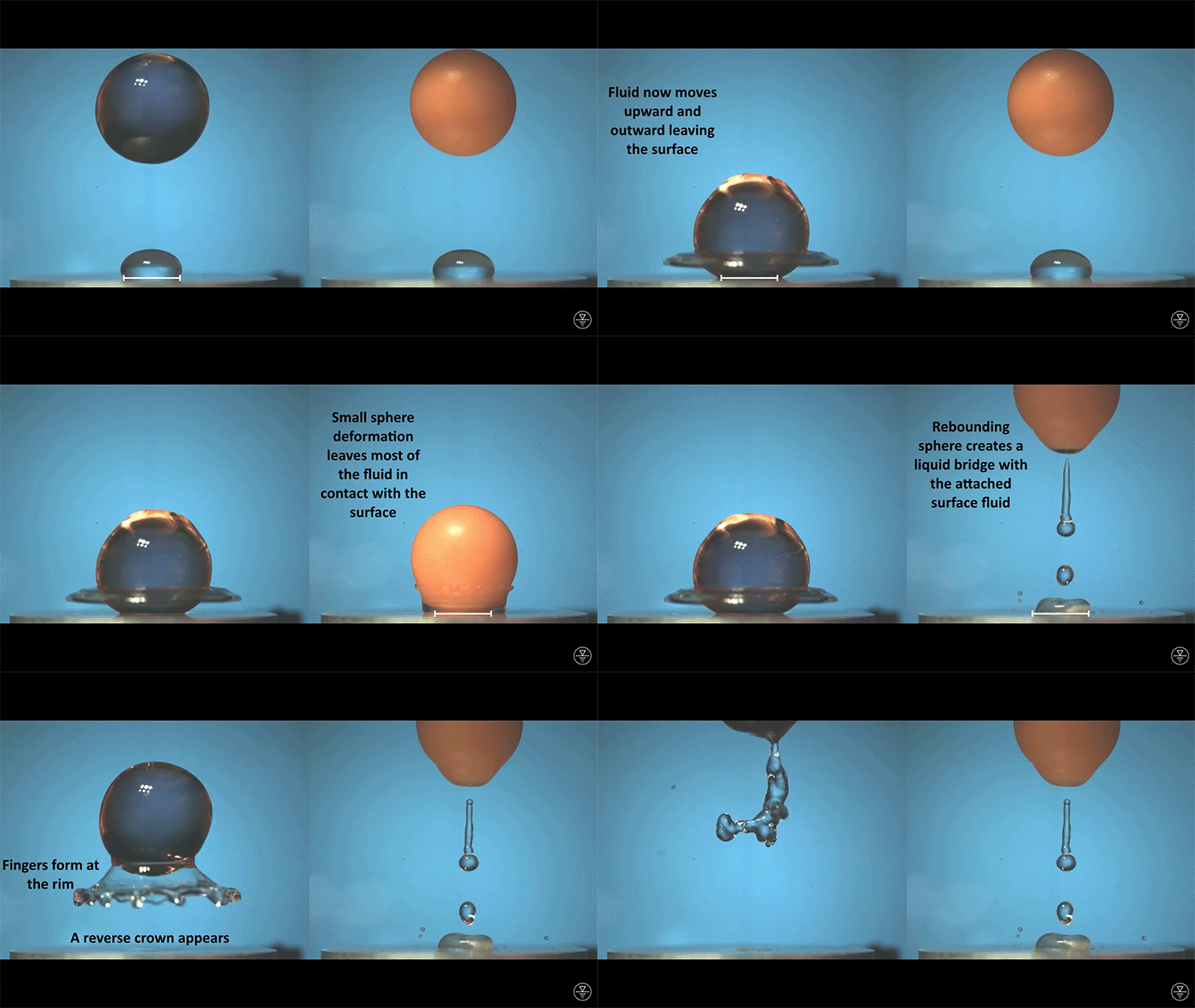
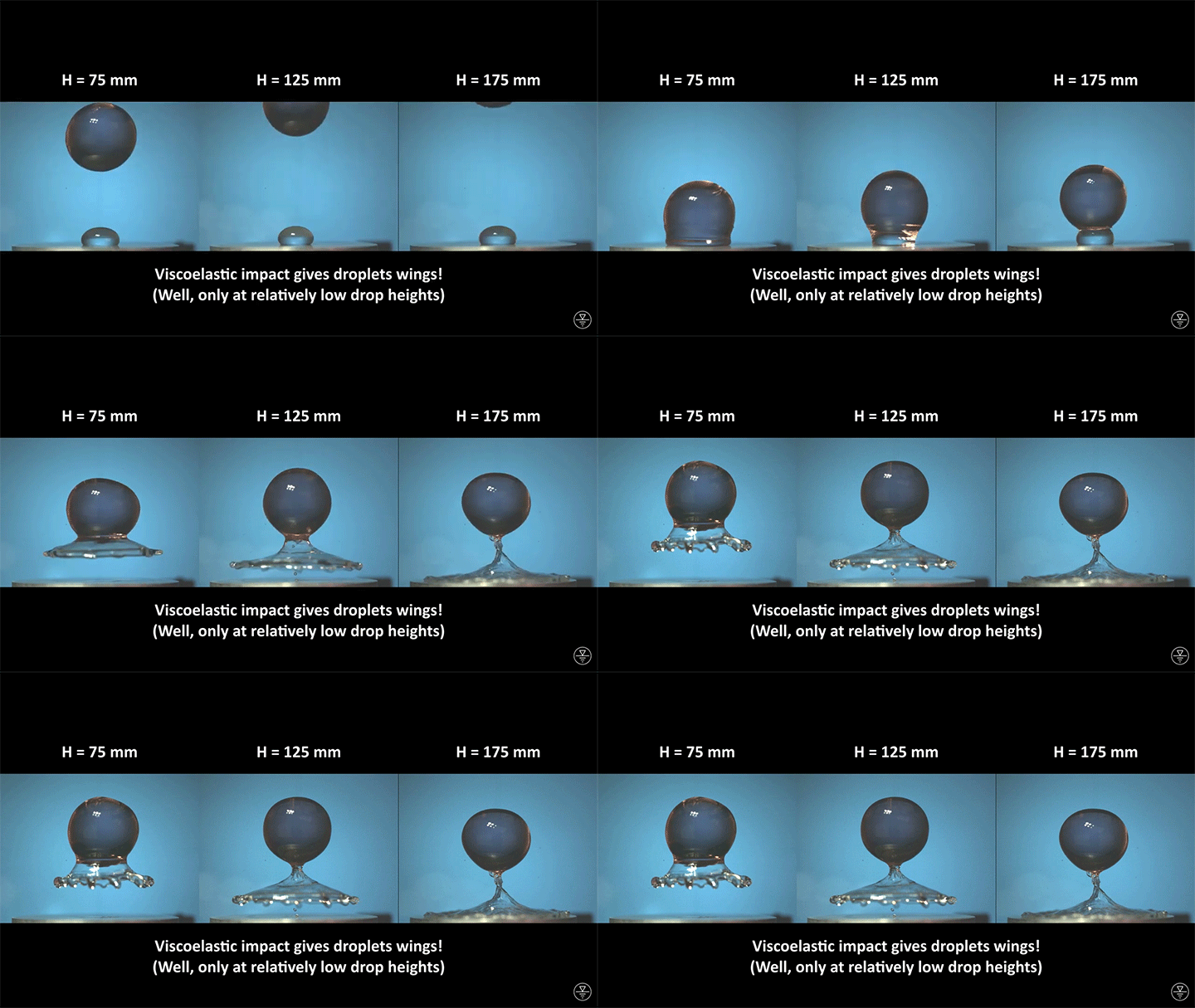
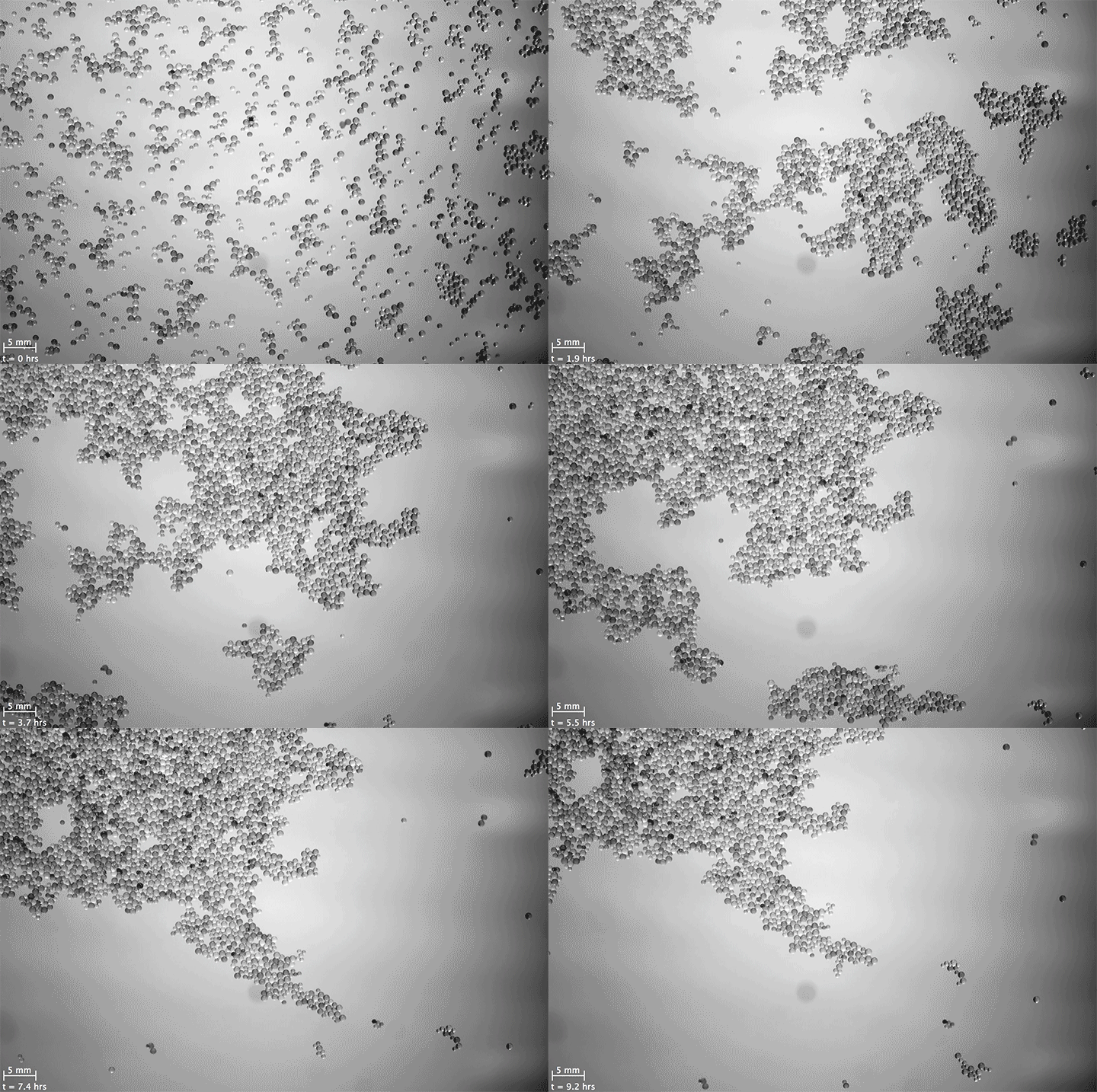
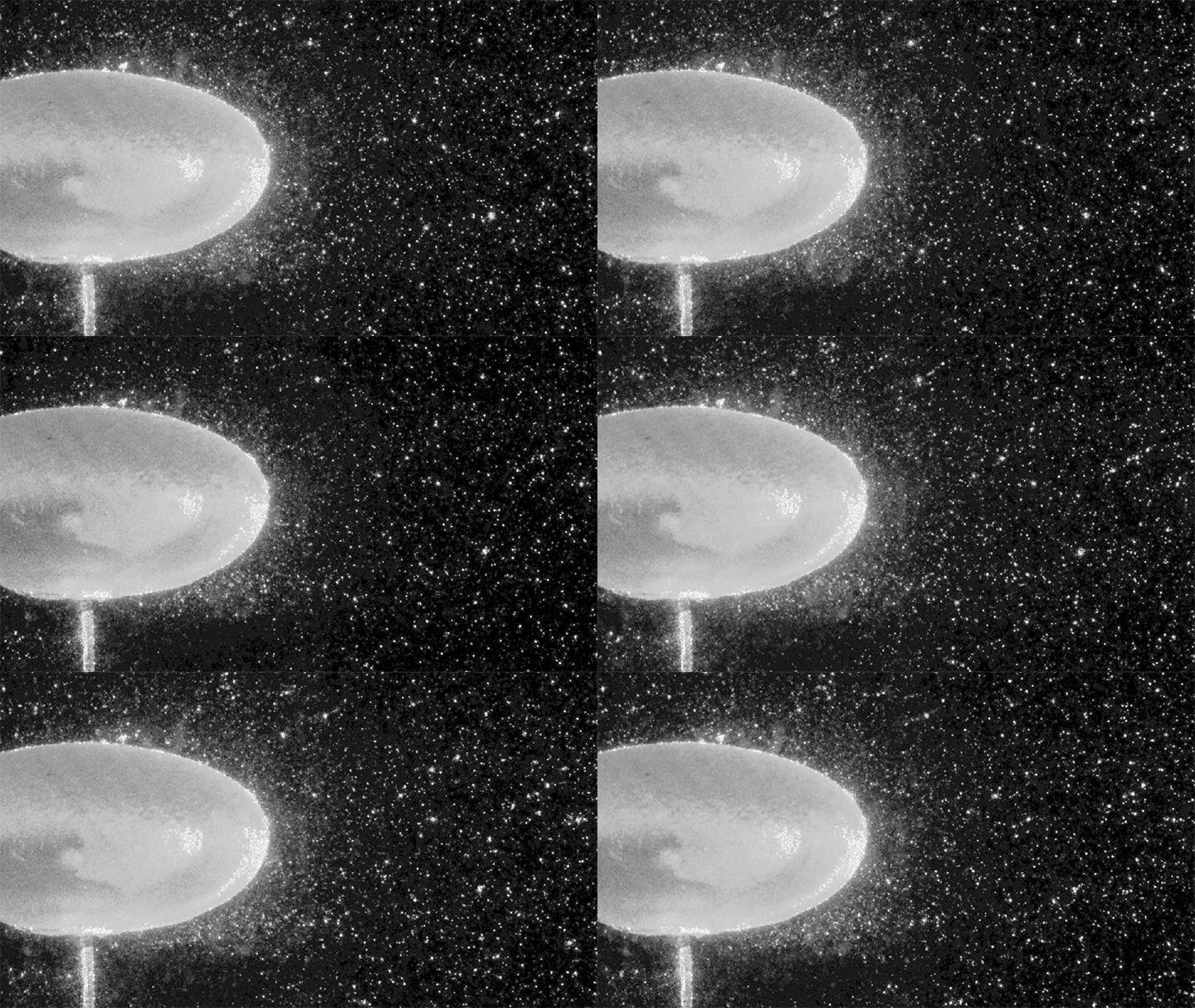
    Moisture is cotton candy’s natural enemy. The spun sugar dissolves incredibly quickly under the influence of even a couple drops of water. Why that’s so is clearer when looking at a single fiber. Inside the droplet there’s a gradient in the sugar concentration. The more sugary water sinks, and the sugar fiber dissolves more quickly in the upper part of the droplet, where the less sugary water can more easily take up new sugar. 

    Once the fiber breaks, capillary forces draw the droplet upward, giving it a fresh section of fiber to dissolve. In a web of fibers, this process can pull droplets apart and together as they quickly eat through the spun sugar. (Image and video credit: S. Dorbolo et al.; submitted by Alexis D.)

  • Galileo’s Descent

    Galileo’s Descent

    In December 1995, the Galileo probe made its dramatic descent into Jupiter’s atmosphere at a velocity of more than 47 km/s. In 30 seconds, it decelerated from Mach 50 to Mach 1, undergoing incredible heating as it did so. Anytime an object moves through a fluid faster than the local speed of sound, it creates a leading shock wave that compresses the fluid, heats it, and redirects it around the object. The faster the speed, the hotter the fluid will be after passing through the shock wave. 

    Above about five times the speed of sound, the heating effect is so strong that it’s able to rip molecules apart, creating a chemically reactive mixture that will ablate away material from the object. For this reason, Galileo and other planetary entry vehicles carry heat shields made to sacrifice themselves while protecting the cargo and (in some cases) crew onboard. Data from Galileo showed that, although the heat shield survived the brunt of its descent, it experienced worse conditions than expected. Near the heat shield’s shoulder, almost all of its material ablated away. 

    Scientists continue to study Galileo’s descent even now, using it to test and inform their models of the flow and chemistry that occurs at these hypersonic speeds. The better we can understand and predict these flows, the better our designs will become. Mass that’s currently spent on overly-conservative heat shields can instead go toward additional instruments or supplies. (Image credit: Chop Shop Studio; research credit: L. Santos Fernandes et al.; via AIP)

  • Sliding Down a Pitcher Plant

    Sliding Down a Pitcher Plant

    Carnivorous pitcher plants supplement their nutrient-poor environments by capturing and consuming insects. The viscoelastic fluid inside them helps trap prey, but fluid dynamics plays a role elsewhere on the plant as well. The inner and outer surfaces of the pitcher are covered in macroscopic and microscopic grooves, seen above, oriented toward the interior of the plant. 

    Researchers found that these grooves trap droplets on the slippery plant through capillary action. Once adhered, the droplet cannot easily move across the grooves, but it can slip along them, carrying the droplet and any insect stuck to it, into the plant. By replicating pitcher-plant-inspired grooves on manmade surfaces, researchers found they were able to better control droplet motion on slippery, lubricant-infused surfaces than in previous work. (Image and research credit: F. Box et al.; via Royal Society; submitted by Kam-Yung Soh)

  • Energy-Efficient Deicing

    Energy-Efficient Deicing

    Defrosting and deicing surfaces is an energy-intensive affair, with lots of heat lost to warming up system components rather than the ice itself. In a new study, researchers explore a faster and more efficient method that focuses on heating just the interface. They coated their working surface in a thin layer of iridium tin oxide, a conductive film used in defrosting. Then, once the surface was iced over, they applied a 100 ms pulse of heating to the film. That localized heat melted the interface, and gravity pulled away the detached ice. Compared to conventional defrosting methods, this technique requires only 1% of the energy and 0.01% of the time. If the method scales reliably to applications like airplane deicing, it would provide enormous savings in time and energy. (Image and research credit: S. Chavan et al.)

  • Boiling in Microgravity

    Boiling in Microgravity

    In the playground of microgravity, every day processes can behave much differently. This photo comes from the RUBI experiment, the Reference mUltiscale Boiling Investigation, aboard the International Space Station. Freshly installed and switched on, the apparatus is now generating bubbles like this one. On the left, you see temperature sensors used to measure bubble temperatures. High-speed and infrared cameras are also part of the experiment.

    The advantage of studying boiling in space is a lack of gravity that can mask or overwhelm subtler effects. It effectively slows down the process, making it easier to observe. And since boiling is such an important part of heat transfer in many manmade devices, it shows us how we have to adapt when operating in an environment where heat – and bubbles – don’t automatically rise. (Image credit: ESA; submitted by Kam-Yung Soh)
  • Champagne’s Shock Wave

    Champagne’s Shock Wave

    The distinctive pop of opening a champagne bottle is more than the cork coming free. The sudden release of high-pressure gas creates a freezing jet that’s initially supersonic. It even creates a Mach disk, like those seen in rocket exhaust. That supersonic flow can only be maintained, though, with a large enough pressure difference between the gas in the bottle and the atmosphere outside. Once the pressure drops below that critical point, the jet slows down and becomes subsonic. For more on champagne popping and its colorful plume, check out this previous post. (Image and research credit: G. Liger-Belair et al.; via Nature; submitted by Kam-Yung Soh)

  • Crowds as a Fluid

    Crowds as a Fluid

    At a low density, crowds of people can behave like a fluid, which has led to numerous hydrodynamically-based crowd models. At higher densities, though, crowds are more like a soft solid, and researchers are adapting models developed for granular materials like sand to describe these crowds. In granular materials, these models help scientists identify how vibrations move through the complex network of grains and what circumstances might cause sudden reorganizations. In a large crowd, this could tell scientists the difference between the innocuous shuffle at a rock concert and the trigger for a deadly stampede. Getting real-world data for comparison is tough – obviously, it’s unethical to intentionally cause a crowd to panic – so thus far the models remain relatively untested. (Image credit: M. Lebrun; research credit: A. Bottinelli and J. Silverberg)

  • Featured Video Play Icon

    Calimero’s Uprising!

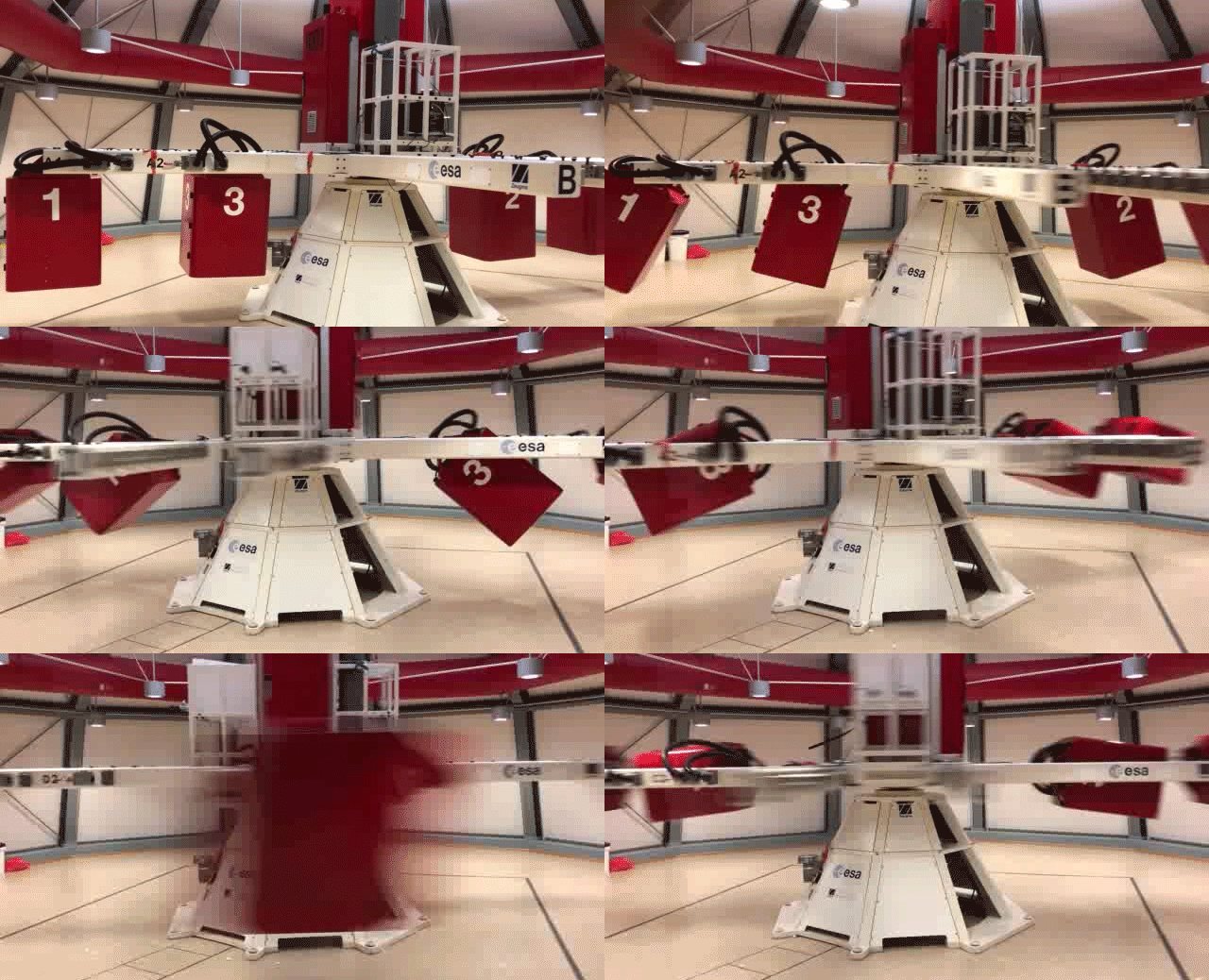
    Here on FYFD posts often focus on research results, with animations and images showing only a tiny portion of the apparatus necessary to conduct that work. But in this timelapse, we get to see a glimpse of what it takes to make the research happen. The video covers a 12-week period in which student Sietze Oostveen sets up, modifies, and takes measurements with a rotating tank apparatus called Calimero. 

    The video captions give you a sense of all the little tasks that go into experimental work, from installing thermal control and measurement systems (in this case, laser Doppler velocimetry, or LDV) to making sure that the rotating table is balanced correctly. In experimental work, it’s worth remembering that you’ll likely spend as much or more time preparing to take data than you will actually doing measurements! (Video credit: S. Oostveen/UCLA Spinlab)

  • Avoiding Shear Thickening

    Avoiding Shear Thickening

    Many substances – like the cornstarch and water mixture above – exhibit a property called shear-thickening. In these fluids, deforming them quickly causes the viscosity to increase dramatically. That shear-thickening occurs when particles inside the fluid jam together, creating large chains able to resist the force being applied. That’s why the oobleck on this vibrating speaker can sustain these “cornstarch monsters”.

    Shear-thickening is useful in many contexts, but it’s problematic during manufacturing, when pumping these substances can become incredibly difficult due to the fluid’s innate resistance to flowing. A new study, though, finds that it’s possible to temporarily suppress shear-thickening using acoustic waves. The researchers used piezoelectric devices to generate acoustic waves at a frequency around 1 MHz while shearing the cornstarch mixture. The acoustic waves disrupt the formation of particle chains inside the mixture, keeping its viscosity 10 times lower than during regular shear-thickening. (Image credit: bendhoward, source; research credit: P. Sehgal et al.; submitted by Brian K.)

  • Making Giant Soap Bubbles

    Making Giant Soap Bubbles

    Making soap bubbles is fun, but there’s something about gigantic soap bubbles that brings out the child in everyone. The world’s largest freestanding soap bubble had more than 100 square meters of surface area, which begs an important question: how can such a thin film stay stable at that size?

    The solutions used for giant bubbles have a few main ingredients: water, naturally; detergent, used for its surfactants; and polymers like polyethylene glycol that help stabilize the soap film. Exactly why polymers helped was a bit of mystery, but a new pre-print study aims to answer that.

    Researchers studied how polymer concentrations affected 1) how much solution could be drawn in as bubbles formed, and 2) how long a film of solution lasted before gravity and evaporation thinned it to breaking. They found that intermediate polymer concentrations actually worked best. This gave the solution the viscoelasticity needed to draw in more solution as bubbles grew without having so much polymer that it negatively affected film lifetime. (Image credit: Pixabay; research credit: S. Frazier et al.; via MIT Tech Review; submitted by Kam-Yung Soh)