Category: Research

  • Inside Solidification

    Inside Solidification

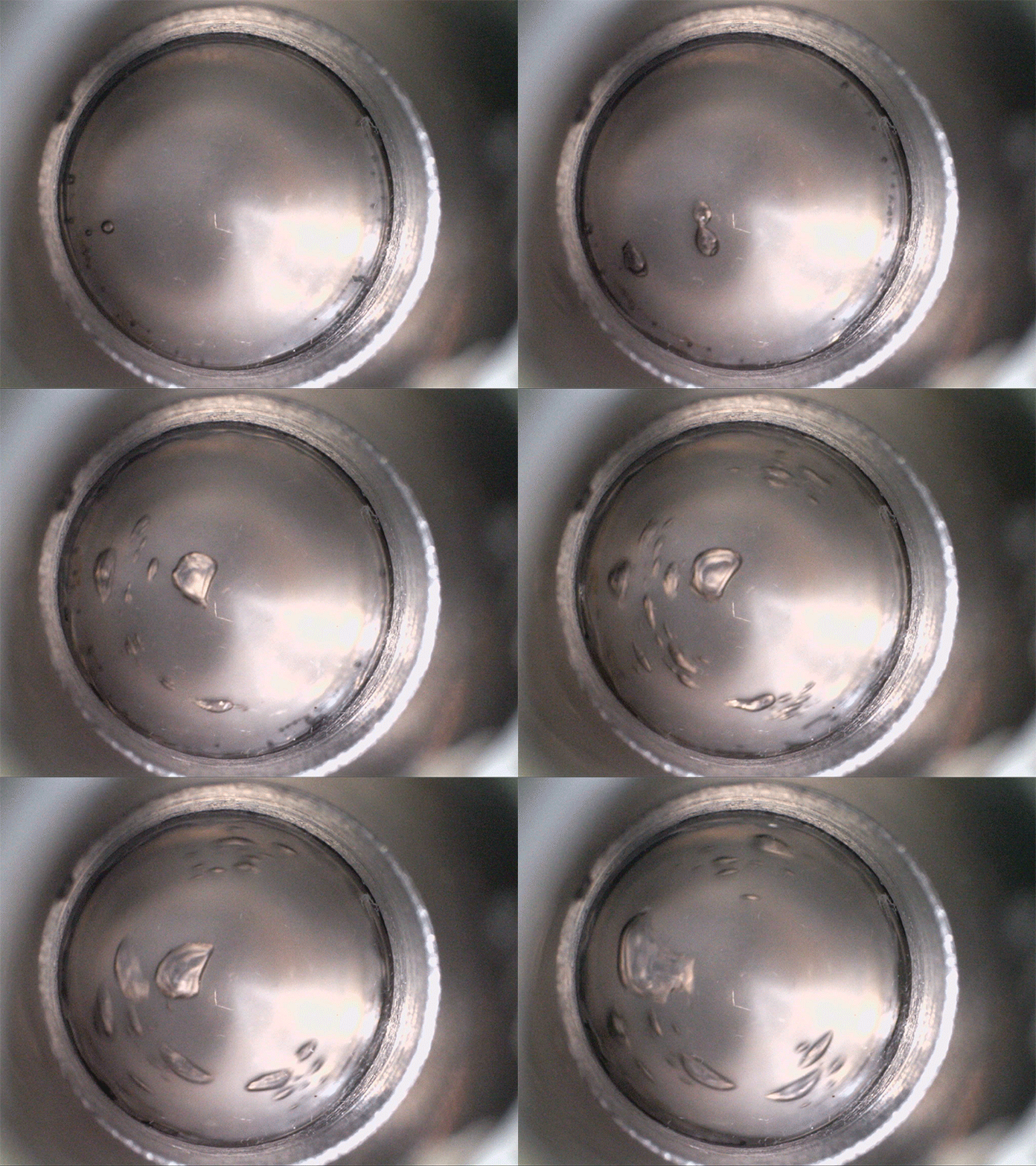
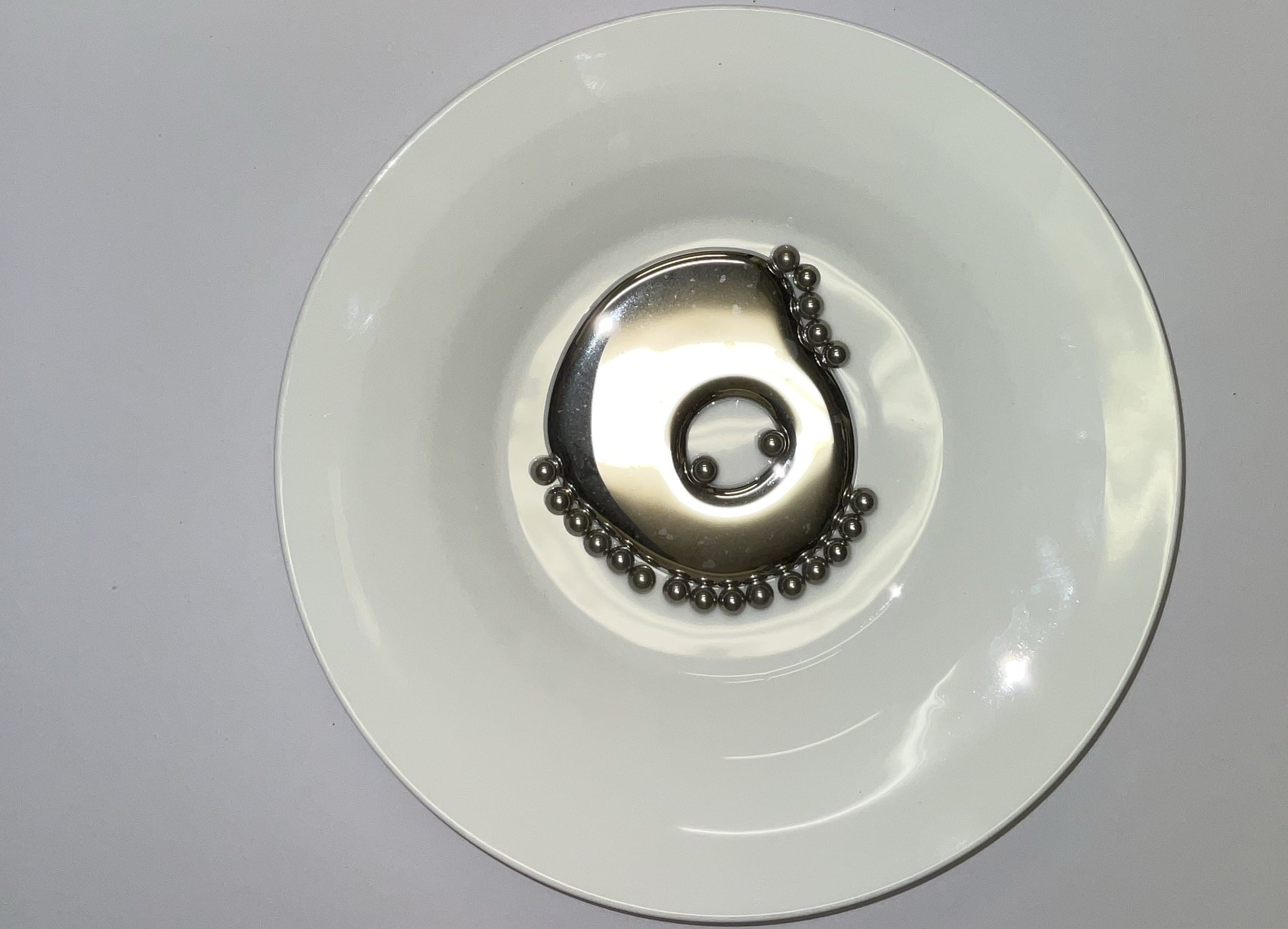
    As children, we’re taught that there are three distinct phases of matter–solid, liquid, and gas–but the reality is somewhat more complicated. In the right–often exotic–conditions, there are far more phases matter takes on. In a recent study, researchers described a metal that sits somewhere between a liquid and a solid.

    In a liquid, atoms are free to move. During solidification, atoms lose this freedom, and their frozen positions relative to one another determine the solid’s properties. Atoms frozen into orderly patterns form crystals, whereas those frozen haphazardly become amorphous solids. In their experiment, researchers instead observed atoms in liquid metal nanoparticles that remained stationary throughout the transition from liquid to solid. The number and position of stationary atoms affected whether the final solid crystallized or not.

    By tracking these stationary atoms and their influence, the team hopes to better control the material properties of the final solidified metal. (Image credit: U. of Nottingham; research credit: C. Leist et al.; via Gizmodo)

    Fediverse Reactions
  • Lung Flows

    Lung Flows

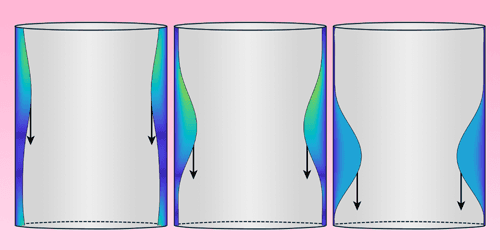
    When a fluid coats the inner walls of a cylinder, it can move downward in what’s called a collar flow. In our airways, a sinking collar flow can thicken as it falls, eventually blocking the airway completely.

    In a Newtonian fluid, this thickening during motion is essentially unavoidable; any small disturbance to the fluid will make its thickness change. But in a viscoplastic fluid–one more akin to the mucus in our airways–researchers found that, below a critical film thickness, the collar flow won’t thicken to form a blockage. (Image and research credit: J. Shemilt et al.; via APS)

  • Featured Video Play Icon

    Ripple Bugs

    Ripple bugs are a type of water strider capable of moving at a blazing fast 120 body lengths per second across the water surface. In addition to their speed, ripple bugs are incredibly agile and are active almost constantly. Researchers believe they’ve found the insect’s secret: feather-like hydrophilic fans that spread on contact with the water. These fans help the insects push off the water and steer, but they require no effort to open and close. They’ve even adapted the technique to bio-inspired robots and seen improvements in speed, agility, and efficiency. (Video credit: Science; research credit: V. Ortega-Jimenez et al.)

    Fediverse Reactions
  • Panama’s Missing Pacific Upwelling

    Panama’s Missing Pacific Upwelling

    Strong seasonal winds blowing from the Atlantic typically push water away from Panama’s Pacific coast, allowing deeper, colder waters to rise up. This upwelling cools reefs and feeds phytoplankton blooms, both of which support the rich marine life found there. But in early 2025, the upwelling didn’t occur.

    Normally, coastal ocean temperatures drop to about 19 degrees Celsius during upwelling. Instead, temperatures only reached 23.3 degrees at their coolest. Wind seems to be the missing ingredient: winds from the Atlantic side were short-lived and 74% less frequent than in typical years.

    That lack of upwelling is expected to carry consequences to Panama’s economy. About 95% of the country’s fishing catch comes from the Pacific side, so any drop in fish populations will be felt. The open question remains: was the missing upwelling a singular extreme event or a harbinger of a new normal? (Image credit: R. Heuvel; research credit: A. O’Dea et al.; via Eos)

    Fediverse Reactions
  • Controlling Hovering

    Controlling Hovering

    Hummingbirds and many insects hover when feeding, escaping predators, and mating. While scientists have decoded the mechanics of a hummingbird’s figure-8-like hovering wingstroke, it’s been harder to understand how the creatures control their hovering. Most of our attempts to control hovering require more computational power than hummingbirds and insects are thought to have. But this study describes a new control scheme: one that allows stable, real-time hovering with little computational cost. (Image credit: J. Wainscoat; research credit: A. Elgohary and S. Eisa; via APS)

    Fediverse Reactions
  • Acoustically Trapping Nanoparticles

    Acoustically Trapping Nanoparticles

    Micrometer-sized particles can be trapped in place against a flow using acoustic waves. But smaller nano-sized particles feel less radiation pressure from acoustic waves, and so keep moving in the flow. But new work shows that it is possible to trap those nanoparticles with some additional help.

    In this case, researchers seeded their flow with microparticles that were held in place by acoustic waves against the background flow. When nanoparticles were added to the mix, they remained trapped in the wells between microparticles due to a combination of acoustic forcing and the hydrodynamic shielding of the nearby large particles. (Image credit: P. Czerwinski; research credit: A. Pavlič and T. Baasch; via APS)

    Fediverse Reactions
  • Turbulence-Suppressing Polymers

    Turbulence-Suppressing Polymers

    Adding just a little polymer to a pipe flow speeds it up by reducing drag near the wall. But the effects on turbulence away from the wall have been harder to suss out. A new experiment shows that added polymers suppress eddy formation in the flow and reduce how much energy is lost to friction and, ultimately, heat. In particular, the researchers found that polymer stress helped stabilize shear layers in the flow and prevent them from destabilizing into more turbulent flow. (Image credit: S. Wilkinson; research credit: Y. Zhang et al.; via APS)

    Fediverse Reactions
  • Ocean Bubbles Capture Carbon

    Ocean Bubbles Capture Carbon

    As humanity pumps carbon dioxide into the atmosphere, the ocean absorbs about a quarter of it. This exchange happens largely through bubbles created by breaking waves. When waves grow large enough to break, their crests curl over and crash down, trapping air beneath them. The turbulence of the upper ocean can push these buoyant bubbles meters under the surface, where the gases inside them dissolve into the surrounding water. This is how the ocean gets the oxygen used by marine animals, but it’s also how it gathers up carbon dioxide.

    Current climate models often approximate this process using only the wind speed, but a recent study took matters a step further by modeling wave breaking and bubble generation, too. While they found a global carbon uptake that was similar to existing models, the researchers found their breaking wave model showed more variability in where carbon gets stored. For example, more carbon got absorbed in the southern hemisphere, where oceans are consistently rougher, than in the northern hemisphere, where large landmasses shelter the oceans. (Image credit: J. Kernwein; research credit: P. Rustogi et al.; via Eos)

    Fediverse Reactions
  • The Start of a Supernova

    The Start of a Supernova

    Stars about eight times more massive than our sun end their lives in supernovas, incredible explosions that rip the star apart. The earliest stages of this explosion are something we’ve never observed firsthand, until now. A new study reports observations of the supernova explosion SN 2024ggi, detected here on Earth on 10 April 2024. Only 26 hours later, researchers pointed the Very Large Telescope at it, capture data that revealed its oblong shape as the initial explosion reached the star’s surface.

    What you see above and below are not the actual supernova. They are an artist’s conception of the event, based on the researchers’ observation data. That data is enough to rule out several existing supernova models and will no doubt guide new models of star death going forward. (Image credit: ESO/L. Calçada; research credit: Y. Yang et al.; via Gizmodo)

    Fediverse Reactions
  • Quantum Rayleigh-Taylor Instability

    Quantum Rayleigh-Taylor Instability

    The Rayleigh-Taylor instability–typically marked by mushroom-shaped plumes–occurs when a dense fluid accelerates into a less dense one. But researchers have now demonstrated the effect at quantum scales, too.

    For their experiment, the group used a Bose-Einstein condensate of sodium atoms and made the interface between them by exciting half of the atoms into a spin-up state and half into a spin-down one. With the interface is place, they reversed the magnetic field gradient, inducing a force on the atoms equivalent to the buoyant force seen in conventional Rayleigh-Taylor instabilities. As shown above, the interface first warped, then developed Rayleigh-Taylor mushrooms and eventually became turbulent. (Image and research credit: Y. Geng et al.; via Physics World)

    Fediverse Reactions