On Earth, gravity dominates over many fluid effects, but in microgravity a different picture emerges. This animation shows a two-channel apparatus partially filled with silicone oil being dropped. While in free-fall, the liquid experiences microgravity conditions and the height of the fluid in the two connected channels changes. The oil meniscus climbs up the walls of the tubes thanks to capillary action. This is the result of intermolecular forces between the liquid and solid walls. Capillary action is most effective in narrow tubes where surface tension and the adhesion between the liquid and solid can actually propel liquid up the walls, as seen here. On Earth we mostly ignore capillary action, except in very small spaces, but for space systems, it is a major force to reckon with in designing flows. (Image credit: NASA Glenn Research Center, source)
Category: Phenomena

Building Labs on a Chip
In their second video on microfluidics, the Lutetium Project takes viewers inside the process of creating microfluidic circuits, also known as labs-on-a-chip. When you want to build pipes only a few microns across, you need to use special techniques. As the video shows, manufacturing starts with photolithography, a process used to selectively mask parts of the substrate which are then etched away chemically. This creates a mold that’s later covered in a polymer solution. Once hardened, the polymer is removed from the mold, treated and attached to a glass slide. The result is a tiny fluid circuit that’s only a few square centimeters in total size. To really appreciate the process, check out the video, which helpfully takes you inside the clean room to see the chip manufacturing process firsthand. (Video and image credit: The Lutetium Project)


Breaking Waves in the Sky
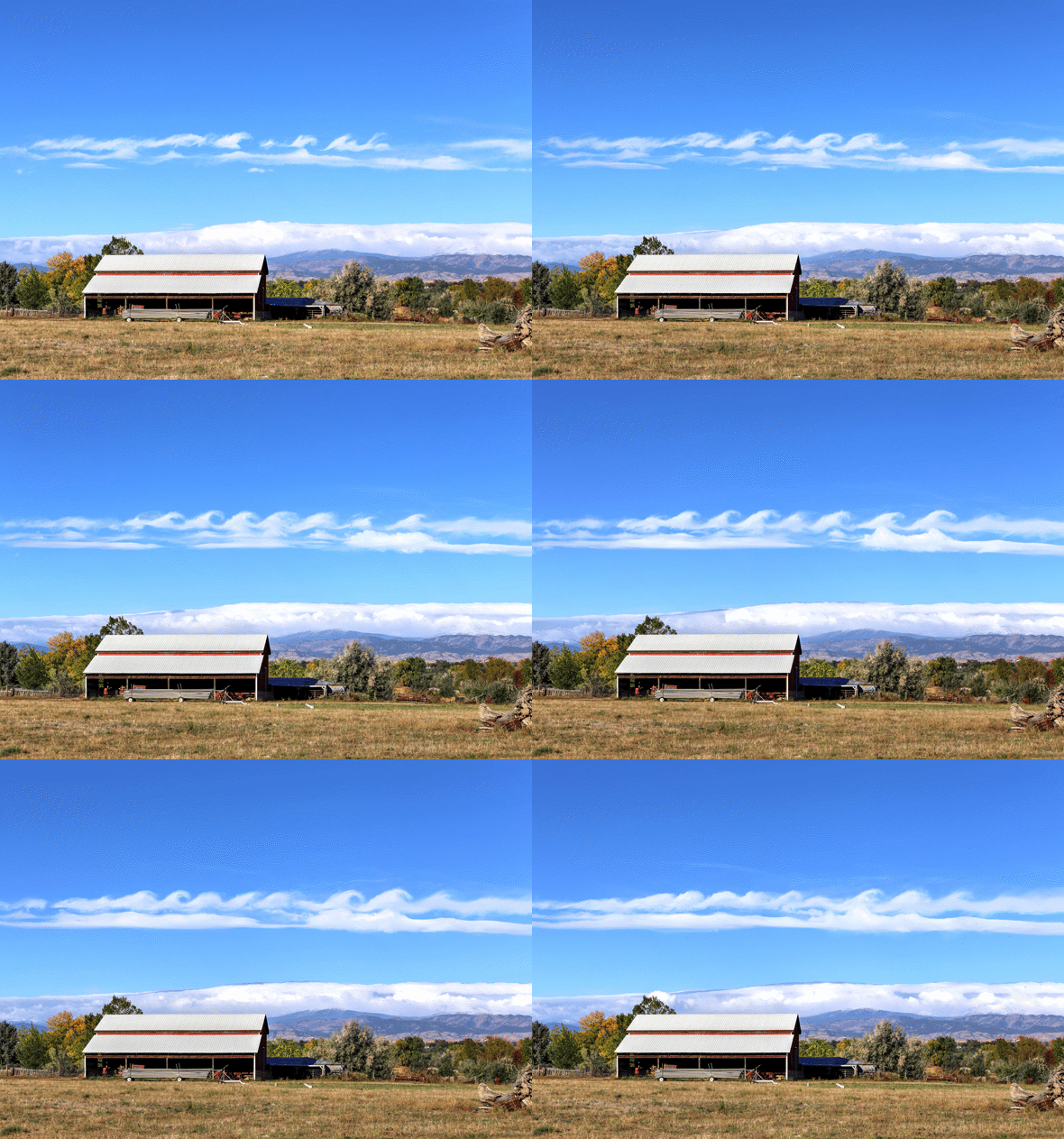
Under the right atmospheric conditions, clouds can form in a distinctive but short-lived breaking wave pattern known as a Kelvin-Helmholtz cloud. The animation above shows the formation and breakdown of such a cloud over the course of 9 minutes early one morning in Colorado’s Front Range region. Kelvin-Helmholtz instabilities occur when fluid layers with different velocities and/or densities move past one another. Friction between the two layers moving past creates shear and causes the curling rolls seen above.
In the background, you can also see a foehn wall cloud low to the horizon. This type of cloud forms downwind of the Rocky Mountains after warm, moist Chinook winds are forced up over the mountains, cool, and then condense and sink in the mountains’ wake. (Image credit and submission: J. Straccia, more info)
Quad Copter Schlieren
Schlieren photography is a classic method of flow visualization that utilizes small variations in density (or temperature) to make otherwise unseen air motion visible. Because changing air’s density or temperature changes its index of refraction, variations in either quantity show up as dark and light regions. Here researchers use it to reveal some of the airflow around a small quadcopter, including the vortices that spiral off each propeller and help generate the lift necessary for take-off. The full video includes a couple of neat demos, including what happens when the blades are wet (shown below). In that case, the wingtip vortices are somewhat disrupted by strings of water droplets being flung off the blades by centrifugal force. Beautiful! (Video and image credit: K. Nolan et al., source; submitted by J. Stafford)


Blue Man Group in Slow Mo


In their latest video, the Slow Mo Guys team up with the Blue Man Group for some high-speed hijinks, some of which make for great fluidsy visuals. Their first experiment involves dropping a bowling ball on gelatin. The gelatin goes through some massive deformation but comes out remarkably unscathed. Gelatin is what is known as a colloid and essentially consists of water trapped in a matrix of protein molecules. This gives it both solid and liquid-like properties, which means that the energy the bowling ball’s impact imparts can be dissipated through liquid-like waves ricocheting through the gelatin before the elasticity of the protein matrix allows it to reform in its original shape.
The video ends with buckets of paint flung at Dan. The paints form beautiful splash sheets that expand and thin until surface tension can no longer hold them together. Holes form in the sheet and eat outward until the paint forms thin ligaments and catenaries. As those continue to stretch, surface tension drives the paint to break into droplets, though that break-up may be countered to some extent by any viscoelastic properties of the paint. (Image and video credit: The Slow Mo Guys + Blue Man Group, source)
Putting Out Fires
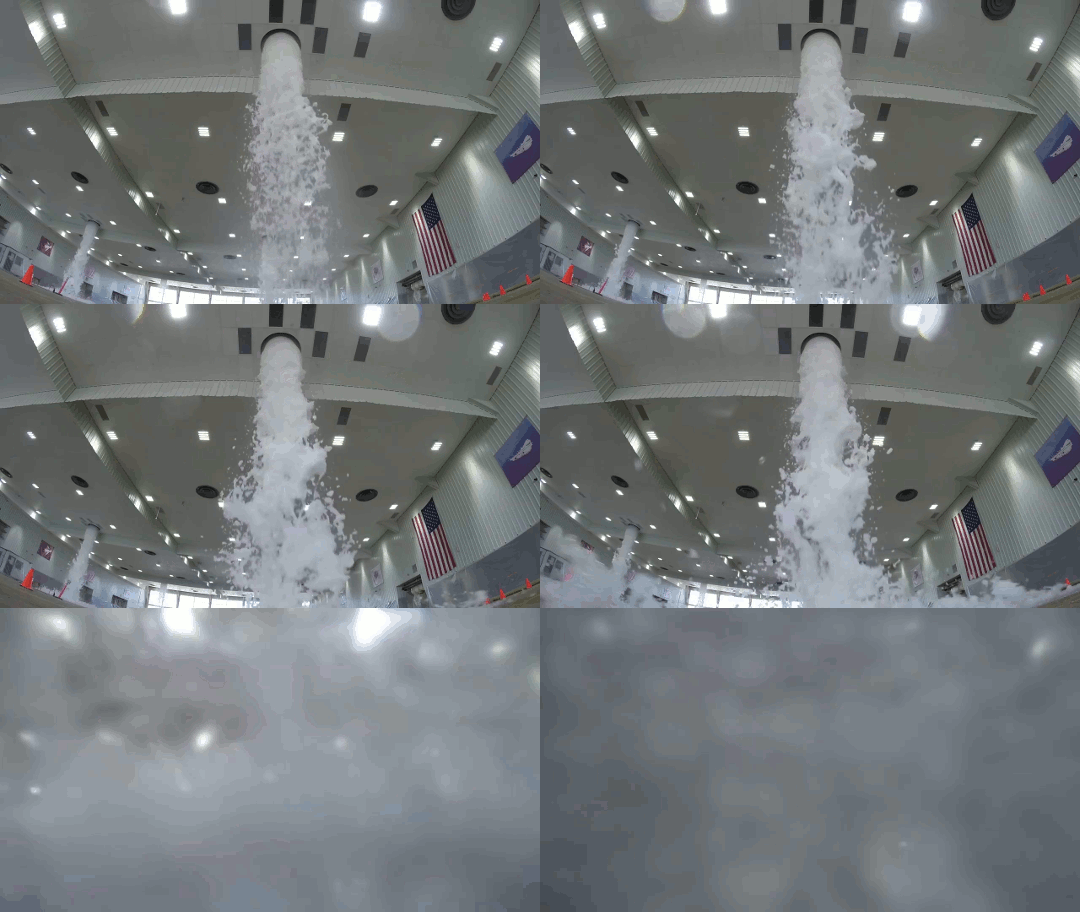
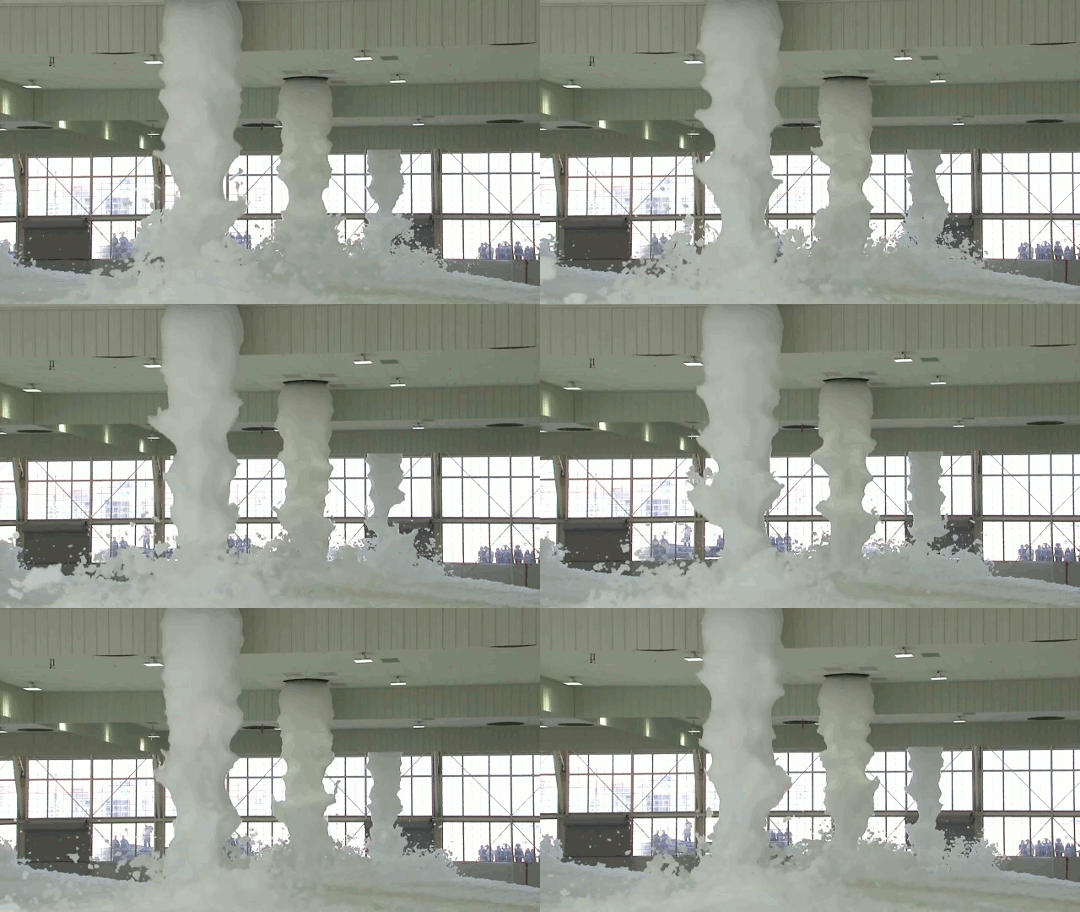
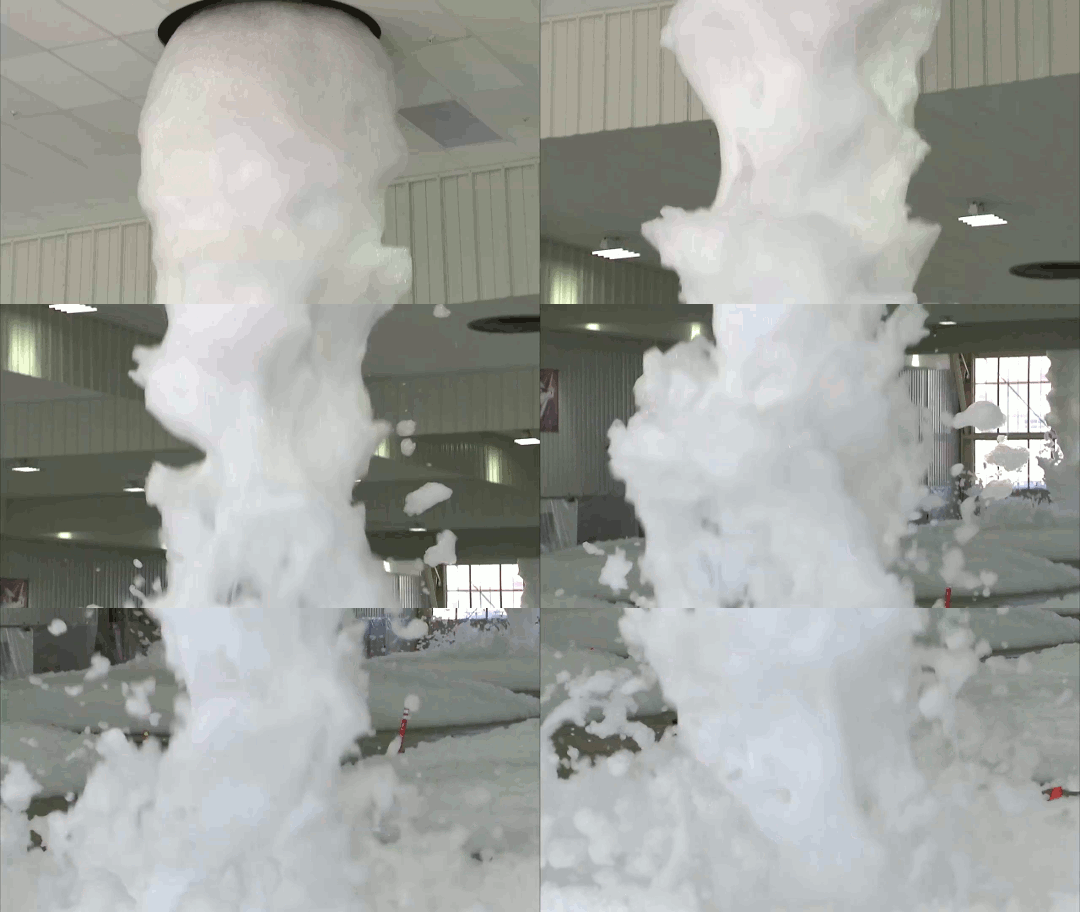
Fires in large, open spaces like aircraft hangers can be difficult to fight with conventional methods, so many industrial spaces use foam-based fire suppression systems. These animations show such a system being tested at NASA Armstrong Research Center. When jet fuel ignites, foam and water are pumped in from above, quickly generating a spreading foam that floats on the liquid fuel and separates it from the flames. Since the foam-covered liquid fuel cannot evaporate to generate flammable vapors, this puts out the fire.
The shape of the falling foam is pretty fascinating, too. Notice the increasing waviness along the foam jet as it falls. Like water from your faucet, the foam jet is starting to break up as disturbances in its shape grow larger and larger. For the most part, though, the flow rate is high enough that the jet reaches the floor before it completely breaks up. (Image credit: NASA Armstrong, source)

Stellar Bow Shock
This Hubble image shows a young star in the Orion Nebula and the curved bow shock arcing around it. Despite its age, the star LL Orionis is energetic, producing a stellar wind that exceeds our sun’s. When that wind collided with the flow in the Orion Nebula, it formed this bow shock that is about a half a light-year wide. We don’t often think about fluid dynamics applying in space, but if we consider a lengthscale that is large enough, even space contains enough matter to behave like a fluid. LL Orionis’s bow shock is in many ways comparable to ones we see form around re-entering spacecraft. (Image credit: NASA/Hubble, via APOD; submitted by jshoer)
Watching a Model Rocket Burn
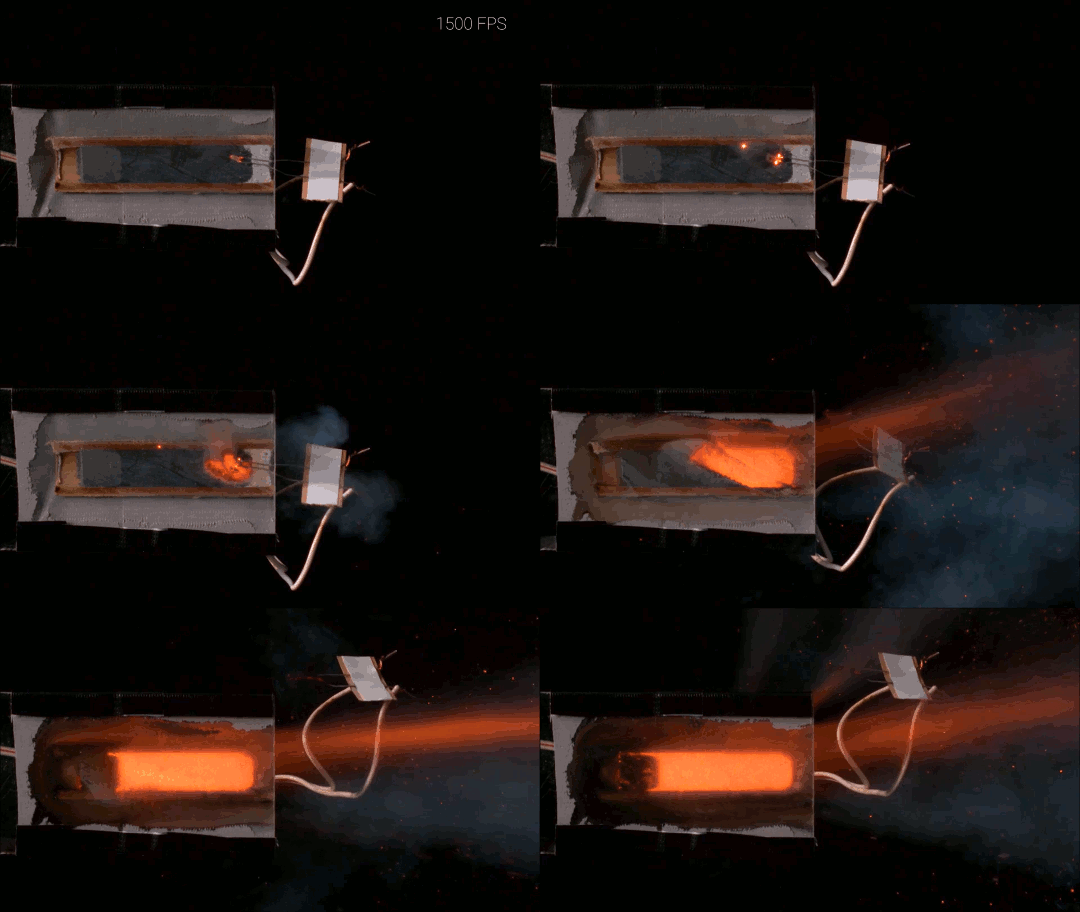
Rockets operate on a pretty simple principle: if you throw something out the back really fast, the rocket goes forward. Practically speaking, we accomplish this with a combination of chemistry and physics, by burning fuel and oxidizer together and accelerating the exhaust out a nozzle. Solid rocket propellant, like that found in the model rockets shown here, is a combination of fuel and oxidizer that don’t react until they’re ignited. You don’t want your rocket to just explode as soon as it’s lit, though, so solid rocket motors are carefully designed to burn in a particular way. By packing the propellant into different shapes – and even including patterns of propellants with different burn rates – engineers can create a rocket that burns with the thrust pattern they want.
In the case of this model rocket motor, what we observe is not really how it is intended to burn; you can see how some of the combustion products are working their way out of cracks that wouldn’t normally exist. But the video and animation do show how the burn front moves gradually through the engine, allowing it to produce a relatively steady amount of thrust for a longer period before reaching the darker burning propellant on the left, which would normally launch the model rocket’s parachute. (Image and video credit: Warped Perception; via Gizmodo)
The Flying Draco
Nature includes many animals that are so-called fliers: flying squirrels, flying snakes, and draco lizards, to name a few. These animals aren’t true fliers like birds, bats, or insects, though. Instead, they are expert gliders, able to produce enough lift to control their descent and land safely at a distance far greater than a normal leap could carry them. Like the flying squirrel, the draco lizard extends a thin membrane that acts as its wings. The additional area provides enough lift that the lizards can glide as far as 60 m (200 ft) while only losing 10 m (33 ft) in altitude. That’s an impressive glide ratio – about 3 times better than the Northern flying squirrel and twice as good as a wingsuit. (Video credit: BBC/Planet Earth II)

Avoiding Coalescence
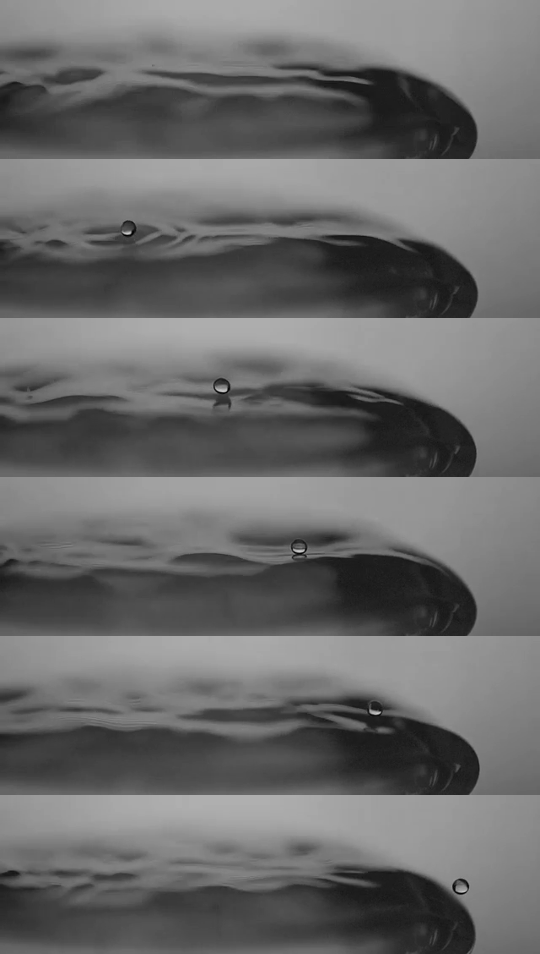
Droplets hitting a liquid surface don’t always coalesce. Above you can see a tiny droplet bounce and skate along the surface of a larger, vibrating drop. The smaller droplet doesn’t coalesce because a tiny layer of air sits between it and the vibrating drop. To actually contact and coalesce, the droplet has to sit still long enough for that air layer to get squeezed out. Instead, the vibration of the larger drop bounces it upwards, refreshing the air layer and scooting the droplet along until it falls off the vibrating drop. (Image credit: C. Kalelkar and S. Phansalkar, source)