Category: Phenomena

  • Featured Video Play Icon

    Evaporating Off Butterfly Scales

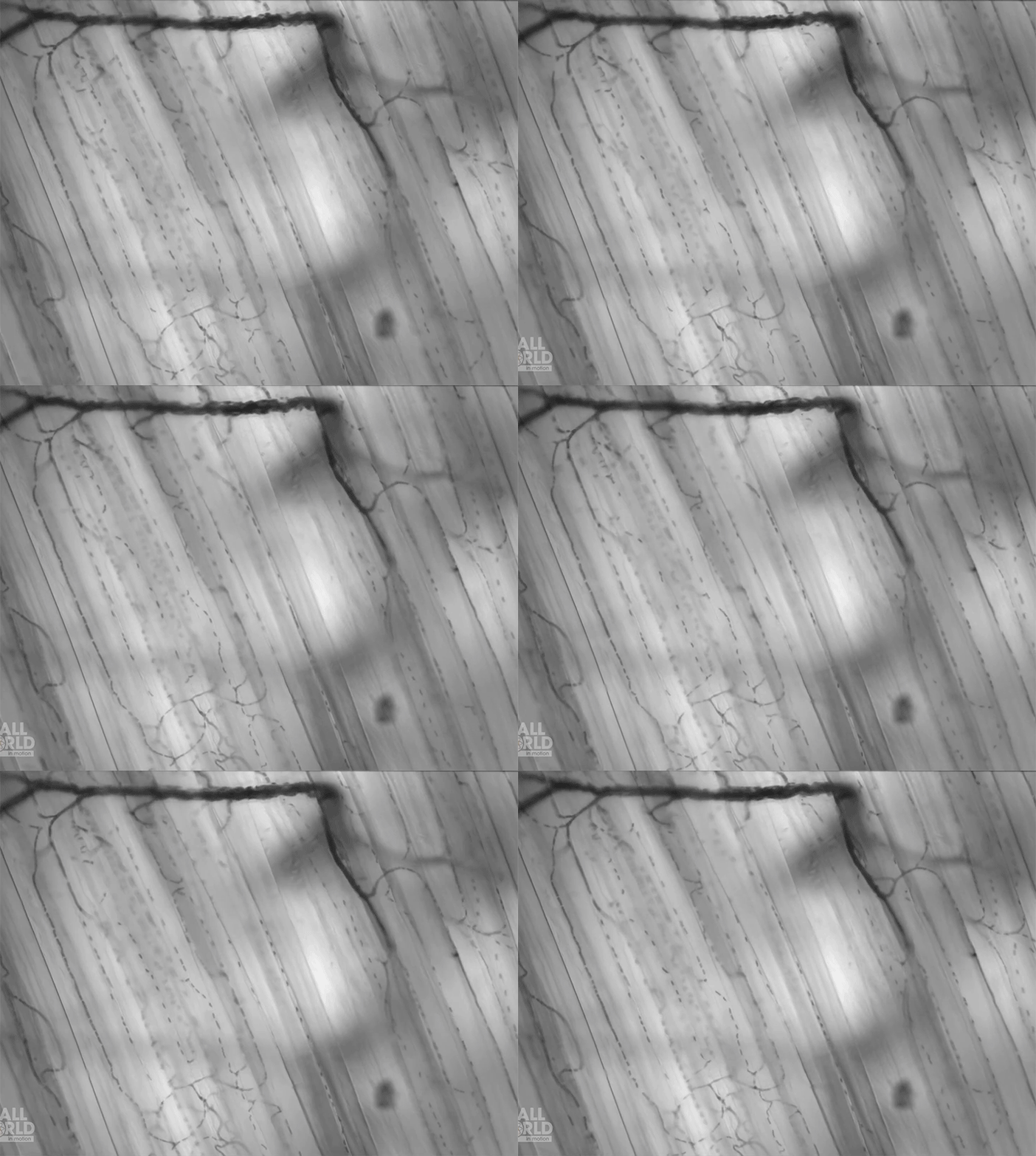
    This award-winning macro video shows scattered water droplets evaporating off a butterfly‘s wing. At first glance, it’s hard to see any motion outside of the camera’s sweep, but if you focus on one drop at a time, you’ll see them shrinking. For most of their lifetime, these tiny drops are nearly spherical; that’s due to the hydrophobic, water-shedding nature of the wing. But as the drops get smaller and less spherical, you may notice how the drop distorts the scales it adheres to. Wherever the drop touches, the wing scales are pulled up, and, when the drop is gone, the scales settle back down. This is a subtle but neat demonstration of the water’s adhesive power. (Video and image credit: J. McClellan; via Nikon Small World in Motion)

    Water droplets evaporate from the wing of a peacock butterfly.
    Water droplets evaporate from the wing of a peacock butterfly.
    Fediverse Reactions
  • Featured Video Play Icon

    “Droplet on a Plucked Wire”

    What happens to a droplet hanging on a wire when the wire gets plucked? That’s the fundamental question behind this video, which shows the effects of wire speed, viscosity, and viscoelasticity on a drop’s detachment. With lovely high-speed video and close-up views, you get to appreciate even subtle differences between each drop. Capillary waves, viscoelastic waves, and Plateau-Rayleigh instabilities abound! (Video and image credit: D. Maity et al.)

    Fediverse Reactions
  • Ponding on the Ice Shelf

    Ponding on the Ice Shelf

    Glaciers flow together and march out to sea along the Amery Ice Shelf in this satellite image of Antarctica. Three glaciers — flowing from the top, left, and bottom of the image — meet just to the right of center and pass from the continental bedrock onto the ice-covered ocean. The ice shelf is recognizable by its plethora of meltwater ponds, which appear as bright blue areas. Each austral summer, meltwater gathers in low-lying regions on the ice, potentially destabilizing the ice shelf through fracture and drainage. This region near the ice shelf’s grounding line is particularly prone to ponding. Regions further afield (right, beyond the image) are colder and drier, often allowing meltwater to refreeze. (Image credit: W. Liang; via NASA Earth Observatory)

    Fediverse Reactions
  • Cat’s Eye Halo

    Cat’s Eye Halo

    The Cat’s Eye Nebula is a planetary nebula located in the Draco constellation. At its center is a dying star. Seen here is the faint halo that stretches 3 light-years around the central nebula. The filaments of the halo are estimated to be 50,000 to 90,000 years old and were shed during earlier periods in the star’s evolution. Their shape is reminiscent of Rayleigh-Taylor instabilities, to my eye. (Image credit: T. Niittee; via APOD)
    Fediverse Reactions
  • Artificial Reoxygenation

    Artificial Reoxygenation

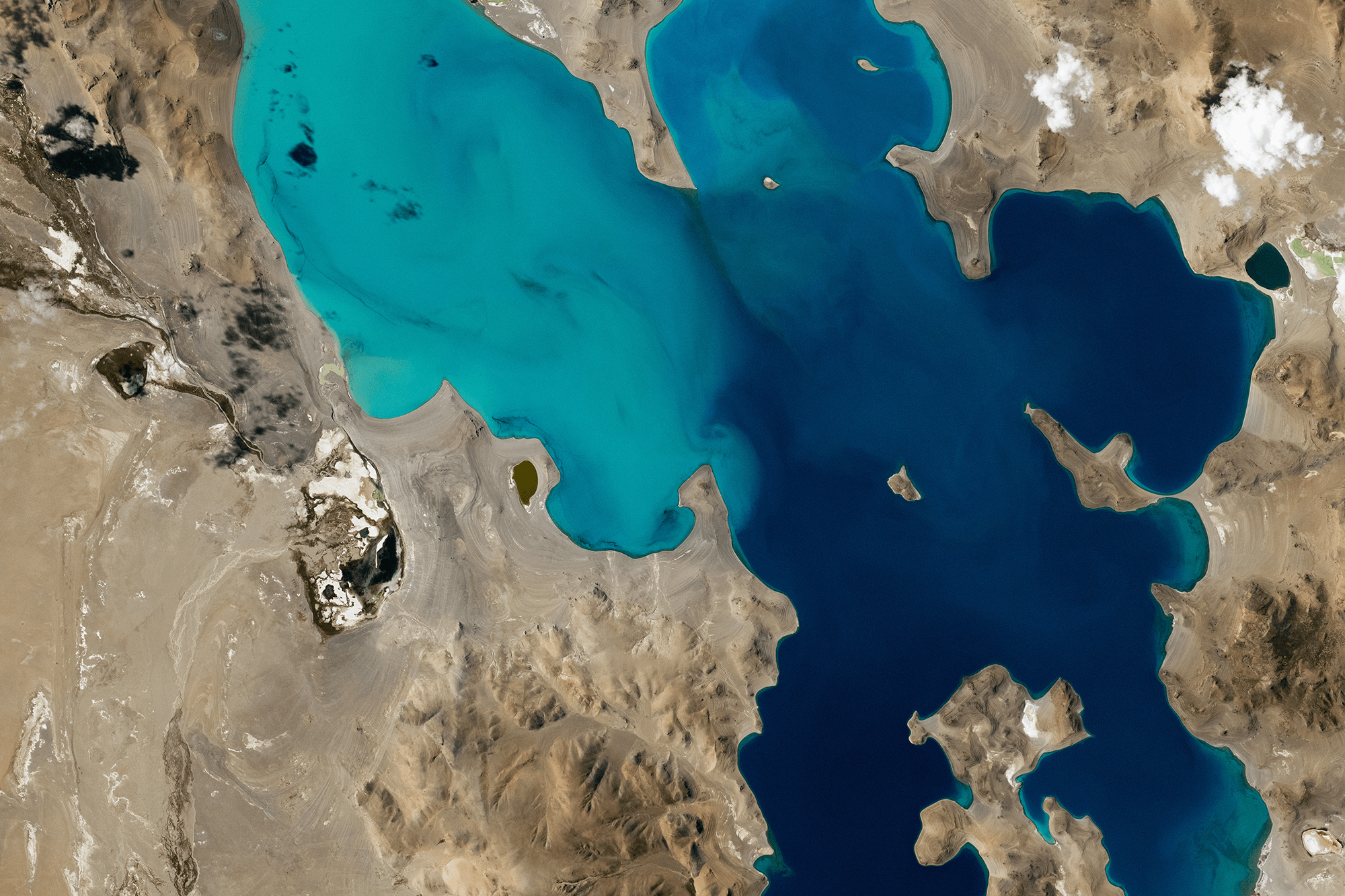
    Phytoplankton blooms have blossomed in coastal waters around the world, driven by phosphorus and nitrogen in agricultural run-off. These large algal blooms deplete oxygen in the water, creating dead zones where fish and other marine life cannot survive. Typically, oxygen makes its way into the ocean at the surface, where breaking waves trap air in bubbles that, when tiny enough, dissolve their oxygen into the water. But this process mainly helps surface-level waters, and without means to circulate oxygen-rich water down to the depths, the low-oxygen state persists.

    Artificial reoxygenation is a possible countermeasure. Either by bubbling oxygen directly into deeper waters or by pumping surface-level water downward, we could increase oxygen levels in the water column. So far, though, artificial reoxygenation’s success has been limited; tests in a few bays and estuaries show that it’s possible to reoxygenate the water, but the effects only last as long as the artificial mechanism remains active. Stop the pumps and bubblers and the water will revert to its low-oxygen state in just a day. Even so, the measures may be worthwhile on a temporary basis in some places while we adjust agricultural practices and try to mitigate warming. (Image credit: Copernicus Sentinel/ESA; via Eos)

    Fediverse Reactions
  • Melting in a Spin

    Melting in a Spin

    The world’s largest iceberg A23a is spinning in a Taylor column off the Antarctic coast. This poster looks at a miniature version of the problem with a fluorescein-dyed ice slab slowly melting in water. On the left, the model iceberg is melting without rotating. The melt water stays close to the base until it forms a narrow, sinking plume. In the center, the ice rotates, which moves the detachment point outward. The wider plume is turbulent compared to the narrow, non-rotating one. At higher rotation speeds (right), the plume is even wider and more turbulent, causing the fastest melting rate. (Image credit: K. Perry and S. Morris)

    Fediverse Reactions
  • Featured Video Play Icon

    Manu Jumping, a.k.a. How to Make a Big Splash

    The Māori people of Aotearoa New Zealand compete in manu jumping to create the biggest splash. Here’s a fun example. In this video, researchers break down the physics of the move and how it creates an enormous splash. There are two main components — the V-shaped tuck and the underwater motion. At impact, jumpers use a relatively tight V-shape; the researchers found that a 45-degree angle works well at high impact speeds. This initiates the jumper’s cavity. Then, as they descend, the jumper unfolds, using their upper body to tear open a larger underwater cavity, which increases the size of the rebounding jet that forms the splash. To really maximize the splash, jumpers can aim to have their cavity pinch-off (or close) as deep underwater as possible. (Video and image credit: P. Rohilla et al.)

    Fediverse Reactions
  • Featured Video Play Icon

    How Insects Fly in the Rain

    Getting caught in the rain is annoying for us but has the potential to be deadly for smaller creatures like insects. So how do they survive a deluge? First, they don’t resist a raindrop, and second, they have the kinds of surfaces water likes to roll or bounce off. The key to this second ability is micro- and nanoscale roughness. Surfaces like butterfly wings, water strider feet, and leaf surfaces contain lots of tiny gaps where air gets caught. Water’s cohesion — its attraction to itself — is large enough that water drops won’t squeeze into these tiny spaces. Instead, like the ball it resembles, a water drop slides or bounces away. (Video and image credit: Be Smart)

    Fediverse Reactions
  • The Hidden Beauty in the Mundane

    The Hidden Beauty in the Mundane

    Physicist Sidney Nagel has spent his career on topics that are somewhat unexpected: how coffee stains form, how droplets splash — or don’t, and how fluid flows into viscous fingers. Often this means looking at the mechanics of everyday occurrences that we otherwise take for granted. Instead, Nagel probes carefully at things like a coffee stain, asking why it’s darker at the edges and what he could do to keep that from happening — all to ultimately uncover the forces and mechanisms at play. Quanta has a great little interview with him on this and other topics. Check it out here. (Image credit: S. Nagel and K. Norman; via Quanta)

    Images of droplets breaking off.
    Assorted "coffee-ring" stains, where particles collect toward the contact line along the circumference of the drop.
    Fediverse Reactions
  • Featured Video Play Icon

    Bigger Particles Slide Farther

    Mudslides and avalanches typically carry debris of many shapes and sizes. To understand how debris size affects flows like these, researchers use simplified, laboratory-scale experiments like this one. Here, researchers mix a slurry of silicone oil and glass particles of roughly two sizes. The red particles are larger; the blue ones smaller. Sitting in a cup, the mixture tends to separate, with red particles sinking faster to form the bottom layer and smaller blue particles collecting on top. And what happens when such a mixture flows down an incline? The smaller blue particles tend to settle out sooner, leaving the larger red particles in suspension as they flow downstream. (Video and image credit: S. Burnett et al.)

    Fediverse Reactions