With a flurry of motion along its pectoral fin, a sting ray lifts the sand nearby and disappears into the turbid cloud. This tactic helps the animal both hide and escape. In a similar move, sting rays and other bottom-dwelling fish can bury themselves in sand.(Image credit: Y. Coll/OPOTY; via Colossal)
Category: Art

Falling From the Sky

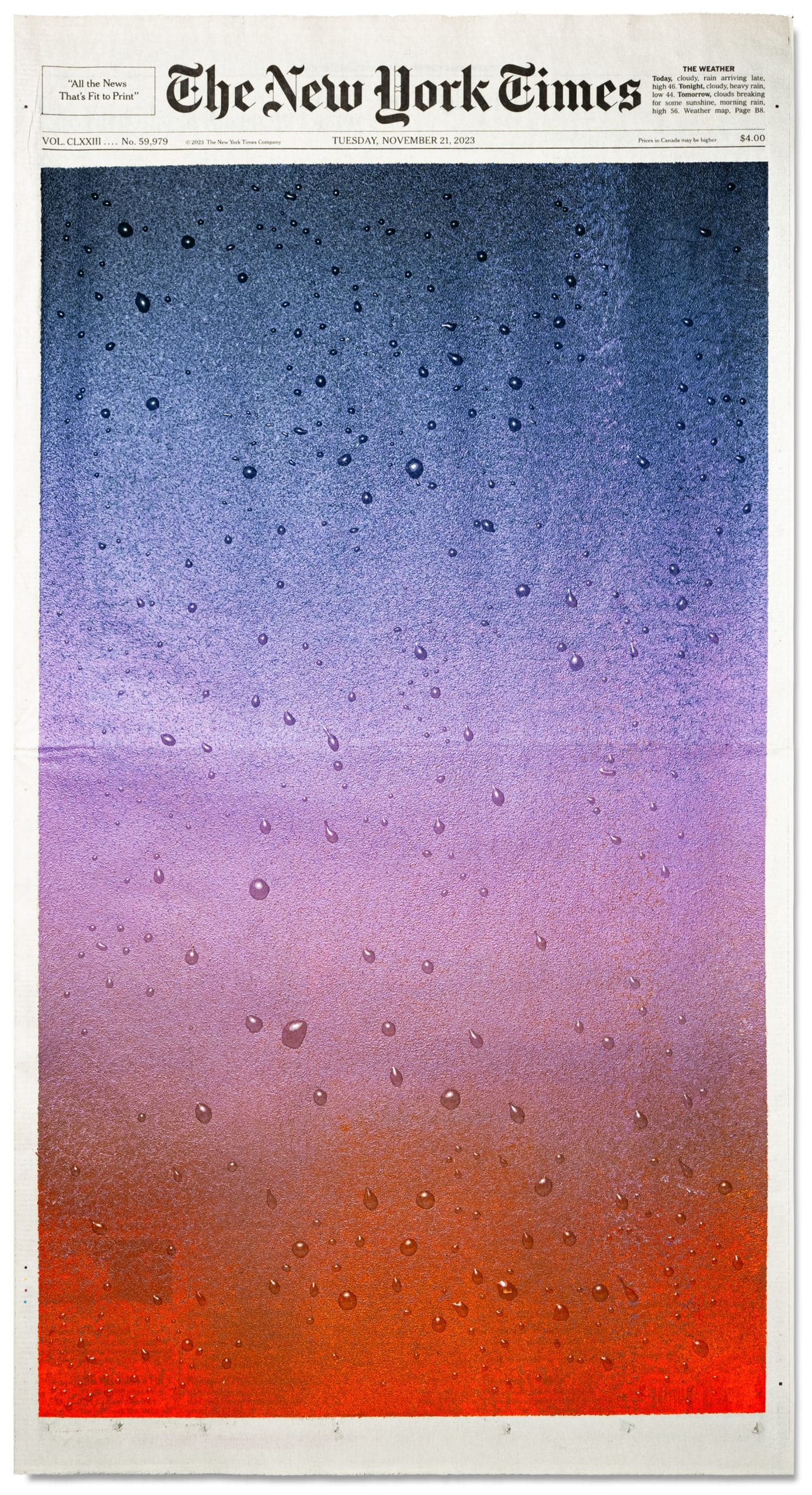
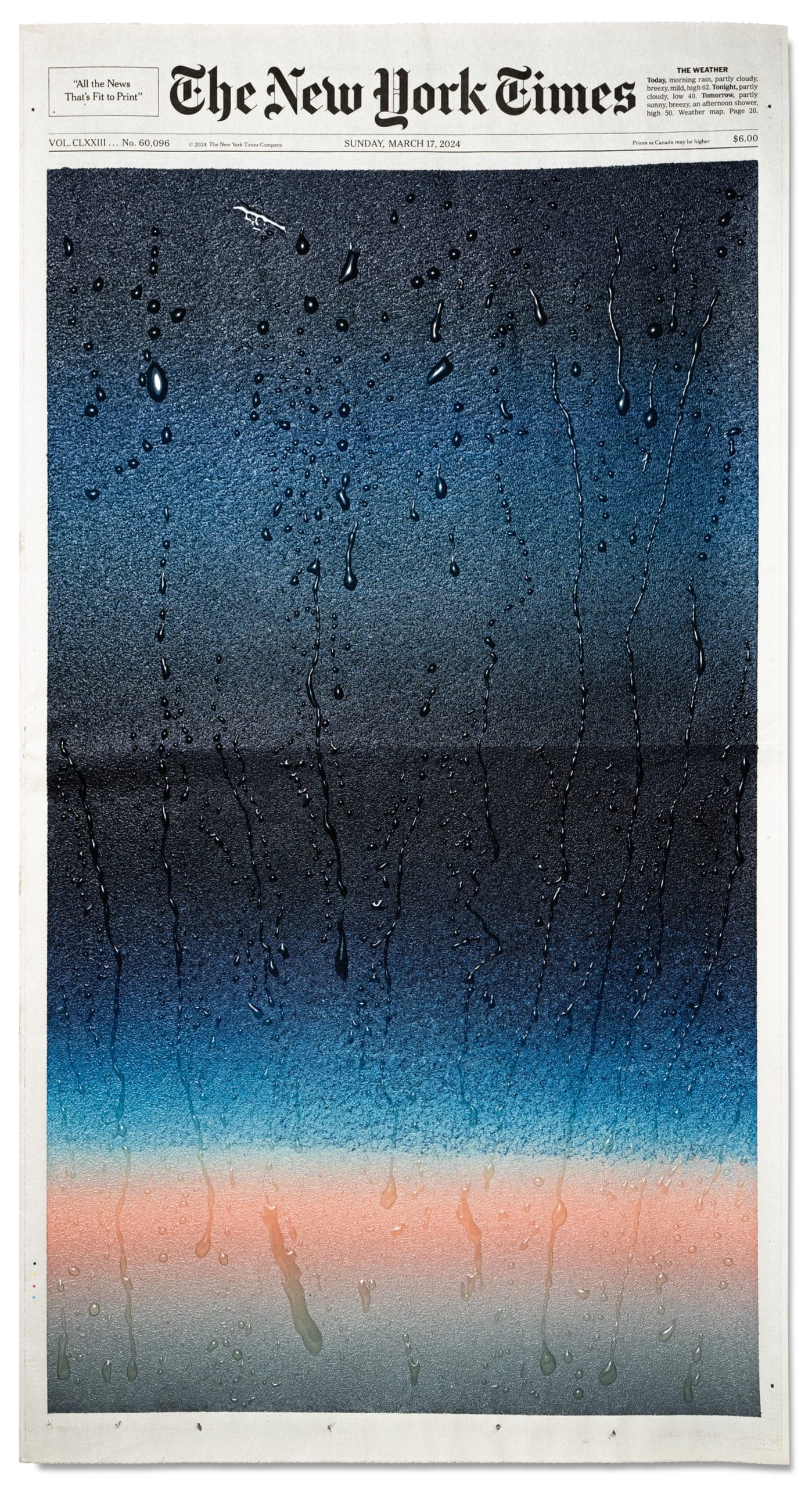

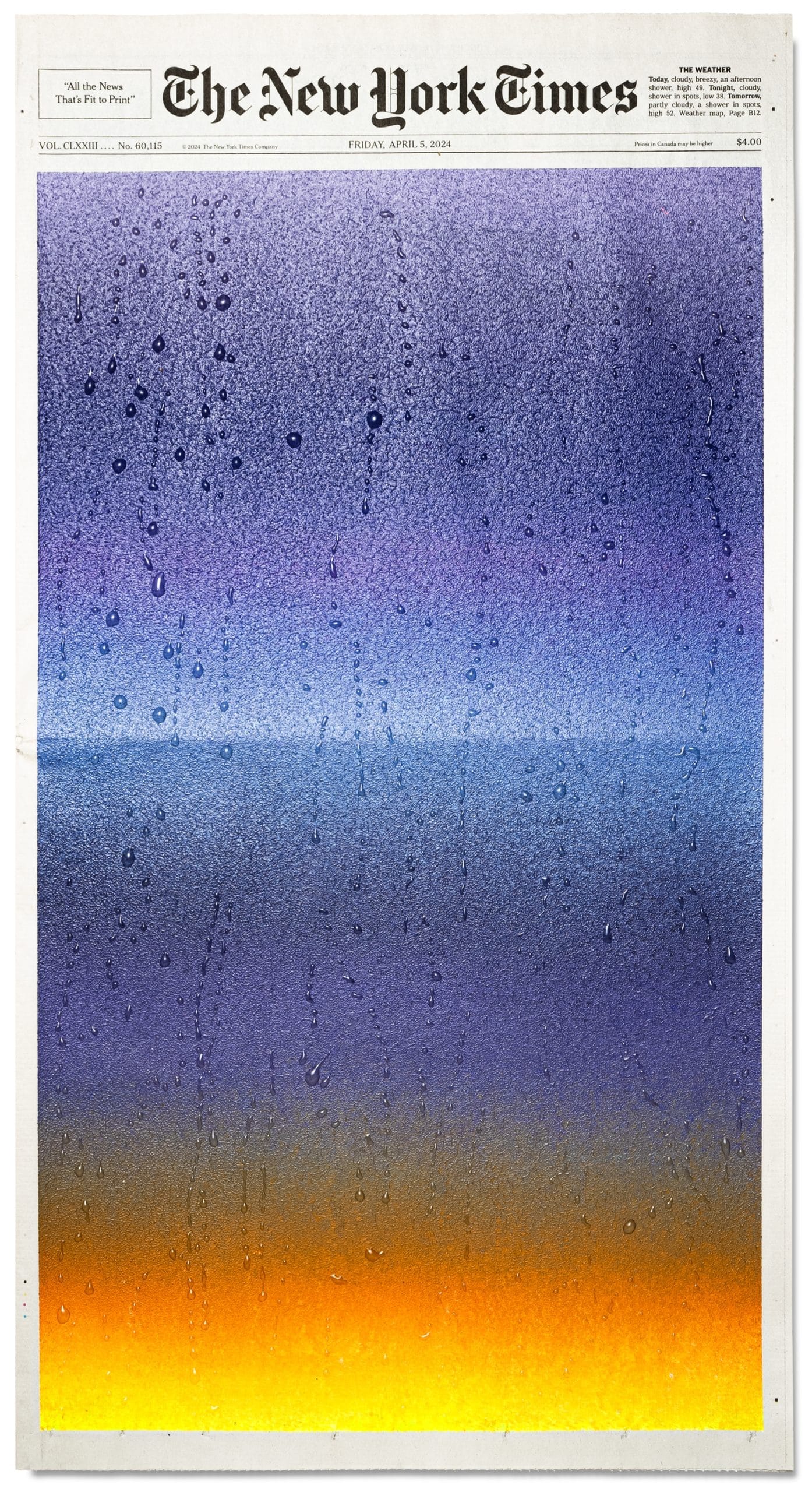
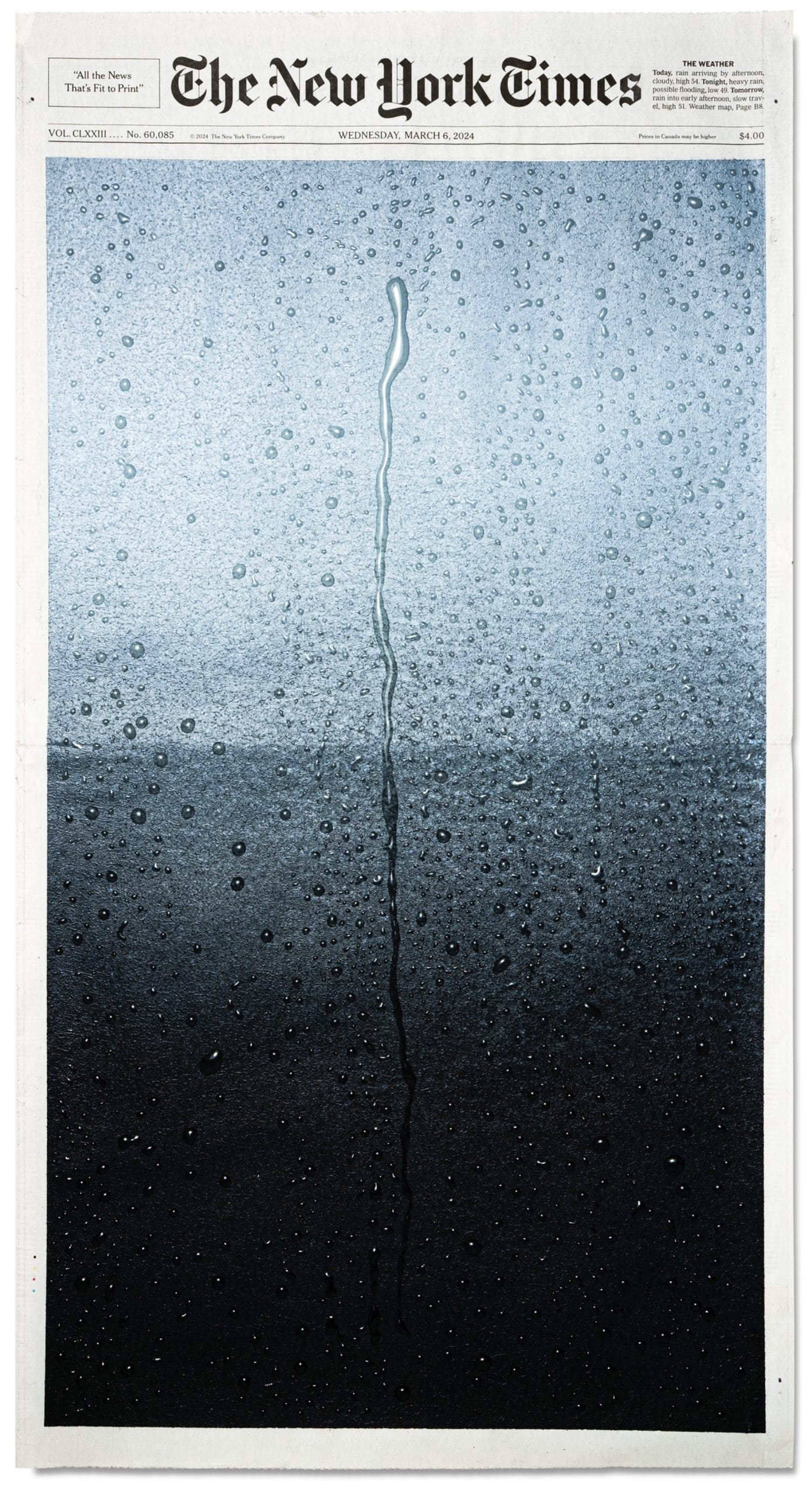
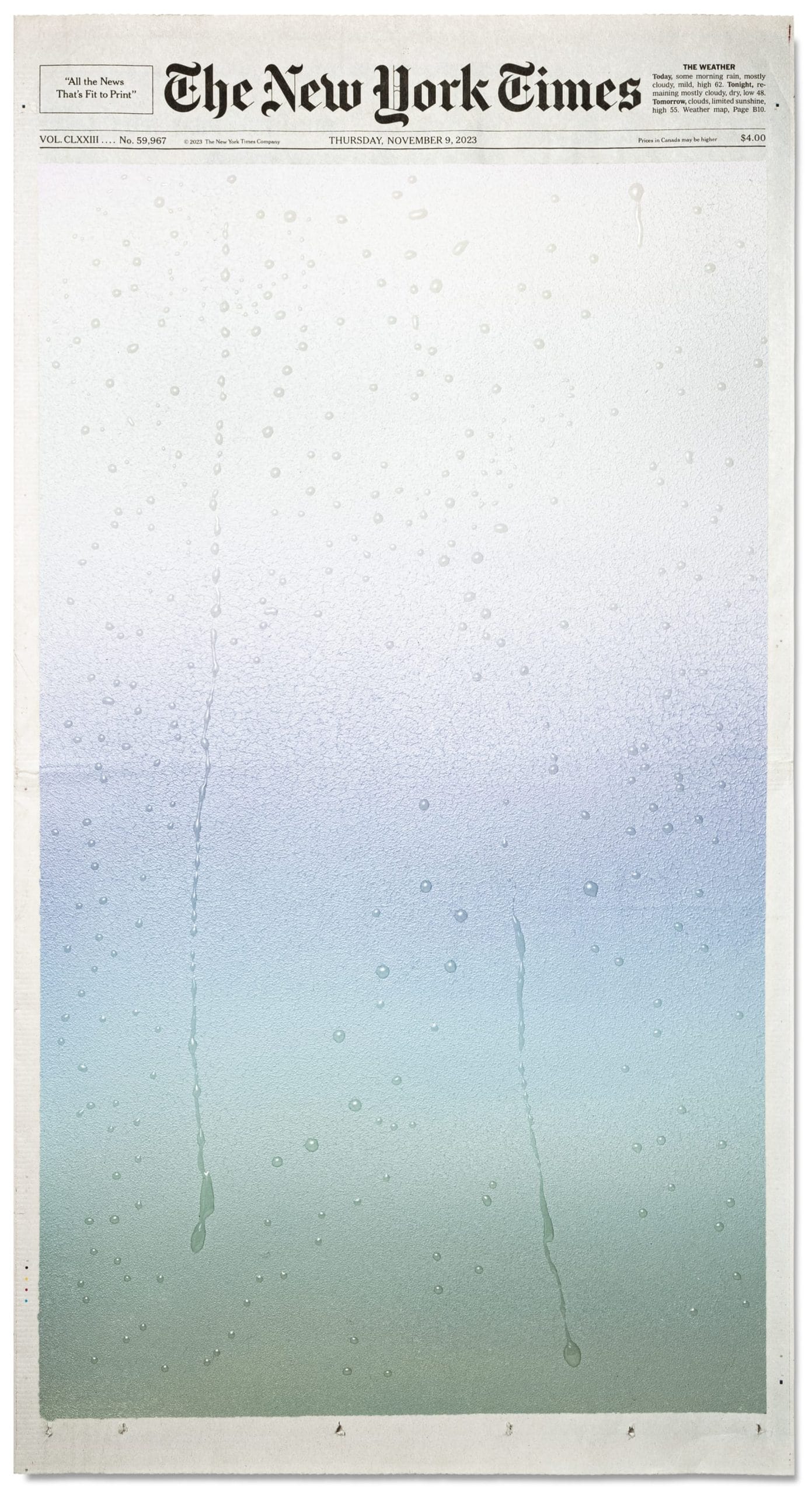
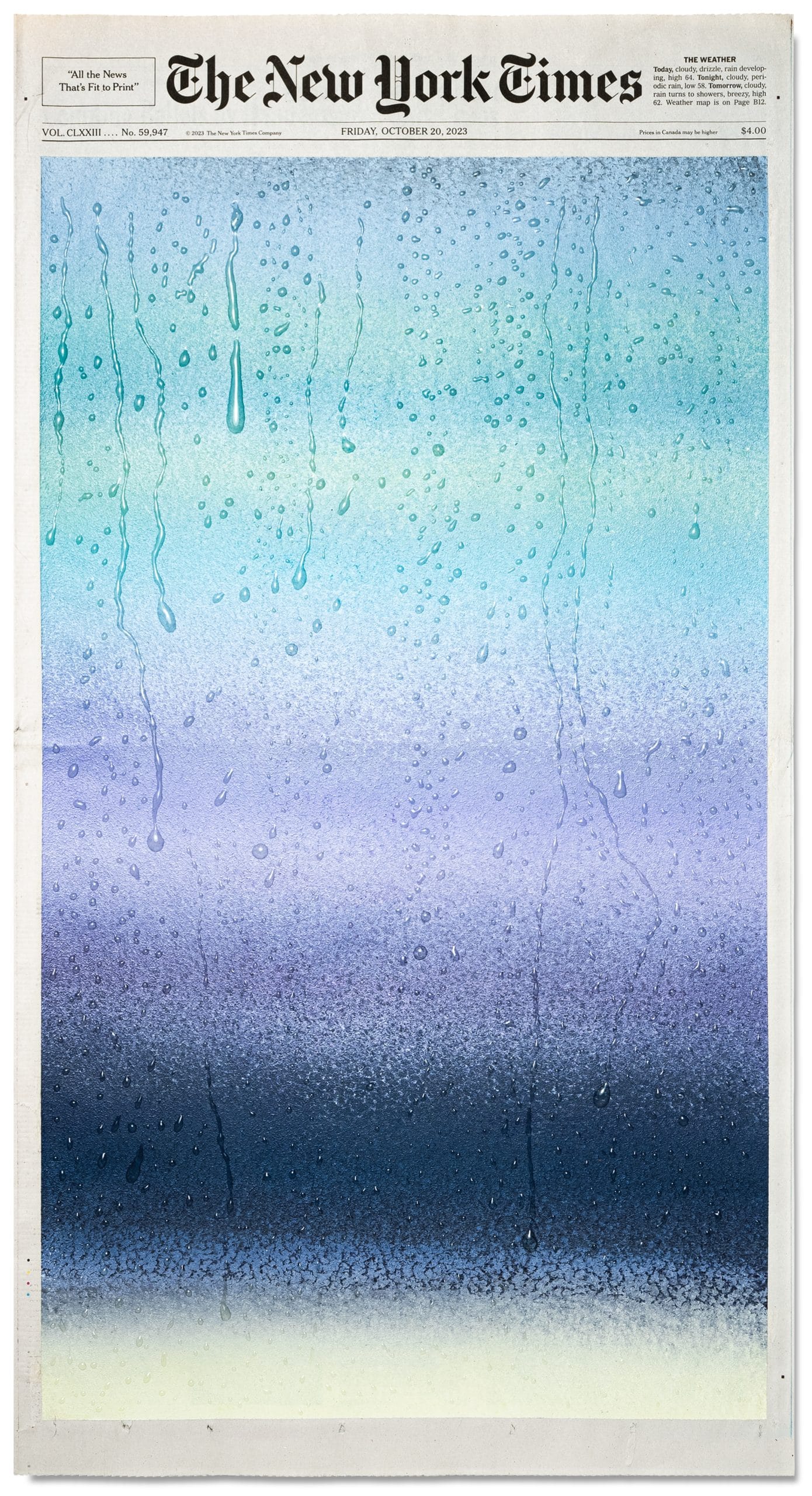


Artist Sho Shibuya paints daily meditations on a copy of The New York Times. These particular examples are part of a recent collection, Falling From the Sky, that features realistic trompe l’oeil droplets that celebrate rain and rainy days. Having spent many an hour contemplating water droplets on my window, I love these. (Image credits: S. Shibuya; via Colossal)
Fediverse Reactions
-

Espresso in Slow-Mo
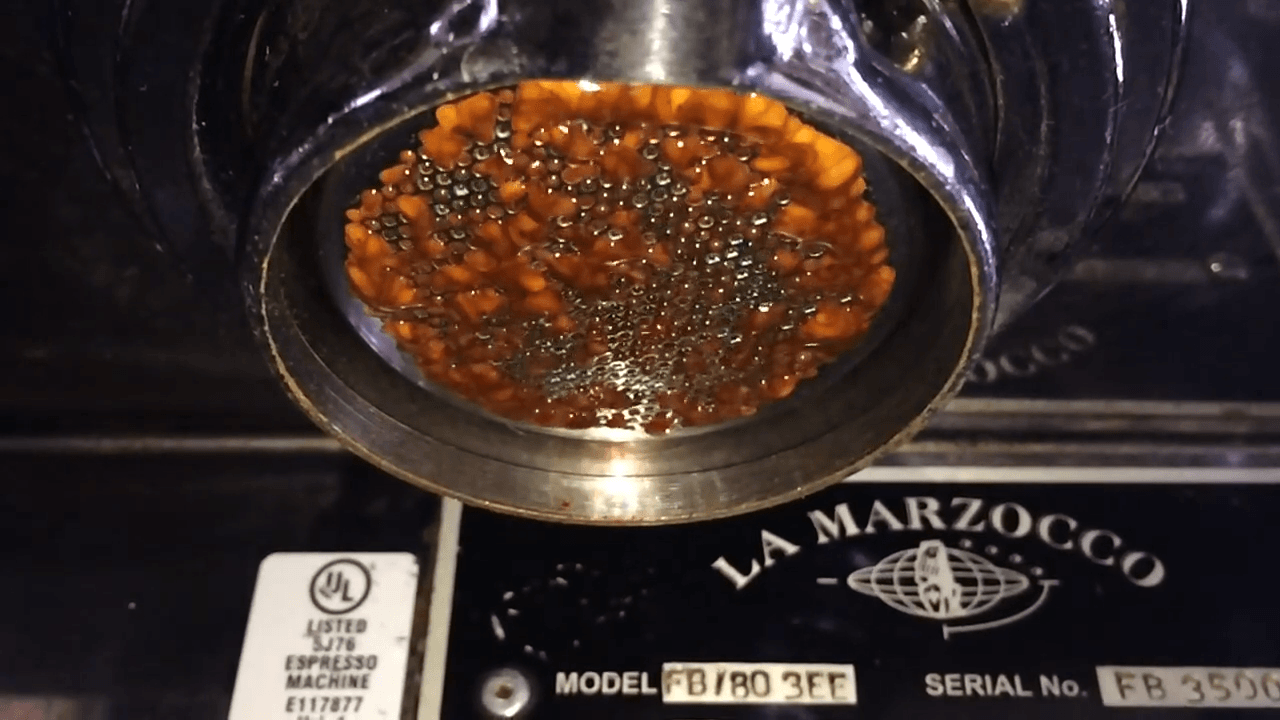
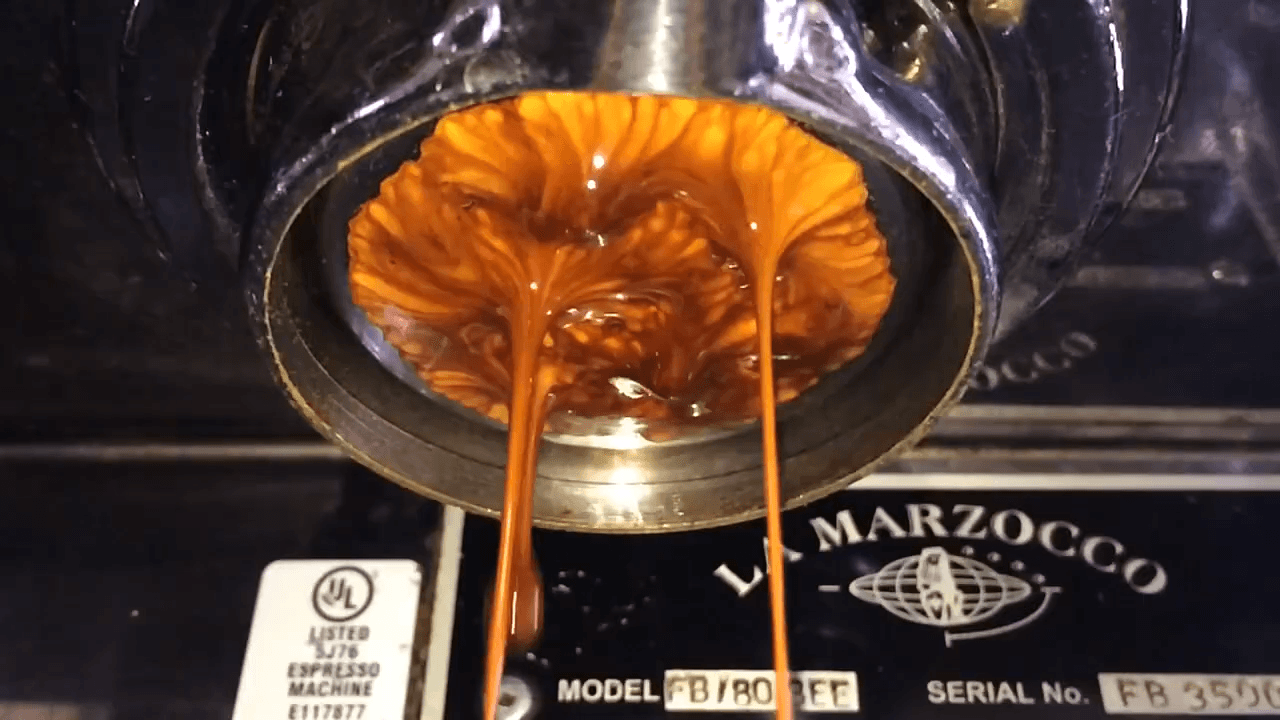
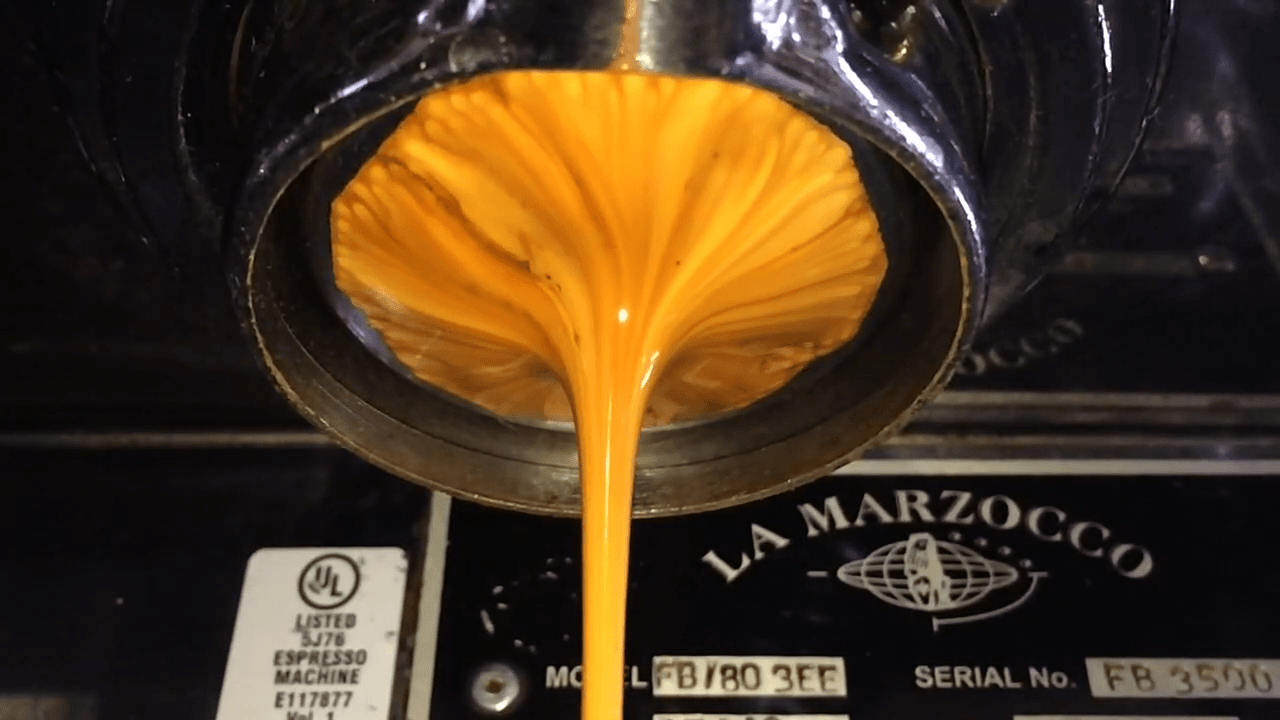
Espresso has some pretty cool physics. But it’s also just lovely to watch in slow motion. This video offers a look at the making of an espresso shot at 120 frames per second (though you can also enjoy a 1000 fps version here). Watching the film form, expand, and break up at the beginning and end of the video is my favorite, but watching how the occasional solid coffee grains make their way into and down the central jet is really interesting also. (Video and image credit: YouTube/skunkay; via Open Culture)
Fediverse Reactions
-
“Vorticity 6”
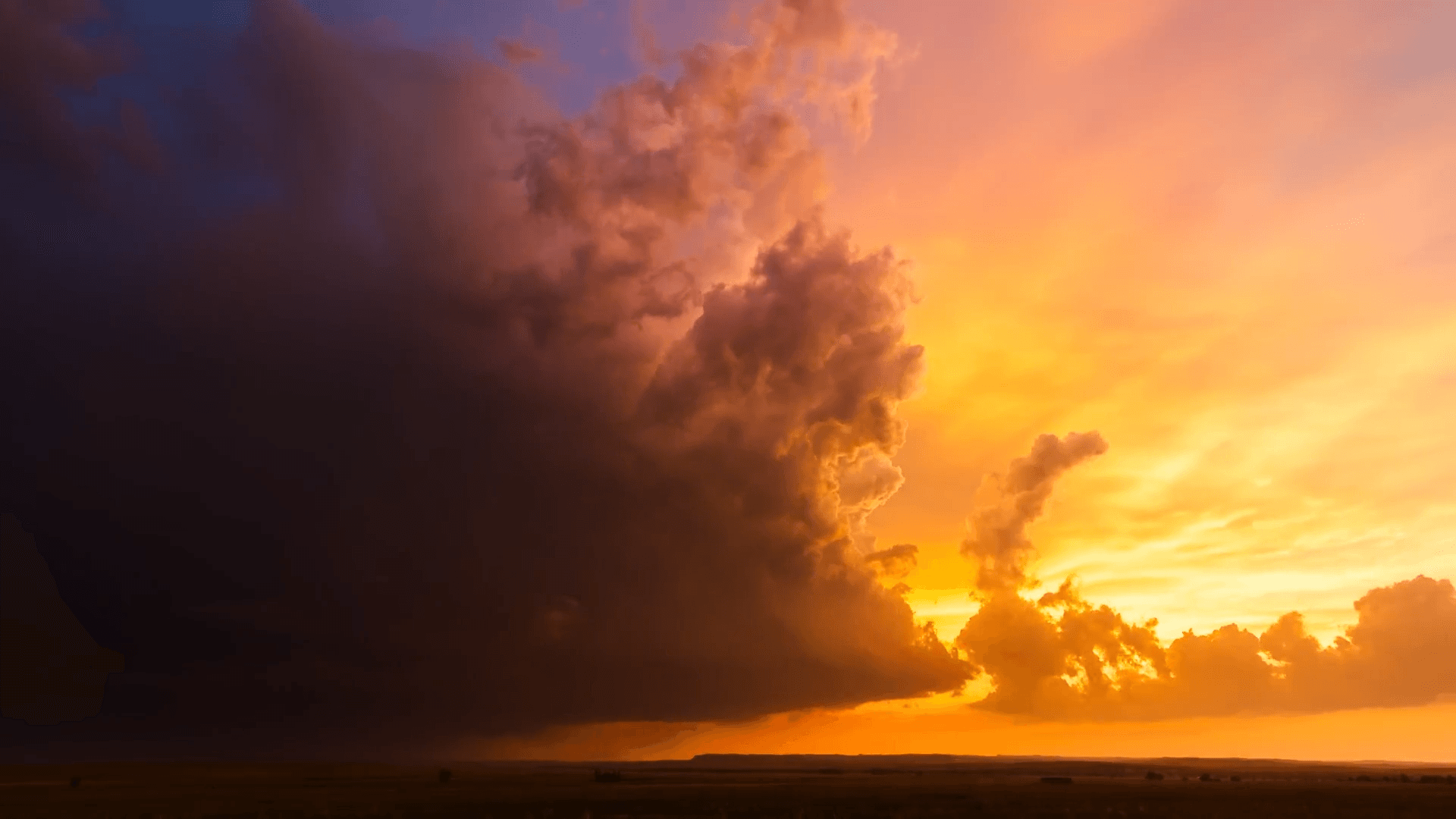
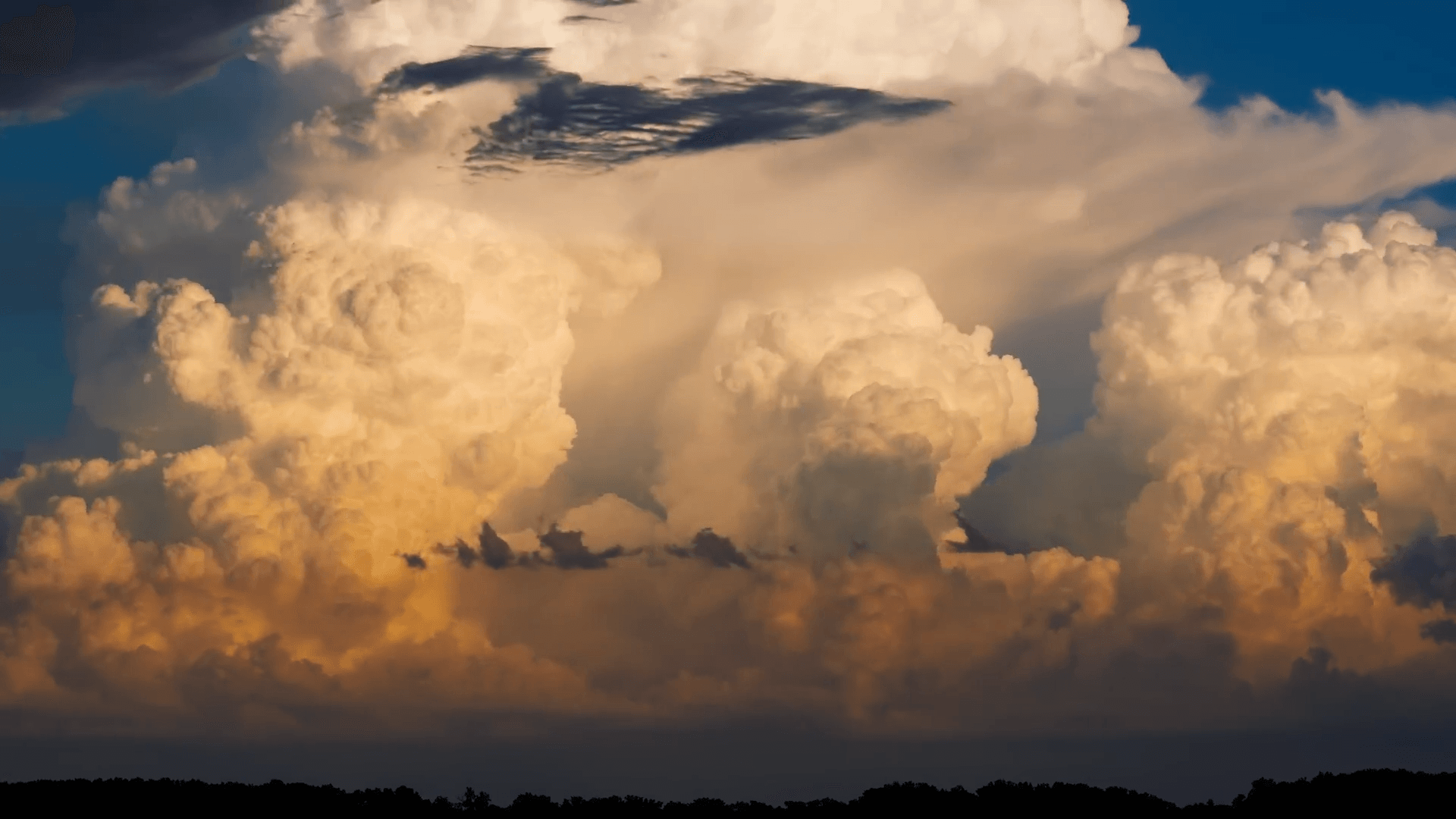
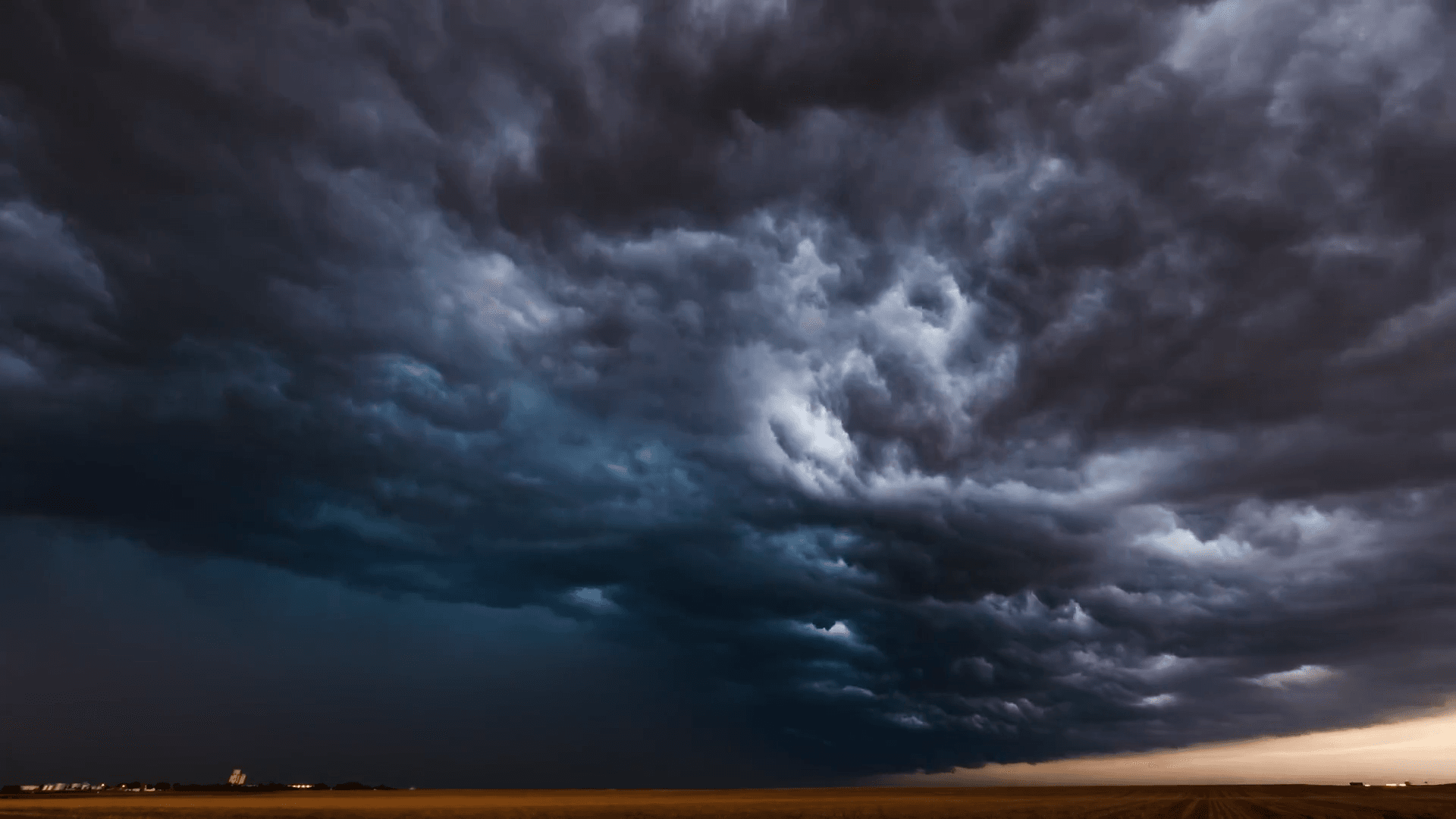
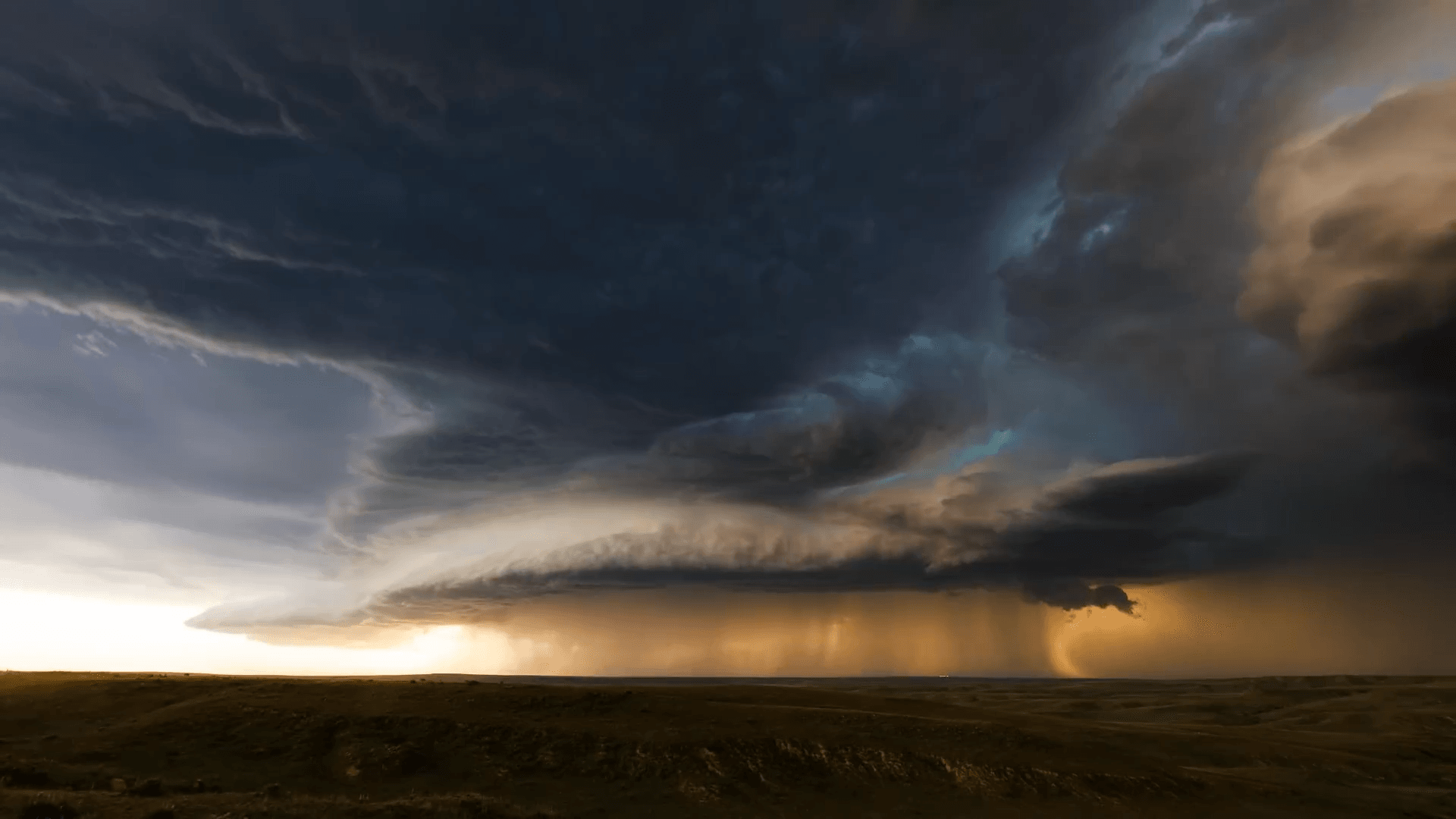
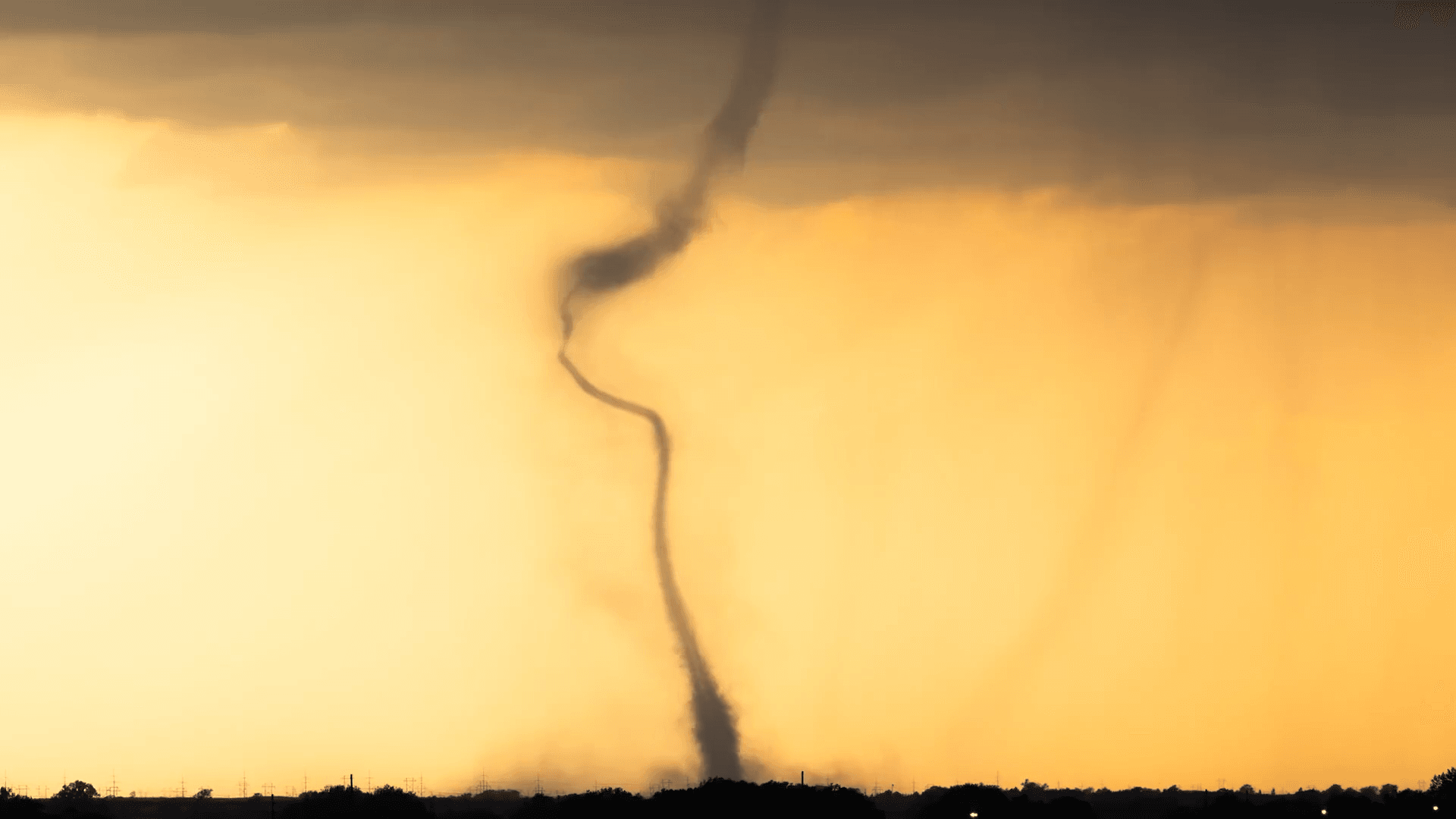
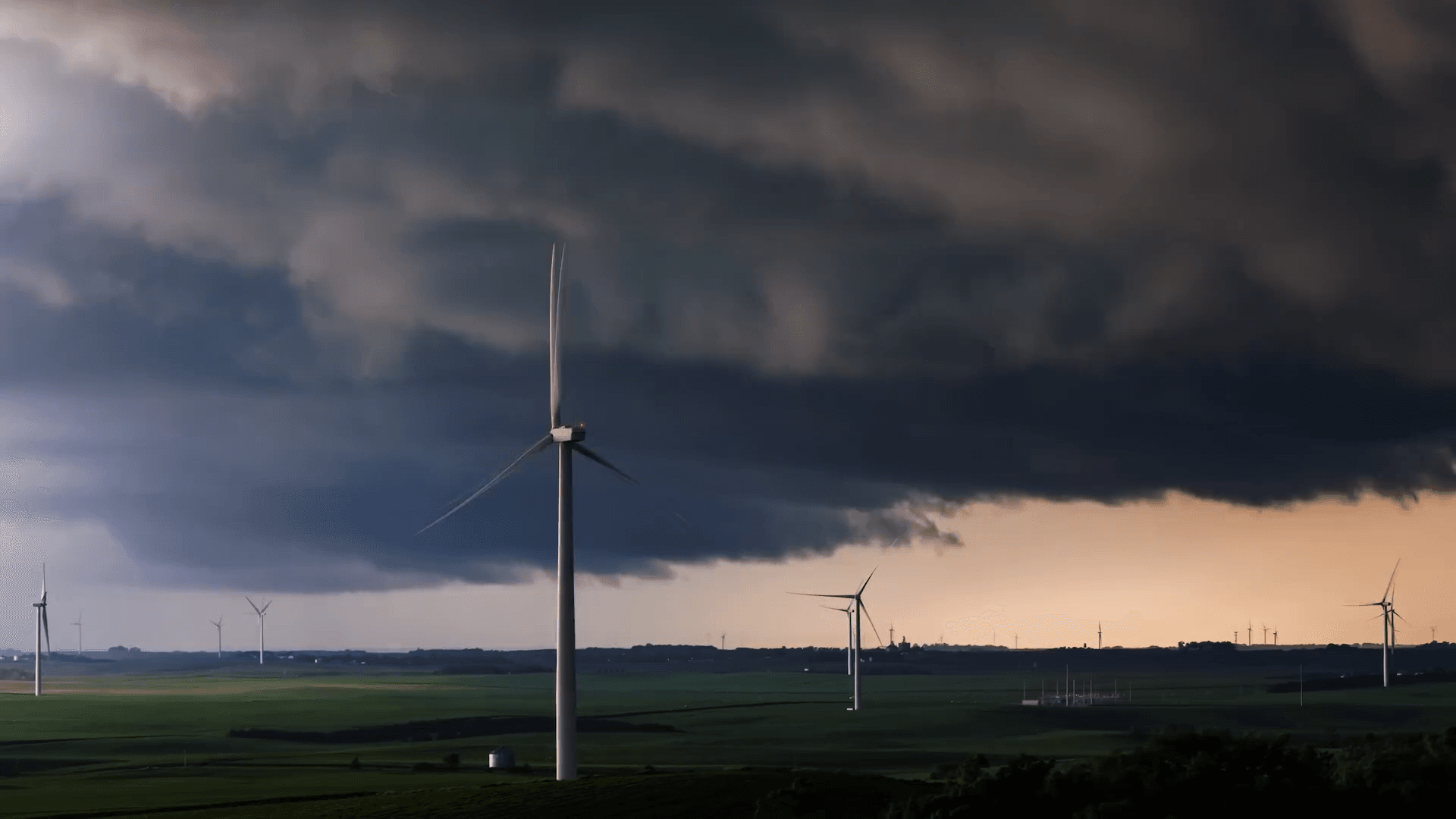
It’s time for another storm-chasing timelapse from photographer Mike Olbinski! “Vorticity 6” focuses on supercell thunderstorms and their tornadoes. There’s billowing turbulent convection, undulating asperitas, bulging mammatus, microbursts, and more. There’s nothing like timelapse to highlight the growth, rotation, and shear involved in these storms. (Video and image credit: M. Olbinski)
Fediverse Reactions
-

Salty Swirls
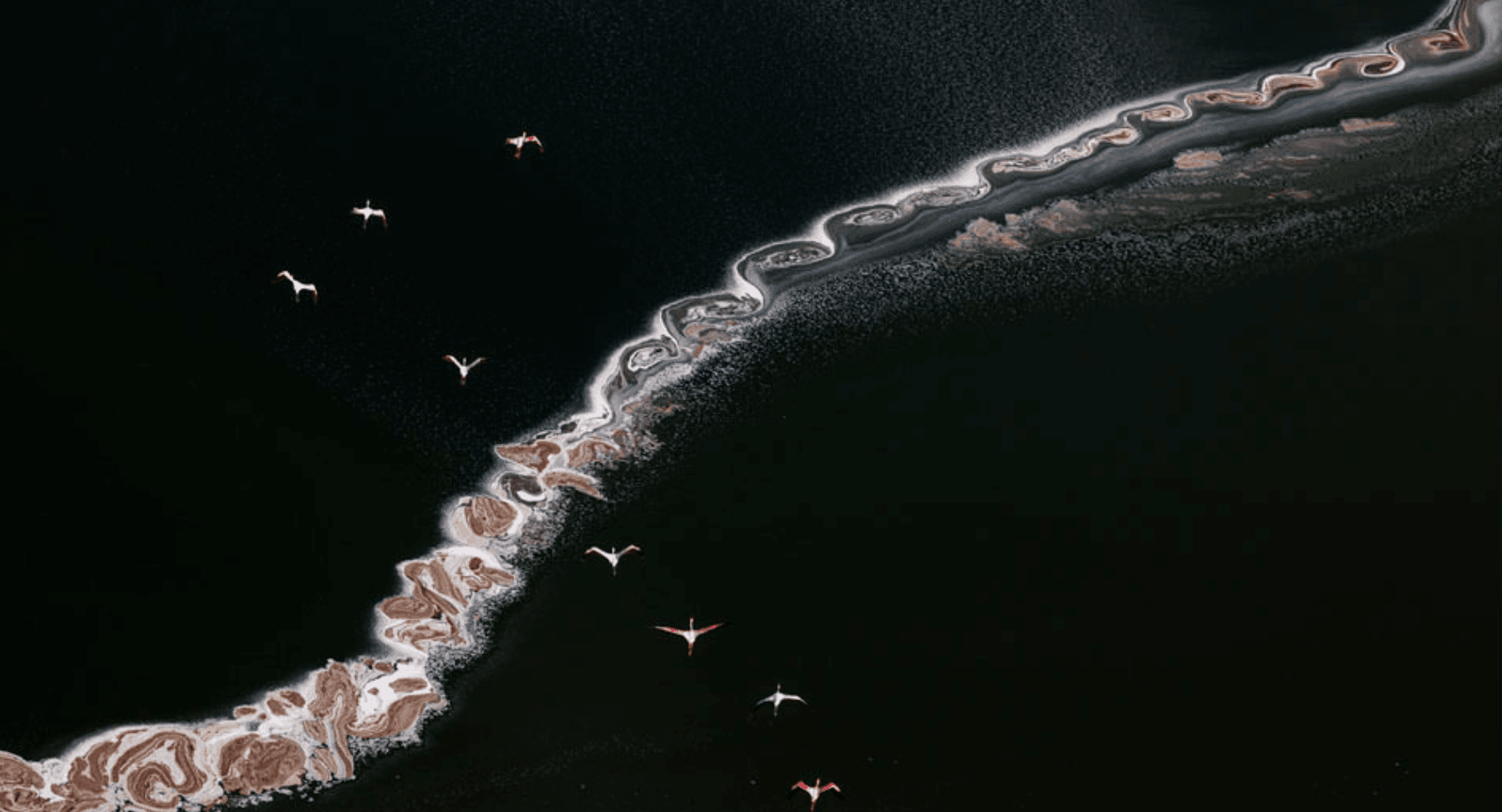
Flamingos soar over swirls of salt and algae in a lake in Kenya’s Rift Valley. Shaped by winds, currents, physics, and chemistry these eddies reflect the motion of the water, evaporation patterns, and more. Without more information, it’s hard to say exactly what shapes the pattern, but it does appear reminiscent of a Kelvin-Helmholtz instability in places. (Image credit: B. Hayden/IAPOTY; via Colossal)
Fediverse Reactions
-
“Sensations”


Beautiful colors, subtle flows, and sudden fractals animate Thomas Blanchard’s “Sensations,” which, like his other short films, is entirely CGI-free. It’s a lovely exploration of droplets, liquid lenses, Marangoni effects, and fingering instabilities. (Video and image credit: T. Blanchard)
Fediverse Reactions
-

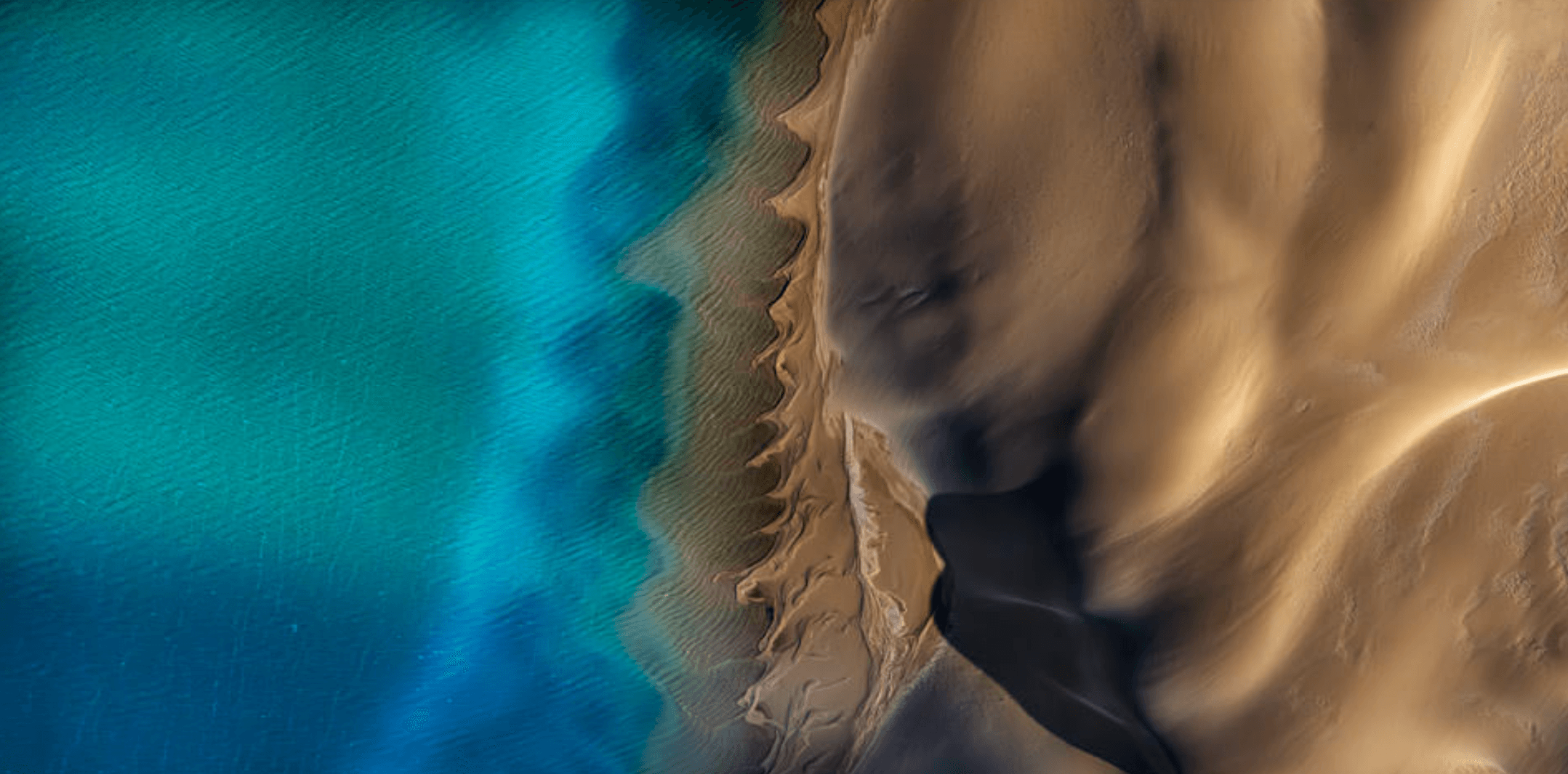
A Sandy Spine
Where sea and sand meet, Gaia’s spine rises. Photographer Satheesh Nair captured this striking image in western Australia, where wind and wave action have dragged a dune into vertebrae-like cusps. Notice how the size and shape of the curves differs between the under- and above-water sections. Those differences reflect the differing forces that shape them — just water for one set, water and air for the other. (Image credit: S. Nair/IAPOTY; via Colossal)
Fediverse Reactions
-

Glacier Timelines

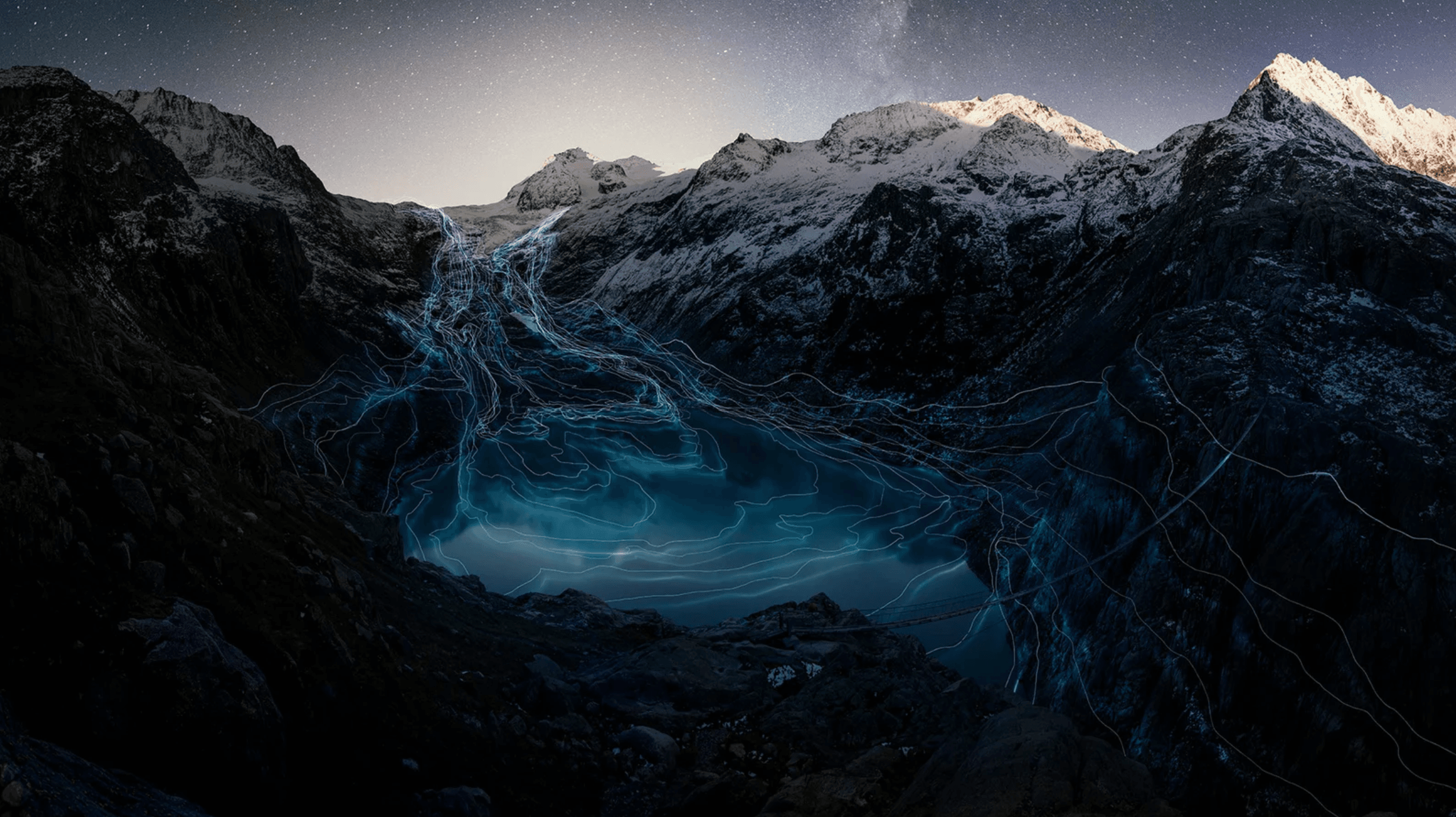
Over the past 150 years, Switzerland’s glaciers have retreated up the alpine slopes, eaten away by warming temperatures induced by industrialization. But such changes can be difficult for people to visualize, so artist Fabian Oefner set out to make these changes more comprehensible. These photographs — showing the Rhone and Trift glaciers — are the result. Oefner took the glacial extent records dating back into the 1800s and programmed them into a drone. Lit by LED, the drone flew each year’s profile over the mountainside, with Oefner capturing the path through long-exposure photography. When all the paths are combined, viewers can see the glacier’s history written on its very slopes. The effect is, fittingly, ghost-like. We see a glimpse of the glacier as it was, laid over its current remains. (Image credit: F. Oefner; video credit: Google Arts and Culture)
Fediverse Reactions
-

Branching Dendrites
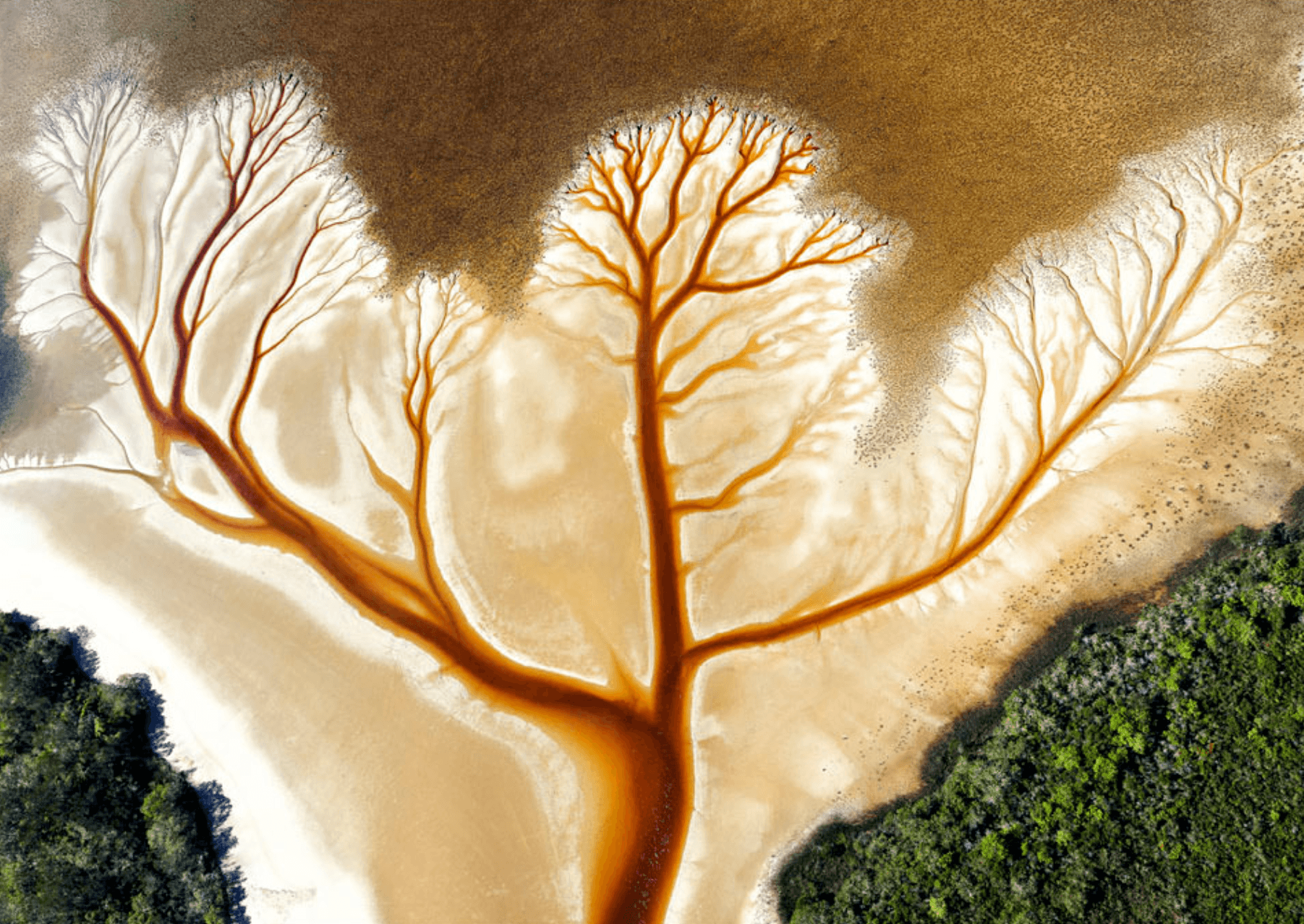
This award-winning aerial image by photographer Stuart Chape shows a tidal creek in Lake Cakora, New South Wales, Australia. At first glance, it looks much like any river delta, with branching dendritic paths that split into smaller and smaller waterways. That’s deceptive, though, because very different forces shape this creek. Because tides move in and out, a tidal creek is home to flows that move both directions — toward and away from the branches. That also means that flow speeds can change rapidly as the tides shift, which in turn changes which sediments get lifted, dropped, and moved around the creek bed. (Image credit: S. Chape/IAPOTY; via Colossal)
Fediverse Reactions
-
“Creation”


Videographer Vadim Sherbakov’s short film “Creation” is full of glittery vistas created under a macro lens. Shifting, particle-seeded flows shimmer in bright colors. Glistening deltas shift and form, and Marangoni flows generate feathers and tree-like dendritic arms. Macro flows never cease to fascinate. (Video and image credit: V. Sherbakov; via Colossal)