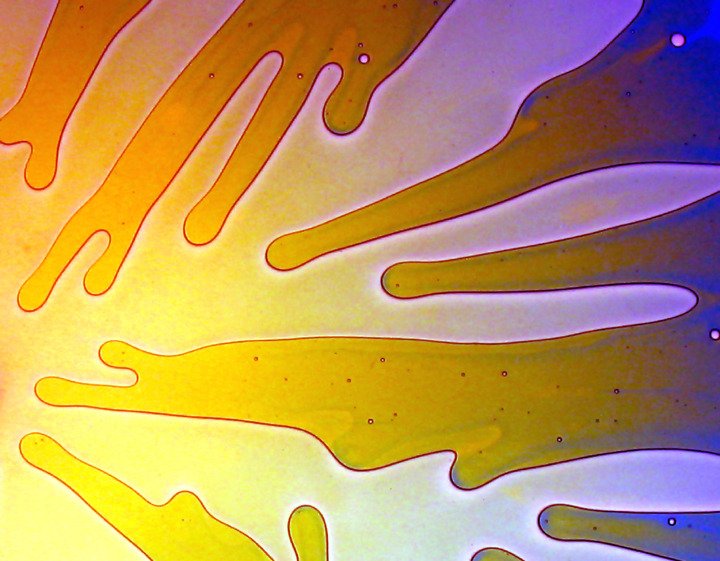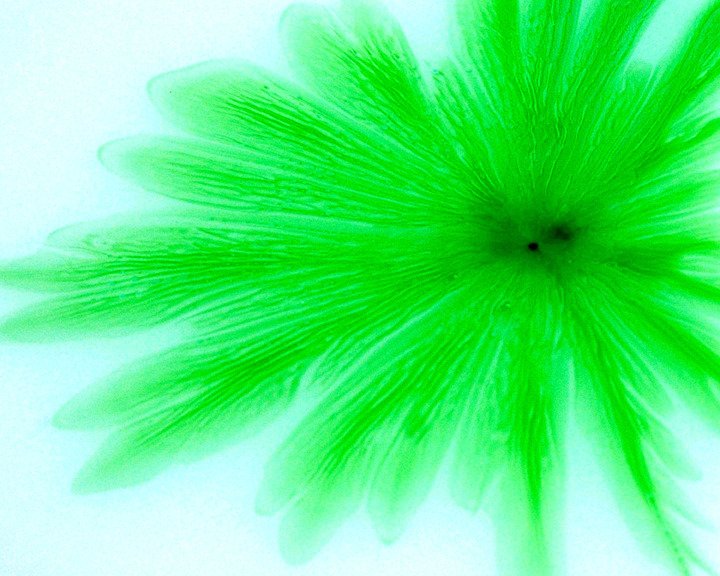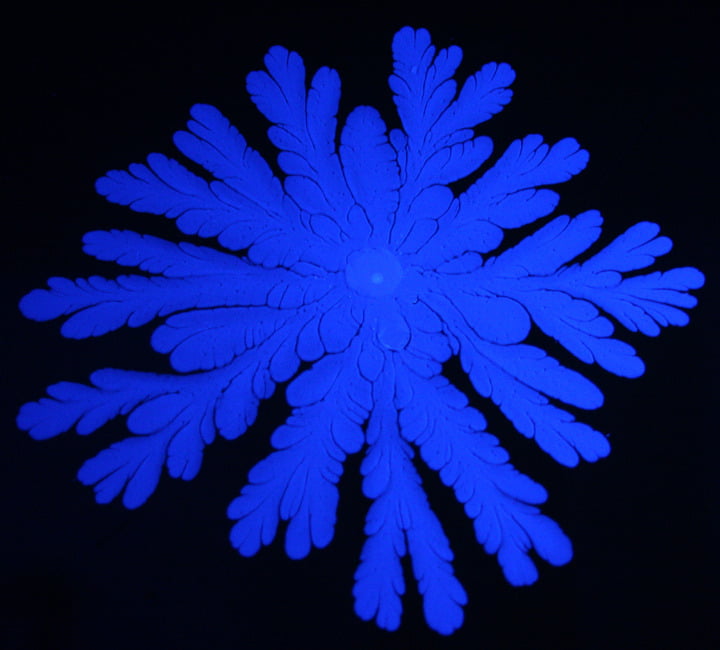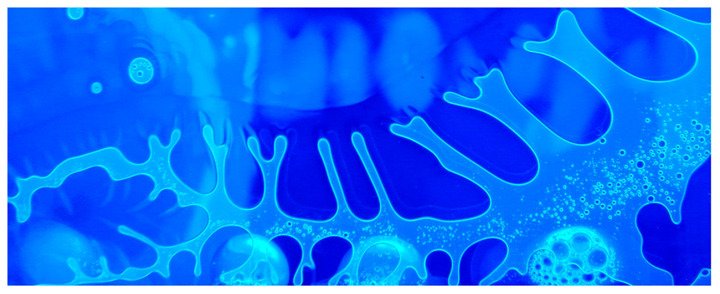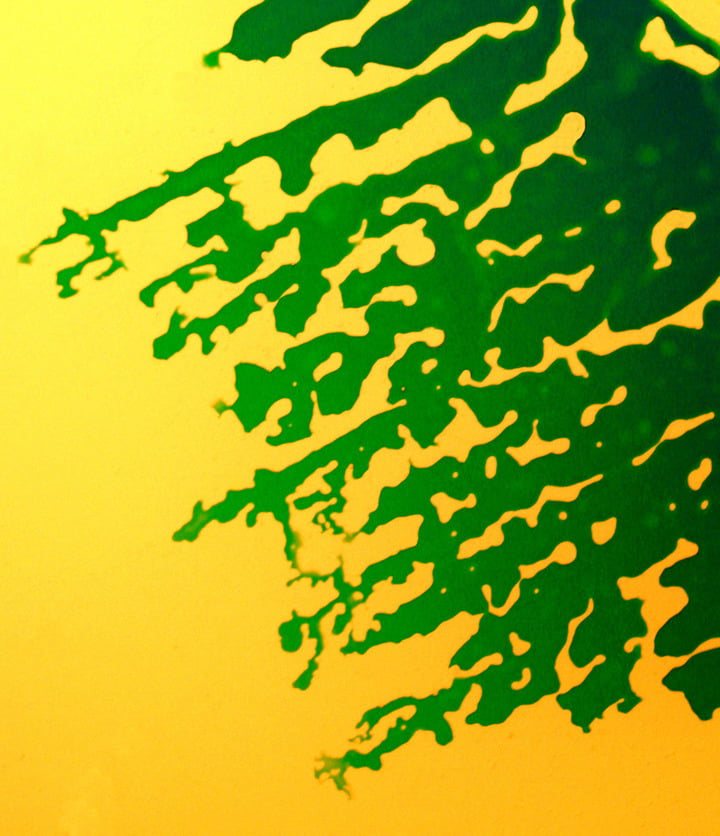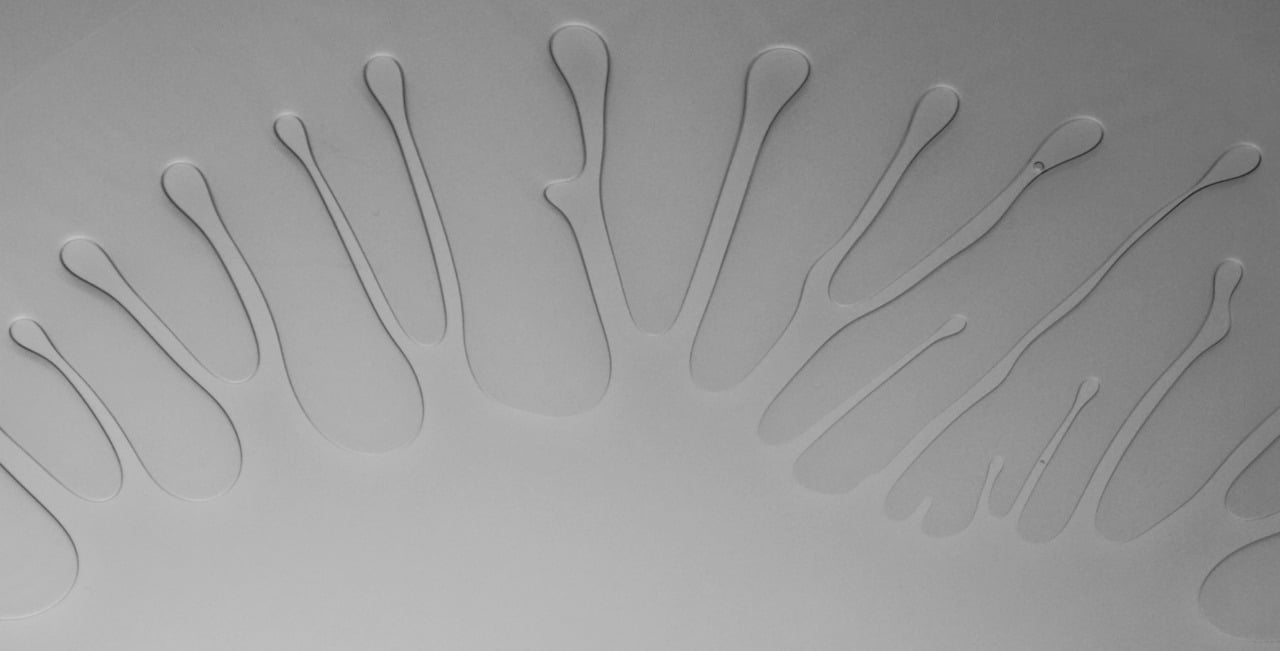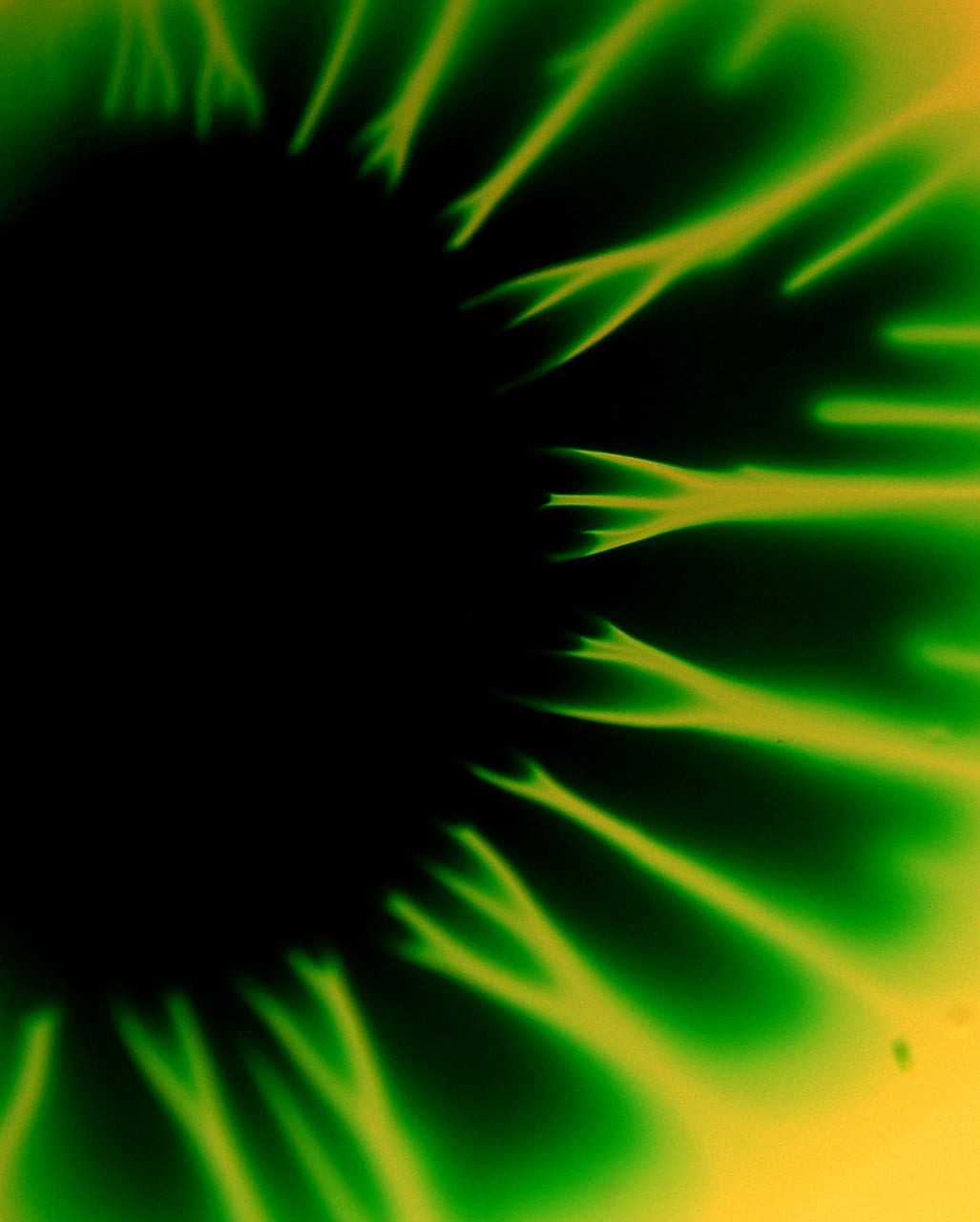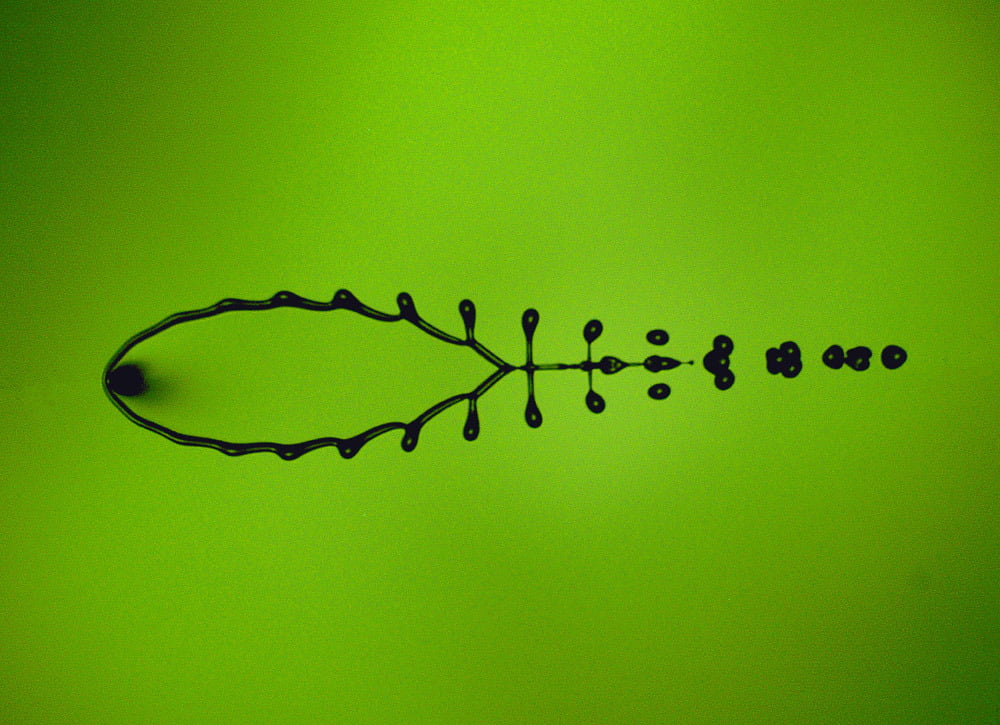
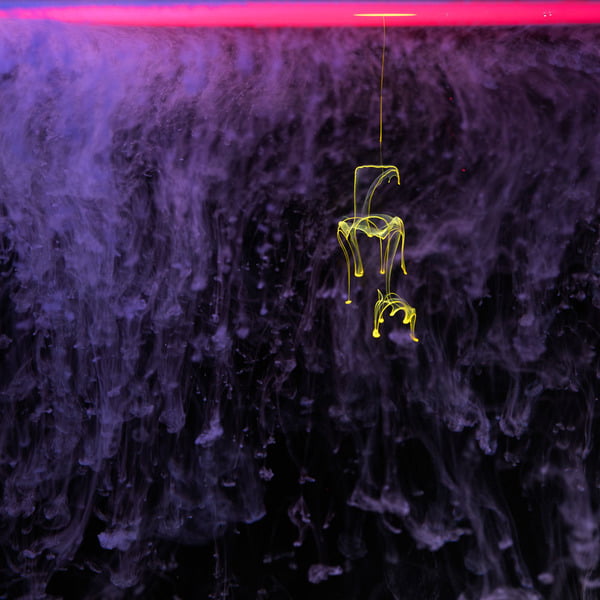
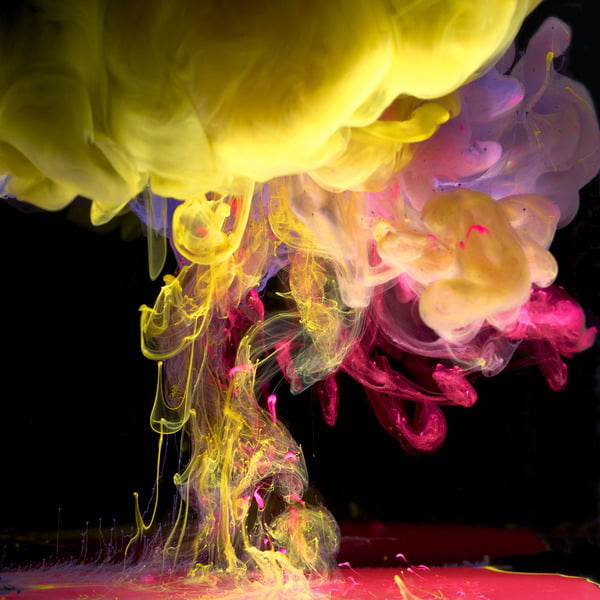
A soap bubble bursts when its surface tension is broken, and, although from our perspective, the bubble bursts instantly, the process is actually directional. The bubble disintegrates from the point of contact outward. See it in high-speed video here or see more photos here. (Photo credit: Richard Heeks) #
Category: Art

Spiky Ferrofluid
Ferrofluids consist of ferromagnetic nanoparticles suspended in a fluid. When subjected to strong magnetic fields, they develop a distinctive peak-and-valley formation due to the normal-field instability. The shape is a result of minimizing the magnetic energy of the fluid. Both gravity and surface tension resist the formation of these peaks. Ferrofluids, in addition to appearing in art exhibits, can be used as liquid seals, MRI contrast agents, and loudspeaker cooling fluids. (Photo credit: Maurizio Mucciola)

Vortex Ring Collisions
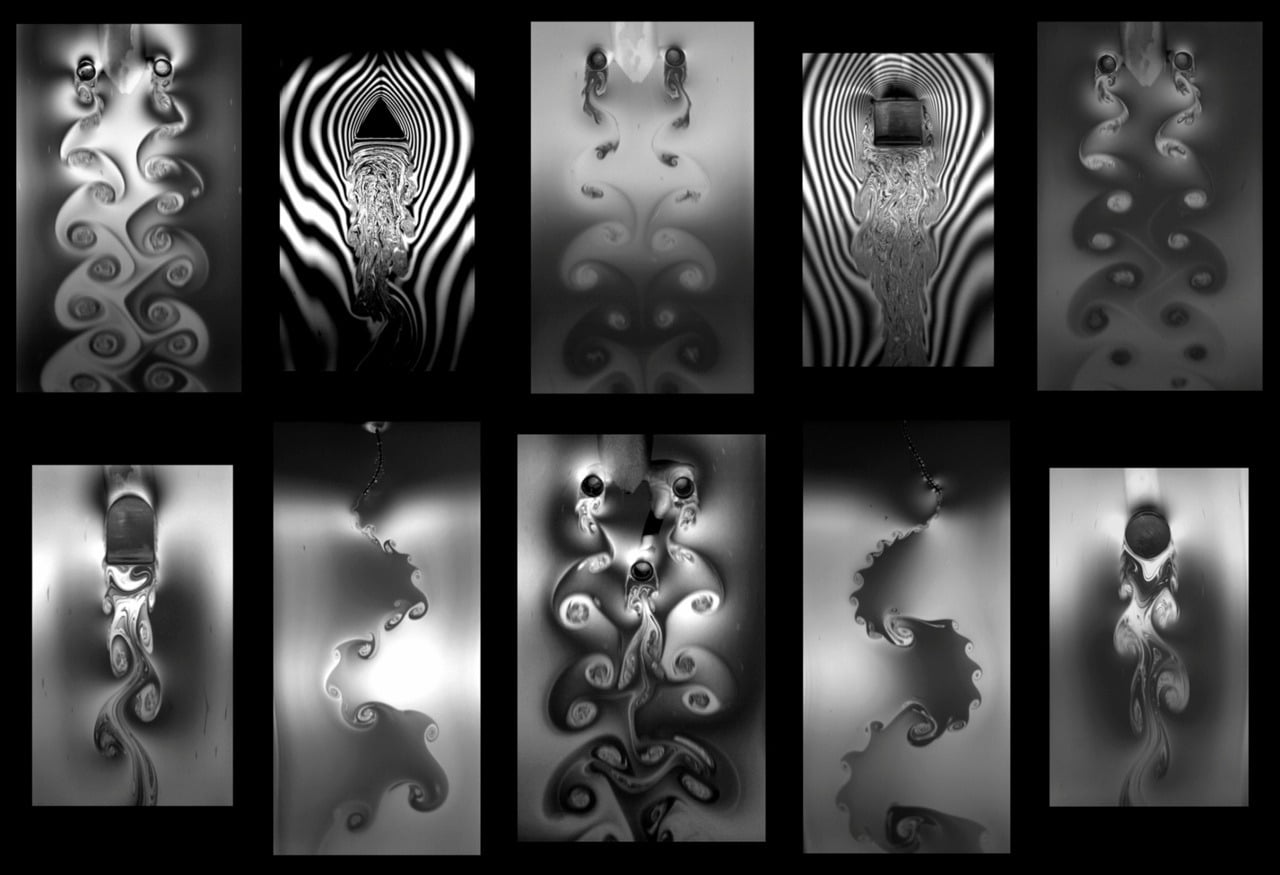
Gorgeous color schlieren photography reveals the development and interaction of ring vortices. (Photo credit: Rebecca Ing)
It’s Schlier-tastic!!
These are my invisible wonders! Gas flows and fluid interactions. Nothing but hot air, metho and acetone, yup, humble old nail polish remover.
The images were captured using a colour indicating z-system schlieren optical array, an open shutter and a flash duration of 125 microseconds.

Colliding Jets

Paint Vibrations
Paint vibrated on a loud speaker explodes in multi-colored jets and droplets. Most paints are shear-thinning non-Newtonian fluids (like ketchup, shampoo, or whipped cream), meaning that their viscosity decreases as they are sheared. This allows them to flow more readily once they are perturbed. #

High Hopes
This gorgeous high-speed video captures bubbles, droplets, wakes, cavitation, coalescence, jets, and lots of surface tension at 7000 fps. The authors unfortunately haven’t indicated whether this is air in water or something more viscous, but regardless there are some great phenomena on display here. # (via Gizmodo)

High-Res Rayleigh-Taylor Instability
When a heavy fluid sits atop a lighter fluid, the interface between the two breaks down through the Rayleigh-Taylor instability. This computation of a 2D interface shows the near fractal behavior of this instability as whorls and eddies of all different scales form and mix the fluids. (submitted by @markjstock)

Gelatin
Gelatins are actually colloidal gels, or a liquid dispersed inside a solid, cross-linked network. The crosslinks give the gelatin structure, but much of its dynamic behavior remains reminiscent of fluid motion.

Rayleigh-Taylor Art
The Rayleigh-Taylor instability occurs when a denser fluid lies atop a lighter fluid (relative to the gravitational field). The interface between the fluids deforms and the two fluids form finger-like protrusions that turn into mushroom caps and mix the dissimilar fluids together. This video, though based on a 2D Rayleigh-Taylor instability numerical simulation, was actually part of an art exhibit. (submitted by Mark S)
Personally, I recommend putting together a playlist of your favorite late 60s/early 70s rock (Pink Floyd, late Beatles, Jimi Hendrix, etc.) and sticking it on in the background while you watch the video in HD. It’s totally worth the 15 minutes. Especially in the later stages of each segment, the mixing between fluid layers really brings to mind cloud patterns on Jupiter or Saturn.

Stereo Liquid Sculpture
This stereo 3D photo shows the Worthington jet ejected when a droplet impacts a pool. The flat crowning drop is formed from an ejected droplet colliding with a falling droplet.