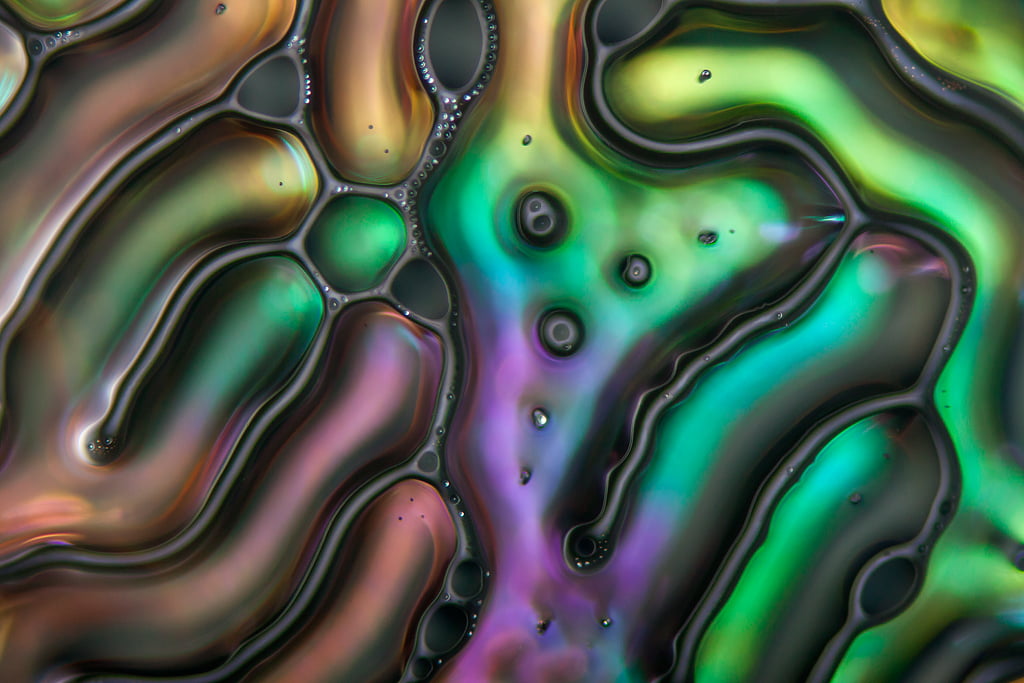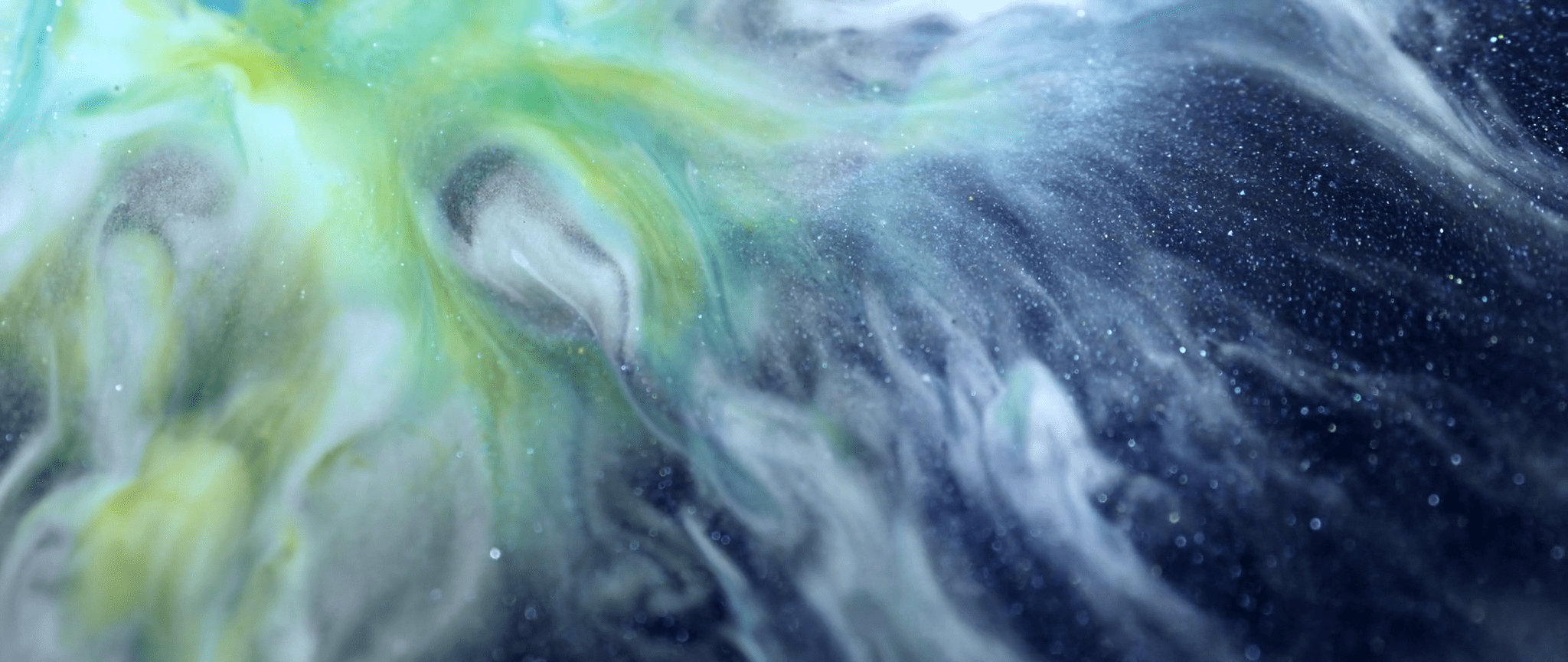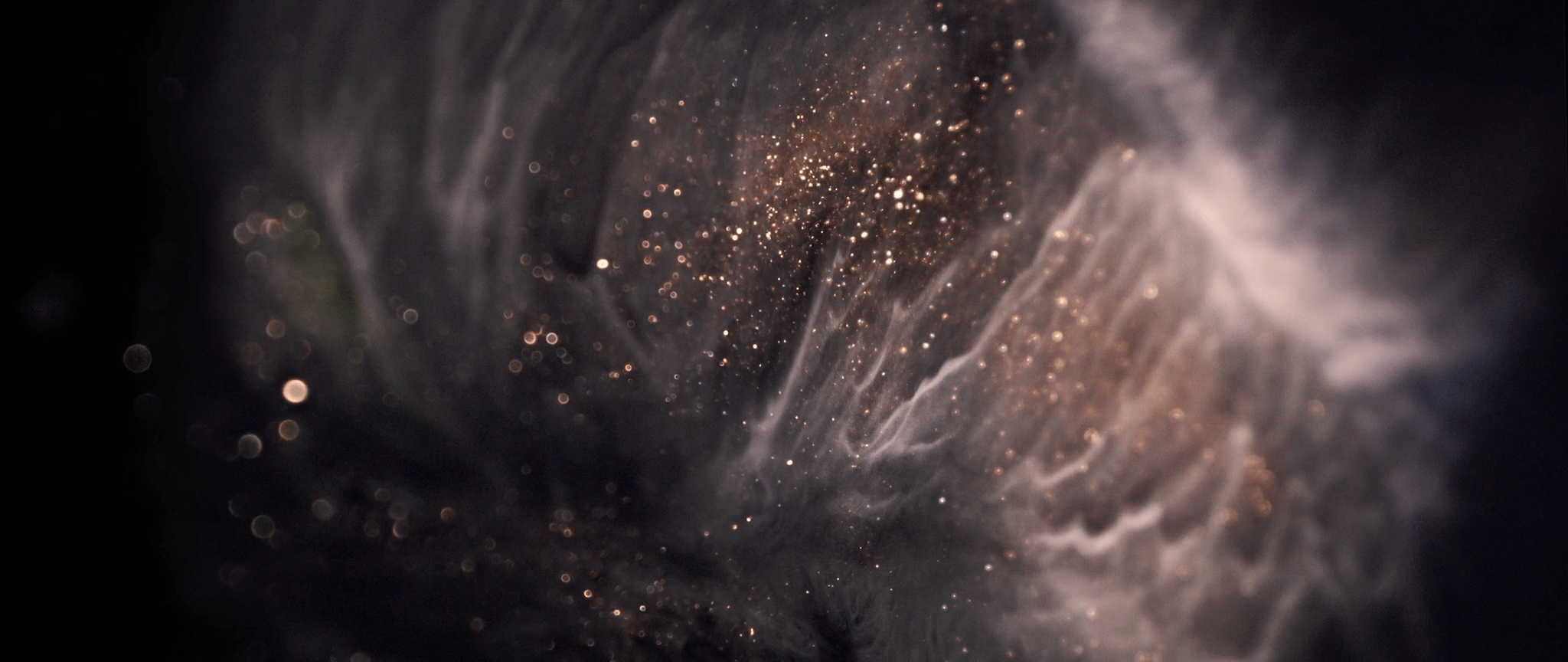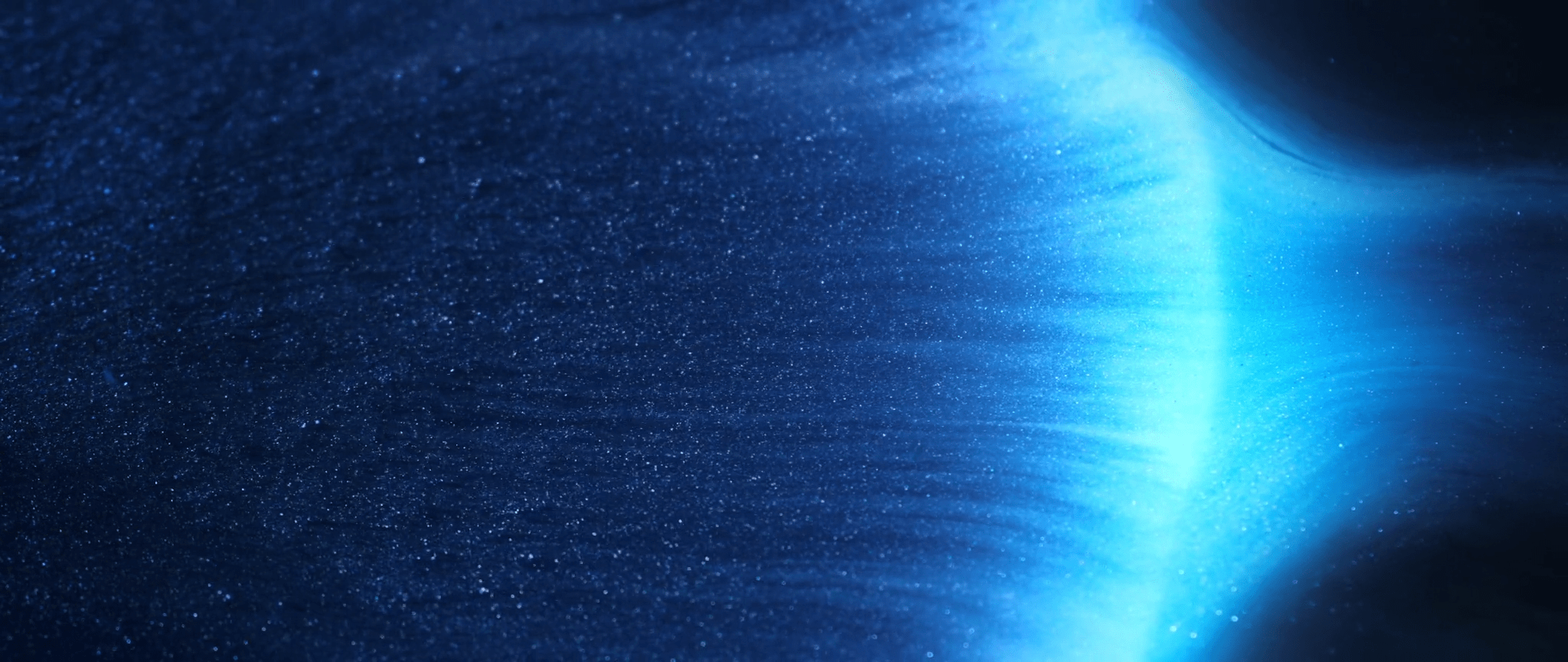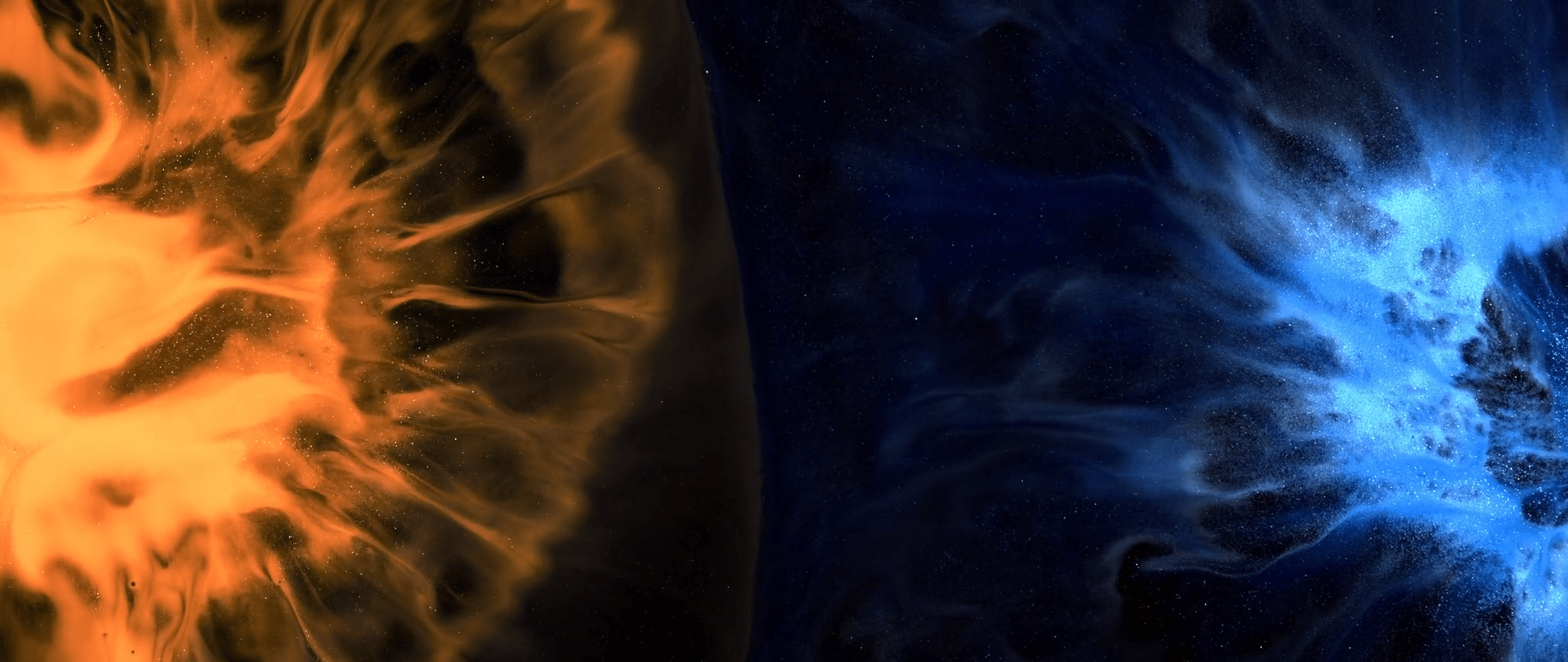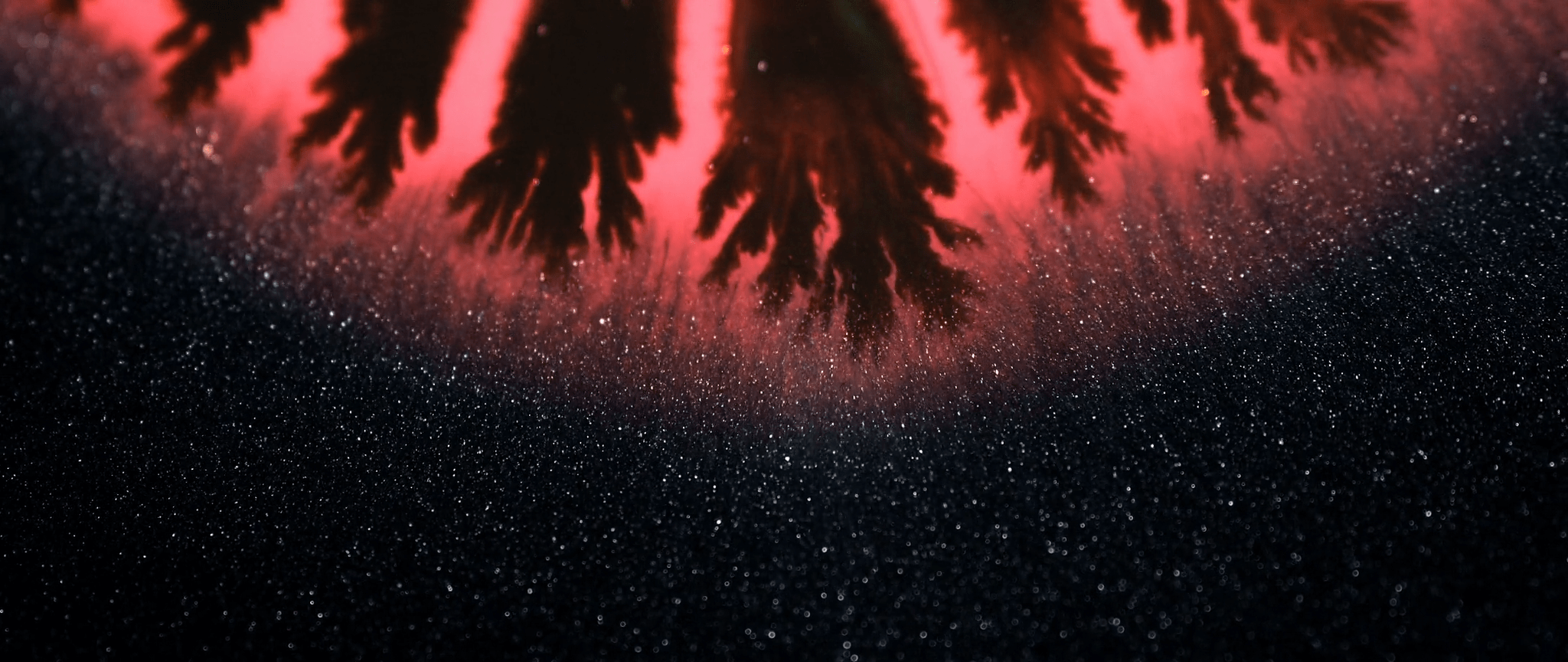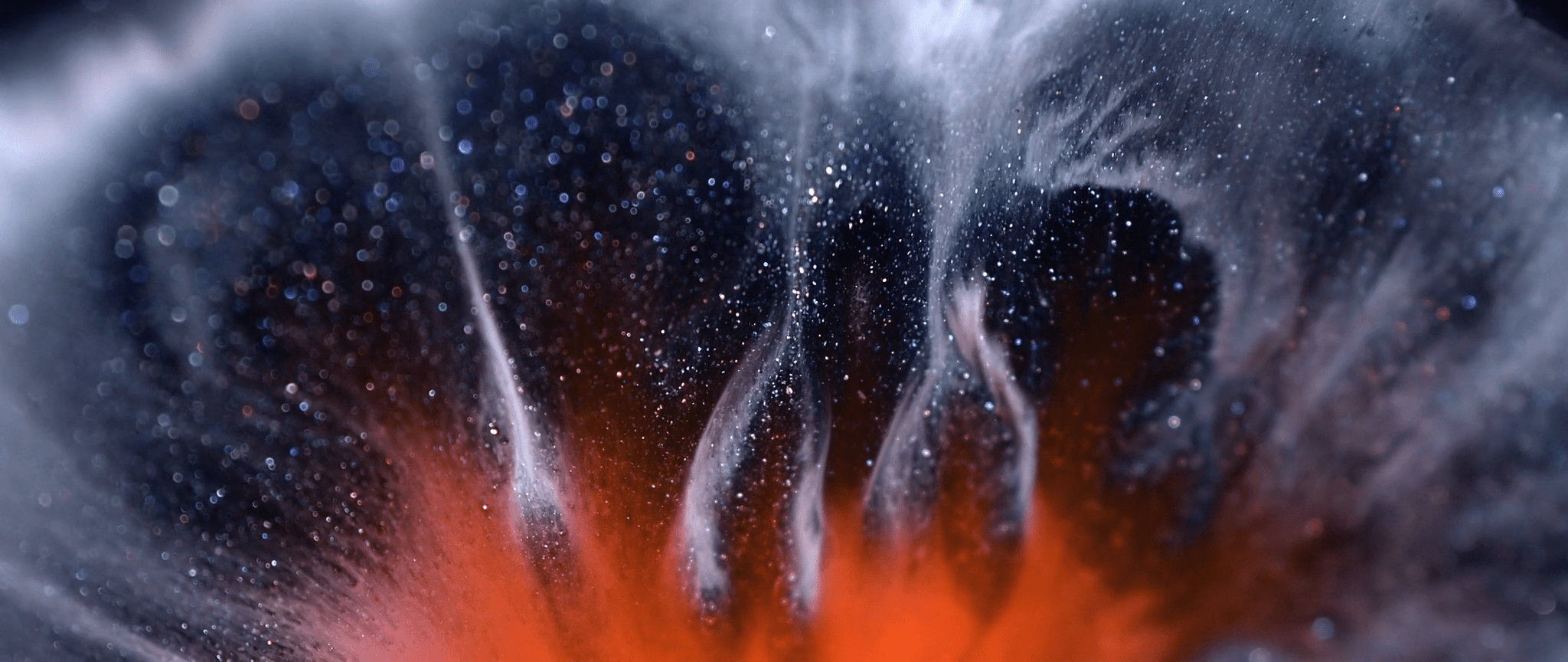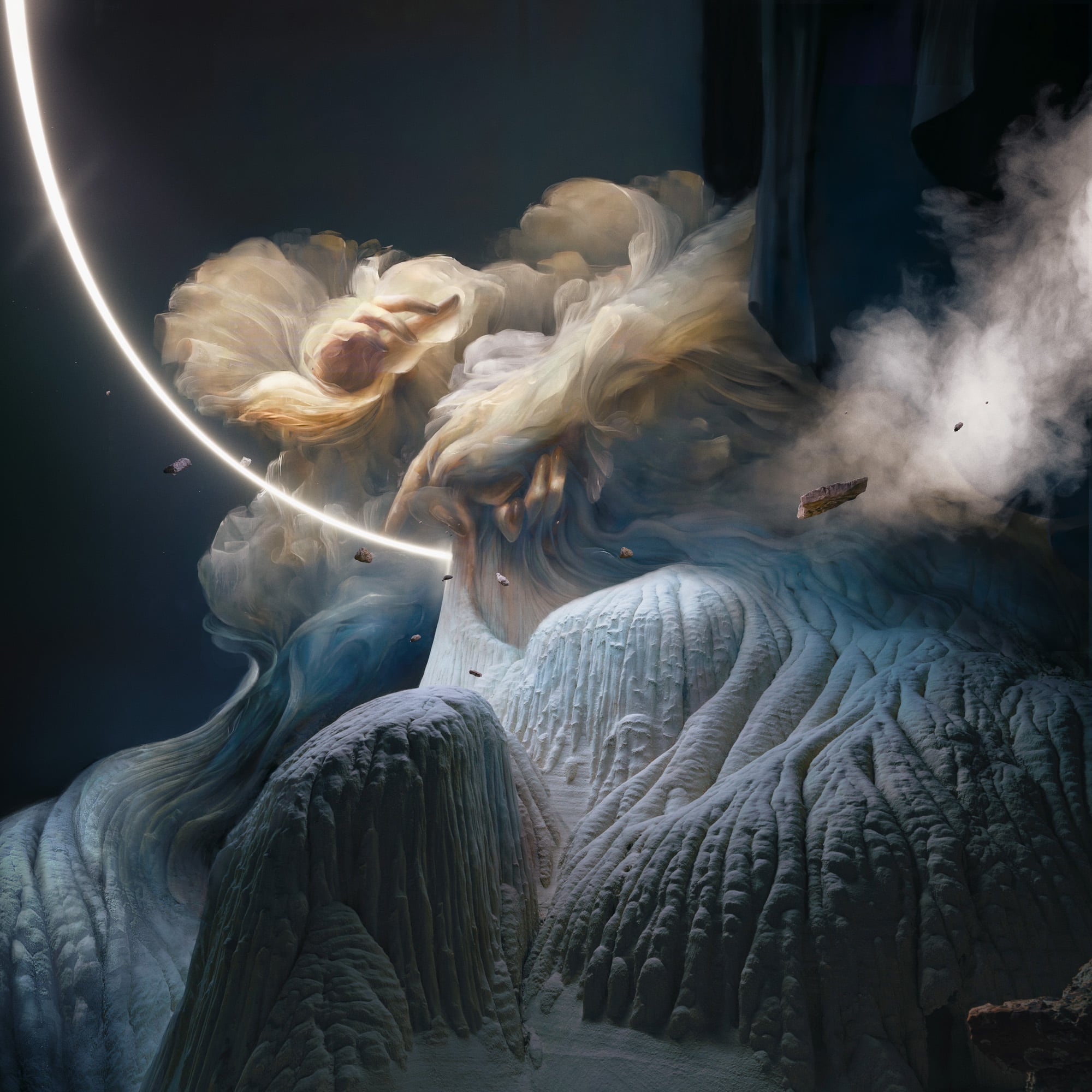
To capture his images of auroras, nebulas, and comets, photographer Juha Tanhua points his camera lens downward, not upward. Despite their astrophysical appearance, Tanhua’s “oil paintings” are actually parking lot oil spills. The stars are roughened bits of asphalt, and the colors come from thin film interference in a layer of oil (similar to the way colors appear in soap bubbles). It’s amazing how much beauty he captures in examples of urban pollution. (Image credit: J. Tanhua; via Colossal)
Category: Art

“Heaven”
Wispy white cirrus clouds cover dark skies glittering with stars in Roman De Giuli’s “Heaven”. Or so it appears. In reality, these skyscapes are made with watercolors, ink, and acrylic paint. The vistas are gorgeous regardless of whether they’re driven by turbulent convection (as in the atmosphere) or the Marangoni effect (as in this video)! (Video and image credit: R. De Giuli)

Portraits of Flight
During lockdown, photographer Doris Mitsch turned her eyes to the sky and began capturing these mesmerizing composite images of animals in flight. Vultures, crows, starlings, gulls, and bats all feature in her series. Some images, like “Lockdown Vulture (Signature)”, feature a single bird’s movement over a minute. Others show entire flocks over extended periods.
I love how the images capture a sense of speed. Given equal timing between images, the lines with more space between each snapshot of a bird indicate a faster speed. It’s a bit like having particle image velociometry frames stacked atop one another! (Image credit: D. Mitsch; via Colossal)

“Delusion”
Soap films are ephemeral and ever-changing. The shifting concentration of surfactants along the surface of the film, combined with thermally-driven convection, keeps the fluid in motion. The shifting colors reflect subtle changes in the soap film’s thickness. Over time, gravity drains fluid from the top of the film, thinning it to the point that it appears black. This photo from Bruno Militelli captures all of that detail in a striking and fascinating image that earned him 2nd place in the Manmade category of the Close-Up Photographer of the Year awards. You can find more winners of the competition here, and more of Militelli’s work on his website and Instagram. (Image credit: B. Militelli)

Lava Landscapes
Lava flows are, by definition, transient. In his LAVA series, photographer Jan Erik Waider explores the changing vistas and textures of Iceland’s Fagradalsfjall volcano eruption. Using a telephoto lens, he captures incredible details of the charred, cooling outer crust of the lava and the glowing molten interior. Only minutes later, fresh lava tore through, destroying these natural sculptures. You can find prints of his images on his website. (Image credit: J. Waider; via Colossal)

Frozen Wind-Sculpted Sands
On the cold, wind-swept beaches of Lake Michigan, the sands sometimes turn into a landscape of miniature hoodoos. Strong winds erode the frozen sand into these shapes, which last only days before wearing away or falling over. This photographic series by Joshua Nowicki immortalizes the ephemeral winter sculptures. You can see more of his photography on his Instagram. (Image credit: J. Nowicki; via Colossal; see also)

Luminous Fruits
Light shines through citrus and melon in this
photographicphotorealistic series of paintings from artist Dennis Wojtkiewicz. The strong illumination reveals the underlying structure of pith, pulp, and juice. The deformable pockets of fluid in the peel of citrus fruits are the source of some incredible microjets. When the peel bends, it compresses these tiny fluid-filled pockets, creating incredibly high pressures that eventually drive a burst of oil at g-forces comparable to those felt by a bullet fired from a gun. Learn more about citrus jets here and see more of Wojtkiewicz’s work and purchase prints here on his site. (Image credit: D. Wojtkiewicz; via Colossal)ETA: Thanks to A.J. for pointing out that Wojtkiewicz is, in fact, a painter (and not a photographer), making his work all the more astounding! We regret the error.

“Halo”
Fluids create mesmerizing practical effects in this new experimental film from the Julia Set Lab. I love how the visuals mess with your sense of scale. Some of the sequences look like they could be a solar firestorm or disintegrating sea ice, though in reality the camera’s field of view is probably smaller than your palm. The filmmakers provide no information on the fluids they use, but I spy some hints of partially miscible ingredients, some chemical reactions, and plenty of Marangoni action. (Video and submission credit: S. Bocci/Julia Set Lab)

Moody Waves
Lines of waves emerge from thick morning fog in this series by photographer Raf Maes. The eerie, slightly surreal images were captured in Venice, near Los Angeles. So often ocean photography features huge, turbulent breaking waves. I find it really neat to see these long, unbroken wave crests appearing from the mist. (Image credits: R. Maes; via Colossal)

“One Month of Sun”
Get lost in the beauty of our star with Seán Doran‘s film “One Month of Sun”. Constructed from more than 78,000 NASA Solar Dynamics Observatory images, the video shows solar activity from August 2014, particularly the golden coronal loops that burst forth from the sun’s visible surface. These bursts of hot plasma follow the sun’s magnetic field lines, often emerging from sunspots. (Image and video credit: S. Doran, using NASA SDO data; via Colossal)