This short film from artist Thomas Blanchard focuses on carnivorous plants and their prey. These plants — including Venus fly traps, sundews, and pitcher plants — rely on fluids both to attract and capture their prey. Plants like the Venus fly trap build turgor pressure in their cells to move and prop open their leaves. Once triggered, a mechanical release allows the fluid pressure to snap the trap closed. Sweet-smelling fluids invite insects in, only to become nightmarishly difficult to escape once prey try to unstick themselves from the highly viscoelastic liquids. (Video and image credit: T. Blanchard; via Colossal)
Category: Art

Yosemite in Winter
Waterfalls, fog, and snow wreathe Yosemite in these beautiful winter landscapes by photographer Michael Shainblum. I love how the tendrils of water and mist give you a real sense of the flow, even in still photos. Check out more of Shainblum’s photography on his Instagram and go behind-the-scenes on his Yosemite trip with this video. (Image credit: M. Shainblum; via Colossal)

“Beyond the Horizon”
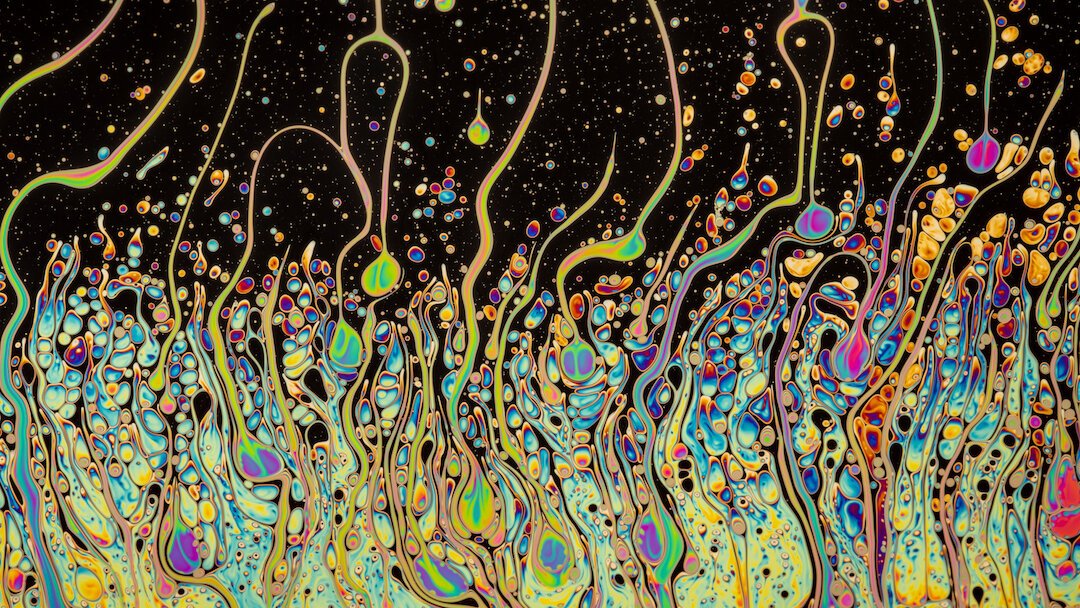
Shifting bubbles and psychedelic colors abound in this abstract video from artist Rus Khasanov. He provides no specifics as to the materials he uses for this video, but my guess is they likely include oil, soap, and polarizing filters. It’s a fun and funky video! See more of Khasanov’s work on his website and Instagram. (Image and video credit: R. Khasanov)

Stormy Landscapes
Photographer Mitch Dobrowner captures the power of major storm systems across the western United States and Canada in these dramatic black-and-white images. Misty clouds, massive downpours, bulbous mammatus clouds, and lonely landscapes abound. You can find more of his work on his website and Instagram. (Image credit: M. Dobrowner; via Colossal)
Making Horsehair Pottery
Native American potter Eric Louis combines traditional and modern techniques in his horsehair pottery. Like his mother and grandmother before him, he collects local clay and pottery shards to make the slip that forms his pieces. After molding and an initial firing in a kiln, he uses wood chips to keep the pottery hot while he applies horsehair. The hair ignites and carbonizes, leaving behind distinctive patterns in the clay that create a backdrop for his etchings. See more of his finished work here. (Image and video credit: Insider)

“Ruin of the Tides”
As tides and waves flow back and forth over a beach, they erode the sandy shore. Here photographer Michael Shainblum captures the streaks and rivulets left by a falling tide. These “ruins” resemble an extensive river delta viewed from above. I love the complicated branches carved by the water’s retreat. (Image credit: M. Shainblum)

Witch’s Broom
Known by many names — including the Witch’s Broom Nebula — NGC 6960 is part of a supernova remnant visible in the constellation Cygnus. The wisp-like filaments of the nebula are shock waves moving through the cloud of dust and ionized gas. Based on observations using the Hubble Space Telescope, the nebula is expanding at around 1.5 million kilometers per hour. When the original supernova exploded thousands of years ago, astrophysicists estimate it would have been bright enough to see during daytime! (Image credit: K. Crawford)

As Above, So Below
I love a good crossover between fluid dynamics and something unexpected. Fiber artist Megan Zaniewski uses thread-painting techniques to embroider ducks, frogs, otters, and other animals as they appear both above and below water. I am blown away by how she captures the movement and turbulence of water in these pieces! Just look at that spectacular frog splash. You can find lots more of her art on her Instagram. (Image credit: M. Zaniewski; via Colossal)

“Heterochromia Iridum”
Heterochromia iridum is the formal name for when a person’s irises are multi-colored, often with streaks or swirls of one color cutting through another. In this short film, photographer Rus Khasanov recreates the effect with glittery inks and paints. Their varying surface tensions help create the eye-like streaks and feathers through the Marangoni effect. Check out the full video to see the effect in action. (Image and video credit: R. Khasanov; via Colossal)

“Stranded”
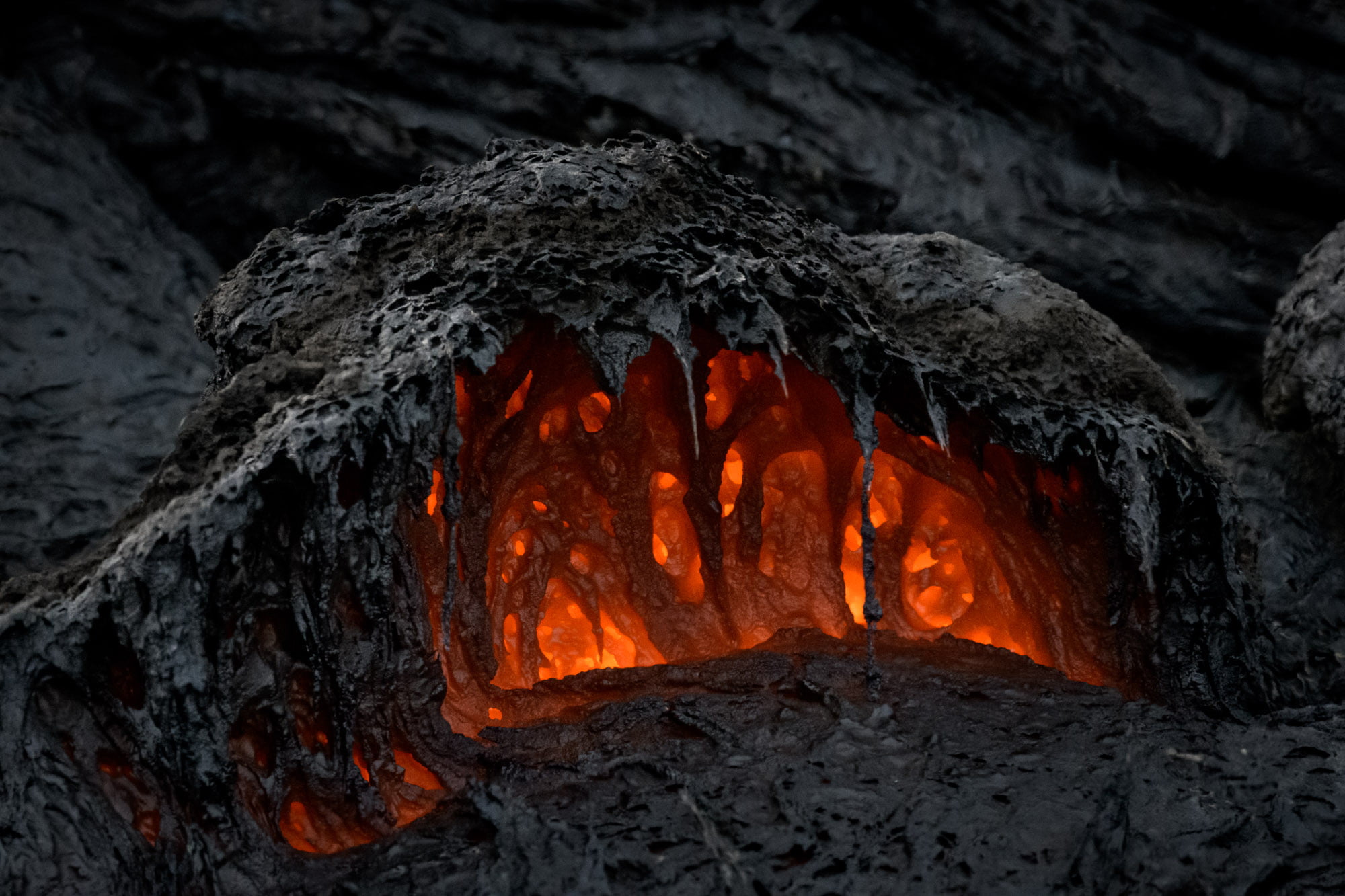
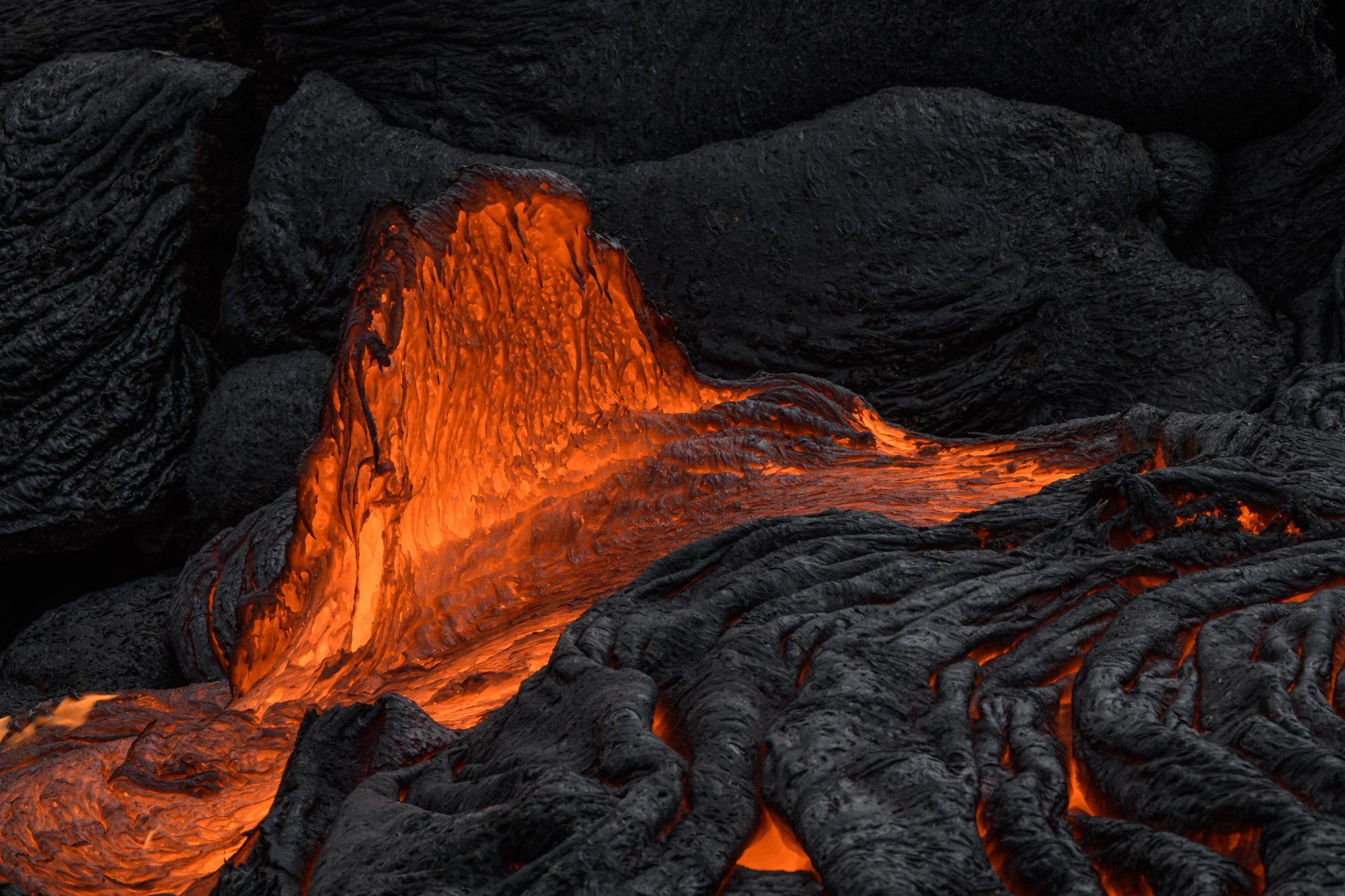
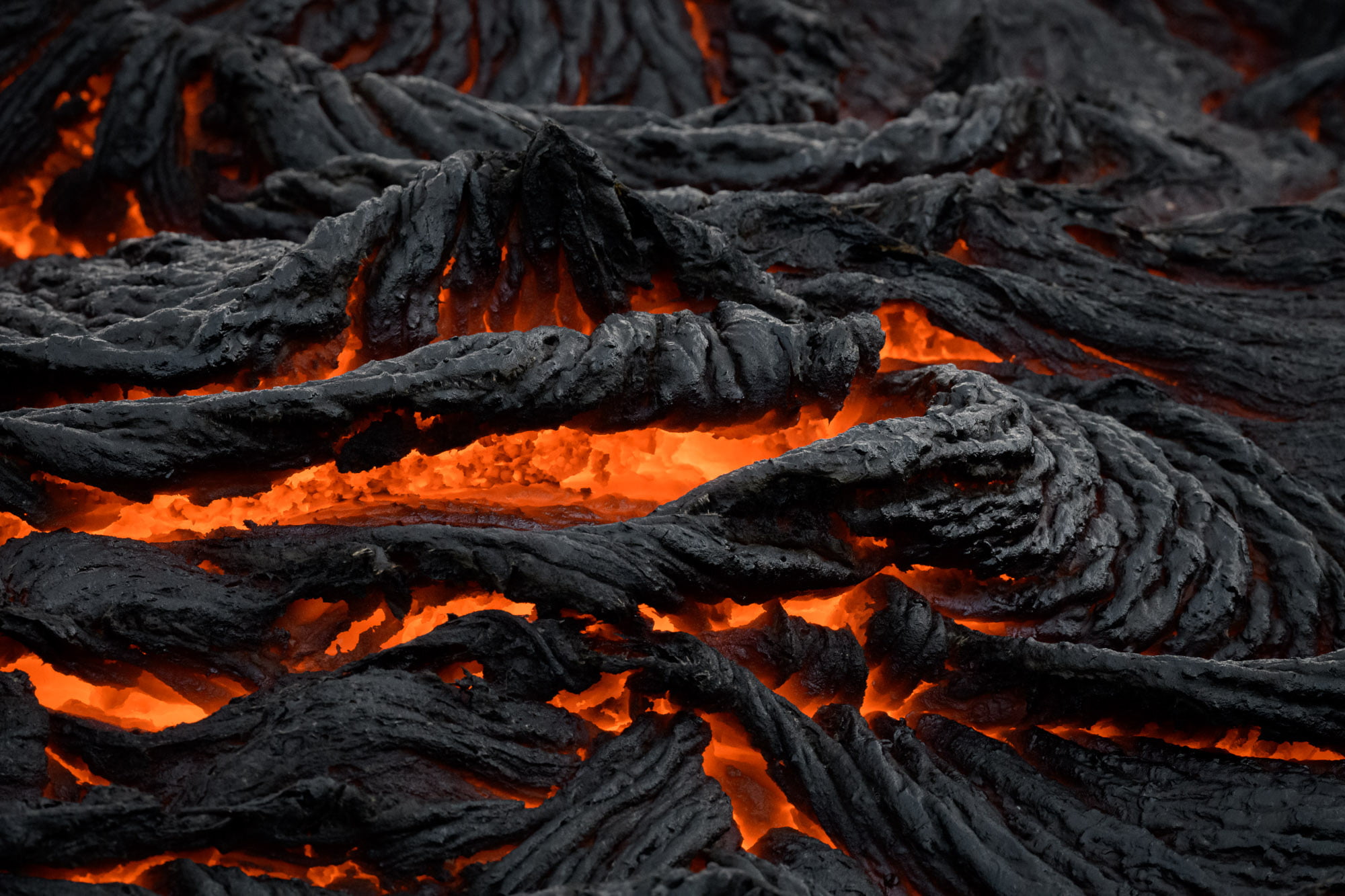
The advantage of flying a drone over a volcanic eruption is getting all of the beauty with none of the danger. No asphyxiating on sulfuric gases, no burns from intense heat, no ash or flying rocks. Just the stunning, glowing beauty of fresh earth being born. “Stranded” takes us over and around the recent Icelandic eruption in a way that no human can ever experience. Sit back, relax, and feast your eyes on the spectacle. (Image and video credit: S. Ridard; via Colossal)