Category: Art

  • “Cracked Earth”

    “Cracked Earth”

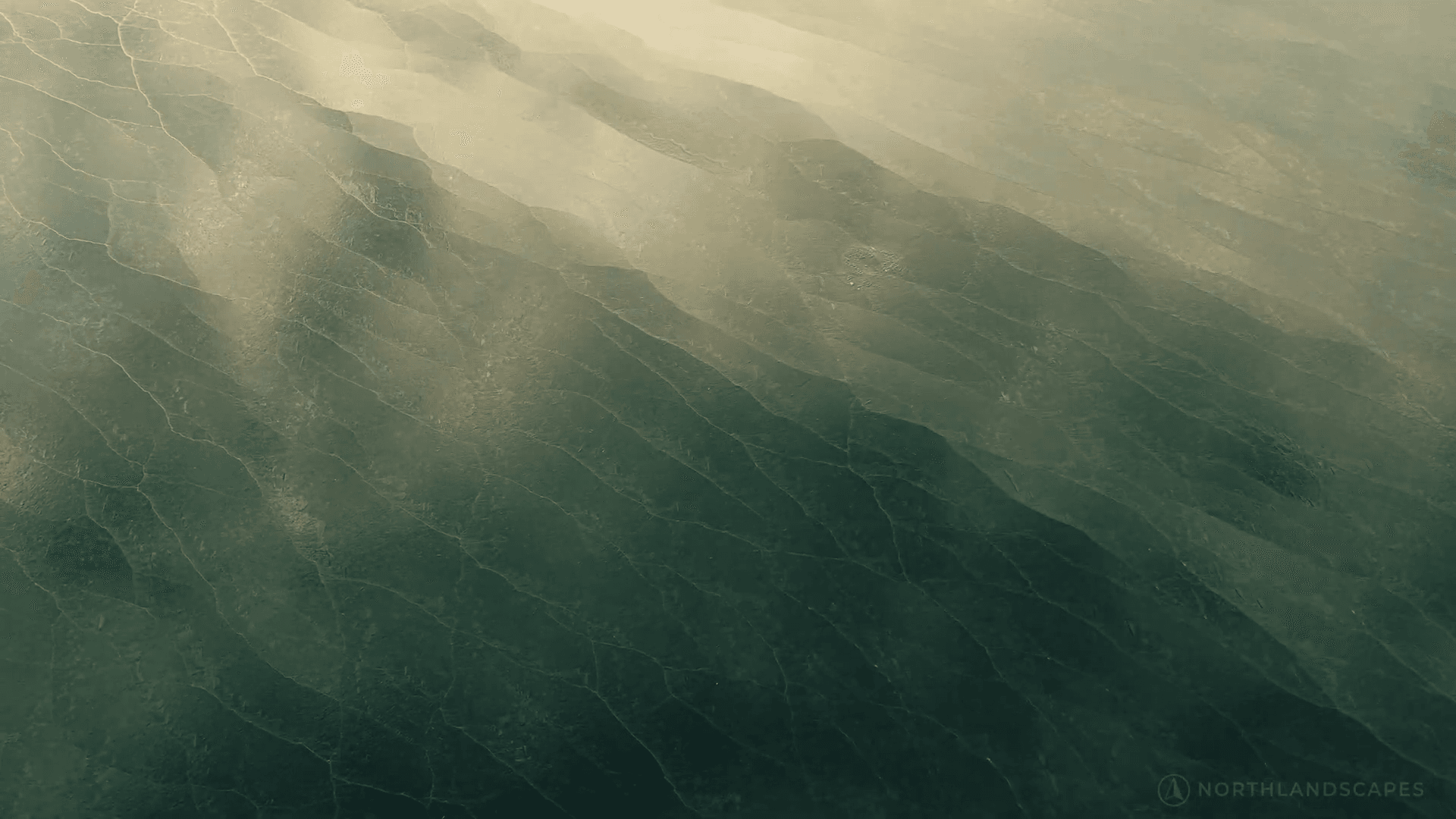
    Branching cracks wend through the slopes of Utah in this photograph by Matt Payne. It may seem strange to feature something so dry on a blog about fluid dynamics, but everything seen here depends as much on air and water as on soil, rock, and sand. How water intrudes into the porous landscape and the way it evaporates back out is critical to crack formation. (Image credit: M. Payne; via ILPOTY)

  • Caught in a Spider’s Web

    Caught in a Spider’s Web

    Grains of pollen are caught amid droplets on a spider’s web in this award-winning image by John-Oliver Dum. How droplets behave on fibers has been a popular topic in recent years with research on how droplets nestle into corners, how they slide on straight or twisted wires, the patterns formed by streams of falling drops, and what happens to a droplet on a plucked string. (Image credit: J. Dum; via Ars Technica)

    Fediverse Reactions
  • Radiant Waves

    Radiant Waves

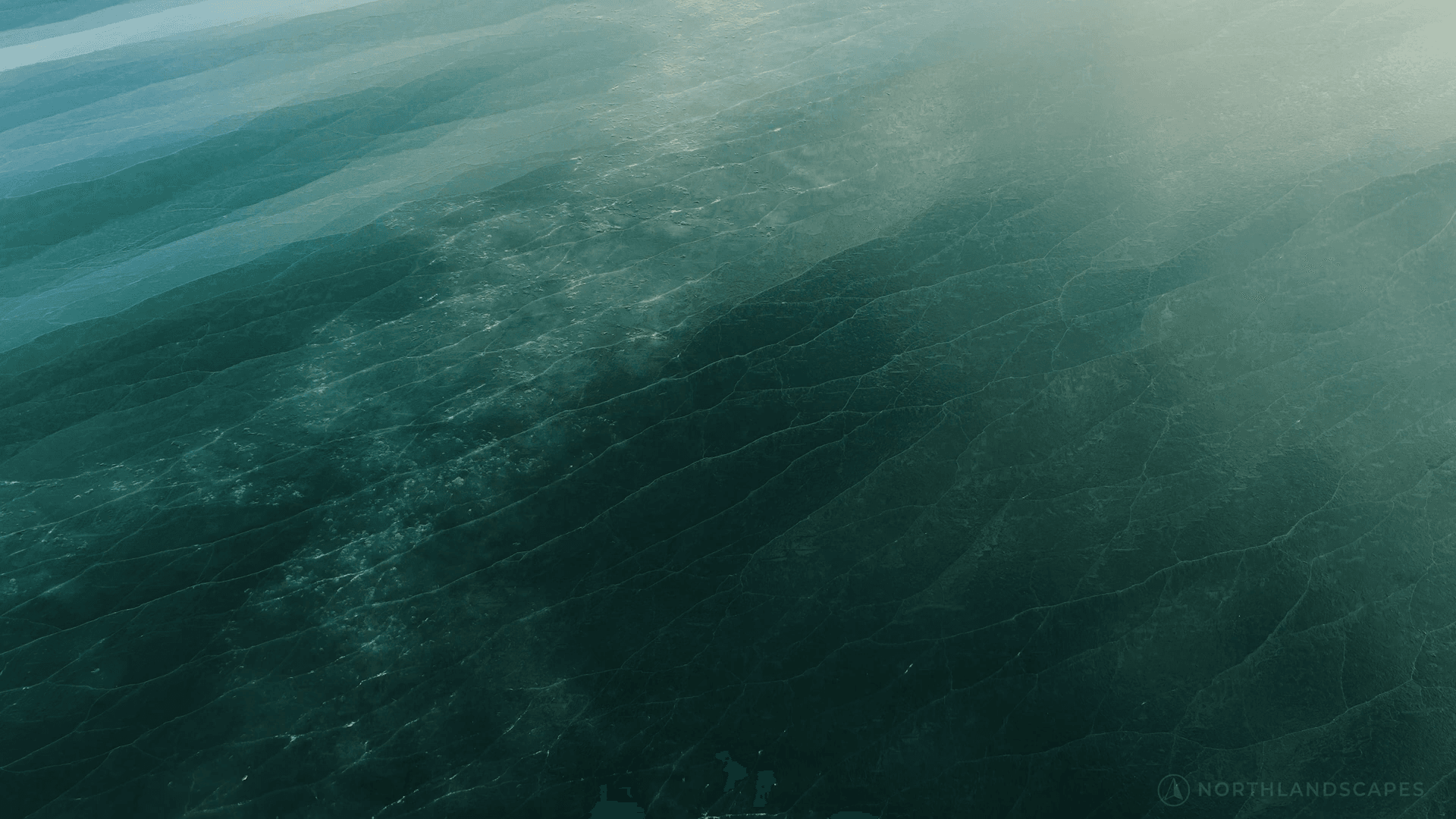
    Photographer Kevin Krautgartner captures the powerful waves of Western Australia from above. His latest series, Waves | Ocean Forces, features luminous turquoise waves, crystalline foam, and brilliant beaches. I could delight in staring at them for hours. Fortunately, he sells prints on his website! (Image credit: K. Krautgartner; via Colossal)

    Fediverse Reactions
  • A Drop of Algae

    A Drop of Algae

    Spheres of a Volvox colonial algae glow green inside a droplet in this award-winning microphotograph by Jan Rosenboom. Pinned on an inclined surface, the droplet is frozen in a balance between gravity and surface tension that keeps its shape–and its contact angles–asymmetric. Droplets will also take on a shape similar to this when air is blowing past them. (Image credit: J. Rosenboom; via Ars Technica)

    Fediverse Reactions
  • Featured Video Play Icon

    “Glacial River Blues”

    Glacier-fed rivers are often rich in colorful sediments. Here, photographer Jan Erik Waider shows us Iceland’s glacial rivers flowing primarily in shades of blue. While the wave action and diffraction in these videos is great, the real star is the turbulent mixing where turbid and clearer waters meet. Watch those boundaries, and you’ll see shear from flows moving at different speeds which feeds the ragged, Kelvin-Helmholtz-unstable edge between colors. (Video and image credit: J. Waider; via Laughing Squid)

    Fediverse Reactions
  • “Rivers and Dunes”

    “Rivers and Dunes”

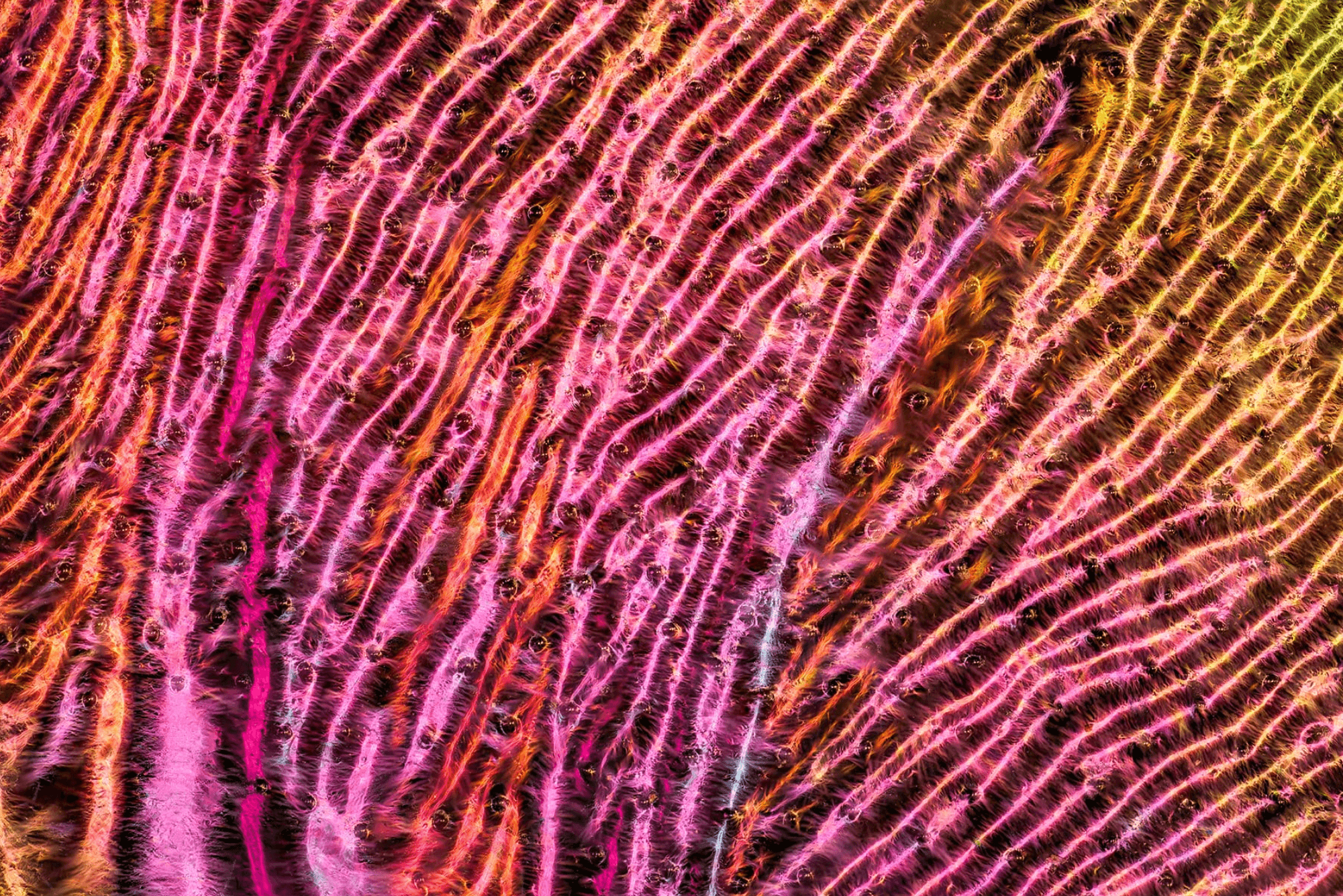
    Taken from a Cessna aircraft, photographer J. Fritz Rumpf’s image of a Brazilian landscape appears abstract. But it captures a serpentine river and surrounding dunes, dyed brown by decaying plant matter and sculpted by the forces of wind and current. This shot is part of a portfolio that won him the title of 2025 International Landscape Photographer of the Year. (Image credit: J. Rumpf; via ILPOTY)
    Fediverse Reactions
  • “Moment of Creation”

    “Moment of Creation”

    Bubbles caught in ice resemble the growth of a cellular organism in this photograph of Tatiewa Lake in Japan, taken by Soichiro Moriyama. When water freezes, gases dissolved in it come out of solution, but depending on the speed and direction of freezing, these bubbles do not always escape before ice forms around them, freezing pockets of gas within the ice’s structure. (Image credit: S. Moriyama; via ILPOTY)

    Fediverse Reactions
  • “Legends of the Falls”

    “Legends of the Falls”

    Strong winds blew curtains of mist across Skógafoss in this image of nesting northern fulmars by photographer Stefan Gerrits. Despite water’s high density compared to air, fine droplets are able to stay aloft for long periods, given the right breeze. Mists, fogs, and sea spray can float surprising distances; droplets exhaled from our lungs can persist even farther. (Image credit: S. Gerrits; via Colossal)

    Fediverse Reactions
  • “Melting Snowflake”

    “Melting Snowflake”

    It’s hard to preserve something as ephemeral as a snowflake, as seen in this microphotograph by Michael Robert Peres. Despite the old adage, it is possible to make identical snowflakes, but it requires mirroring the freezing conditions exactly, including both temperature and humidity. Here, the snowflake’s crystalline structure survives as a ghost in a melting droplet. (Image credit: M. Peres; via Ars Technica)

    Fediverse Reactions
  • Featured Video Play Icon

    “Magnetic Vortex”

    The Macro room team is back with a video featuring their signature colorful cleverness. This time they’re using a magnetic stirrer to swirl up some mesmerizing flows. It’s well worth a watch. (Video and image credit: Macro Room)

    Fediverse Reactions