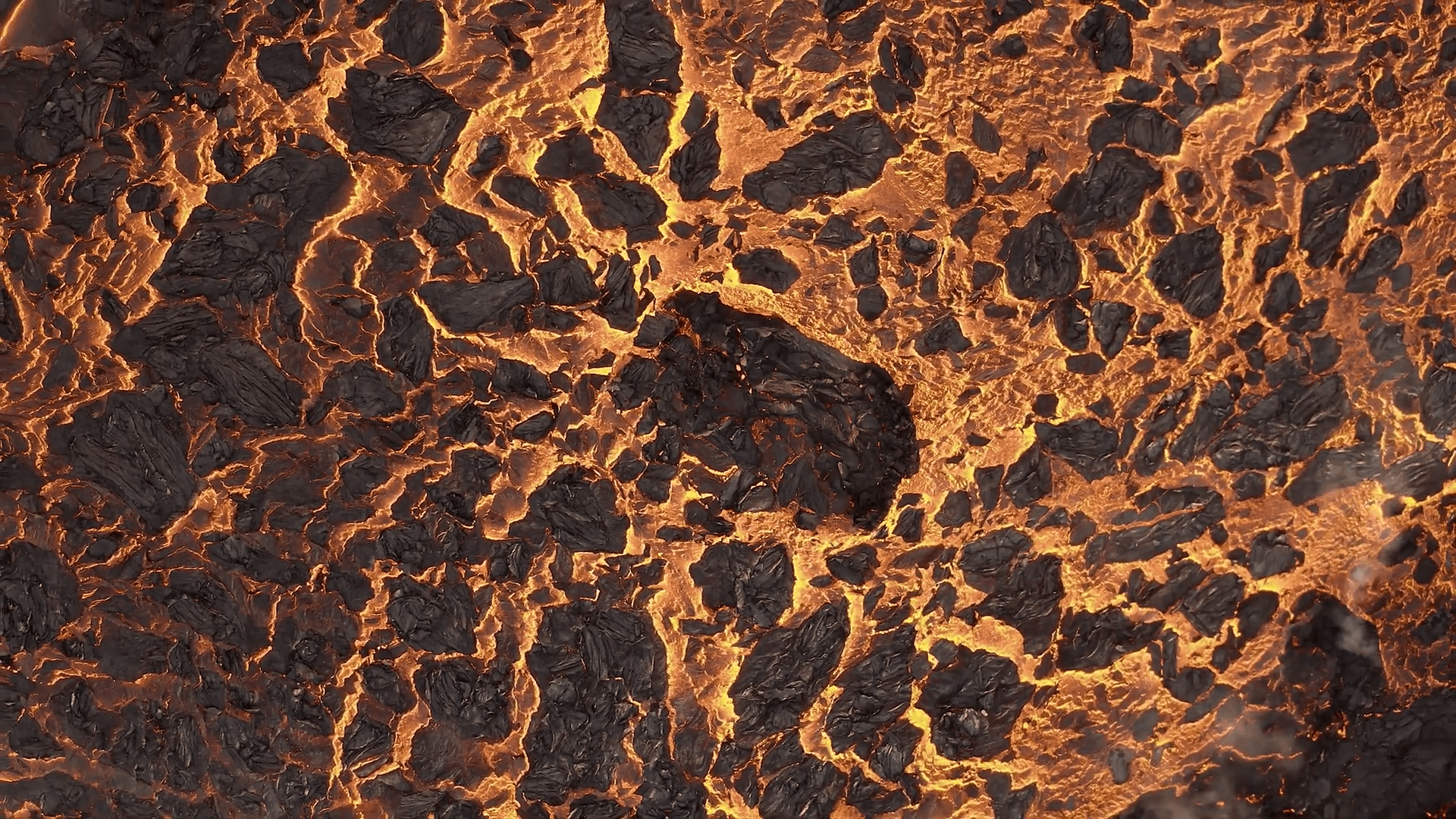
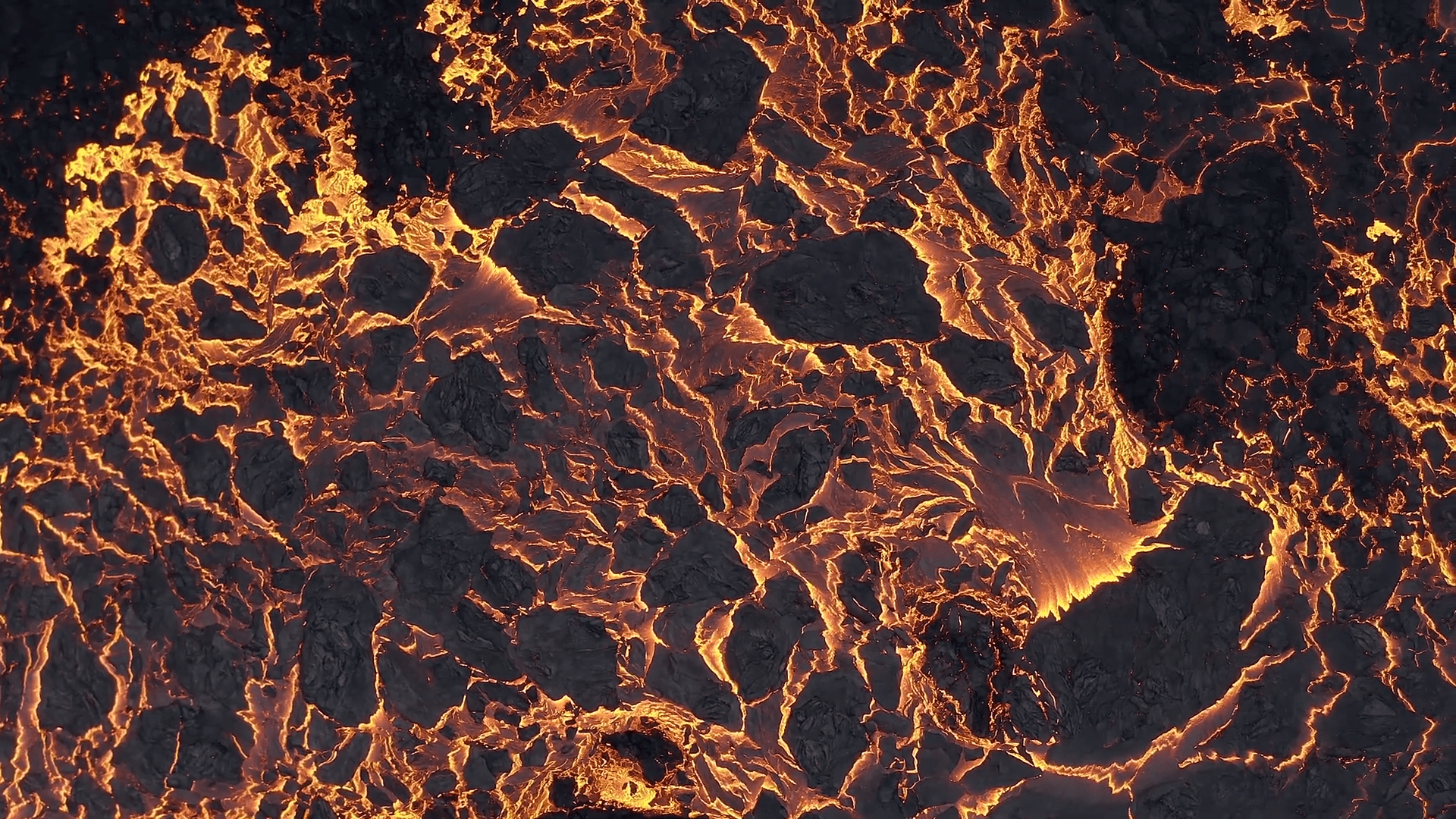
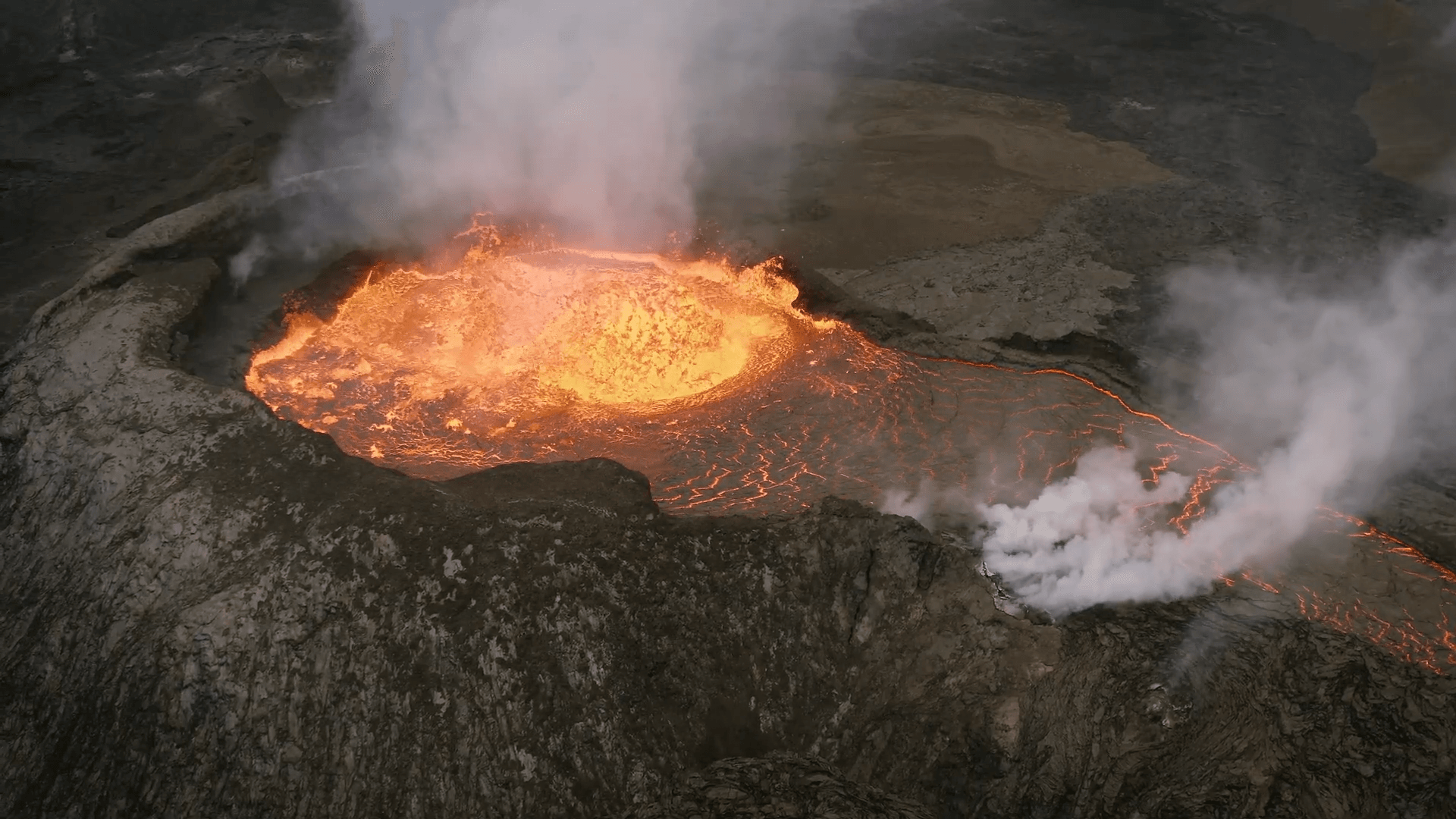
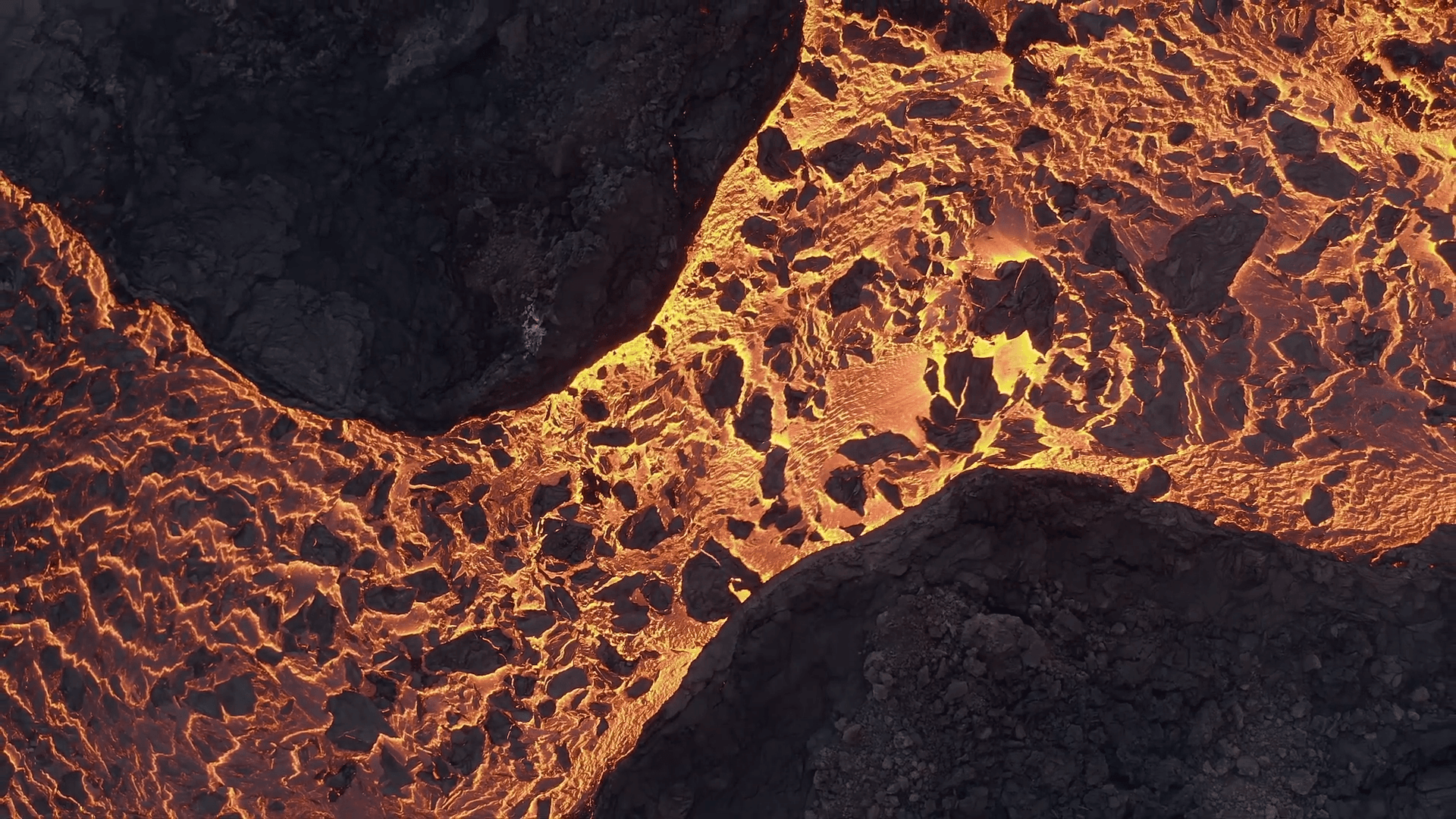
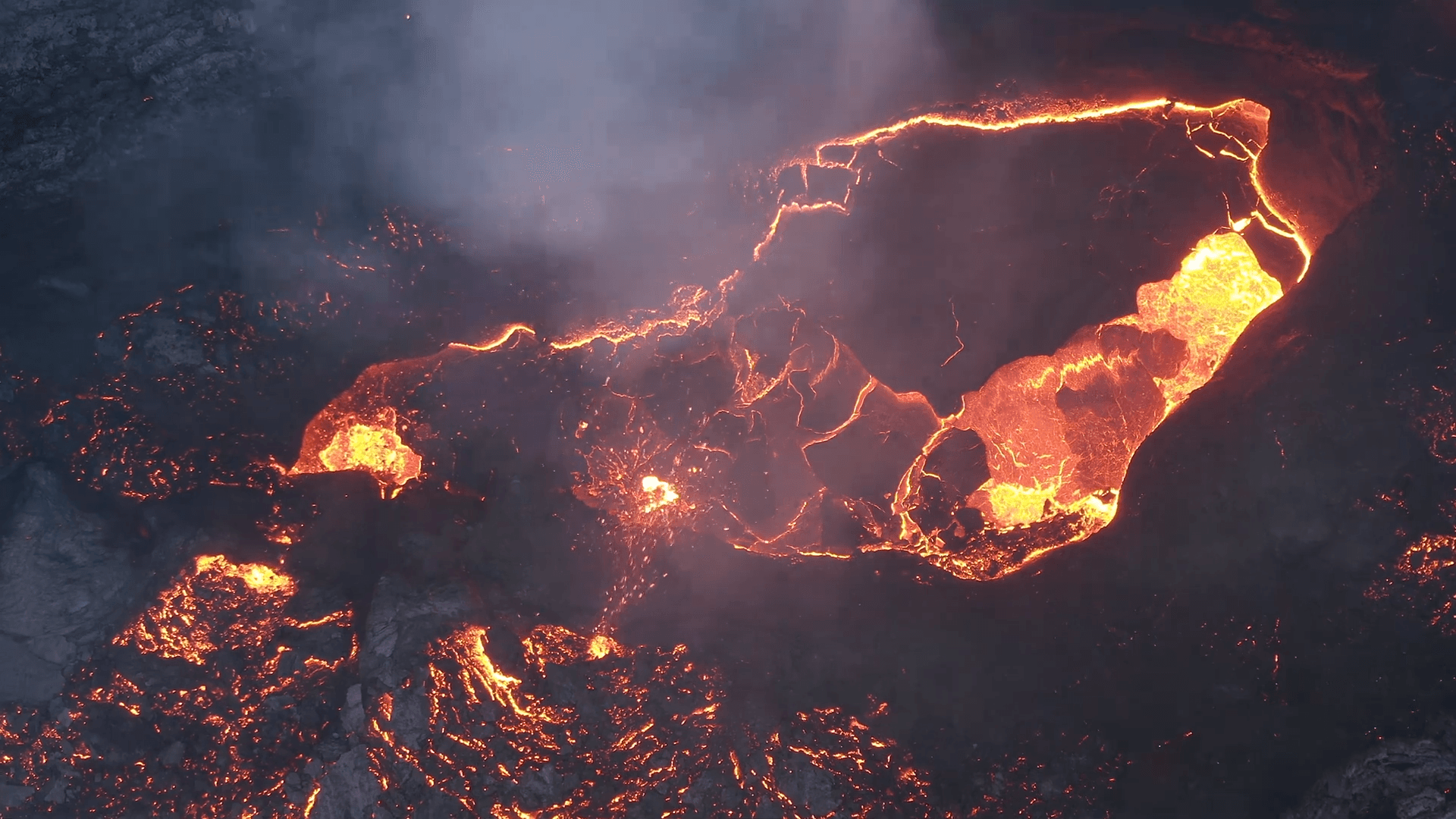
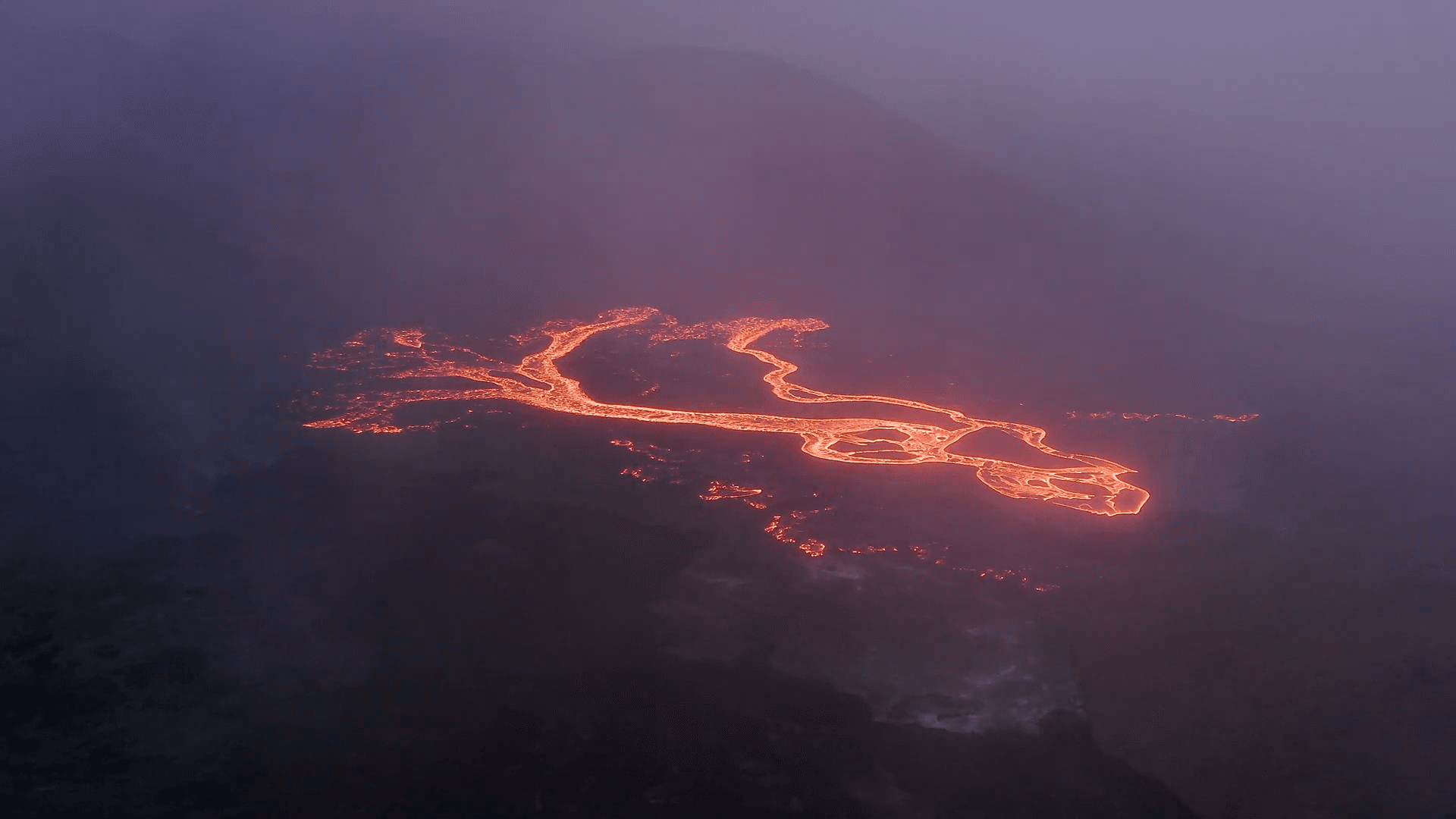
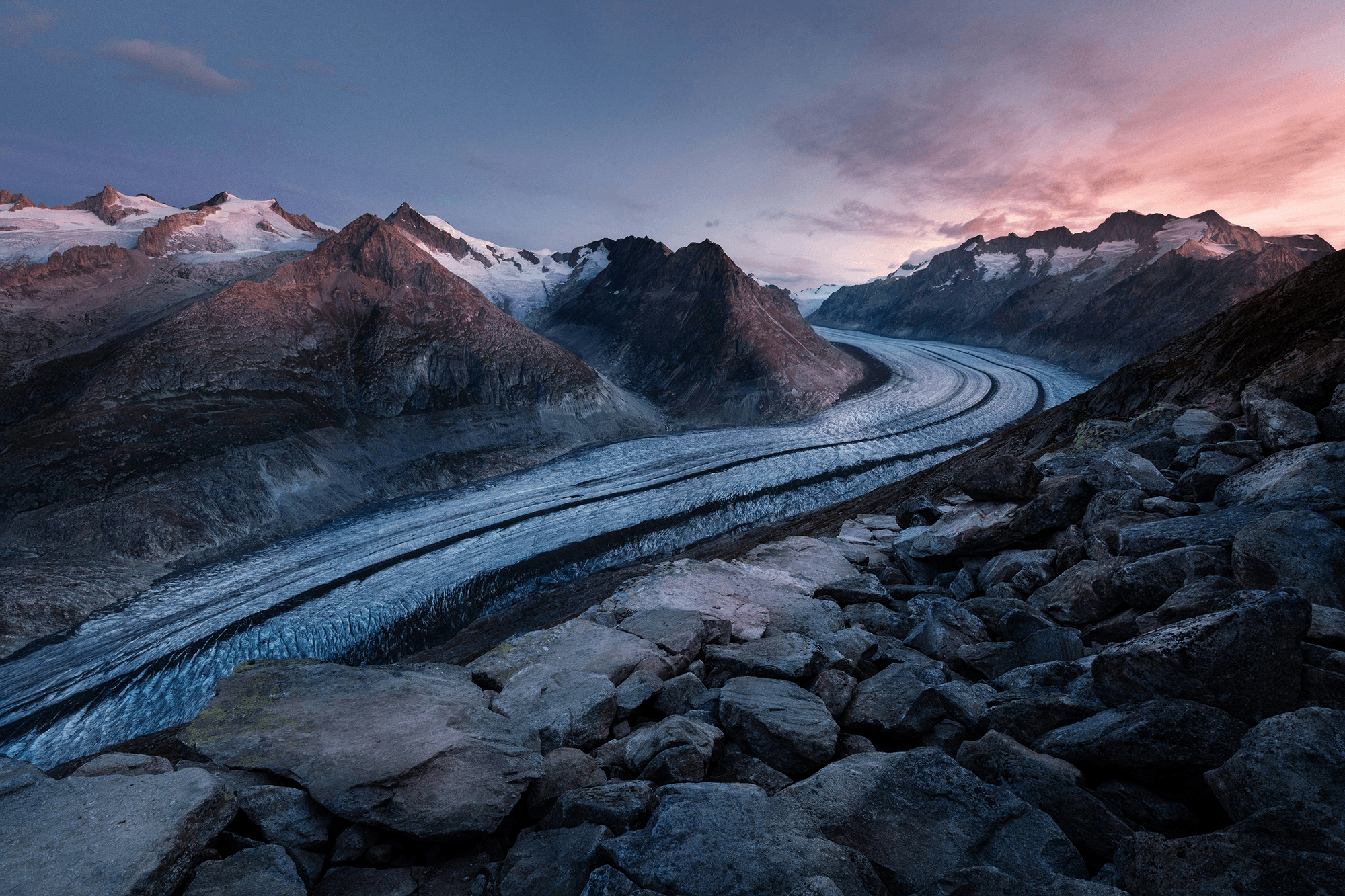
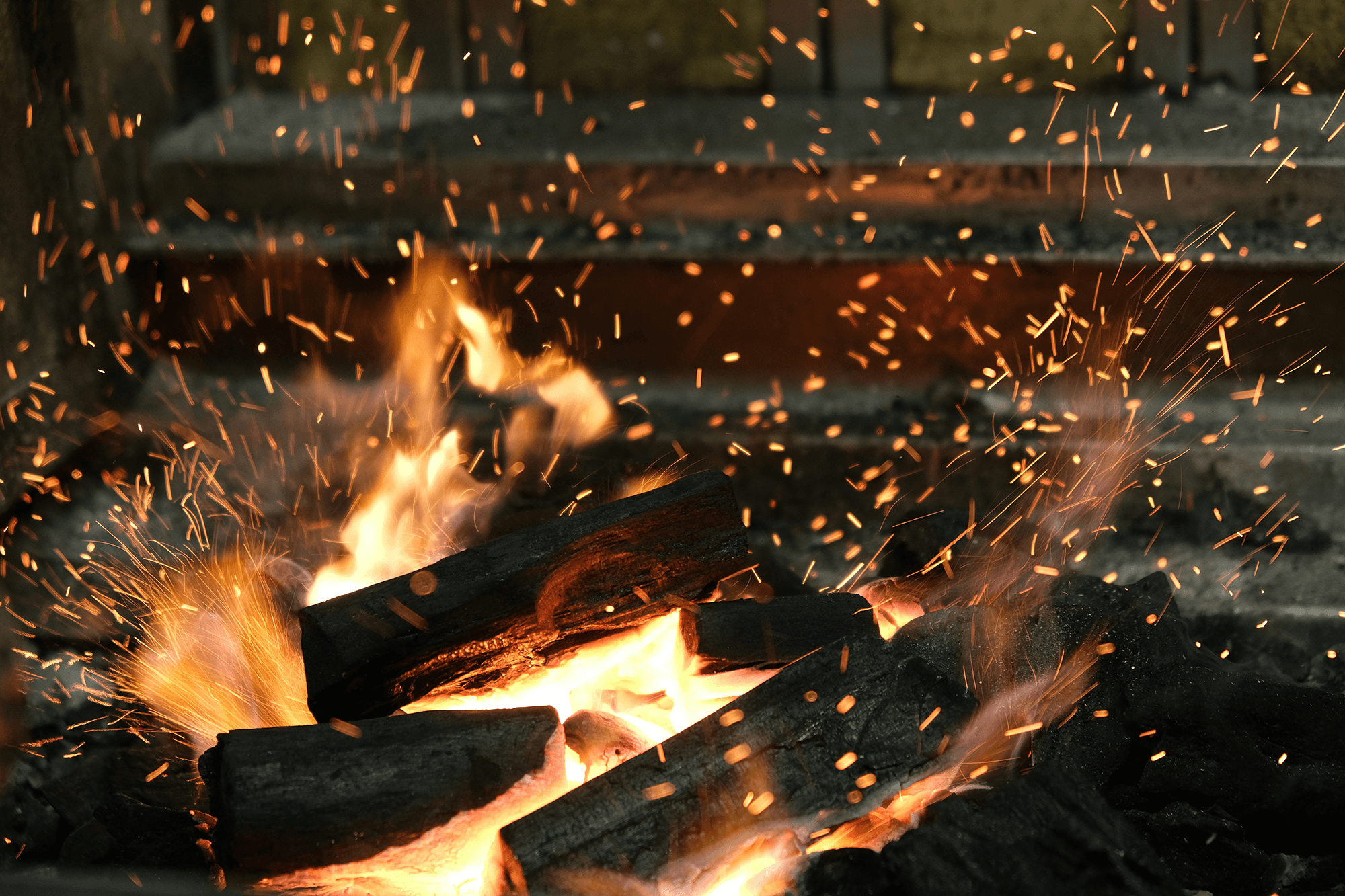
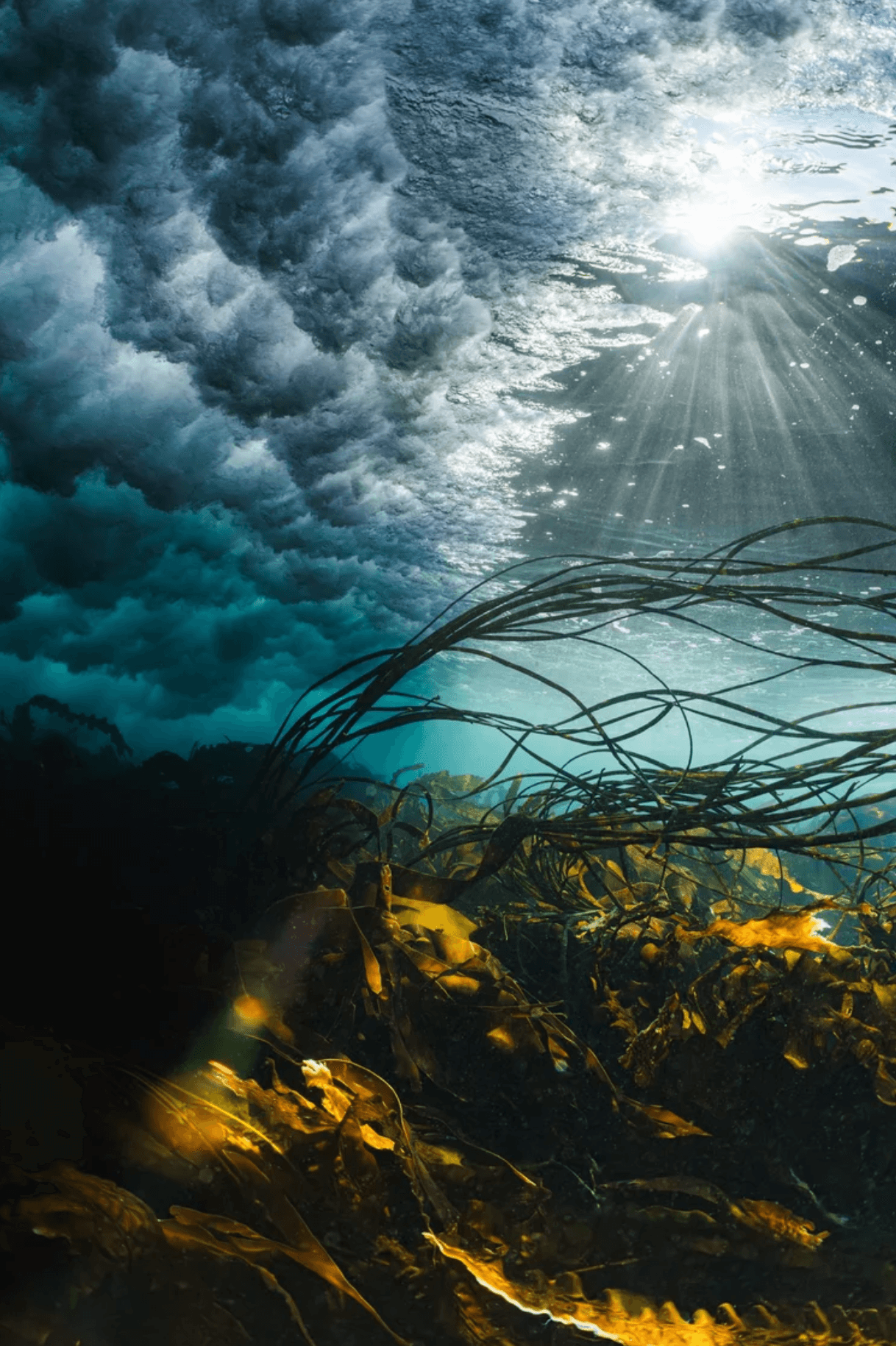
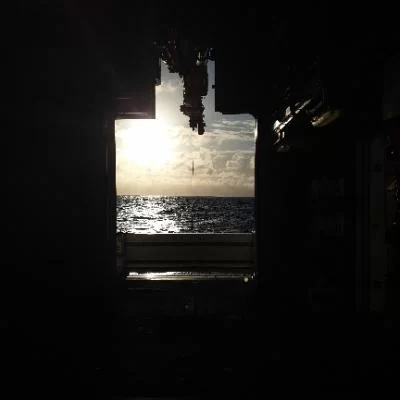
Photographer Jan Erik Waider is a master of capturing incredible landscape imagery. In these videos, he uses a drone to film waves in the Baltic Sea gently undulating polygonal slabs of ice on the ocean surface. The interplay of light, color, and motion looks almost surreal, but nature is better than we credit at making imagery too good to look away from. (Video and image credit: J. Waider/NorthLandscapes; via Colossal)
Tag: science

Viscoelastic Vortex Street
When flow moves past a cylinder, vortices get shed in its wake. Known as a von Karman vortex street, this distinctive pattern is seen behind flags, islands, and even behind starships. Here, researchers are simulating flow of a viscoelastic fluid, where–unlike water or other Newtonian fluids–elastic stresses can build up.
As the flow hits the leading edge of the cylinder, the polymers in the fluid compress and then get stretched as the flow moves around the cylinder. The left image shows vorticity in the flow; the right shows elastic stresses. The large swirls are primary vortices–those shed off the cylinder. But look closely and you’ll see smaller secondary vortices curled up beside the primaries. These form when the elastic stresses in the fluid pull some of the shear layer into the wake. (Image and research credit: U. Patel et al.)


Understanding Fish and Turbines
Fish detect turbulence in the water around them; among other things, this helps them avoid colliding with objects. Here, researchers are looking to understand how fish interact with underwater turbines. Experiments give them a set of trajectories that actual fish follow when dealing with the experimental turbine. But to understand what the fish is detecting, the researchers build a digital facsimile of the turbine and use Large Eddy Simulation (LES) to calculate the turbine’s wake.
By overlaying the fish trajectories onto the simulated flow structures, they can better understand what flows the fish is and is not comfortable with. That knowledge helps engineers design turbines with smaller ecological impact. (Video and image credit: H. Seyedzadeh et al.)

A Fungus That Freezes Water
Although water can freeze below 0 degrees Celsius, it requires a little help–in the form of a nucleation site–to do so. Often temperatures must dip well below 0 degrees Celsius for droplets to become ice. But a new study shows that at least one fungus forms proteins that help the process along.
The proteins come from the Mortierellaceae fungal family, by way of a bacterial species some hundreds of thousands of years ago or more. In experiments, adding the fungal protein helped water freeze 10 or more degrees Celsius sooner than it otherwise would.
The authors note that there are many possible applications for this freezing additive; it could help preserve food or cells without requiring lower freezing temperatures that could damage delicate tissues. It could also serve as a cloud seeding chemical in place of toxic silver iodide particles. (Image and research credit: R. Eufemio et al.; via Gizmodo; see also V. Tech)

Shocking Fizzy Jets
Many industrial processes break a fluid jet into droplets, like spray painting and ink-jet printing. Here, researchers examine an effervescent fluid jet made up of both liquid and gas. Like a fluid-only jet, this fizzy jet forms sheets, bags, ligaments, and droplets. As it breaks down, it creates a range of droplet sizes–both large and small. But when a shock wave passes, the jet and its droplets get atomized into even tinier droplets. (Video and image credit: S. Rao et al.)

Insect Wings in Extreme Macro
Photographer Chris Perani is fascinated by the microstructures of insect wings, which he captures in “extreme macro” through focus stacking–letting us see wings in glorious micron-scale detail. In addition to giving insects their brilliant colors and irridescence, these structures serve another key role: they help insects stay dry. In a world where contact with water is unavoidable, insects have instead evolved to trap air in the gaps of their wings, letting water slide off instead of sticking. (Image credit: C. Perani; via Colossal)

Melting Can Propel Icebergs
Icebergs have long served as a metaphor for not knowing what’s going on beneath the surface. Studies like today’s are a reminder of why that is. Researchers found that asymmetric icebergs–shaped, in this case, like a right triangular prism–can self-propel as they melt. Their shape forces cold, dense meltwater to slide down the surface, generating a sinking plume that propels the ice as a whole. The team demonstrated this effect in both fresh- and saltwater. For icebergs wandering into warm waters, the effect is particularly strong and may reach levels about 10% of the magnitude of dominant propulsive forces like wind. (Image and research credit: M. Berhanu et al.; via APS)


Schooling at Scale
Relatively simple visual and hydrodynamic signals are enough to make digital fish school in ways that resemble living ones. Here, researchers look at what happens when well-behaved schools of fish get too big. The researchers first demonstrate that their schools behave reasonably at one hundred members, either in a schooling configuration or a group milling around a central region.
At one thousand fish, the schools are still reasonably coherent and sensible. But at fifty thousand fish, the picture is drastically different. Neither schooling nor milling groups are able to remain together. They fracture and scatter into smaller groupings. (Video and image credit: H. Hang et al.)

Scrubbing Bubbles
Cleaning produce helps fruits and vegetables last longer and reduces the chances for foodborne illness. But it can be a difficult feat with soft, delicate foods like tomatoes, berries, or greens. Current methods often combine ultrasonic cleaning and chemicals like chlorine. Instead, researchers are looking to boost the cleaning power of bubbles themselves by giving them an acoustic pick-me-up.

Stop-and-go. A bubble slides along an inclined surface in a pronounced stop-and-go motion when vibrated near its frequency for translational resonance. The team combined a bubble-filled bath with sound at low (sub-cavitation) frequencies. They found that driving sound waves at the right frequency could vibrate the bubbles in a way that made them slide in a stop-and-go motion along inclined surfaces. This swaying significantly boosted their cleaning power; getting surfaces 90% cleaner than non-resonating bubbles did. (Image credit: S. Hok/Cornell University; video and research credit: Y. Lin et al.; via Gizmodo)

Bursting an Oobleck Bubble
When soap bubbles burst, the hole grows as an expanding circle. But not every fluid bursts this same way. Here, researchers let air rise through oobleck–a fluid made from cornstarch suspended in water–to form a bubble. In time, as with all bubbles, the oobleck bubble bursts. But–in keeping with oobleck’s solid-like properties–the film tears open and fractures. As it sinks back into the liquid, it wrinkles before it slowly relaxes back into fluid form. (Video and image credit: X. Zhang et al.)