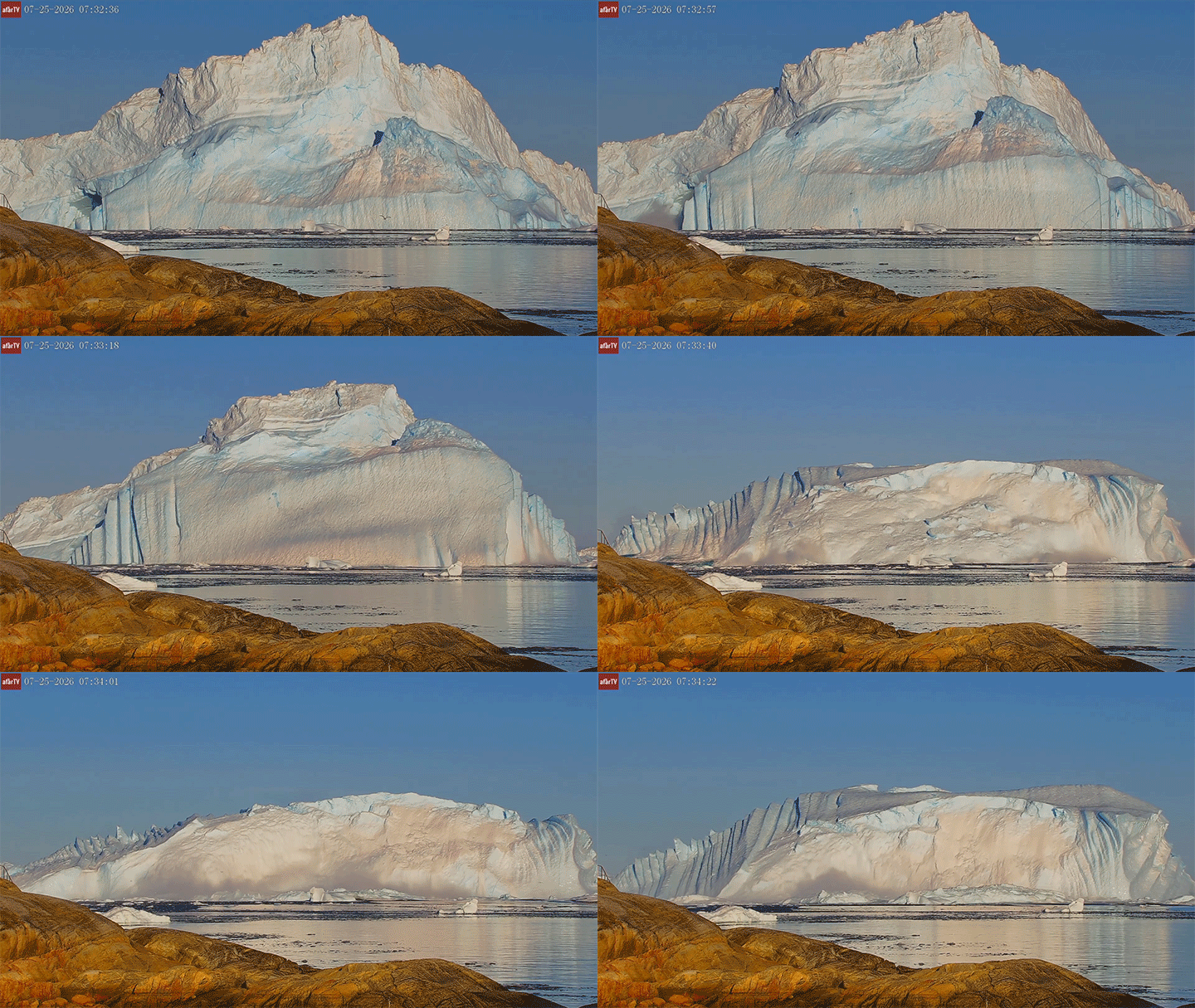
Footage of a massive iceberg flipping in Greenland has gone viral. The feat took place off the coast of Ilulissat and was caught on a nearby livestream camera. Icebergs shift like this because they melt unevenly, with submerged areas melting faster. As the underwater shape of the iceberg changes, the buoyant forces shift relative to the iceberg’s center of mass, and it flips, eventually settling into a (temporarily) stable orientation. This situation is simpler in the lab version, though; as the video here shows, real icebergs can also rapidly lose mass if they start breaking apart. That, too, can necessitate a flip. (Video and image credit: AfarTV; via Colossal)
Tag: science

Flex Pen and Ink
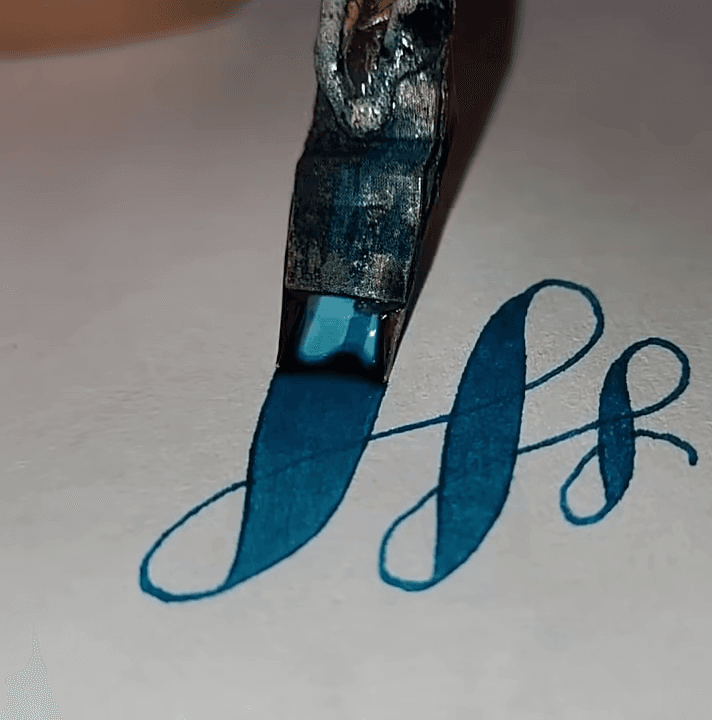
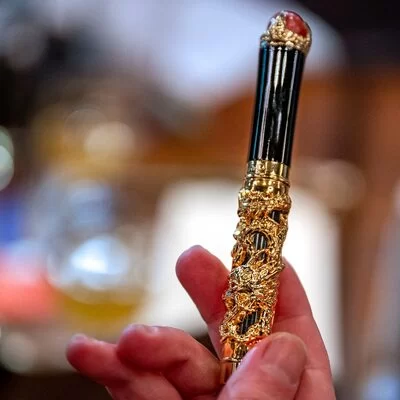
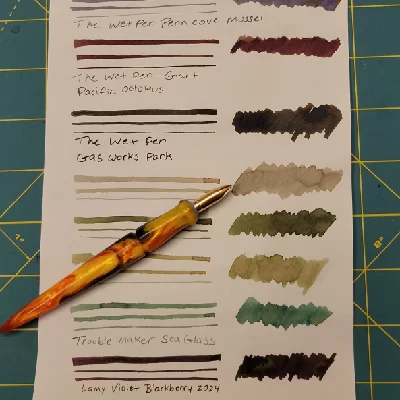
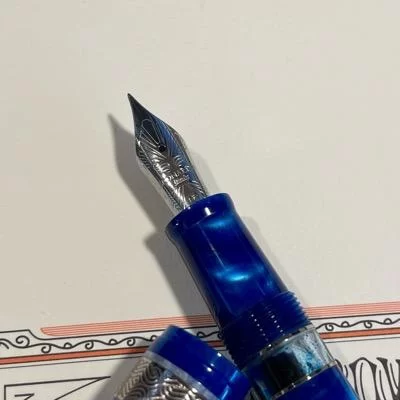
It’s no secret that I’m a fan of fountain pens. They’re just one way I like to have little celebrations of fluid physics in my everyday life. That said, I don’t typically use anything with a monster flex nib like what you see here. This is extra. But it’s also an incredibly cool glimpse of fluid physics.

Just check out that sheet of fluid stretching between the tines! To keep the liquid sheet intact to that kind of width you need the perfect balance of surface tension and flow. The ink needs to cling to the tines, cohere to itself (despite some impressive stretching), and make its way down from the reservoir and through the feed quickly enough (but not too quickly!) to replace the ink being laid down on the page as the nib moves. Gorgeous stuff. (Video and image credit: Flexperiments)
Fediverse Reactions
-

Capillary Slinkies
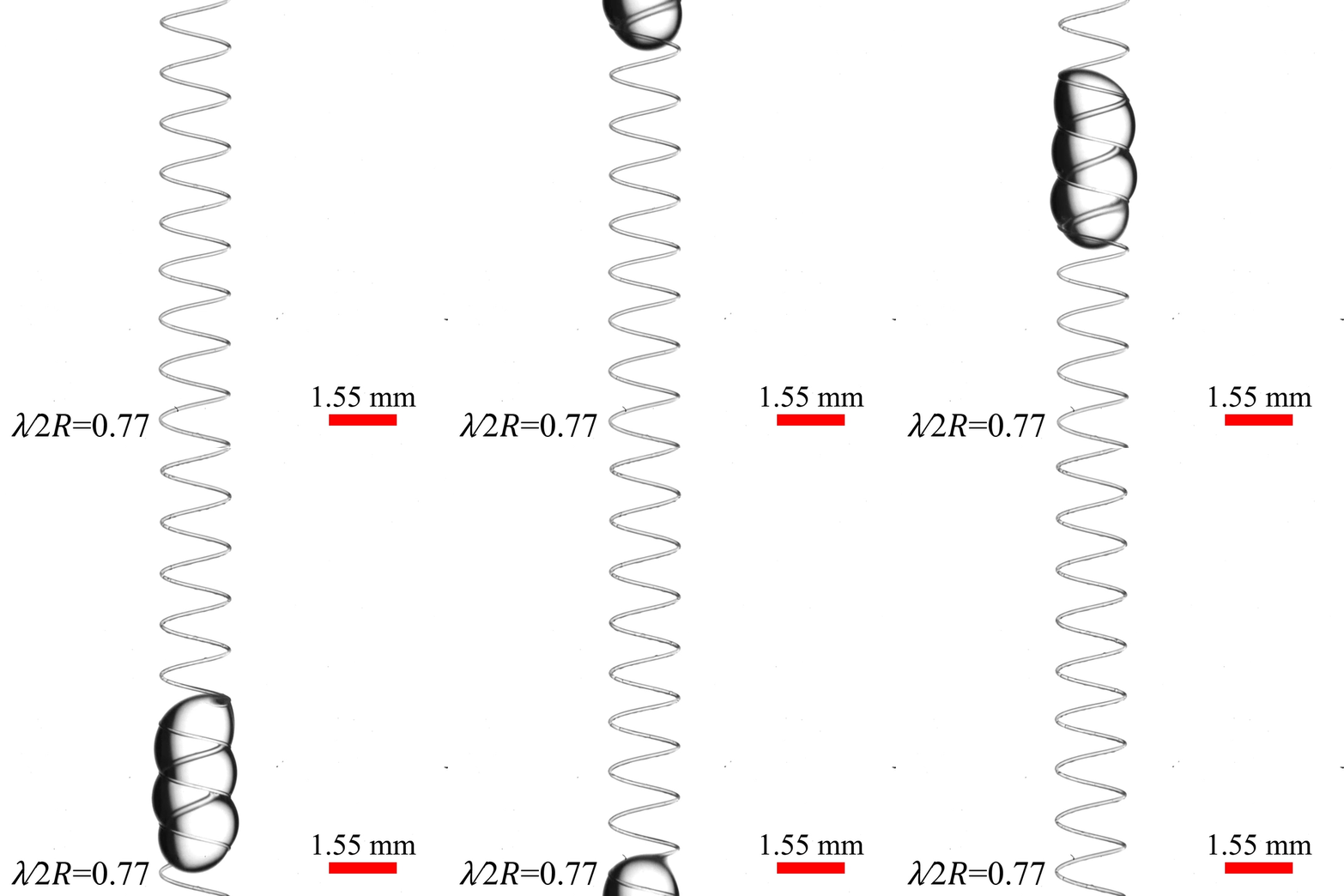
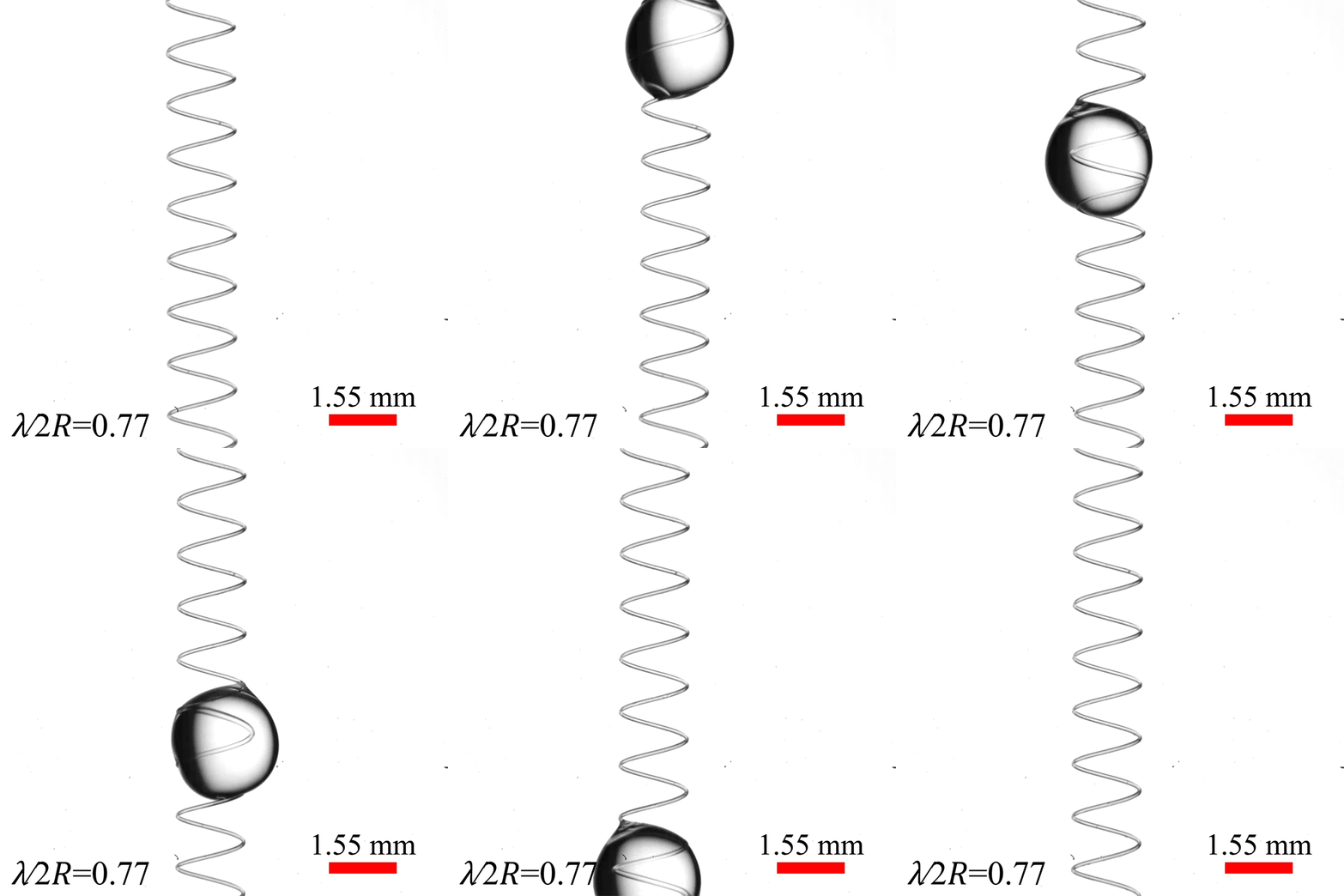
Nature is full of helical fibers, including in plants and bird feathers. In this study, researchers explore how these soft springs react to droplets. When the pitch of the spring (roughly speaking, the spacing between coils) is small, droplets can flow down in a plug (not shown). But as the pitch increases, droplets can take on a caterpillar-like (or, eruciform) shape. These drops descend quickly, in part, the team found, because internal flows within the droplet help it along.
A caterpillar-shaped droplet slides down a soft spring. Other drops maintain a spherical shape as they descend the widely-spaced coils of the spring. These drops tend to spin around the coil as they go, with their center of mass actually moving side-to-side as they descend. (Image and research credit: B. Bhatt and A. Carlson)
A sphere-shaped droplet slides down a soft spring. Fediverse Reactions
-
Levitating By Squeeze Film

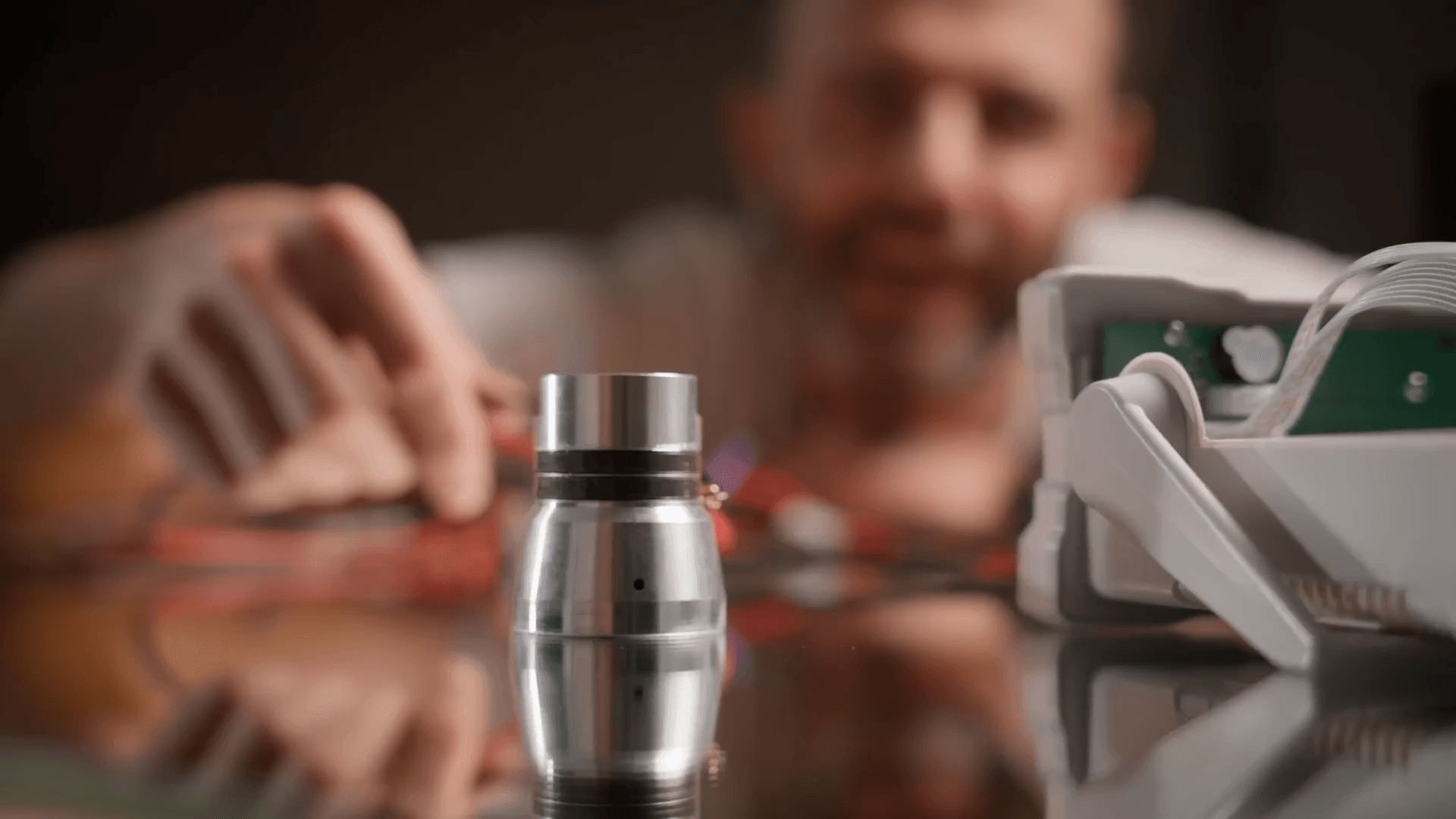
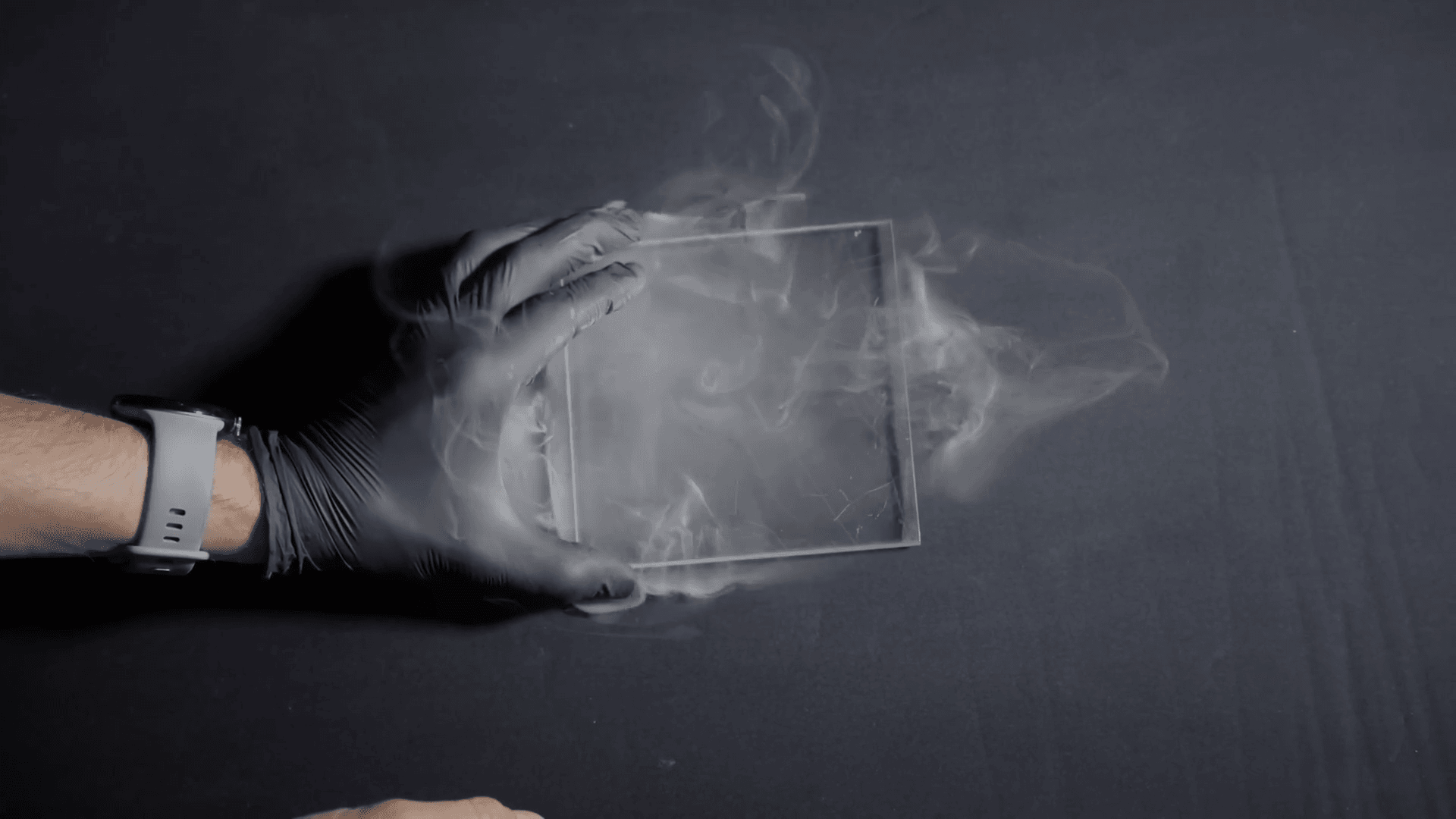
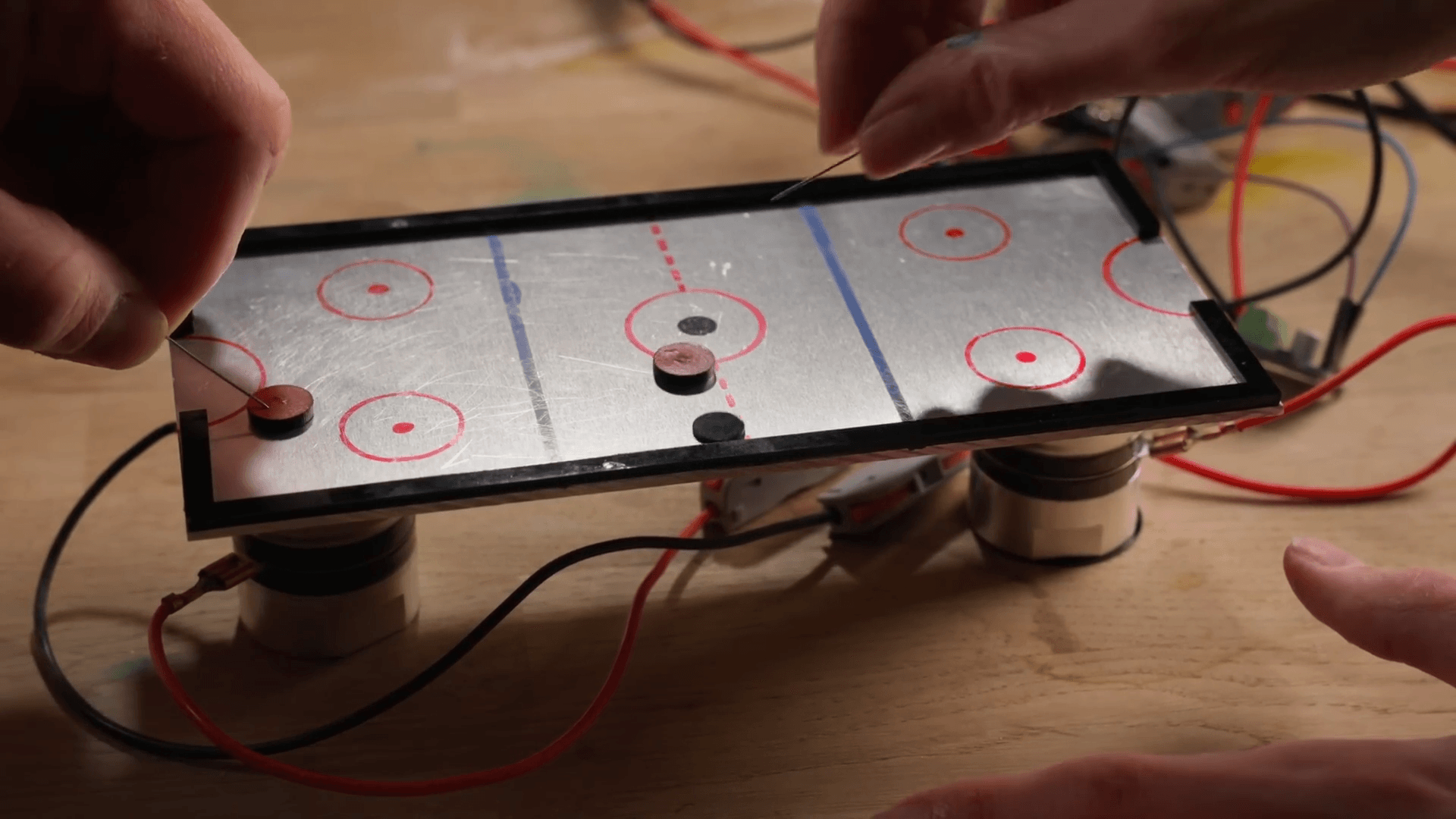
We’ve seen a few different kinds of levitation here over the years, including via acoustic waves, aerodynamics, and Leidenfrost effect. Here, Steve Mould describes something a bit different: a levitation squeeze film driven by ultrasonic transducers. Like a vibrating droplet, the thing keeping surfaces apart here is a thin, lubricating layer of air. The vibration of the ultrasonic transducer squeezes and replenishes the air layer quickly enough that it can keep transducers aloft. Steve even manages to create a miniature airless “air hockey” table with it! (Video and image credit: S. Mould)

Dragonfly Dogfights
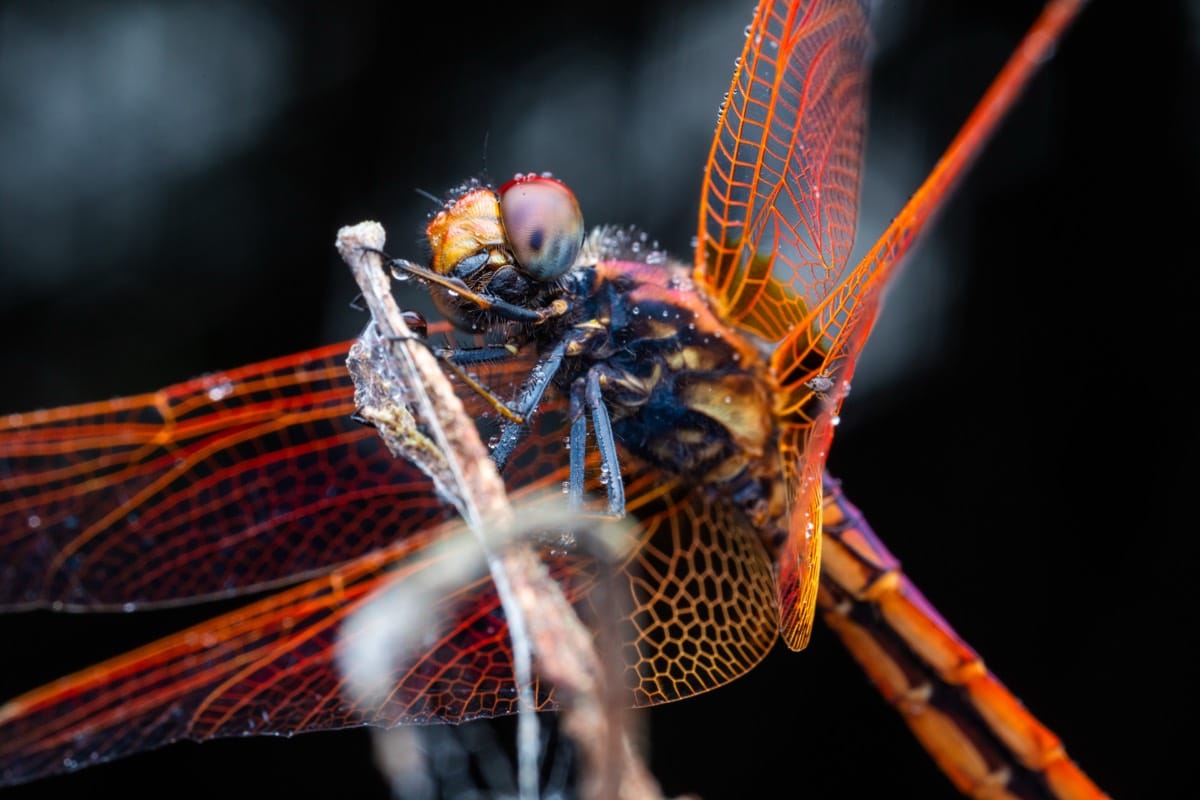
Like fighter pilots of old, male dragonflies engage in aerial combat where each tries to outmaneuver the other to keep a sight on their rival’s tail. A recent study observed this combat in the field and uncovered some surprising similarities to dogfighting. Like pilots, dragonflies used spiraling turns and other high-g moves to gain an advantageous position behind the other. In human combat, that position favors the forward-facing weapons of the pilot in back; for dragonflies, it keeps their rival in the part of their vision that best detects movement.
Interestingly, the team found that–even in the midst of combat–dragonflies spent at least a third of their time gliding. It’s unclear whether they glide to conserve energy or because it’s easier to track a rival when gliding.
The authors dig into the control rules needed for dragonflies to execute these chases and found that even relatively simple control schemes–constrained by the dragonfly’s physical limits–result in complex flight contests. (Image and research credit: S. Fabian et al.; via Ars Technica)
Fediverse Reactions
-
Blowing Droplets Apart


In raindrops, ink-jet printing, and spray painting, droplets get broken apart by the air flowing around them. Here, researchers investigate how a jet of fluid can push a droplet from its perch, or–with enough momentum–shatter the droplet. There are some lovely flow visualizations here; it’s especially cool to see the starting vortex ring of the jet push and deform the droplet. (Video and image credit: S. Jain et al.)

Salt and Dunes
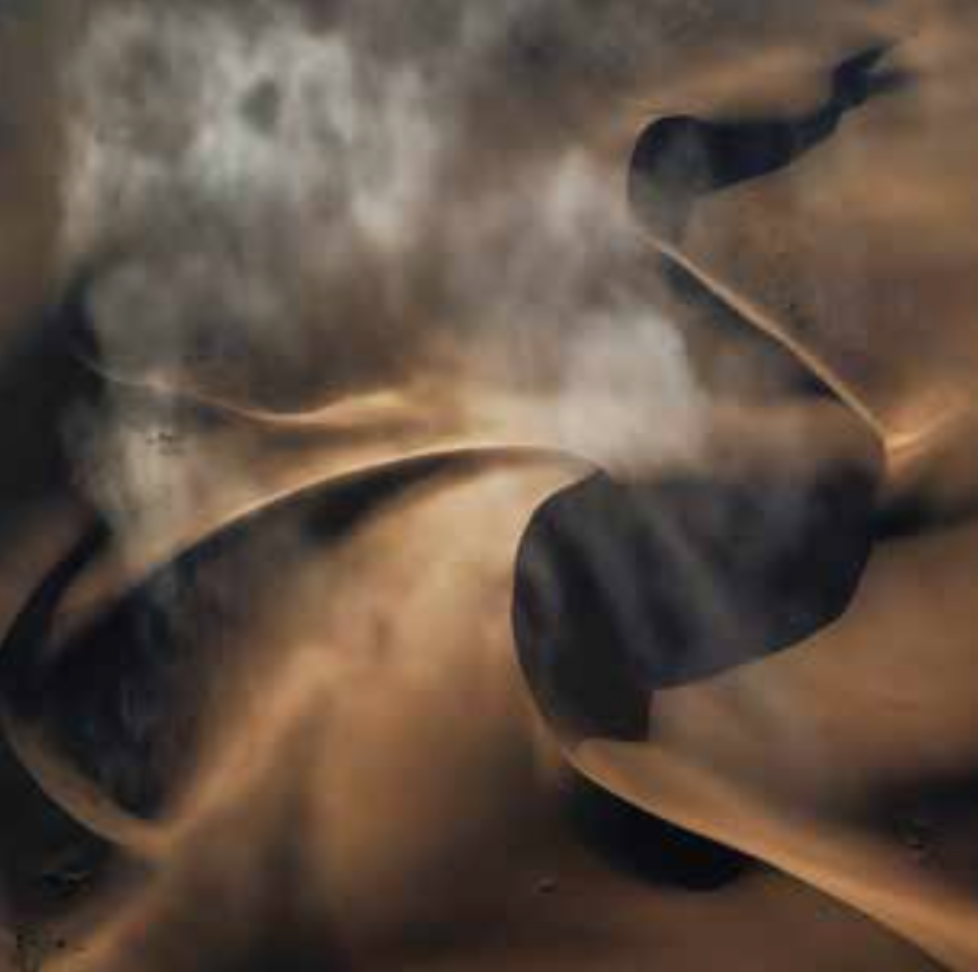
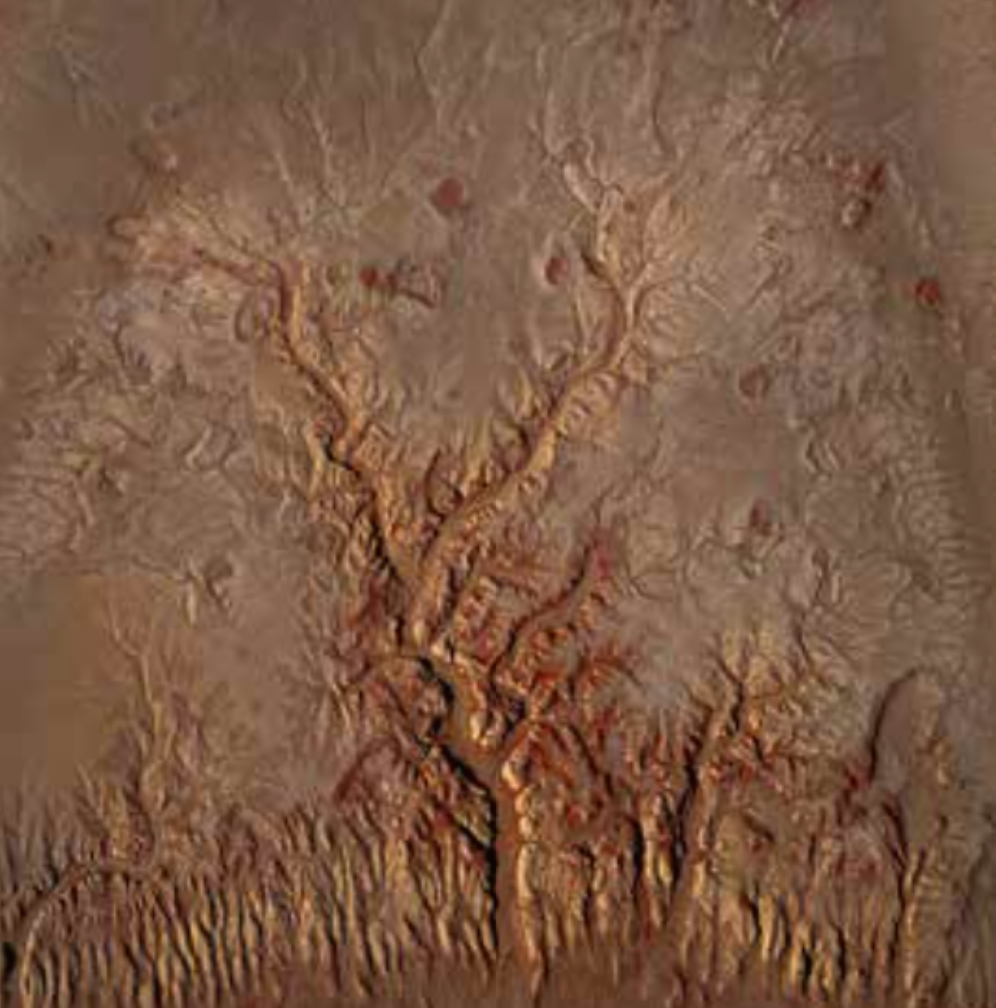
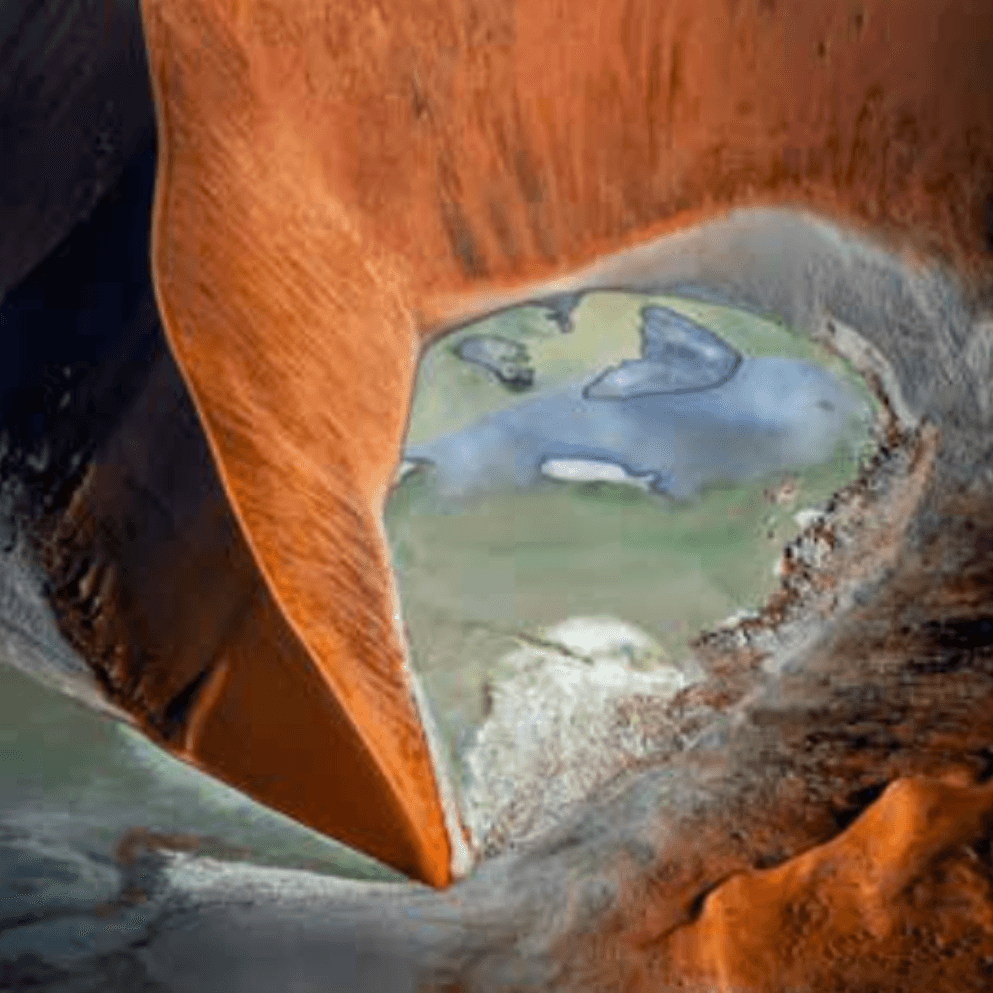
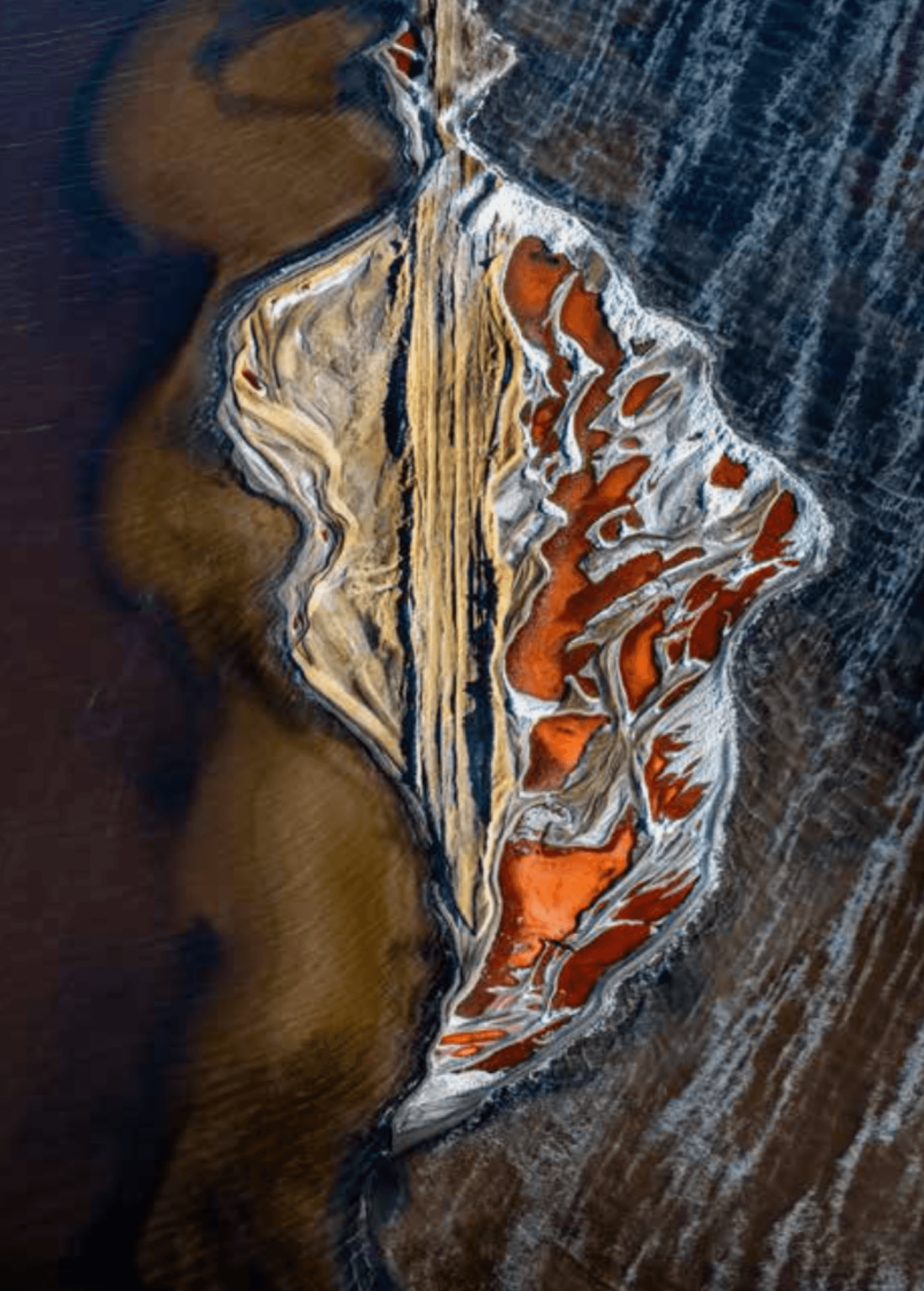
Photographer Barbara Brown captured these striking aerial views in Namibia. Coastal dunes and saltworks feature in the photos from Walvis Bay, where wind, waves, evaporation, and humankind have shaped the landscape. The colorful and dendritic dune images come from Sossusvlei, where the ephemeral Tsauchab River ends in the Namib Desert. Recent flooding left its mark on the dry landscape. (Image credit: B. Brown/IAPOTY; via Colossal)
Fediverse Reactions
-

How Corals Stir
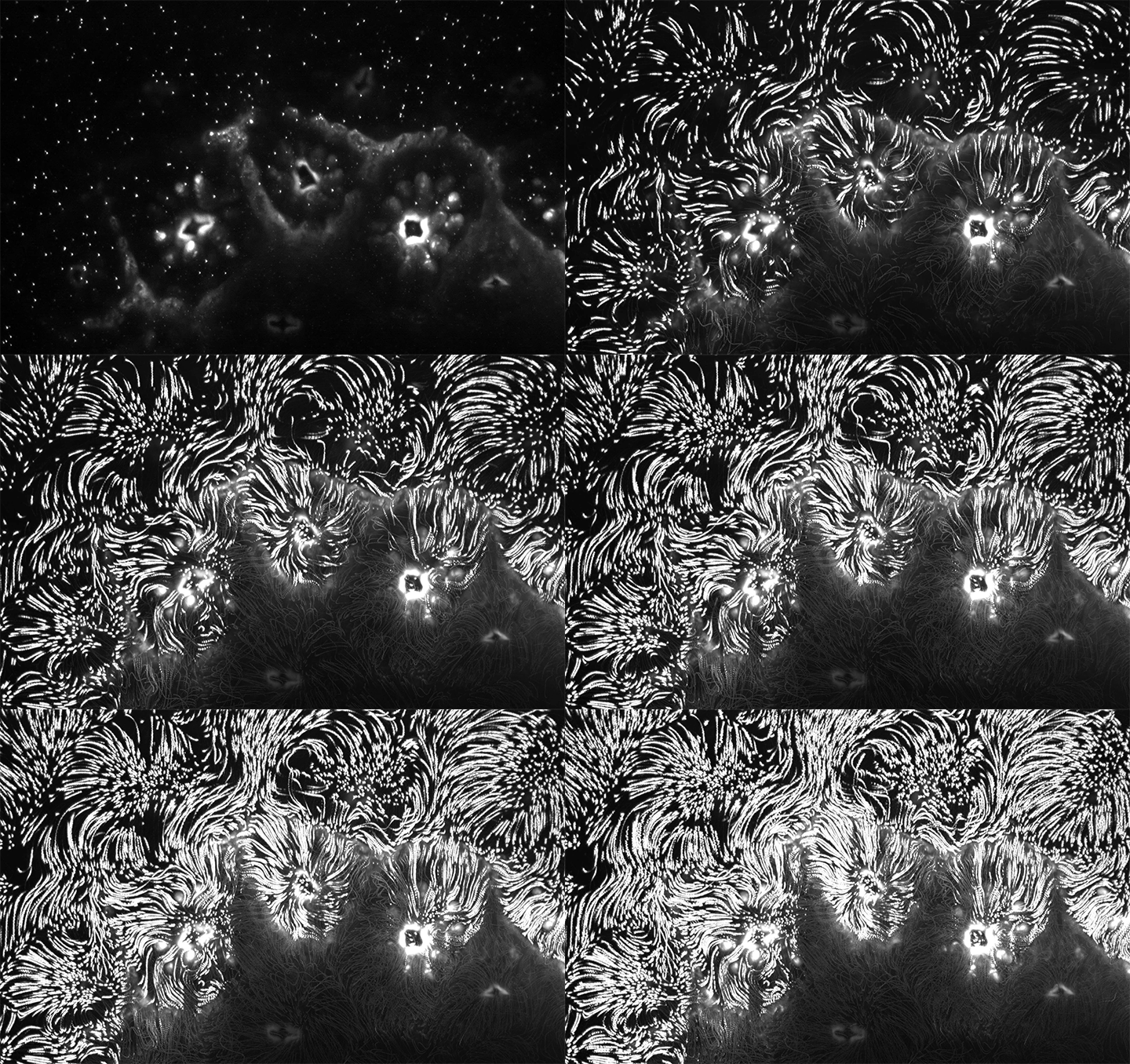
Reef-building coral polyps constantly stir the water around them with dense carpets of microscopic hair-like cilia. The beating of the cilia helps polyps feed while also pushing away sediment and debris. Their stirring increases nutrient and gas exchange with seawater, too. A new study combines experimental measurements with a simple mathematical model to recreate the three-dimensional flows corals make. The model’s efficiency means it should be useful for future studies of how corals and other cilia-covered systems interact with bacteria or other active particles. (Image and research credit: S. Selvan et al.; via APS)

The Subtleties of Pipe Flow
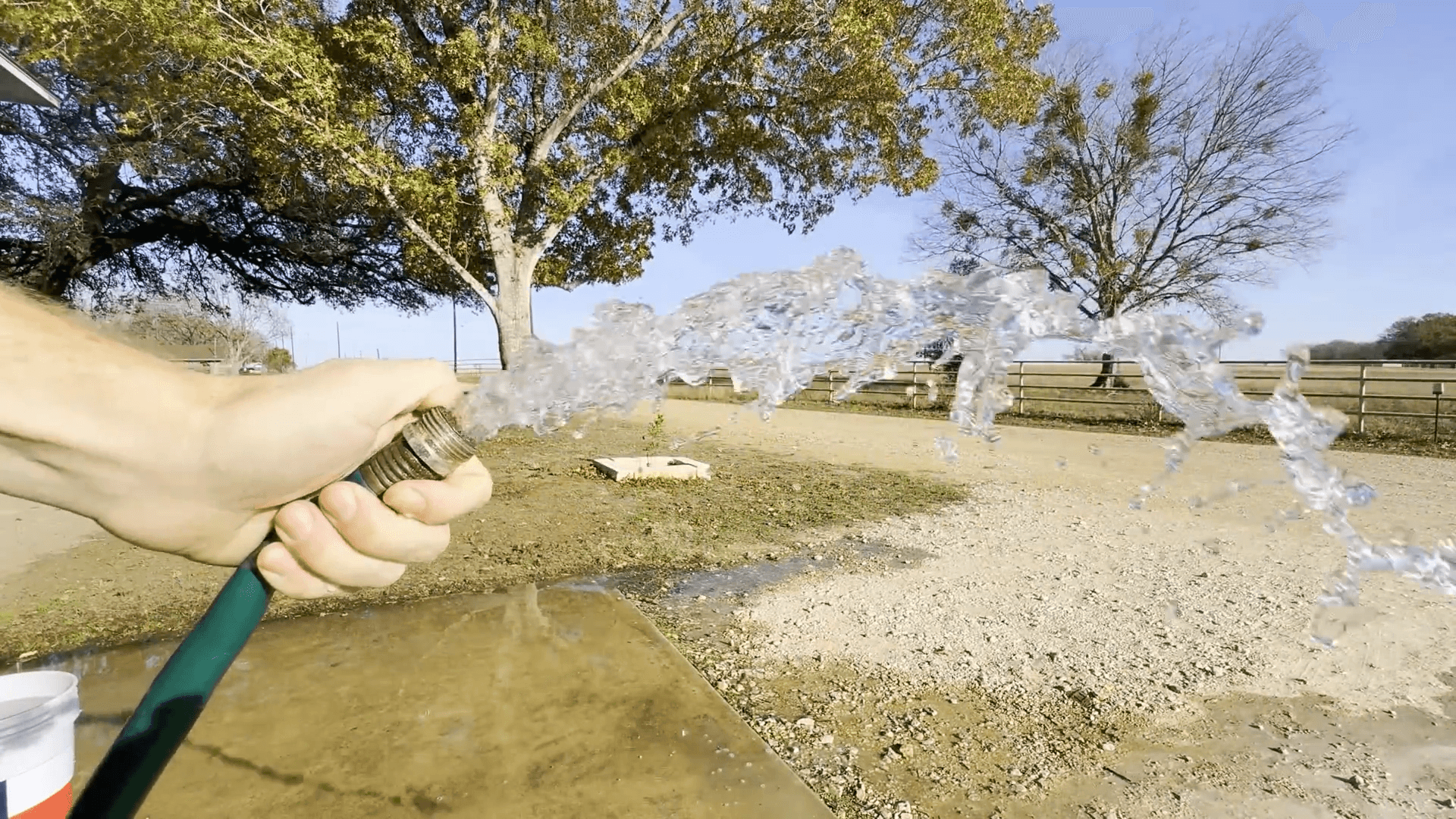
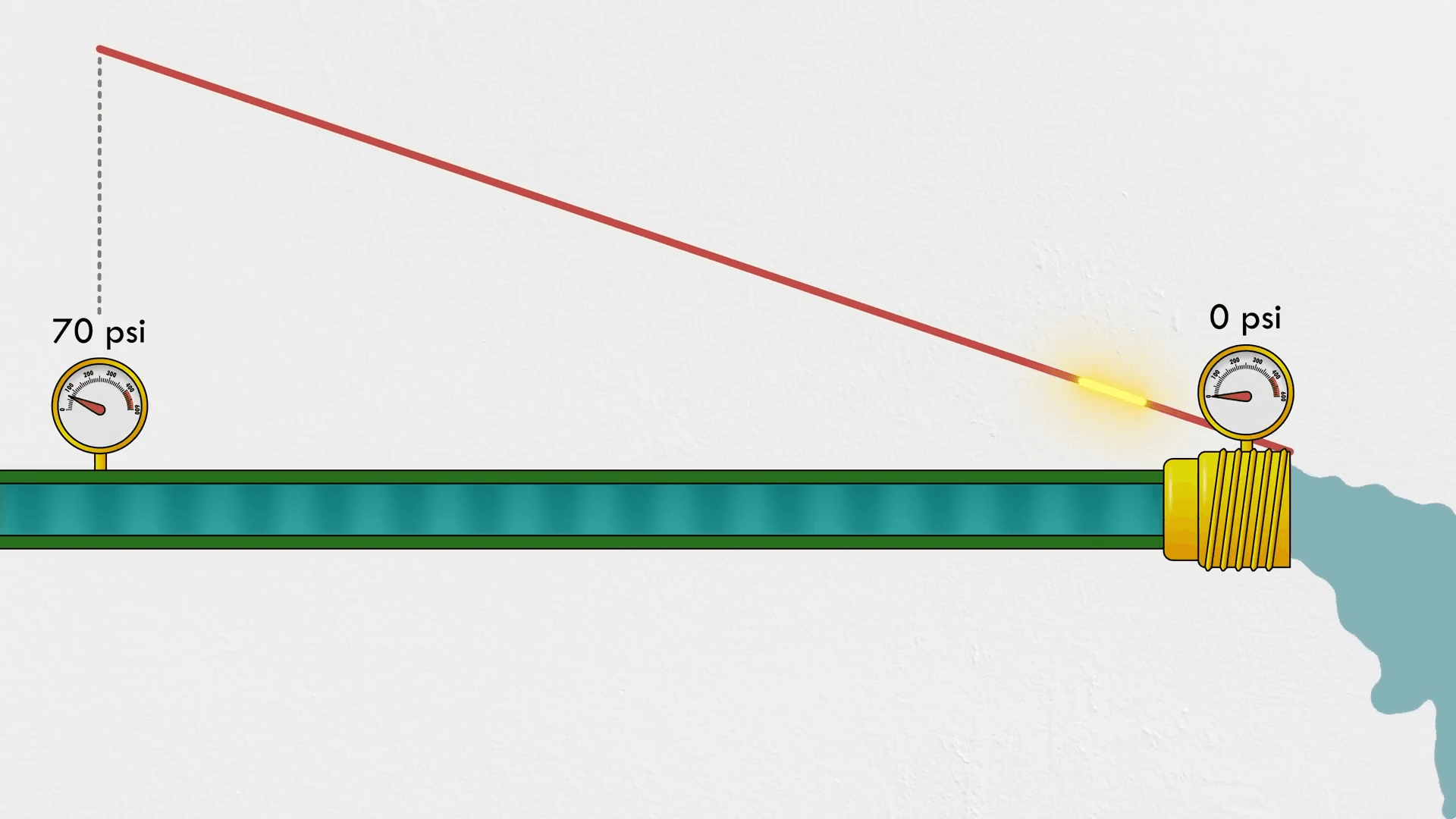
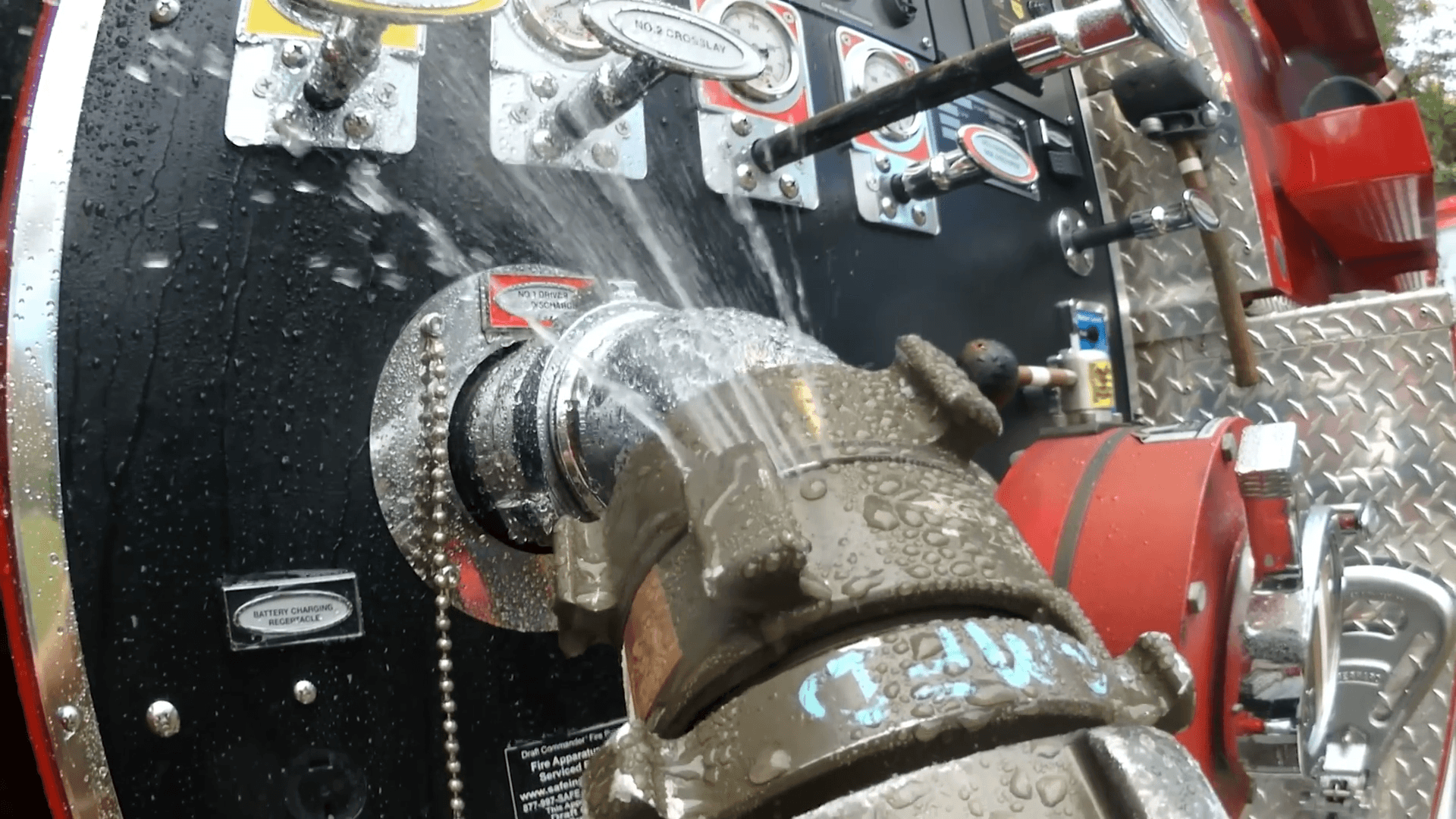
If you put a thumb over your hose’s outlet, you get a faster jet, but how does that affect the flow rate? That’s the question Grady starts from in this Practical Engineering video exploring pipe flow physics. From continuity and control volumes to practical losses, he touches on both the theory and practice behind this all-important aspect of engineering. Pipe flow is often where engineering students begin their studies of fluids, but that doesn’t mean it’s easy! (Video and image credit: Practical Engineering)

Screening for Sleep Apnea
Snoring and sleep apnea–a condition where aeroelastic flutter obstructs the airway and stops breathing during sleep–often go hand-in-hand. But diagnosing sleep apnea involves an expensive and time-consuming screening in which the patient has to sleep while monitored by various sensors. To make the process easier, researchers are developing a screening method based only on audio recording.
They started with a pre-trained audio model designed for speech recognition and stripped back computationally-expensive layers that weren’t relevant to snoring. Then they trained the new model using labeled audio data taken from standard clinical testing for sleep apnea. That means the model was told which audio recordings corresponded to “normal” snoring and which showed signs of sleep apnea. From there, the model was able to correctly identify apnea-related audio from fresh recordings just under 74% of the time. While that accuracy isn’t high enough to use the tool for diagnosis, it could help patients pre-screen for sleep apnea at home to decide whether the more invasive testing is warranted. (Image credit: L. Cline; research credit: H. Li et al.; via Physics World)