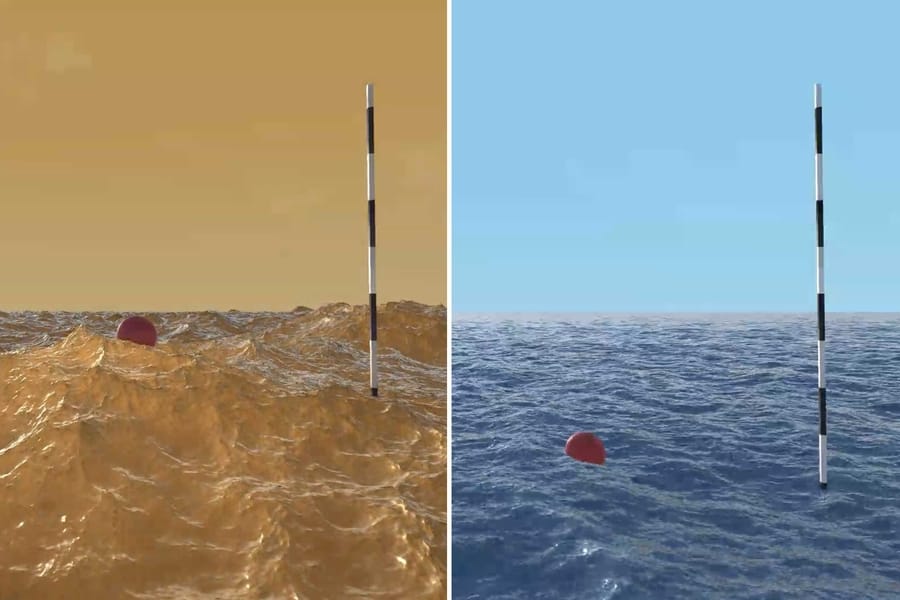
When an object like a sphere enters the water, it drags air into the water behind it, creating a cavity. Depending on the sphere’s impact speed, the cavity might close first under the water, forming a deep seal, or at the surface with a surface seal. But, as this video points out, water often isn’t still. Here, they explore how the sphere’s entry changes when there are ripples on the water surface. (Video and image credit: M. Ibrahim et al.; via GFM)
Tag: waves

Wave Energy Through the Meniscus
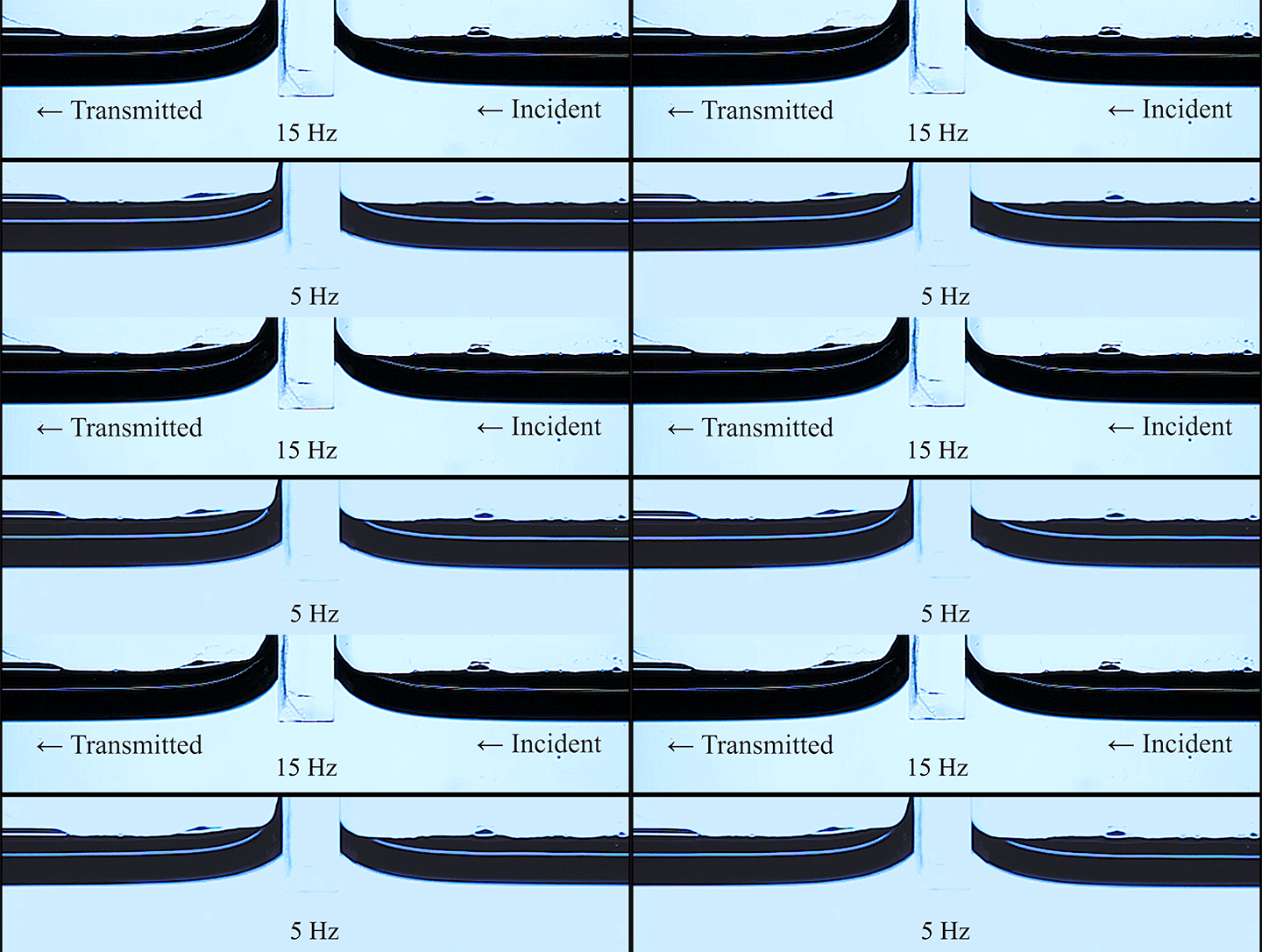
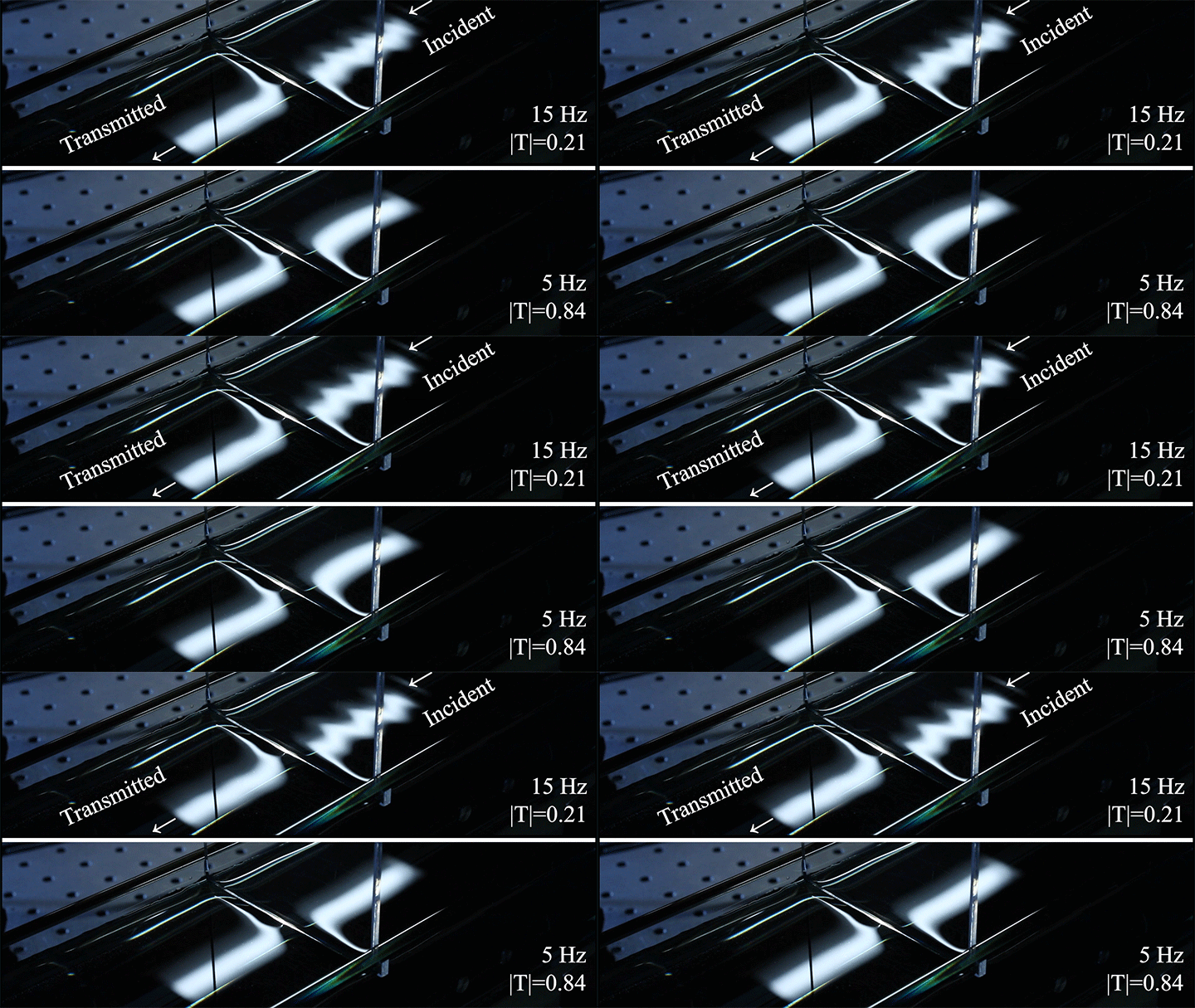
Even small changes to a meniscus can change how much wave energy passes through it. A new study systemically tests how meniscus size and shape affects the transmission of incoming waves.
As seen above, the meniscus was formed on a suspended barrier. By changing the barrier size and wettability as well as the characteristics of incoming waves, researchers were able to map out how the meniscus affected waves that made it past the barrier.

In particular, they found that drawing the meniscus upward by raising the barrier would, at first, enhance wave transmission but then suppressed wave energy as the barrier moved higher. They attributed the change in behavior to an interplay between water column height and meniscus inclination. (Research and image credit: Z. Wang et al.; via Physics World)

A New Plasma Wave for Jupiter
Jupiter‘s North Pole has a powerful magnetic field combined with plasma that has unusually low electron densities. This combination, researchers found, gives rise to a new type of plasma wave.
Ions in a magnetic field typically move parallel to magnetic field lines in Langmuir waves and perpendicularly to the field lines in Alfvén waves — with each wave carrying a distinctive frequency signature. But in Jupiter’s strong magnetosphere, low-density plasma does something quite different: it creates what the team is calling an Alfvén-Langmuir wave — a wave that transitions from Alfvén-like to Langmuir-like, depending on wave number and excitation from local beams of electrons.
Although this is the first time such plasma behavior has been observed, the team suggests that other strongly-magnetized giant planets — or even stars — could also form these waves near their poles. (Image credit: NASA / JPL-Caltech / SwR I/ MSSS/G. Eason; research credit: R. Lysak et al.; via APS)

Waves Lap on Titan’s Shores
Titan, one of Saturn’s moons, is the only other planetary body known to have liquid lakes, rivers, and seas at its surface. Whether those bodies — made up of hydrocarbons rather than water, like here on Earth — have waves is a matter of ongoing debate. What data we have from visiting spacecraft is inconclusive. So a group of researchers decided to look for the effects of wave action instead.
Beginning with a model of flooded areas similar to Titan’s, the team simulated a coastline’s erosion assuming three different situations: 1) no coastal erosion, 2) erosion from waves, and 3) uniform erosion through dissolution. Each set of conditions resulted in a very different final coastline. But, of the three, the wave-eroded coast was most similar to those seen on Titan. That’s a good indicator that, even if our spacecraft couldn’t see waves on Titan, they’re likely there. (Image credit: ESA; research credit: R. Palermo et al.; via Gizmodo)

Calming the Waves
Wave action can be a major source of erosion along riverbanks and shorelines. But in a recent study, scientists were able to perfectly absorb incoming waves to create a downstream region with calm, wave-free waters.

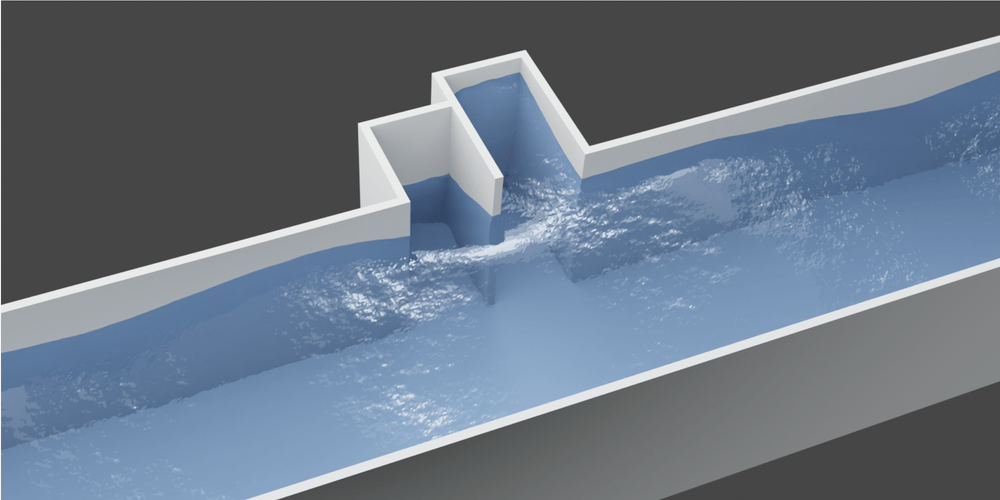
Experimental data shows that waves approaching from the left interact with the resonant chambers and get perfectly absorbed, leaving the water on the right side still. The group began with a narrow channel that waves could move down. They added two small, side-by-side cavities perpendicular to the channel; as waves travel down the channel, they resonate with the cavities, which reflect and transmit their own waves back into the channel. With the right tuning to the size and spacing of the cavities, the team was able to make the cavities’ waves perfectly cancel the channel’s waves. The group demonstrated this absorption theoretically, numerically, and experimentally.
Currently, they’ve only managed perfect absorption with a single wave frequency, but an array of cavities should be able to absorb a range of incoming waves. The authors hope their work will one day help protect coastal structures and prevent erosion by countering incoming waves. (Image and research credit: L-P. Euvé et al.; via APS Physics)

An August Arc
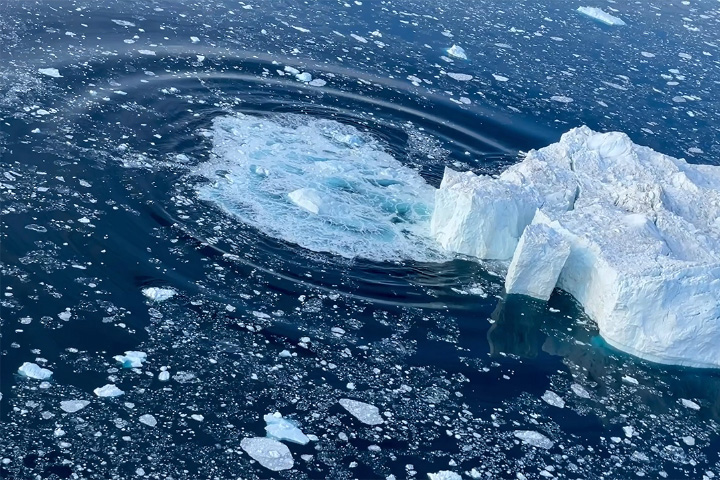
In summer, the fjords of Greenland are littered with ice, but in August 2023, satellites caught an odd interloper. See the thin white arc spanning the fjord in the photo above? Scientists suspect this ephemeral feature was a wave caused by a large iceberg calving off the glacier on the right. When large chunks of ice fall into the water, they can cause distinctive waves that travel out from the point of impact.
Another possible mechanism is an underwater plume. In Greenland’s fjords, such plumes are sometimes formed from freshwater melting below the glacier. When that water rises to the surface, it can push ice. (Image credit: W. Liang; via NASA Earth Observatory)

Banzai Pipeline From Above
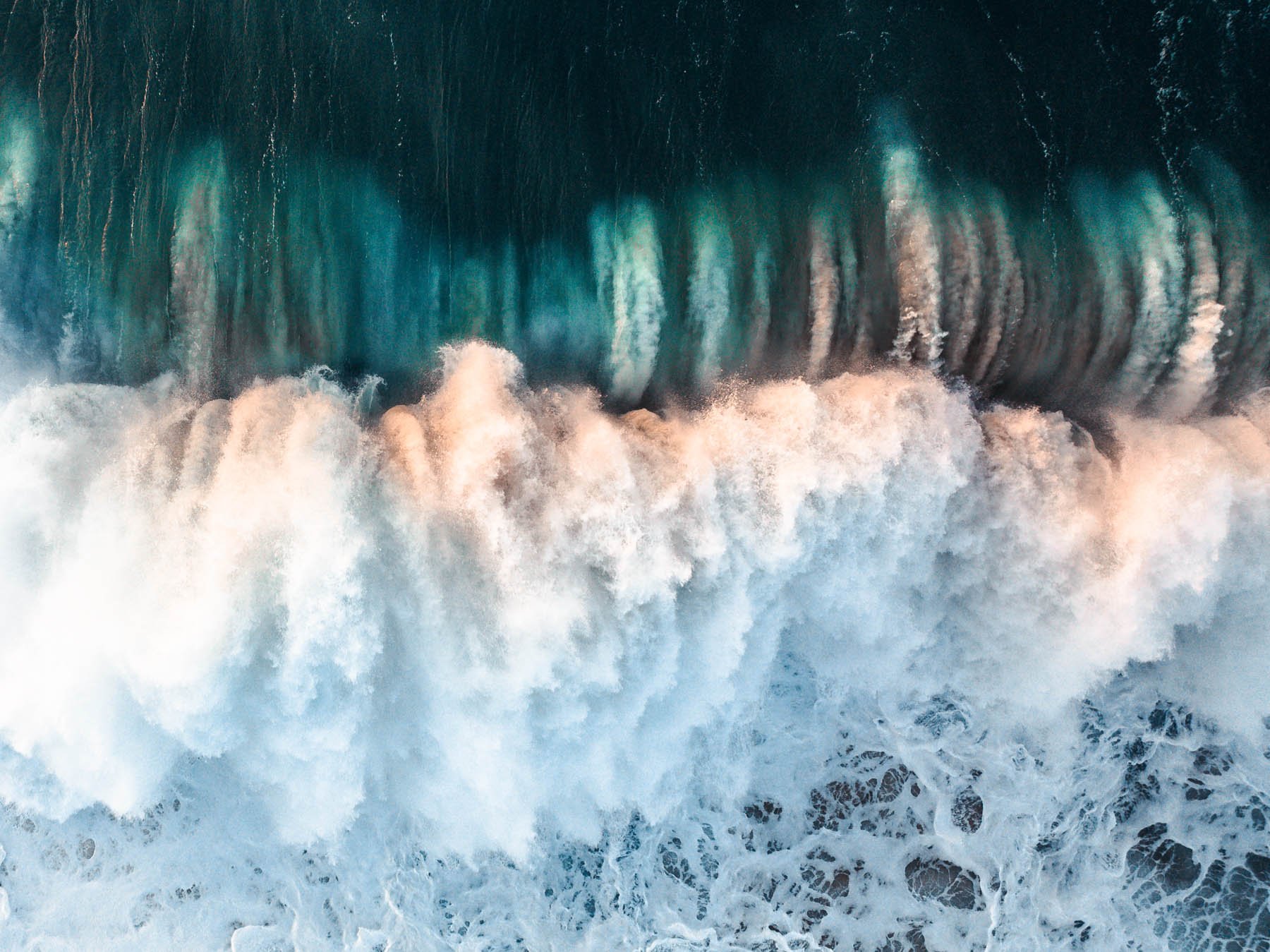
On the north shore of O’ahu, Hawaii, Banzai Pipeline is known for some of the most thrilling and deadly surfing in the world. The area’s barrel rolls are triggered when incoming waves break over the shallow reef. Photographer Kevin Krautgartner captures the waves from above, showcasing the incredible energy inherent in the ocean. The motion and texture of the water is mesmerizing. I feel like I could stare at these all day long! (Image credit: K. Krautgartner; via Colossal)

Reflections of the Storm
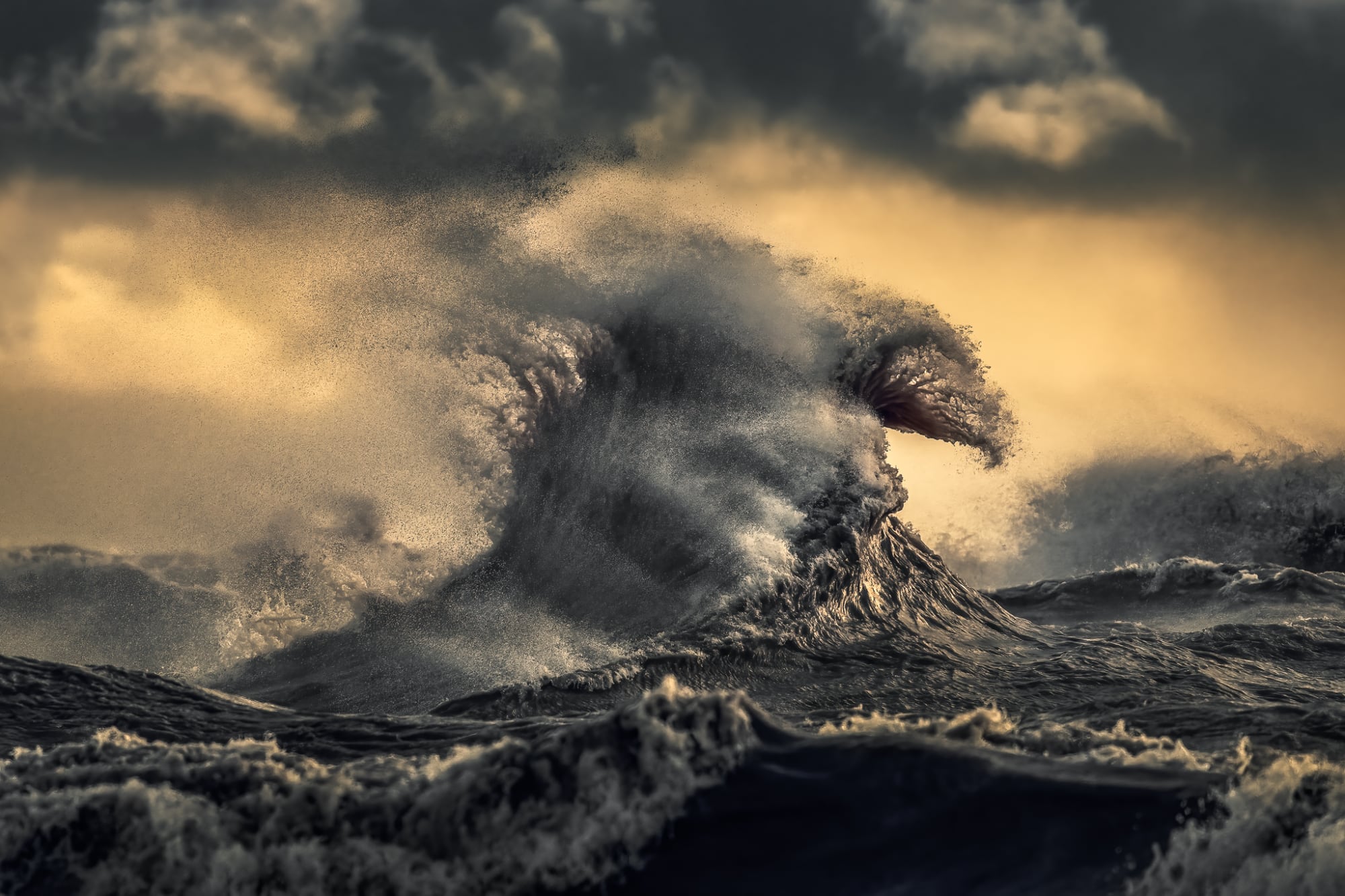
Fall and winter storms rip Lake Erie with violent waves. Photographer Trevor Pottelberg of Ontario captures the dramatic eruptions of mist and spray from these massive, turbulent waves. It’s amazing how many different characters a wave can take on. Just compare Pottelberg’s waves with those caught by Lloyd Meudell or Ray Collins. It’s almost hard to imagine all of these waves growing from the same wind-driven start. See more from Pottelberg on his website and Instagram. (Image credit: T. Pottelberg; via Colossal)

Classifying Waves
In a lab, researchers create their waves in a long, clear-sided tank, where they can observe how the waves form, travel, and interact. To generate the wave, they use a plate, attached to a piston. Push the water at one end, and a wave forms. The type of wave that forms depends on both the velocity and the stroke length of the piston, as shown in this video. By mapping out these two variables, researchers can observe all different sorts of waves, from peaceful solitary waves to wild, plunging breakers. (Image and video credit: W. Sarlin et al.)
Moving By (Intestinal) Wave
A word of warning: today’s post includes visuals of digestion taking place in (non-human) embryonic intestines.
Our bodies rely on waves driven by muscle contractions to move both fluids and solids, whether through the esophagus, the ureter, the fallopian tubes, or the intestines. In areas where mixing is unnecessary, those waves move in a single direction, transporting the contents one-way. But in the intestines, mixing is critical to enhancing nutrient absorption, so mammal intestines have wave trains that move both forwards and backwards.
The majority of waves move downstream, carrying waste toward its exit (Images 1 and 2). But occasionally, upstream waves collide with their downstream counterparts to force material together, both mixing and delaying progress in order to allow better nutrient uptake along the intestinal walls (Image 3). (Image credits: top – S. Bughdaryan, others – R. Amedzrovi Agbesi and N. Chavalier; research credit: R. Amedzrovi Agbesi and N. Chavalier; via APS Physics)