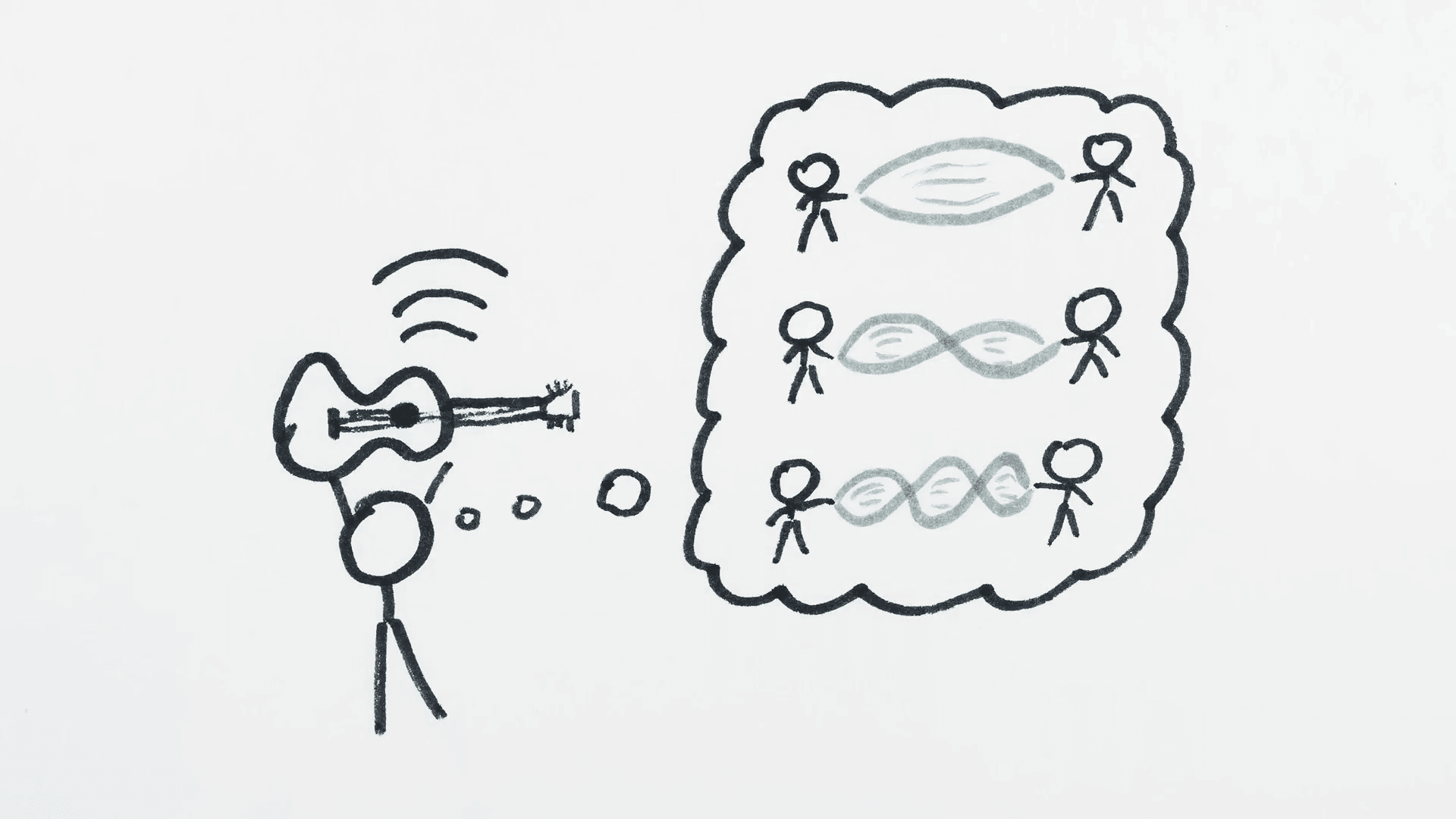
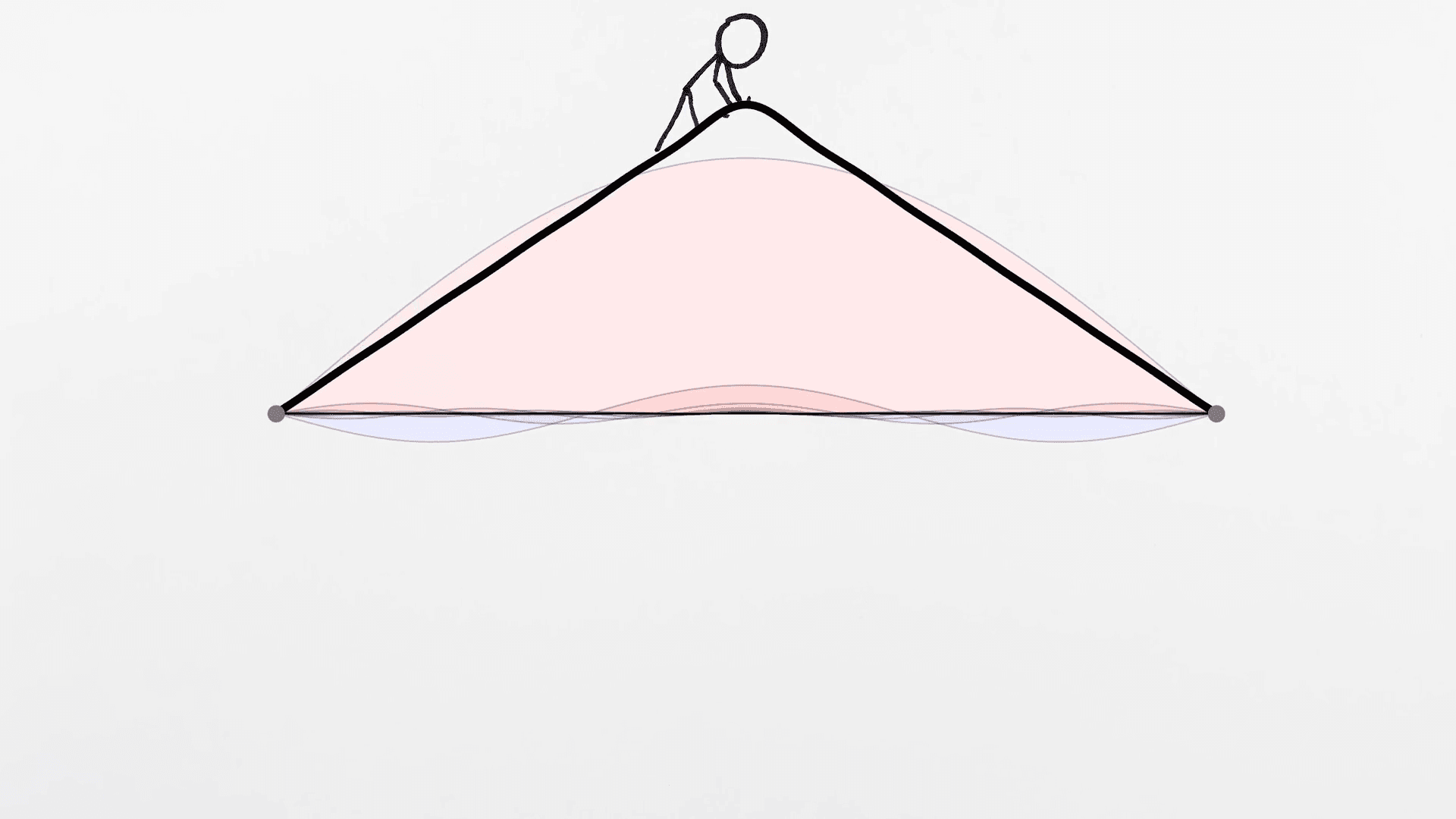
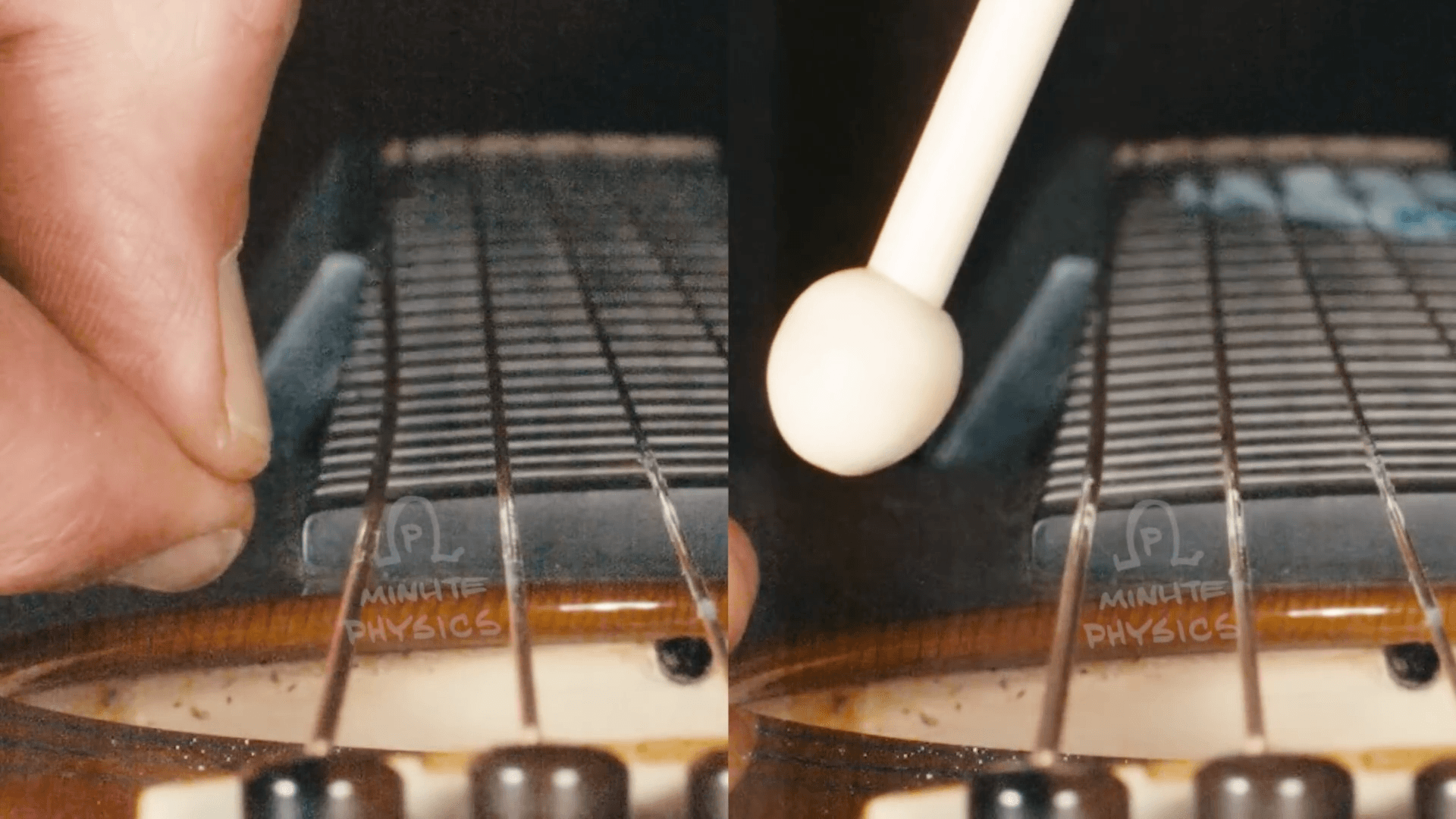
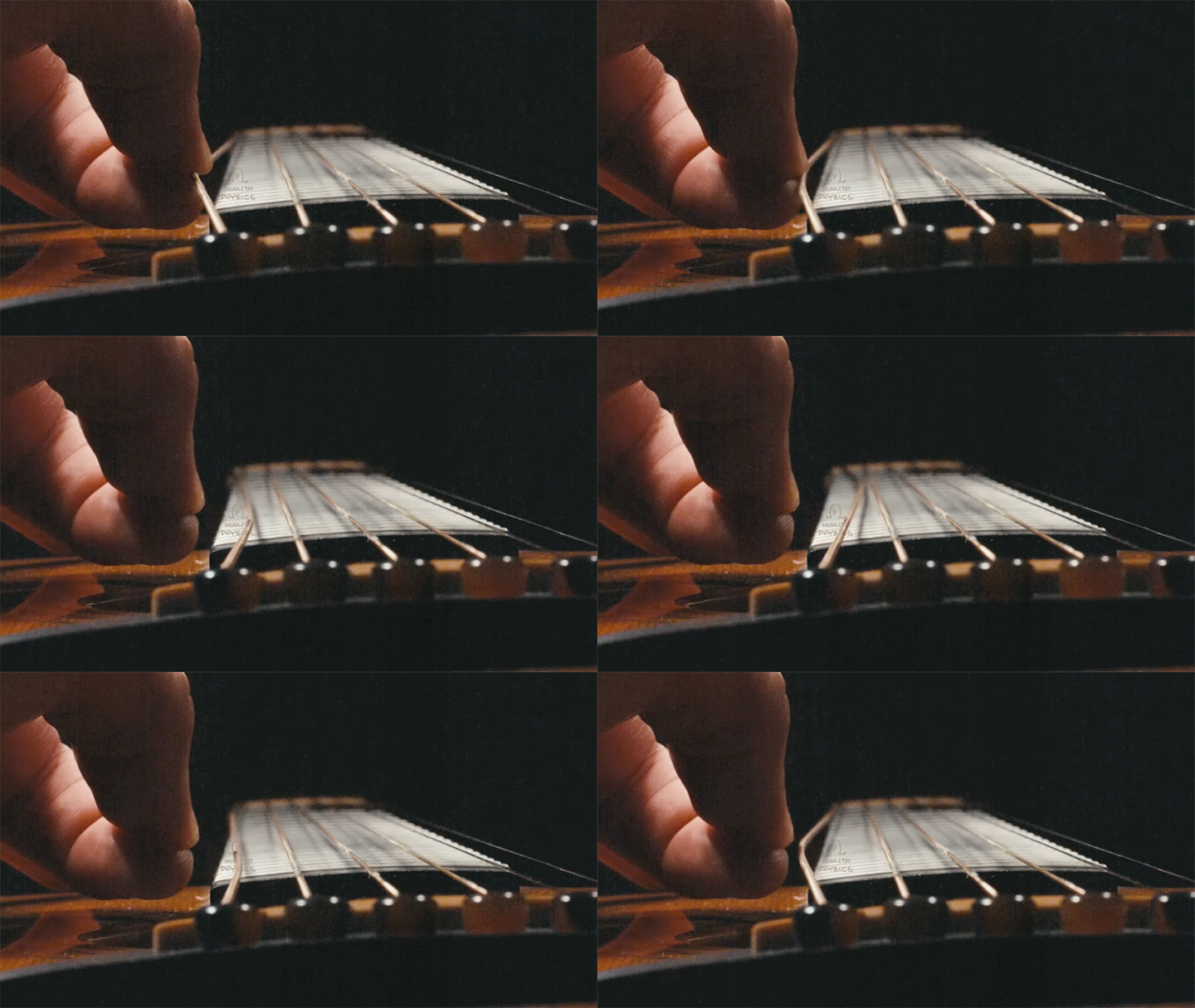
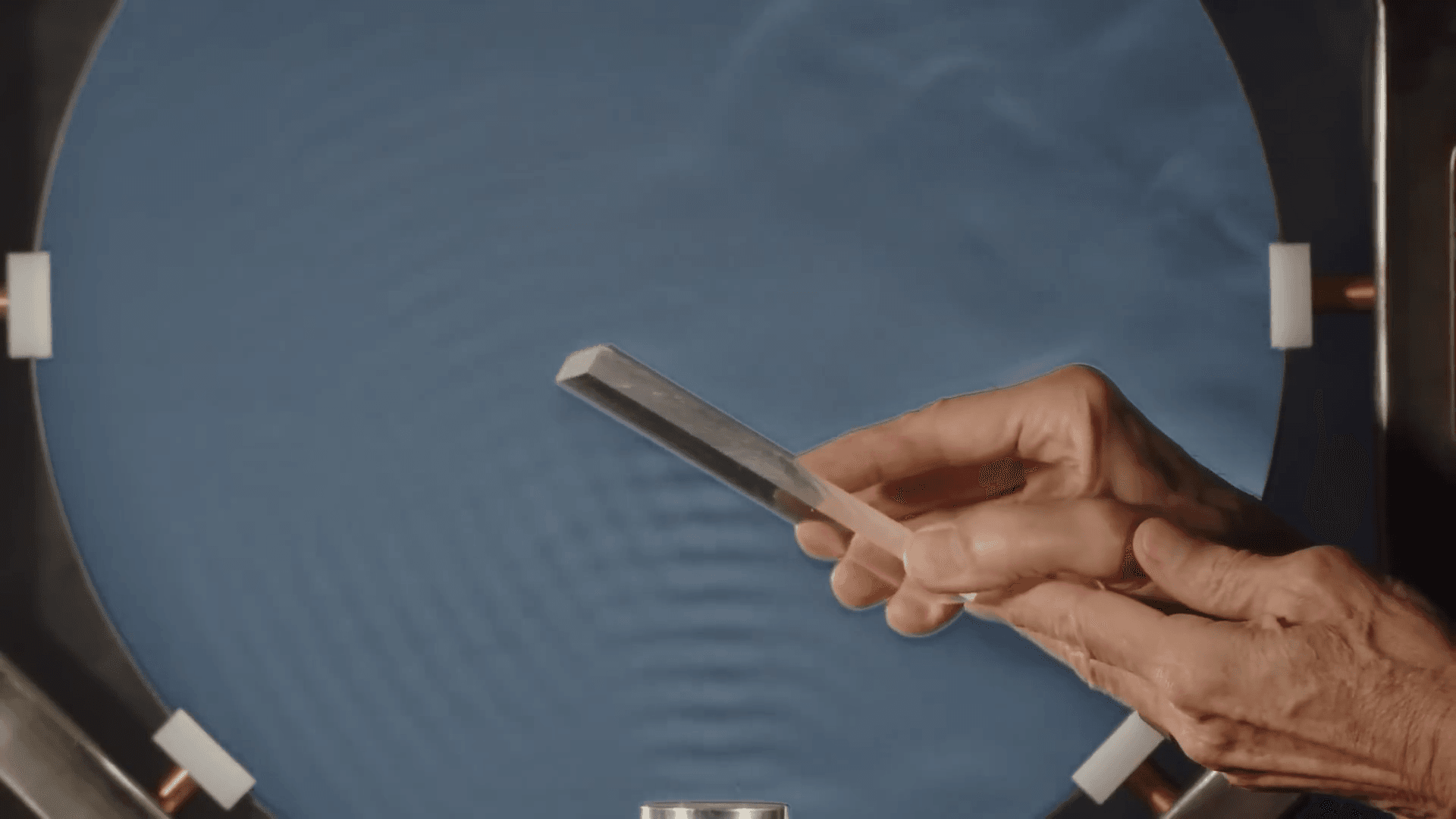
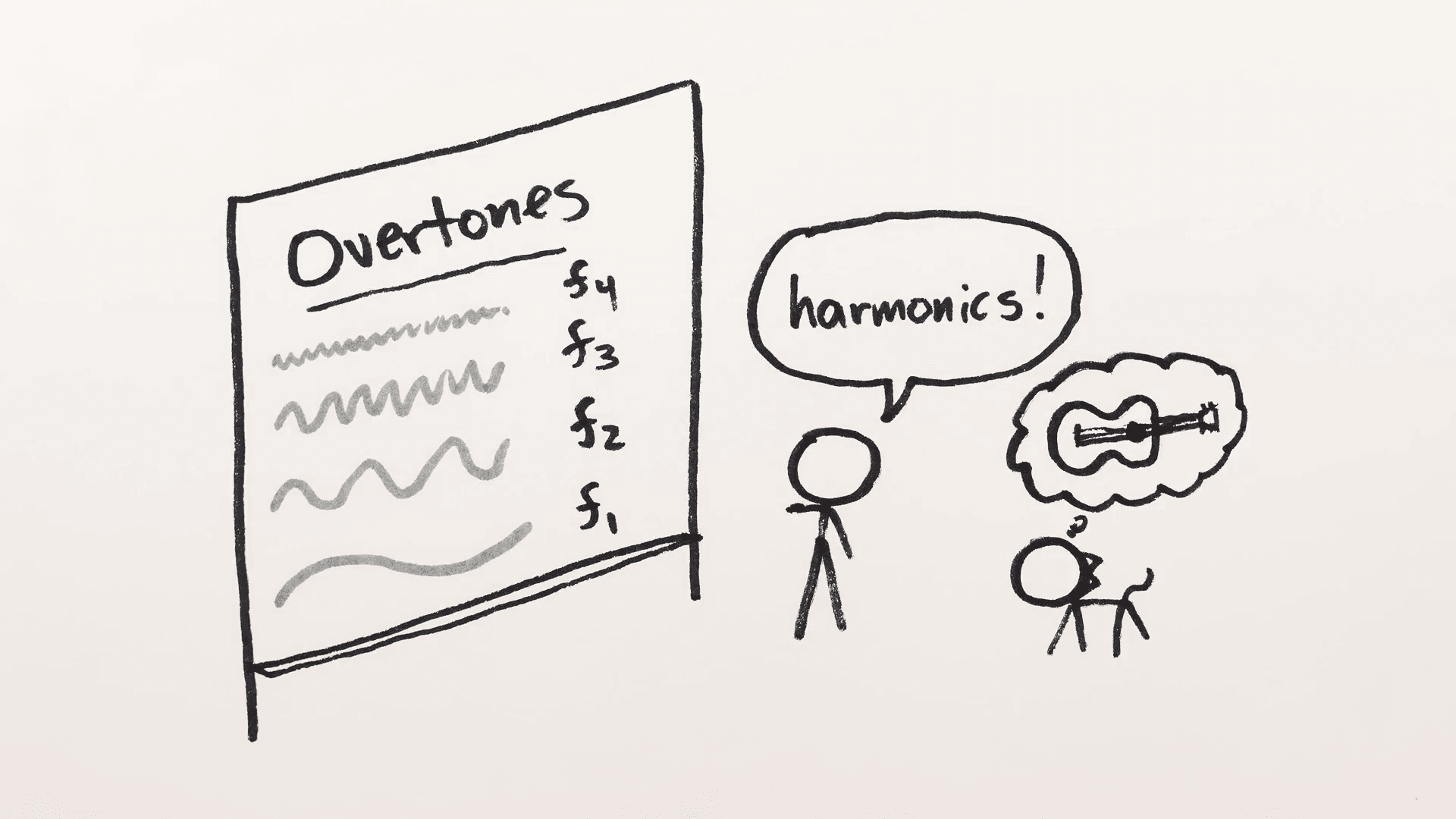
Many of us have a mental image of strings vibrating like a swinging jump rope, but that’s not quite what you actually see. Instead, plucked strings often look strangely triangular, as Henry explains in this Minute Physics video. This more complicated shape comes from the way the string’s tension responds to the applied force of plucking, striking, or bowing.
That doesn’t mean that the jump rope picture is entirely wrong, though. The triangular waves seen in the video are the shape you get when all the sine waves of the jump rope model get added together! (Superposition is fun.) (Video and image credit: Minute Physics)
Snoring and sleep apnea–a condition where aeroelastic flutter obstructs the airway and stops breathing during sleep–often go hand-in-hand. But diagnosing sleep apnea involves an expensive and time-consuming screening in which the patient has to sleep while monitored by various sensors. To make the process easier, researchers are developing a screening method based only on audio recording.
They started with a pre-trained audio model designed for speech recognition and stripped back computationally-expensive layers that weren’t relevant to snoring. Then they trained the new model using labeled audio data taken from standard clinical testing for sleep apnea. That means the model was told which audio recordings corresponded to “normal” snoring and which showed signs of sleep apnea. From there, the model was able to correctly identify apnea-related audio from fresh recordings just under 74% of the time. While that accuracy isn’t high enough to use the tool for diagnosis, it could help patients pre-screen for sleep apnea at home to decide whether the more invasive testing is warranted. (Image credit: L. Cline; research credit: H. Li et al.; via Physics World)
Sprinklers have long been the go-to fire protection for commercial properties and some residences. Dousing a fire in water not only puts out the flames but cools the surroundings and helps prevent reignition. But it requires complicated infrastructure and can damage buildings and their contents. Back in 2015, students were experimenting with an alternative fire extinguisher that used sound below the range of human hearing; now a company is pitching a version of that technology for replacing sprinklers.
As described by Ars Technica, this infrasound system can detect and put out a small kitchen fire in under a minute. But fire fighting experts warn that there’s a big difference between a fire small enough for a fire extinguisher to handle and the kinds of fires sprinklers put out. With lives at stake, the burden of proof is significant for Sonic Fire Tech and any other company that wants to get their infrasound “sprinkler” system cleared for use in buildings. (Image credit: I. Azevedo; via Ars Technica)
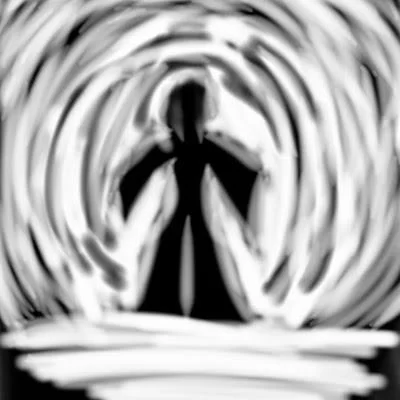
Our ears, like those of many other animals, convert mechanical signals to electrical ones, through a Rube-Goldberg-esque series of transformations. External sound waves make their way down the soft tube of the ear canal, which funnels them to a thin-walled cone, the eardrum, that’s about half as large as a dime. Here, the vibrating air pushes against the cone’s membrane, and those vibrations travel onward through a linked trio of small bones that amplify the vibration’s amplitude.
The last of these bones presses against an even smaller, oval-shaped membrane. As the bone moves, it shakes the membrane, sending waves through the liquid on its other side. Those waves travel down the spirals of the tiny, pea-sized cochlea, named for a snail shell’s shape. As the waves move through the liquid, they bend bundles of hair-like strands back and forth, like tall grass waving in a breeze. The bending triggers a chemical that binds to nerves at the base of the bundles, sending an electrical signal through the nerve and into the brain.
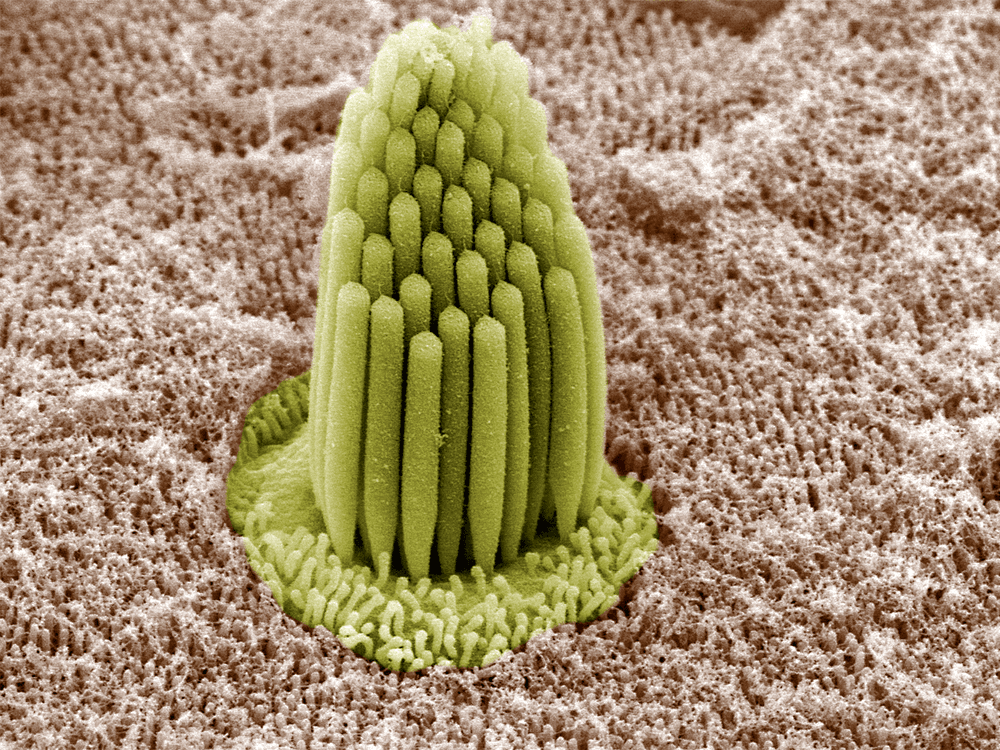
But the hair-like bundles, known as stereocilia, are also able to amplify incoming vibrations. In this case, the bundles in the outer portion of the cochlea expend energy to bend more than the incoming vibrations naturally make them move. This bending amplifies the fluid motion that gets transmitted to stereocilia further down the line; it’s those bundles that will make the final conversion to an electrical signal the brain receives. (Image credit: B. Kachar; research credit: Y. Thipmaungprom et al.; via APS)
Scanning electron microscope view of the stereocilia “hair bundles” inside a frog’s inner ear.
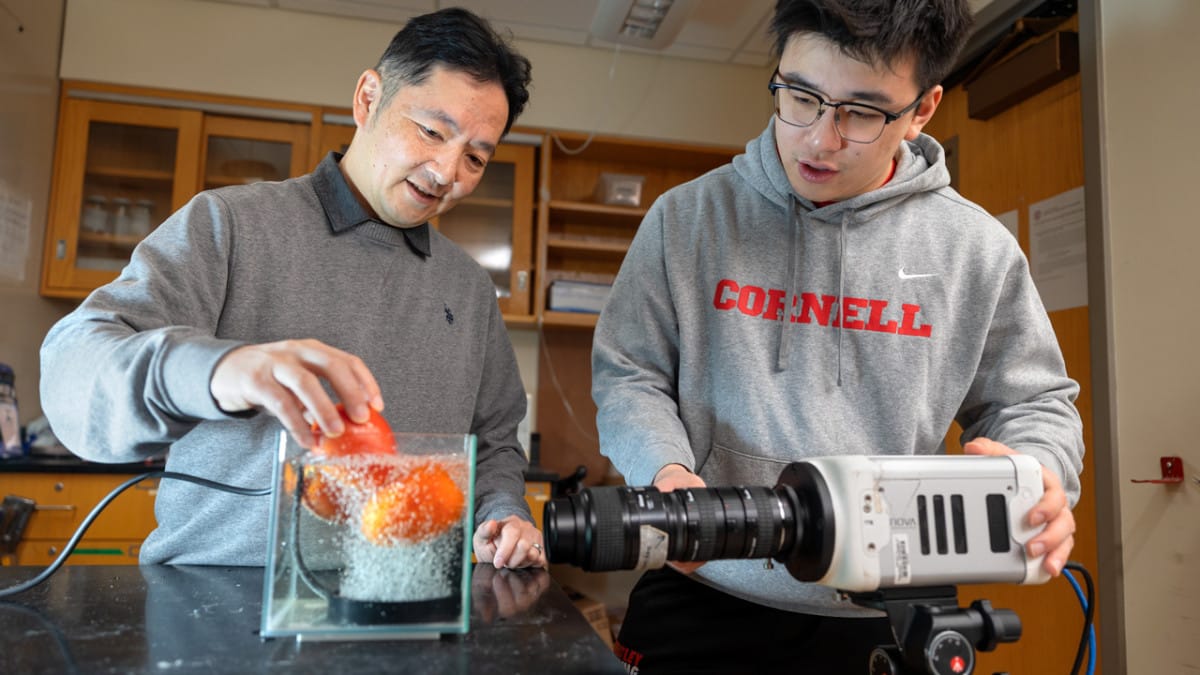
Cleaning produce helps fruits and vegetables last longer and reduces the chances for foodborne illness. But it can be a difficult feat with soft, delicate foods like tomatoes, berries, or greens. Current methods often combine ultrasonic cleaning and chemicals like chlorine. Instead, researchers are looking to boost the cleaning power of bubbles themselves by giving them an acoustic pick-me-up.
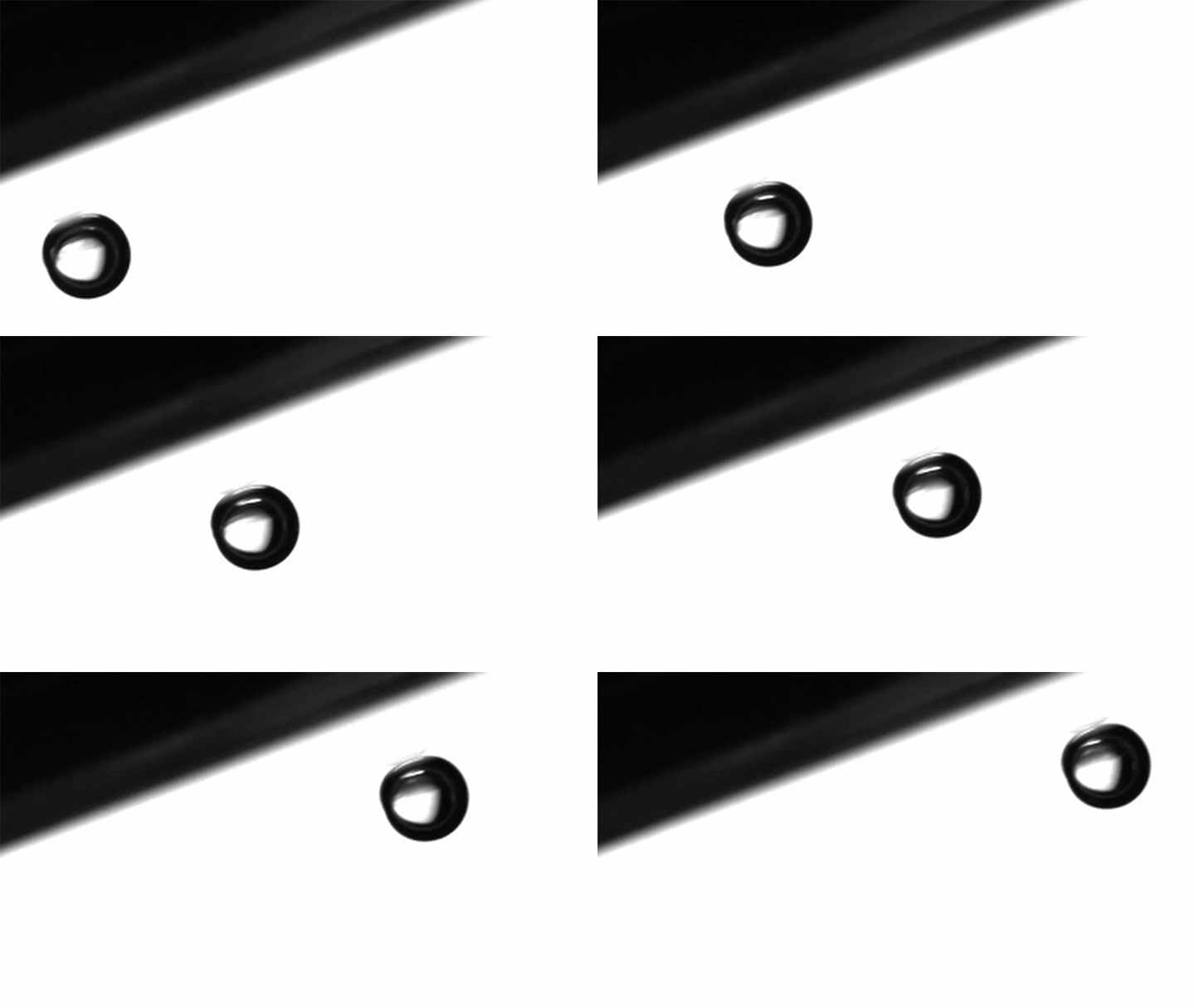
Stop-and-go. A bubble slides along an inclined surface in a pronounced stop-and-go motion when vibrated near its frequency for translational resonance.
The team combined a bubble-filled bath with sound at low (sub-cavitation) frequencies. They found that driving sound waves at the right frequency could vibrate the bubbles in a way that made them slide in a stop-and-go motion along inclined surfaces. This swaying significantly boosted their cleaning power; getting surfaces 90% cleaner than non-resonating bubbles did. (Image credit: S. Hok/Cornell University; video and research credit: Y. Lin et al.; via Gizmodo)
Sound is not something we can typically see, though there are ways to visualize it, including cymatics and special acoustic cameras. This video pursues a different tactic: using schlieren photography and stroboscopic lighting to show how sound waves reflect and deflect. It’s no easy feat, but one worth enjoying–especially when others have already done the hard part for you! (Video and image credit: All Things Physics; submitted by David J.)
Micrometer-sized particles can be trapped in place against a flow using acoustic waves. But smaller nano-sized particles feel less radiation pressure from acoustic waves, and so keep moving in the flow. But new work shows that it is possible to trap those nanoparticles with some additional help.
In this case, researchers seeded their flow with microparticles that were held in place by acoustic waves against the background flow. When nanoparticles were added to the mix, they remained trapped in the wells between microparticles due to a combination of acoustic forcing and the hydrodynamic shielding of the nearby large particles. (Image credit: P. Czerwinski; research credit: A. Pavlič and T. Baasch; via APS)
The loud noises of construction are not just an issue for humans. Sound and pressure waves from underwater construction are a problem for water-dwellers, too. So engineers use bubble curtains around a construction site to help reduce the amount of sound that escapes. Water and air transmit sound very differently; in acoustic terms, they have very different impedance. You’ve probably experienced this yourself if you’ve ever compared the sounds of a swimming pool above and below the surface. Because some of a sound’s intensity gets lost in the water –> air –> water transition, a bubble curtain can halve the sound pressure transmitted from equipment. (Video and image credit: Practical Engineering)
Dissonance — the discomfort we feel when two or more musical notes feel mismatched — is more than just a subjective measure. In this video, Henry of Minute Physics delves into some of the physics involved in dissonance, first with simple sine waves and then with musical instruments. Our ears — and our brains — seem most troubled when two notes (and their overtones) are close but not quite matching in frequency. And, as Henry explains, the peaks and valleys between those agreements lead to many of the musical systems we have today. (Video and image credit: Minute Physics)
Can plants recognize the sound of their pollinators? That’s the question behind this recently presentedacoustic research. As bees and other pollinators hover, land, and take-off, their bodies buzz in distinctive ways. Researchers recorded these subtle sounds from a Rhodanthidium sticticum bee and played them back to snapdragons, which rely on that insect. They found that the snapdragons responded with an increase in sugar and nectar volume; the plants even altered their gene expression governing sugar transport and nectar production. The researchers suspect that the plants evolved this strategy to attract their most efficient pollinators and thereby increase their own reproductive success. (Image credit: E. Wilcox; research credit: F. Barbero et al.; via PopSci)