Tag: supersonic flight

  • Imaging a New Era of Supersonic Travel

    Imaging a New Era of Supersonic Travel

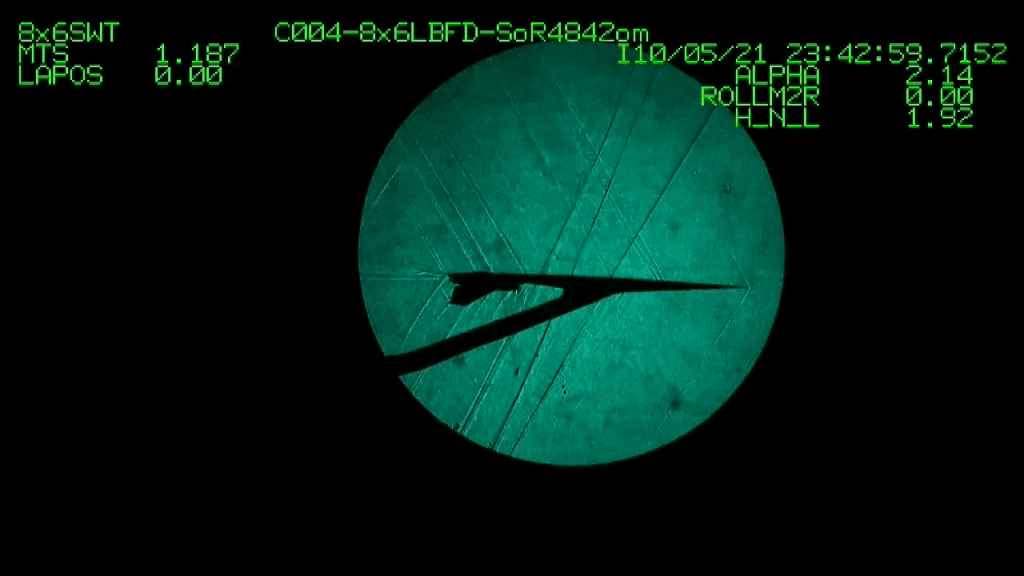
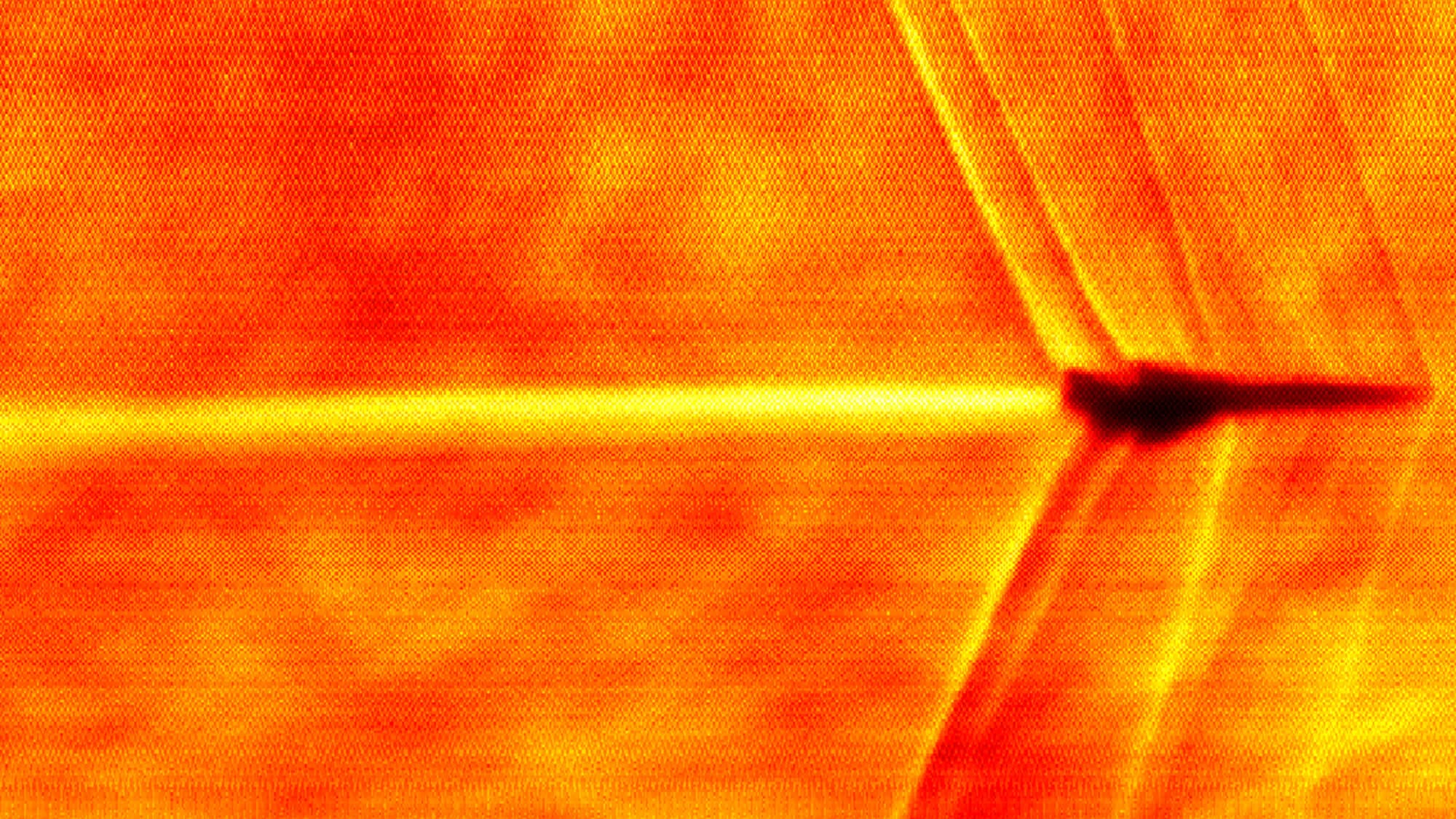
    Supersonic commercial travel was briefly possible in the twentieth century when the Concorde flew. But the window-rattling sonic boom of that aircraft made governments restrict supersonic travel over land. Now a new generation of aviation companies are revisiting the concept of supersonic commercial travel with technologies that help dampen the irritating effects of a plane’s shock waves.

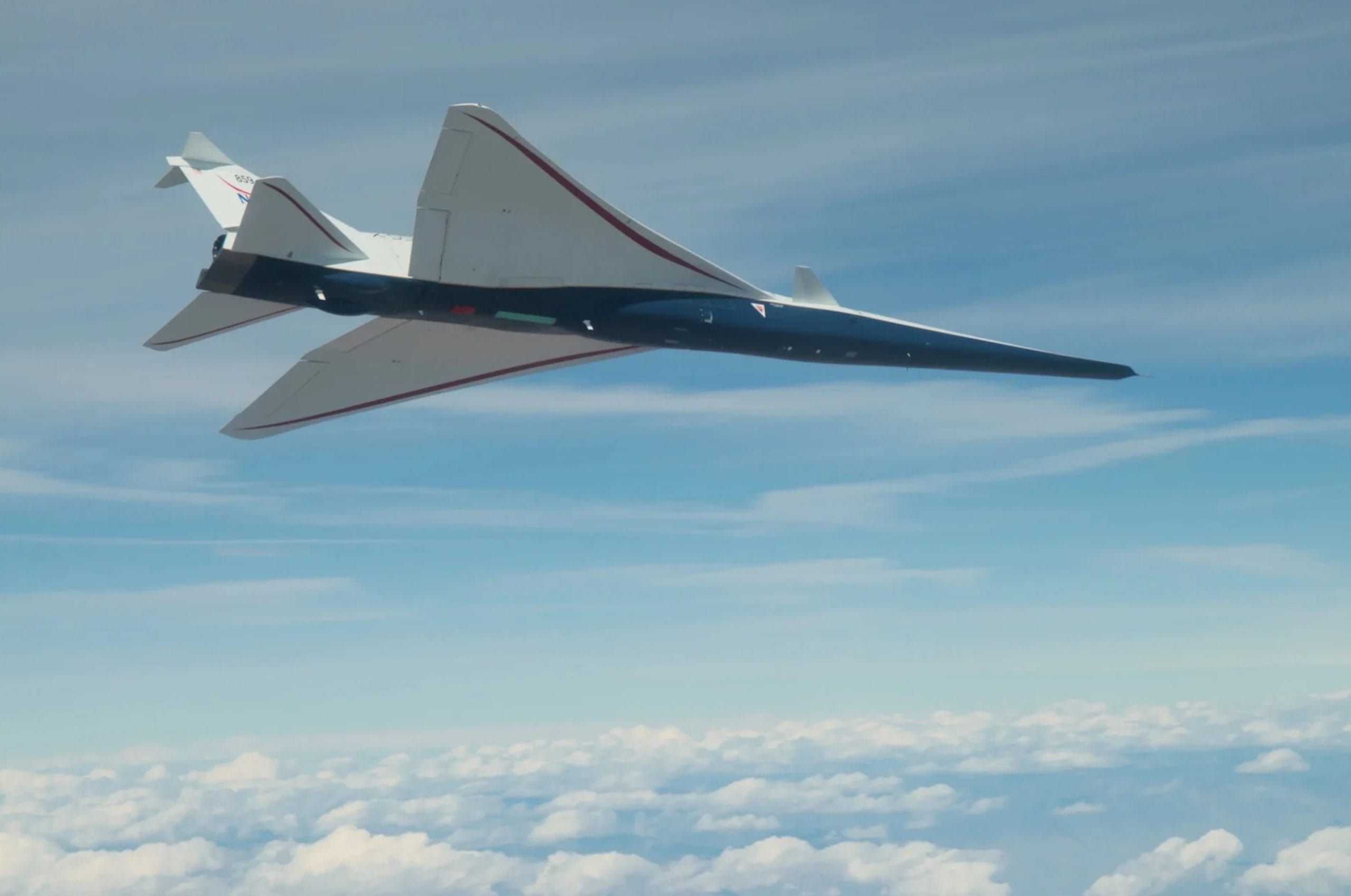
    One such company, Boom Supersonic, partnered with NASA to capture the above schlieren image of their experimental XB-1 aircraft in flight. The diagonal lines spreading from the nose, wings, and tail of the aircraft mark shock waves. It’s those shock waves’ interactions with people and buildings on the ground that causes problems. But the XB-1 is testing out scalable methods for producing weaker shock waves that dissipate before reaching people down below, thus reducing the biggest source of complaints about supersonic flight over land. (Image credit: Boom Supersonic/NASA; via Quartz)

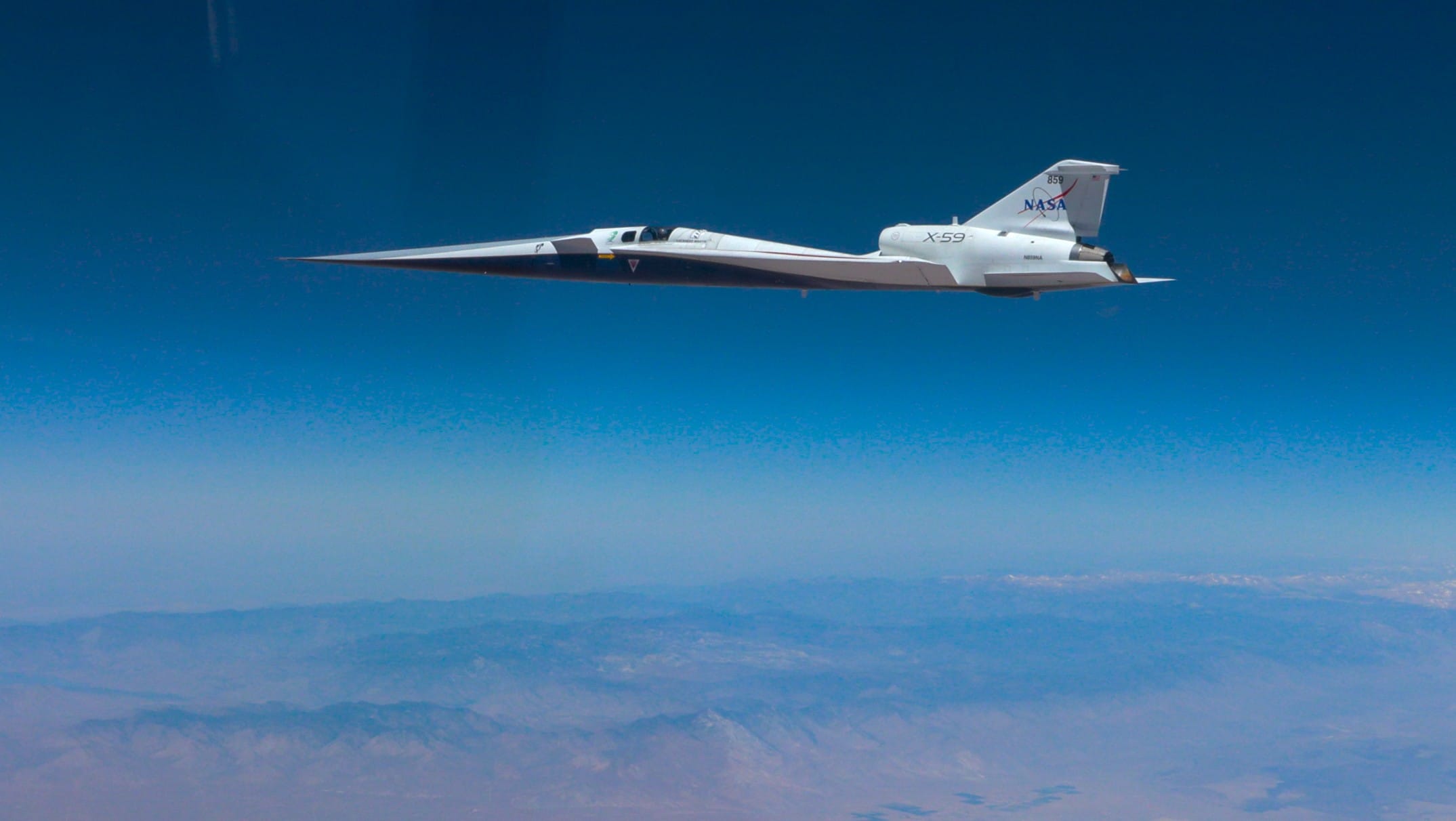
    The XB-1 test aircraft in flight.
    Fediverse Reactions
  • Featured Video Play Icon

    Challenges of Commercial Supersonic Flight

    Years ago as I sat on a plane taxiing at Heathrow, I caught a glimpse of a Concorde out on the tarmac. My classmates couldn’t understand why I was so excited to see that funny looking plane, but even as a high schooler, I was fascinated by the prospect of flying faster than sound.

    Unfortunately, there are a lot of challenges to overcome in making supersonic flight widely available — fuel efficiency, cost effectiveness, and sonic boom control, to name a few. This video delves into some of the major issues and touches on some of the recent work at NASA and other organizations studying the problem. Perhaps as new technologies develop and mature we’ll once again see faster-than-sound air travel outside of rocket launches and military jets. (Video and image credit: TED-Ed)

  • Fluids Round-up

    Fluids Round-up

    Last week was supposed to have a fluids round-up, but we were having too much fun walking on water instead. So here it is now!

    – NASA has asked Congress for funding for new X-plane programs to explore solutions for greener airliners and quieter sonic booms to enable next-generation air travel. Popular Science, Gizmodo, and Ars Technica take a closer look at the proposed projects. I won’t lie – as an aerospace engineer I am hugely in favor of this. The first ‘A’ in NASA has been neglected for quite a while and projects like these are needed if we want to advance the state-of-the-art in aeronautics.

    – The New York Times’ ScienceTake video series took a look back at their most popular videos, and 3 of the top 5 videos are fluid dynamics-related. Because we are just that awesome. (via Rebecca M)

    – I made a guest appearance on last week’s Improbable Research podcast, where we talked about bizarre experiments trying to unravel swimming.

    – Physics Girl shows us 5 weird ways to blow out a candle. There’s some neat and potentially non-intuitive fluid dynamics involved!

    – SciShow offers an explanation of why we sneeze. Spoiler alert: it’s more than just to get rid of irritants.

    – Fluid dynamics made the short list for NPR’s Golden Mole awards with the discovery of dancing droplets. Here’s Skunkbear’s take on it.

    – Ernst Mach, of Mach number fame, was also a bit of an artist and philosopher. (via @JenLucPiquant)

    – It’s not quite fluid dynamics, but this Slow Mo Guys video of spinning burning steel wool might be their most beautiful video yet. Check it out!

    (Image credit: NASA)

  • Featured Video Play Icon

    Supersonic

    Moving supersonically–faster than the local speed of sound–can cause some awesome effects. Among these are vapor cones (a.k.a. Prandlt-Glauert singularities), shock waves, and, of course, the sonic boom.