Tag: filtration

  • Filtering Like a Manta Ray

    Filtering Like a Manta Ray

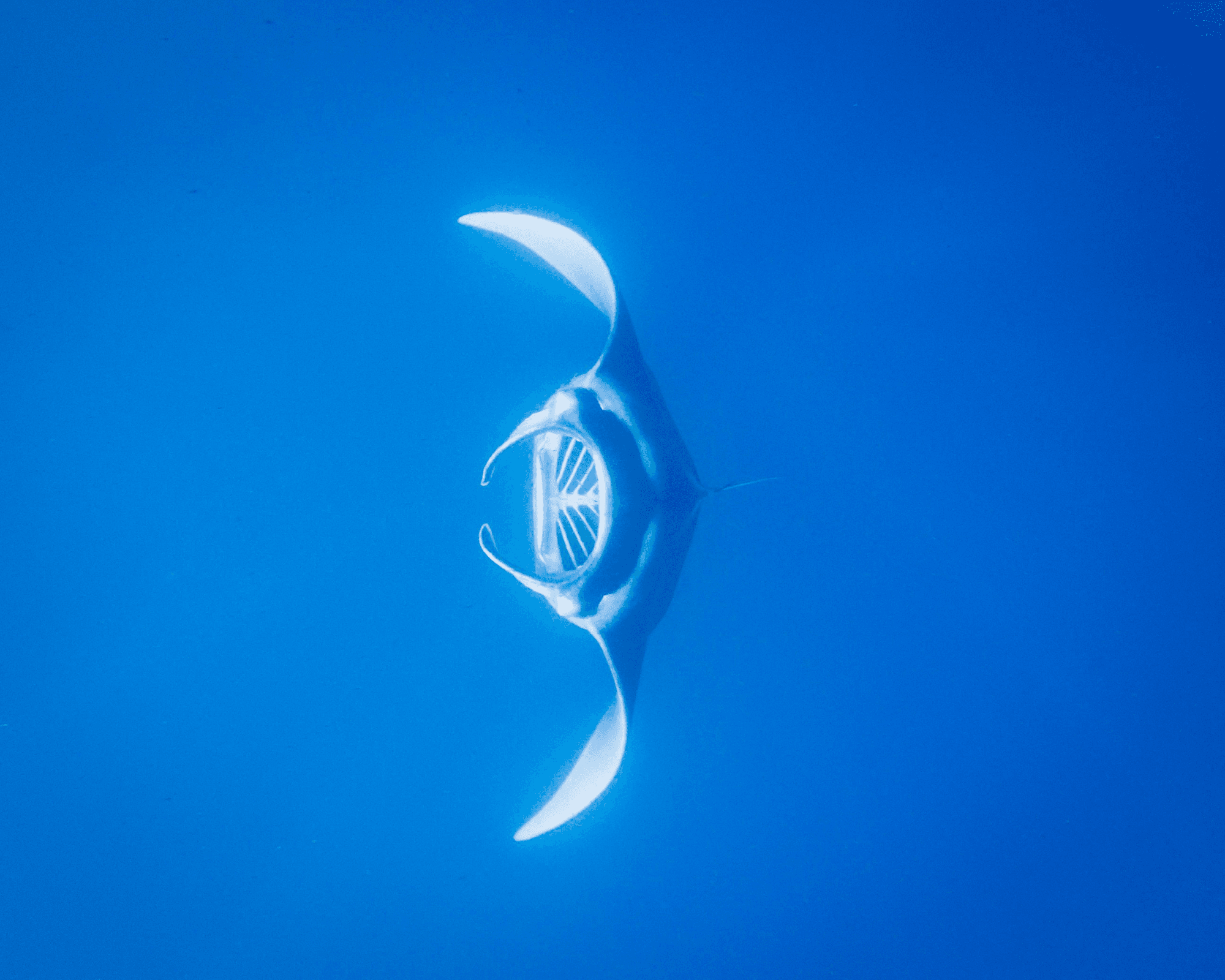
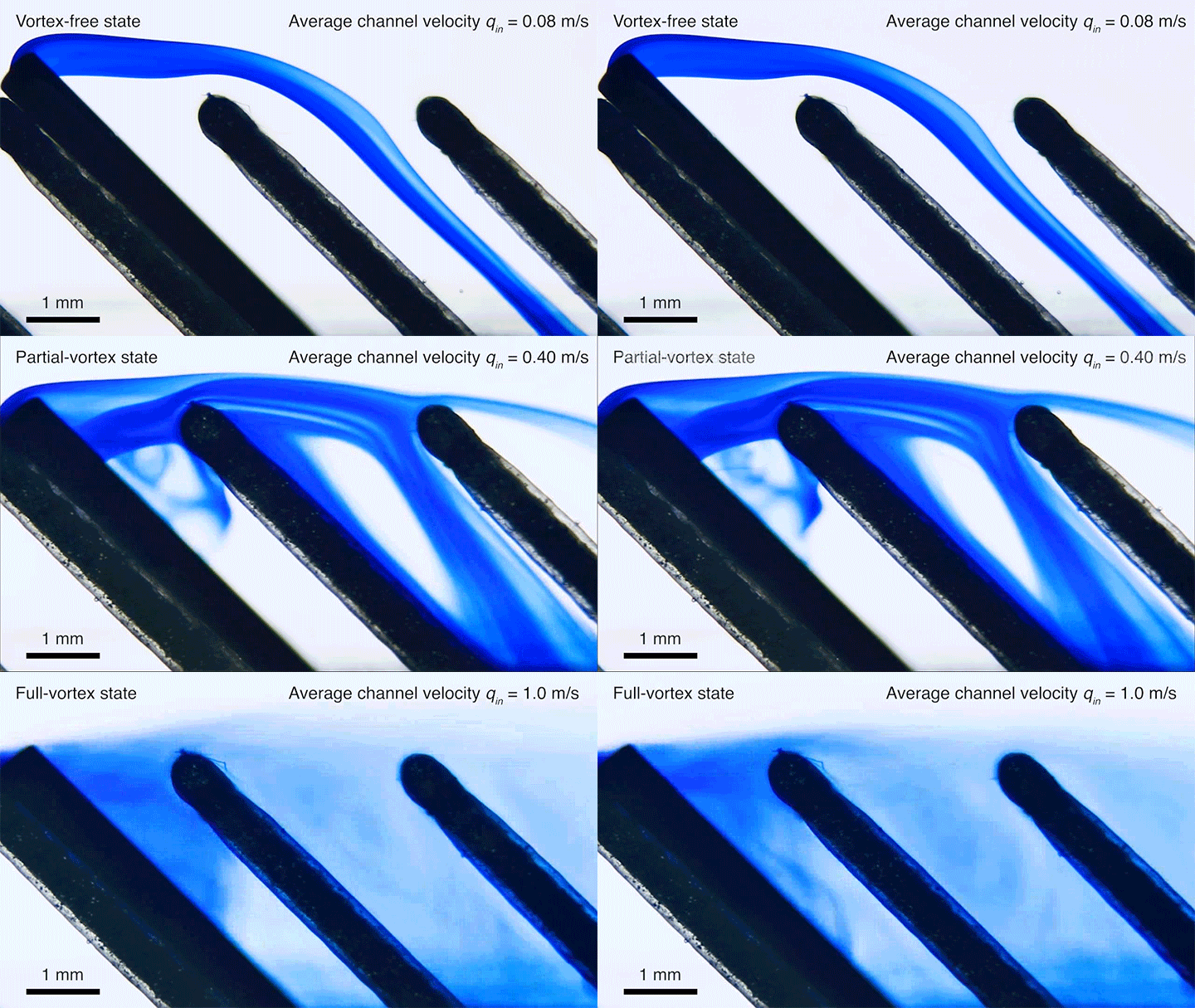
    As manta rays swim, they’re constantly doing two important — but not necessarily compatible — things: getting oxygen to breathe and collecting plankton to eat. That requires some expert filtering to send food particles toward their stomach and oxygen-rich water to their gills. Manta rays do this with a built-in filter that resembles an industrial crossflow filter. Researchers built a filter inspired by a manta ray’s geometry, and found that it has three different flow states, based on the flow speed. At low speeds, flow moves freely down the filter’s channels; in a manta, this would carry both water and particles toward the gills. At medium speeds, vortices start to form at the entrance to the filter channels. This sends large particles downstream (toward a manta’s digestive system) while water passes down the channels. At even greater speeds, each channel entrance develops a vortex. That allows water to pass down the filter channels but keeps particles out. (Image credit: manta – N. Weldingh, filter – X. Mao et al.; research credit: X. Mao et al.; via Ars Technica)

    An animation showing three different flow states through a manta-ray-inspired filter.
    Depending on the flow speed, a manta-inspired filter can allow both water and particles in or filter particles out of the water.
    Fediverse Reactions
  • Paris 2024: Clearing the Air

    Paris 2024: Clearing the Air

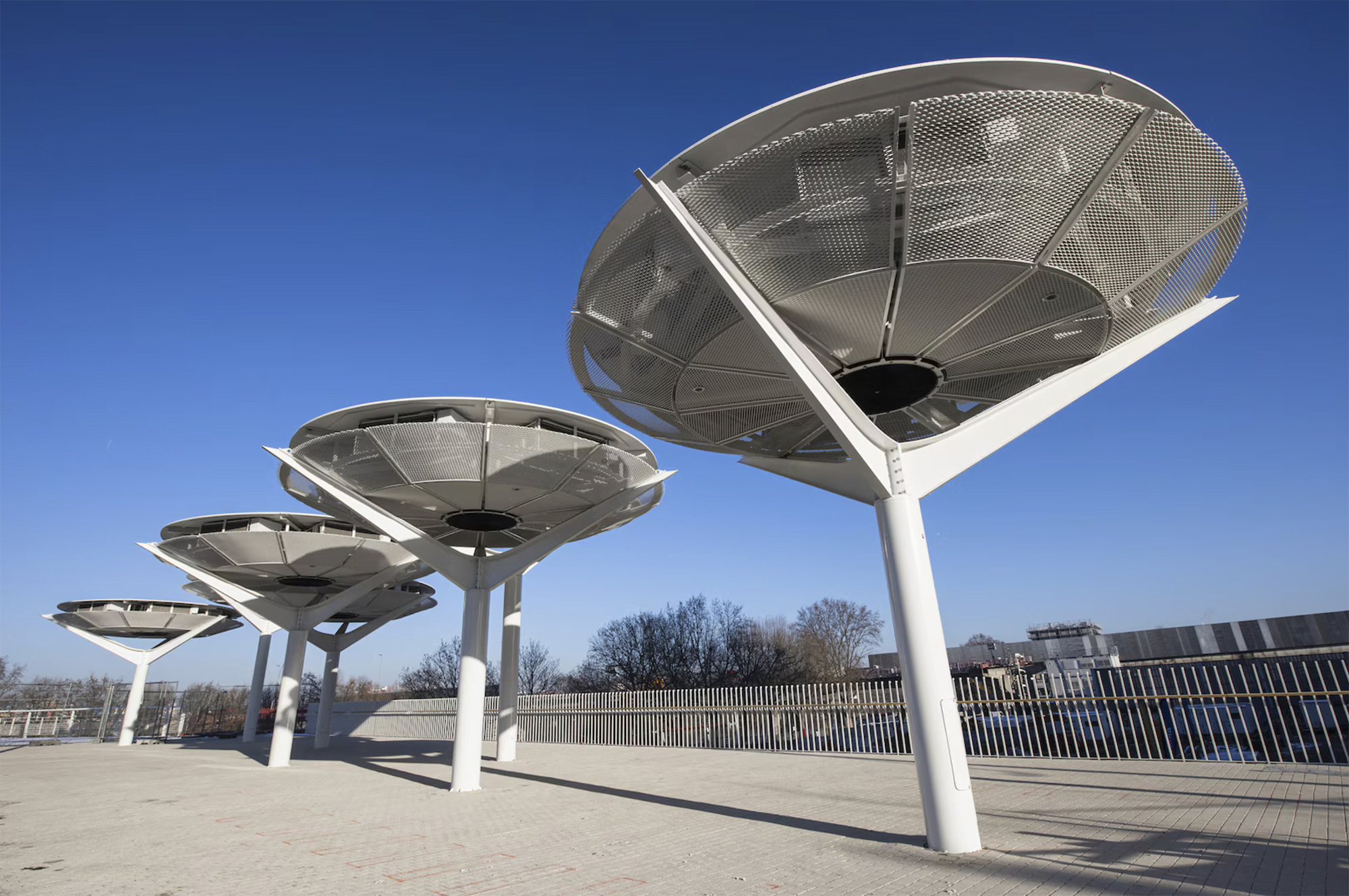
    A quartet of mushroom-shaped structures tower nearly 6 meters above the Olympic Village. Known as Aerophiltres, these devices filter particulates out of the air to provide cleaner air for the Village, despite its proximity to major roadways. There’s no need to change out the filters in the Aerophiltres, though, because they don’t have any. Instead, the devices ionize fine particles, encourage them to clump together, and then capture them on highly-charged metal plates. A fan near the base sucks polluted air in through the top and expels clean air at the ground level. According to the engineers, the system is capable of removing 95% of particulates and producing nine Olympic-sized swimming pools’ worth of clean air each hour. Compared to traditional systems — which require lots of power to suck air through filters that get progressively more clogged — the Aerophiltres are energy efficient, highly effective, and easy to maintain. (Image credit: SOLIDEO/C. Badet; via DirectIndustry)

    Related topics: How manta rays filter without clogging, making artificial snow, and building whitewater rafting courses

    Catch our past and ongoing Olympic coverage here.

  • Featured Video Play Icon

    Filter-Feeding Mantas

    Large filter-feeders like the manta ray face the interesting challenge of obtaining enough small particulates like plankton to sustain an animal the size of a car. They do this through what is known as ram filter-feeding, essentially swimming open-mouthed through food-laden waters, filtering out the food, and releasing the water through their gills. Their internal filtration doesn’t simply catch particles like a colander does, though – it would be too easy for the ray’s filters to clog. Instead, the animals use several alternative methods to catch and redirect particles toward their esophagus. One, known as crossflow filtration, causes water to turn sharply through the filters. Heavier particles cannot accelerate that quickly, so they are carried onward. Another method, vortex filtration, works like a tiny centrifuge, spinning the water and ejecting the heavier particles back toward the esophagus. (Video credit: Science Friday; research credit: E. Paig-Tran, thesis)