When filming, things don’t always go according to plan. Glasses break, splashes obscure your subject, and sometimes effects just don’t turn out the way you expect. But if you’re the Macro Room team, even those mistakes and outtakes are pretty darn fascinating to watch! I especially like some of the granular “splash” sequences here. (Image and video credit: Macro Room)
We’ve seen previously just how fluid dynamically impressive sharks are on the outside, but today’s study demonstrates that they’re just as incredible on the inside. Researchers used CT scans of more than 20 shark species to examine the structure of their intestines. Sharks have spiral intestines that come in four different varieties; two of those types look like a stacked series of funnels (either pointing upstream or downstream). These funnel-filled spirals, the researchers found, are incredibly good at creating uni-directional flow without any moving parts, much like a Tesla valve does. The spiral structure also seems to slow down digestion, which may factor into the shark’s ability to go long periods between meals. Incredibly, the fossil record indicates that spiral intestines — in some form — evolved in sharks about 450 million years ago — before mammals even existed! Clearly we engineers are way behind sharks when it comes to controlling flows!
It’s impressive when a microscopic organism is visible from space, but that’s a regular occurrence for phytoplankton, the tiny marine algae that feed much of the ocean. In this video from NASA Earth Observatory, we travel around the globe, observing phytoplankton blooms and learning about the ecosystems they feed — or destroy.
Note that many of these satellite images have been color-enhanced to bring out the swirls and eddies of each bloom. The colors are enhanced but the patterns are real. (Image and video credit: NASA Earth Observatory)
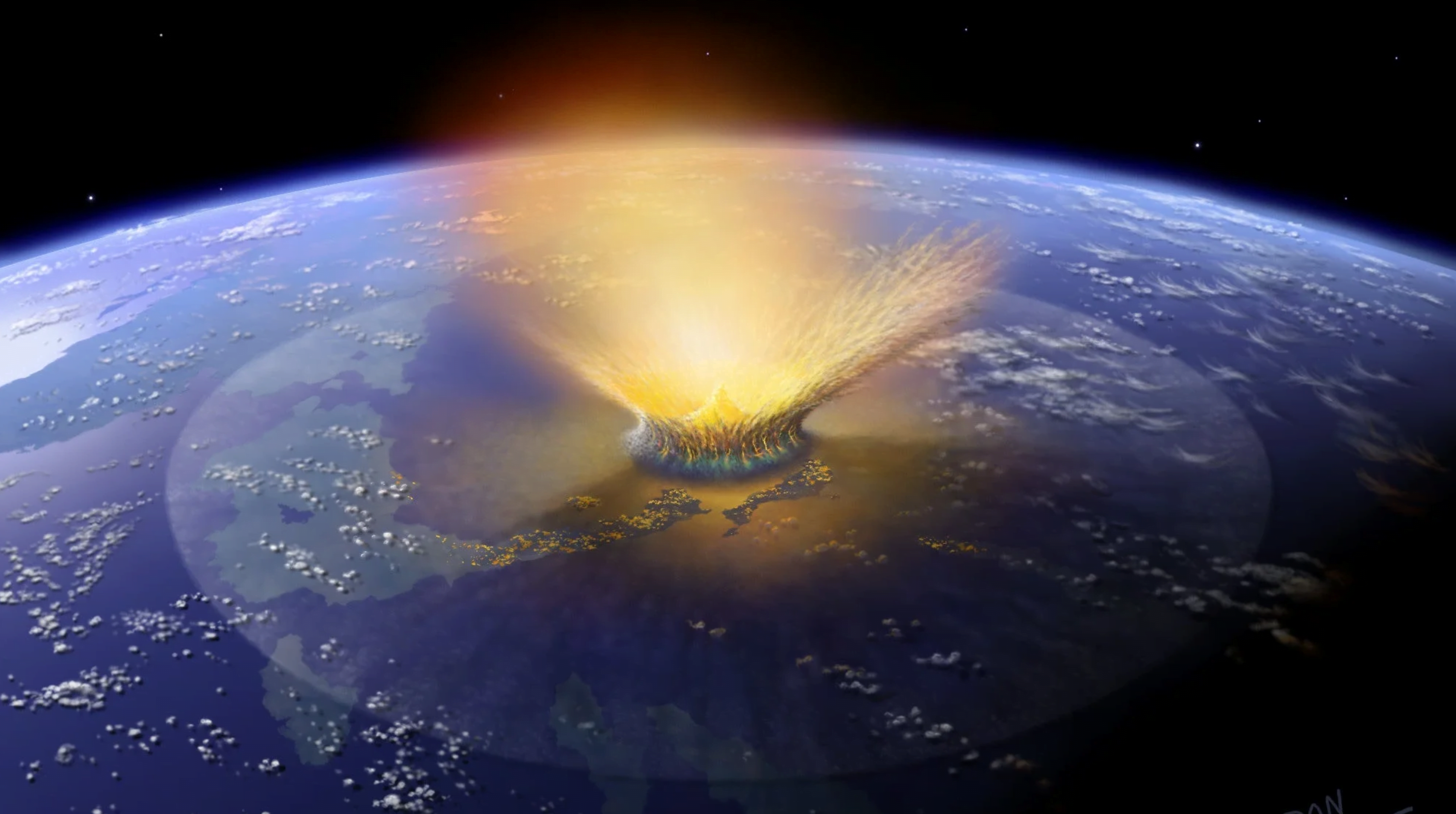
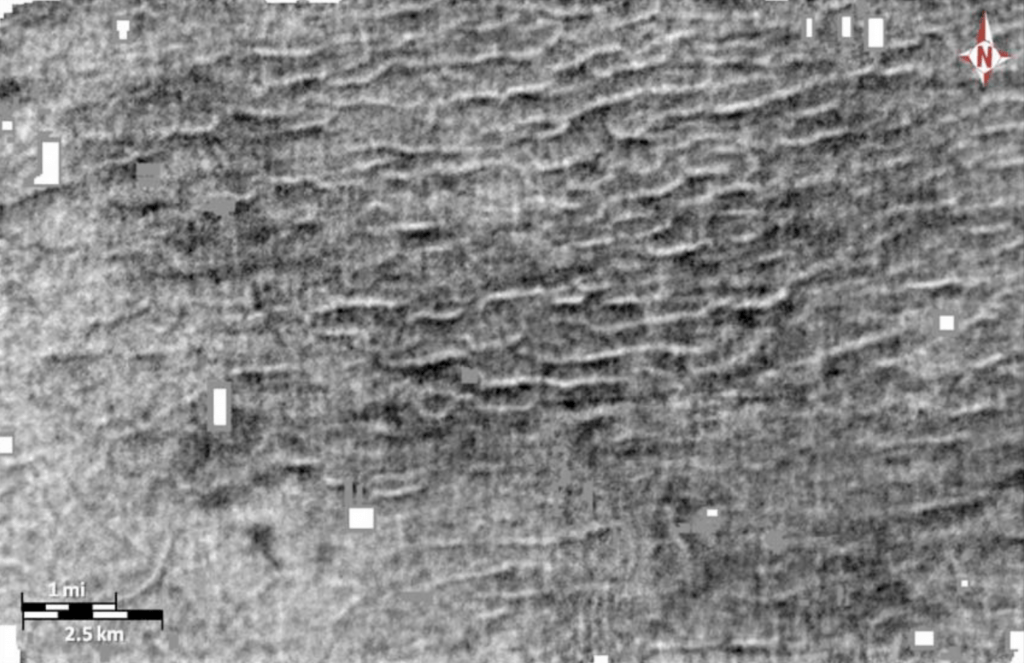
Approximately 66 million years ago, a 10-km asteroid struck our planet near Chicxulub on the Yucatán Peninsula. The impact was globally catastrophic, causing tsunamis, wildfires, earthquakes, and so much atmosphere-clogging sediment that about 75% of all species on the planet — including the non-avian dinosaurs — died out. A new study points to another remnant of the impact: giant ripples buried in the sediment of Louisiana.
Using seismic data collected by petroleum companies, the researchers describe the ripples as approximately 16 meters tall with a spacing around 600 meters, making them the largest known ripples on the planet. Currently, they are buried about 1500 meters underground, just below a layer of fine debris associated with the impact. The ripples show no evidence of erosion from storms or wind, leading the authors to conclude that they were deposited by an impact-associated tsunami and remained unaffected by smaller natural disasters before their burial. It’s very likely, according to the authors, that many other such megaripples exist, hidden away in proprietary petroleum data sets. (Image credits: top – D. Davis/SWRI, ripples – G. Kinsland et al.; research credit: G. Kinsland et al.; via Gizmodo)
Building sandcastles is more than a pastime for the bumblebee-mimic digger bee. This species of bee collects water into an abdominal pouch, then uses it to wet sand to help her sculpt her nest. She’ll use the material she digs out to create a protective turret over the nest’s entrance, and once her eggs are laid and stocked with food, she’ll deconstruct the turret to rebury the nest and keep her brood safely hidden. (Image and video credit: Deep Look)
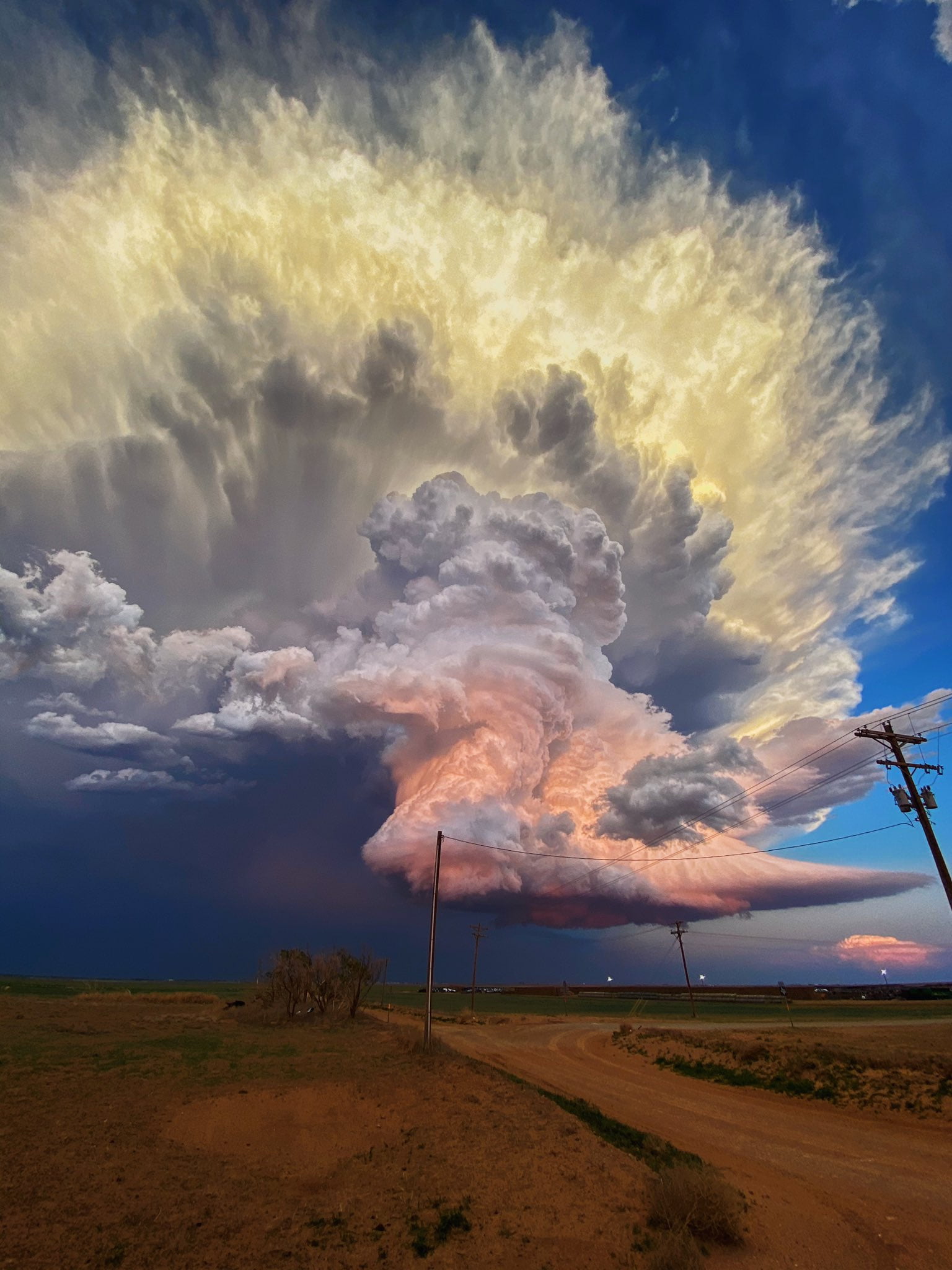
There’s nothing quite like a towering storm cloud to showcase nature’s power. This gorgeous photo by Laura Rowe shows pastel clouds over West Texas in the middle of a thunderstorm. Despite the dusk at ground level, the height of the cloud keeps it lit by direct sunlight, giving its turbulentconvection that colorful glow. Rowe, as it happens, is not a professional photographer, which is a good reminder to us all: it’s always worth looking up! You never know what beauty you’ll miss if you don’t. (Image credit: L. Rowe; via Colossal)
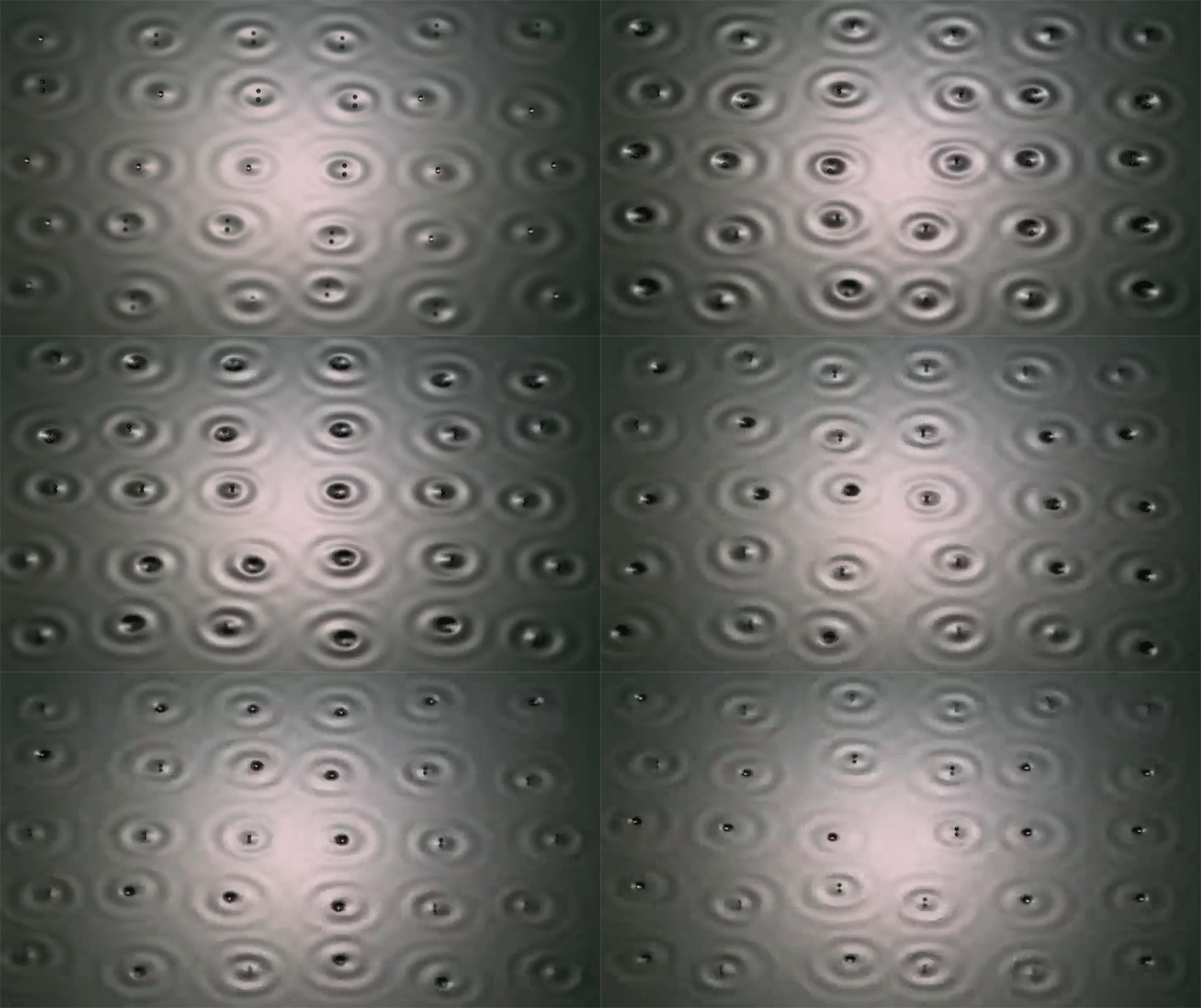
Droplets bouncing on a fluid bath display some strikingly quantum-like behaviors thanks to the interactions between a drop and its guiding surface wave. Here, researchers use submerged wells beneath the drop to confine each droplet into a space where it bounces in a clockwise or anticlockwise trajectory.
With an array of these wells, the droplets form a lattice. Each drop remains in its well, but its wave travels beyond and interacts with nearby wells. Through this interaction, the researchers found that lattices tended to synchronize, similar to the way groups of fireflies will synchronize their flashing. This sort of behavior is also observed in quantum systems, and the researchers hope that further studying their bouncing droplets will give insight into quantum spin systems and their behaviors. (Image and research credit: P. Saenz et al.; via Nature; submitted by Kam-Yung Soh)
Engineers often need to break a liquid jet up into droplets. To do so quickly, they surround the jet with a ring of fast-moving air in a set-up known as a coaxial jet. Shear between the gas and liquid creates instabilities that quickly distort the jet’s initial cylinder into sheets and ligaments. Those formations then undergo their own instabilities to break up into drops. The method is, as you can see in the high-speed images above, quite effective, though the breakup mechanism itself is tough to quantify. (Image credit: G. Ricard et al.)
I love that fluid dynamics can bring new insights to other subjects, like this study on how heavily-armored ankylosaurs avoided heat stroke. Scans of ankylosaur skulls show a complicated, twisty nasal cavity that researchers likened to a child’s crazy straw. Using numerical simulations, they showed that the airflow through these passages acts like a heat exchanger. As air gets drawn into its body, it warms up from exposure to blood vessels lining the nasal cavity; that means that, simultaneously, the hot blood is getting cooled. Those blood vessels lead up to the animal’s brain, indicating that these twisted cavities essentially serve as air-conditioning for the sauropod’s brain! (Image and video credit: Scientific American; research credit: J. Bourke et al.; via J. Ouellette)
Flying fish and diving birds often navigate the interface between water and air in their flight, but few studies have actually looked at the effects of this transition on lift. In this work, researchers measured forces on a small, fixed wing as it egresses from water into air at a constant velocity.
The tests showed that exit velocity had a large effect on lift generation. At low speeds, an exiting wing experienced a strong, positive lift spike as soon as the leading edge broke the surface. But that lift changed to strongly negative as the wing continued out of the water. At higher speeds, the wings had no lift reversal but also reached lower peak lift coefficients. The team studied the effects of angle of attack and starting depth as well, concluding that any vehicles intended to navigate the water-air transition will need robust control systems prepared to deal with fast-changing forces. (Image credit: fish – J. Cobb, wing – W. Weisler et al.; research credit: W. Weisler et al.)