Month: August 2021

  • Featured Video Play Icon

    Shattering With Resonance

    Resonance is a phenomenon that is both familiar and somewhat mysterious. It takes place when a system is excited near its natural frequency. In this case, we’re seeing a mechanical resonance that’s driven by sound waves near the glass’s natural frequency. Once excited, the glass vibrates by flexing side-to-side along one axis and then again in a perpendicular direction. Eventually, the amplitude of this flexing is large enough to break the glass. When the glass is filled with water, its flexing instead generates a cloud of tiny droplets in a process known as vibration-induced atomization. The inverse problem — an empty glass resonating within a pool of liquid — is also an extremely cool problem. (Image and video credit: The Slow Mo Guys)

  • The Froghopper’s Incredible Suction

    The Froghopper’s Incredible Suction

    The tiny froghopper feeds on the sap in xylem, a feat that requires overcoming more than a megapascal of negative pressure. Plants, as you may recall, transport water and nutrients from their roots to their leaves through negative pressure, essentially pulling on the water as if it were a rope. So drinking that sap is not as simple as making a hole and waiting for sap to flow. Instead, froghoppers must generate even more suction than the plant. Some scientists have been so skeptical that such a feat is even possible that they’ve disputed whether plants are truly at such high negative pressures.

    But a new study shows that froghoppers can, indeed, generate immense suction – up to nearly 1.5 megapascals. (By comparison, humans generate less than a tenth of that suction, even on a stubborn milkshake.) The researchers used two complementary methods to prove the insects’ ability. First, they studied the anatomy of the pumplike structure in the froghoppers’ heads, where the suction is generated, and determined the insects’ sucking potential from a simple calculation of force divided by area. Then, they observed feeding froghoppers in a chamber where they could measure their metabolic rates through carbon dioxide output. As the froghoppers fed, their metabolic rates spiked to 50 – 85% higher than when at rest. Only when the xylem tensions exceeded the theoretical biomechanical limits for froghopper suction did the tiny insects seem to stop feeding. (Image and research credit: E. Bergman et al.; via Science News; submitted by Kam-Yung Soh)

  • Featured Video Play Icon

    “Starlit”

    In “Starlit” filmmaker Roman De Giuli explores a universe in a fish tank. The planets and asteroids we see are droplets of paint and ink floating in a transparent, gel-like medium. I particularly like the sequences where paint stretches, beads up, and breaks into a string of droplets! (Image and video credit: R. De Giuli)

  • Featured Video Play Icon

    Fun From the Beach

    Here’s a neat bit of fluid dynamics derived from a day at the beach! Our experiment begins with well-mixed (and likely compacted) sand grains and sea water in a bottle. When flipped, the sand layer sits at the top of the bottle with the water layer beneath.

    Very quickly new layers establish themselves in the bottle. The lower half of the bottle turns into a turbulent churn of water and sand, topped by a thin air bubble, then the thick sand layer, and finally, a layer of filtered water. That air bubble beneath the sand means that the sand layer is compacted enough that surface tension keeps the air from being able to squeeze through the grains. On the other hand, water is able to filter through, eventually making it into that upper region. The compact layer of sand is supported in the bottle by force chains running through the largest grains, which is why only fine sediment settles down through the turbulent layer at this point.

    Eventually, the top sand layer erodes enough that it can no longer support its weight, and the sand collapses. As the grains settle out, we end up with fine sediment on the bottom (as previously discussed), followed by a layer of coarse sand from the erosion and collapse of the sand layer, topped with a layer of very fine grains that — due to their light weight — are the very last to settle out of the water. I love that such a simple seaside experiment contains such scientific depth! (Video and submission credit: M. Schich; special thanks to Nathalie V. for helpful input)

  • Featured Video Play Icon

    Adhering Through Vibration

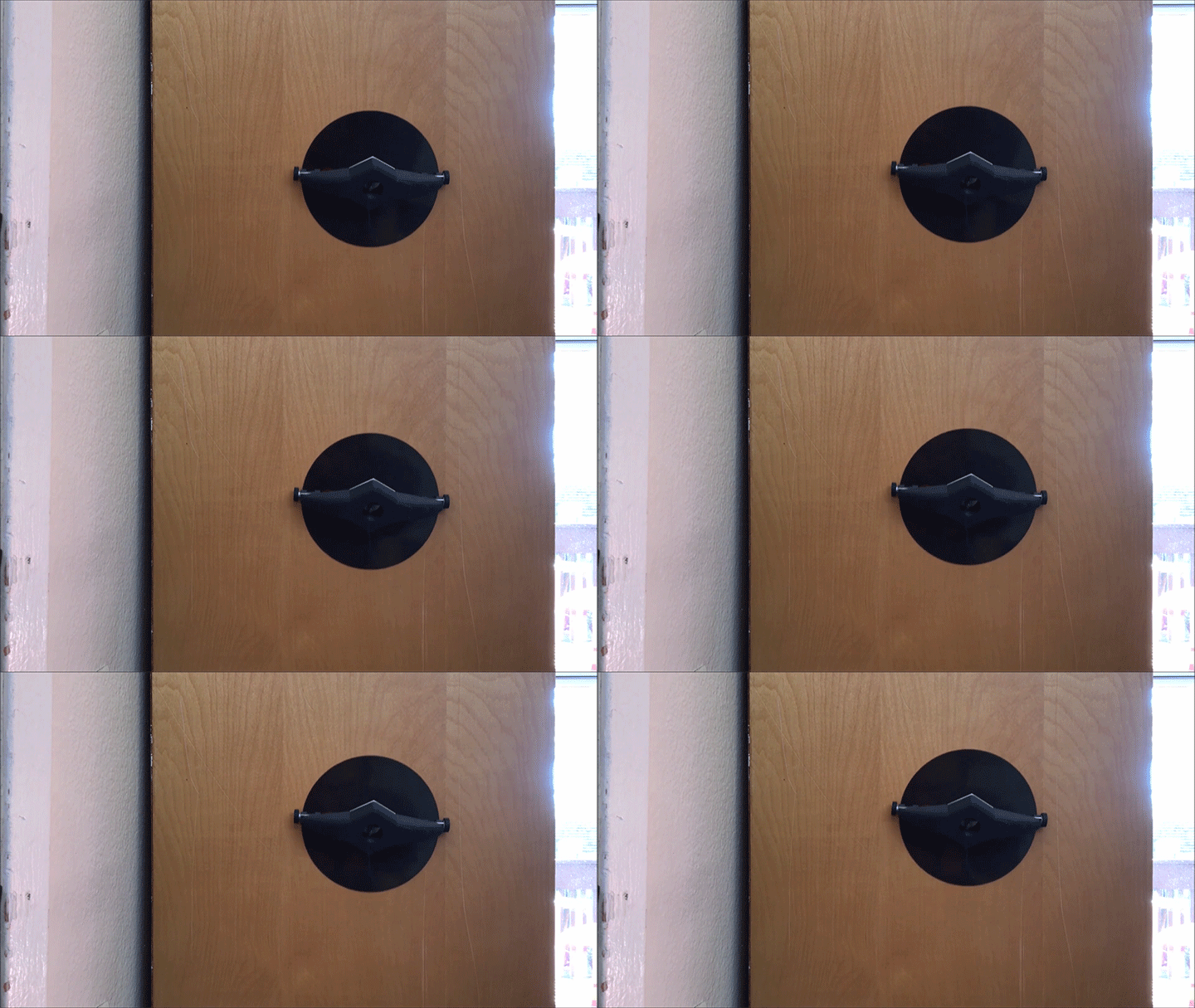
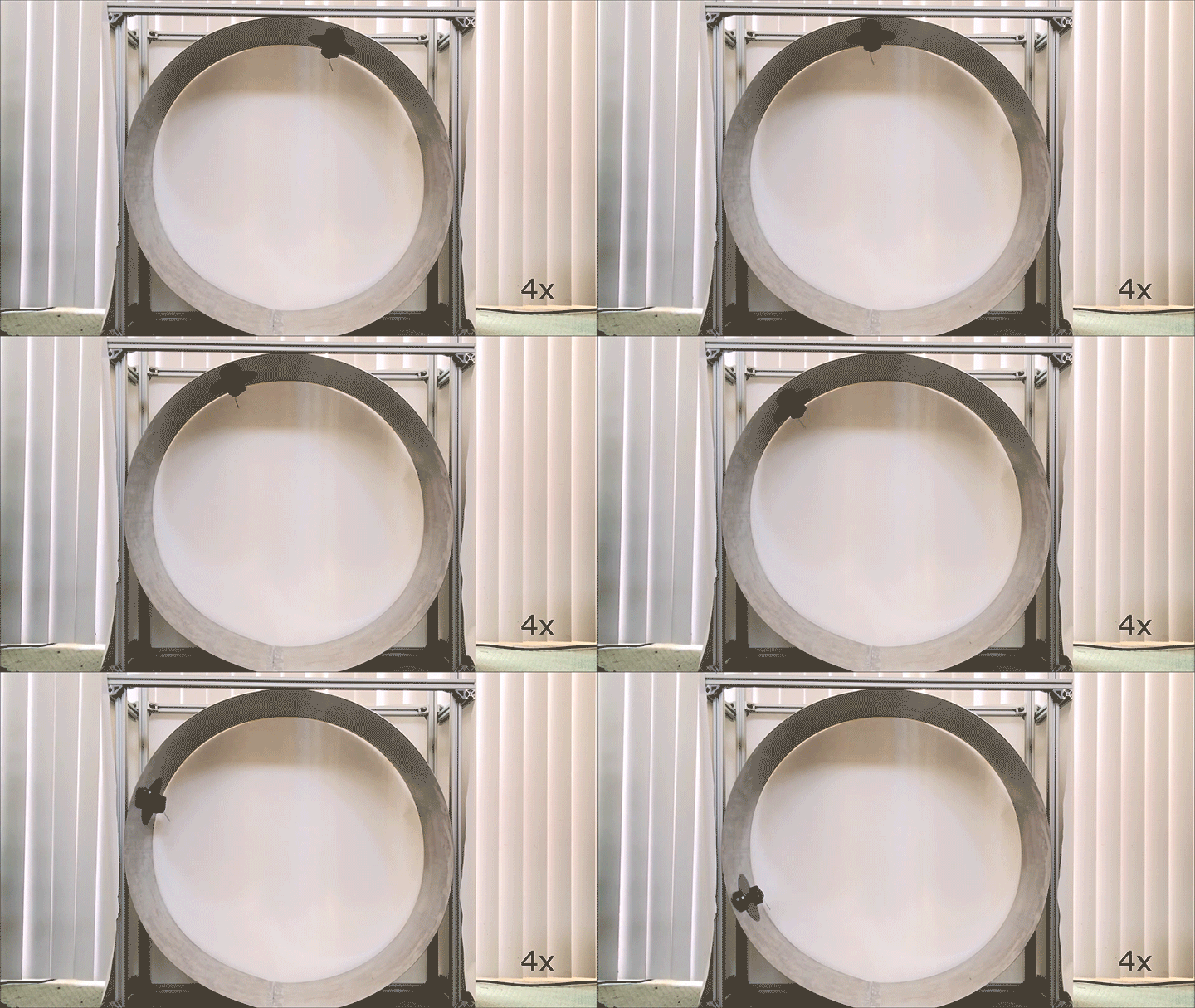
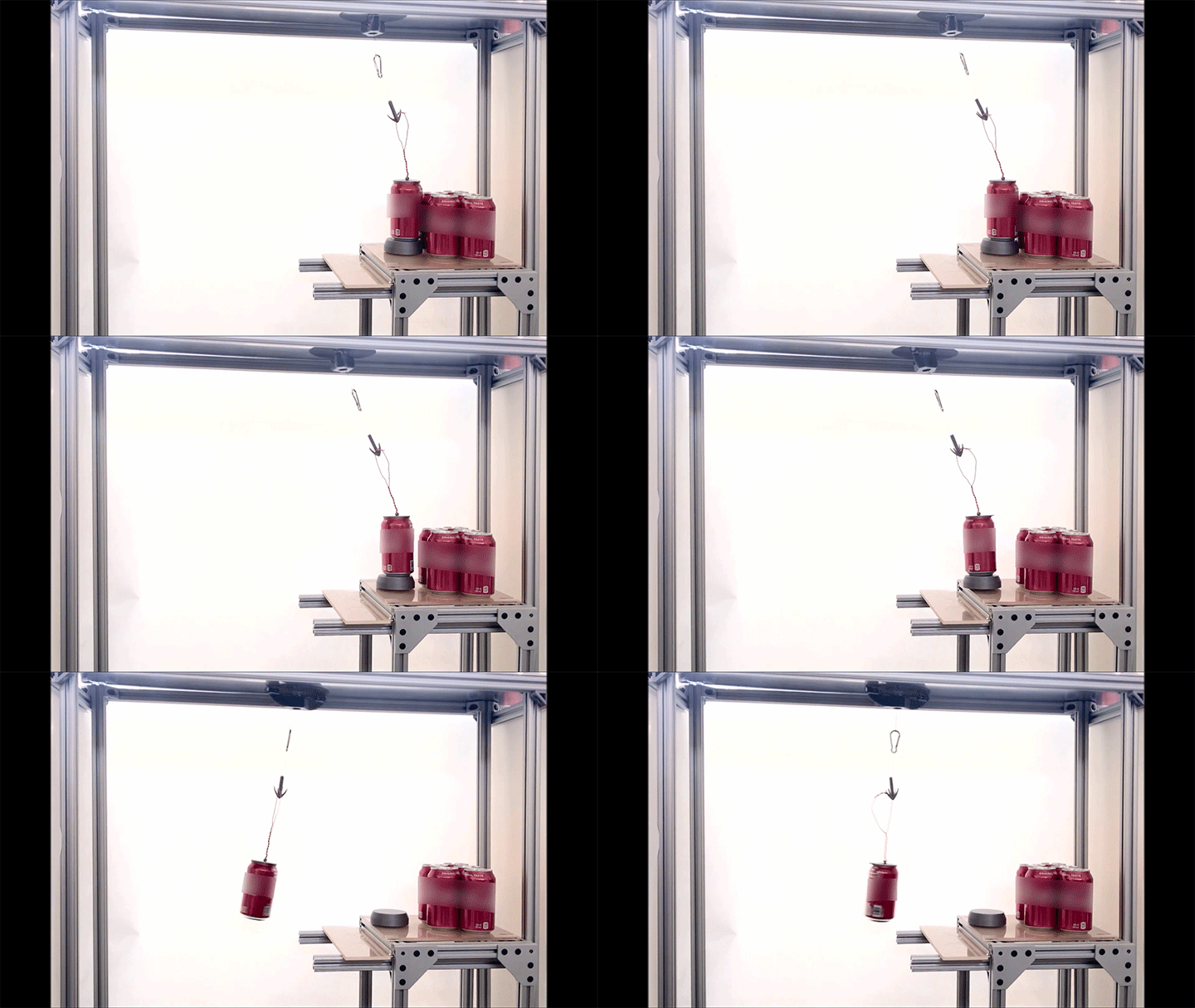
    This little robot relies on vibration to generate its adhesion. By vibrating its flexible disk, it generates low pressure in the thin air layer between the disk and the surface. The force created is strong in the normal direction — meaning that the robot won’t come off the surface, even when carrying large weights — but relatively weak in the plane of the surface, allowing the robot to move freely. The system does have some disadvantages, though. It requires a relatively smooth surface to work, and the necessary frequency of vibration is around 200 Hz — well inside of human hearing — which makes the robot very noisy. (Image, video, and research credit: W. Weston-Dawkes et al.; via IEEE Spectrum; submitted by Kam-Yung Soh)

  • Jupiter in Many Lights

    Jupiter in Many Lights

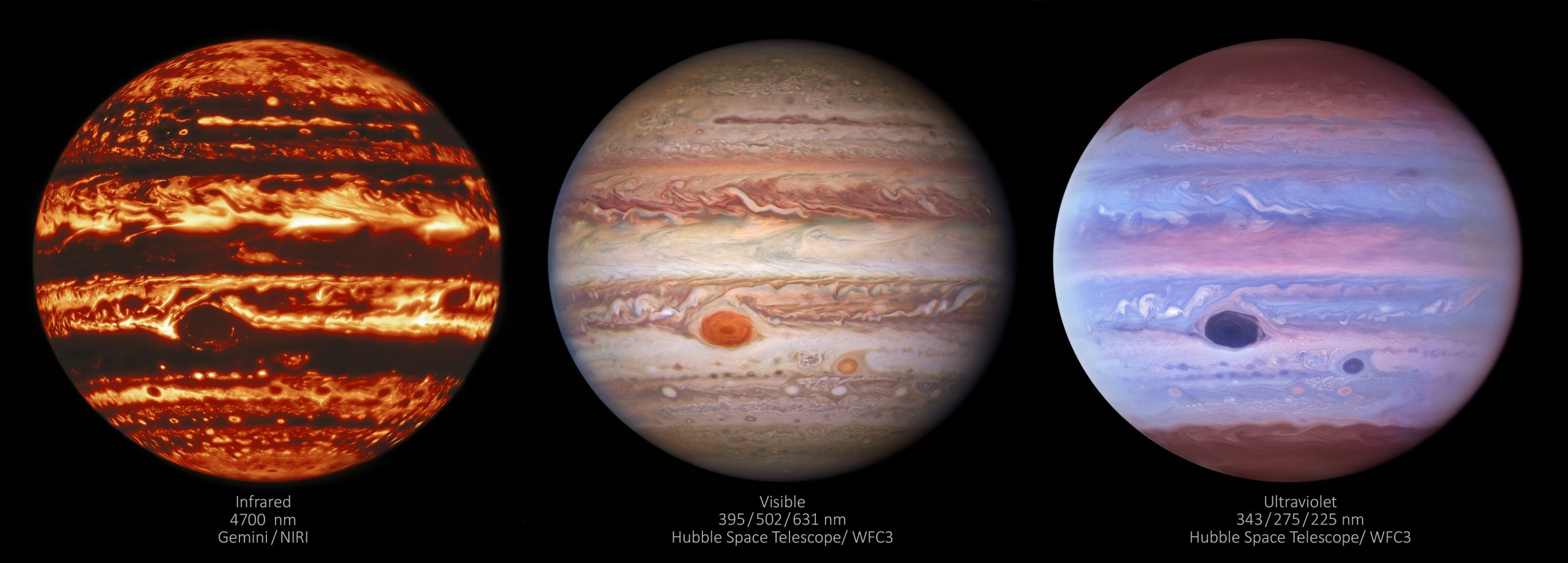
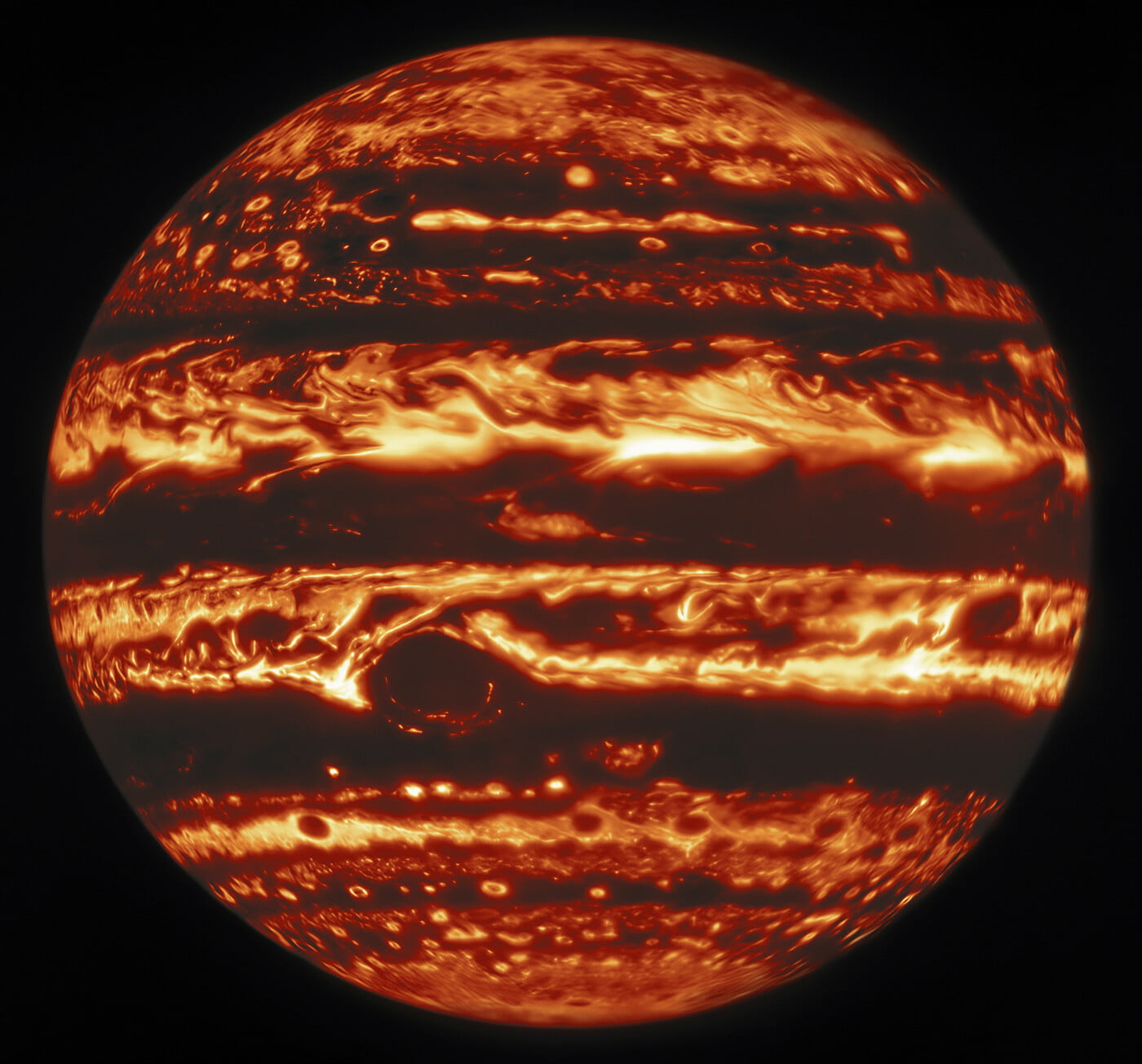
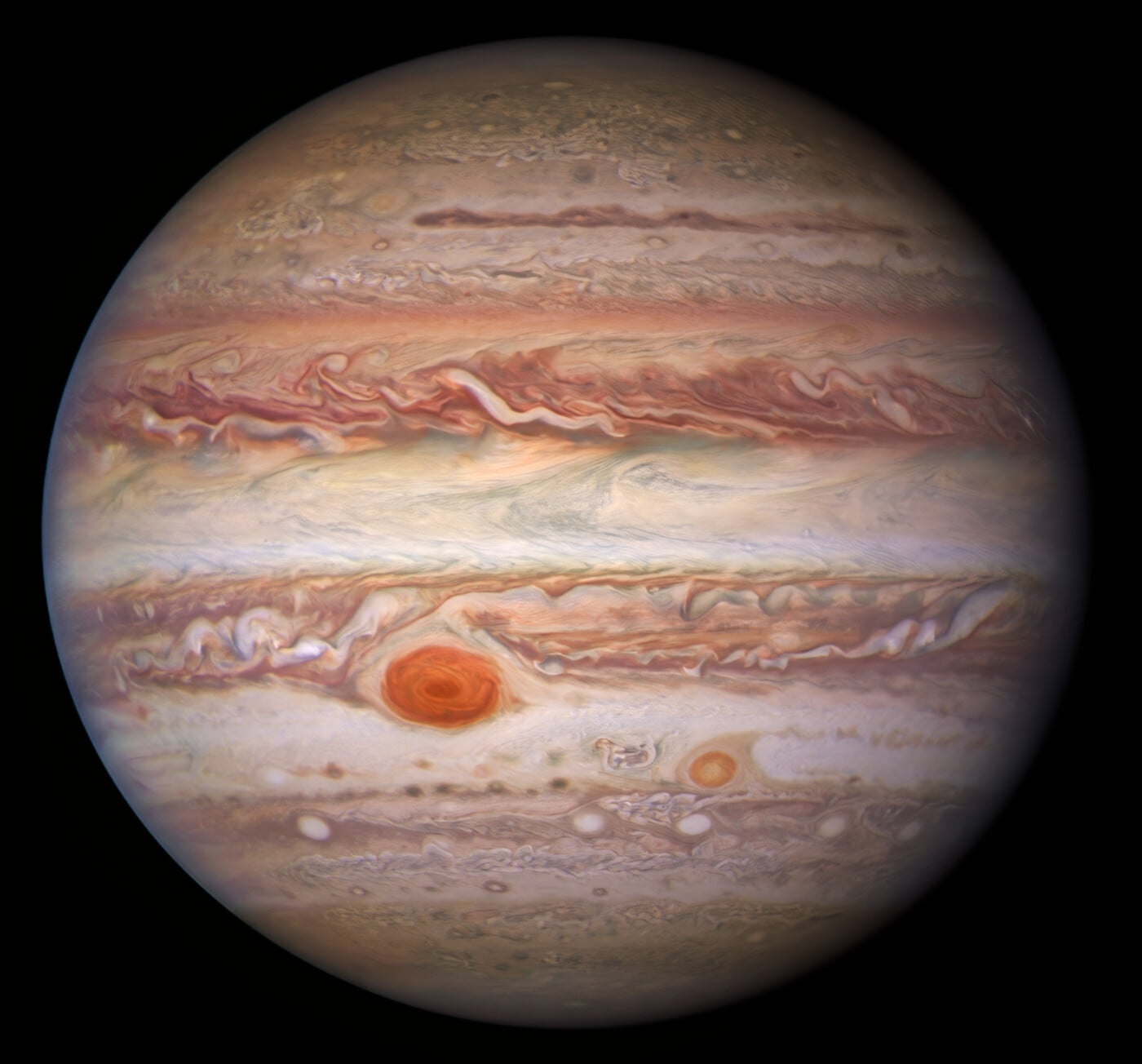
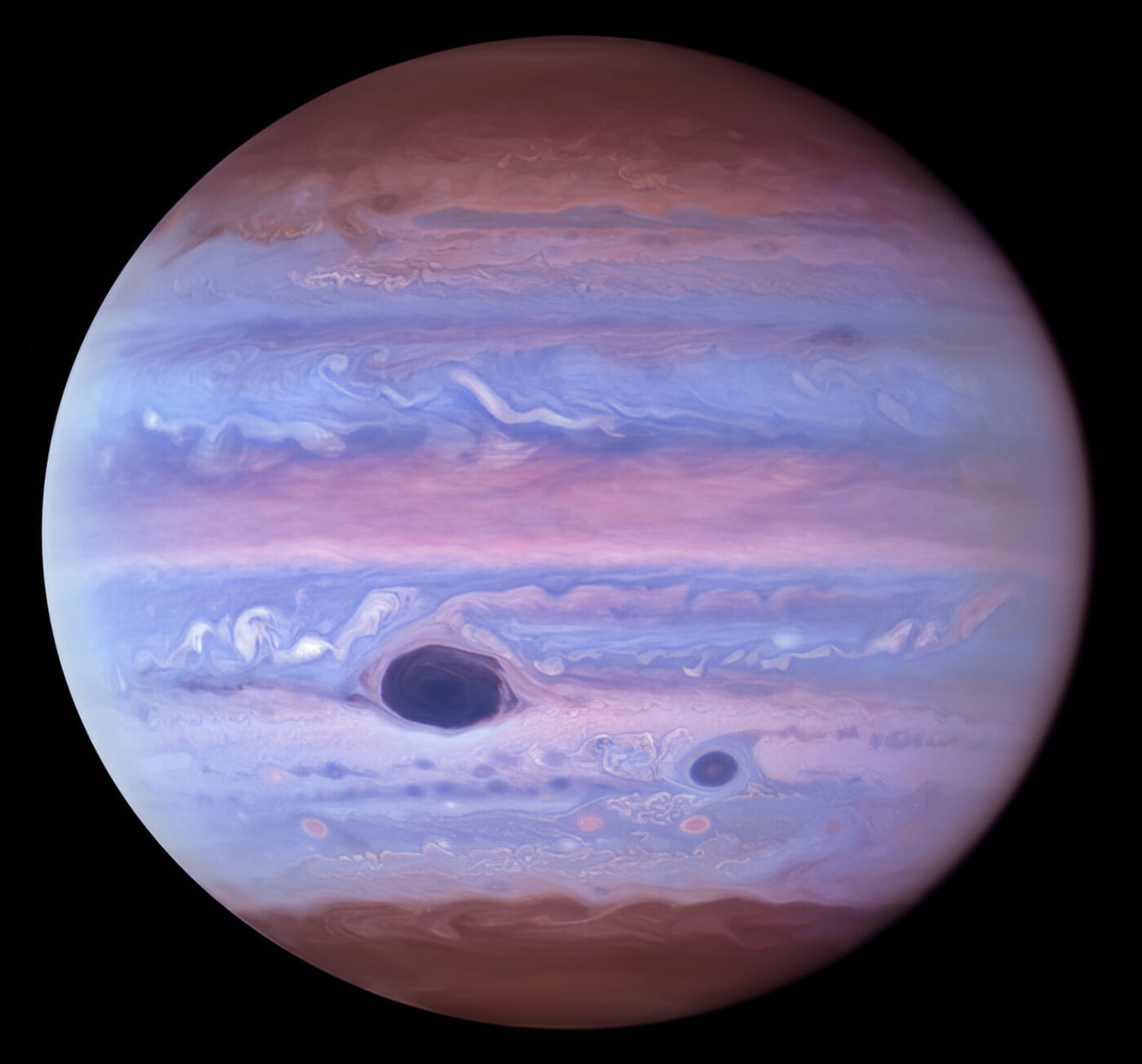
    Sometimes the key to unraveling a mystery is to observe the phenomenon in different ways. That’s why researchers are increasingly taking advantage of multiple instruments simultaneously observing targets like Jupiter. Here we see the gas giant in three different types of light: infrared, visible, and ultraviolet. Infrared bands reveal the hot and cold regions of Jupiter’s clouds, allowing scientists to identify convective areas. Ultraviolet observations can reveal high-energy processes, like Jupiter’s auroras. And the colors revealed in visible light can give hints about chemical make-up in different regions. But to get a fuller picture, scientists compare all three modes — along with radio signal data from Juno — to understand topics like the planet’s lightning-filled storms. (Image credits: International Gemini Observatory/NOIRLab/NSF/AURA/NASA/ESA, M.H. Wong and I. de Pater (UC Berkeley) et al.; via Gizmodo)

  • Programmable Capillary Action

    Programmable Capillary Action

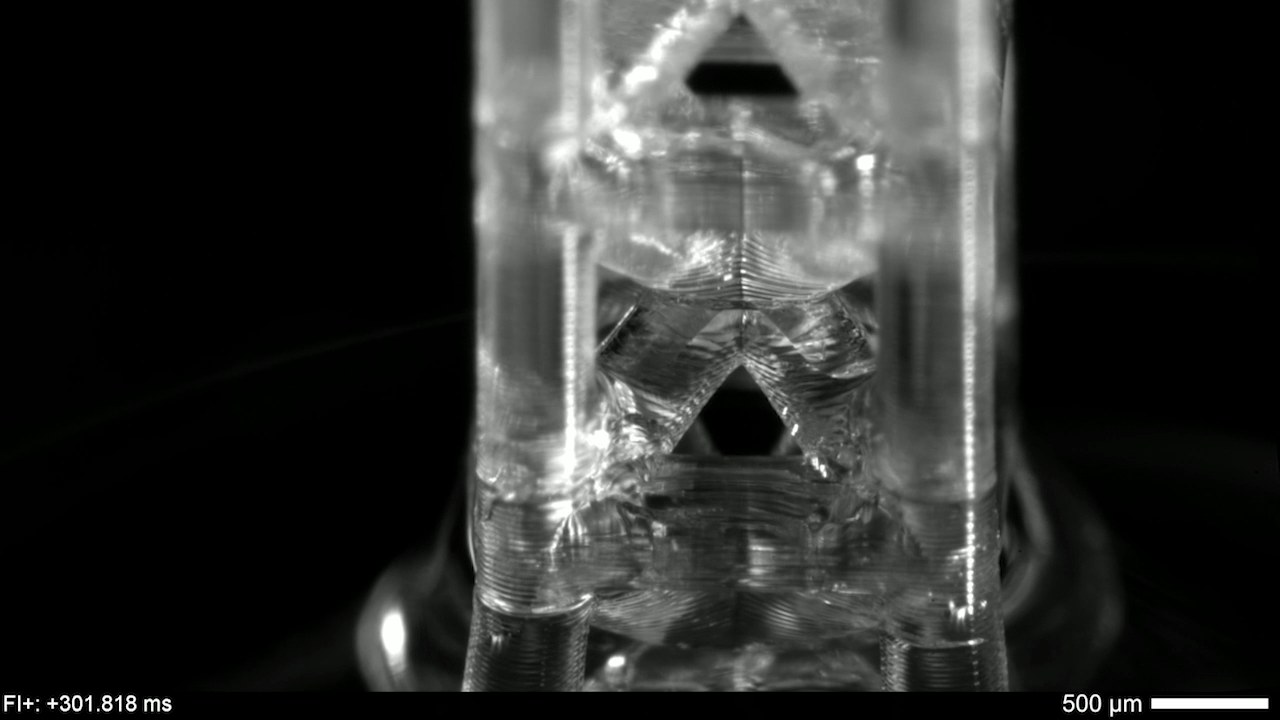
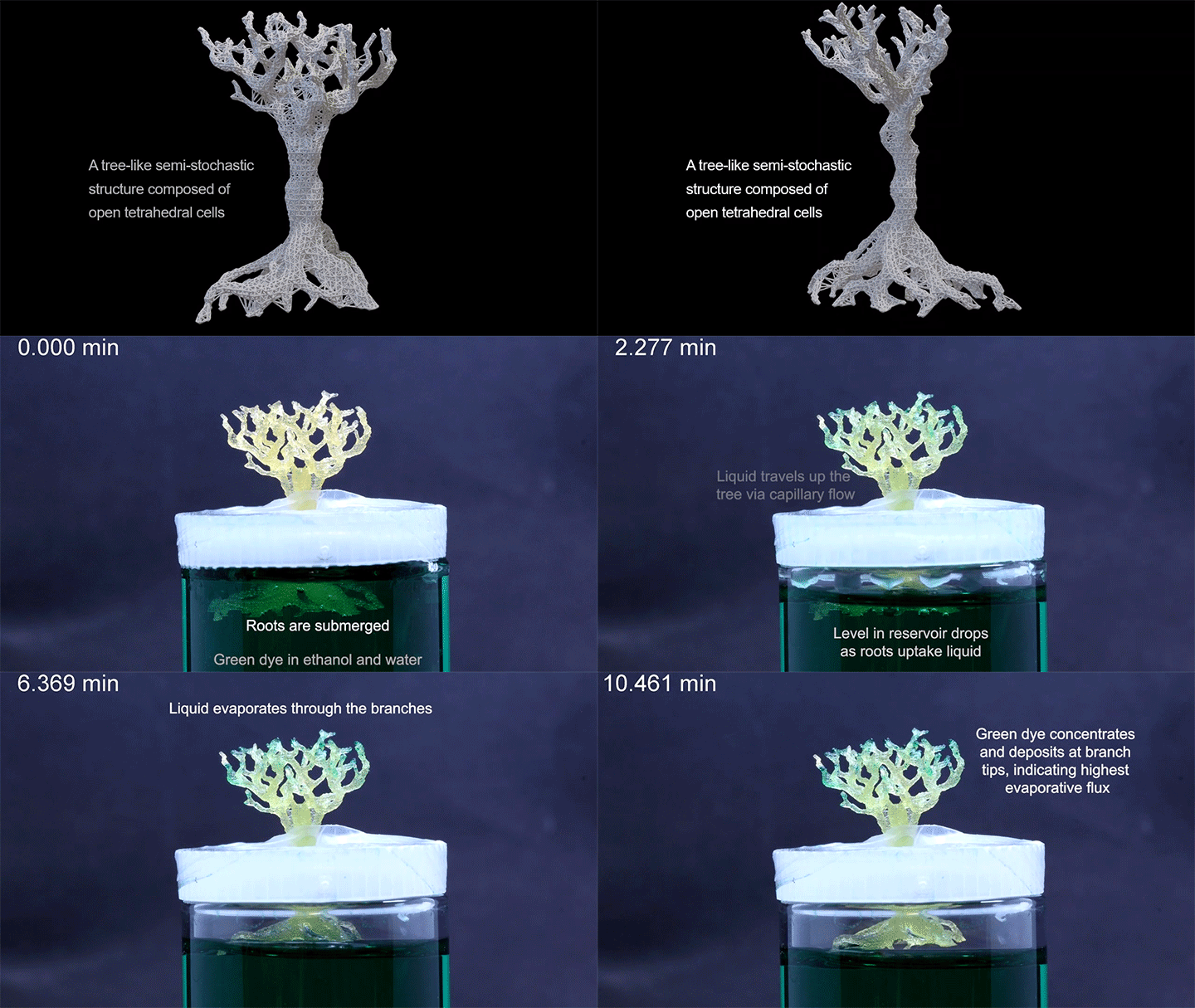
    Capillary action combines the cohesive forces within a liquid and the adhesive forces between a liquid and solid to enable a liquid to fill narrow spaces, even against the force of gravity. To control capillary action, researchers are 3D-printing what they call “unit cells,” tiny structures that water and other liquids can climb. There’s no pump raising the liquid through these structures, just capillary action.

    In a particularly neat demonstration of the technology, the researchers built a tree-like structure out of many open-walled unit cells and placed the “root” system in a closed reservoir. Capillary action drew liquid up the structure to the tips of its branches, where the dyed water evaporated. The process is similar to transpiration in trees, though in trees, capillary action provides much less of the lift. (Image and research credit: N. Dudukovic et al.; via Nature; submitted by Kam-Yung Soh)

  • Featured Video Play Icon

    Aerial Sheep Flow

    I may never get tired of drone videos of sheep herding. They are mesmerizing to watch and full of so many characteristics of flow. Like a compressible fluid, the herd squeezes together as it passes through a gate, then spreads and decreases density as it reaches the pasture. The sequence of sheep moving down the road reminds me of pipe flow, with a boundary layer of sheep along the edge who choose to graze rather than move with the herd. There are even sheep vortices in this video, folks. Vortices of sheep! How could you resist watching?! (Video credit: L. Patel; via Colossal; submitted by Florian T. and Matevz D.)

  • Digging Into Acoustic Levitation

    Digging Into Acoustic Levitation

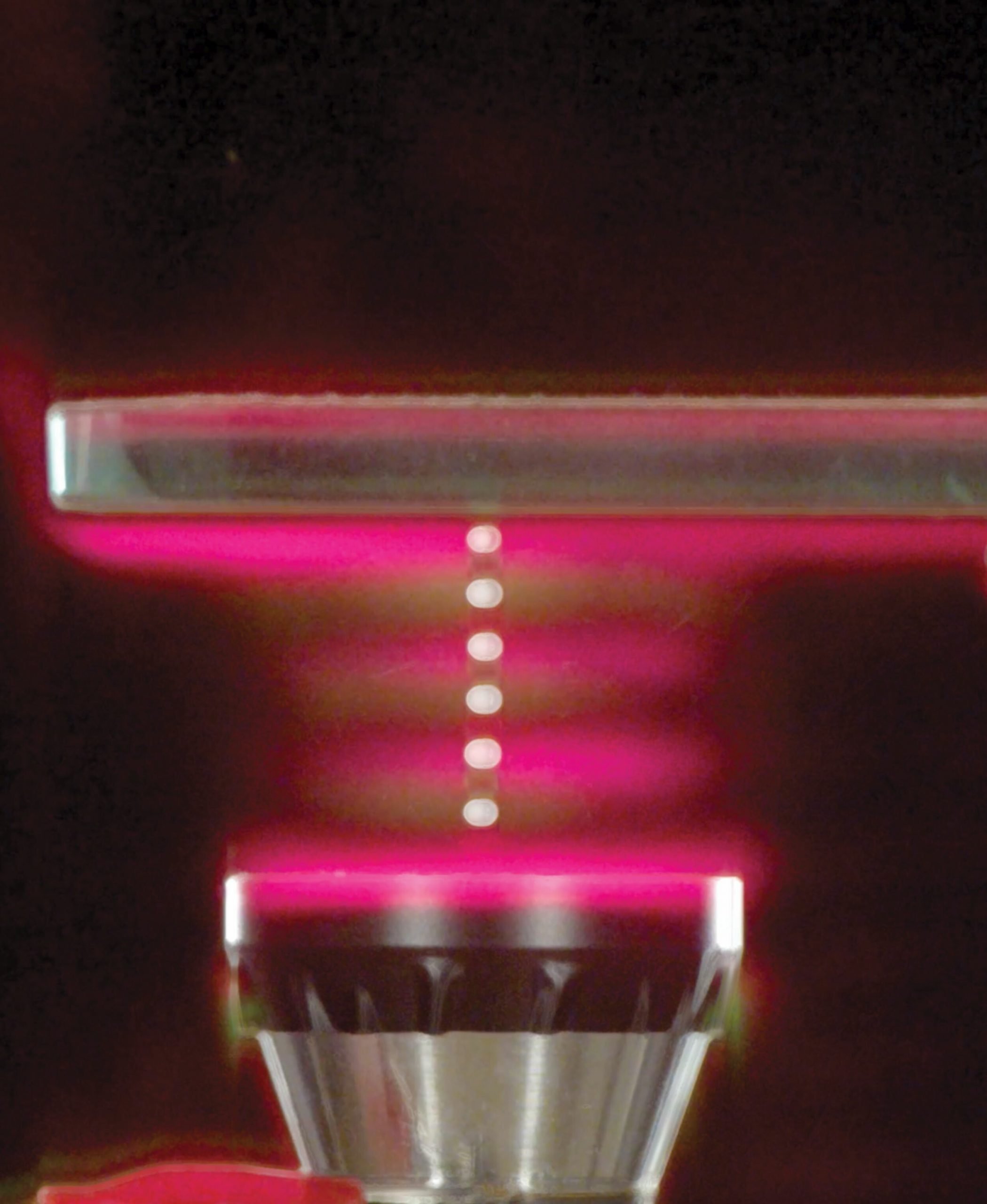
    Acoustic levitation is a fascinating phenomenon in which small objects, like the Styrofoam balls seen here, are levitated by a standing acoustic wave. In this image, a color schlieren system shows regions of increasing pressure with height (red) and decreasing pressure with height (green). The balls sit within the colored bands, indicating that they’re levitated near the standing wave’s pressure nodes.

    Interestingly, a basic (linear) analysis of the acoustics indicates that the balls should levitate at the pressure anti-nodes, but this clearly isn’t the case in reality. As the authors show, understanding acoustic levitation requires a nonlinear analysis, which reveals the acoustic radiation pressure as the force responsible for holding the balls in place near the nodes. Check out their paper for the full analysis! (Image and research credit: D. Jackson and M. Chang; via Physics Today)

  • Controlling Aerosols Onstage

    Controlling Aerosols Onstage

    Few industries saw more disruption from the pandemic than the performing arts. To help orchestras return to the concert hall in a way that keeps performers and audience members safe, researchers have simulated air flow and aerosols around musicians onstage. Some instruments — like the trumpet — are super-spreaders when it comes to aerosol production, and, in the conventional organization of orchestras, those aerosols have to travel through other sections of the orchestra before reaching air vents, putting more musicians at risk.

    (Upper left) Aerosol concentration for an orchestra performing in their original arrangement, with doors to the hall closed; (Upper right) Aerosol concentration in the modified musician arrangement, with doors open; (Bottom row) Time-averaged aerosol concentration in the breathing zone of performers for (left) the original arrangement and (right) with modified seating.
    (Upper row) Aerosol concentration for the orchestra’s original seating arrangement (left) and in the modified arrangement (right). (Bottom row) Time-averaged concentration of aerosol particles in the breathing zone of each musician in the original (left) and modified arrangements (right).

    Using Large Eddy Simulation, researchers looked at alternate seating arrangements for the Utah Symphony that could mitigate these risks. By rearranging the musicians so that instruments that produce lots of aerosols are closer to the air vents and open doors, the team reduced the average concentration of aerosols around musicians by a factor of 100, giving the performers a chance to return to the stage far more safely. (Image credit: top – M. Nägeli, simulation – H. Hedworth et al.; research credit: H. Hedworth et al.; via NYTimes; submitted by Kam-Yung Soh)