Tag: vortex

  • Vortex Reconnection

    Vortex Reconnection

    In slow motion, vortex rings can be truly stunning. This video shows two bubble rings underwater as they interact with one another. Upon approach, the two low-pressure vortex cores link up in what’s known as vortex reconnection. Note how the vortex rings split and reconnect in two places – not one. According to Helmholtz’s second theorem a vortex cannot end in a fluid–it must form a closed path (or end at a boundary); that’s why both sides come apart and together this way. After reconnection, waves ripple back and forth along the distorted vortex ring; these are known as Kelvin waves. Some of those perturbations bring two sides of the enlarged vortex ring too close to one another, causing a second vortex reconnection, which pinches off a smaller vortex ring. (Image source: A. Lawrence; submitted by Kam-Yung Soh)

    Note: As with many viral images, locating a true source for this video is difficult. So far the closest to an original source I’ve found is the Instagram post linked above. If you know the original source, please let me know so that I can update the credit accordingly. Thanks!

  • Featured Video Play Icon

    How Smoke Rings Work

    Vortices are a ubiquitous part of life, whether they’re draining down your bathtub or propelling underwater robots. In the latest video from the Lib Lab project, you can learn about how vortex rings form, what makes them last so long, and even make a vortex generator of your own. I can personally attest that vortex cannons are good for hours of entertainment, no matter your age. They’re even more fun with friends, as the Oregon State drumline demonstrates in the video. Want even more vortex fun? Check out leapfrogging vorticesvortex rings colliding head-on, and a giant 3 meter wide vortex cannon in action. (Video and image credit: Lib Lab)

  • Reconnecting

    Reconnecting

    Vortices are a common feature of many flows. Here we see a helical vortex tube spinning in a swirling flow. The vortex itself is visible thanks to air trapped in its low-pressure core. As the vortex spins, two sections of it come together. This results in what’s known as vortex reconnection: the vortex lines break apart and rejoin in a new configuration – as a small independent vortex ring and a shorter section of helical vortex. Events like this are common but usually hard to observe directly. They’ve been previously visualized using vortex knots and have even been sighted in the quantum vortices of superfluid helium. (Image credit: S. Skripkin, source; research credit: S. Alekseenko et al., pdf)

  • The Japanese Pufferfish

    The Japanese Pufferfish

    [original media no longer available]

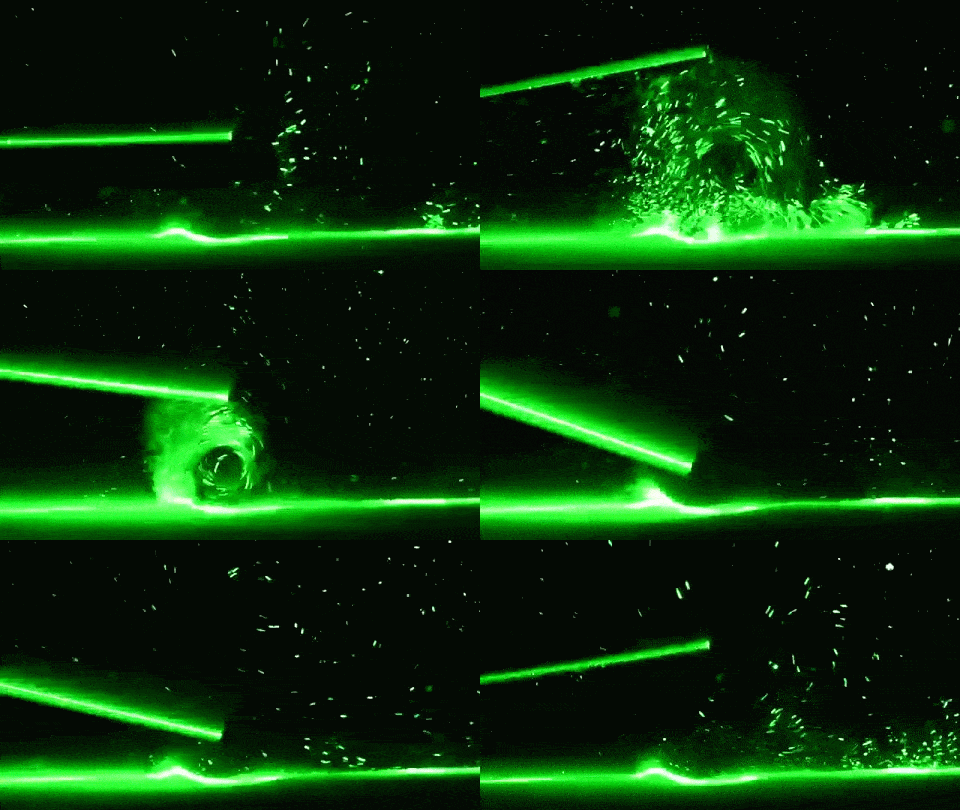
    If you’ve ever dived or snorkeled over a sandy lake or ocean bottom, you’ve probably seen some neat patterns there. But it’s hard to compete with the Japanese pufferfish for pure artistry. This small fish creates enormous and elaborate designs in the sand in order to attract a mate. The male fish moves the sand into place by flapping his fins very close to the surface. Above a critical flapping velocity, his fins generate vortices capable of picking up sand, as seen below. With repeated passes, the fish is able to excavate the trough that is key to his creation. It’s a constant fight against the current, though. 

    Puffers aren’t the only ones who flap their fins to move the sands. Rays and flounders use this technique to bury themselves and hide (Video credit: BBC Earth; image credit: A. Sauret, source; research credit: A. Sauret et al.)

  • Turbine Wakes in the Sea

    Turbine Wakes in the Sea

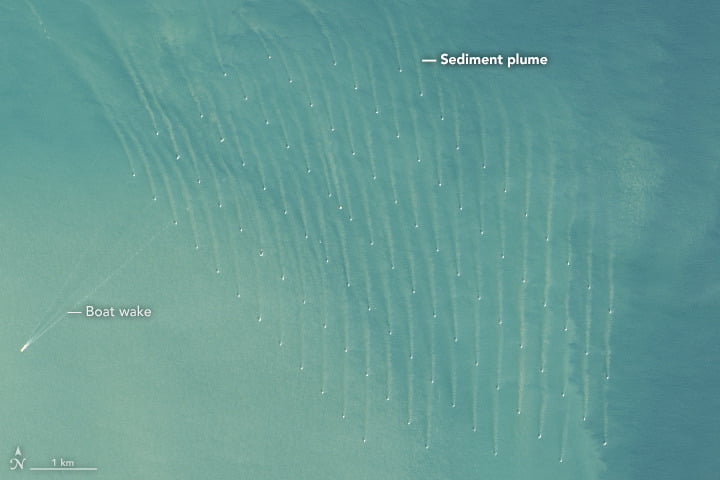
    What we we build always has an impact on the environment around us. The white dots you see in the image above are an array of offshore wind turbines, standing in waters 20 to 25 meters deep. The brownish lines extending from each turbine show the underwater wakes of the turbines, colored by the sediment they’ve picked up. As with trees in a snowstorm, the currents flowing past the base of the turbine likely form a horseshoe vortex that lifts up the sediment into the wake. Because the tides in this area reverse direction every six hours, these sediment plumes can appear quite dynamic in satellite imagery, frequently changing strength and direction. (Image credit: NASA Earth Observatory)

  • Washington Ice Disk

    Washington Ice Disk

    Winter weather in northern latitudes sometimes brings with it unusual phenomena like this ice disk spinning in the Middle Fork Snoqualmie River in Washington state. Photographer Kaylyn Messer ventured out to capture photos and videos of the event over the weekend. There are a couple theories as to how such disks form, but swirling river eddies are a key ingredient. One theory posits that chunks of ice forming on the river get caught up by the spinning eddy and slowly freeze together to form the disk. Another theory proposes that the disks occur when an existing chunk of ice breaks away, gets caught in the spinning eddy and slowly has its edges ground down into a circle. Personally, I lean toward the former explanation, though there is likely grinding at the edges either way. See more about this ice circle over at Messer’s blog.  (Image credit: K. Messer; GIF by @itscolossal; via Colossal)

  • Featured Video Play Icon

    “Gargantua”

    Peering into a vortex feels like staring into an abyss in the Julia Set Collective’s “Gargantua”. Like their previously featured works, this video uses a macro perspective on fluid phenomenon to create an alternate sense of scale. Instead of a whirlpool, we could be observing a wormhole. Part of this is a matter of fooling our brains with perspective, but it also works because, on some level, we recognize that these same fluid patterns occur at very different lengthscales and so it is believable that what we see is much bigger than in reality. (Video credit and submission: S. Bocci/Julia Set Collective)

  • Dust Devils

    Dust Devils

    Dust devils, like fire tornadoes and waterspouts, form from warm, rising air. As the sun heats the ground to temperatures hotter than the surrounding atmosphere, hot air will begin to rise. When it rises, that air leaves behind a region of lower pressure that draws in nearby air. Any vorticity in that air gets intensified as it gets pulled toward the low pressure area. It will start to spin faster, exactly like a spinning ice skater who pulls in his arms. The result is a spinning vortex of air driven by buoyant convection. On Earth, dust devils are typically no more than a few meters in size and can only pick up light objects like leaves or hay. On Mars, dust devils can be hundreds of meters tall, and, though they’re too weak to do much damage, they have helpfully cleaned off the solar panels of some of our rovers! (Image credit: T. Bargman, source; via Gizmodo)

  • Bubble Tricks

    [original media no longer available]

    Everyone remembers playing with soap bubbles as a child, but most of us probably never became as adept with them as magician Denis Lock. In this video, Lock shows off some of the clever things one can do with surface tension and thin films. My favorite demo starts at 1:25, when he constructs a spinning vortex inside a bubble. He starts with one big bubble and adds a smaller, smoke-filled one beneath it. Then, using a straw, he blows off-center into the large bubble. This sets up some vorticity inside the bubble. When he breaks the film between the two bubbles, the smoke mixes into the already-swirling air in the larger bubble. Then he pokes a hole in the top of the bubble. Air starts rushing out the deflating bubble. As the air flows toward the center of the bubble, it spins faster because of the conservation of angular momentum and a miniature vortex takes shape.  (Video credit: D. Lock/Tonight at the London Palladium/ via J. Hertzberg)

  • Reader Question: Shower Curtains

    Reader Question: Shower Curtains

    Reader thansy asks:

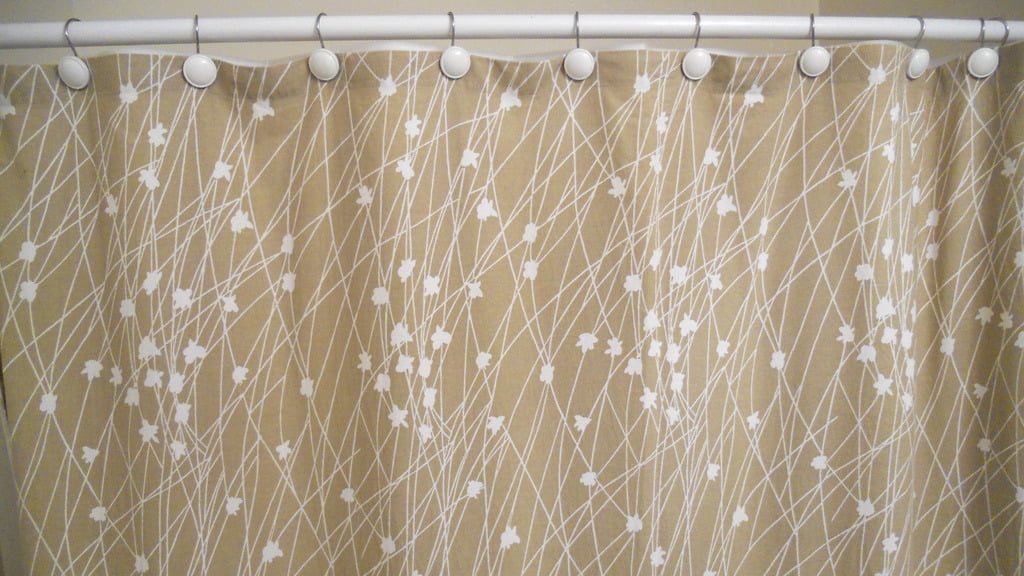
    Why do the bottoms of shower curtains drift in toward the water coming from the shower head?

    We all know that moment. You’re minding your own business, scrubbing away, and all of a sudden, the shower curtain billows up and grabs you. Scientists have debated the cause of this behavior for years. Some argued that the curtain billowed due to hot air rising from the shower. Others claimed the fast-moving spray caused lift that pulled the curtain up. But fifteen years ago, one scientist tackled the problem computationally. He performed a numerical simulation of a shower head spraying into a bath and found that this spray of droplets creates a weak horizontal vortex in the shower.

    This shower vortex has a low-pressure core at the middle, which is thought to provide the suction that causes the shower curtain to billow. The scientist, David Schmidt, was awarded the 2001 Ig Nobel Prize for his work. (Image credits: N. Paix, D. Schmidt; research credit: D. Schmidt)