Space, as I’ve discussed previously, is surprisingly full of matter, especially clouds of dust. And yet the rate of star formation we observe is bizarrely low; the Milky Way, for example, produces only about one solar mass worth of new stars every year. If gravity were the sole force driving star formation, we’d see far more stars forming. Recent research suggests that turbulence plays a major role in regulating the star formation process, both by countering gravity’s attempts to collapse gases into a proto-star and by creating supersonic shocks that drive material together to jump-start star formation. There seem to be other important ingredients as well: young stars tend to form jets that blow material back into the interstellar clouds they’re forming in, feeding the turbulent background. For more, check out Physics Today. (Image credit: ESA/NASA/Hubble/ESO, via APOD; research credit: C. Federrath)
Tag: turbulence

The Coexistence of Order and Chaos
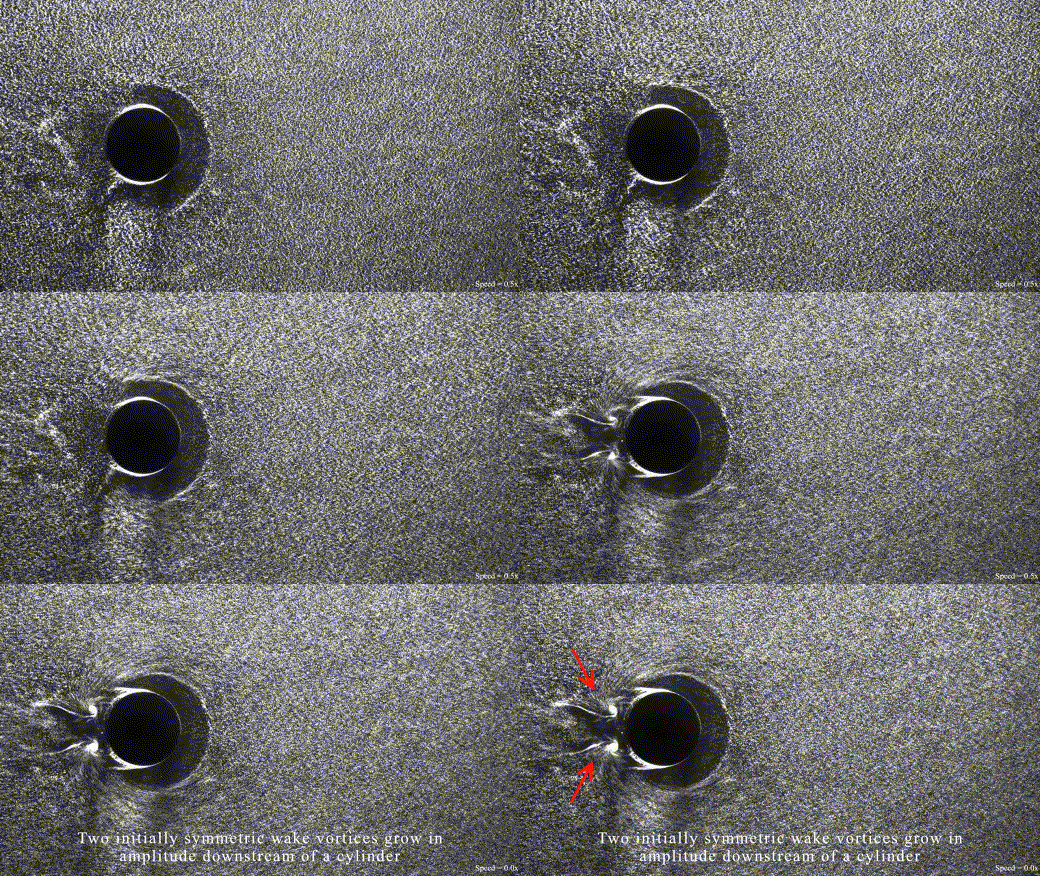
One of the great challenges in fluid dynamics is understanding how order gives way to chaos. Initially smooth and laminar flows often become disordered and turbulent. This video explores that transition in a new way using sound. Here’s what’s going on.

The first segment of the video shows a flat surface covered in small particles that can be moved by the flow. Initially, that flow is moving in right to left, then it reverses directions. The main flow continues switching back and forth in direction. This reversal tends to provoke unstable behaviors, like the Tollmien-Schlichting waves called out at 0:53. Typically, these perturbations in the flow start out extremely small and are difficult or even impossible to see by eye. So researchers take photos of the particles you see here and analyze them digitally. In particular, they are looking for subtle patterns in the flow, like a tendency for particles to clump together with a consistent spacing, or wavelength, between them. Normally, researchers would study these patterns using graphs known as spectra, but that’s where this video does something different.
Instead of representing these subtle patterns graphically, the researchers transformed those spectra into sound. They mapped the visual data to four octaves of C-major, which means that you can now hear the turbulence. When the audio track shifts from a pure note to an unsteady warble, you’re hearing the subtle disturbances in the flow, even when they’re too small for your eye to pick out.

The last part of the video takes this technique and applies it to another flow. We again see a flat plate, but now it has a roughness element, like a tiny hockey puck, stuck to it. As the flow starts, we see and hear vortices form behind the roughness. Then a horseshoe-shaped vortex forms upstream of it. Aside from the area right around the roughness, this flow is still laminar. But then turbulence spreads from upstream, its fingers stretching left until it envelops the roughness element and its wake, making the music waver. (Video and image credit: P. Branson et al.)
Can Zooplankton Mix Oceans?
Krill and other tiny marine zooplankton make daily migrations to and from the ocean surface. Previously, models of ocean mixing ignored these migrations; these animals are tiny, researchers argued, so any effects they could have would be too small to matter. But zooplankton make these migrations in huge swarms, and studies of a laboratory analog of their migrations (using brine shrimp rather than krill) reveal that, when moving en masse, these tiny swimmers create turbulent jets and eddies far larger than an individual. Their collective motion is enough to mix salty water layers 1000 times faster than molecular diffusion alone! Learn more in the latest FYFD video, embedded below. (Image and video credit: N. Sharp; research credit: I. Houghton et al.; h/t to Kam-Yung Soh)
“Breathe”


In black and white, the towering power of a thunderstorm looks almost apocalyptic. Photographer Mike Olbinski’s latest storm timelapse, “Breathe,” features roiling turbulence, distant downpours, and eerie mammatus clouds. Supercell thunderstorms churn and rotate over empty horizons. Billowing cumulus clouds condense from bright skies. Flashes of lightning reveal the outlines of massive thunderheads. It’s a beautiful glimpse of atmospheric fluid dynamics in action, with every texture magnified and enhanced by the stark black and white palette. (Video and image credit: M. Olbinski; via Gizmodo)
Withstanding Windstorms
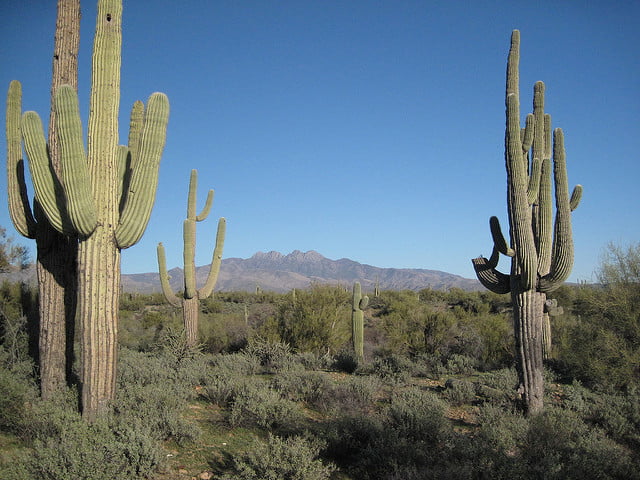
Saguaro cacti can grow 15 meters tall, and despite their shallow root systems can withstand storm winds up to 38 meters per second without being blown over. Grooves in the cacti’s surface may contribute to its resilience, by adding structural support and/or through reducing aerodynamic loads. The latter theory mirrors the concept of dimples on a golf ball; namely, grooves create turbulence in the flow near the cactus, which allows air flow to track further around the cactus before separating. The result is less drag for a given wind speed than a smooth cactus would experience.
Indeed, recent experiments on a grooved cylinder with a pneumatically-controlled shape showed exactly that; the morphable cylinder’s drag was consistently significantly lower than fixed samples. Cacti do change their shapes somewhat as their water content changes, but they don’t have the ability for up-to-the-minute alterations. Nevertheless, their adaptations can inspire engineered creations that morph to reduce wind impact. (Image credit: A. Levine; research credit: M. Guttag and P. Reis)

The Lava Lamps That Secure the Internet


A wall of lava lamps in a San Francisco office currently helps keep about 10% of the Internet’s traffic secure. Internet security company Cloudflare uses a video feed of the lava lamps as one of the inputs to the algorithms they use to generate large random numbers for encryption. The concept dates back to a 1996 patent for a product called LavaRand. The idea is that using a chaotic, unpredictable source as a seed for random number generators makes it much harder for an adversary to crack your encryption.
With lava lamps, a lot of that chaos comes from the fluid dynamics involved – without perfect knowledge of thousands of variables, it would be impossible to simulate the lava lamp wall and get the same outcome as the real one – but there’s also randomness that comes from the measurement. People walking by, shifts in lighting, and random fluctuations of individual pixels all help make the video feed unpredictable. For those interested in the details of how Cloudflare uses their lava lamps, the company explains things for both technical and non-technical readers. You can also check out Tom Scott’s video for a good overview. (Image and video credit: T. Scott; submitted by Jean H.)

Seeing the Wake
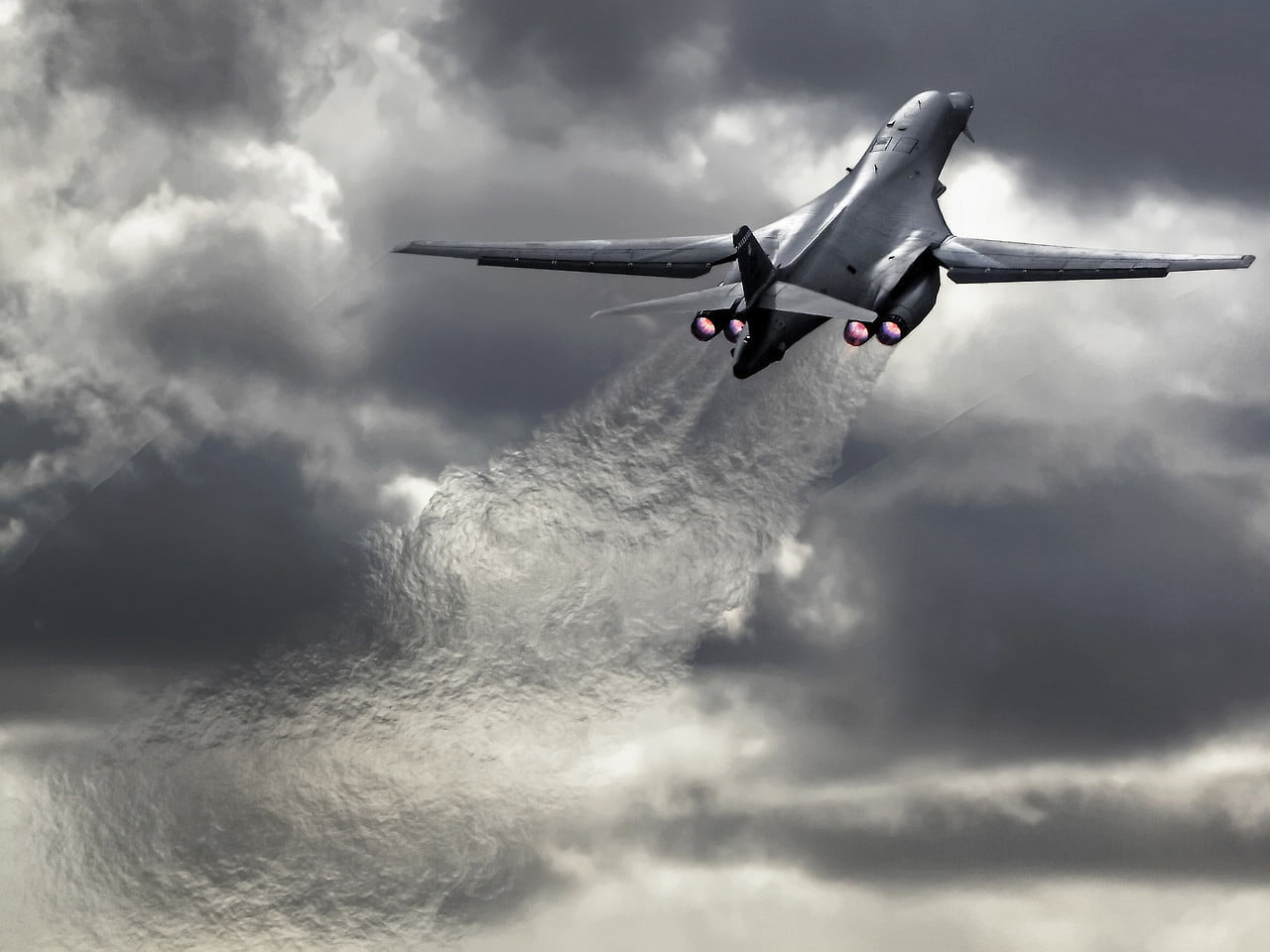
Hot exhaust gases churn in the wake of this climbing B-1B Lancer. The high temperature of the exhaust changes the density and, thus, the refractive index of the gases relative to the atmosphere. Light traveling through the exhaust gets distorted, making the highly turbulent flow visible to the human eye. Note how the four individual engine exhaust plumes quickly combine into one indistinguishable wake. This is typical for turbulence; it’s hard to track where any given fluctuations originally came from. The airplane’s wingtip vortices are just visible as well, if you look closely. (Image credit: T. Rogoway; submitted by Mark S.)

Breaking Up Turbulence
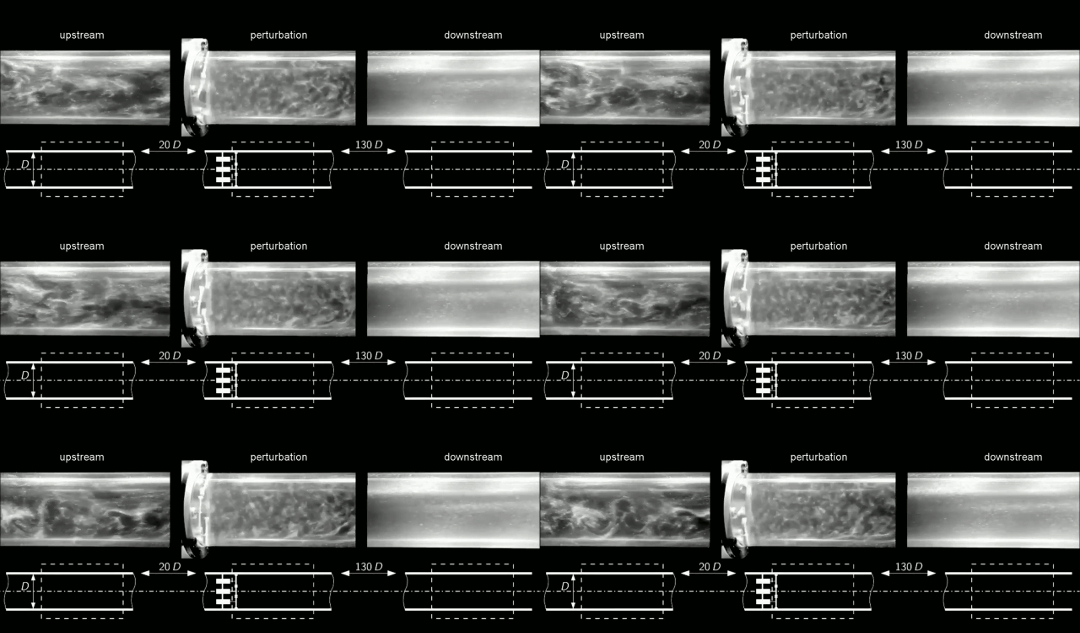
Under most circumstances, we think about flows changing from ordered and laminar to random and turbulent. But it’s actually possible for disordered flows to become laminar again. This is what we see happening in the clip above. Upstream, the flow in this pipe is turbulent (left). Then four rotors are used to perturb the flow (center). This disrupts the turbulence and causes the flow to become laminar again downstream (right). To understand how this works, we have to talk about one of the fundamental concepts in turbulence: the energy cascade.
Turbulent flows are known for their large range of length scales. Think about a volcanic plume, for example. Some of the turbulent motions in the plume may be a hundred meters across, but there are a continuous range of smaller scales as well, all the way down to a centimeter or less in size. In a turbulent flow, energy starts at the largest scales and flows further and further down until it reaches scales small enough that viscosity can extinguish them.
That should offer a hint as to what’s happening here. The rotors are perturbing the flow, yes, but they’re also breaking the larger turbulent scales down into smaller ones. The smaller the largest lengthscales of the flow are, the more quickly their energy will decay to the smallest lengthscales where viscosity can damp them out. This is what we see here. Once the turbulent energy is concentrated at the smallest scales, viscosity damps them out and the flow returns to laminar. Check out the full video below for a cool sequence where the camera moves alongside the pipe so you can watch the turbulence fading as it moves downstream. (Image and video credit: J. Kühnen et al.)
ETA: As it turns out, there’s more going on here than I’d originally thought. Simulations show that breaking up length scales is not the primary cause of relaminarization in this case. Instead, the rotors are modifying the velocity profile across the pipe in such a way that it tends to cause the turbulence to die out. The full paper is now out in Nature Physics and on arXiv.

Flow Inside the Heart
Inside each of us is a remarkable and constant flow, driven by a muscle that’s always at work. As blood circulates through our bodies, it goes through a surprisingly varied journey. In the heart, as seen above, blood flow is very unsteady and quite turbulent, due to the beating pulse of the heart. As valves open and close and the muscle walls constrict and relax, the rushing blood moves in eddy-filled spurts. In the outer reaches of our capillaries, however, the nature of the flow is quite different. Thanks to smaller vessel sizes and other factors, capillary blood flow is much steadier and more laminar. Viscosity becomes more important, as do the non-Newtonian properties of components in our blood. (Image credit: mushin111/YouTube, source; via Science; submitted by Gary N.)

Turbulent Volcanic Plumes
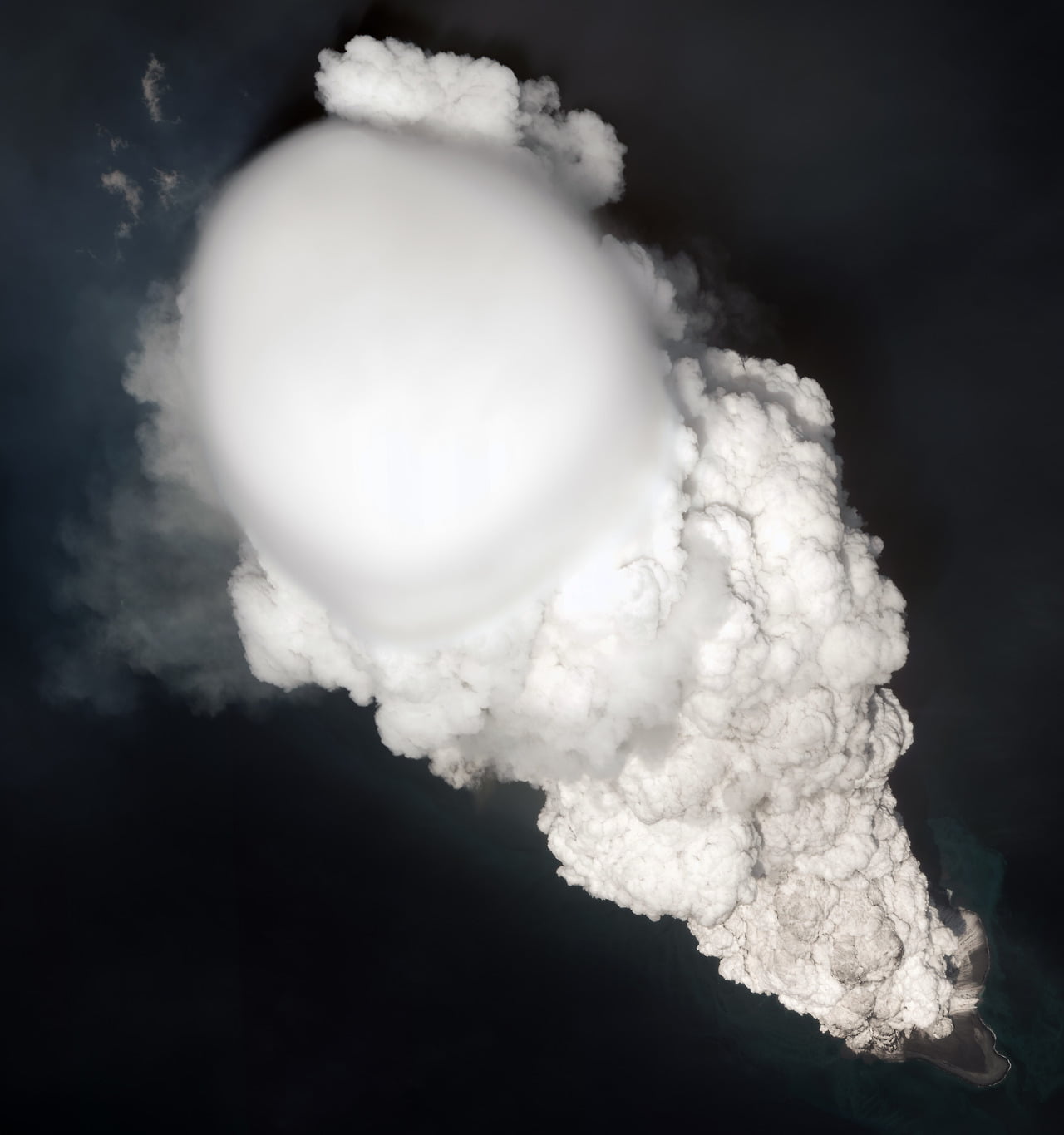
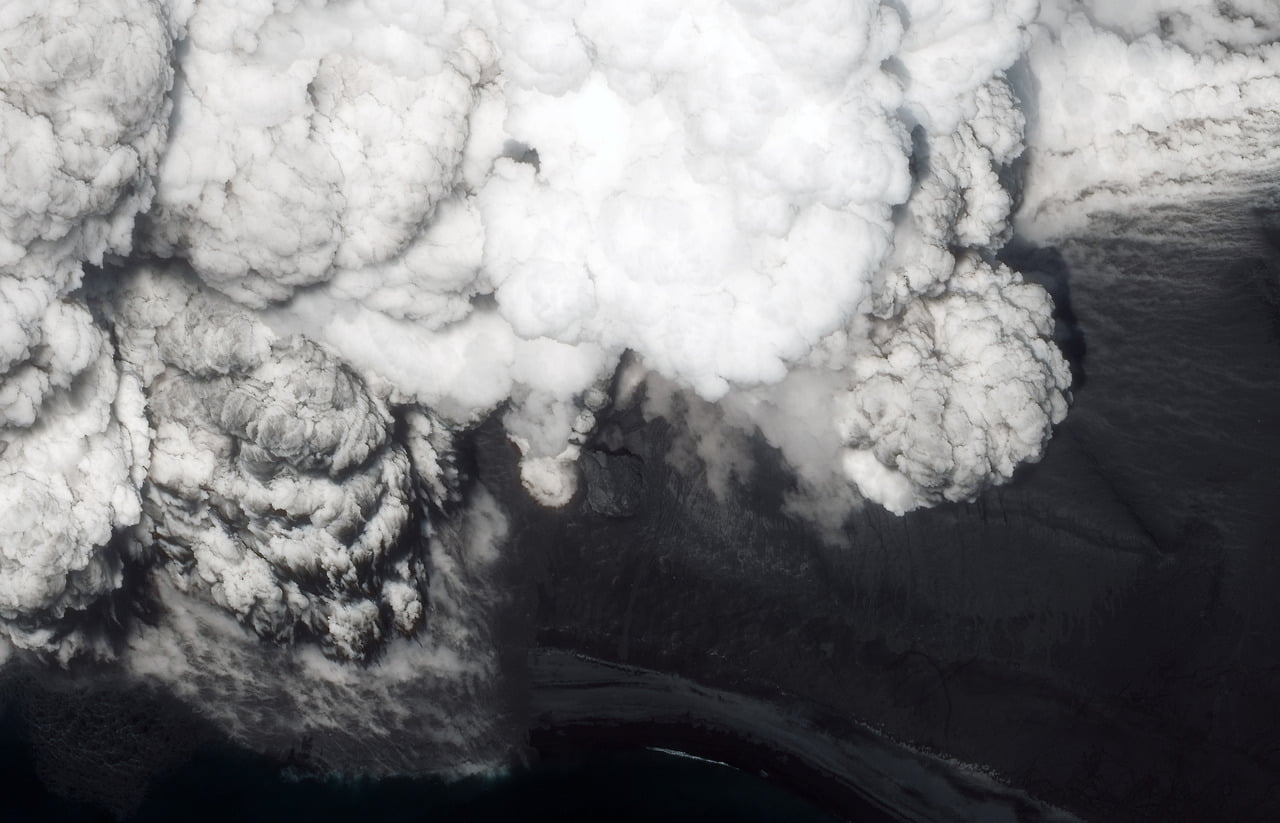
Volcanic eruptions produce some of the largest flows on Earth. These towering ash clouds were imaged from orbit in May 2017 as an eruption began on Alaska’s Bogoslof Island. The clouds are a beautiful example of a turbulent flow. Turbulence is characterized by its many length scales. Some features in the plume are tens or hundreds of meters across, yet there are also coherent motions down at the centimeter or millimeter scale. In a turbulent flow, energy cascades from these very large scales down to the smallest ones, where viscosity is significant enough to dissipate it. This is part of the challenge of modeling turbulence; to fully describe it, you have to capture what happens at every scale. (Image credit: DigitalGlobe, via Apollo Mapping; submitted by Mark S.)