From Earth, we rarely glimpse the violent flows of our home star. Here, a filament erupts from the photosphere creating a coronal mass ejection, captured in ultraviolet wavelengths by the Solar Dynamics Observatory. This particular eruption took place in 2012, and, while it was not aimed at the Earth, it did create auroras here a few days later. Eruptions like these occur as complex interactions between the sun’s hot, ionized plasma and its magnetic fields. Magnetohydrodynamics like these are particularly tough to understand because they combine magnetic physics, chemistry, and flow. (Image credit: NASA/GSFC/SDO; via APOD)
Tag: science

“The Art of Flying”


Like schools of fish, starlings gather in massive undulating crowds. Known as murmurations, these gatherings are a type of collective motion. Scientists often try to mimic these groups through simulations and lab experiments where individuals in a swarm obey simple rules that depend only on observing their neighbors. It requires very little, it turns out, to form swarms that move in this beautiful manner! (Video and image credit: J. van IJken; via Colossal)

Venusian Lava Flows
Venus is often known as Earth’s twin, given its similar size and proximity. But, thanks to its runaway greenhouse effect, Venus is a hellish landscape buried beneath a hot atmosphere of carbon dioxide and sulfuric acid. Unlike Earth, Venus is not tectonically active, though it does have active volcanoes. A recent study re-examined synthetic aperture radar data from the Magellan spacecraft mission in the early 1990s and found that the data contained evidence of fresh lava flows.
The team found two areas near volcanoes where the surface backscatter changed significantly between orbital observations. After examining many possible explanations for the changes, the team concluded that the differences were most likely due to new lava. They even performed the same analysis for a volcanic field here on Earth between known lava flows and observed the same behavior. Combined with another recent study that found evidence of volcanic activity in Magellan data, signs are pointing toward Venus being about as volcanically active as our own planet, even if the mechanisms driving the volcanism differ. (Image credit: NASA/JPL-Caltech; research credit: D. Sulcanese et al.; via Gizmodo)
Playing With Water in 2D Containers


Once again Steve Mould is putting his prototyping skills to use to work out what goes on inside tricky containers. Here he looks at a “magic” wizard’s cup where — like the assassin’s teapot — cleverly placed holes in the side of the cup can block or allow air’s escape. In the wizard’s cup this lets the wizard refill the cup at will.
He also takes a look at how draining works, using tracer particles and a video editing effect that “echoes” previous frames in a video. For the tracer particles, this algorithm effectively visualizes pathlines in the flow. Areas with faster-moving fluid have longer pathlines that are closer together, whereas slow-moving regions have short pathlines. (Video credit: S. Mould)

Saving Energy By Following a Leader
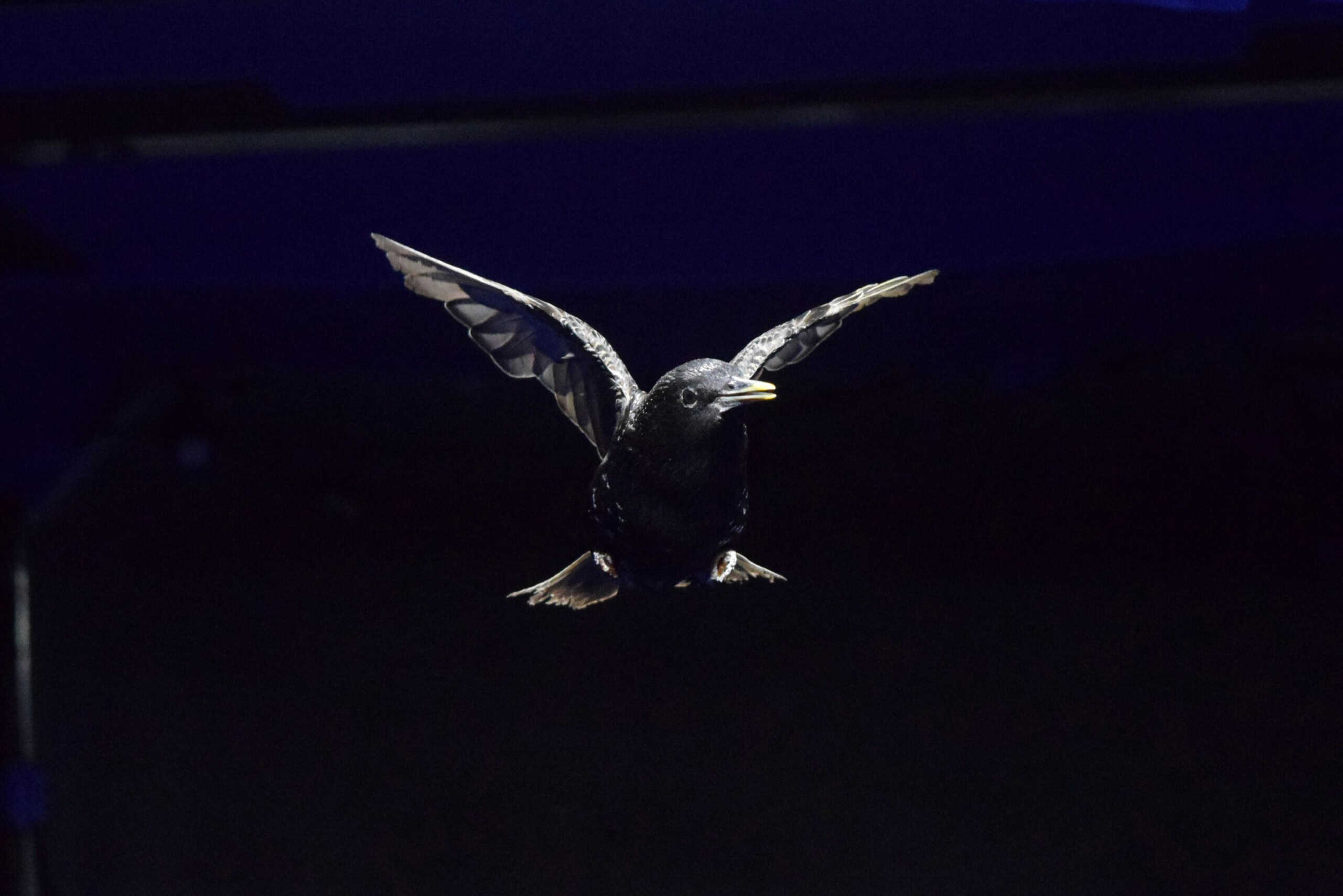
Scientists have long suspected that birds save energy by following a leader — think of the V-shaped flight formation used by geese — but a new study captures that savings directly. The team studied starlings, flying singly or in groups of two or three, in a special wind tunnel. Each bird wore a tiny backpack with sensors and lights that captured its motion and helped researchers identify it individually in videos. And, using before and after metabolic measurements, the researchers could pin down exactly how much energy each bird used when flying.
They found that birds who spent most of the flight in a “follower” position used up to 25% less energy than they did when flying solo. That’s a major incentive to follow someone else. Interestingly, they also found that the most efficient solo fliers were the birds most likely to take on the “leader” position. The team notes that these “leaders” tend to use a lower wing-flapping frequency, but a full explanation of how they save energy will require a follow-up study. (Image credit: R. Gissler and S. Hao; research credit: S. Friman et al.; via Physics World)

The Real Butterfly Effect
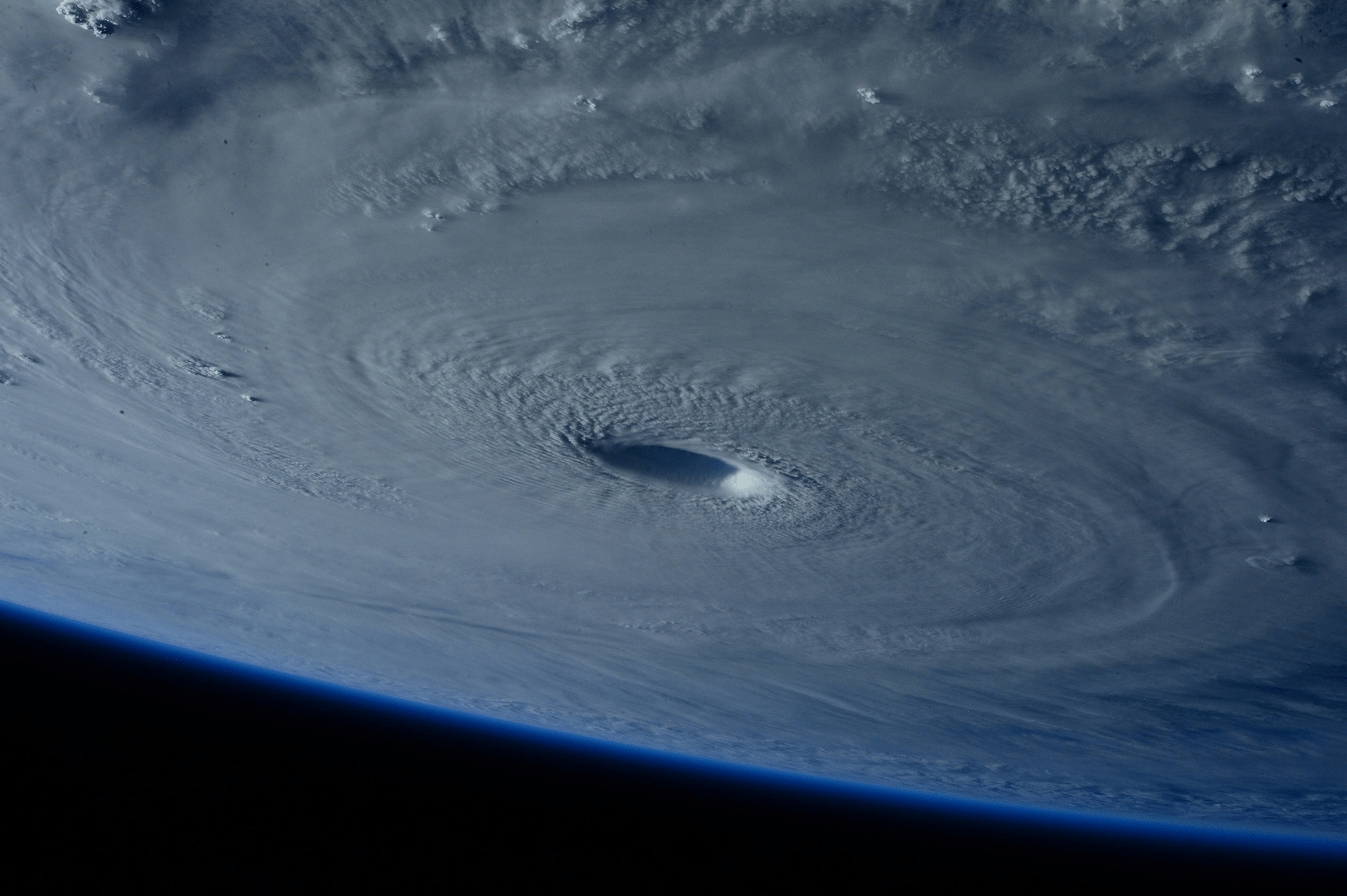
The butterfly effect — that the flapping of a butterfly’s wings in Brazil can cause a tornado in Texas — expresses the sensitivity of a chaotic system to initial conditions. In essence, because we can’t possibly track every butterfly in Brazil, we’ll never perfectly predict tornadoes in Texas, even if the equations behind our weather forecast are deterministic.
But this interpretation doesn’t fully capture the subtleties of the situation. With fluid dynamics, the small scales of a flow — like the turbulence in an individual cloud — are linked to the largest scales in the flow — for example, a hurricane. For short times, we’re actually quite good at predicting those large scales; our weather forecasts can distinguish sunny days and cloudy ones a week out. But at smaller scales, the forecast errors pile up quickly. No one can forecast that an individual cloud will form over your house three days from now. And because the small scales are linked to the larger scales, the uncertainties from the small scale cascade upward, limiting how far into the future we can reliably predict the weather.
And, unfortunately, drilling down to capture smaller and smaller scales in our models can’t fix the problem, unless our initial uncertainties are identically zero. To get around this problem, weather forecasters instead use ensemble forecasting, where they run many simulations of the weather with slightly different initial conditions. Those differences in initial conditions let the forecasters play with those initial uncertainties — how accurate is the temperature reading from that station? How reliable is the instrument reporting that humidity? How old is the satellite data coming in? Once all the forecasts are run, they can see how many predicted sunny days versus rainy ones, which ones resulted in severe weather, and so on. Often the probabilities we see in our weather app — like 30% chance of rain — depend on factors including how many of the forecasts resulted in rain.
Unfortunately, this butterfly effect permanently limits just how far into the future we can predict weather — at least until we fully understand the nature of the Navier-Stokes equations. For much more on this interesting aspect of chaos, check out this Physics Today article. (Image credit: NASA; see also T. Palmer at Physics Today)
Fediverse Reactions
-

Making a Splash
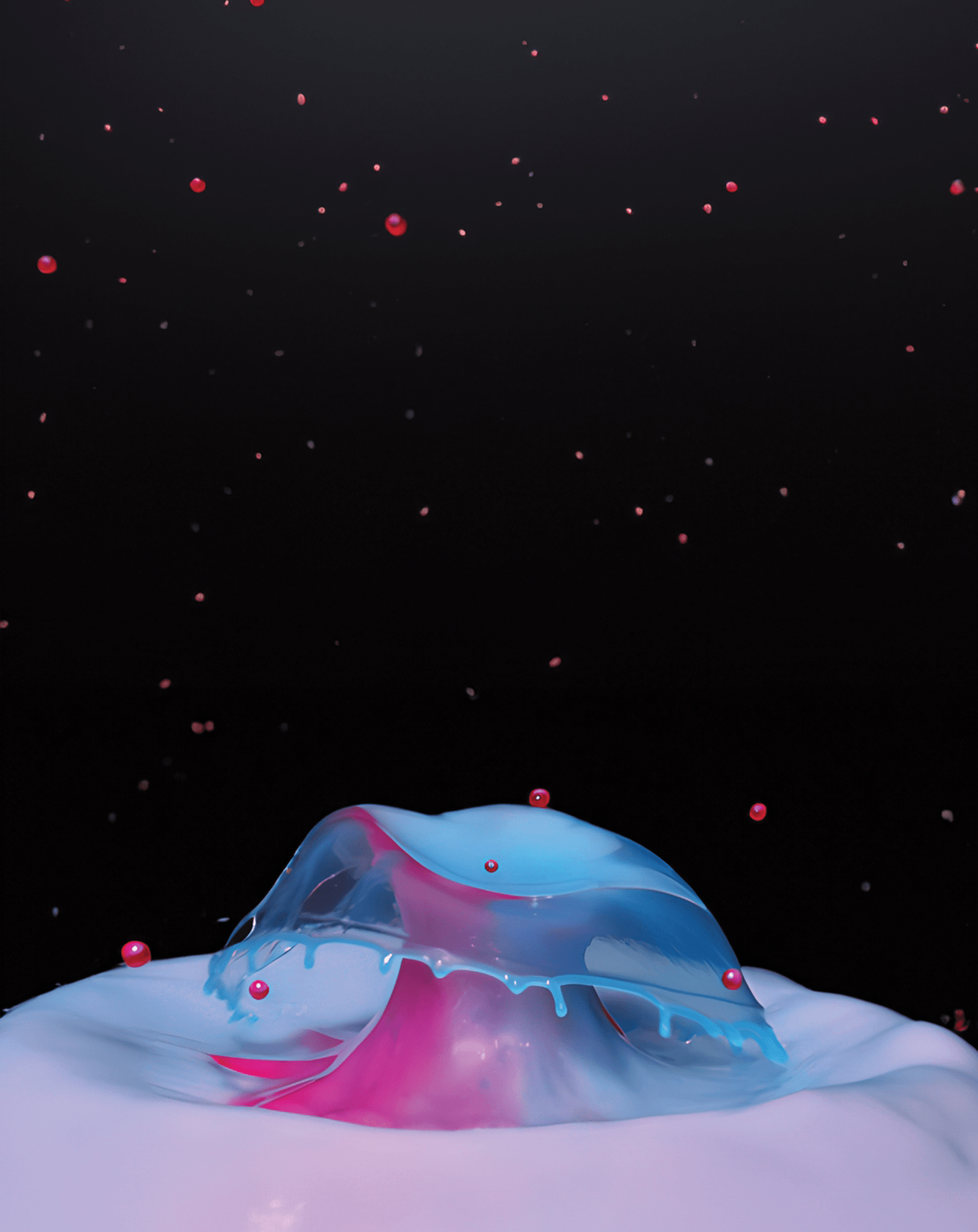
Since Harold Edgerton’s experiments with stroboscopic photographs in the 1930s, we’ve been fascinated by the shape of splashes. These days students and artists can take advantage of programmable external flashes to capture this split-second moment of impact. Here, a pink-dyed drop of ethanol strikes a jet rising from a pool of glycerin, milk, and food coloring. The resulting splash is umbrella-like, with a thickened rim that shows tiny ligaments of fluid — an early sign of the instability that will ultimately detach droplets from the splash. This image was taken by students in a course that connects art and fluid mechanics. (Image credit: L. Sharpe et al.; via Physics Today)

How Water Droplets Charge Up
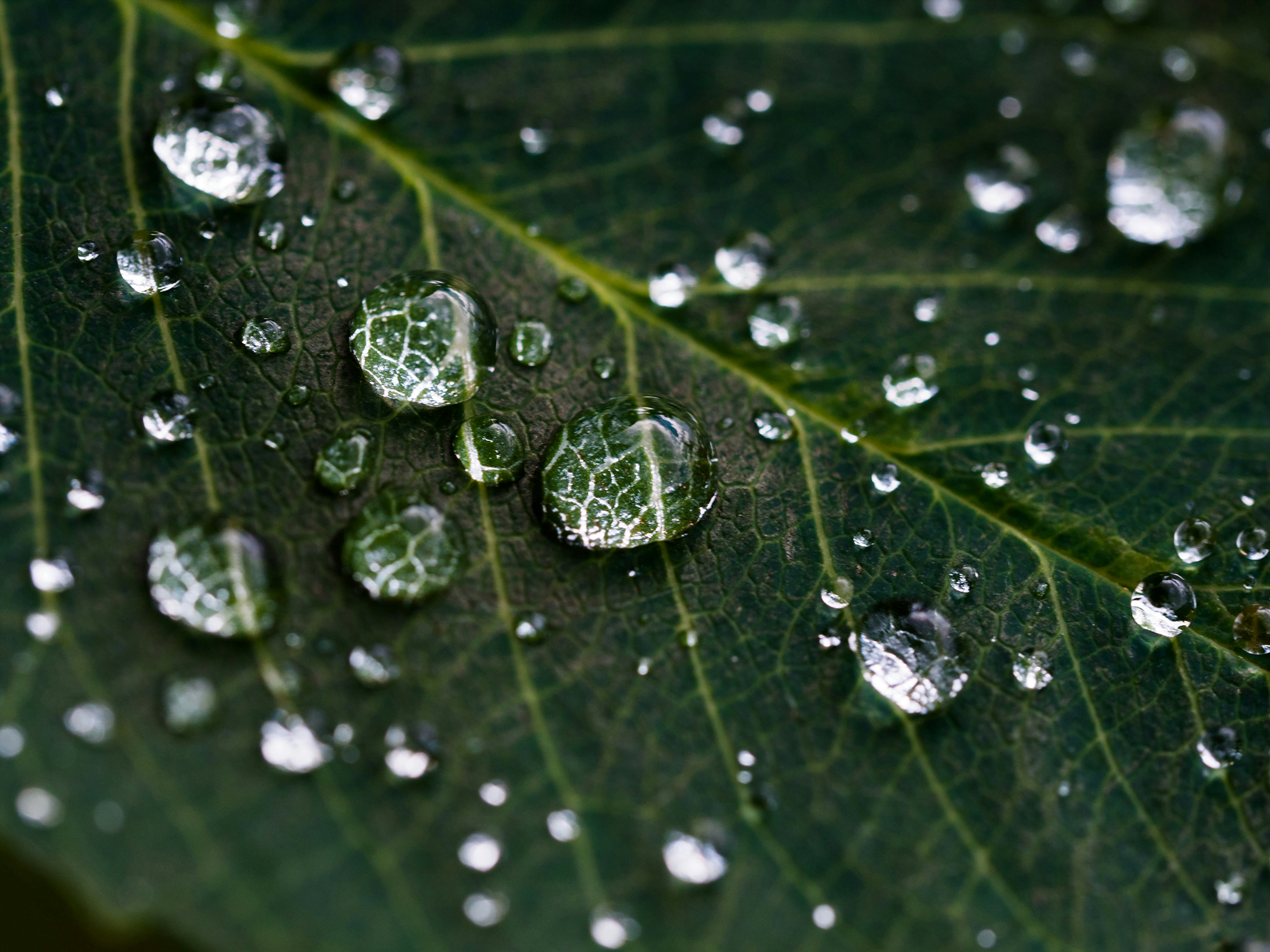
Rubbing a balloon on your hair can build a significant electrical charge. Water droplets have the same issue when they slide across a hydrophobic, electrically-insulated surface. A new study models why these charges build up and tests the model both experimentally and through simulation. They focused their theory on three effects that determine how much charge builds up. The first is a two-way chemical reaction that continuously creates charge at the interface, with positive charge building in the drop. Secondly, the drop’s contact angle with the surface sets how many protons can build up at the contact line, thereby affecting the electrical field they generate. And, finally, fluid motion at the rear of the drop deflects protons upward, shifting the electrical field. In particular, their model predicts that the higher contact angles of hydrophobic surfaces should increase charge build-up and faster sliding velocities should slow charge build-up, both of which agree with experiments.
The model should help researchers understand various charging scenarios, like those found on self-cleaning surfaces, in inkjet printing, and in semiconductor manufacturing. In the last scenario, rinsing semiconductor wafers in ultrapure water can build up charges in the kilovolt range, which is enough to damage the product. (Image credit: D. Carlson; research credit: A. Ratschow et al.; via APS Physics)

Mardi Gras Pass
The mighty Mississippi River has long been bound by humanity’s efforts. To keep the river in place and control its flooding, engineers have built levees, canals, and other structures. But those efforts have come with costs. Where the wild Mississippi used to deposit sediment and build new land, the bound river sends its sediment out to sea, contributing to wetland erosion. But sometimes the river still exerts its own control.
In 2012, around the time of Mardi Gras, the river broke through its eastern bank (near an existing canal) and created a new channel to the Gulf of Mexico. Known as Mardi Gras Pass, this distributary waterway now contributes fresh sediment, nutrients, and water to the Louisiana wetlands. Despite its small size, observations indicate that the Mardi Gras Pass is, indeed, helping to build new land in the area. (Image credit: J. Stevens; via NASA Earth Observatory)

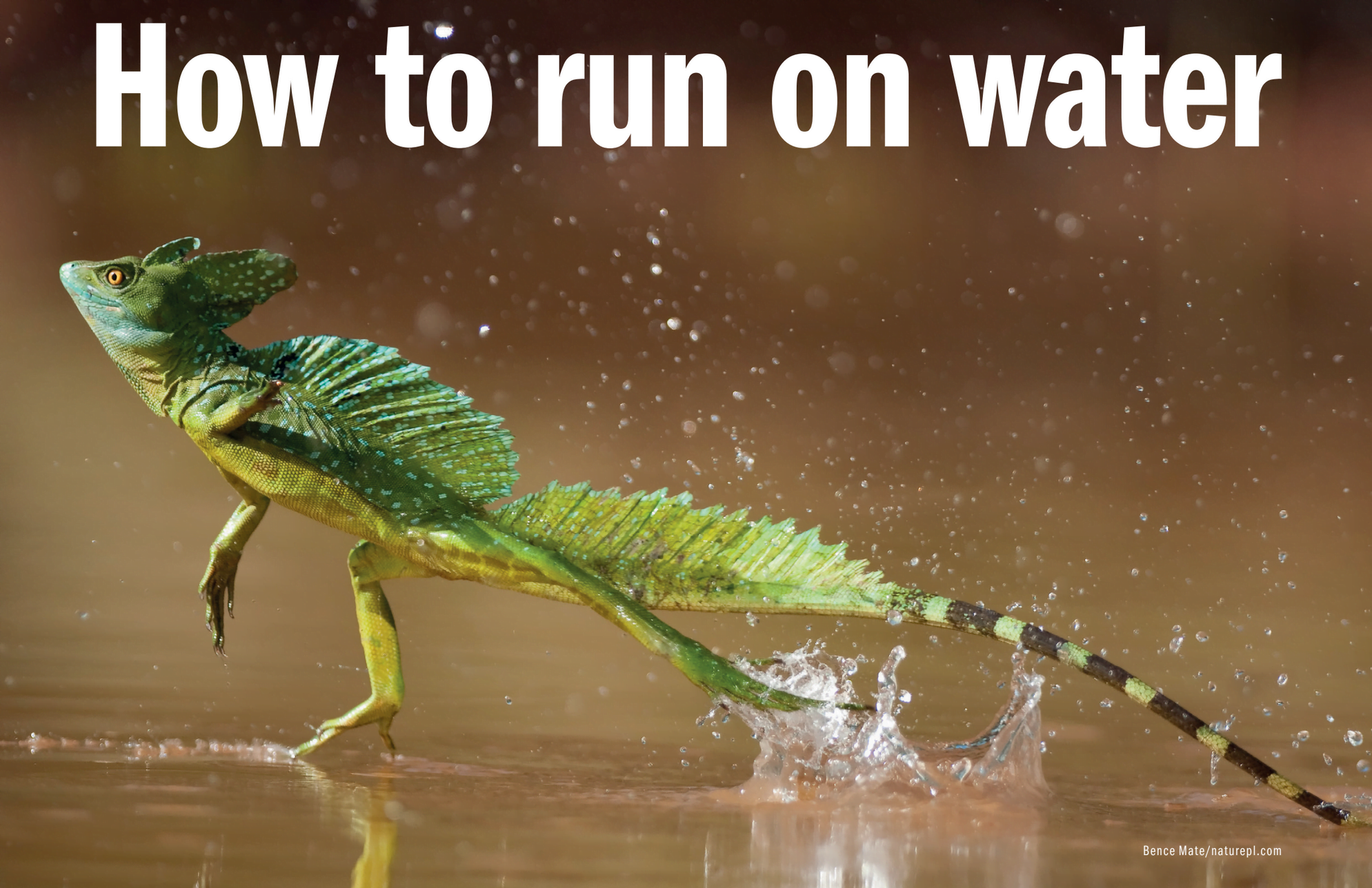
How to Run on Water
Ahead of the Olympics, I’ve written a feature article for Physics World that explores how basilisk lizards and grebes run on water and what it would take for a human runner to do the same. Check it out! (Image credit: B. Mate; see Physics World)